
Synthetic Biology In Agriculture Market Report 2026
Global Outlook – By Product Type (Crops, Livestock, Microbes, Other Product Types), By Technology (Genome Editing, Pathway Engineering, Deoxyribonucleic Acid (DNA) Synthesis, Other Technologies), By Application (Crop Improvement, Pest And Disease Control, Soil Health Management, Livestock Production, Other Applications), By End-User (Agricultural Biotechnology Companies, Research Institutes, Farmers, Other End-Users) – Market Size, Trends, Strategies, and Forecast to 2030
Synthetic Biology In Agriculture Market Overview
• Synthetic Biology In Agriculture market size has reached to $1.64 billion in 2025 • Expected to grow to $3.78 billion in 2030 at a compound annual growth rate (CAGR) of 18.1% • Growth Driver: Increasing Demand For Sustainable Agricultural Practices Fueling The Growth Of The Market Amid Rising Government Incentive Programs Promoting Sustainable Farming • Market Trend: Integration Of Engineered Nitrogen-Fixing Microbes To Improve Soil Health And Crop Productivity • North America was the largest region in 2025 and Asia-Pacific is the fastest growing region.What Is Covered Under Synthetic Biology In Agriculture Market?
Synthetic biology in agriculture refers to changing or designing the deoxyribonucleic acid (DNA) of plants, microbes, or insects to help them perform new or improved functions. It works by adding or creating special genes that allow crops to grow better, resist pests, or survive in tough conditions such as drought. By enhancing crop productivity and resilience, synthetic biology promotes sustainable farming practices, minimizes dependence on chemical inputs, and plays a crucial role in ensuring long-term global food security. The main product types of synthetic biology in agriculture are crops, livestock, microbes, and others. Crops refer to genetically engineered plants developed through advanced synthetic biology techniques to enhance traits such as yield, nutritional value, pest resistance, and environmental adaptability. These innovations are achieved using technologies such as genome editing, pathway engineering, and deoxyribonucleic acid (DNA), among others. The various applications include crop improvement, pest and disease control, soil health management, livestock production, and others. The key end-users include agricultural biotechnology companies, research institutes, farmers, and others.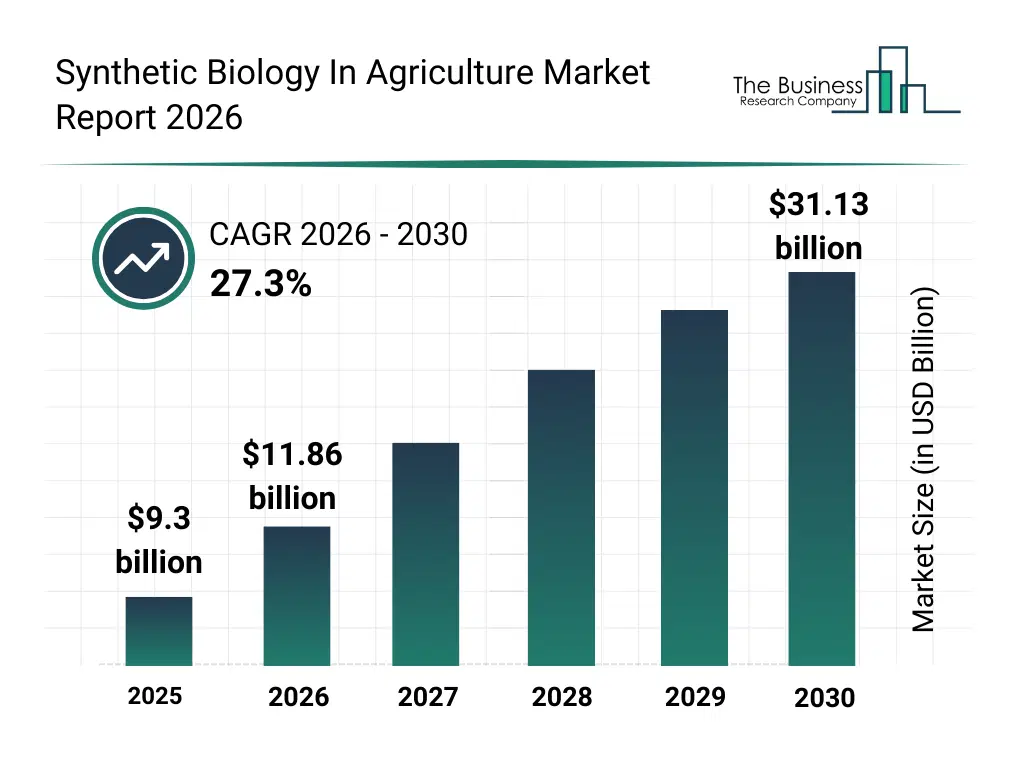
What Is The Synthetic Biology In Agriculture Market Size and Share 2026?
The synthetic biology in agriculture market size has grown rapidly in recent years. It will grow from $1.64 billion in 2025 to $1.94 billion in 2026 at a compound annual growth rate (CAGR) of 18.5%. The growth in the historic period can be attributed to growth in traditional genetic modification research, rising demand for high-yield crops, increasing pest and disease pressure, early integration of biotech in farming, expansion of agricultural r&d investments.What Is The Synthetic Biology In Agriculture Market Growth Forecast?
The synthetic biology in agriculture market size is expected to see rapid growth in the next few years. It will grow to $3.78 billion in 2030 at a compound annual growth rate (CAGR) of 18.1%. The growth in the forecast period can be attributed to rising need for climate-resilient agriculture, growing adoption of genome editing tools, expansion of synthetic microbe applications, rising demand for sustainable farming inputs, increasing commercialization of advanced biotech products. Major trends in the forecast period include increasing development of pest-resistant crops, growing adoption of synthetic microbes for soil health, expansion of gene-edited livestock for higher productivity, rising use of synthetic biology for climate-resilient crops, growing commercialization of bioengineered agricultural inputs.
Global Synthetic Biology In Agriculture Market Segmentation
2) By Technology: Genome Editing, Pathway Engineering, Deoxyribonucleic Acid (DNA) Synthesis, Other Technologies 3) By Application: Crop Improvement, Pest And Disease Control, Soil Health Management, Livestock Production, Other Applications 4) By End-User: Agricultural Biotechnology Companies, Research Institutes, Farmers, Other End-Users Subsegments: 1) By Crops: Cereal Crops, Fruit Crops, Vegetable Crops, Oilseed Crops, Fiber Crops, Forage Crops 2) By Livestock: Cattle, Poultry, Swine, Sheep, Goats, Aquaculture Species 3) By Microbes: Bacteria, Yeast, Fungi, Algae, Cyanobacteria, Protozoa 4) By Other Product Types: Insect Cells, Plant Cells, Enzymes, Synthetic Seeds, Biofertilizers, BiopesticidesWhat Is The Driver Of The Synthetic Biology In Agriculture Market?
The increasing demand for sustainable agricultural practices is expected to propel the growth of the synthetic biology in agriculture market going forward. Sustainable agricultural practices refer to farming methods that aim to meet current food and textile needs without compromising the ability of future generations to meet their own needs by conserving resources, maintaining soil fertility, and minimizing environmental impact. The adoption of sustainable agricultural practices is rising primarily due to government incentive programs that financially reward farmers for implementing environmentally friendly and resource-efficient farming methods. Synthetic biology in agriculture supports sustainable agricultural practices by enabling the development of bioengineered crops and microbes that enhance nutrient efficiency, reduce chemical inputs, and improve soil health, promoting higher yields with minimal environmental impact. For instance, in February 2025, according to the Department for Environment, Food and Rural Affairs (DEFRA), a UK-based government agency, in January 2025, the number of active Sustainable Farming Incentive (SFI) agreements in England reached 32,200, representing a 23% increase compared to October 2024. Therefore, the increasing demand for sustainable agricultural practices is driving the growth of the synthetic biology in agriculture industry.Key Players In The Global Synthetic Biology In Agriculture Market
Major companies operating in the synthetic biology in agriculture market are BASF SE, Bayer AG, Corteva Agriscience LLC, KWS Saat Societas Europaea, Twist Bioscience Corporation, Ginkgo Bioworks Incorporated, Benson Hill Incorporated, Pivot Bio Incorporated, Cibus Incorporated, Inari Agriculture Incorporated, Tropic Biosciences United Kingdom Limited, Pairwise Plants Incorporated, Ansa Biotechnologies Incorporated, Arzeda Corporation, GreenLight Biosciences Incorporated, Evogene Limited, Aromyx Corporation, Arcadia Biosciences Incorporated, AquaBounty Technologies Incorporated, Yield10 Bioscience Incorporated.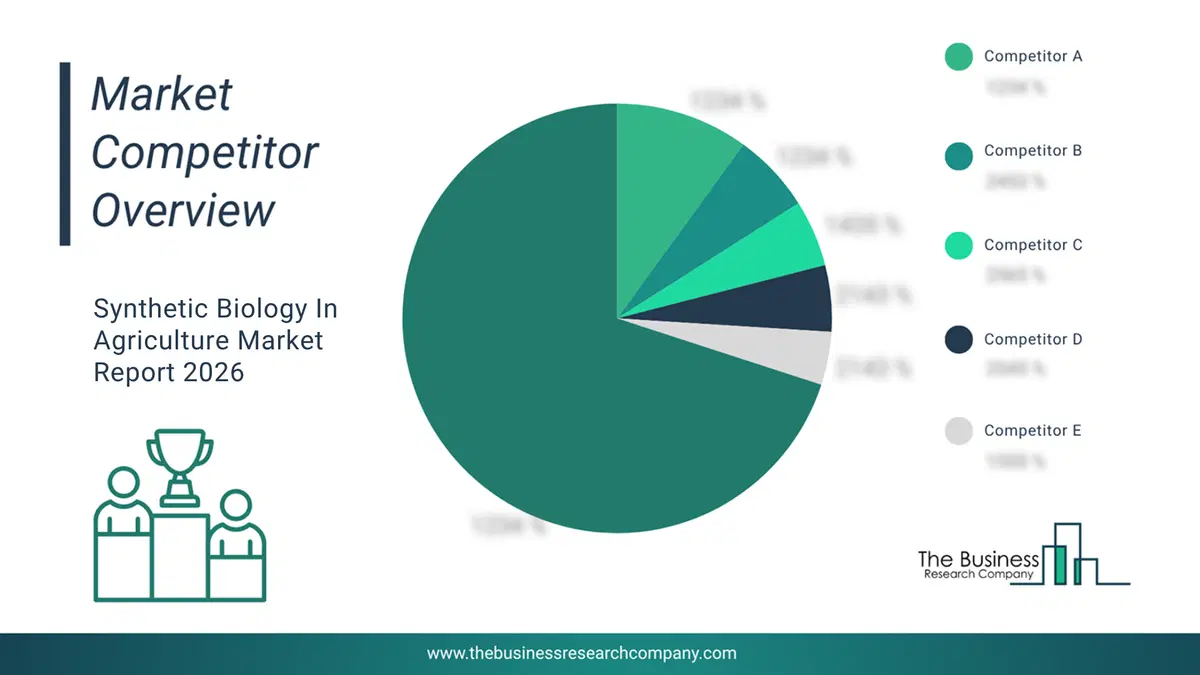
This chart is for illustrative purposes; the full report includes a detailed competitor analysis and comprehensive overview of the top 10 companies in the market.
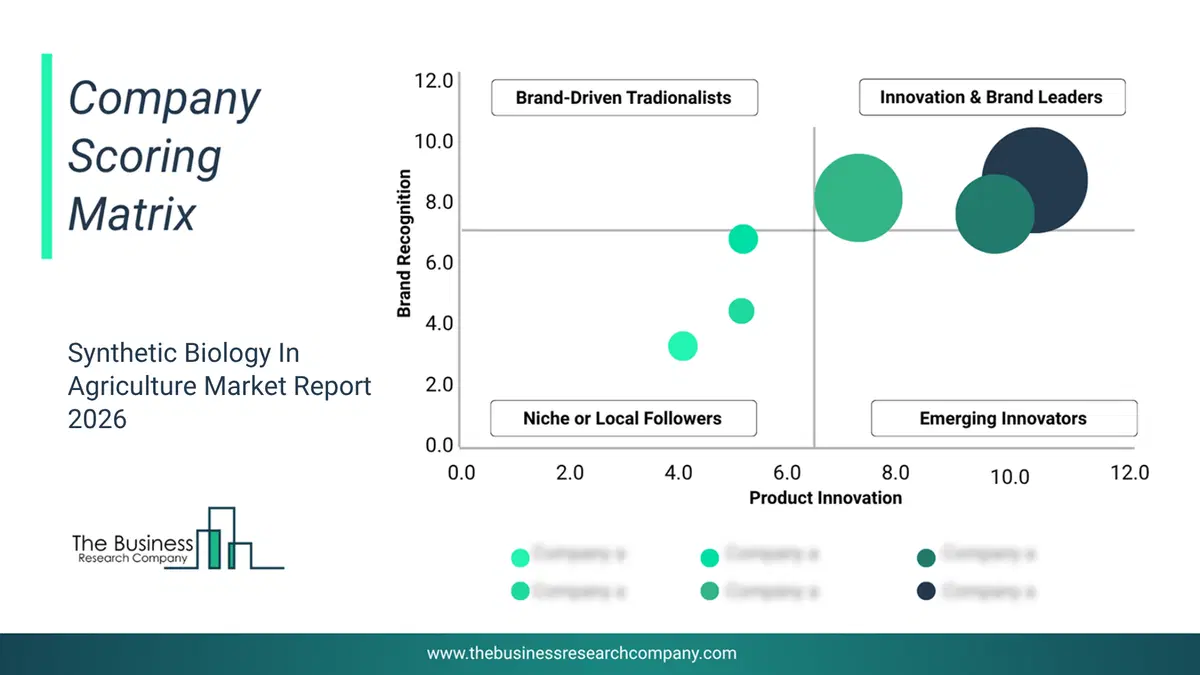
This chart maps companies by product innovation and brand strength, with bubble size indicating relative revenue, helping identify market leaders, challengers, and niche players. This is an illustrative chart; the full report provides a complete and accurate competitive analysis.
Global Synthetic Biology In Agriculture Market Trends and Insights
Major companies operating in the synthetic biology in agriculture market are focusing on developing advanced solutions, such as engineered nitrogen-fixing microbes, to enhance soil fertility, nutrient use efficiency, and sustainable yield performance. Engineered nitrogen-fixing microbes refer to microorganisms selected and optimized via synthetic biology tools and microbial engineering to fix atmospheric nitrogen and associate with plant roots, enabling capabilities such as nitrogen conversion in the rhizosphere, root colonization, and fertilizer displacement. For instance, in December 2024, BioConsortia, a US-based microbial biotech company, introduced Always-N, a seed-applied microbial nitrogen-fixing treatment developed to reduce synthetic fertilizer use while maintaining or improving yields in crops such as corn and wheat, featuring a shelf life of over two years, on-seed stability, and sustained colonization of plant roots. Always-N aims to enhance nutrient efficiency, lower fertilizer costs, and promote environmental sustainability, demonstrating how synthetic biology is being applied to practical agricultural solutions.What Are Latest Mergers And Acquisitions In The Synthetic Biology In Agriculture Market?
In December 2023, Invaio Sciences, a US-based provider of nature-positive agricultural biologicals and precision delivery systems, acquired Peptyde Bio for an undisclosed amount. With this acquisition, Invaio Sciences gains access to Peptyde Bio’s peptide discovery platform, intellectual property, and portfolio of peptide candidates for crop protection, thereby enhancing its bioactive discovery and biological innovation capabilities while accelerating the development of sustainable alternatives to chemical crop protection. Peptyde Bio is a US-based biotechnology company that specializes in AI-driven antimicrobial peptide design and sustainable disease control solutions for crops.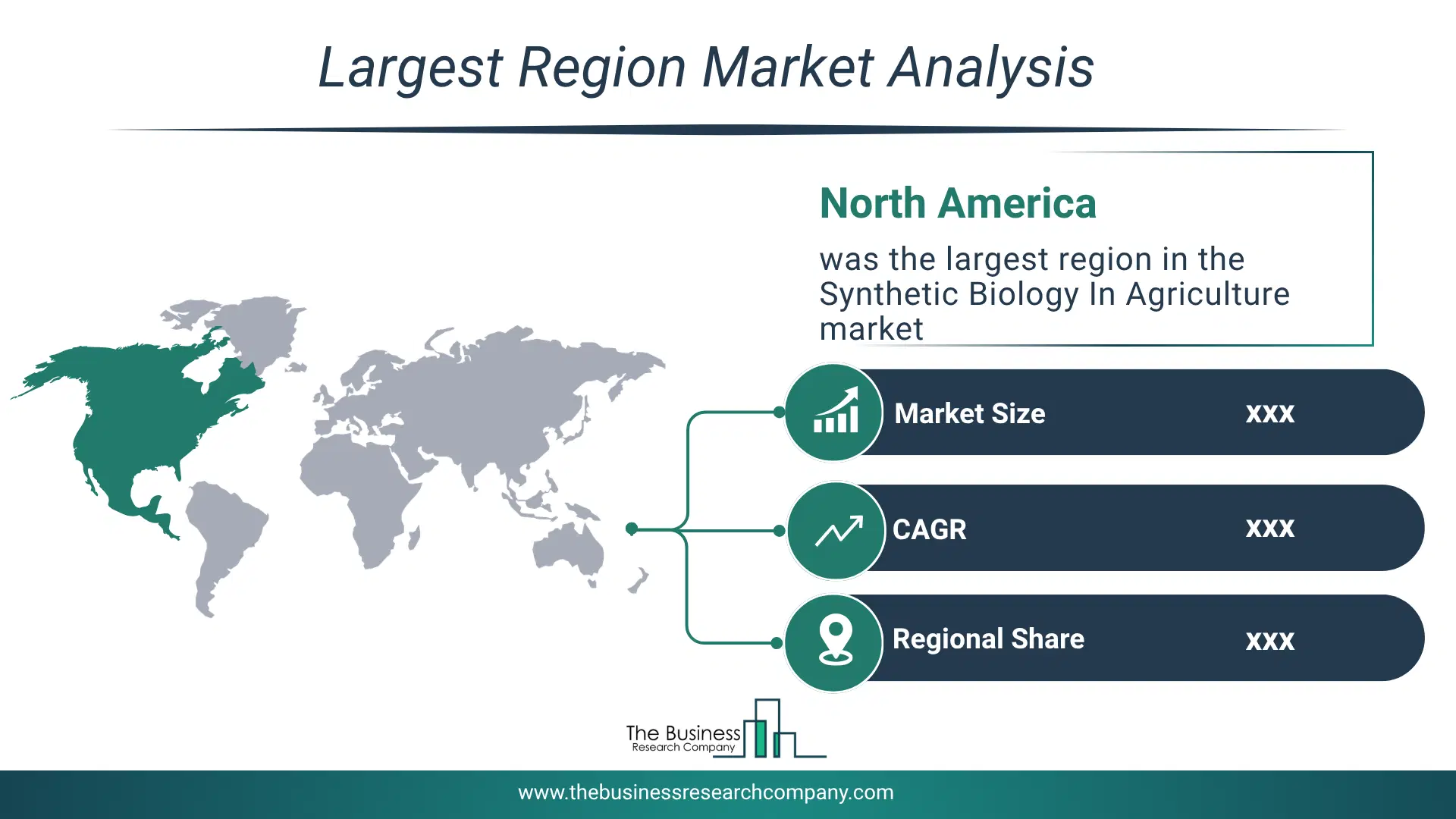
Regional Outlook
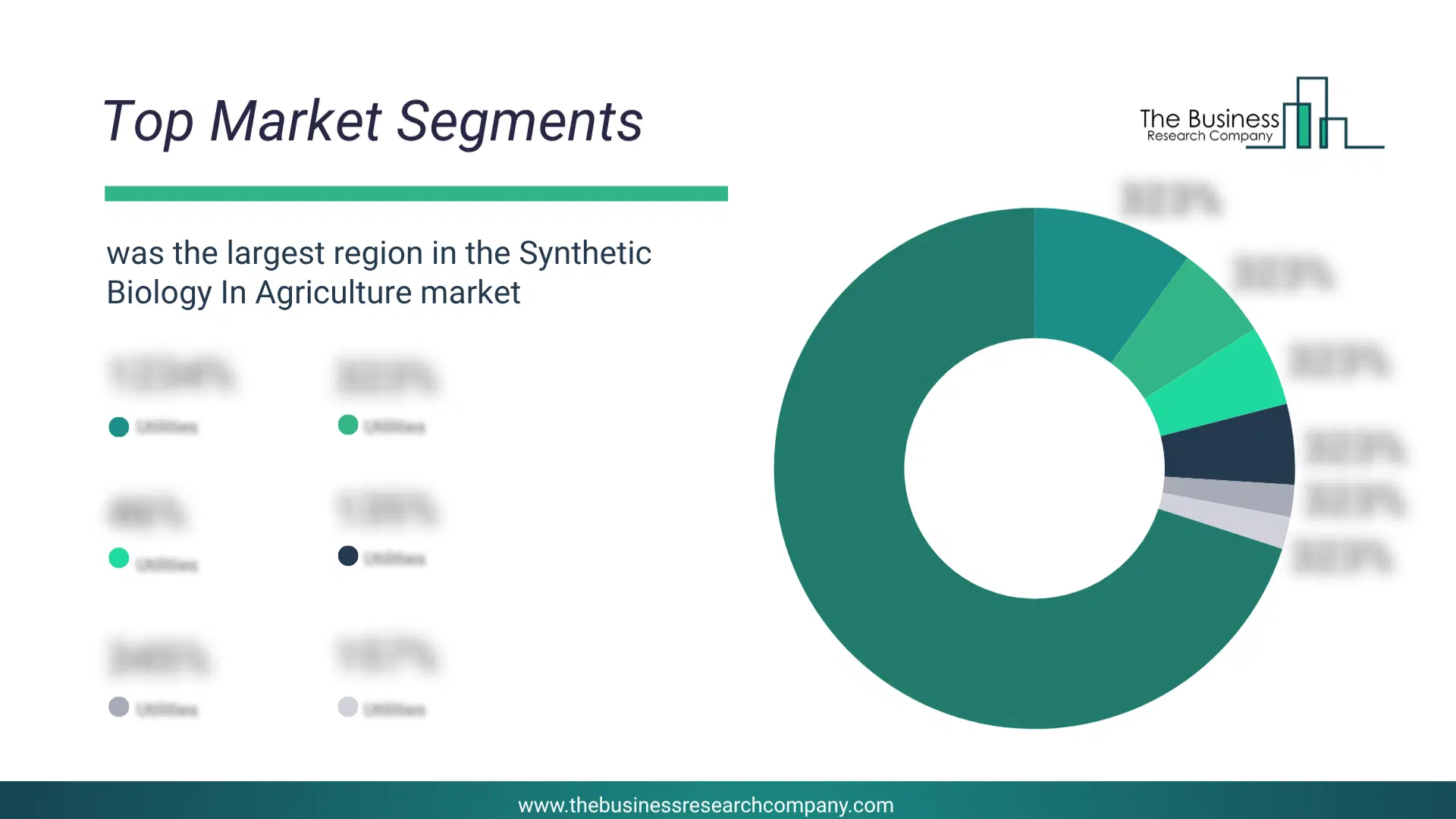
North America was the largest region in the synthetic biology in agriculture market in 2025. Asia-Pacific is expected to be the fastest-growing region in the forecast period. The regions covered in this market report are Asia-Pacific, South East Asia, Western Europe, Eastern Europe, North America, South America, Middle East, Africa. The countries covered in this market report are Australia, Brazil, China, France, Germany, India, Indonesia, Japan, Taiwan, Russia, South Korea, UK, USA, Canada, Italy, Spain.What Defines the Synthetic Biology In Agriculture Market?
The synthetic biology in agriculture market consists of sales of genetically modified seeds, engineered microbes, synthetic enzymes, biofertilizers, biopesticides, and biosensors. Values in this market are ‘factory gate’ values, that is the value of goods sold by the manufacturers or creators of the goods, whether to other entities (including downstream manufacturers, wholesalers, distributors and retailers) or directly to end customers. The value of goods in this market includes related services sold by the creators of the goods.How is Market Value Defined and Measured?
The market value is defined as the revenues that enterprises gain from the sale of goods and/or services within the specified market and geography through sales, grants, or donations in terms of the currency (in USD unless otherwise specified). The revenues for a specified geography are consumption values that are revenues generated by organizations in the specified geography within the market, irrespective of where they are produced. It does not include revenues from resales along the supply chain, either further along the supply chain or as part of other products.
This chart presents market attractiveness based on a quantitative evaluation of growth, competition, strategic alignment, and risk, offering a clear view of opportunity areas for decision-making. This chart is for illustrative purposes; the full report contains the complete analysis.

This chart highlights the Total Addressable Market (TAM) by estimating the maximum revenue opportunity using an assumption-driven approach, supporting strategic planning and opportunity sizing across markets. The chart is illustrative; the full report provides a more comprehensive analysis.
What Key Data and Analysis Are Included in the Synthetic Biology In Agriculture Market Report 2026?
The synthetic biology in agriculture market research report is one of a series of new reports from The Business Research Company that provides market statistics, including industry global market size, regional shares, competitors with the market share, detailed market segments, market trends and opportunities, and any further data you may need to thrive in the synthetic biology in agriculture industry. The market research report delivers a complete perspective of everything you need, with an in-depth analysis of the current and future state of the industry.Synthetic Biology In Agriculture Market Report Forecast Analysis
| Report Attribute | Details |
|---|---|
| Market Size Value In 2026 | $1.94 billion |
| Revenue Forecast In 2030 | $3.78 billion |
| Growth Rate | CAGR of 18.1% from 2026 to 2030 |
| Base Year For Estimation | 2025 |
| Actual Estimates/Historical Data | 2020-2025 |
| Forecast Period | 2026 - 2030 |
| Market Representation | Revenue in USD Billion and CAGR from 2026 to 2030 |
| Segments Covered | Product Type, Technology, Application, End-User |
| Regional Scope | Asia-Pacific, Western Europe, Eastern Europe, North America, South America, Middle East, Africa |
| Country Scope | The countries covered in the report are Australia, Brazil, China, France, Germany, India, Indonesia, Japan, Taiwan, Russia, South Korea, UK, USA, Canada, Italy, Spain. |
| Key Companies Profiled | BASF SE, Bayer AG, Corteva Agriscience LLC, KWS Saat Societas Europaea, Twist Bioscience Corporation, Ginkgo Bioworks Incorporated, Benson Hill Incorporated, Pivot Bio Incorporated, Cibus Incorporated, Inari Agriculture Incorporated, Tropic Biosciences United Kingdom Limited, Pairwise Plants Incorporated, Ansa Biotechnologies Incorporated, Arzeda Corporation, GreenLight Biosciences Incorporated, Evogene Limited, Aromyx Corporation, Arcadia Biosciences Incorporated, AquaBounty Technologies Incorporated, Yield10 Bioscience Incorporated. |
| Customization Scope | Request for Customization |
| Pricing And Purchase Options | Explore Purchase Options |