
Synthetic Cannabinoids Market Report 2026
Global Outlook – By Product Type (High-Pure Synthetic Cannabinoids, Ultra-Pure Synthetic Cannabinoids), By Formulation (Oil, Capsules, Edibles, Vapes, Topicals), By Indication (Pain Management, Nausea Or Vomiting, Neurological Disorder Management, Other Indications), By Application (Pharmaceuticals, Research, Recreational Use, Agriculture, Nutraceuticals), By Distribution Channel (Hospital Pharmacies, Retail Pharmacies, Online Pharmacies) – Market Size, Trends, Strategies, and Forecast to 2030
Synthetic Cannabinoids Market Overview
• Synthetic Cannabinoids market size has reached to $2.2 billion in 2025 • Expected to grow to $4.91 billion in 2030 at a compound annual growth rate (CAGR) of 17.4% • Growth Driver: The Rising Demand For Neurological Disorders Drives The Growth Of The Market Due To The Increasing Prevalence And Need For Symptom Management • Market Trend: Growing Focus On Safer Synthetic Cannabinoid Products And Advanced NPS Detection Technologies • North America was the largest region in 2025 and Asia-Pacific is the fastest growing region.What Is Covered Under Synthetic Cannabinoids Market?
Synthetic cannabinoids are lab-created compounds designed to mimic the effects of natural cannabinoids by binding to cannabinoid receptors in the body. They are produced through advanced chemical synthesis and can be significantly more potent and unpredictable than their natural counterparts. Additionally, some synthetic cannabinoids are used in regulated pharmaceutical applications for therapeutic purposes. The main product types of synthetic cannabinoids are high-pure synthetic cannabinoids and ultra-pure synthetic cannabinoids. High-pure synthetic cannabinoids refer to chemically engineered compounds that mimic the effects of natural cannabinoids found in the cannabis plant, such as tetrahydrocannabinol (THC). It is available in various formulations, such as oils, capsules, edibles, vapes, and topicals, for several indications, including pain management, nausea and vomiting relief, neurological disorder treatment, and others. It is distributed through various distribution channels such as hospital pharmacies, retail pharmacies, and online pharmacies for several applications, including pharmaceuticals, research, recreational use, agriculture, and nutraceuticals.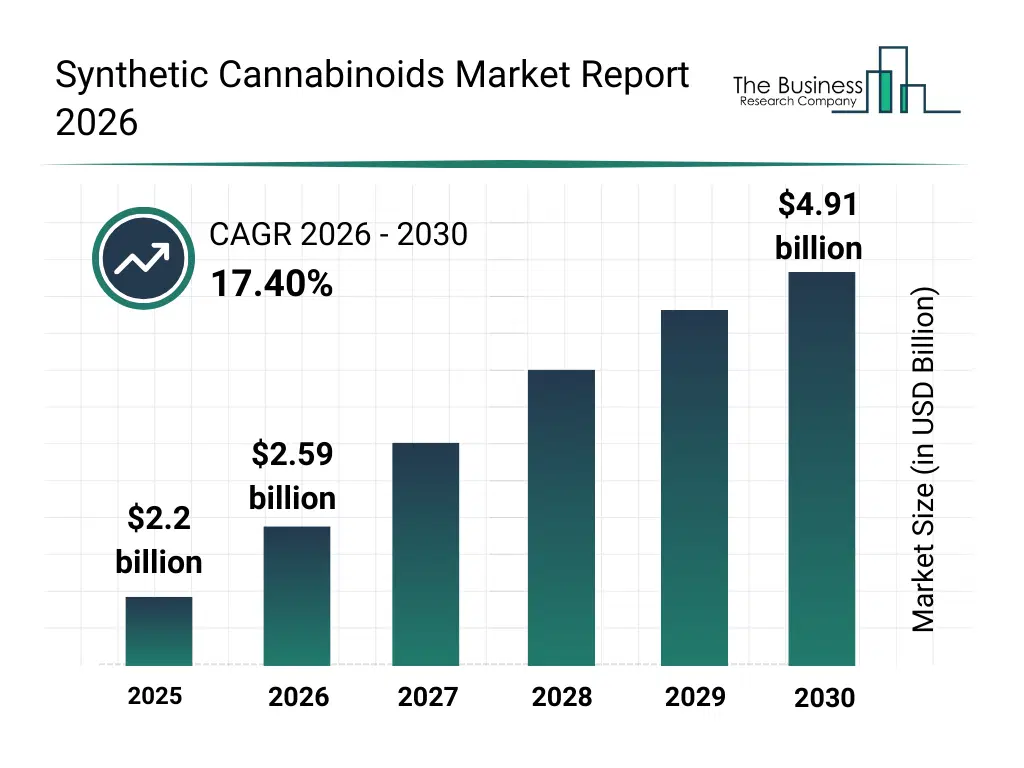
What Is The Synthetic Cannabinoids Market Size and Share 2026?
The synthetic cannabinoids market size has grown rapidly in recent years. It will grow from $2.2 billion in 2025 to $2.59 billion in 2026 at a compound annual growth rate (CAGR) of 17.6%. The growth in the historic period can be attributed to limitations of plant-derived cannabinoids, demand for potency control, pharmaceutical research needs, growth in pain management therapies, regulatory approvals in select regions.What Is The Synthetic Cannabinoids Market Growth Forecast?
The synthetic cannabinoids market size is expected to see rapid growth in the next few years. It will grow to $4.91 billion in 2030 at a compound annual growth rate (CAGR) of 17.4%. The growth in the forecast period can be attributed to medical cannabis expansion, controlled cannabinoid therapeutics growth, precision dosing demand, synthetic API scalability, pharmaceutical R&D investments. Major trends in the forecast period include expansion of pharmaceutical-grade cannabinoids, growing research use of synthetic cannabinoids, increasing demand for high-purity formulations, shift toward regulated medical applications, advancements in controlled synthesis techniques.
Global Synthetic Cannabinoids Market Segmentation
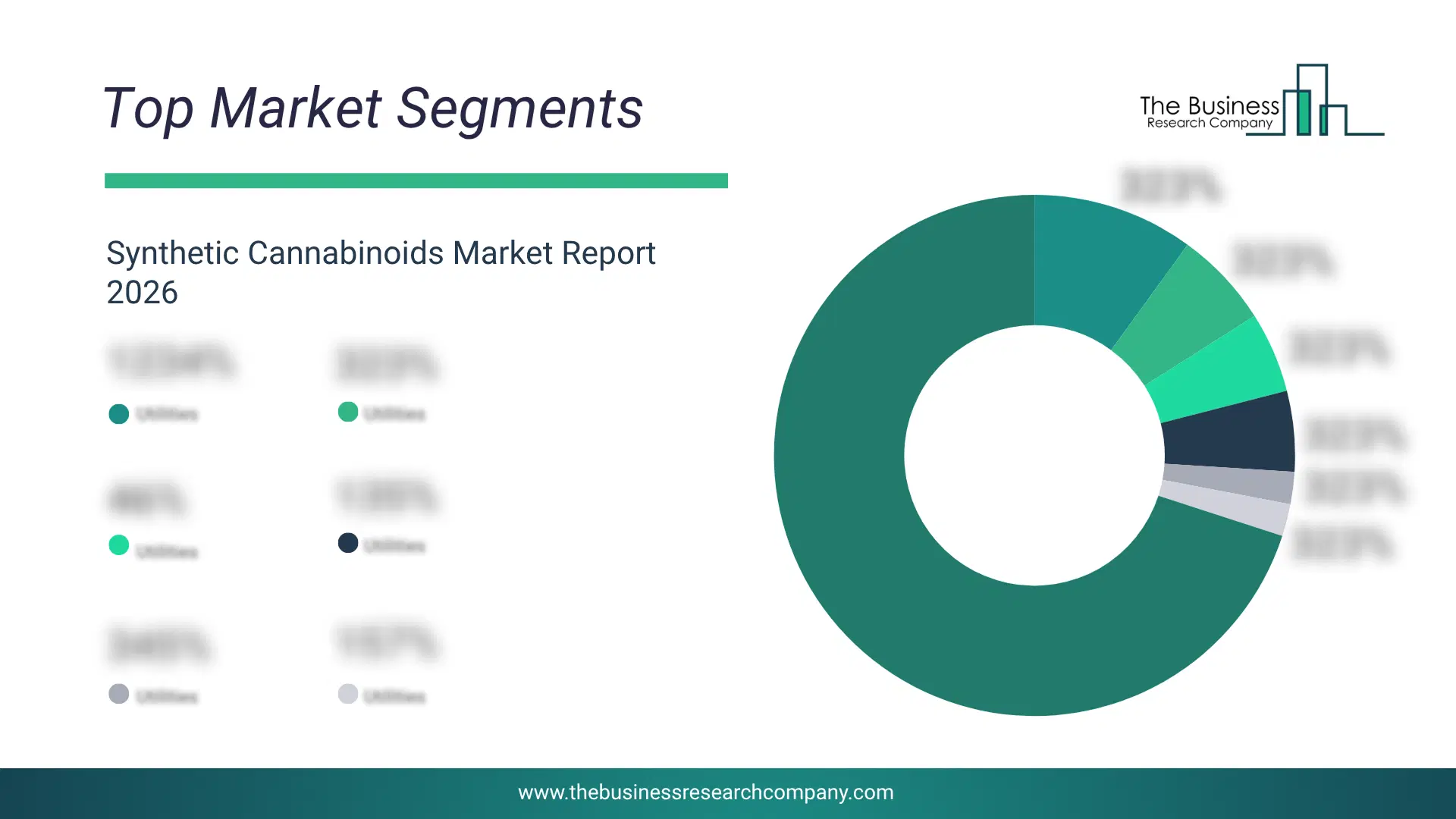
1) By Product Type: High-Pure Synthetic Cannabinoids, Ultra-Pure Synthetic Cannabinoids 2) By Formulation: Oil, Capsules, Edibles, Vapes, Topicals 3) By Indication: Pain Management, Nausea Or Vomiting, Neurological Disorder Management, Other Indications 4) By Application: Pharmaceuticals, Research, Recreational Use, Agriculture, Nutraceuticals 5) By Distribution Channel: Hospital Pharmacies, Retail Pharmacies, Online Pharmacies Subsegments: 1) By High-Pure Synthetic Cannabinoids: Pharmaceutical-Grade Cannabinoids, Research-Grade Cannabinoids, Industrial-Use Cannabinoids 2) By Ultra-Pure Synthetic Cannabinoids: Medical-Grade Cannabinoids, Biotechnology-Grade Cannabinoids, Analytical-Standard CannabinoidsWhat Is The Driver Of The Synthetic Cannabinoids Market?
The rising demand for neurological disorder treatments is expected to propel the growth of the synthetic cannabinoids market going forward. Neurological disorders are diseases of the brain, spinal cord, and nerves that disrupt movement, sensation, cognition, or overall function. The increasing prevalence of neurological disorders is primarily due to the aging global population, as conditions such as Alzheimer's become more common with age due to brain aging and accumulated cellular damage. Synthetic cannabinoids target cannabinoid receptors in the brain, helping to regulate neurotransmitter activity and potentially alleviate symptoms associated with neurological disorders. For instance, in September 2024, according to the European Brain Council, a Belgium-based health organization, 7 million people in Europe currently live with Alzheimer’s disease, a number expected to double to 14 million by 2030 due to an aging population, making it a significant global public health challenge. Therefore, the rising demand for neurological disorder treatments is driving the growth of the synthetic cannabinoids industry.Key Players In The Global Synthetic Cannabinoids Market
Major companies operating in the synthetic cannabinoids market are Cayman Chemical, Cerilliant Corporation, Restek Corporation, Chiron AS, BayMedica, CB Therapeutics Inc., Skye Bioscience, Zynerba Pharmaceuticals Inc., Botanix Pharmaceuticals, Kannalife Sciences Inc., SciSparc Ltd., Tetra Bio-Pharma Inc., Canntab Therapeutics Ltd., BioVectra, Noramco Inc., Purisys LLC, Lygos Inc., Johnson Matthey, Almac Group, Cambrex Corporation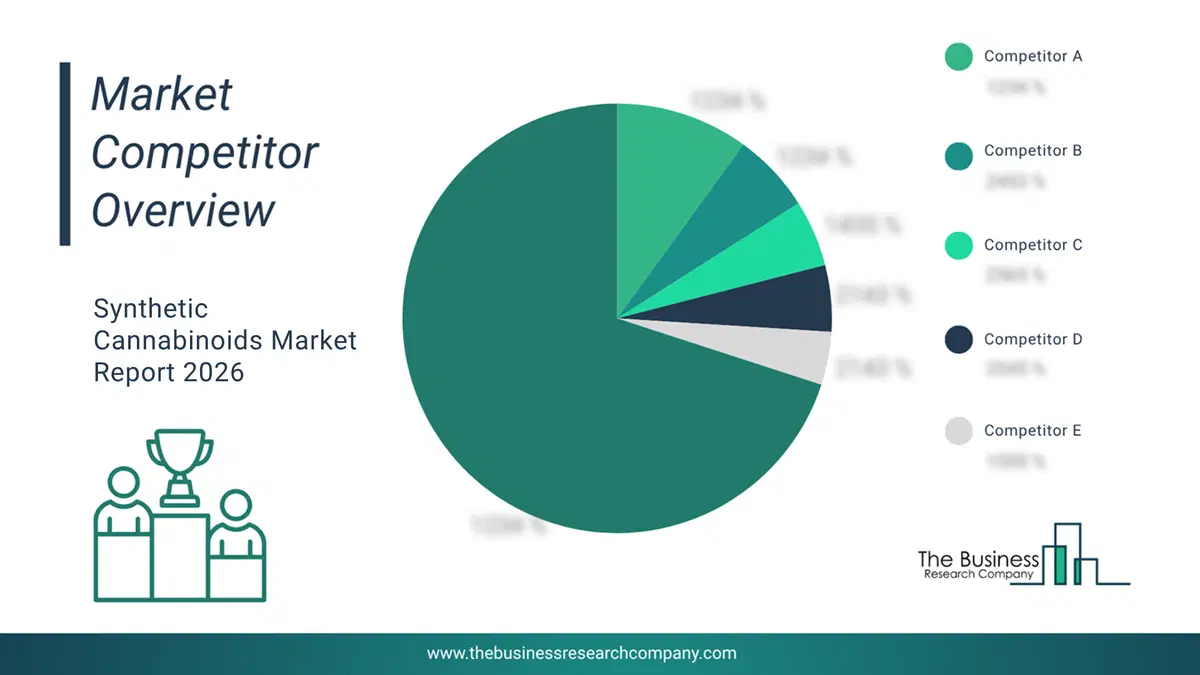
This chart is for illustrative purposes; the full report includes a detailed competitor analysis and comprehensive overview of the top 10 companies in the market.
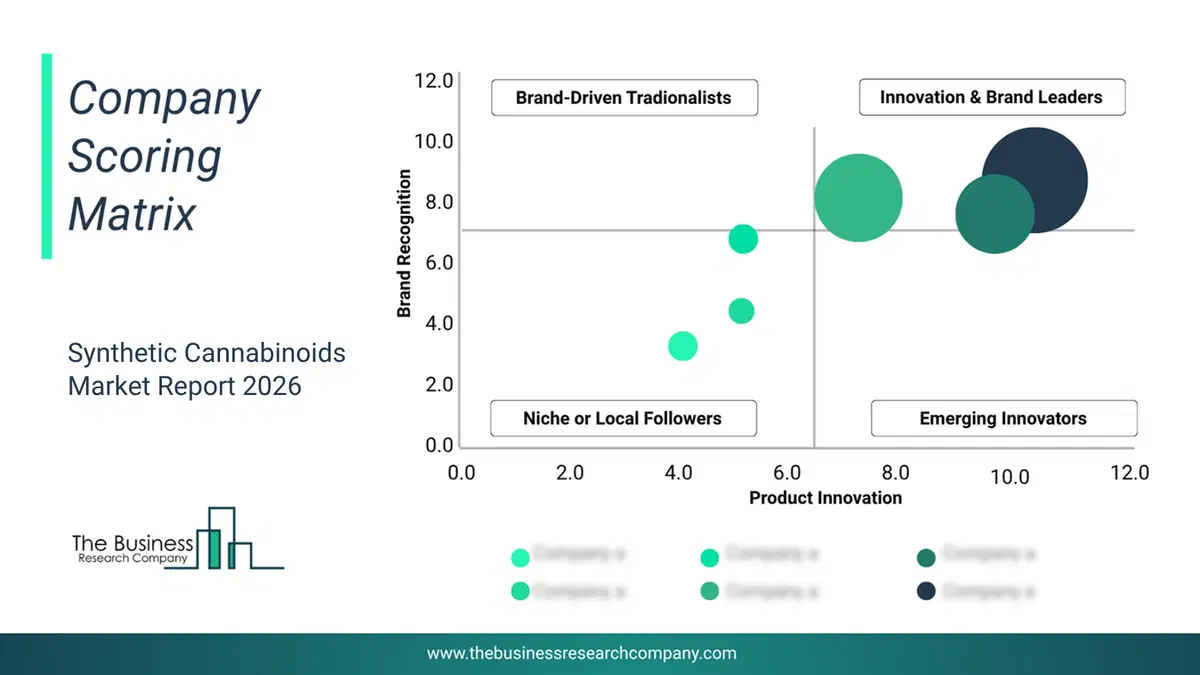
This chart maps companies by product innovation and brand strength, with bubble size indicating relative revenue, helping identify market leaders, challengers, and niche players. This is an illustrative chart; the full report provides a complete and accurate competitive analysis.
Global Synthetic Cannabinoids Market Trends and Insights
Major companies operating in the synthetic cannabinoids market are focusing on developing safer, high-quality products, such as novel psychoactive substances, to reduce health risks and strengthen their competitive position. Novel psychoactive substances refer to laboratory-created designer drugs that mimic the effects of traditional illicit substances but use altered chemical structures to evade detection and regulation. For instance, in December 2023, Quest Diagnostics Inc., a US-based healthcare company, launched a new 88-compound Novel Psychoactive Substance (NPS) Test Panel to help identify a wide range of synthetic cannabinoids and other designer drugs more accurately. This new mass-spectrometry-based test provides clearer detection of emerging synthetic cannabinoids, helping healthcare providers better understand patient exposure and improve treatment decisions. The introduction of such advanced testing solutions highlights the growing need for reliable monitoring tools as synthetic cannabinoids continue to evolve, ensuring improved safety, transparency, and regulatory compliance across the market.What Are Latest Mergers And Acquisitions In The Synthetic Cannabinoids Market?
In October 2023, ResolutionRx Ltd, an Australian-based subsidiary of US-based RespireRx Pharmaceuticals Inc., entered into a Master Services Agreement with Ab Initio Pharma Pty Ltd. With this partnership, ResolutionRx aims to support its lipid nanoparticle-based dronabinol development program for obstructive sleep apnea, enabling production for pharmacokinetic, pharmacodynamic, pivotal clinical trials, and eventual commercialization. Ab Initio Pharma Pty Ltd. is an Australian-based pharmaceutical manufacturing company.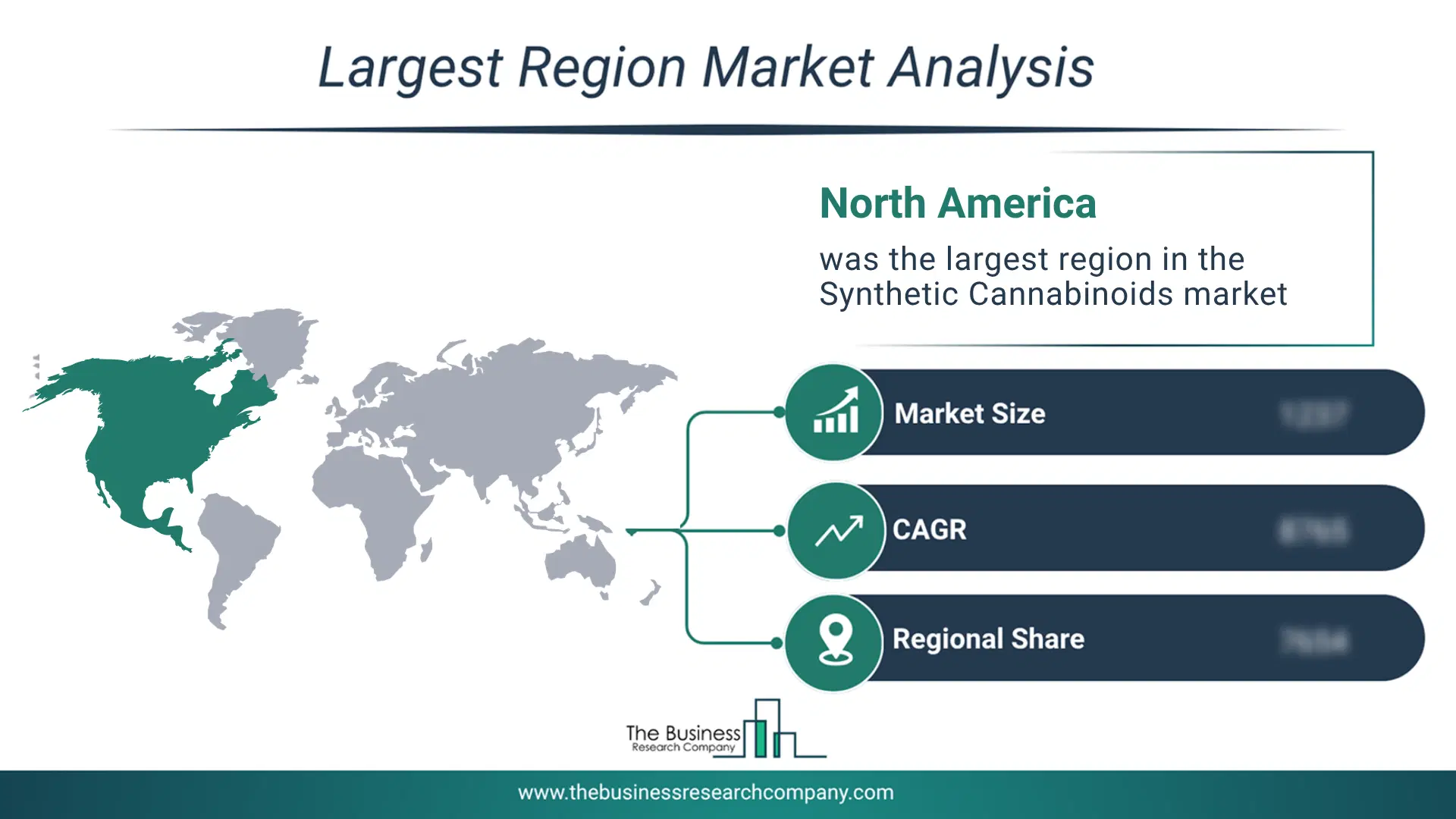
Regional Insights
North America was the largest region in the synthetic cannabinoids market in 2025. Asia-Pacific is expected to be the fastest-growing region in the forecast period. The regions covered in this market report are Asia-Pacific, South East Asia, Western Europe, Eastern Europe, North America, South America, Middle East, Africa. The countries covered in this market report are Australia, Brazil, China, France, Germany, India, Indonesia, Japan, Taiwan, Russia, South Korea, UK, USA, Canada, Italy, Spain.What Defines the Synthetic Cannabinoids Market?
The synthetic cannabinoids market consists of sales of research chemicals, prescription medications, and herbal incense products. Values in this market are ‘factory gate’ values, that is, the value of goods sold by the manufacturers or creators of the goods, whether to other entities (including downstream manufacturers, wholesalers, distributors, and retailers) or directly to end customers. The value of goods in this market includes related services sold by the creators of the goods.How is Market Value Defined and Measured?
The market value is defined as the revenues that enterprises gain from the sale of goods and/or services within the specified market and geography through sales, grants, or donations in terms of the currency (in USD unless otherwise specified). The revenues for a specified geography are consumption values that are revenues generated by organizations in the specified geography within the market, irrespective of where they are produced. It does not include revenues from resales along the supply chain, either further along the supply chain or as part of other products.
This chart presents market attractiveness based on a quantitative evaluation of growth, competition, strategic alignment, and risk, offering a clear view of opportunity areas for decision-making. This chart is for illustrative purposes; the full report contains the complete analysis.

This chart highlights the Total Addressable Market (TAM) by estimating the maximum revenue opportunity using an assumption-driven approach, supporting strategic planning and opportunity sizing across markets. The chart is illustrative; the full report provides a more comprehensive analysis.
What Key Data and Analysis Are Included in the Synthetic Cannabinoids Market Report 2026?
The synthetic cannabinoids market research report is one of a series of new reports from The Business Research Company that provides market statistics, including industry global market size, regional shares, competitors with the market share, detailed market segments, market trends and opportunities, and any further data you may need to thrive in the synthetic cannabinoids industry. The market research report delivers a complete perspective of everything you need, with an in-depth analysis of the current and future state of the industry.Synthetic Cannabinoids Market Report Forecast Analysis
| Report Attribute | Details |
|---|---|
| Market Size Value In 2026 | $2.59 billion |
| Revenue Forecast In 2030 | $4.91 billion |
| Growth Rate | CAGR of 17.6% from 2026 to 2030 |
| Base Year For Estimation | 2025 |
| Actual Estimates/Historical Data | 2020-2025 |
| Forecast Period | 2026 - 2030 |
| Market Representation | Revenue in USD Billion and CAGR from 2026 to 2030 |
| Segments Covered | Product Type, Formulation, Indication, Application, Distribution Channel |
| Regional Scope | Asia-Pacific, Western Europe, Eastern Europe, North America, South America, Middle East, Africa |
| Country Scope | The countries covered in the report are Australia, Brazil, China, France, Germany, India, Indonesia, Japan, Taiwan, Russia, South Korea, UK, USA, Canada, Italy, Spain. |
| Key Companies Profiled | Cayman Chemical, Cerilliant Corporation, Restek Corporation, Chiron AS, BayMedica, CB Therapeutics Inc., Skye Bioscience, Zynerba Pharmaceuticals Inc., Botanix Pharmaceuticals, Kannalife Sciences Inc., SciSparc Ltd., Tetra Bio-Pharma Inc., Canntab Therapeutics Ltd., BioVectra, Noramco Inc., Purisys LLC, Lygos Inc., Johnson Matthey, Almac Group, Cambrex Corporation |
| Customization Scope | Request for Customization |
| Pricing And Purchase Options | Explore Purchase Options |