
Synthetic Food Market Report 2026
Global Outlook – By Product Type (Cultivated Meat and Poultry, Cultivated Seafood, Synthetic Dairy Products, Microbial or Fermentation-Derived Proteins, Synthetic Fats and Oils), By Production Technology (Cellular Agriculture, Precision Fermentation, Microbial Fermentation, Biomass Fermentation), By Source Material (Animal Cell-Based, Microbial-Based, Yeast-Based, Fungal-Based), By Distribution Channel (Supermarkets and Hypermarkets, Specialty and Alternative Protein Stores, Online Retail, Foodservice Channels), By Application (Meat and Poultry Alternatives, Seafood Alternatives, Dairy Alternatives, Processed and Ready-to-Eat Foods, Functional and Nutritional Foods6) By End User (Food Manufacturers, Foodservice) – Market Size, Trends, Strategies, and Forecast to 2030
Synthetic Food Market Overview
• Synthetic Food market size has reached to $18.56 billion in 2025 • Expected to grow to $25.12 billion in 2030 at a compound annual growth rate (CAGR) of 6.4% • Growth Driver: Rising Demand For Alternative Protein Sources Fuels Growth In The Synthetic Food Market • Market Trend: Growing Emphasis On Investments In Synthetic Food • North America was the largest region in 2025.What Is Covered Under Synthetic Food Market?
Synthetic food refers to food items or products artificially generated in controlled laboratory settings. They are used instead of naturally farmed foods to lessen their environmental impact. The main products of synthetic food are synthetic color, enzymes, hydrocolloids, antioxidants, flavor and fragrances, fats, and oils. Synthetic color refers to any organic color manufactured through chemical synthesis that is not found in nature. Synthetic colors give food and drink enticing hues that make them appear delicious. It is distributed by supermarkets, conventional stores, and online for various applications including beverages, dairy and frozen products, bakery and confectionery, meat, poultry and seafood, processed food, convenience food and beverages, sauces, and dressings.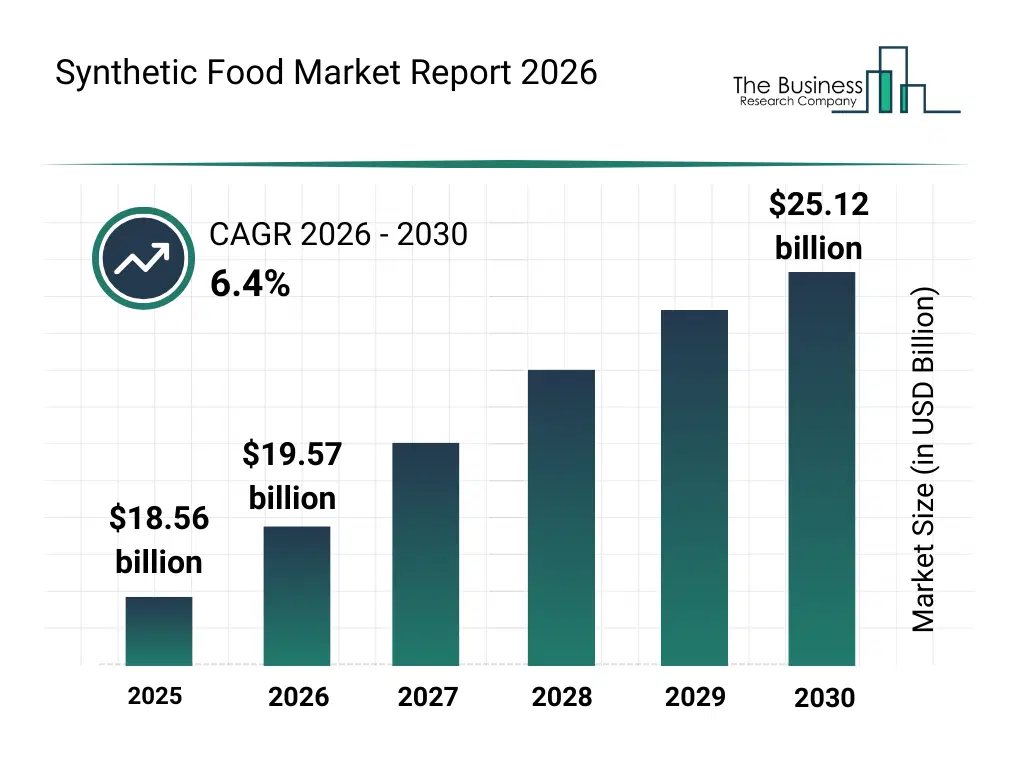
What Is The Synthetic Food Market Size and Share 2026?
The synthetic food market size has grown strongly in recent years. It will grow from $18.56 billion in 2025 to $19.57 billion in 2026 at a compound annual growth rate (CAGR) of 5.5%. The growth in the historic period can be attributed to demand for food preservation solutions, expansion of processed food consumption, advancements in food chemistry, availability of synthetic additives, growth of industrial food manufacturing.What Is The Synthetic Food Market Growth Forecast?
The synthetic food market size is expected to see strong growth in the next few years. It will grow to $25.12 billion in 2030 at a compound annual growth rate (CAGR) of 6.4%. The growth in the forecast period can be attributed to increasing investment in sustainable food technologies, rising adoption of alternative proteins, expansion of precision fermentation, growing regulatory approvals, increasing demand for climate-resilient food systems. Major trends in the forecast period include increasing development of lab-grown food ingredients, rising adoption of synthetic additives in food processing, expansion of alternative protein applications, growing focus on environmental impact reduction, enhanced precision in food formulation.
Global Synthetic Food Market Segmentation
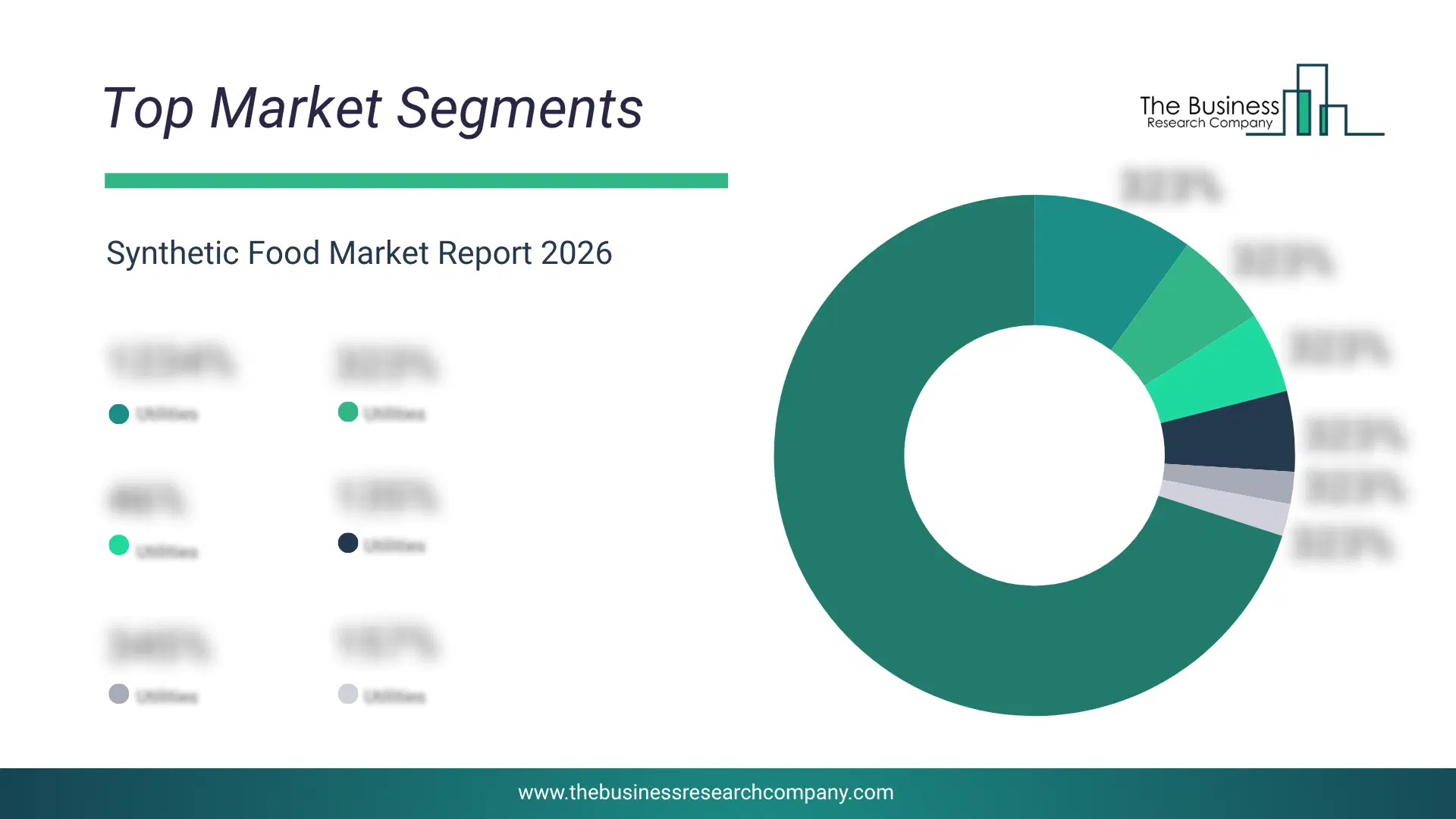
1) By Product Type: Cultivated Meat and Poultry, Cultivated Seafood, Synthetic Dairy Products, Microbial or Fermentation-Derived Proteins, Synthetic Fats and Oils 2) By Production Technology: Cellular Agriculture, Precision Fermentation, Microbial Fermentation, Biomass Fermentation 3) By Source Material: Animal Cell-Based, Microbial-Based, Yeast-Based, Fungal-Based 4) By Distribution Channel: Supermarkets and Hypermarkets, Specialty and Alternative Protein Stores, Online Retail, Foodservice Channels 5) By Application: Meat and Poultry Alternatives, Seafood Alternatives, Dairy Alternatives, Processed and Ready-to-Eat Foods, Functional and Nutritional Foods 6) By End User: Food Manufacturers, Foodservice and HoReCa, Retail and Direct-to-Consumer Subsegments: 1) By Cultivated Meat and Poultry: Cultivated Beef, Cultivated Chicken, Cultivated Pork, Cultivated Lamb 2) By Cultivated Seafood: Cultivated Fish, Cultivated Shrimp, Cultivated Crustaceans and Mollusks 3) By Synthetic Dairy Products: Cultured Milk Proteins, Synthetic Butter and Cream, Synthetic Cheese and Yogurt Bases 4) By Microbial or Fermentation-Derived Proteins: Mycoprotein, Yeast-Derived Proteins, Bacterial-Derived Proteins 5) By Synthetic Fats and Oils: Microbial Fats and Oils, Precision-Fermented Lipids, Cell-Cultured FatsWhat Is The Driver Of The Synthetic Food Market?
The growing demand for alternative protein sources is expected to propel the growth of the synthetic food market going forward. Alternative protein sources are made from plants, animals, or fermentation-produced cells. The increasing demand for protein has resulted in rapid innovations devised by the food industry in categories such as alternative proteins such as lab-grown meat, plant-based meat, single-cell proteins from yeast or algae, and edible insects. Therefore, alternative protein sources and synthetic food are part of the more significant trend toward developing sustainable and healthy diets. For instance, in 2024, according to the International Food Information Council, a US-based nonprofit organization, the share of consumers seeking to increase their protein intake has steadily grown, from 59% in 2022 to 67% in 2023 and 71% in 2024. Therefore, the growing demand for alternative protein sources is driving the growth of the synthetic food industry.Key Players In The Global Synthetic Food Market
Major companies operating in the synthetic food market are UPSIDE Foods Inc., Mosa Meat, Aleph Farms Ltd., Believer Meats, GOOD Meat, SuperMeat, Meatable, IntegriCulture Inc., Finless Foods, BlueNalu, Wildtype Foods, Shiok Meats, Orbillion Bio, Future Meat Technologies, New Age Meats, Perfect Day, Remilk, Formo, Change Foods, The EVERY Company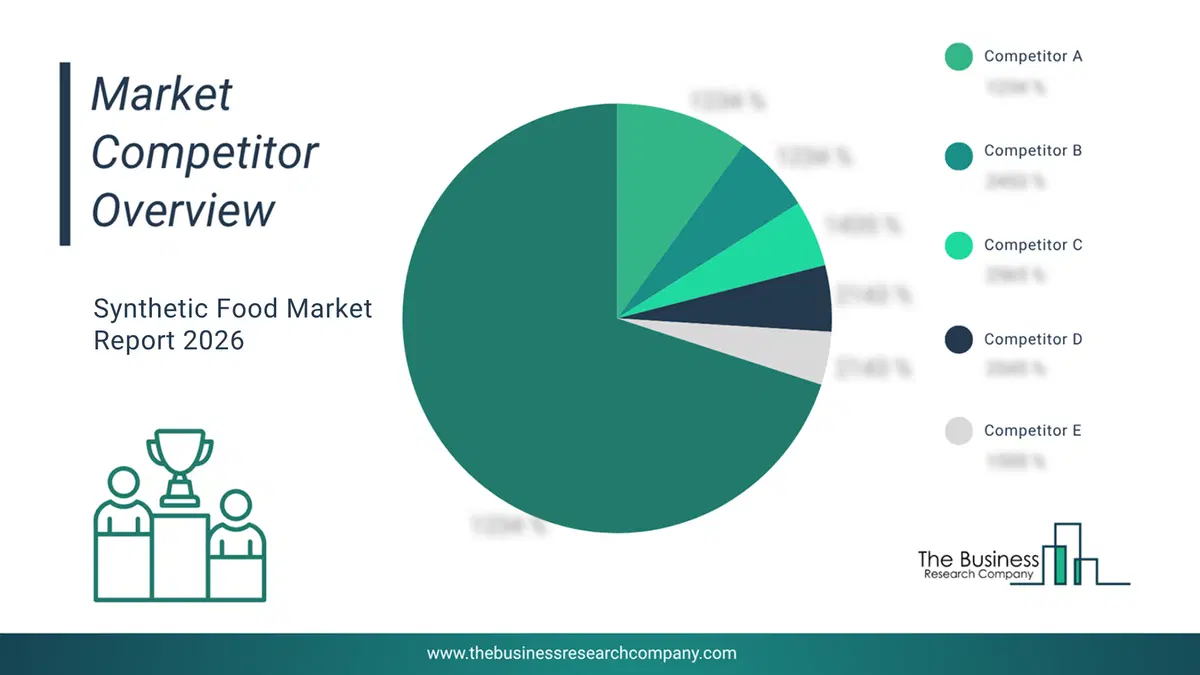
This chart is for illustrative purposes; the full report includes a detailed competitor analysis and comprehensive overview of the top 10 companies in the market.
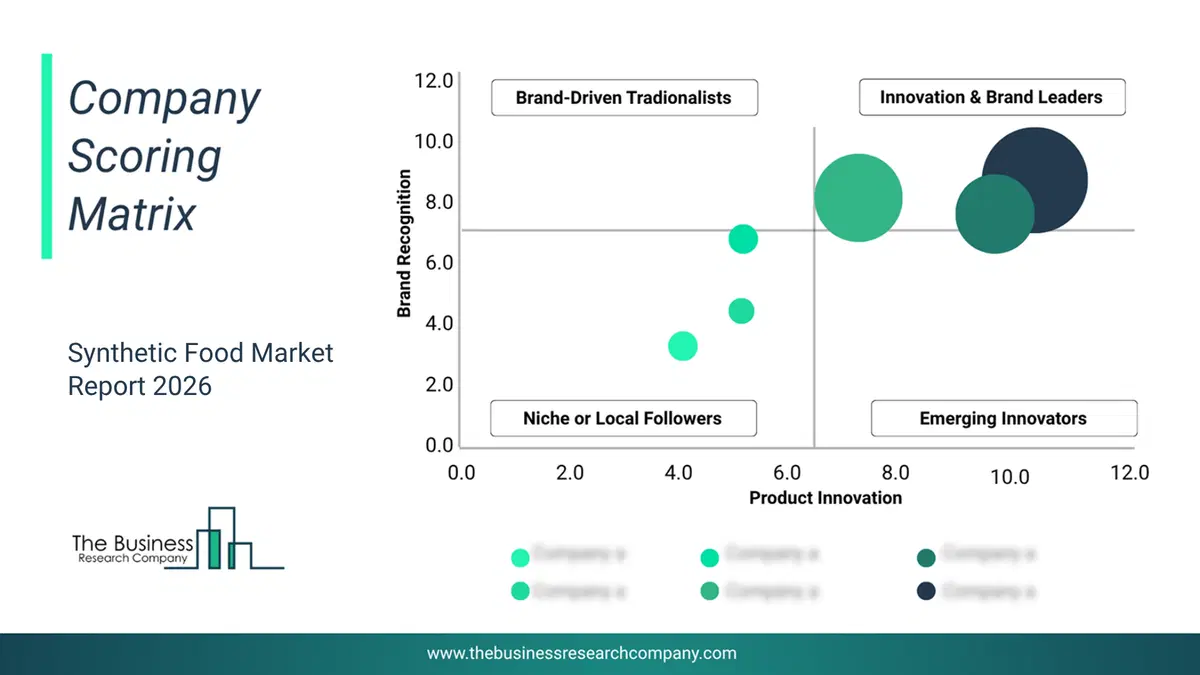
This chart maps companies by product innovation and brand strength, with bubble size indicating relative revenue, helping identify market leaders, challengers, and niche players. This is an illustrative chart; the full report provides a complete and accurate competitive analysis.
Global Synthetic Food Market Trends and Insights
Major companies operating in the synthetic food market are focused on investing in synthetic food to innovate and scale production methods, enhance the nutritional profile of food products, meet the growing demand for sustainable and alternative protein sources, reduce environmental impact, and address food security challenges. Investments in seed funding from prominent investors in the biotech and foodtech sectors, aiming to revolutionize the alternative meat industry with innovative solutions. For instance, in April 2024, Cultimate Foods, a Berlin-based company that manufactures food products raised USD 2.48 million (€2.3 million) in seed funding to enhance its production capabilities and expand its operations within the alternative meat industry. The startup emphasizes that its technology not only enhances flavor but also contributes to reducing reliance on intensive animal farming and mitigating climate change by lowering CO2 emissions.What Are Latest Mergers And Acquisitions In The Synthetic Food Market?
In March 2025, New Wave Biotech Ltd., a UK-based biotechnology company, formed a partnership with Multus to optimize biomanufacturing processes. The collaboration aims to enhance the efficiency, scalability, and quality of biomanufacturing operations, supporting the development of advanced biologic products while fostering innovation and growth in the biotechnology sector. Multus is a UK-based company specializing in bioprocess optimization and manufacturing solutions for the life sciences industry.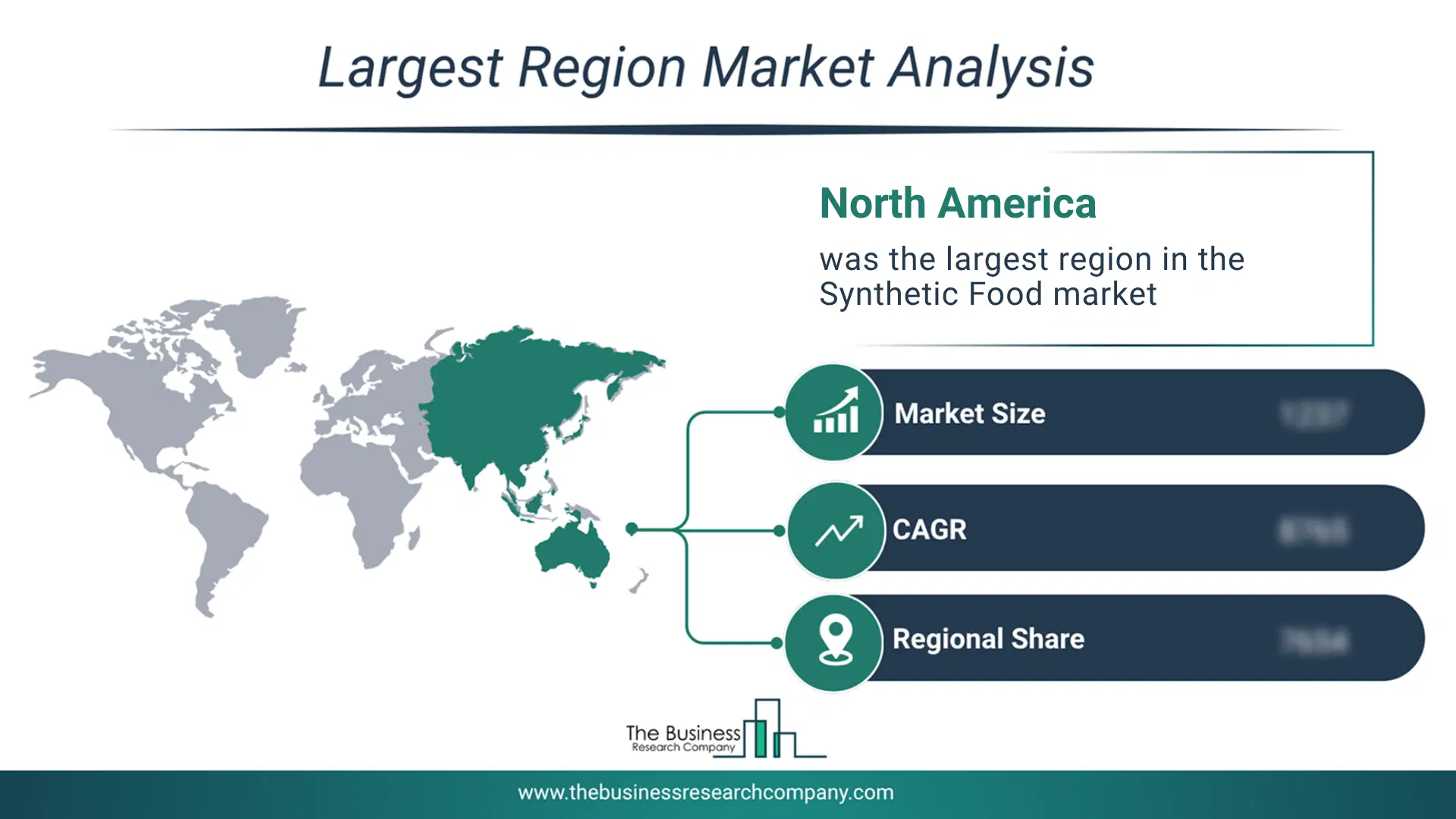
Regional Outlook
North America was the largest region in the synthetic food market in 2025. The regions covered in this market report are Asia-Pacific, South East Asia, Western Europe, Eastern Europe, North America, South America, Middle East and Africa. The countries covered in this market report are Australia, Brazil, China, France, Germany, India, Indonesia, Japan, Taiwan, Russia, South Korea, UK, USA, Italy, Spain, CanadaWhat Defines the Synthetic Food Market?
The synthetic food market consists of sales of vegan cheese, lab-grown ricotta, and mozzarella. Values in this market are ‘factory gate’ values, that is, the value of goods sold by the manufacturers or creators of the goods, whether to other entities (including downstream manufacturers, wholesalers, distributors, and retailers) or directly to end customers. The value of goods in this market includes related services sold by the creators of the goods.How is Market Value Defined and Measured?
The market value is defined as the revenues that enterprises gain from the sale of goods and/or services within the specified market and geography through sales, grants, or donations in terms of the currency (in USD unless otherwise specified). The revenues for a specified geography are consumption values that are revenues generated by organizations in the specified geography within the market, irrespective of where they are produced. It does not include revenues from resales along the supply chain, either further along the supply chain or as part of other products.
This chart presents market attractiveness based on a quantitative evaluation of growth, competition, strategic alignment, and risk, offering a clear view of opportunity areas for decision-making. This chart is for illustrative purposes; the full report contains the complete analysis.

This chart highlights the Total Addressable Market (TAM) by estimating the maximum revenue opportunity using an assumption-driven approach, supporting strategic planning and opportunity sizing across markets. The chart is illustrative; the full report provides a more comprehensive analysis.
What Key Data and Analysis Are Included in the Synthetic Food Market Report 2026?
The synthetic food market research report is one of a series of new reports from The Business Research Company that provides market statistics, including industry global market size, regional shares, competitors with the market share, detailed market segments, market trends and opportunities, and any further data you may need to thrive in the synthetic food industry. The market research report delivers a complete perspective of everything you need, with an in-depth analysis of the current and future state of the industry.Synthetic Food Market Report Forecast Analysis
| Report Attribute | Details |
|---|---|
| Market Size Value In 2026 | $19.57 billion |
| Revenue Forecast In 2030 | $25.12 billion |
| Growth Rate | CAGR of 5.5% from 2026 to 2030 |
| Base Year For Estimation | 2025 |
| Actual Estimates/Historical Data | 2020-2025 |
| Forecast Period | 2026 - 2030 |
| Market Representation | Revenue in USD Billion and CAGR from 2026 to 2030 |
| Segments Covered | Product Type, Production Technology, Source Material, Distribution Channel, Application, End User |
| Regional Scope | Asia-Pacific, Western Europe, Eastern Europe, North America, South America, Middle East, Africa |
| Country Scope | The countries covered in the report are Australia, Brazil, China, France, Germany, India, Indonesia, Japan, Taiwan, Russia, South Korea, UK, USA, Canada, Italy, Spain. |
| Key Companies Profiled | UPSIDE Foods Inc., Mosa Meat, Aleph Farms Ltd., Believer Meats, GOOD Meat, SuperMeat, Meatable, IntegriCulture Inc., Finless Foods, BlueNalu, Wildtype Foods, Shiok Meats, Orbillion Bio, Future Meat Technologies, New Age Meats, Perfect Day, Remilk, Formo, Change Foods, The EVERY Company |
| Customization Scope | Request for Customization |
| Pricing And Purchase Options | Explore Purchase Options |