

Synthetic Hormones Market Report 2026
Global Outlook – By Product Type (Steroid Hormones, Peptide Hormone, Amino Acid Derivatives, Other Product Types), By Route of Administration (Oral, Nasal, Topical, Intravenous), By Application (Growth Hormone Deficiency, Thyroid Hormone Deficiency, Menopause, Male Hypogonadism, Other Applications), By End User (Hospital Pharmacies, Retail Pharmacies, Online Pharmacies) – Market Size, Trends, Strategies, and Forecast to 2030
Synthetic Hormones Market Overview
• Synthetic Hormones market size has reached to $6.71 billion in 2025 • Expected to grow to $8.34 billion in 2030 at a compound annual growth rate (CAGR) of 4.5% • Growth Driver: The Rise In Hormonal Imbalances Fueling The Growth Of The Market Due To Increasing Demand For Hormone Replacement Therapies • Market Trend: High‑Concentration Growth Hormone Formulation Aims To Improve Access And Treatment Convenience • North America was the largest region in 2025 and Asia-Pacific is the fastest growing region.What Is Covered Under Synthetic Hormones Market?
Synthetic hormones are artificially produced substances that mimic the function of natural hormones in the body. These hormones are typically created through chemical synthesis rather than being derived from natural sources and are used in medical treatments to regulate various physiological processes or to replace hormones that the body may not produce in sufficient quantities. The main types of synthetic hormones are steroid hormones, peptide hormone, amino acid derivatives, and others. Steroid hormones are a class of hormones derived from cholesterol and characterized by their structure, which includes four interconnected carbon rings. Various routes of administration involve oral, nasal, topical, and intravenous administration. Various applications include growth hormone deficiency, thyroid hormone deficiency, menopause, male hypogonadism, and others, and are used by various end users such as hospital pharmacies, retail pharmacies, and online pharmacies.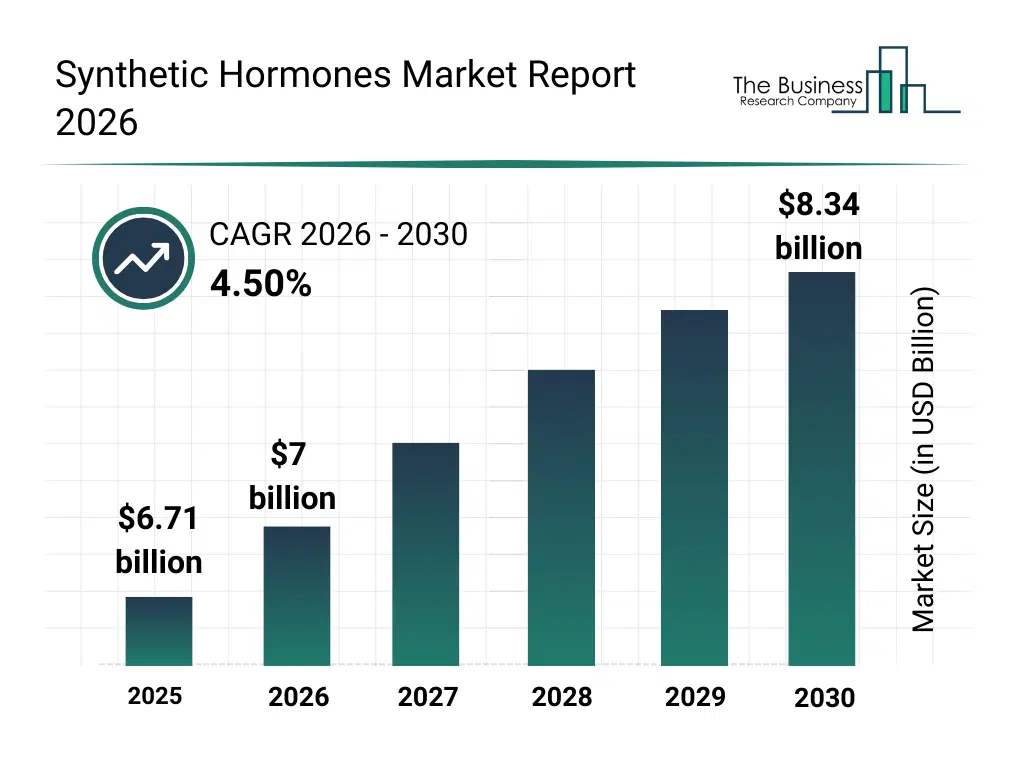
What Is The Synthetic Hormones Market Size and Share 2026?
The synthetic hormones market size has grown steadily in recent years. It will grow from $6.71 billion in 2025 to $7 billion in 2026 at a compound annual growth rate (CAGR) of 4.4%. The growth in the historic period can be attributed to advancements in chemical synthesis, increasing prevalence of hormonal disorders, rising awareness of hormone replacement therapy, expansion of hospital and retail pharmacy networks, early adoption of insulin and growth hormones.What Is The Synthetic Hormones Market Growth Forecast?
The synthetic hormones market size is expected to see steady growth in the next few years. It will grow to $8.34 billion in 2030 at a compound annual growth rate (CAGR) of 4.5%. The growth in the forecast period can be attributed to integration of ai in hormone therapy, development of oral and non-invasive hormone delivery, growth in personalized medicine, expansion of online pharmacy platforms, innovation in peptide and amino acid derivative hormones. Major trends in the forecast period include personalized hormone therapy development, advanced drug delivery systems, synthetic hormone formulation innovation, growth in hormone replacement therapy adoption, regulatory compliance and quality standards.
Global Synthetic Hormones Market Segmentation
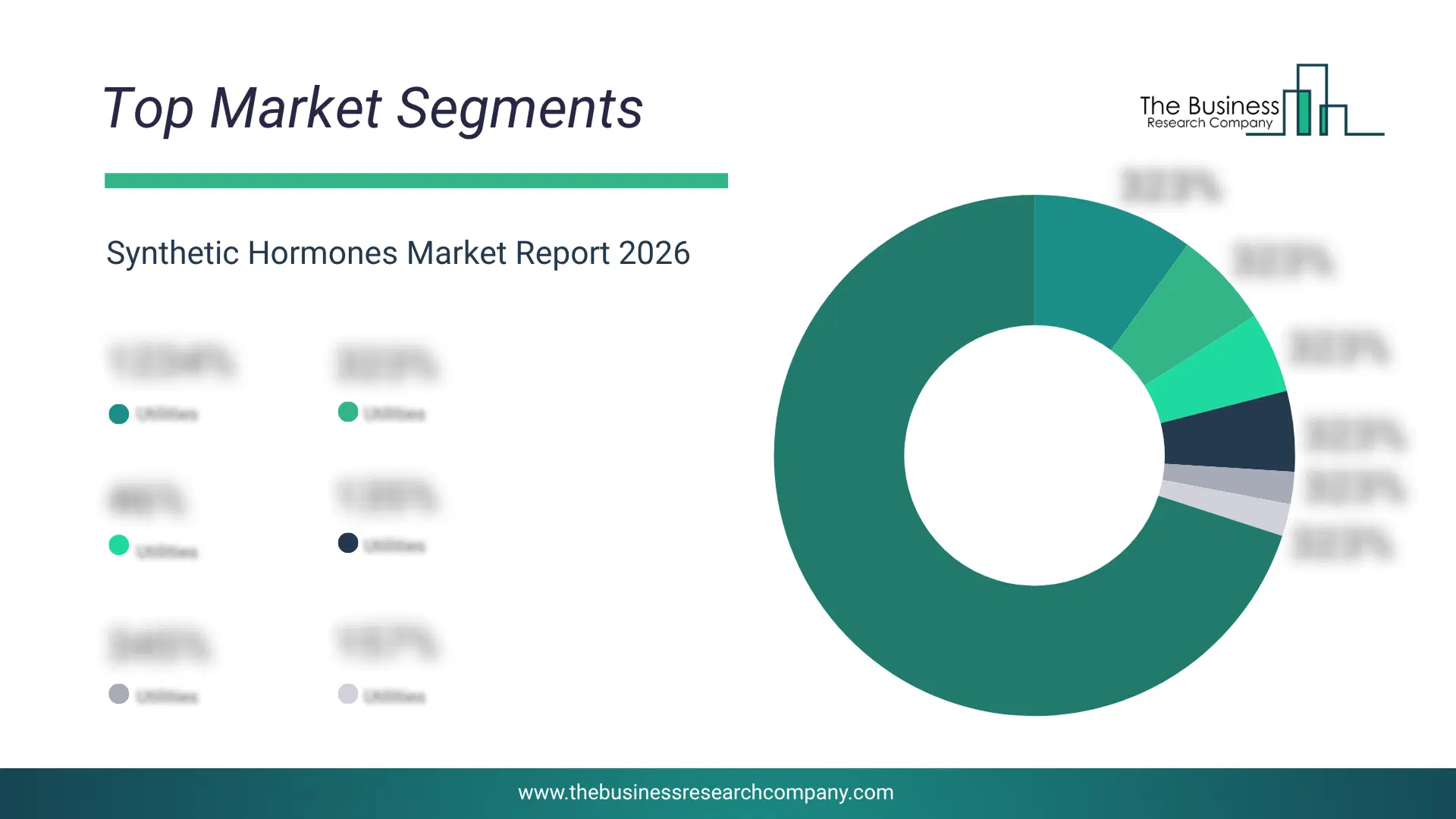
1) By Product Type: Steroid Hormones, Peptide Hormone, Amino Acid Derivatives, Other Product Types 2) By Route of Administration: Oral, Nasal, Topical, Intravenous 3) By Application: Growth Hormone Deficiency, Thyroid Hormone Deficiency, Menopause, Male Hypogonadism, Other Applications 4) By End User: Hospital Pharmacies, Retail Pharmacies, Online Pharmacies Subsegments: 1) By Steroid Hormones: Corticosteroids, Estrogens and Progesterone, Androgens, Progestins 2) By Peptide Hormones: Insulin, Growth Hormones, Thyroid Stimulating Hormones, Leptin 3) By Amino Acid Derivatives: Thyroxine (T4), Epinephrine (Adrenaline), Melatonin 4) By Other Product Types: Vitamin D Derivatives, Prostaglandins, GonadotropinsWhat Is The Driver Of The Synthetic Hormones Market?
The rising incidence of hormonal imbalances is expected to propel the growth of the synthetic hormones market going forward. Hormonal imbalances occur when the body produces too much or too little of certain hormones, leading to disruptions caused by aging, stress, lifestyle factors, or underlying medical conditions. These imbalances often require therapeutic intervention, and synthetic hormones play a vital role by supplementing or replacing deficient hormones to restore normal physiological function and alleviate associated symptoms. The growing demand for hormone replacement therapy (HRT) reflects the increasing prevalence of these conditions. For instance, in January 2025, according to the World Health Organization, a Switzerland-based intergovernmental organization,polycystic ovary syndrome is a significant public health concern and one of the most common hormonal disorders among women of reproductive age, affecting an estimated 6–13%, with up to 70% of cases remain undiagnosed. Therefore, the rising incidence of hormonal imbalances is driving the growth of the synthetic hormones industry.Key Players In The Global Synthetic Hormones Market
Major companies operating in the synthetic hormones market are Pfizer Inc., Johnson & Johnson, AbbVie Inc., Bristol Myers Squibb Company, Sanofi SA, AstraZeneca PLC, Novartis AG, GlaxoSmithKline PLC, Boehringer Ingelheim International GmbH, Novo Nordisk A/S, Merck & Co. Inc, Teva Pharmaceutical Industries Ltd., Ferring B.V., Endo Pharmaceuticals Inc., Lupin Pharmaceuticals Inc., IBSA Institute Biochimique SA, American Regent Inc., McGuff Pharmaceuticals Inc., Anhui Anke Biotechnology Co.Ltd, Acerus Pharmaceuticals Corporation, Slayback Pharma LLC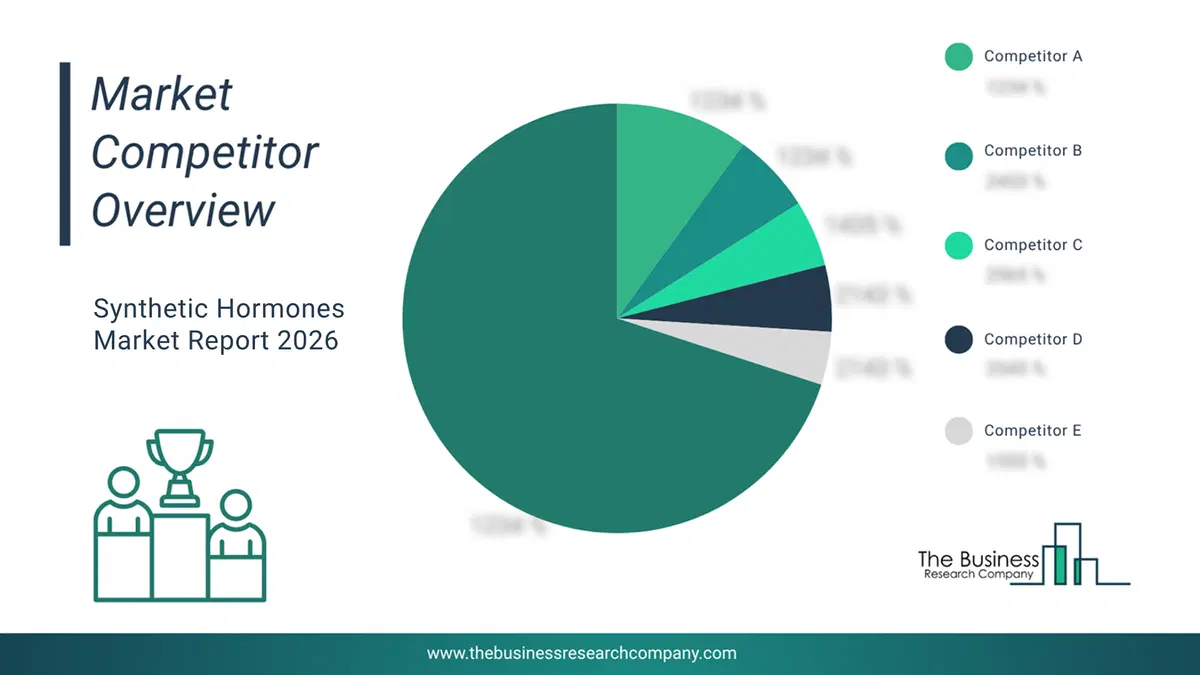
This chart is for illustrative purposes; the full report includes a detailed competitor analysis and comprehensive overview of the top 10 companies in the market.
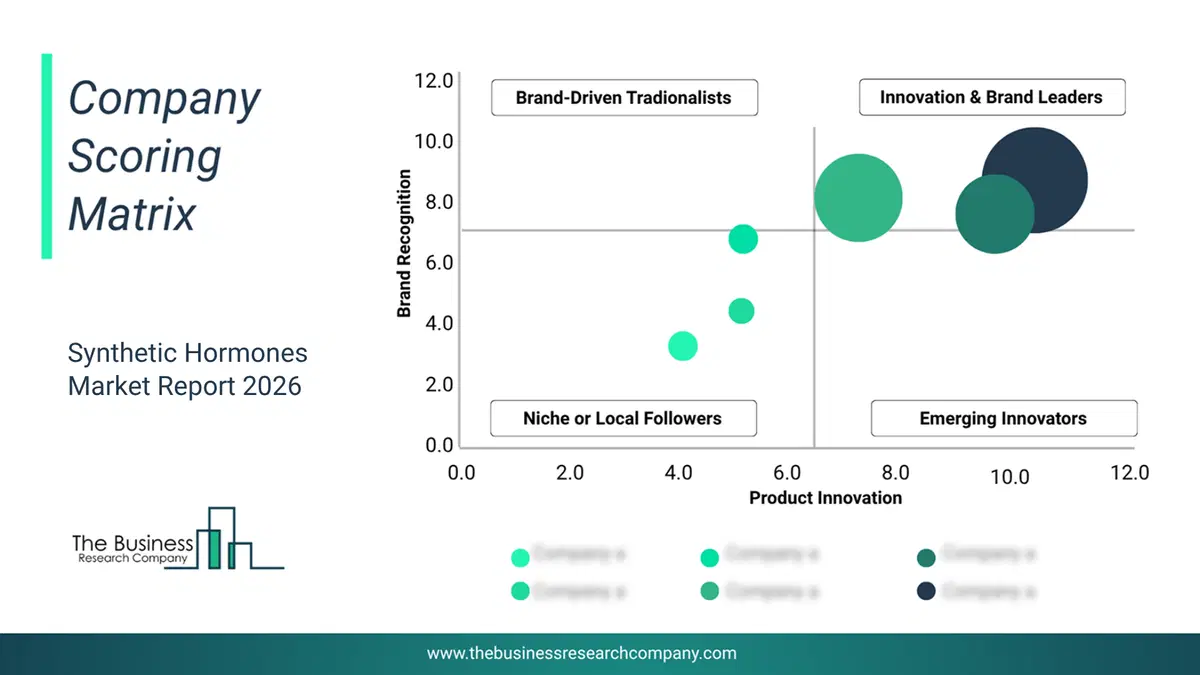
This chart maps companies by product innovation and brand strength, with bubble size indicating relative revenue, helping identify market leaders, challengers, and niche players. This is an illustrative chart; the full report provides a complete and accurate competitive analysis.
Global Synthetic Hormones Market Trends and Insights
Major companies operating in the synthetic hormone market are focusing on developing innovative biosimilar formulations, such as high‑concentration recombinant human growth hormone (rhGH), to meet the rising demand for more accessible and affordable therapies for growth‑hormone deficiency and short stature. High‑concentration rhGH refers to a form of synthetic growth hormone (typically somatropin) produced via recombinant DNA technology, with an increased drug load per volume, which allows for smaller injection volumes, greater convenience, and potentially better treatment adherence compared to traditional lower‑concentration formulations. For instance, in May 2025, Sandoz AG a Switzerland‑based leader in generics and biosimilars, launched OMNITROPE in a new 15 mg / 1.5 mL concentration for the Egyptian market. This formulation contains somatropin produced by recombinant DNA technology in bacteria, is functionally identical to human endogenous growth hormone, and is offered in a more concentrated form to reduce injection burden and minimize treatment interruptions; it is indicated for pediatric short stature (e.g., in Turner syndrome, small-for-gestational-age children, Prader–Willi syndrome) and adult GH deficiency, and is priced to broaden access under Egypt’s Vision 2030 public‑health initiative.What Are Latest Mergers And Acquisitions In The Synthetic Hormones Market?
In November 2023, Aspen Pharmacare Holdings Limited, a South Africa-based pharmaceutical company, acquired Sandoz's Chinese business for $100 million. This acquisition includes Sandoz's China business, which includes products such as the synthetic hormone injectable Sandostatin. This strategic move allows Aspen to expand its footprint and capabilities in China's pharmaceutical market. Sandoz (China) Pharmaceutical Co., Ltd. is a China-based pharmaceutical company that provides a range of pharmaceutical products, including synthetic hormones.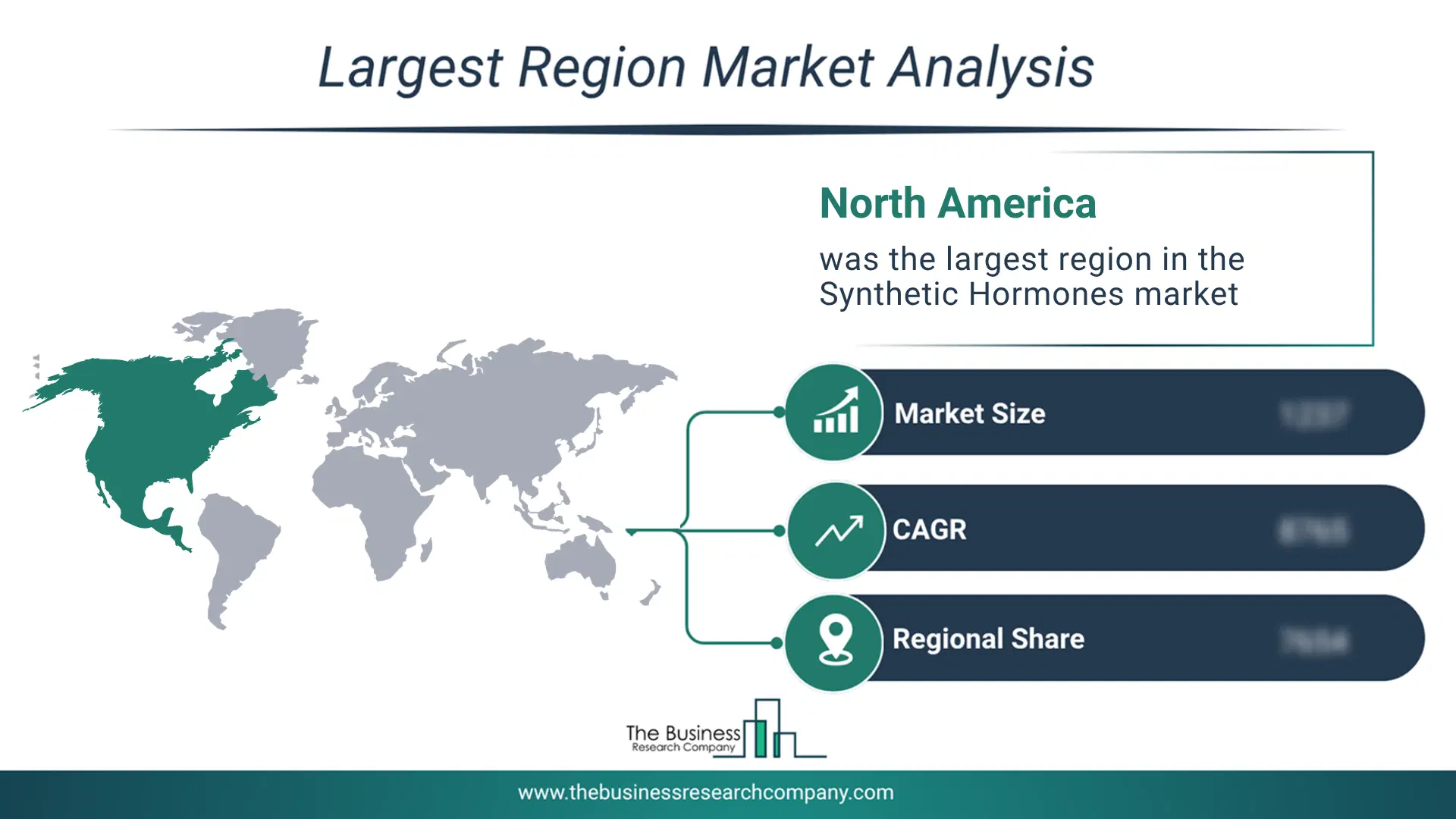
Regional Insights
North America was the largest region in the synthetic hormones market in 2025. Asia-Pacific is expected to be the fastest-growing region in the forecast period. The regions covered in this market report are Asia-Pacific, South East Asia, Western Europe, Eastern Europe, North America, South America, Middle East, Africa. The countries covered in this market report are Australia, Brazil, China, France, Germany, India, Indonesia, Japan, Taiwan, Russia, South Korea, UK, USA, Canada, Italy, Spain.What Defines the Synthetic Hormones Market?
The synthetic hormones market consists of sales of anabolic steroids, insulin, oral contraceptives, and corticosteroids. Values in this market are ‘factory gate’ values, that is the value of goods sold by the manufacturers or creators of the goods, whether to other entities (including downstream manufacturers, wholesalers, distributors and retailers) or directly to end customers. The value of goods in this market includes related services sold by the creators of the goods.How is Market Value Defined and Measured?
The market value is defined as the revenues that enterprises gain from the sale of goods and/or services within the specified market and geography through sales, grants, or donations in terms of the currency (in USD unless otherwise specified). The revenues for a specified geography are consumption values that are revenues generated by organizations in the specified geography within the market, irrespective of where they are produced. It does not include revenues from resales along the supply chain, either further along the supply chain or as part of other products.
This chart presents market attractiveness based on a quantitative evaluation of growth, competition, strategic alignment, and risk, offering a clear view of opportunity areas for decision-making. This chart is for illustrative purposes; the full report contains the complete analysis.

This chart highlights the Total Addressable Market (TAM) by estimating the maximum revenue opportunity using an assumption-driven approach, supporting strategic planning and opportunity sizing across markets. The chart is illustrative; the full report provides a more comprehensive analysis.
What Key Data and Analysis Are Included in the Synthetic Hormones Market Report 2026?
The synthetic hormones market research report is one of a series of new reports from The Business Research Company that provides market statistics, including industry global market size, regional shares, competitors with the market share, detailed market segments, market trends and opportunities, and any further data you may need to thrive in the synthetic hormones industry. The market research report delivers a complete perspective of everything you need, with an in-depth analysis of the current and future state of the industry.Synthetic Hormones Market Report Forecast Analysis
| Report Attribute | Details |
|---|---|
| Market Size Value In 2026 | $7 billion |
| Revenue Forecast In 2030 | $8.34 billion |
| Growth Rate | CAGR of 4.4% from 2026 to 2030 |
| Base Year For Estimation | 2025 |
| Actual Estimates/Historical Data | 2020-2025 |
| Forecast Period | 2026 - 2030 |
| Market Representation | Revenue in USD Billion and CAGR from 2026 to 2030 |
| Segments Covered | Product Type, Route of Administration, Application, End User |
| Regional Scope | Asia-Pacific, Western Europe, Eastern Europe, North America, South America, Middle East, Africa |
| Country Scope | The countries covered in the report are Australia, Brazil, China, France, Germany, India, Indonesia, Japan, Taiwan, Russia, South Korea, UK, USA, Canada, Italy, Spain. |
| Key Companies Profiled | Pfizer Inc., Johnson & Johnson, AbbVie Inc., Bristol Myers Squibb Company, Sanofi SA, AstraZeneca PLC, Novartis AG, GlaxoSmithKline PLC, Boehringer Ingelheim International GmbH, Novo Nordisk A/S, Merck & Co. Inc, Teva Pharmaceutical Industries Ltd., Ferring B.V., Endo Pharmaceuticals Inc., Lupin Pharmaceuticals Inc., IBSA Institute Biochimique SA, American Regent Inc., McGuff Pharmaceuticals Inc., Anhui Anke Biotechnology Co.Ltd, Acerus Pharmaceuticals Corporation, Slayback Pharma LLC |
| Customization Scope | Request for Customization |
| Pricing And Purchase Options | Explore Purchase Options |