
Synthetic Leather Surface Materials For Transportation Market Report 2026
Global Outlook – By Material Type (Polyurethane, Polyvinyl Chloride, Polyester), By Process (Virgin, Recycled), By Sales Channel (Original Equipment Manufacturer, Aftermarket), By Application (Upholstery, Headliner, Dashboard, Floor), By Industry Type (Automotive, Marine, Aviation) – Market Size, Trends, Strategies, and Forecast to 2030
Synthetic Leather Surface Materials For Transportation Market Overview
• Synthetic Leather Surface Materials For Transportation market size has reached to $10.98 billion in 2025 • Expected to grow to $16.98 billion in 2030 at a compound annual growth rate (CAGR) of 9% • Growth Driver: Growing Adoption Of Electric Vehicles Fueling The Growth Of The Market Due To Increasing Demand For Lightweight And Sustainable Interior Materials • Market Trend: Innovations In HIUV Technology-Based Leather Enhance Sustainable And Lightweight Automotive Interior Materials • Asia-Pacific was the largest region and fastest growing region.What Is Covered Under Synthetic Leather Surface Materials For Transportation Market?
Synthetic leather surface materials for transportation are engineered materials used as an alternative to natural leather in vehicle interiors, designed to provide a leather-like appearance with enhanced durability and performance. Their main purpose is to improve the aesthetics, comfort, and functionality of transportation interiors while offering advantages such as cost-effectiveness, lightweight structure, resistance to wear, UV radiation, and moisture, easier maintenance, and better compliance with safety and environmental standards. The main material types of synthetic leather surface materials for transportation include polyurethane, polyvinyl chloride, and polyester. Polyurethane refers to a synthetic polymer material widely used for transportation interiors due to its durability, flexibility, abrasion resistance, and leather-like appearance. These materials are available through virgin and recycled processing methods and are supplied through original equipment manufacturer and aftermarket sales channels. They find applications including upholstery, headliner, dashboard, and floor across industry types such as automotive, marine, and aviation industries.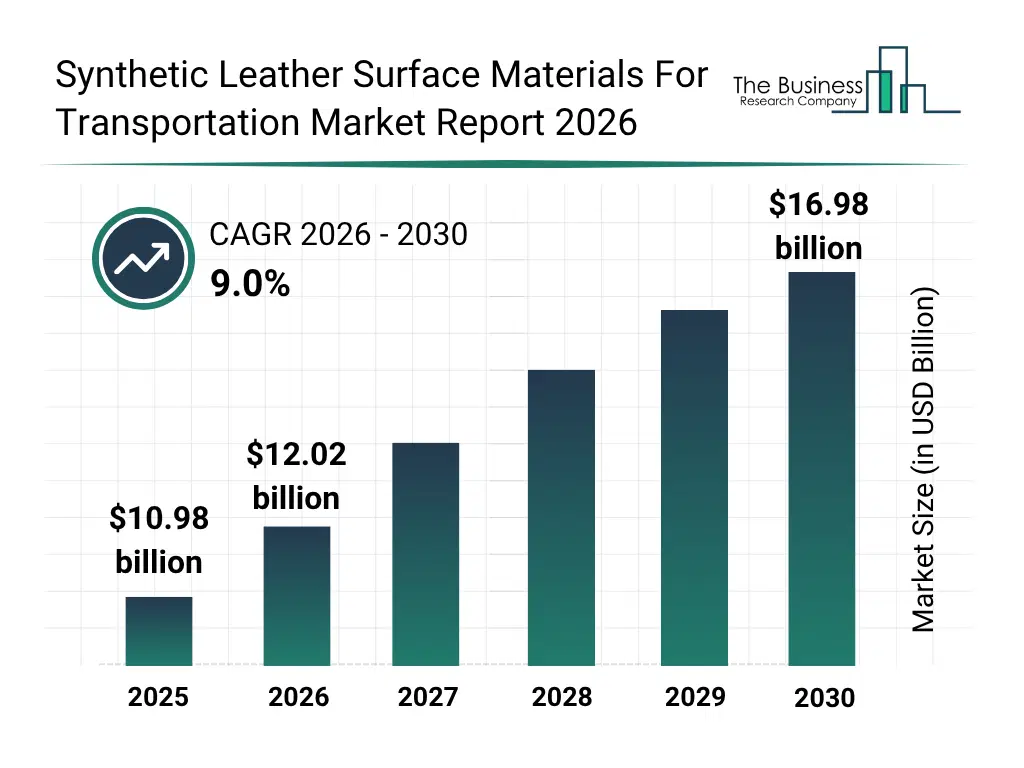
What Is The Synthetic Leather Surface Materials For Transportation Market Size and Share 2026?
The synthetic leather surface materials for transportation market size has grown strongly in recent years. It will grow from $10.98 billion in 2025 to $12.02 billion in 2026 at a compound annual growth rate (CAGR) of 9.4%. The growth in the historic period can be attributed to increasing demand for cost effective alternatives to natural leather, rising adoption of synthetic materials in automotive interiors, growing vehicle production across emerging economies, increasing consumer preference for durable and easy maintenance interior materials, expanding use of synthetic leather in transportation applications.What Is The Synthetic Leather Surface Materials For Transportation Market Growth Forecast?
The synthetic leather surface materials for transportation market size is expected to see strong growth in the next few years. It will grow to $16.98 billion in 2030 at a compound annual growth rate (CAGR) of 9.0%. The growth in the forecast period can be attributed to growing demand for sustainable and recycled synthetic leather materials, increasing adoption of lightweight interior components in electric vehicles, rising focus on environmentally compliant vehicle interiors, expanding demand for premium transportation aesthetics, increasing development of advanced performance synthetic leather technologies. Major trends in the forecast period include increasing adoption of bio based synthetic leather materials, growing demand for lightweight transportation interior materials, rising development of high durability synthetic leather surfaces, increasing preference for premium and cost effective interior solutions, growing focus on recyclable and low emission interior materials.
Global Synthetic Leather Surface Materials For Transportation Market Segmentation
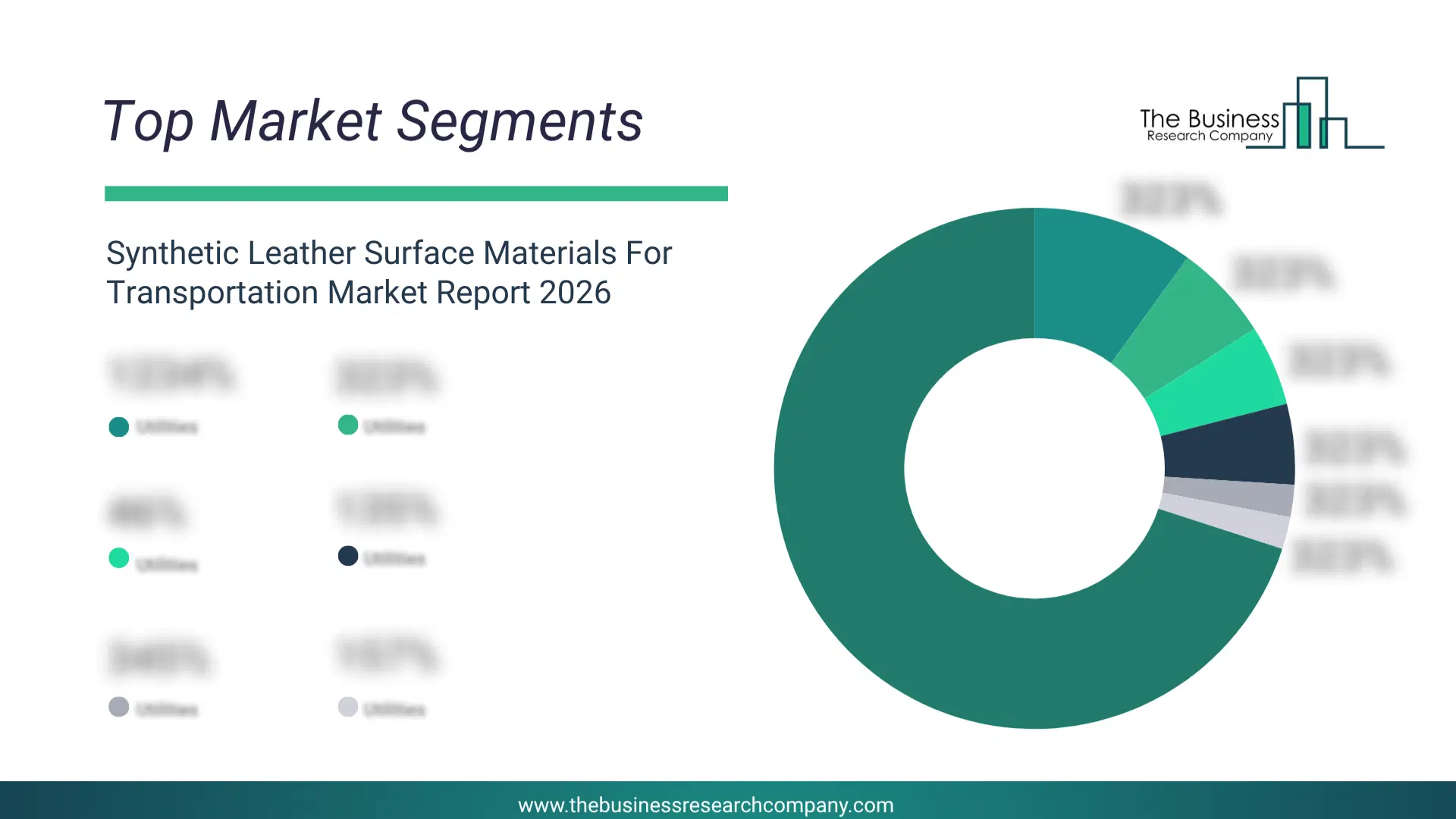
2) By Process: Virgin, Recycled 3) By Sales Channel: Original Equipment Manufacturer, Aftermarket 4) By Application: Upholstery, Headliner, Dashboard, Floor 5) By Industry Type: Automotive, Marine, Aviation Subsegments: 1) By Polyurethane: Thermoplastic Polyurethane, Cast Polyurethane, Polyester Based Polyurethane, Polyether Based Polyurethane, Flexible Polyurethane Foam, Rigid Polyurethane Foam, Polyurethane Coatings And Laminates 2) By Polyvinyl Chloride: Rigid Polyvinyl Chloride, Flexible Polyvinyl Chloride, Polyvinyl Chloride Films And Sheets, Polyvinyl Chloride Coatings, Polyvinyl Chloride Laminates, Polyvinyl Chloride Synthetic Leather Materials 3) By Polyester: Polyester Fiber Based Materials, Polyethylene Terephthalate Based Materials, Microfiber Polyester, Polyester Blended Materials, Polyester Nonwoven Fabrics, Coated Polyester FabricsWhat Is The Driver Of The Synthetic Leather Surface Materials For Transportation Market?
The growing adoption of electric vehicles (EVs) is expected to propel the growth of synthetic leather surface materials for the transportation market going forward. Electric vehicles are automobiles powered wholly or partially by electricity, utilizing battery systems and electric drivetrains instead of conventional internal combustion engines. The increasing adoption of electric vehicles is rising due to supportive government incentives and policies that encourage consumers and businesses to shift toward cleaner transportation. Synthetic leather surface materials support electric vehicle manufacturing by offering lightweight, durable interior solutions that reduce vehicle weight, enhance cabin comfort and aesthetics, and support sustainability through eco-friendly alternatives to traditional leather. For instance, in April 2024, according to the International Energy Agency (IEA), a France-based intergovernmental organization, global electric car sales approached 14 million units, accounting for 18% of total car sales, up from 14% in 2022. In 2023, sales increased by 3.5 million units compared to the previous year, reflecting a strong 35% year-on-year growth. Therefore, the growing adoption of electric vehicles is driving the growth of synthetic leather surface materials for the transportation market.Key Players In The Global Synthetic Leather Surface Materials For Transportation Market
Major companies operating in the synthetic leather surface materials for transportation market are Asahi Kasei Corporation, BASF SE, Continental AG, Covestro AG, DuPont de Nemours Inc., Filwel Co. Ltd., Haartz Corporation, Kuraray Co. Ltd., Kyowa Leather Cloth Co. Ltd., Mayur Uniquoters Limited, Nan Ya Plastics Corporation, San Fang Chemical Industry Co. Ltd., Scientex Berhad, Seiren Co. Ltd., Teijin Limited, Toray Industries Inc., Yantai Wanhua Synthetic Leather Group Co. Ltd.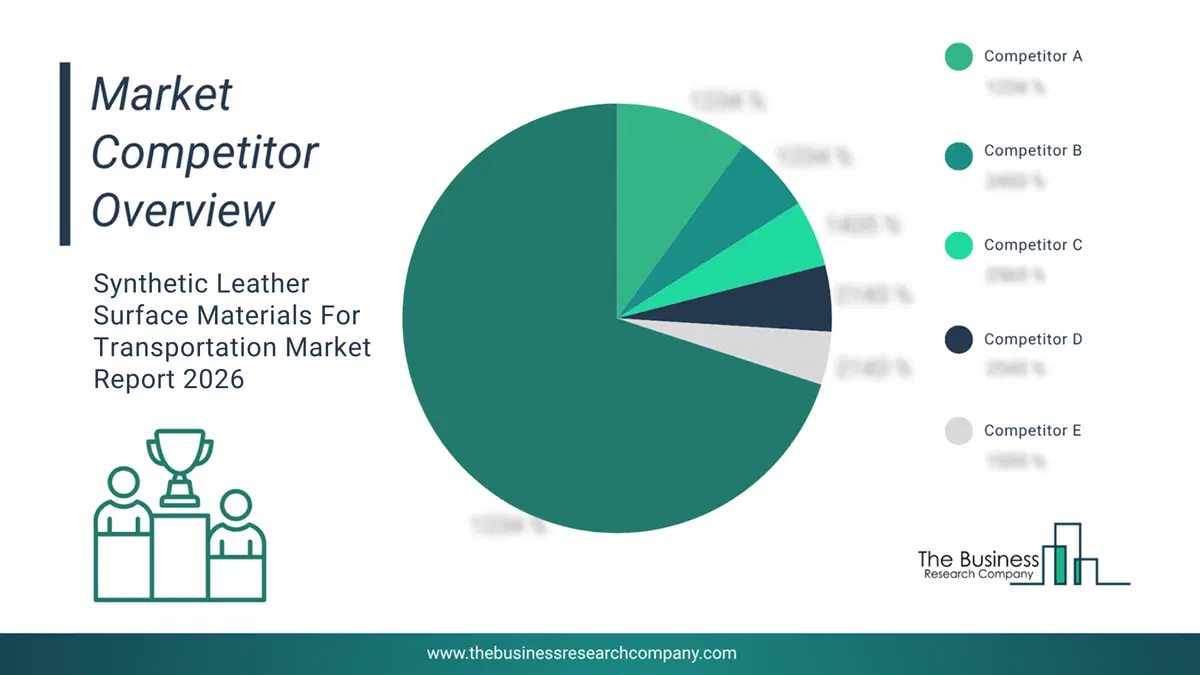
This chart is for illustrative purposes; the full report includes a detailed competitor analysis and comprehensive overview of the top 10 companies in the market.
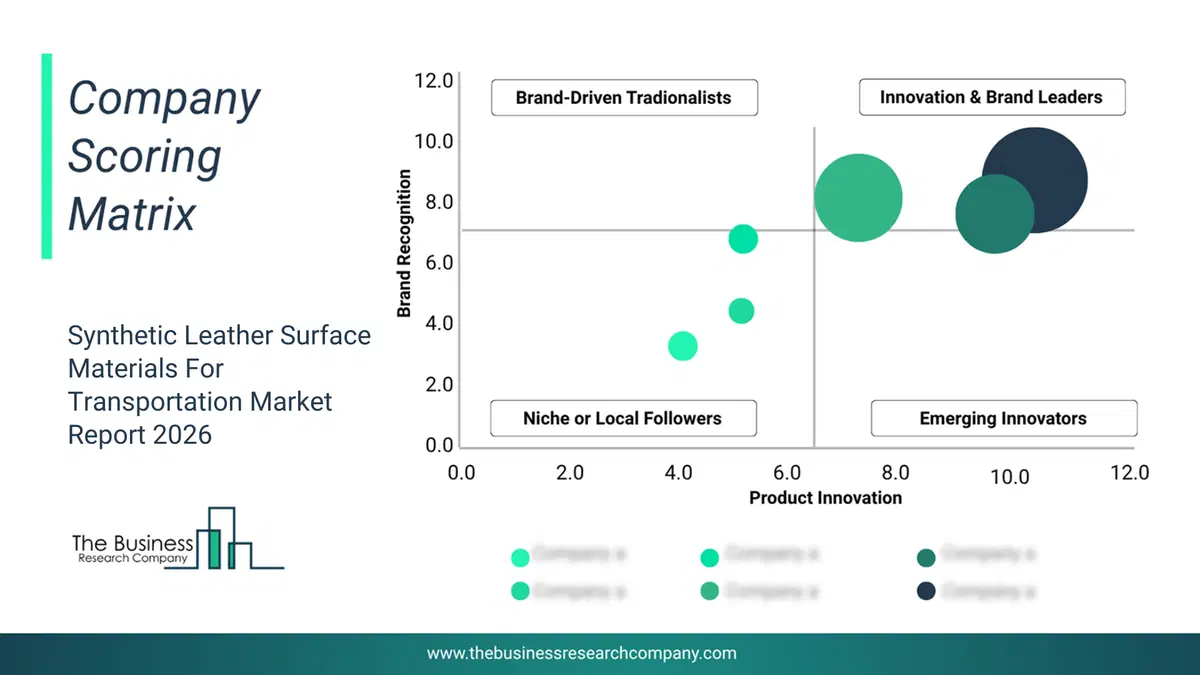
This chart maps companies by product innovation and brand strength, with bubble size indicating relative revenue, helping identify market leaders, challengers, and niche players. This is an illustrative chart; the full report provides a complete and accurate competitive analysis.
Global Synthetic Leather Surface Materials For Transportation Market Trends and Insights
Major companies operating in the synthetic leather surface materials for transportation market are focusing on developing advanced leather-alternative materials, such as HIUV materials-based leather, to improve vehicle efficiency, enhance interior durability, and support sustainability goals. HIUV technology-based leather is a high-performance synthetic leather produced using high-intensity ultraviolet curing technology that enhances durability, scratch resistance, color stability, and surface quality for transportation and upholstery applications. For instance, in March 2024, Dow, a US-based materials science company, introduced a new polyolefin elastomer (POE)-based leather alternative for the automotive industry. The solution is designed to provide an ultra-soft tactile feel, improved color stability, enhanced aging resistance, and low-temperature durability while offering a lightweight and animal-free alternative to conventional leather. The innovation supports automotive manufacturers in developing lighter, more sustainable vehicle interiors and strengthens advancements in next-generation transportation surface materials.What Are Latest Mergers And Acquisitions In The Synthetic Leather Surface Materials For Transportation Market?
In May 2023, Pecca Group Berhad, a Malaysia-based automotive upholstery manufacturer, acquired an 80% stake in PT Gemilang Maju Kencana for an undisclosed amount. This acquisition aligns with Pecca Group's strategy to expand its presence in the Southeast Asian automotive upholstery market and strengthen its regional manufacturing capabilities. PT Gemilang Maju Kencana is an Indonesia-based manufacturer and supplier of synthetic and leather upholstery surface materials for transportation applications.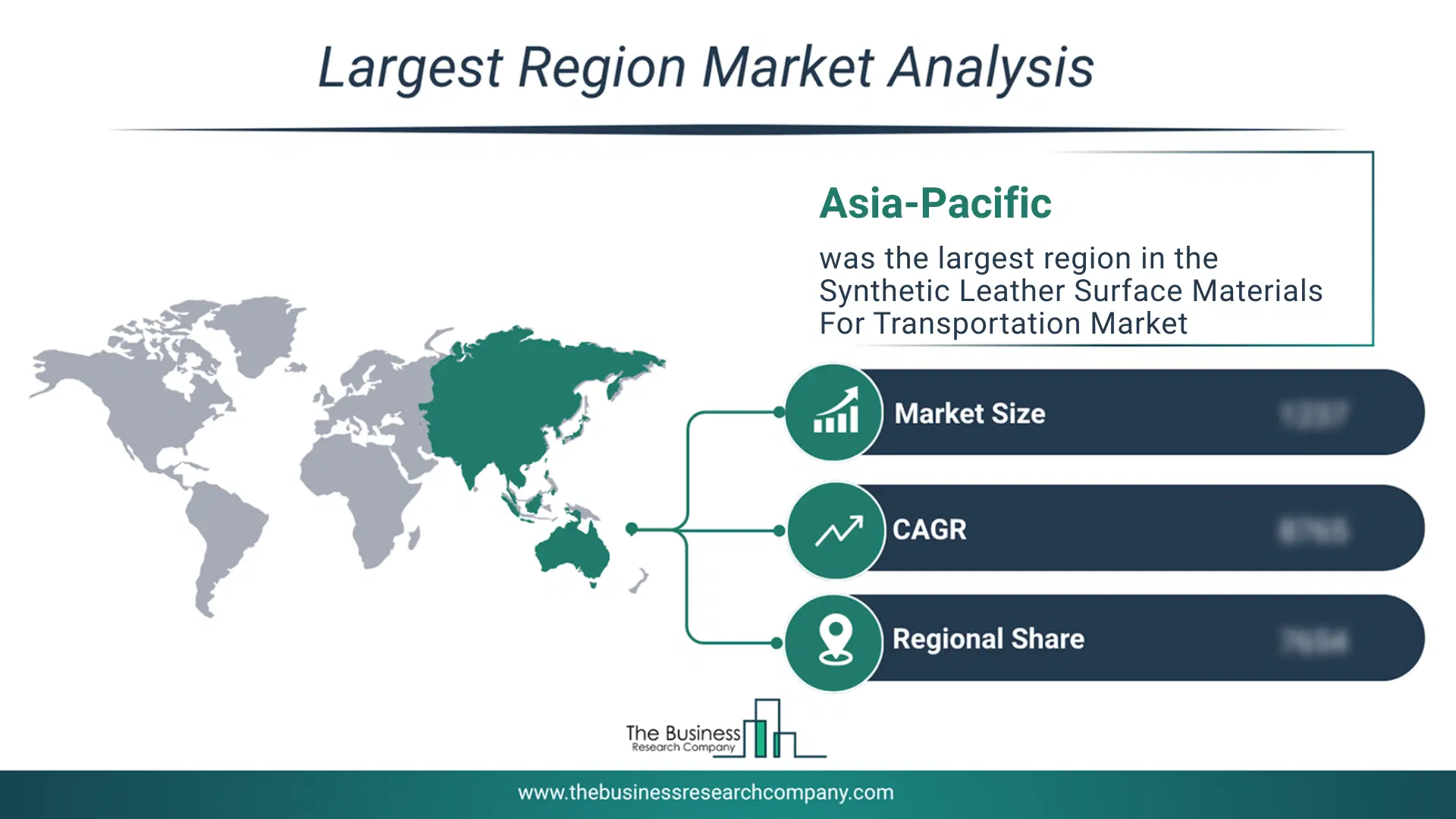
Regional Outlook/Insights
Asia-Pacific was the largest region in the synthetic leather surface materials for transportation market in 2025. Asia-Pacific is expected to be the fastest-growing region in the forecast period. The regions covered in this market report are Asia-Pacific, South East Asia, Western Europe, Eastern Europe, North America, South America, Middle East, Africa. The countries covered in this market report are Australia, Brazil, China, France, Germany, India, Indonesia, Japan, Taiwan, Russia, South Korea, UK, USA, Canada, Italy, Spain.What Defines the Synthetic Leather Surface Materials For Transportation Market?
The synthetic leather surface materials for the transportation market consist of sales of microfiber synthetic leather, bio-based synthetic leather, coated fabric upholstery materials, steering wheel coverings, and interior decorative surface materials. Values in this market are ‘factory gate’ values, that is, the value of goods sold by the manufacturers or creators of the goods, whether to other entities (including downstream manufacturers, wholesalers, distributors and retailers) or directly to end customers. The value of goods in this market includes related services sold by the creators of the goods.How is Market Value Defined and Measured?
The market value is defined as the revenues that enterprises gain from the sale of goods and/or services within the specified market and geography through sales, grants, or donations in terms of the currency (in USD unless otherwise specified). The revenues for a specified geography are consumption values that are revenues generated by organizations in the specified geography within the market, irrespective of where they are produced. It does not include revenues from resales along the supply chain, either further along the supply chain or as part of other products.
This chart presents market attractiveness based on a quantitative evaluation of growth, competition, strategic alignment, and risk, offering a clear view of opportunity areas for decision-making. This chart is for illustrative purposes; the full report contains the complete analysis.

This chart highlights the Total Addressable Market (TAM) by estimating the maximum revenue opportunity using an assumption-driven approach, supporting strategic planning and opportunity sizing across markets. The chart is illustrative; the full report provides a more comprehensive analysis.
What Key Data and Analysis Are Included in the Synthetic Leather Surface Materials For Transportation Market Report 2026?
The synthetic leather surface materials for transportation market research report is one of a series of new reports from The Business Research Company that provides synthetic leather surface materials for transportation market statistics, including synthetic leather surface materials for transportation industry global market size, regional shares, competitors with a synthetic leather surface materials for transportation market share, detailed synthetic leather surface materials for transportation market segments, market trends and opportunities, and any further data you may need to thrive in the synthetic leather surface materials for transportation industry. This synthetic leather surface materials for transportation market research report delivers a complete perspective of everything you need, with an in-depth analysis of the current and future scenario of the industry.Synthetic Leather Surface Materials For Transportation Market Report Forecast Analysis
| Report Attribute | Details |
|---|---|
| Market Size Value In 2026 | $12.02 billion |
| Revenue Forecast In 2030 | $16.98 billion |
| Growth Rate | CAGR of 9% from 2026 to 2030 |
| Base Year For Estimation | 2025 |
| Actual Estimates/Historical Data | 2020-2025 |
| Forecast Period | 2026 - 2030 |
| Market Representation | Revenue in USD Billion and CAGR from 2026 to 2030 |
| Segments Covered | Material Type, Process, Sales Channel, Application, Industry Type |
| Regional Scope | Asia-Pacific, Western Europe, Eastern Europe, North America, South America, Middle East, Africa |
| Country Scope | The countries covered in the report are Australia, Brazil, China, France, Germany, India, Indonesia, Japan, Taiwan, Russia, South Korea, UK, USA, Canada, Italy, Spain. |
| Key Companies Profiled | Asahi Kasei Corporation, BASF SE, Continental AG, Covestro AG, DuPont de Nemours Inc., Filwel Co. Ltd., Haartz Corporation, Kuraray Co. Ltd., Kyowa Leather Cloth Co. Ltd., Mayur Uniquoters Limited, Nan Ya Plastics Corporation, San Fang Chemical Industry Co. Ltd., Scientex Berhad, Seiren Co. Ltd., Teijin Limited, Toray Industries Inc., Yantai Wanhua Synthetic Leather Group Co. Ltd. |
| Customization Scope | Request for Customization |
| Pricing And Purchase Options | Explore Purchase Options |