

Tardive Dyskinesia Treatment Market Report 2026
Global Outlook – By Treatment Type (Medications, Botulinum Toxin Injections, Deep Brain Stimulation, Other Treatment Types), By Drug (Valbenazine, Amantadine, Tetrabenazine, Clonazepam, Other Drugs), By Route Of Administration (Oral Administration, Injection, Transdermal Patches), By Distribution Channel (Hospital Pharmacies, Retail Pharmacies, Other Distribution Channels), By End-Users (Hospitals, Specialty Clinics, Other End-Users) – Market Size, Trends, Strategies, and Forecast to 2030
Tardive Dyskinesia Treatment Market Overview
• Tardive Dyskinesia Treatment market size has reached to $2.61 billion in 2025 • Expected to grow to $3.9 billion in 2030 at a compound annual growth rate (CAGR) of 8.3% • Growth Driver: The Rise In Psychiatric Disorders Driving The Growth Of The Market Due To Increasing Mental Health Burden • Market Trend: Innovative Drug Formulations Aim To Improve Care For Patients With Swallowing Difficulties • North America was the largest region in 2025 and Asia-Pacific is the fastest growing region.What Is Covered Under Tardive Dyskinesia Treatment Market?
Tardive dyskinesia treatment refers to the medical management and therapeutic interventions aimed at reducing or controlling the involuntary, repetitive movements caused by long-term use of dopamine receptor-blocking agents, especially antipsychotics. The main treatment types of tardive dyskinesia are medications, botulinum toxin injections, deep brain stimulation, and other treatment types. Medications refer to drugs specifically used to manage and reduce the involuntary, repetitive movements caused by long-term use of antipsychotic medications. Commonly used drugs are valbenazine, amantadine, tetrabenazine, clonazepam, and others. These treatments are administered through various routes, including oral administration, injection, and transdermal patches. These various distribution channels are hospital pharmacies, retail pharmacies, and others, and cater to various end users, including hospitals, specialty clinics, and others.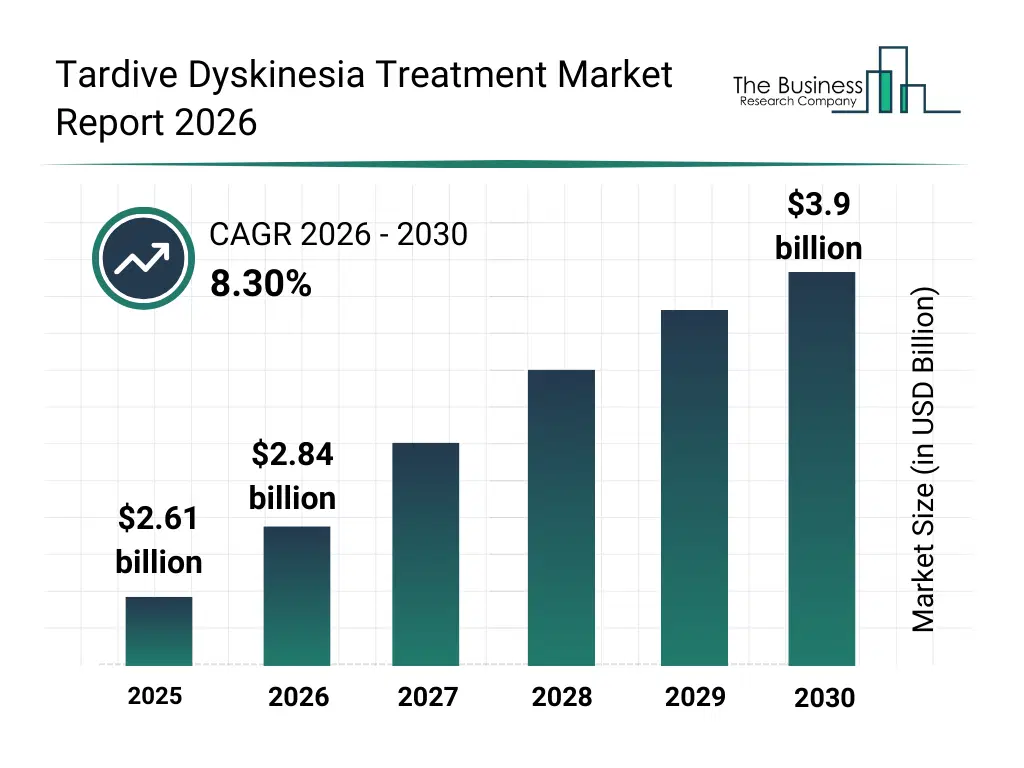
What Is The Tardive Dyskinesia Treatment Market Size and Share 2026?
The tardive dyskinesia treatment market size has grown strongly in recent years. It will grow from $2.61 billion in 2025 to $2.84 billion in 2026 at a compound annual growth rate (CAGR) of 8.8%. The growth in the historic period can be attributed to prolonged use of antipsychotic medications, increasing awareness of tardive dyskinesia, limited availability of specialized treatment options, rising mental health disorder prevalence, growing hospital neurology departments.What Is The Tardive Dyskinesia Treatment Market Growth Forecast?
The tardive dyskinesia treatment market size is expected to see strong growth in the next few years. It will grow to $3.9 billion in 2030 at a compound annual growth rate (CAGR) of 8.3%. The growth in the forecast period can be attributed to development of novel dopamine-depleting therapies, expansion of deep brain stimulation adoption, increasing botulinum toxin applications, integration of telemedicine for movement disorder management, rising investment in patient-specific rehabilitation and cognitive therapies. Major trends in the forecast period include increasing adoption of dopamine-depleting agents and anticholinergic medications, rising preference for botulinum toxin injections for focal dyskinesia, growth in use of deep brain stimulation for refractory tardive dyskinesia, expansion of customized injection protocols and multi-target dbs approaches, integration of cognitive behavioral therapy and supportive rehabilitation programs.
Global Tardive Dyskinesia Treatment Market Segmentation
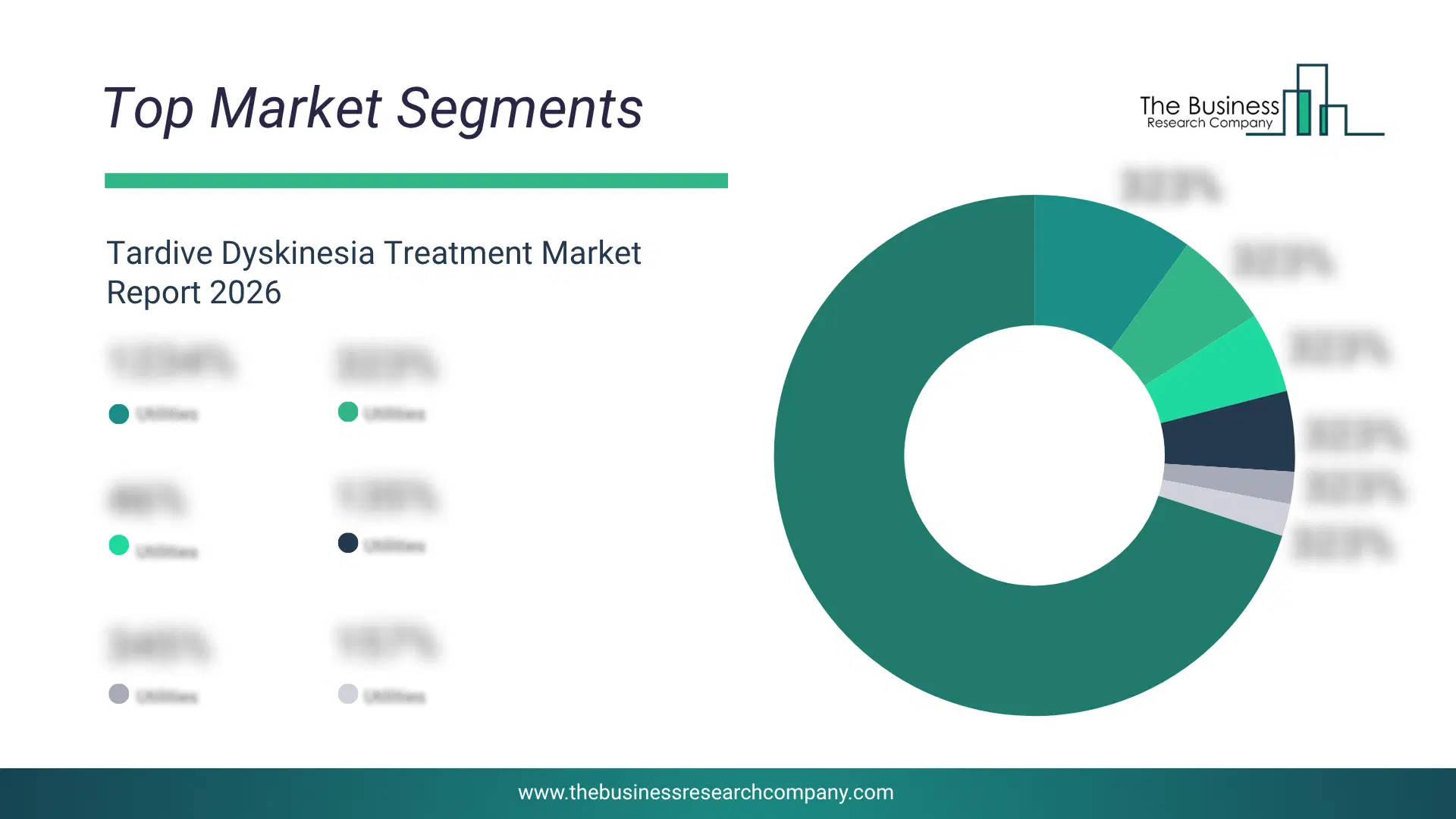
1) By Treatment Type: Medications, Botulinum Toxin Injections, Deep Brain Stimulation, Other Treatment Types 2) By Drug: Valbenazine, Amantadine, Tetrabenazine, Clonazepam, Other Drugs 3) By Route Of Administration: Oral Administration, Injection, Transdermal Patches 4) By Distribution Channel: Hospital Pharmacies, Retail Pharmacies, Other Distribution Channels 5) By End-Users: Hospitals, Specialty Clinics, Other End-Users Subsegments: 1) By Medications: Antipsychotic Medications, Benzodiazepines, Dopamine-Depleting Agents, Anticholinergic Agents 2) By Botulinum Toxin Injections: Facial Muscle Injections, Neck Muscle Injections, Limb Muscle Injections, Customized Injection Protocols 3) By Deep Brain Stimulation: Subthalamic Nucleus Stimulation, Globus Pallidus Interna Stimulation, Thalamic Stimulation, Multi-Target Stimulation 4) By Other Treatment Types: Supportive Therapies, Cognitive Behavioral Therapy, Physical Rehabilitation, Emerging Experimental TreatmentsWhat Is The Driver Of The Tardive Dyskinesia Treatment Market?
The increasing prevalence of psychiatric disorders is expected to propel the growth of the tardive dyskinesia treatment market going forward. Psychiatric disorders refer to a wide range of mental health conditions that affect a person's mood, thinking, behavior, and overall functioning, often requiring clinical diagnosis and treatment. The prevalence of psychiatric disorders is growing due to rising stress and lifestyle pressures resulting from high workloads, social isolation, and limited time for self-care. Tardive dyskinesia treatment helps manage involuntary movement symptoms, improving overall treatment outcomes and quality of life for individuals with psychiatric disorders who require long-term antipsychotic medication. For instance, in November 2023, according to the NHS England, a UK-based government health agency, about 20.3 % of children aged 8 to 16, 23.3 % of those aged 17 to 19, and 21.7 % of those aged 20 to 25 had a probable mental disorder in 2023. Therefore, the increasing prevalence of psychiatric disorders is driving the growth of the tardive dyskinesia treatment industry.Key Players In The Global Tardive Dyskinesia Treatment Market
Major companies operating in the tardive dyskinesia treatment market are AbbVie Inc., Takeda Pharmaceutical Company Limited, Teva Pharmaceutical Industries Limited, Otsuka Pharmaceutical Co. Ltd., Jazz Pharmaceuticals plc, Kyowa Kirin Co Ltd., H. Lundbeck A/S, Neurocrine Biosciences Inc., Acadia Pharmaceuticals Inc., Upsher-Smith Laboratories LLC, Adamas Pharmaceuticals Inc., Sunovion Pharmaceuticals Inc., Mitsubishi Tanabe Pharma Corporation.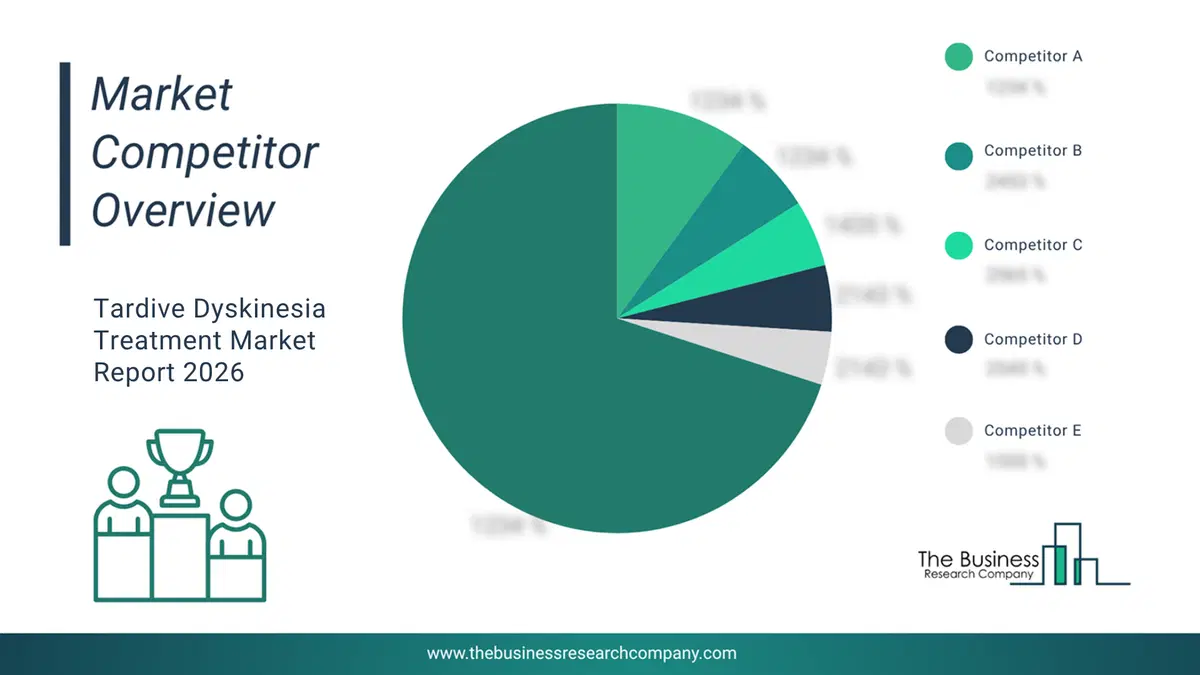
This chart is for illustrative purposes; the full report includes a detailed competitor analysis and comprehensive overview of the top 10 companies in the market.
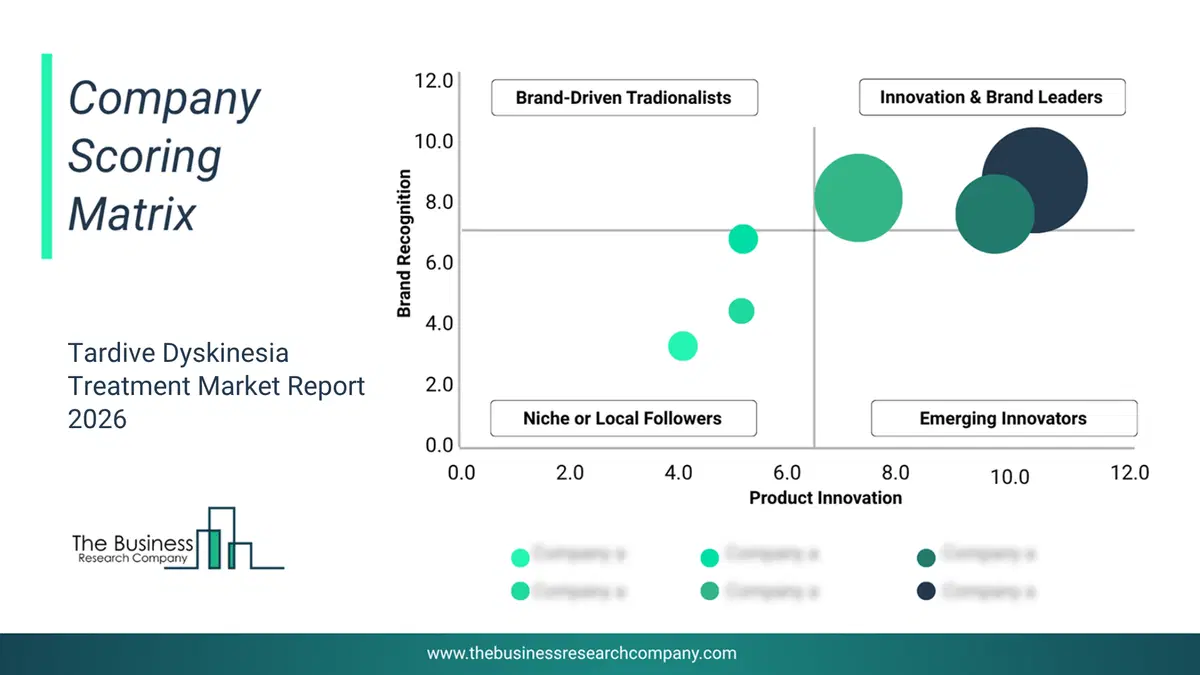
This chart maps companies by product innovation and brand strength, with bubble size indicating relative revenue, helping identify market leaders, challengers, and niche players. This is an illustrative chart; the full report provides a complete and accurate competitive analysis.
Global Tardive Dyskinesia Treatment Market Trends and Insights
Major companies operating in the tardive dyskinesia treatment market are focusing on developing innovative drugs, such as sprinkle capsule formulations, to improve medication adherence for patients with swallowing difficulties. Sprinkle capsule formulations are medications designed to be opened and sprinkled onto soft food, making them easier to swallow for patients with dysphagia or difficulty taking whole capsules. For instance, in July 2024, Neurocrine Biosciences Inc., a US-based biotechnology company, launched Ingrezza sprinkle (valbenazine) capsules, the leading prescribed vesicular monoamine transporter 2 (VMAT2) inhibitor for treating adults with tardive dyskinesia and chorea associated with Huntington's disease. This VMAT2 inhibitor works by regulating dopamine levels in the brain to help manage involuntary movements. The medication is available as a once-daily oral capsule, including a sprinkle formulation designed to ease administration for patients who have difficulty swallowing.What Are Latest Mergers And Acquisitions In The Tardive Dyskinesia Treatment Market?
In April 2025, Johnson & Johnson, a US-based pharmaceutical industry company, acquired Intra-Cellular Therapies for an undisclosed amount. With this acquisition, Johnson & Johnson aims to strengthen its leadership in neuroscience and expand its presence in the fast-growing mental health treatment market. Intra-Cellular Therapies Inc. is a US-based pharmaceutical company that specializes in providing treatments for tardive dyskinesia.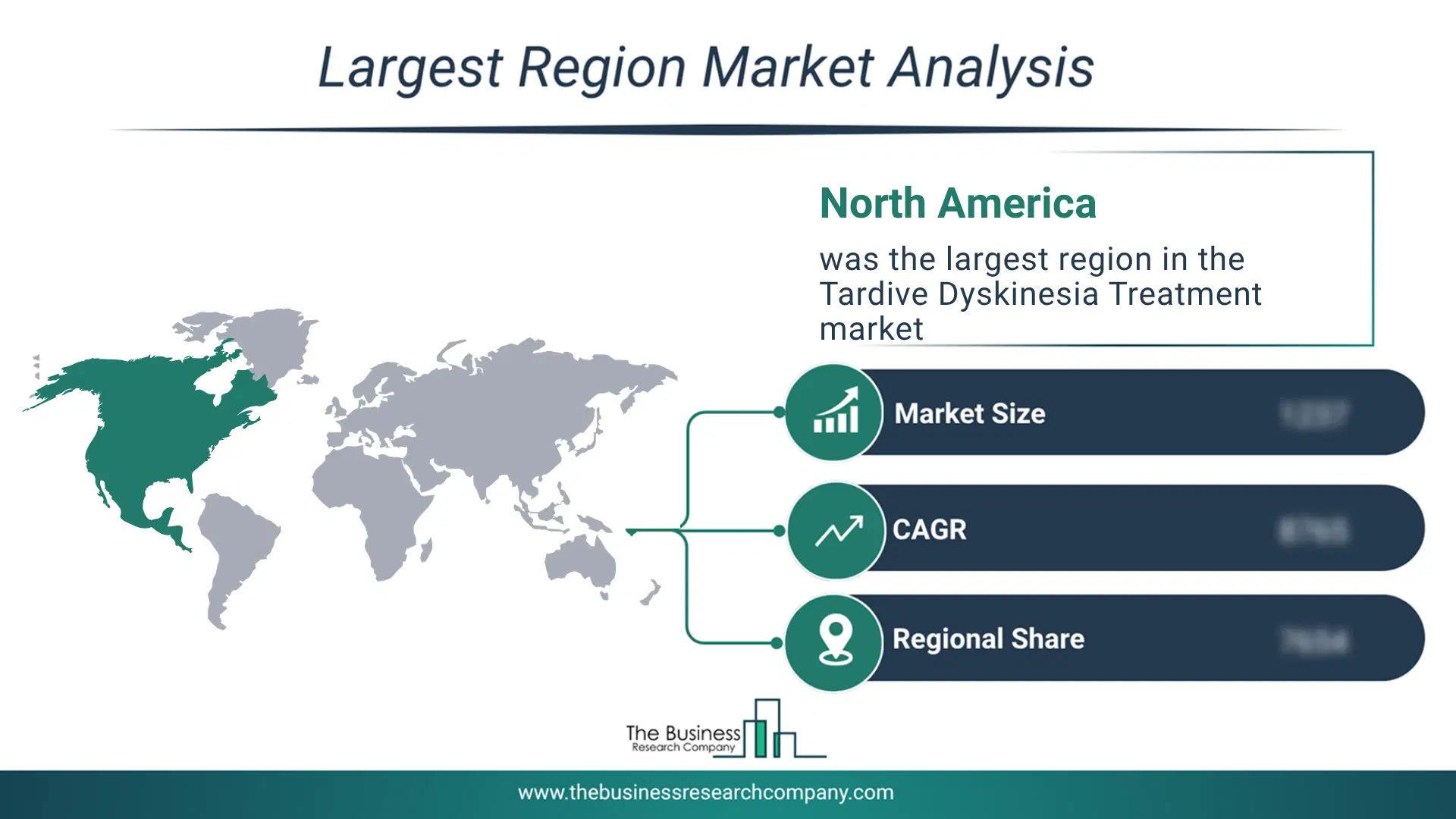
Regional Insights
North America was the largest region in the tardive dyskinesia treatment market in 2025. Asia-Pacific is expected to be the fastest-growing region in the forecast period. The regions covered in this market report are Asia-Pacific, South East Asia, Western Europe, Eastern Europe, North America, South America, Middle East, Africa. The countries covered in this market report are Australia, Brazil, China, France, Germany, India, Indonesia, Japan, Taiwan, Russia, South Korea, UK, USA, Canada, Italy, Spain.What Defines the Tardive Dyskinesia Treatment Market?
The tardive dyskinesia treatment market includes revenues earned by entities through botulinum toxin injection services, deep brain stimulation procedures, and diagnostic and monitoring services. The market value includes the value of related goods sold by the service provider or included within the service offering. Only goods and services traded between entities or sold to end consumers are included.How is Market Value Defined and Measured?
The market value is defined as the revenues that enterprises gain from the sale of goods and/or services within the specified market and geography through sales, grants, or donations in terms of the currency (in USD unless otherwise specified). The revenues for a specified geography are consumption values that are revenues generated by organizations in the specified geography within the market, irrespective of where they are produced. It does not include revenues from resales along the supply chain, either further along the supply chain or as part of other products.
This chart presents market attractiveness based on a quantitative evaluation of growth, competition, strategic alignment, and risk, offering a clear view of opportunity areas for decision-making. This chart is for illustrative purposes; the full report contains the complete analysis.

This chart highlights the Total Addressable Market (TAM) by estimating the maximum revenue opportunity using an assumption-driven approach, supporting strategic planning and opportunity sizing across markets. The chart is illustrative; the full report provides a more comprehensive analysis.
What Key Data and Analysis Are Included in the Tardive Dyskinesia Treatment Market Report 2026?
The tardive dyskinesia treatment market research report is one of a series of new reports from The Business Research Company that provides market statistics, including industry global market size, regional shares, competitors with the market share, detailed market segments, market trends and opportunities, and any further data you may need to thrive in the tardive dyskinesia treatment industry. The market research report delivers a complete perspective of everything you need, with an in-depth analysis of the current and future state of the industry.Tardive Dyskinesia Treatment Market Report Forecast Analysis
| Report Attribute | Details |
|---|---|
| Market Size Value In 2026 | $2.84 billion |
| Revenue Forecast In 2030 | $3.9 billion |
| Growth Rate | CAGR of 8.8% from 2026 to 2030 |
| Base Year For Estimation | 2025 |
| Actual Estimates/Historical Data | 2020-2025 |
| Forecast Period | 2026 - 2030 |
| Market Representation | Revenue in USD Billion and CAGR from 2026 to 2030 |
| Segments Covered | Treatment Type, Drug, Route Of Administration, Distribution Channel, End-Users |
| Regional Scope | Asia-Pacific, Western Europe, Eastern Europe, North America, South America, Middle East, Africa |
| Country Scope | The countries covered in the report are Australia, Brazil, China, France, Germany, India, Indonesia, Japan, Taiwan, Russia, South Korea, UK, USA, Canada, Italy, Spain. |
| Key Companies Profiled | AbbVie Inc., Takeda Pharmaceutical Company Limited, Teva Pharmaceutical Industries Limited, Otsuka Pharmaceutical Co. Ltd., Jazz Pharmaceuticals plc, Kyowa Kirin Co Ltd., H. Lundbeck A/S, Neurocrine Biosciences Inc., Acadia Pharmaceuticals Inc., Upsher-Smith Laboratories LLC, Adamas Pharmaceuticals Inc., Sunovion Pharmaceuticals Inc., Mitsubishi Tanabe Pharma Corporation. |
| Customization Scope | Request for Customization |
| Pricing And Purchase Options | Explore Purchase Options |