
Targeted Alpha-Therapy Market Report 2026
Global Outlook – By Isotope Type (Actinium-225, Radium-223, Lead-212, Bismuth-213, Other Isotype Types), By Application (Prostate Cancer, Bone Metastases, Pancreatic Cancer, Other Applications), By End-User (Hospitals, Cancer Research Institutes, Specialty Clinics, Lymphoma, Other End Users) – Market Size, Trends, Strategies, and Forecast to 2030
Targeted Alpha-Therapy Market Overview
• Targeted Alpha-Therapy market size has reached to $1.03 billion in 2025 • Expected to grow to $2.25 billion in 2030 at a compound annual growth rate (CAGR) of 17% • Growth Driver: Rising Adoption Of Precision Medicine Driving The Market Growth Due To Increasing Genetic Testing And Personalized Treatment Approaches • Market Trend: Advancements In Precision Alpha-Emitter Cancer Treatments • North America was the largest region in 2025 and Asia-Pacific is the fastest growing region.What Is Covered Under Targeted Alpha-Therapy Market?
Targeted alpha-therapy (TAT) refers to a form of radiation therapy that delivers highly potent alpha-particle-emitting isotopes directly to cancer cells or diseased tissues. The therapy uses targeting molecules, such as antibodies, peptides, or small molecules, that bind specifically to cancer cell markers, allowing the alpha particles to cause lethal double-strand DNA breaks in nearby cells while minimizing damage to surrounding healthy tissue. The main isotope types of targeted alpha therapy are actinium-225, radium-223, lead-212, bismuth-213, and others. Actinium-225 refers to a potent alpha-emitting radioisotope widely used in targeted therapies due to its favorable half-life and decay properties. This therapy is applied in conditions including prostate cancer, bone metastases, pancreatic cancer, and others, serving end-users including hospitals, cancer research institutes, specialty clinics, lymphoma, and others.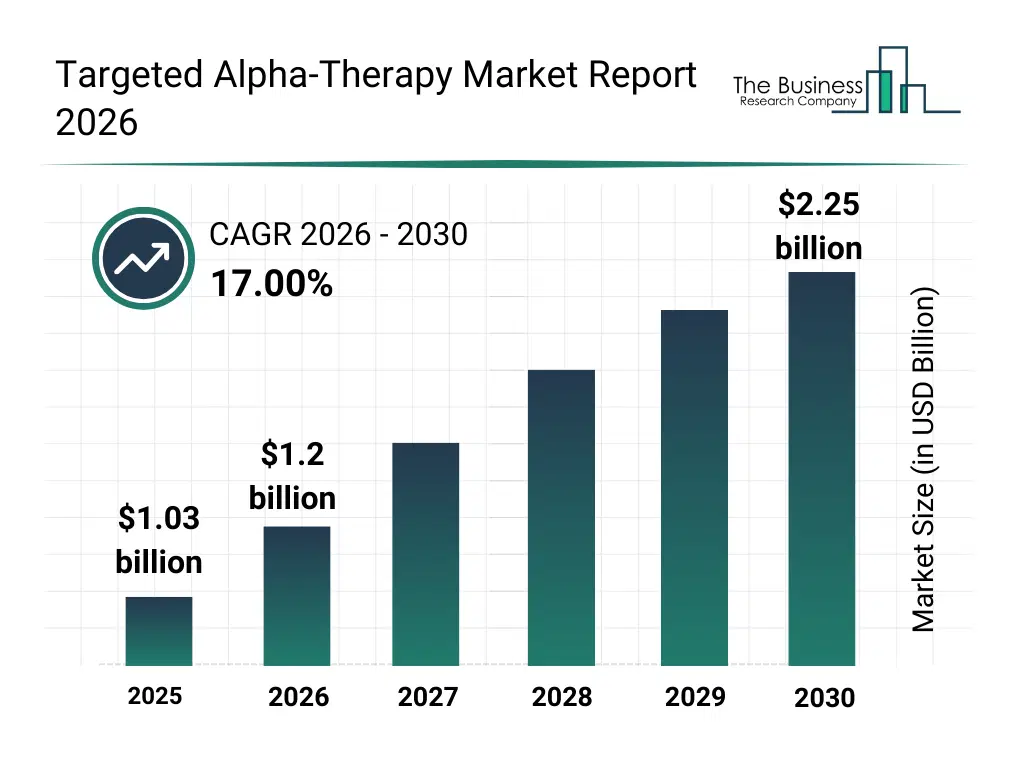
What Is The Targeted Alpha-Therapy Market Size and Share 2026?
The targeted alpha-therapy market size has grown rapidly in recent years. It will grow from $1.03 billion in 2025 to $1.2 billion in 2026 at a compound annual growth rate (CAGR) of 17.2%. The growth in the historic period can be attributed to advances in nuclear medicine research, increasing unmet needs in advanced cancers, expansion of radiopharmaceutical clinical trials, availability of medical isotopes, growth in targeted radiation therapy adoption.What Is The Targeted Alpha-Therapy Market Growth Forecast?
The targeted alpha-therapy market size is expected to see rapid growth in the next few years. It will grow to $2.25 billion in 2030 at a compound annual growth rate (CAGR) of 17.0%. The growth in the forecast period can be attributed to increasing investment in isotope manufacturing infrastructure, rising adoption of personalized radiotherapy, expansion of targeted alpha therapies into new indications, growing regulatory support for radiopharmaceuticals, increasing collaboration between nuclear and oncology specialists. Major trends in the forecast period include increasing development of alpha-emitting radiopharmaceuticals, rising use of targeted radioligand therapies, growing focus on precision radiation delivery, expansion of isotope production capabilities, enhanced integration of targeting molecules.
Global Targeted Alpha-Therapy Market Segmentation
1) By Isotope Type: Actinium-225, Radium-223, Lead-212, Bismuth-213, Other Isotype Types 2) By Application: Prostate Cancer, Bone Metastases, Pancreatic Cancer, Other Applications 3) By End-User: Hospitals, Cancer Research Institutes, Specialty Clinics, Lymphoma, Other End Users Subsegments: 1) By Actinium-225: Ac-225 Lintuzumab, Ac-225 PSMA-617, Ac-225 DOTATATE 2) By Radium-223: Radium-223 Dichloride (Xofigo) 3) By Lead-212: Pb-212 DOTAMTATE (AlphaMedix), Pb-212 TCMC-Trastuzumab 4) By Bismuth-213: Bi-213 Lintuzumab, Bi-213 DOTATOC 5) By Other Isotope Types: Thorium-227, Astatine-211, Terbium-149What Is The Driver Of The Targeted Alpha-Therapy Market?
The growing focus on precision medicine is expected to propel the growth of the targeted alpha-therapy market going forward. Precision medicine refers to a healthcare approach that customizes prevention, diagnosis, and treatment based on an individual’s genetic profile, lifestyle, and environment for more effective outcomes. Precision medicine is increasing because the growing availability of genetic testing enables more accurate diagnoses and targeted treatments with improved patient outcomes. Targeted alpha-therapy helps in precision medicine by delivering highly potent alpha-emitting isotopes directly to cancer cells, enabling personalized and precise treatment while minimizing damage to healthy tissues. For instance, in March 2024, according to the American Pharmaceutical Review, a US-based journal company, global spending on precision medicine treatments was nearly $32 billion in 2022 and is projected to exceed $124 billion by 2027. Therefore, the growing focus on precision medicine is driving the growth of the targeted alpha-therapy industry.Key Players In The Global Targeted Alpha-Therapy Market
Major companies operating in the targeted alpha-therapy market are Bayer Aktiengesellschaft, Novartis AG, Lantheus Holdings Inc., Telix Pharmaceuticals Limited, Eckert & Ziegler Strahlen- und Medizintechnik AG, Actinium Pharmaceuticals Inc., RayzeBio Inc., ITM Isotope Technologies Munich SE, ARTBIO Inc., AdvanCell Pty Ltd., IONETIX Corporation, Abdera Therapeutics Inc., Aktis Oncology Inc., Alpha-9 Oncology Inc., Clarity Pharmaceuticals Pty Ltd., Nucleus RadioPharma, Oncoinvent AS, PanTera, Perspective Therapeutics Inc., RadioMedix Inc.
This chart is for illustrative purposes; the full report includes a detailed competitor analysis and comprehensive overview of the top 10 companies in the market.
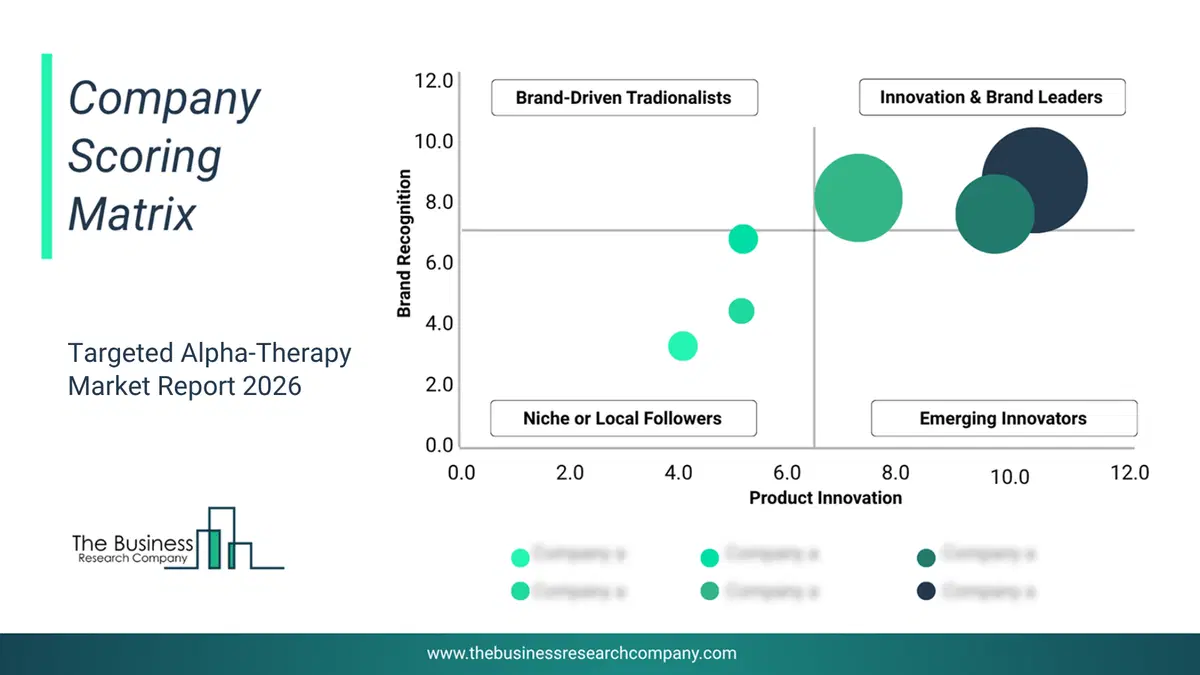
This chart maps companies by product innovation and brand strength, with bubble size indicating relative revenue, helping identify market leaders, challengers, and niche players. This is an illustrative chart; the full report provides a complete and accurate competitive analysis.
Global Targeted Alpha-Therapy Market Trends and Insights
Major companies operating in the targeted alpha-therapy market are focusing on developing innovative solutions such as peptide receptor radionuclide therapy to improve targeted cancer treatment efficacy, minimize off-target effects, and enhance patient outcomes. Peptide receptor radionuclide therapy (PRRT) refers to a targeted cancer treatment that delivers radioactive isotopes directly to tumor cells by binding them to peptides that specifically attach to receptors overexpressed on cancer cells, thereby minimizing damage to healthy tissue. For instance, in February 2024, RadioMedix Inc., a US-based biotechnology company, partnered with Orano Med, a US-based pharma company, and received the first targeted alpha therapy to win FDA breakthrough device designation is AlphaMedix (lead-212-Dotamtate), aimed at treating neuroendocrine tumors. It is designed to treat advanced gastroenteropancreatic neuroendocrine tumors by delivering highly potent alpha radiation directly to cancer cells while sparing healthy tissue. Its key advantage lies in the high energy and short path length of alpha particles, which cause lethal DNA damage to tumor cells with minimal toxicity. This therapy offers a promising option for patients who are naïve to or have limited response to current beta-emitter treatments, aiming to improve efficacy and safety in difficult-to-treat neuroendocrine tumors.What Are Latest Mergers And Acquisitions In The Targeted Alpha-Therapy Market?
In June 2024, AstraZeneca Plc, a UK-based pharmaceutical industry company, acquired Fusion Pharmaceuticals Inc. for an undisclosed amount. With this acquisition AstraZeneca aims to transform cancer treatment and patient outcomes by developing more precise, targeted next-generation radioconjugate therapies that replace traditional chemotherapy and radiotherapy. Fusion Pharmaceuticals Inc. is a Canada-based biotech company that offers targeted alpha-therapy.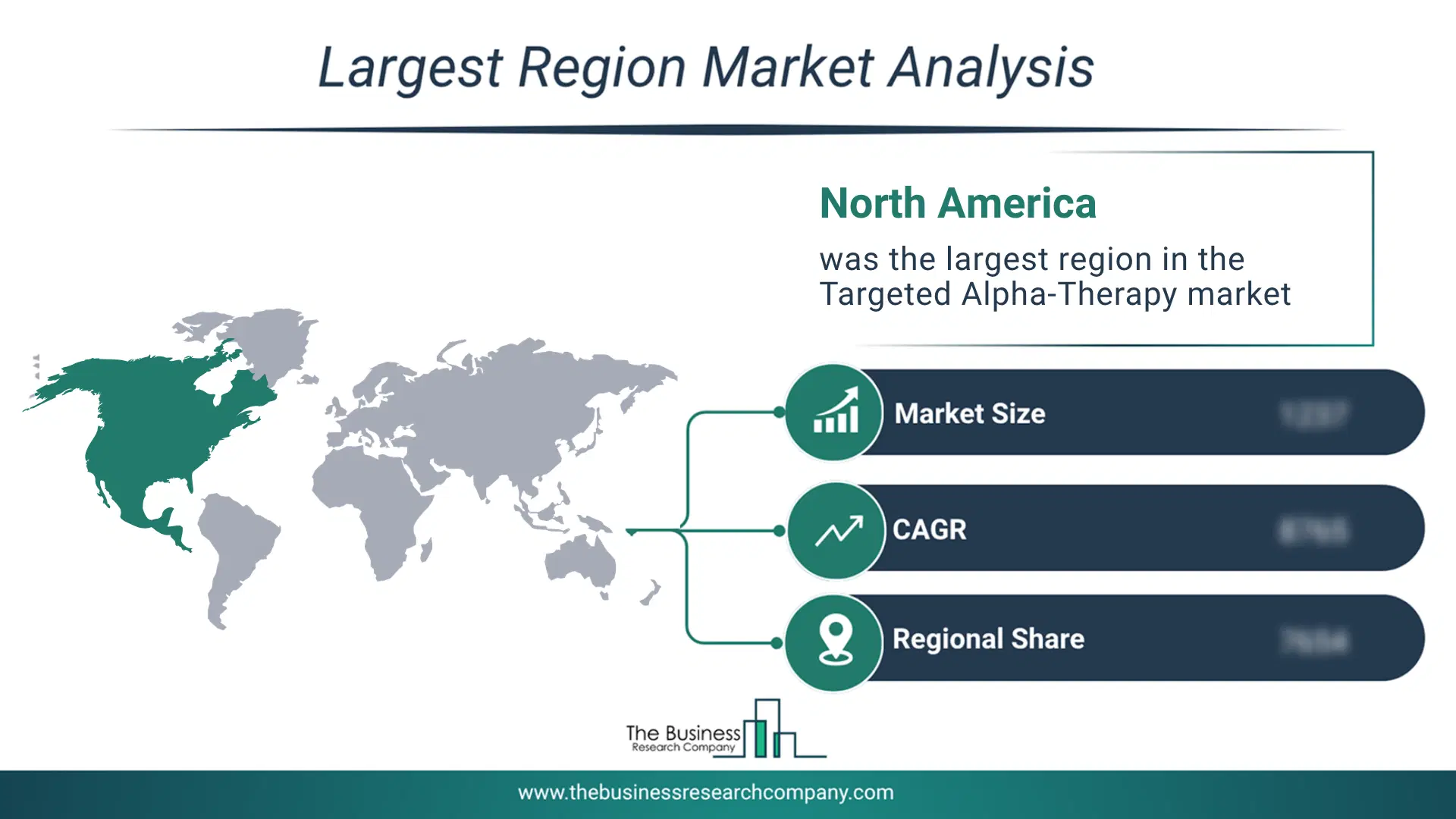
Regional Insights
North America was the largest region in the targeted alpha-therapy market in 2025. Asia Pacific is expected to be the fastest-growing region in the forecast period. The regions covered in this market report are Asia-Pacific, South East Asia, Western Europe, Eastern Europe, North America, South America, Middle East, Africa. The countries covered in this market report are Australia, Brazil, China, France, Germany, India, Indonesia, Japan, Taiwan, Russia, South Korea, UK, USA, Canada, Italy, Spain.What Defines the Targeted Alpha-Therapy Market?
The targeted alpha-therapy market consists of sales of neptunium-225 thorium-227 and astatine-211. Values in this market are ‘factory gate’ values, that is, the value of goods sold by the manufacturers or creators of the goods, whether to other entities (including downstream manufacturers, wholesalers, distributors, and retailers) or directly to end customers. The value of goods in this market includes related services sold by the creators of the goods.How is Market Value Defined and Measured?
The market value is defined as the revenues that enterprises gain from the sale of goods and/or services within the specified market and geography through sales, grants, or donations in terms of the currency (in USD unless otherwise specified). The revenues for a specified geography are consumption values that are revenues generated by organizations in the specified geography within the market, irrespective of where they are produced. It does not include revenues from resales along the supply chain, either further along the supply chain or as part of other products.
This chart presents market attractiveness based on a quantitative evaluation of growth, competition, strategic alignment, and risk, offering a clear view of opportunity areas for decision-making. This chart is for illustrative purposes; the full report contains the complete analysis.

This chart highlights the Total Addressable Market (TAM) by estimating the maximum revenue opportunity using an assumption-driven approach, supporting strategic planning and opportunity sizing across markets. The chart is illustrative; the full report provides a more comprehensive analysis.
What Key Data and Analysis Are Included in the Targeted Alpha-Therapy Market Report 2026?
The targeted alpha-therapy market research report is one of a series of new reports from The Business Research Company that provides market statistics, including industry global market size, regional shares, competitors with the market share, detailed market segments, market trends and opportunities, and any further data you may need to thrive in the targeted alpha-therapy industry. The market research report delivers a complete perspective of everything you need, with an in-depth analysis of the current and future state of the industry.Targeted Alpha-Therapy Market Report Forecast Analysis
| Report Attribute | Details |
|---|---|
| Market Size Value In 2026 | $1.2 billion |
| Revenue Forecast In 2030 | $2.25 billion |
| Growth Rate | CAGR of 17.2% from 2026 to 2030 |
| Base Year For Estimation | 2025 |
| Actual Estimates/Historical Data | 2020-2025 |
| Forecast Period | 2026 - 2030 |
| Market Representation | Revenue in USD Billion and CAGR from 2026 to 2030 |
| Segments Covered | Isotope Type, Application, End-User |
| Regional Scope | Asia-Pacific, Western Europe, Eastern Europe, North America, South America, Middle East, Africa |
| Country Scope | The countries covered in the report are Australia, Brazil, China, France, Germany, India, Indonesia, Japan, Taiwan, Russia, South Korea, UK, USA, Canada, Italy, Spain. |
| Key Companies Profiled | Bayer Aktiengesellschaft, Novartis AG, Lantheus Holdings Inc., Telix Pharmaceuticals Limited, Eckert & Ziegler Strahlen- und Medizintechnik AG, Actinium Pharmaceuticals Inc., RayzeBio Inc., ITM Isotope Technologies Munich SE, ARTBIO Inc., AdvanCell Pty Ltd., IONETIX Corporation, Abdera Therapeutics Inc., Aktis Oncology Inc., Alpha-9 Oncology Inc., Clarity Pharmaceuticals Pty Ltd., Nucleus RadioPharma, Oncoinvent AS, PanTera, Perspective Therapeutics Inc., RadioMedix Inc. |
| Customization Scope | Request for Customization |
| Pricing And Purchase Options | Explore Purchase Options |