
Targeted Protein Degradation Oncology (PROTAC) Market Report 2026
Global Outlook – By Type (Proteolysis Targeting Chimeras (PROTACs), Molecular Glue Degraders, Lysosome Targeting Chimeras (LYTACs), Autophagy Targeting Chimeras (AUTACs), Other Types), By Stage (Approved Therapies, Phase III Clinical, Phase II Clinical, Preclinical Research And Discovery Stage), By Therapeutic Area (Breast Cancer, Prostate Cancer, Hematological Malignancies, Lung Cancer, Other Therapeutic Areas), By End User (Pharmaceutical Companies, Biotechnology Companies, Contract Research Organizations (CROs), Academic Research Institutes, Other End Users) – Market Size, Trends, Strategies, and Forecast to 2030
Targeted Protein Degradation Oncology (PROTAC) Market Report 2026 Market Overview
• Targeted Protein Degradation Oncology (PROTAC) Market Report 2026 market size has reached to $1.3 billion in 2025 • Expected to grow to $4.14 billion in 2030 at a compound annual growth rate (CAGR) of 26.2% • Growth Driver: Rising Cancer Incidence Driving The Market Growth Due To Increasing Demand for Targeted Therapies • Market Trend: Advancements In Precision Oncology Through Targeted Protein Degradation Technologies • North America was the largest region in 2025 and Asia-Pacific is the fastest growing region.What Is Covered Under Targeted Protein Degradation Oncology (PROTAC) Market?
Targeted protein degradation oncology (PROTAC) is a therapeutic approach that eliminates disease-causing proteins by harnessing the body's natural protein degradation machinery. It is designed to selectively remove proteins that contribute to cancer development and progression rather than merely inhibiting their activity. Targeted protein degradation oncology (PROTAC) aims to improve treatment efficacy, overcome drug resistance, and expand the range of cancer-related proteins that can be therapeutically targeted. The main types of targeted protein degradation oncology (PROTAC) include proteolysis targeting chimeras (PROTACs), molecular glue degraders, lysosome targeting chimeras (LYTACs), autophagy targeting chimeras (AUTACs), and other types. Proteolysis targeting chimeras (PROTACs) refer to heterobifunctional molecules designed to selectively degrade disease-causing proteins by recruiting them to the cellular ubiquitin-proteasome system. These therapies are categorized by stage including approved therapies, phase III clinical, phase II clinical, and preclinical research and discovery stage. They target therapeutic areas such as breast cancer, prostate cancer, hematological malignancies, lung cancer, and others and they are utilized end users by pharmaceutical companies, biotechnology companies, contract research organizations (CROs), academic research institutes, and others.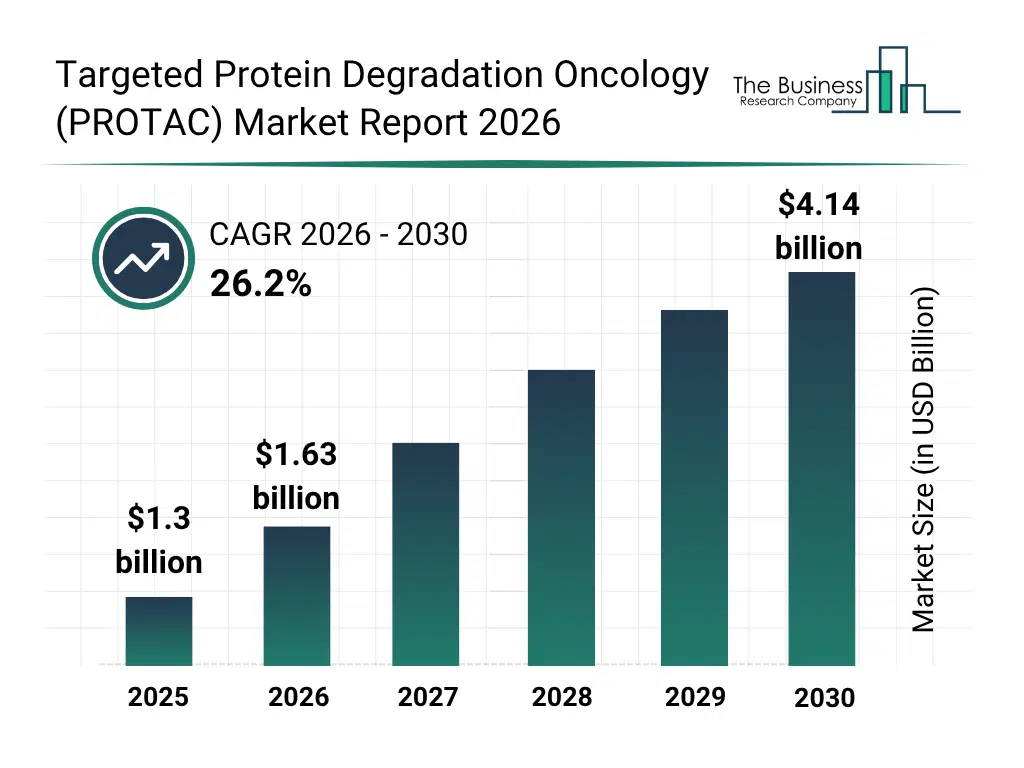
What Is The Targeted Protein Degradation Oncology (PROTAC) Market Size and Share 2026?
The targeted protein degradation oncology (PROTAC) market size has grown exponentially in recent years. It will grow from $1.3 billion in 2025 to $1.63 billion in 2026 at a compound annual growth rate (CAGR) of 26.0%. The growth in the historic period can be attributed to rising cancer prevalence globally driving demand for novel therapeutics, limitations of traditional small molecule inhibitors in oncology treatment, growth in targeted cancer therapy research and clinical trials, increasing investment in biotechnology and pharmaceutical r&d, expansion of precision medicine approaches in oncology care.What Is The Targeted Protein Degradation Oncology (PROTAC) Market Growth Forecast?
The targeted protein degradation oncology (PROTAC) market size is expected to see exponential growth in the next few years. It will grow to $4.14 billion in 2030 at a compound annual growth rate (CAGR) of 26.2%. The growth in the forecast period can be attributed to increasing adoption of next generation protein degradation platforms in oncology pipelines, rising demand for therapies targeting undruggable cancer proteins, expansion of biomarker driven personalized cancer treatment approaches, growing clinical validation of PROTAC based therapeutics, increasing pharmaceutical partnerships and biotech innovation funding. Major trends in the forecast period include ai driven protein degradation target discovery platforms for oncology drug design optimization, precision oncology expansion through tumor specific proteolysis targeting chimera development, next generation molecular glue degraders for overcoming cancer drug resistance mechanisms, advanced lysosome targeting chimera systems for selective cancer cell protein elimination, hybrid multi modal protein degradation therapies combining PROTAC and autophagy pathways.
Global Targeted Protein Degradation Oncology (PROTAC) Market Segmentation
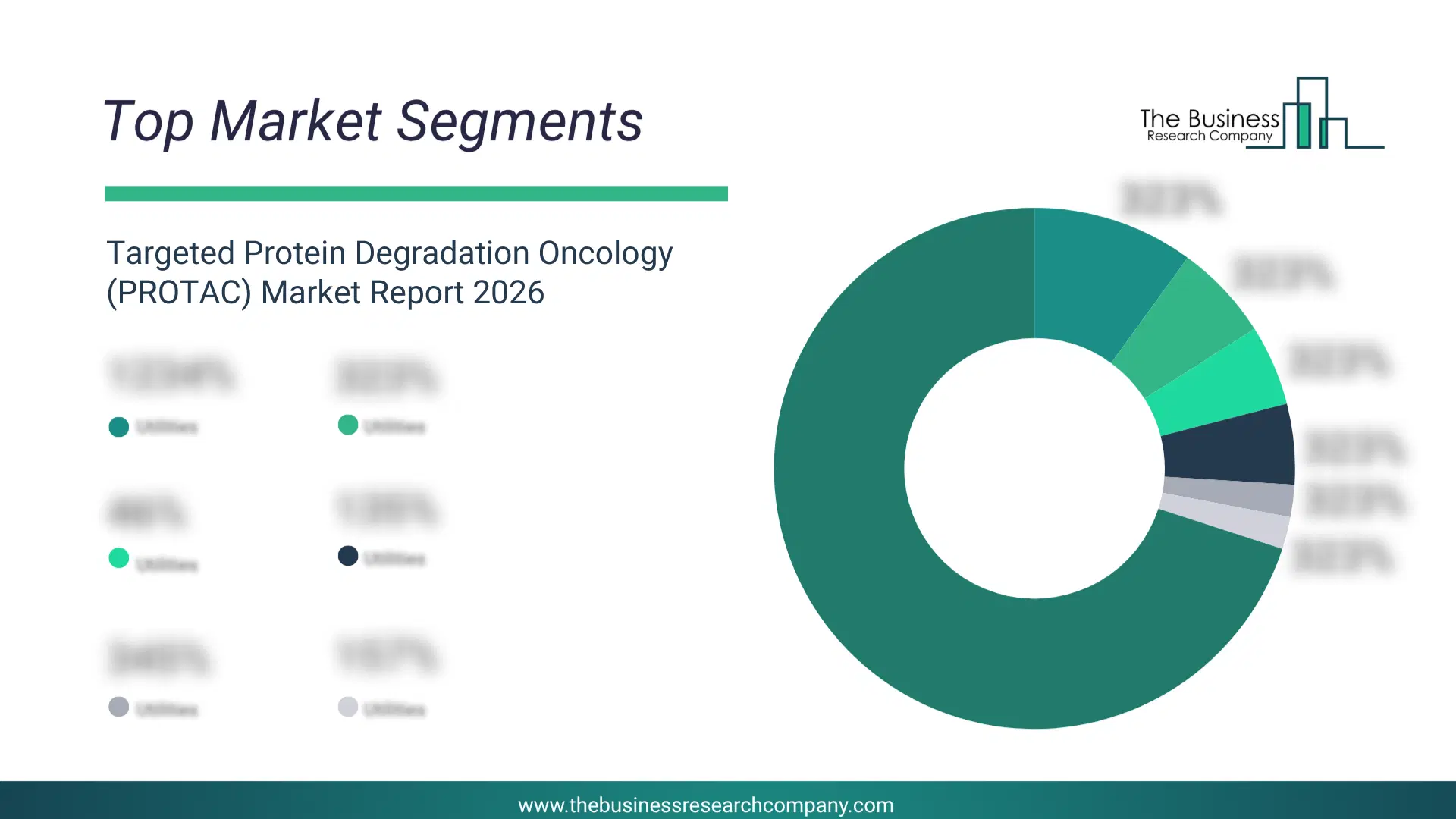
1) By Type: Proteolysis Targeting Chimeras (PROTACs), Molecular Glue Degraders, Lysosome Targeting Chimeras (LYTACs), Autophagy Targeting Chimeras (AUTACs), Other Types 2) By Stage: Approved Therapies, Phase III Clinical, Phase II Clinical, Preclinical Research And Discovery Stage 3) By Therapeutic Area: Breast Cancer, Prostate Cancer, Hematological Malignancies, Lung Cancer, Other Therapeutic Areas 4) By End User: Pharmaceutical Companies, Biotechnology Companies, Contract Research Organizations (CROs), Academic Research Institutes, Other End Users Subsegments: 1) By Proteolysis Targeting Chimeras (PROTACs): Small Molecule Proteolysis Targeting Chimeras (PROTACs), Peptide Based Proteolysis Targeting Chimeras (PROTACs), Antibody Conjugated Proteolysis Targeting Chimeras (PROTACs), Oral Proteolysis Targeting Chimeras (PROTACs) Therapeutics, Tumor Specific Proteolysis Targeting Chimeras (PROTACs) 2) By Molecular Glue Degraders: Small Molecule Molecular Glues, Protein Interaction Modulating Molecular Glues, Kinase Targeted Molecular Glues, Transcription Factor Degrading Molecular Glues, Oncology Specific Molecular Glue Degraders 3) By Lysosome Targeting Chimeras (LYTACs): Antibody Based Lysosome Targeting Chimeras (LYTACs), Glycoprotein Based Lysosome Targeting Chimeras (LYTACs), Cell Surface Receptor Mediated Lysosome Targeting Chimeras (LYTACs), Tumor Antigen Targeting Lysosome Targeting Chimeras (LYTACs) 4) By Autophagy Targeting Chimeras (AUTACs): Small Molecule Autophagy Targeting Chimeras (AUTACs), Organelle Specific Autophagy Targeting Chimeras (AUTACs), Protein Aggregate Targeting Autophagy Targeting Chimeras (AUTACs), Cancer Selective Autophagy Targeting Chimeras (AUTACs) 5) By Other Types: Hybrid Protein Degradation Modalities, Emerging Targeted Protein Degradation Platforms, Dual Mechanism Protein Degraders, Experimental Oncology Protein Degradation Technologies, Next Generation Targeted Degradation SystemsWhat Is The Driver Of The Targeted Protein Degradation Oncology (PROTAC) Market?
The rising cancer incidence is expected to propel the growth of the targeted protein degradation oncology (PROTAC) market going forward. Cancer incidence refers to the rate at which new cancer cases are diagnosed within a specific population over a defined period of time. The growing prevalence of cancer is largely driven by population aging, as older individuals accumulate prolonged exposure to carcinogenic risk factors and experience a progressive decline in cellular repair mechanisms. The rising burden of cancer directly intensifies demand for novel and more precise therapeutic approaches, as conventional treatments often fail to effectively target undruggable oncoproteins, prompting the need for selective degradation technologies such as targeted protein degradation oncology (PROTAC). For instance, in February 2024, according to the World Health Organization, a Switzerland-based intergovernmental organization, by 2050, over 35 million new cancer cases were projected, representing a 77% increase compared to the estimated 20 million cases in 2022. Therefore, rising cancer incidence is driving the growth of the targeted protein degradation oncology (PROTAC) industry.Key Players In The Global Targeted Protein Degradation Oncology (PROTAC) Market
Major companies operating in the targeted protein degradation oncology (protac) market report are AbbVie Inc., Amgen Inc., Amphista Therapeutics Limited, Arvinas Inc., AstraZeneca plc, BeiGene Ltd., Boehringer Ingelheim International GmbH, Bristol-Myers Squibb Company, C4 Therapeutics Inc., Dialectic Therapeutics Inc., Eli Lilly and Company, F. Hoffmann-La Roche AG, Foghorn Therapeutics Inc., Gilead Sciences Inc., GSK plc, Johnson & Johnson, Kymera Therapeutics Inc., Merck & Co. Inc., Monte Rosa Therapeutics Inc., Novartis AG, Nurix Therapeutics Inc., Pfizer Inc., Sanofi S.A., Takeda Pharmaceutical Company Limited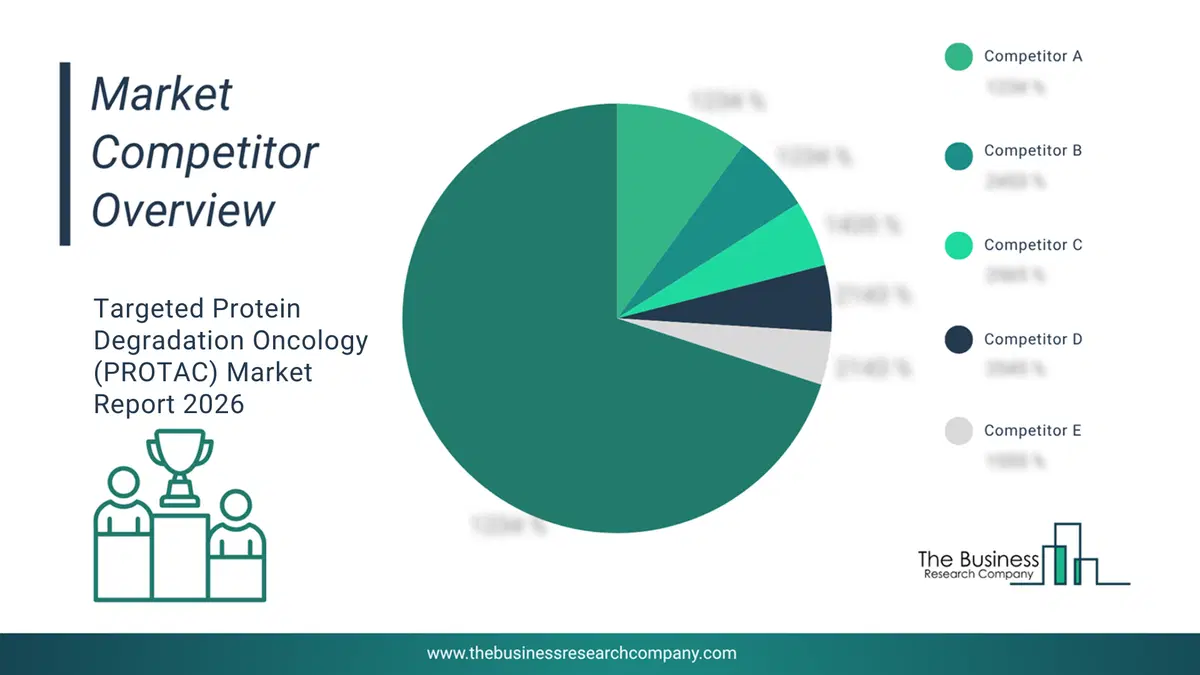
This chart is for illustrative purposes; the full report includes a detailed competitor analysis and comprehensive overview of the top 10 companies in the market.
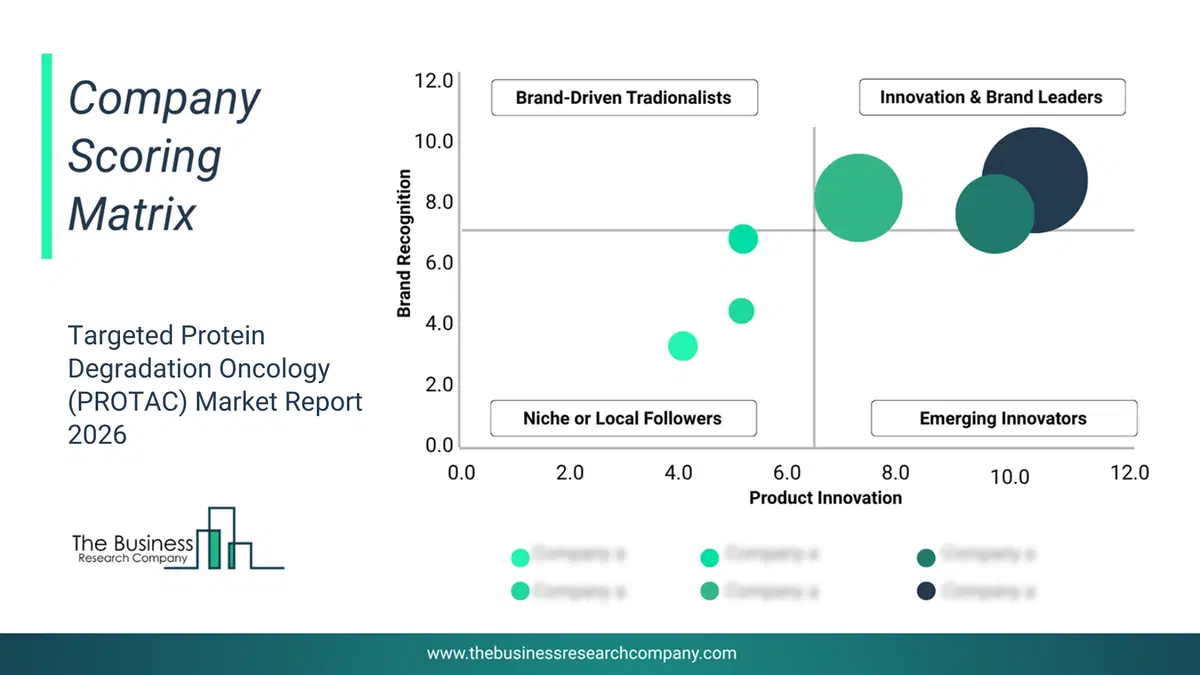
This chart maps companies by product innovation and brand strength, with bubble size indicating relative revenue, helping identify market leaders, challengers, and niche players. This is an illustrative chart; the full report provides a complete and accurate competitive analysis.
Global Targeted Protein Degradation Oncology (PROTAC) Market Trends and Insights
Major companies operating in the targeted protein degradation oncology (PROTAC) market are focusing on developing innovative solutions, such as oral PROTAC protein degraders, to enhance treatment efficacy, improve patient convenience, and target previously undruggable cancer-causing proteins. Oral PROTAC protein degraders are orally administered therapeutic compounds that selectively induce the degradation of disease-causing proteins by harnessing the body’s natural protein disposal system. For instance, in February 2024, Arvinas Inc., a US-based clinical-stage biotechnology company, partnered with Pfizer Inc., a US-based biopharmaceutical and biotechnology corporation, to announce that the U.S. Food and Drug Administration (FDA) had granted Fast Track designation for the investigation of vepdegestrant (ARV-471) to enhance the development and expedited regulatory review of a novel targeted protein degrader for the treatment of ER+/HER2- locally advanced or metastatic breast cancer with unmet medical needs. Vepdegestrant (ARV-471) is a PROTAC protein degrader designed to selectively target and degrade the estrogen receptor (ER) rather than merely inhibiting its activity.What Are Latest Mergers And Acquisitions In The Targeted Protein Degradation Oncology (PROTAC) Market?
In November 2023, Bristol Myers Squibb, a US-based biopharmaceutical company, acquired Orum Therapeutics’ ORM-6151 program from Orum Therapeutics for an undisclosed amount. Through this acquisition, Bristol Myers Squibb aims to expand its oncology pipeline and strengthen its protein degradation capabilities by advancing a first-in-class anti-CD33 antibody-enabled GSPT1 degrader for the treatment of acute myeloid leukemia (AML) and high-risk myelodysplastic syndromes (MDS). Orum Therapeutics is a US-based clinical-stage biotechnology company specializing in dual-precision targeted protein degradation (TPD²) and targeted protein stabilization (TPS²) technologies for cancer treatment.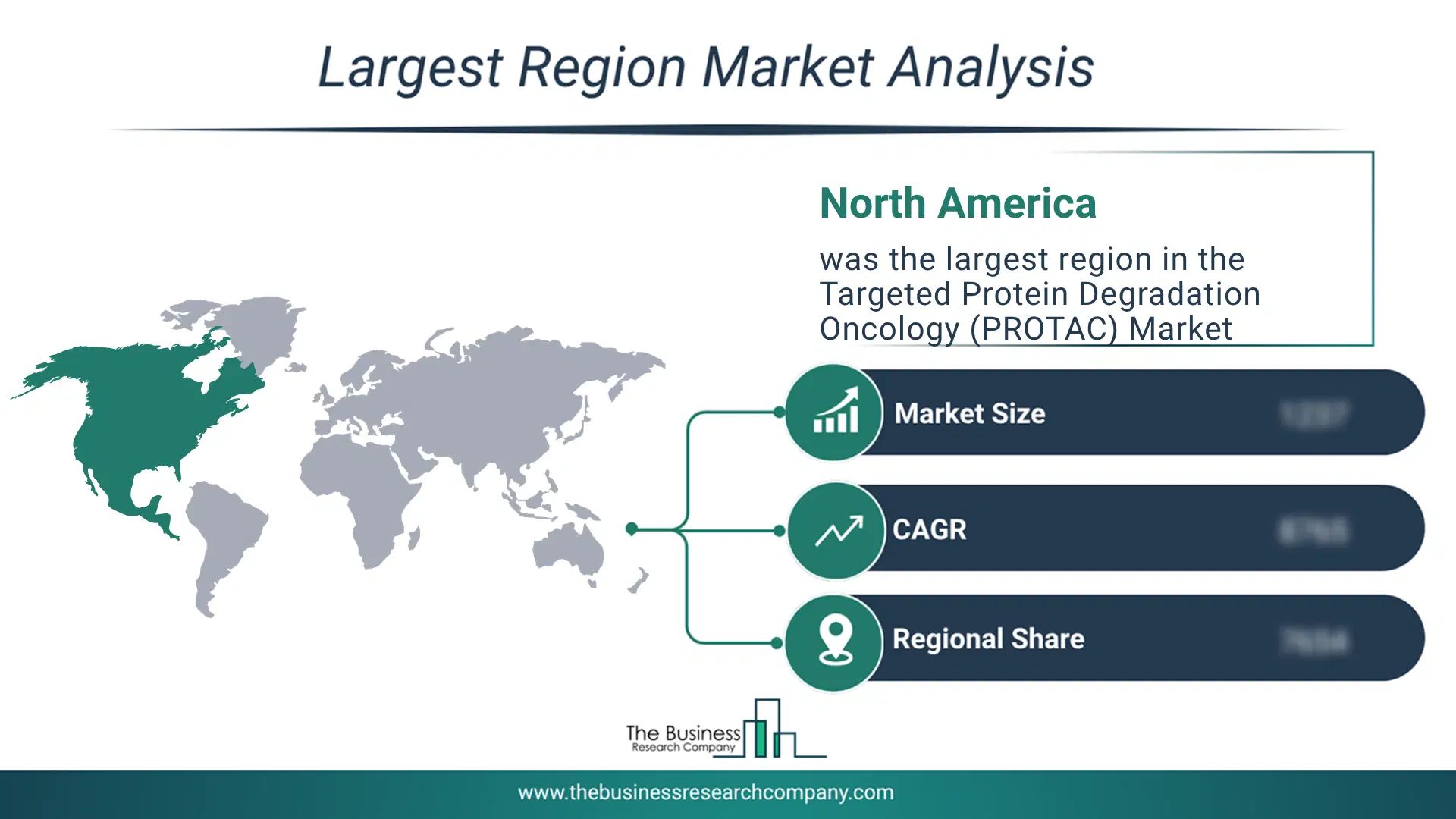
Regional Outlook
North America was the largest region in the targeted protein degradation oncology (PROTAC) market in 2025. Asia-Pacific is expected to be the fastest-growing region in the forecast period. The regions covered in this market report are Asia-Pacific, South East Asia, Western Europe, Eastern Europe, North America, South America, Middle East, Africa. The countries covered in this market report are Australia, Brazil, China, France, Germany, India, Indonesia, Japan, Taiwan, Russia, South Korea, UK, USA, Canada, Italy, Spain.What Defines the Targeted Protein Degradation Oncology (PROTAC) Market?
The targeted protein degradation oncology (PROTAC) market consists of revenues earned by entities by providing services such as drug discovery support, targeted protein degradation platform development, oncology clinical research, and biomarker identification services. The market value includes the value of related goods sold by the service provider or included within the service offering. The targeted protein degradation oncology (PROTAC) market also includes sales of androgen receptor degraders, estrogen receptor degraders, bromodomain protein degraders, and kinase-targeting degraders. Values in this market are ‘factory gate’ values, that is, the value of goods sold by the manufacturers or creators of the goods, whether to other entities (including downstream manufacturers, wholesalers, distributors and retailers) or directly to end customers. The value of goods in this market includes related services sold by the creators of the goods.How is Market Value Defined and Measured?
The market value is defined as the revenues that enterprises gain from the sale of goods and/or services within the specified market and geography through sales, grants, or donations in terms of the currency (in USD unless otherwise specified). The revenues for a specified geography are consumption values that are revenues generated by organizations in the specified geography within the market, irrespective of where they are produced. It does not include revenues from resales along the supply chain, either further along the supply chain or as part of other products.
This chart presents market attractiveness based on a quantitative evaluation of growth, competition, strategic alignment, and risk, offering a clear view of opportunity areas for decision-making. This chart is for illustrative purposes; the full report contains the complete analysis.

This chart highlights the Total Addressable Market (TAM) by estimating the maximum revenue opportunity using an assumption-driven approach, supporting strategic planning and opportunity sizing across markets. The chart is illustrative; the full report provides a more comprehensive analysis.
What Key Data and Analysis Are Included in the Targeted Protein Degradation Oncology (PROTAC) Market Report 2026?
The targeted protein degradation oncology (protac) market research report is one of a series of new reports from The Business Research Company that provides market statistics, including industry global market size, regional shares, competitors with the market share, detailed market segments, market trends and opportunities, and any further data you may need to thrive in the targeted protein degradation oncology (protac) industry. The market research report delivers a complete perspective of everything you need, with an in-depth analysis of the current and future state of the industry.Targeted Protein Degradation Oncology (PROTAC) Market Report Forecast Analysis
| Report Attribute | Details |
|---|---|
| Market Size Value In 2026 | $1.63 billion |
| Revenue Forecast In 2030 | $4.14 billion |
| Growth Rate | CAGR of 26.2% from 2026 to 2030 |
| Base Year For Estimation | 2025 |
| Actual Estimates/Historical Data | 2020-2025 |
| Forecast Period | 2026 - 2030 |
| Market Representation | Revenue in USD Billion and CAGR from 2026 to 2030 |
| Segments Covered | Type, Stage, Therapeutic Area, End User |
| Regional Scope | Asia-Pacific, Western Europe, Eastern Europe, North America, South America, Middle East, Africa |
| Country Scope | The countries covered in the report are Australia, Brazil, China, France, Germany, India, Indonesia, Japan, Taiwan, Russia, South Korea, UK, USA, Canada, Italy, Spain. |
| Key Companies Profiled | AbbVie Inc., Amgen Inc., Amphista Therapeutics Limited, Arvinas Inc., AstraZeneca plc, BeiGene Ltd., Boehringer Ingelheim International GmbH, Bristol-Myers Squibb Company, C4 Therapeutics Inc., Dialectic Therapeutics Inc., Eli Lilly and Company, F. Hoffmann-La Roche AG, Foghorn Therapeutics Inc., Gilead Sciences Inc., GSK plc, Johnson & Johnson, Kymera Therapeutics Inc., Merck & Co. Inc., Monte Rosa Therapeutics Inc., Novartis AG, Nurix Therapeutics Inc., Pfizer Inc., Sanofi S.A., Takeda Pharmaceutical Company Limited |
| Customization Scope | Request for Customization |
| Pricing And Purchase Options | Explore Purchase Options |