

Tele-Derm Robot Camera Arm Market Report 2026
Global Outlook – By Product Type (Fixed Camera Arm, Articulated Camera Arm, Portable Camera Arm, Other Product Types), By Technology (Wired, Wireless), By Application (Teledermatology, Remote Patient Monitoring, Clinical Diagnostics, Other Applications), By End-User (Hospitals, Clinics, Ambulatory Surgical Centers, Other End-Users) - Market Size, Trends, Strategies, and Forecast to 2030
Tele-Derm Robot Camera Arm Market Overview
• Tele-Derm Robot Camera Arm market size has reached to $1.6 billion in 2025 • Expected to grow to $3.76 billion in 2030 at a compound annual growth rate (CAGR) of 18.6% • Growth Driver: The Increasing Prevalence Of Skin Disorders Driving The Growth Of The Market Due To Environmental Factors And Demand For Remote Dermatological Care • North America was the largest region in 2025 and Asia-Pacific is the fastest growing region.What Is Covered Under Tele-Derm Robot Camera Arm Market?
A tele-derm robot camera arm refers to a robotic device equipped with a high-resolution camera designed to assist dermatologists in performing remote skin examinations and diagnoses through telemedicine platforms. It enables precise image capture and positioning, allowing real-time visual assessment and enhanced accuracy in dermatological consultations. The main product types of the tele-derm robot camera arms are fixed camera arm, articulated camera arm, portable camera arm, and others. A fixed camera arm refers to a stationary support device designed to hold and position a camera in a set location, providing stability and consistent framing for capturing images or video. These arms are compatible with various technologies, including wired and wireless systems, and are employed across multiple applications such as teledermatology, remote patient monitoring, clinical diagnostics, and other applications. They serve a wide range of end-users, including end-users such as hospitals, clinics, ambulatory surgical centers, and other end-users.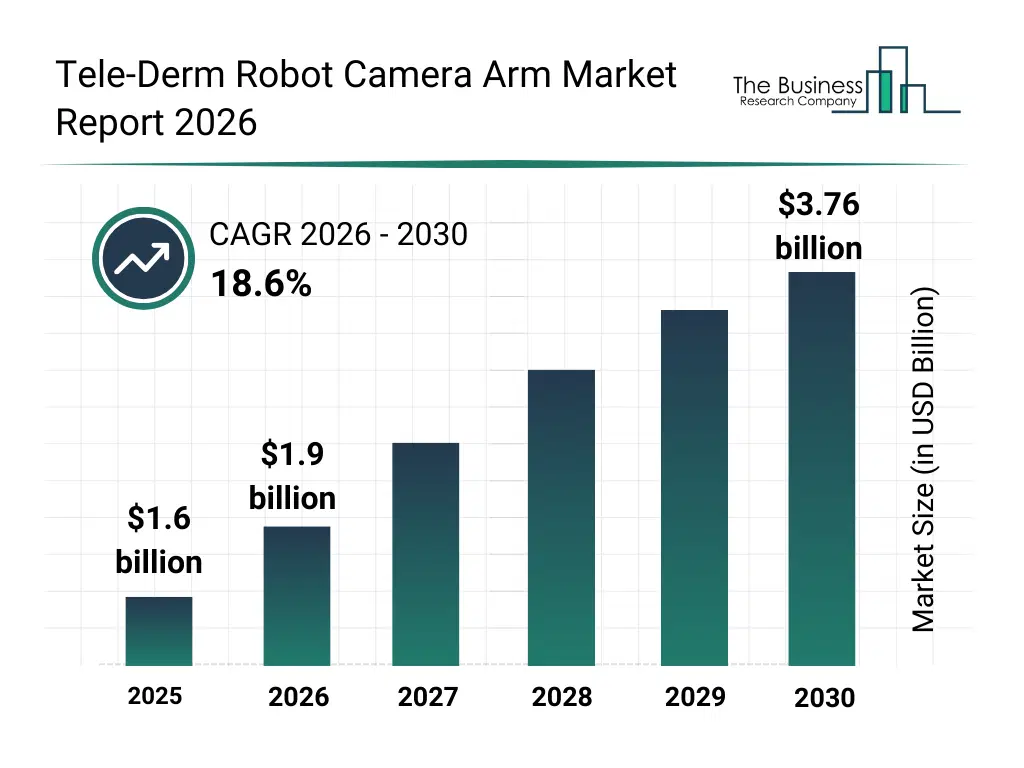
What Is The Tele-Derm Robot Camera Arm Market Size and Share 2026?
The tele-derm robot camera arm market size has grown rapidly in recent years. It will grow from $1.6 billion in 2025 to $1.9 billion in 2026 at a compound annual growth rate (CAGR) of 18.9%. The growth in the historic period can be attributed to growth in telemedicine adoption, increasing shortage of dermatology specialists, expansion of remote clinical consultation services, advancements in robotic camera hardware, rising acceptance of digital diagnostics.What Is The Tele-Derm Robot Camera Arm Market Growth Forecast?
The tele-derm robot camera arm market size is expected to see rapid growth in the next few years. It will grow to $3.76 billion in 2030 at a compound annual growth rate (CAGR) of 18.6%. The growth in the forecast period can be attributed to increasing investments in telehealth robotics, rising demand for remote specialty care, expansion of wireless medical imaging technologies, growing integration of ai diagnostics, increasing deployment in outpatient and ambulatory settings. Major trends in the forecast period include increasing adoption of robotic-assisted teledermatology devices, rising demand for high-precision remote imaging systems, growing integration of AI-enhanced skin analysis, expansion of portable and flexible camera arm solutions, enhanced focus on remote diagnostic accuracy.
Global Tele-Derm Robot Camera Arm Market Segmentation
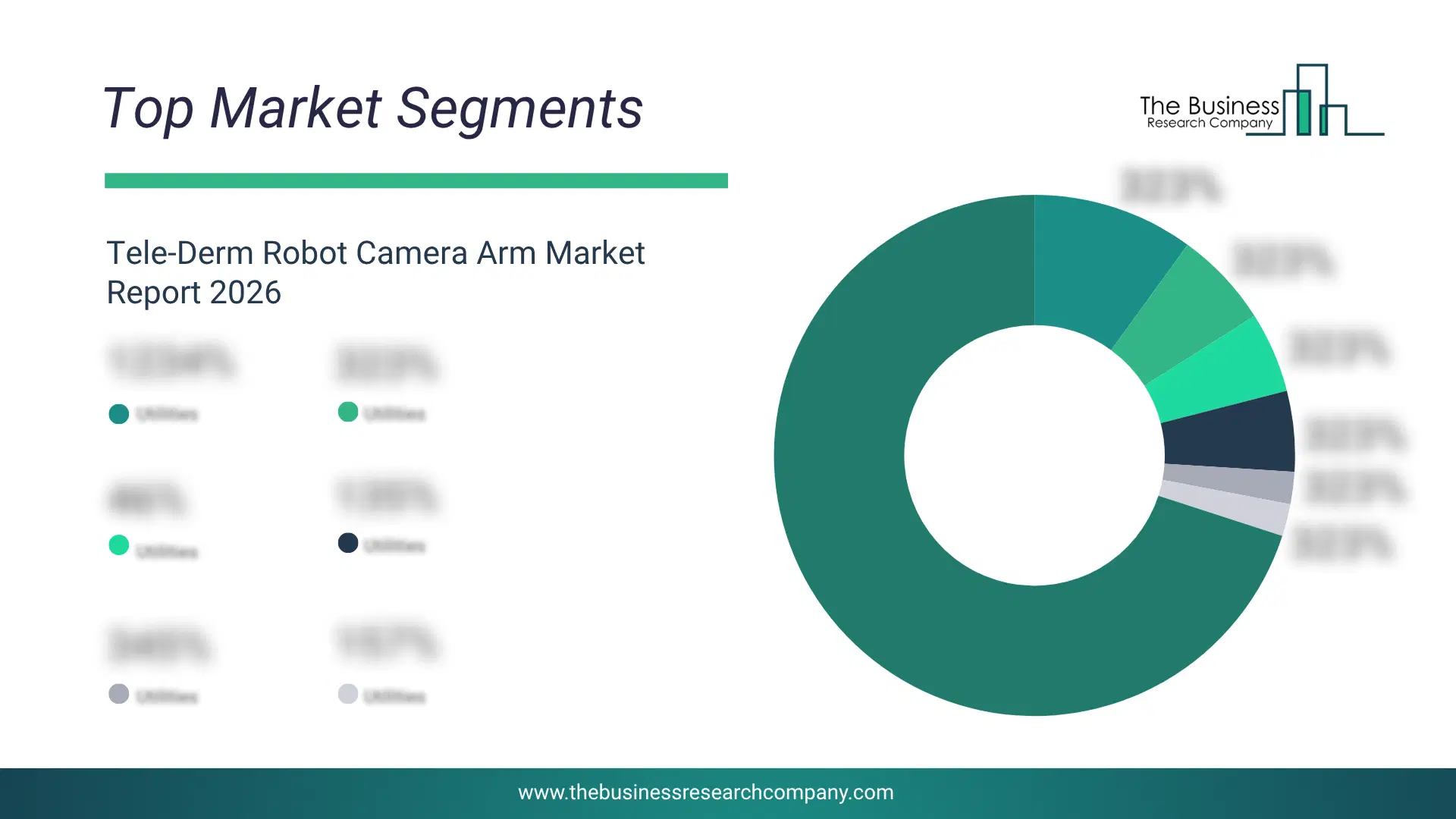
1) By Product Type: Fixed Camera Arm, Articulated Camera Arm, Portable Camera Arm, Other Product Types 2) By Technology: Wired, Wireless 3) By Application: Teledermatology, Remote Patient Monitoring, Clinical Diagnostics, Other Applications 4) By End-User: Hospitals, Clinics, Ambulatory Surgical Centers, Other End-Users Subsegments: 1) By Fixed Camera Arm: Wall Mounted, Ceiling Mounted, Tripod Mounted, Desk Mounted 2) By Articulated Camera Arm: Single Joint, Double Joint, Multi Joint, Telescopic 3) By Portable Camera Arm: Handheld, Foldable, Collapsible, Lightweight 4) By Other Product Types: Robotic, Motorized, Pneumatic, HydraulicWhat Are The Drivers Of The Tele-Derm Robot Camera Arm Market?
The increasing prevalence of skin disorders is expected to propel the growth of the tele-derm robot camera arm market going forward. Skin disorders refer to any medical conditions that affect the skin’s structure, function, or appearance, causing symptoms such as rashes, lesions, inflammation, or changes in color or texture. The increasing prevalence of skin disorders is due to environmental factors, as exposure to pollution, UV radiation, climate changes, and harmful chemicals can damage the skin and trigger various dermatological conditions. The tele-derm robot camera arm enables precise remote skin examinations, improving early detection, diagnosis, and monitoring of various skin disorders while expanding access to dermatological care. For instance, in August 2023, according to Skin Health Institute Inc., an Australia-based non-profit organization, in Australia, psoriasis affects an estimated 2–3% of the population, highlighting it as a fairly common skin condition. Therefore, the increasing prevalence of skin disorders is driving the telederm robot camera arm market. The rising healthcare expenditure is expected to propel the growth of the tele-derm robot camera arm market going forward. Healthcare expenditure refers to the total spending on medical services, equipment, and technologies aimed at improving health outcomes. Healthcare expenditure is growing due to the increasing demand for advanced medical technologies, as hospitals and clinics invest more in innovative equipment and digital solutions to improve patient care and outcomes. Rising healthcare expenditure is driving the adoption of tele-derm robot camera arms by enabling healthcare providers to invest in advanced diagnostic technologies that improve remote dermatological care and enhance patient outcomes. For instance, in June 2025, according to the Centers for Medicare & Medicaid Services, a US-based government agency, in 2023, national health expenditures (NHE) grew by 7.5%, reaching $4.9 trillion, which averages $14,570 per person and represents 17.6% of the Gross Domestic Product (GDP). Spending on Medicare increased by 8.1% to $1,029.8 billion, making up 21% of total NHE. Therefore, the rising healthcare expenditure is driving the growth of tele-derm robot camera arm industry. The Growing Adoption Of Telemedicine Platforms Driving The Market Due To Enhance Healthcare Accessibility The growing adoption of telemedicine platforms is expected to propel the growth of the tele-derm robot camera arm market going forward. Telemedicine refers to the use of digital technologies to provide remote clinical services, enabling patients to consult healthcare professionals without in-person visits. The adoption of telemedicine platforms is rising due to the increasing need for convenient and accessible healthcare services that allow patients to consult doctors remotely without traveling to clinics or hospitals. Tele-derm robot camera arm enhances telemedicine platforms by enabling high-resolution, real-time skin imaging, allowing dermatologists to remotely diagnose, monitor, and manage skin conditions with greater accuracy and efficiency. For instance, in April 2023, according to FAIR Health Inc., a US-based non-profit organization, in 2023, national telehealth use increased by 7.3%, rising from 5.5% of medical claim lines in December 2022 to 5.9% in January 2023. Therefore, the growing adoption of telemedicine platforms is driving the growth of the tele derm robot camera arm market.Key Players In The Global Tele-Derm Robot Camera Arm Market
Major companies operating in the tele-derm robot camera arm market are Olympus Corporation, KUKA Systems GmbH, Comau S.p.A., Universal Robots AS, FotoFinder Systems Inc., Canfield Scientific Inc., Mecademic Robotics, Blackcam Robotics, Dermavision Solutions S.L., Elephant Robotics, Fourth Arrow Camera Arms, Shenzhen Wisonic Medical Technology Co. Ltd, Adept Technology Inc., Kinova Robotics, Staubli Robotics, Denso Robotics, Robotiq Inc., iRobot Medical Systems, Yaskawa Motoman, ABB Robotics
This chart is for illustrative purposes; the full report includes a detailed competitor analysis and comprehensive overview of the top 10 companies in the market.
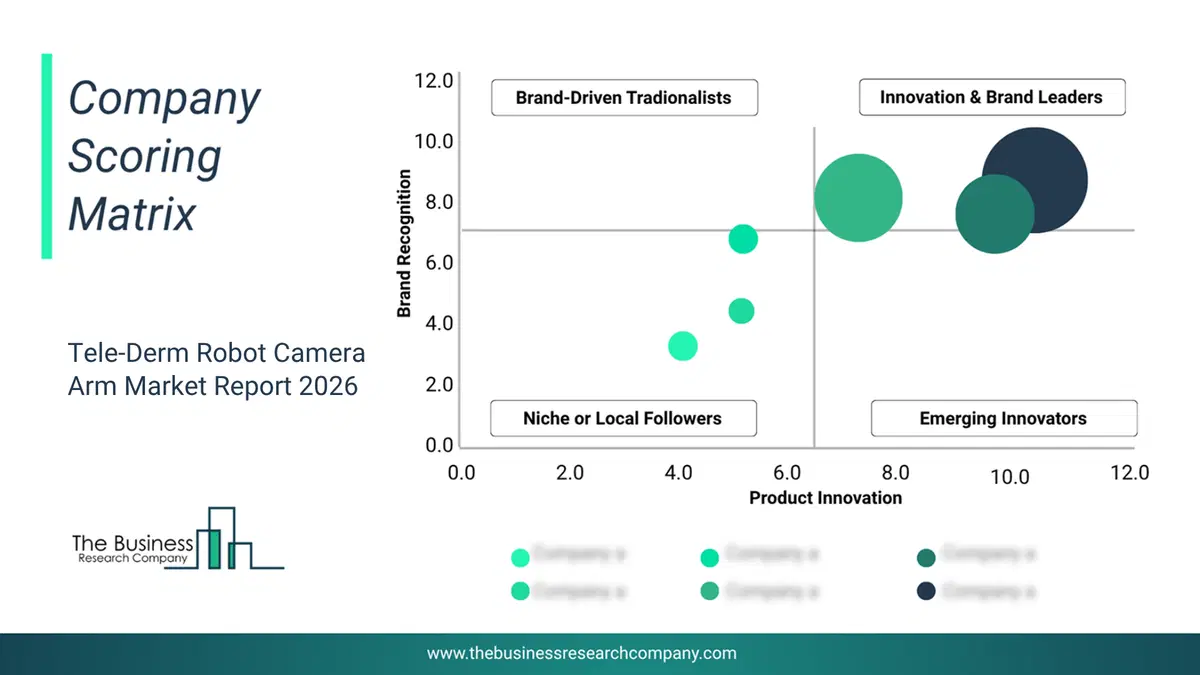
This chart maps companies by product innovation and brand strength, with bubble size indicating relative revenue, helping identify market leaders, challengers, and niche players. This is an illustrative chart; the full report provides a complete and accurate competitive analysis.
Regional Outlook
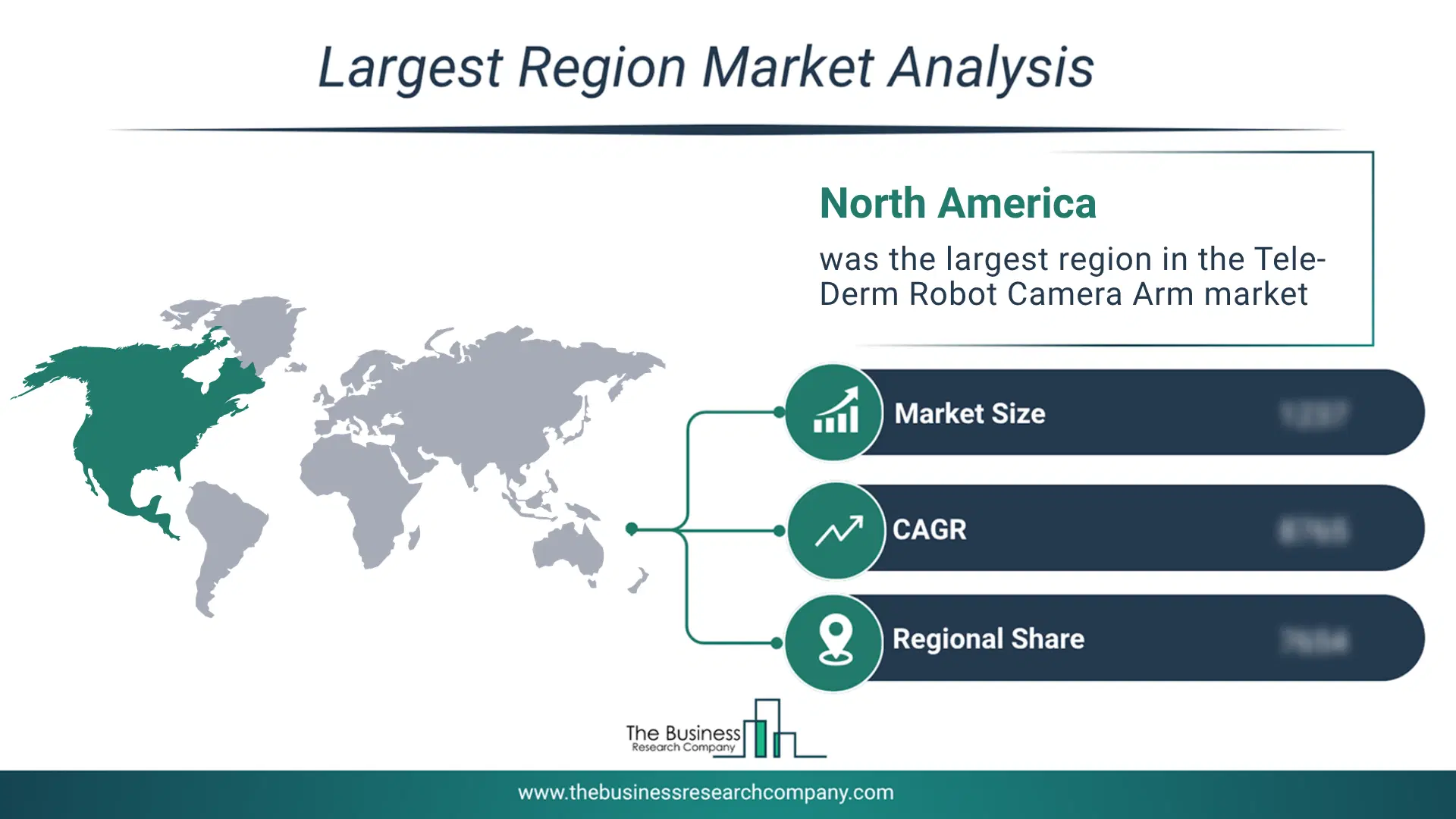
North America was the largest region in the tele-derm robot camera arm market in 2025. Asia-Pacific is expected to be the fastest-growing region in the forecast period. The regions covered in this market report are Asia-Pacific, South East Asia, Western Europe, Eastern Europe, North America, South America, Middle East, Africa. The countries covered in this market report are Australia, Brazil, China, France, Germany, India, Indonesia, Japan, Taiwan, Russia, South Korea, UK, USA, Canada, Italy, Spain.What Defines the Tele-Derm Robot Camera Arm Market?
The tele-derm robot camera arm market consists of revenues earned by entities by providing services such as telemedicine consultations, skin imaging and documentation, surgical assistance and biopsy guidance, remote patient monitoring, and equipment leasing and maintenance services. The market value includes the value of related goods sold by the service provider or included within the service offering. The telederm robot camera arm market also includes sales of robotic camera control systems, motorized endoscope attachments, and robotic arm drapes. Values in this market are ‘factory gate’ values; that is, the value of goods sold by the manufacturers or creators of the goods, whether to other entities (including downstream manufacturers, wholesalers, distributors, and retailers) or directly to end customers. The value of goods in this market includes related services sold by the creators of the goods.How is Market Value Defined and Measured?
The market value is defined as the revenues that enterprises gain from the sale of goods and/or services within the specified market and geography through sales, grants, or donations in terms of the currency (in USD unless otherwise specified). The revenues for a specified geography are consumption values that are revenues generated by organizations in the specified geography within the market, irrespective of where they are produced. It does not include revenues from resales along the supply chain, either further along the supply chain or as part of other products.
This chart presents market attractiveness based on a quantitative evaluation of growth, competition, strategic alignment, and risk, offering a clear view of opportunity areas for decision-making. This chart is for illustrative purposes; the full report contains the complete analysis.

This chart highlights the Total Addressable Market (TAM) by estimating the maximum revenue opportunity using an assumption-driven approach, supporting strategic planning and opportunity sizing across markets. The chart is illustrative; the full report provides a more comprehensive analysis.
What Key Data and Analysis Are Included in the Tele-Derm Robot Camera Arm Market Report 2026?
The tele-derm robot camera arm market research report is one of a series of new reports from The Business Research Company that provides market statistics, including industry global market size, regional shares, competitors with the market share, detailed market segments, market trends and opportunities, and any further data you may need to thrive in the tele-derm robot camera arm industry. The market research report delivers a complete perspective of everything you need, with an in-depth analysis of the current and future state of the industry.Tele-Derm Robot Camera Arm Market Report Forecast Analysis
| Report Attribute | Details |
|---|---|
| Market Size Value In 2026 | $1.9 billion |
| Revenue Forecast In 2030 | $3.76 billion |
| Growth Rate | CAGR of 18.6% from 2026 to 2030 |
| Base Year For Estimation | 2025 |
| Actual Estimates/Historical Data | 2020-2025 |
| Forecast Period | 2026 - 2030 |
| Market Representation | Revenue in USD Billion and CAGR from 2026 to 2030 |
| Segments Covered | Product Type, Technology, Application, End-User |
| Regional Scope | Asia-Pacific, Western Europe, Eastern Europe, North America, South America, Middle East, Africa |
| Country Scope | The countries covered in the report are Australia, Brazil, China, France, Germany, India, Indonesia, Japan, Taiwan, Russia, South Korea, UK, USA, Canada, Italy, Spain |
| Key Companies Profiled | Olympus Corporation, KUKA Systems GmbH, Comau S.p.A., Universal Robots AS, FotoFinder Systems Inc., Canfield Scientific Inc., Mecademic Robotics, Blackcam Robotics, Dermavision Solutions S.L., Elephant Robotics, Fourth Arrow Camera Arms, Shenzhen Wisonic Medical Technology Co. Ltd, Adept Technology Inc., Kinova Robotics, Staubli Robotics, Denso Robotics, Robotiq Inc., iRobot Medical Systems, Yaskawa Motoman, ABB Robotics |
| Customization Scope | Request for Customization |
| Pricing And Purchase Options | Explore Purchase Options |