

Tendinopathy Market Report 2026
Global Outlook – By Type (Achilles Tendinopathy, Rotator Cuff Tendinopathy, Lateral Epicondylitis (Tennis Elbow), Patellar Tendinopathy, Other Types), By Treatment Type (Therapy, Medication, Surgical Treatment, Regenerative Medicine), By Route Of Administration (Oral, Topical, Injectable), By End User (Hospitals, Clinics, Ambulatory Surgical Centers, Rehabilitation Centers) - Market Size, Trends, Strategies, and Forecast to 2030
Tendinopathy Market Overview
• Tendinopathy market size has reached to $13.28 billion in 2025 • Expected to grow to $17.01 billion in 2030 at a compound annual growth rate (CAGR) of 5% • Growth Driver: Rising Incidence Of Sports Injuries Driving The Growth Of The Market Due To Increasing Tendon Stress And Overuse • Market Trend: Advancements In Bioinductive Technology For Enhanced Tendon Healing • North America was the largest region in 2025.What Is Covered Under Tendinopathy Market?
Tendinopathy refers to a condition that affects the tendons, causing pain, swelling, and reduced movement or strength. It is usually caused by repetitive stress or overuse and involves the deterioration of tendon tissue rather than acute inflammation. The main types of tendinopathy are achilles tendinopathy, rotator cuff tendinopathy, lateral epicondylitis (tennis elbow), patellar tendinopathy, and others. Achilles tendinopathy specifically refers to an injury of the achilles tendon, which connects the calf muscles to the heel bone. Treatment options include therapy, medications, surgical interventions, and regenerative medicine approaches. The condition can be managed through various routes of administration, such as oral, topical, and injectable methods and are provided in various end users such as hospitals, clinics, and ambulatory surgical centres.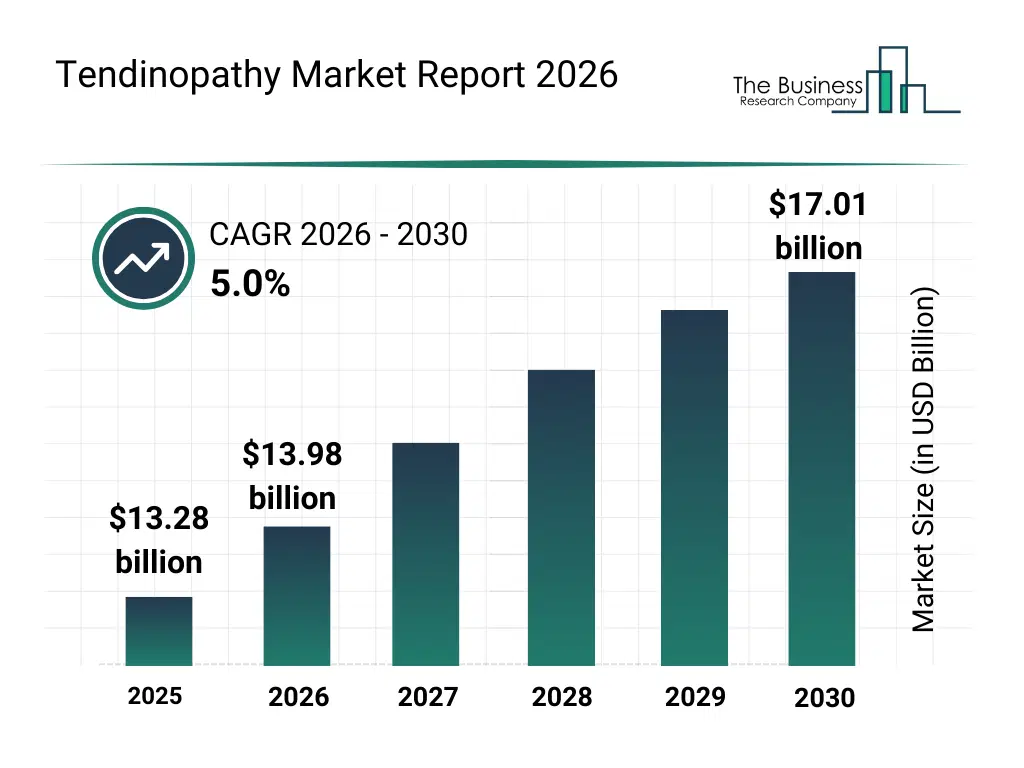
What Is The Tendinopathy Market Size and Share 2026?
The tendinopathy market size has grown strongly in recent years. It will grow from $13.28 billion in 2025 to $13.98 billion in 2026 at a compound annual growth rate (CAGR) of 5.3%. The growth in the historic period can be attributed to increasing incidence of sports-related injuries, growing aging population, rising awareness of musculoskeletal disorders, expansion of orthopedic care services, availability of physical therapy treatment options.What Is The Tendinopathy Market Growth Forecast?
The tendinopathy market size is expected to see strong growth in the next few years. It will grow to $17.01 billion in 2030 at a compound annual growth rate (CAGR) of 5.0%. The growth in the forecast period can be attributed to increasing investments in regenerative medicine research, rising demand for minimally invasive treatments, expansion of personalized orthopedic care, growing focus on long-term pain management solutions, increasing integration of digital rehabilitation monitoring. Major trends in the forecast period include increasing adoption of regenerative treatment approaches, rising use of non-invasive therapy solutions, growing integration of imaging-guided diagnosis, expansion of personalized rehabilitation programs, enhanced focus on early condition detection.
Global Tendinopathy Market Segmentation
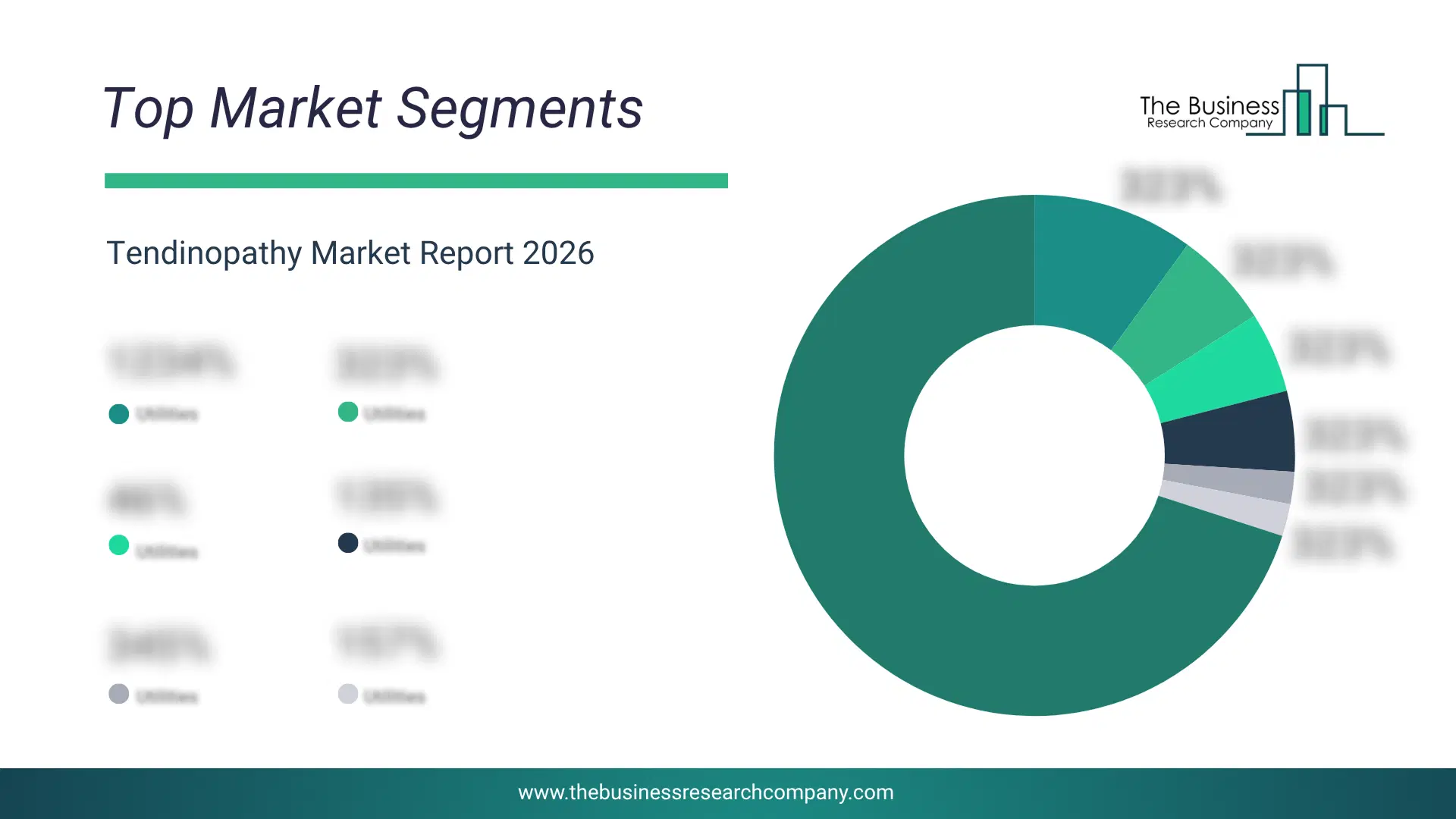
1) By Type: Achilles Tendinopathy, Rotator Cuff Tendinopathy, Lateral Epicondylitis (Tennis Elbow), Patellar Tendinopathy, Other Types 2) By Treatment Type: Therapy, Medication, Surgical Treatment, Regenerative Medicine 3) By Route Of Administration: Oral, Topical, Injectable 4) By End User: Hospitals, Clinics, Ambulatory Surgical Centers, Rehabilitation Centers Subsegments: 1) By Achilles Tendinopathy: Insertional Achilles Tendinopathy, Non-insertional Achilles Tendinopathy 2) By Rotator Cuff Tendinopathy: Supraspinatus Tendinopathy, Infraspinatus Tendinopathy, Subscapularis Tendinopathy, Teres Minor Tendinopathy 3) By Lateral Epicondylitis (Tennis Elbow): Tendon Overuse Injuries, Tendon Degeneration Injuries 4) By Patellar Tendinopathy: Proximal Patellar Tendinopathy, Distal Patellar Tendinopathy 5) By Other Types: De Quervain’s Tenosynovitis, Peroneal Tendinopathy, Flexor Tendinopathy, Extensor TendinopathyWhat Is The Driver Of The Tendinopathy Market?
The increasing incidence of sports injuries is expected to propel the growth of the tendinopathy market going forward. Sports injuries refer to physical injuries sustained during athletic activities or exercise, ranging from minor sprains and strains to more severe fractures or dislocations. The increasing incidence of sports injuries is due to intensified training and competition at younger ages, which places excessive stress on developing muscles and joints before they are fully matured. Sports injuries can cause tendinopathy by subjecting tendons to repetitive stress or sudden overload, resulting to microscopic tears, inflammation, and degeneration over time. For instance, in November 2023, according to the Howden Group Holdings Ltd, a UK-based insurance intermediary company, the severity of ankle injuries in the English Premier League surged by 170% between October 2022 and January 2023, with calf/shin injuries increasing by 200% and hamstring injuries by 130%, following the FIFA World Cup Qatar 2022. Therefore, the increasing incidence of sports injuries is driving the growth of tendinopathy industry.Key Players In The Global Tendinopathy Market
Major companies operating in the tendinopathy market are Pfizer Inc., Johnson and Johnson, Merck & Co. Inc., AbbVie Inc., Bayer AG, Sanofi SA, Bristol‑Myers Squibb Company, Novartis AG, GSK plc, Medtronic Plc, Stryker Corporation, Zimmer Biomet, Smith & Nephew plc, Arthrex, Bioventus, MIMEDX, Amniotics AB, BioPro Inc., TendoMend Ltd., Alafair Biosciences, Amniox Medical Inc., CONMED Corporation, Aevumed Inc., Parcus Medical LLC, Orthocell Ltd., CollPlant Biotechnologies Ltd., Tissue Regenix Group plc, Biorez Inc.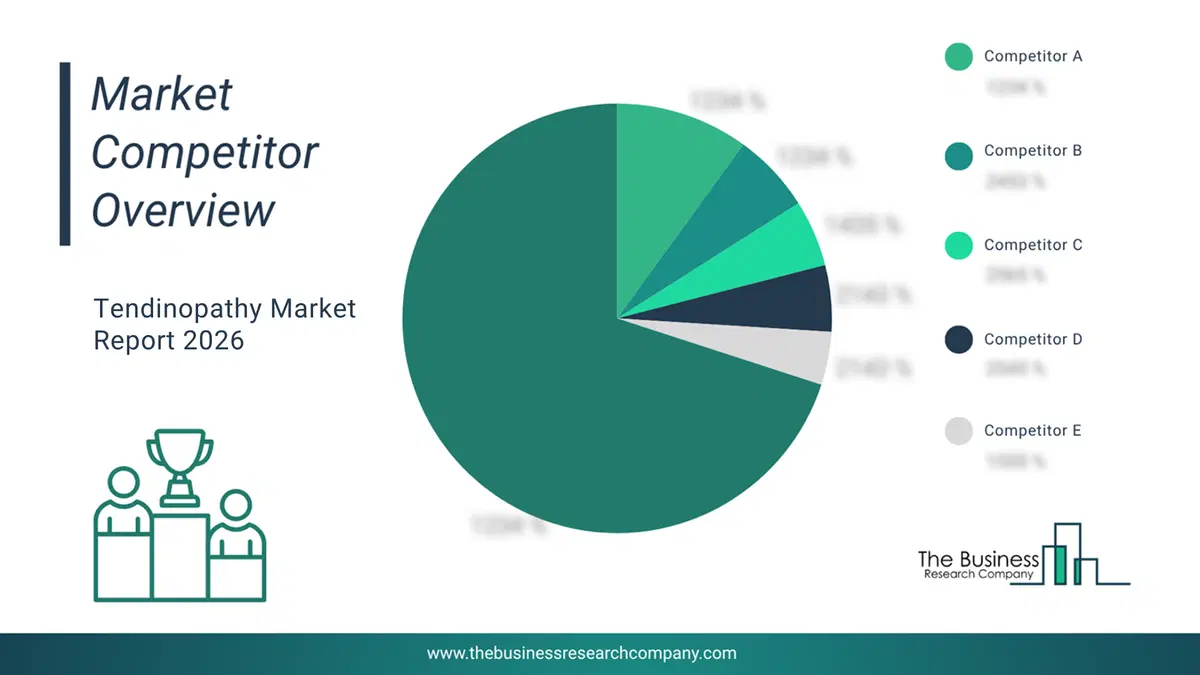
This chart is for illustrative purposes; the full report includes a detailed competitor analysis and comprehensive overview of the top 10 companies in the market.
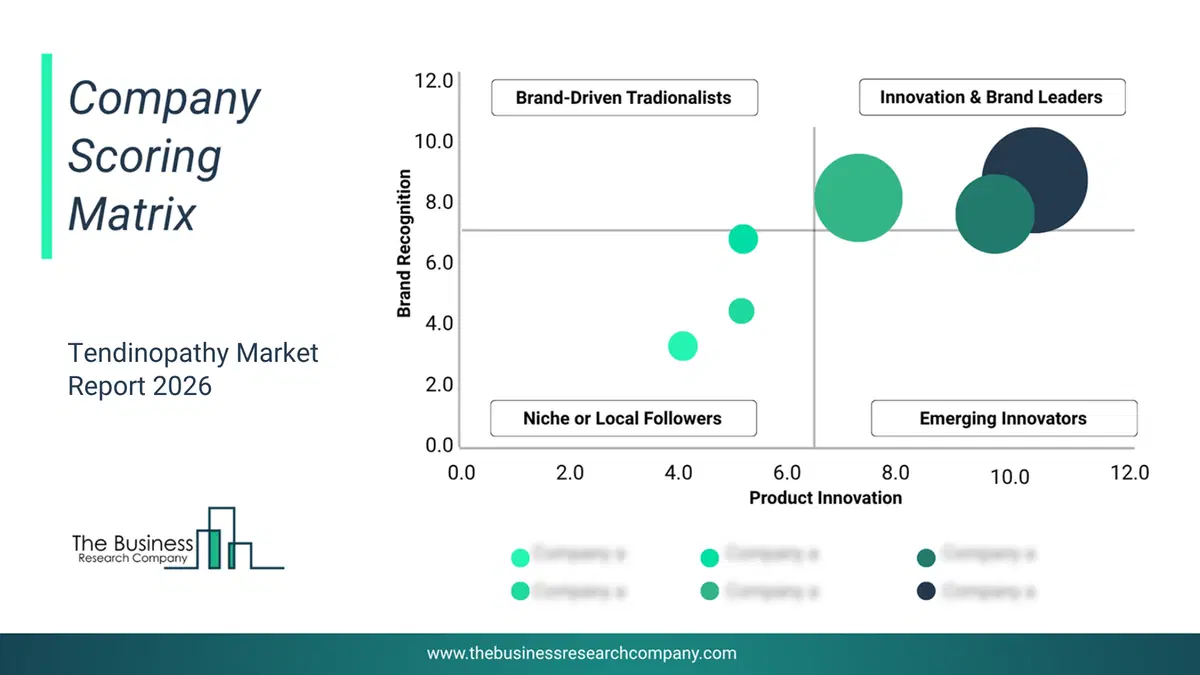
This chart maps companies by product innovation and brand strength, with bubble size indicating relative revenue, helping identify market leaders, challengers, and niche players. This is an illustrative chart; the full report provides a complete and accurate competitive analysis.
Global Tendinopathy Market Trends and Insights
Major companies operating in the tendinopathy market are focusing on developing technologically advanced products, such as bioinductive implants, to accelerate healing, enhance tendon regeneration, and reduce recovery time. A bioinductive implant is an advanced medical device that stimulates the body’s natural healing process by inducing new tendon-like tissue growth, thereby improving clinical outcomes in tendon repair. For instance, in July 2023, Smith+Nephew, a UK-based medical technology company, launch of the REGENETEN Bioinductive Implant in India. This collagen-based device transforms tendon repair by promoting biological healing through the induction of new tissue growth at the site of injury, particularly rotator cuff repair. A key feature of the implant is its minimally invasive delivery, which allows orthopedic surgeons to reinforce the tendon biologically without altering the existing surgical technique, offering a quicker, safer, and more effective treatment pathway for tendinopathy patients.What Are Latest Mergers And Acquisitions In The Tendinopathy Market?
In April 2023, Vander-Bend Manufacturing, Inc., a US-based medical technology company, acquired Omni Components Corporation for an undisclosed amount. With this acquisition, Vander-Bend Manufacturing Inc. aims to expand its precision manufacturing capabilities, enhance its product offerings in the medical technology sector, and strengthen its position in the market by integrating Omni Components Corporation's expertise in complex, high-precision components. Omni Components Corporation is a US-based medical device company offers tendon surgeries.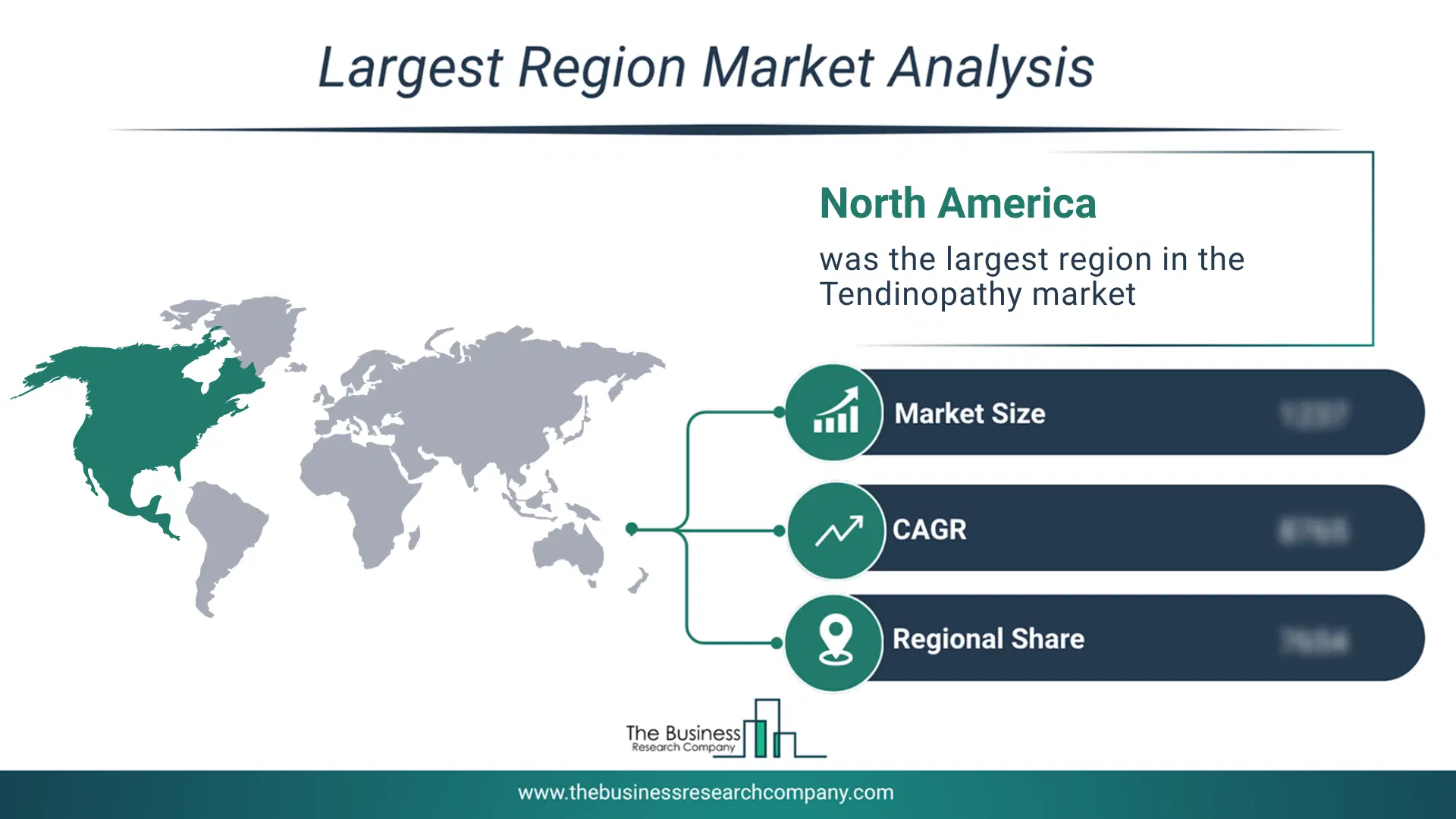
Regional Outlook
North America was the largest region in the tendinopathy market in 2025. The regions covered in this market report are Asia-Pacific, South East Asia, Western Europe, Eastern Europe, North America, South America, Middle East, Africa. The countries covered in this market report are Australia, Brazil, China, France, Germany, India, Indonesia, Japan, Taiwan, Russia, South Korea, UK, USA, Canada, Italy, Spain.What Defines the Tendinopathy Market?
The tendinopathy market consists of revenues earned by entities by providing services such as physical therapy and rehabilitation programs, pain management, arthroscopic debridement, and occupational therapy. The market value includes the value of related goods sold by the service provider or included within the service offering. The tendinopathy market also include sales of nonsteroidal anti-inflammatory drugs, creams and gels, and capsaicin creams. Values in this market are ‘factory gate’ values, that is the value of goods sold by the manufacturers or creators of the goods, whether to other entities (including downstream manufacturers, wholesalers, distributors and retailers) or directly to end customers. The value of goods in this market includes related services sold by the creators of the goods.How is Market Value Defined and Measured?
The market value is defined as the revenues that enterprises gain from the sale of goods and/or services within the specified market and geography through sales, grants, or donations in terms of the currency (in USD unless otherwise specified). The revenues for a specified geography are consumption values that are revenues generated by organizations in the specified geography within the market, irrespective of where they are produced. It does not include revenues from resales along the supply chain, either further along the supply chain or as part of other products.
This chart presents market attractiveness based on a quantitative evaluation of growth, competition, strategic alignment, and risk, offering a clear view of opportunity areas for decision-making. This chart is for illustrative purposes; the full report contains the complete analysis.

This chart highlights the Total Addressable Market (TAM) by estimating the maximum revenue opportunity using an assumption-driven approach, supporting strategic planning and opportunity sizing across markets. The chart is illustrative; the full report provides a more comprehensive analysis.
What Key Data and Analysis Are Included in the Tendinopathy Market Report 2026?
The tendinopathy market research report is one of a series of new reports from The Business Research Company that provides market statistics, including industry global market size, regional shares, competitors with the market share, detailed market segments, market trends and opportunities, and any further data you may need to thrive in the tendinopathy industry. The market research report delivers a complete perspective of everything you need, with an in-depth analysis of the current and future state of the industry.Tendinopathy Market Report Forecast Analysis
| Report Attribute | Details |
|---|---|
| Market Size Value In 2026 | $13.98 billion |
| Revenue Forecast In 2030 | $17.01 billion |
| Growth Rate | CAGR of 5% from 2026 to 2030 |
| Base Year For Estimation | 2025 |
| Actual Estimates/Historical Data | 2020-2025 |
| Forecast Period | 2026 - 2030 |
| Market Representation | Revenue in USD Billion and CAGR from 2026 to 2030 |
| Segments Covered | Type, Treatment Type, Route Of Administration, End User |
| Regional Scope | Asia-Pacific, Western Europe, Eastern Europe, North America, South America, Middle East, Africa |
| Country Scope | The countries covered in the report are Australia, Brazil, China, France, Germany, India, Indonesia, Japan, Taiwan, Russia, South Korea, UK, USA, Canada, Italy, Spain |
| Key Companies Profiled | Pfizer Inc., Johnson and Johnson, Merck & Co. Inc., AbbVie Inc., Bayer AG, Sanofi SA, Bristol‑Myers Squibb Company, Novartis AG, GSK plc, Medtronic Plc, Stryker Corporation, Zimmer Biomet, Smith & Nephew plc, Arthrex, Bioventus, MIMEDX, Amniotics AB, BioPro Inc., TendoMend Ltd., Alafair Biosciences, Amniox Medical Inc., CONMED Corporation, Aevumed Inc., Parcus Medical LLC, Orthocell Ltd., CollPlant Biotechnologies Ltd., Tissue Regenix Group plc, Biorez Inc. |
| Customization Scope | Request for Customization |
| Pricing And Purchase Options | Explore Purchase Options |