
Textile Exchange Preferred Fibers Market Report 2026
Global Outlook – By Fiber Type (Organic Cotton, Recycled Polyester, Lyocell, Recycled Nylon, Responsible Wool, Responsible Down, Other Fiber Types), By Distribution Channel (Direct Sales, Distributors, Online Retail, Other Distribution Channels), By Application (Apparel, Home Textiles, Industrial Textiles, Other Applications), By End User (Fashion And Apparel, Home Furnishing, Automotive, Industrial, Other End Users) – Market Size, Trends, Strategies, and Forecast to 2035
Textile Exchange Preferred Fibers Market Overview
• Textile Exchange Preferred Fibers market size has reached to $13.07 billion in 2025 • Expected to grow to $22.65 billion in 2030 at a compound annual growth rate (CAGR) of 11.5% • Growth Driver: Rising Demand for Sustainable and Eco-Friendly Textiles Driving The Market Growth Due To Increasing Adoption of Preferred Fiber • Market Trend: Innovations In Responsible Material Sourcing Accelerate Adoption Of Textile Exchange Preferred Fibers • Asia-Pacific was the largest region and fastest growing region.What Is Covered Under Textile Exchange Preferred Fibers Market?
Textile exchange preferred fibers are fibers or fiber materials identified or recognized by textile exchange as having improved environmental and/or social impacts compared with conventional alternatives, based on defined criteria or assessment approaches. They support efforts to promote more responsible fiber sourcing, supply chain transparency, and sustainability objectives within the textile industry. The main fiber types of textile exchange preferred fibers include organic cotton, recycled polyester, lyocell, recycled nylon, responsible wool, responsible down, and other fiber types. Organic cotton refers to cotton produced using farming practices that avoid synthetic pesticides and fertilizers and follow recognized organic production standards. These fibers are distributed through direct sales, distributors, online retail, and other distribution channels. The various applications involved are apparel, home textiles, industrial textiles, and others and they are utilized by end users including fashion and apparel, home furnishing, automotive, industrial, and others.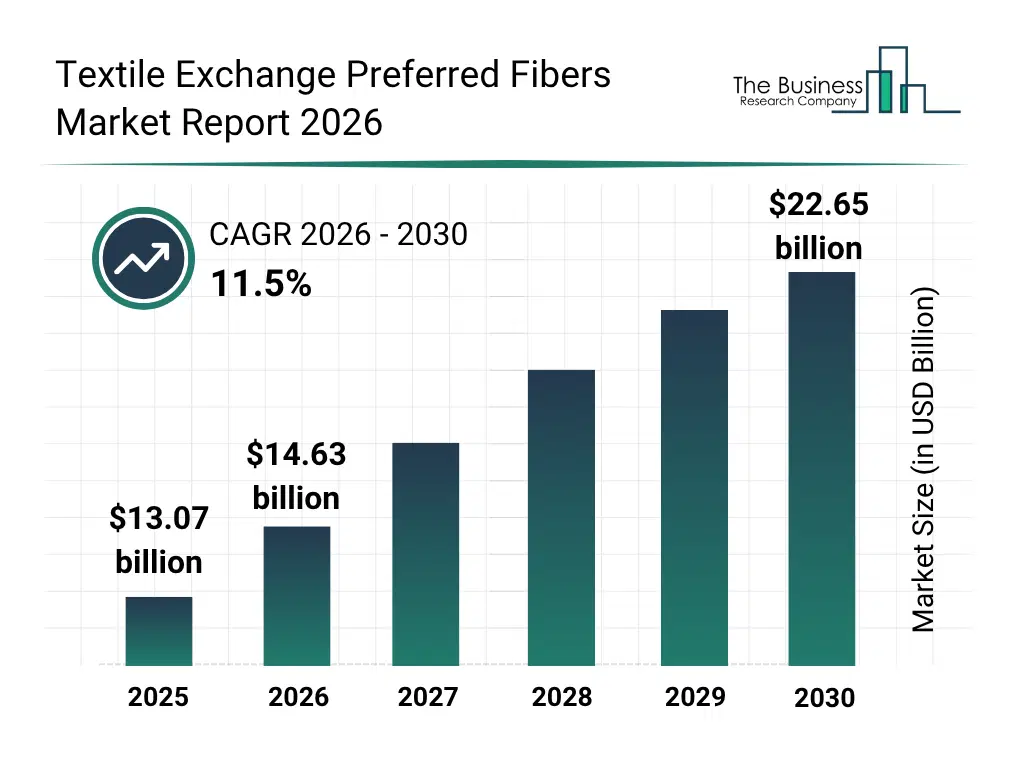
What Is The Textile Exchange Preferred Fibers Market Size and Share 2026?
The textile exchange preferred fibers market size has grown rapidly in recent years. It will grow from $13.07 billion in 2025 to $14.63 billion in 2026 at a compound annual growth rate (CAGR) of 12.0%. The growth in the historic period can be attributed to increasing consumer demand for sustainable apparel, growing adoption of responsible sourcing standards, rising environmental concerns associated with conventional fibers, expansion of sustainable textile manufacturing, increasing brand commitments to responsible fiber sourcing.What Is The Textile Exchange Preferred Fibers Market Growth Forecast?
The textile exchange preferred fibers market size is expected to see rapid growth in the next few years. It will grow to $22.65 billion in 2030 at a compound annual growth rate (CAGR) of 11.5%. The growth in the forecast period can be attributed to tightening environmental regulations for textile production, increasing demand for circular textile materials, growing adoption of regenerative agriculture practices, rising demand for supply chain traceability, expansion of sustainable fashion and home textile applications. Major trends in the forecast period include growing adoption of certified sustainable fibers, expansion of regenerative fiber production, increasing use of recycled textile fibers, rising demand for traceable fiber supply chains, shift toward low-impact fiber processing.Tariff Impact On Textile Exchange Preferred Fibers Market
Tariffs are impacting the Textile Exchange preferred fibers market by increasing the cost of imported sustainable fibers, recycled materials, textile inputs, and finished products across global supply chains. Apparel and home textile applications are likely to experience greater cost pressure, particularly in Asia-Pacific and North America where major textile manufacturing and sourcing activities are concentrated. Higher import costs may slow adoption among price-sensitive manufacturers, but tariffs can also encourage regional fiber production, supplier diversification, recycled material development, and greater investment in domestic sustainable textile supply chains.
Global Textile Exchange Preferred Fibers Market Segmentation
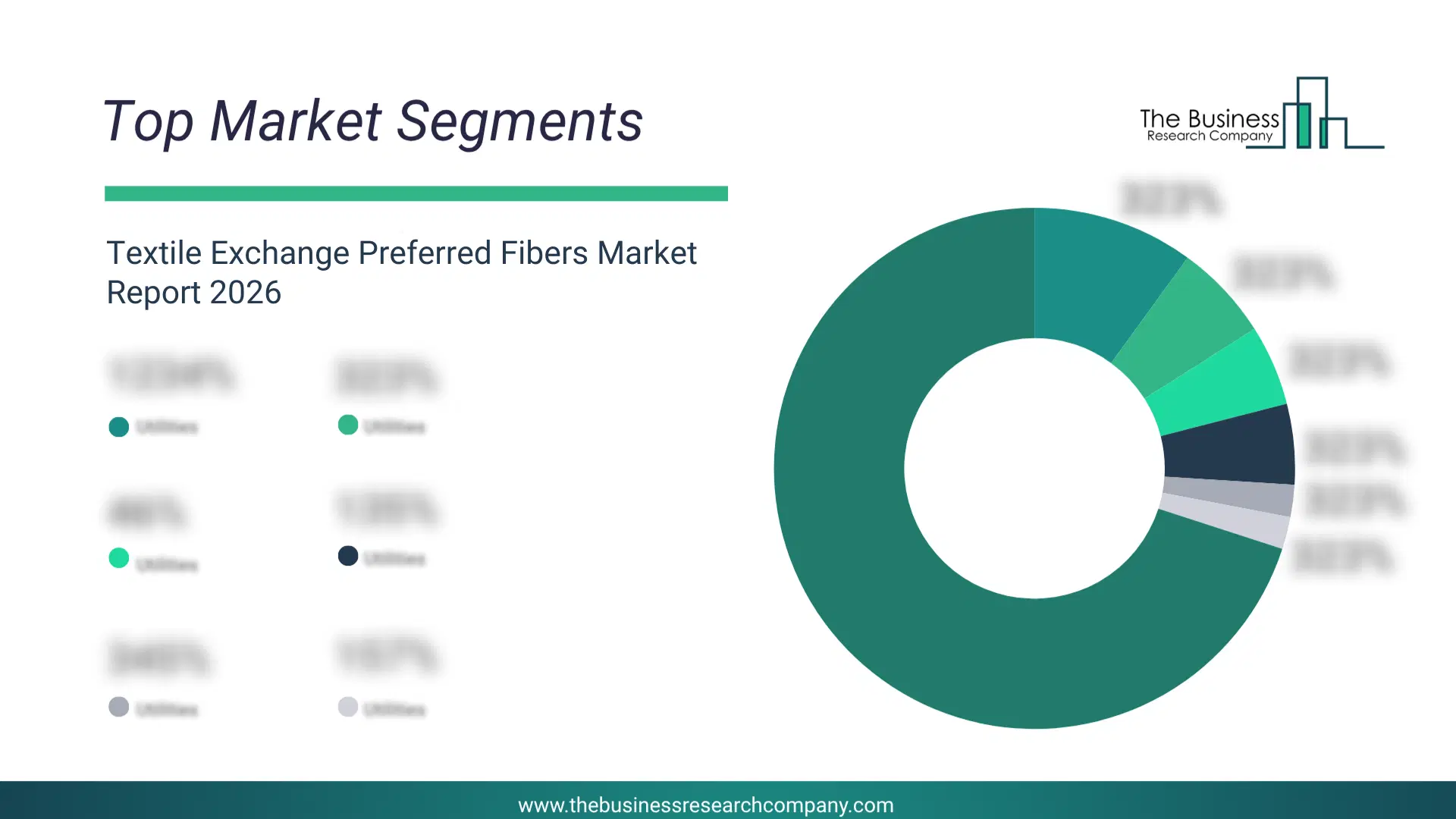
2) By Distribution Channel: Direct Sales, Distributors, Online Retail, Other Distribution Channels 3) By Application: Apparel, Home Textiles, Industrial Textiles, Other Applications 4) By End User: Fashion And Apparel, Home Furnishing, Automotive, Industrial, Other End Users Subsegments: 1) By Organic Cotton: Global Organic Textile Standard Certified Organic Cotton, Organic Content Standard Certified Organic Cotton, Regenerative Organic Cotton, Transitional Organic Cotton, Other Certified Organic Cotton 2) By Recycled Polyester: Post Consumer Recycled Polyester, Post Industrial Recycled Polyester, Mechanically Recycled Polyester, Chemically Recycled Polyester, Other Recycled Polyester 3) By Lyocell: Conventional Lyocell, Tencel Lyocell, Refibra Lyocell, Other Certified Lyocell 4) By Recycled Nylon: Post Consumer Recycled Nylon, Post Industrial Recycled Nylon, Mechanically Recycled Nylon, Chemically Recycled Nylon, Other Recycled Nylon 5) By Responsible Wool: Responsible Wool Standard Certified Wool, Recycled Wool, Regenerative Wool, Organic Wool, Other Responsible Wool 6) By Responsible Down: Responsible Down Standard Certified Down, Recycled Down, Traceable Down, Regenerative Down, Other Responsible Down 7) By Other Fiber Types: Responsible Hemp, Organic Linen, Recycled Cellulosic Fibers, Responsible Silk, Bio Based Synthetic Fibers, Other Preferred FibersWhat Is The Driver Of The Textile Exchange Preferred Fibers Market?
The rising demand for sustainable and eco-friendly textiles is expected to propel the growth of the textile exchange preferred fibers market going forward. Sustainable and eco-friendly textiles refer to fabrics and fibers produced through environmentally responsible methods that minimize ecological impact, reduce harmful chemical usage, and promote resource conservation across the supply chain. This demand is largely driven by the growing consumer and regulatory push for greener production practices, as governments and industries worldwide are implementing sustainability mandates and circular economy strategies that compel manufacturers to adopt preferred fiber alternatives over conventional materials. The growing preference for eco-conscious materials directly boosts uptake of certified preferred fibers, as brands and producers increasingly integrate sustainable sourcing standards into their procurement and manufacturing decisions. For instance, in February 2025, according to the Sigma Technology Group, a Sweden-based privately owned technology company, approximately 5 million tonnes of clothing are discarded annually in the European Union, equivalent to around 12 kg per person, while textile collection for reuse can create 20–35 jobs per 1,000 tonnes of textiles collected, highlighting the need for sustainable textile practices and circular fiber solutions. Therefore, the rising demand for sustainable and eco-friendly textiles is driving the growth of the textile exchange preferred fibers industry.Key Players In The Global Textile Exchange Preferred Fibers Market
Major companies operating in the textile exchange preferred fibers market are Reliance Industries Limited, Toray Industries Inc, Indorama Ventures Public Company Limited, Aditya Birla Management Corporation Private Limited, Asahi Kasei Corporation, Eastman Chemical Company, Far Eastern New Century Corporation, Lenzing AG, Hyosung TNC Corporation, Alpek SAB de CV, Teijin Frontier Co Ltd, Unifi Inc, Aquafil SpA, Tangshan Sanyou Group Xingda Chemical Fibre Co Ltd, Fulgar SpA, Kelheim Fibres GmbH, Zhejiang Jiaren New Materials Co Ltd, Procotex Corporation SA, Hemp Fortex Industries Ltd, Bast Fibre Technologies Inc, Recover Textile Systems SL, Spinnova Plc, Infinited Fiber Company, Circ Inc, Tainan Spinning Co Ltd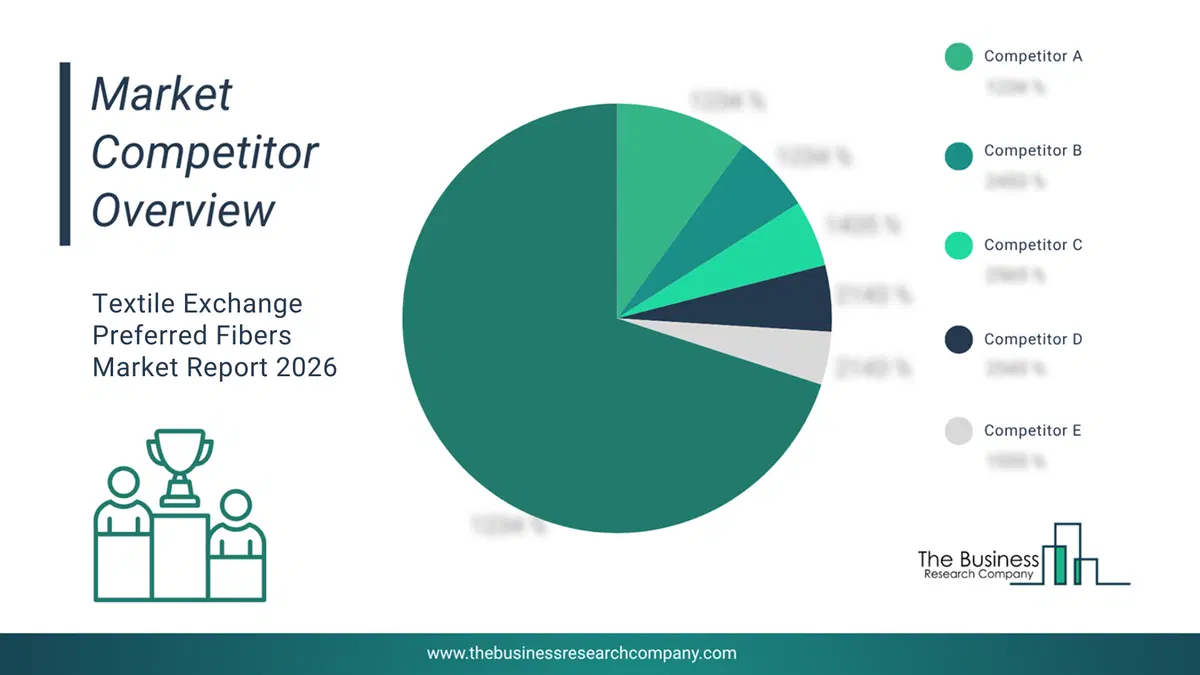
This chart is for illustrative purposes; the full report includes a detailed competitor analysis and comprehensive overview of the top 10 companies in the market.

This chart maps companies by product innovation and brand strength, with bubble size indicating relative revenue, helping identify market leaders, challengers, and niche players. This is an illustrative chart; the full report provides a complete and accurate competitive analysis.
Global Textile Exchange Preferred Fibers Market Trends and Insights
Major companies operating in the textile exchange preferred fibers market are focusing on adopting verified production systems to increase the use of preferred fibers, strengthen responsible sourcing practices, and accelerate sustainability across the textile value chain. Verified preferred production systems refer to material production practices that are assessed through Textile Exchange standards or other third-party certification and verification schemes, helping ensure credible environmental, social, and sourcing outcomes. For instance, in February 2026, Textile Exchange, a UK-based global nonprofit organization, unveiled a new commitment-based pathway for its members through its Action Cohort to accelerate the adoption of preferred production systems for raw materials and fibers. The three-step pathway focuses on reporting materials sourcing and production data, increasing the proportion of materials sourced or produced from verified preferred production systems, and supporting collective action to scale responsible production, covering areas such as pesticide and fertilizer use, deforestation and conversion, animal welfare, textile-to-textile recycling, human rights, livelihoods, and certified or verified sourcing.What Are Latest Mergers And Acquisitions In The Textile Exchange Preferred Fibers Market?
In October 2025, Recover Textile Systems S.L., a Spain-based textile recycling company that specializes in providing textile exchange preferred fibers, partnered with Intradeco Holdings Inc. to establish Recover Central America, a regional textile-to-textile circularity hub in El Salvador. With this partnership, Recover Textile Systems S.L. and Intradeco Holdings Inc. aim to scale recycled textile production, promote sustainable and traceable nearshore manufacturing, close the textile recycling loop, and support the growth of circular textile systems across the Americas. Intradeco Holdings Inc. is a US-based textile manufacturing company that specializes in vertically integrated apparel and textile production, including design, manufacturing, and distribution.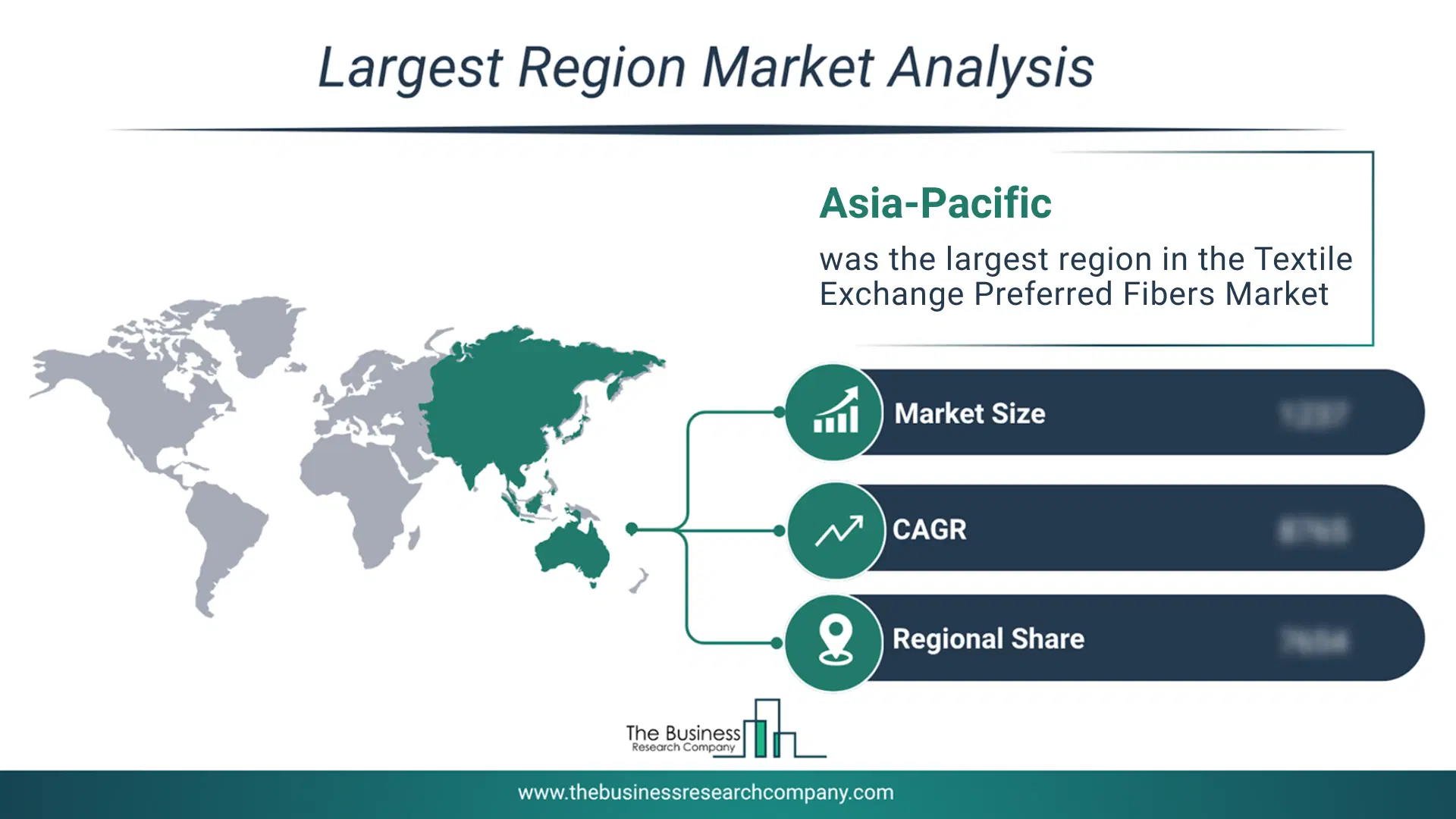
Regional Outlook/Insights
Asia-Pacific was the largest region in the textile exchange preferred fibers market in 2025. Asia-Pacific is expected to be the fastest-growing region in the forecast period. The regions covered in this market report are Asia-Pacific, South East Asia, Western Europe, Eastern Europe, North America, South America, Middle East, Africa. The countries covered in this market report are Australia, Brazil, China, France, Germany, India, Indonesia, Japan, Taiwan, Russia, South Korea, UK, USA, Canada, Italy, Spain.What Defines the Textile Exchange Preferred Fibers Market?
The textile exchange preferred fibers market consists of sales of hemp fiber, linen fiber, recycled cellulosic fiber, responsible silk fiber, bio-based synthetic fiber, recycled synthetic fiber, organic cotton fiber, and other preferred textile fibers. Values in this market are ‘factory gate’ values, that is, the value of goods sold by the manufacturers or creators of the goods, whether to other entities (including downstream manufacturers, wholesalers, distributors, and retailers) or directly to end customers. The value of goods in this market includes related services sold by the creators of the goods.How is Market Value Defined and Measured?
The market value is defined as the revenues that enterprises gain from the sale of goods and/or services within the specified market and geography through sales, grants, or donations in terms of the currency (in USD unless otherwise specified). The revenues for a specified geography are consumption values that are revenues generated by organizations in the specified geography within the market, irrespective of where they are produced. It does not include revenues from resales along the supply chain, either further along the supply chain or as part of other products.
This chart presents market attractiveness based on a quantitative evaluation of growth, competition, strategic alignment, and risk, offering a clear view of opportunity areas for decision-making. This chart is for illustrative purposes; the full report contains the complete analysis.

This chart highlights the Total Addressable Market (TAM) by estimating the maximum revenue opportunity using an assumption-driven approach, supporting strategic planning and opportunity sizing across markets. The chart is illustrative; the full report provides a more comprehensive analysis.
What Key Data and Analysis Are Included in the Textile Exchange Preferred Fibers Market Report 2026?
The textile exchange preferred fibers market research report is one of a series of new reports from The Business Research Company that provides market statistics, including industry global market size, regional shares, competitors with the market share, detailed market segments, market trends and opportunities, and any further data you may need to thrive in the textile exchange preferred fibers industry. The market research report delivers a complete perspective of everything you need, with an in-depth analysis of the current and future state of the industry.Textile Exchange Preferred Fibers Market Report Forecast Analysis
| Report Attribute | Details |
|---|---|
| Market Size Value In 2026 | $14.63 billion |
| Revenue Forecast In 2030 | $22.65 billion |
| Growth Rate | CAGR of 11.5% from 2026 to 2035 |
| Base Year For Estimation | 2025 |
| Actual Estimates/Historical Data | 2020-2025 |
| Forecast Period | 2026 - 2030 |
| Market Representation | Revenue in USD Billion and CAGR from 2026 to 2030 |
| Segments Covered | Fiber Type, Distribution Channel, Application, End User |
| Regional Scope | Asia-Pacific, Western Europe, Eastern Europe, North America, South America, Middle East, Africa |
| Country Scope | The countries covered in the report are Australia, Brazil, China, France, Germany, India, Indonesia, Japan, Taiwan, Russia, South Korea, UK, USA, Canada, Italy, Spain. |
| Customization Scope | Request for Customization |
| Pricing And Purchase Options | Explore Purchase Options |