

Thermal Insulation Material Global Market Opportunities And Strategies To 2035
By Product (Roof Insulation, Wall Insulation, Floor Insulation), By Building Type (Residential Building, Non-Residential Building), By Material Type (Stone Wool, Glass Wool, Plastic Foam, Natural Fibers, Other Material Types), And By Region, Opportunities And Strategies – Global Forecast To 2035
Thermal Insulation Material Market Definition
Thermal insulation material refers to a broad range of products and systems used to reduce the transfer of heat between indoor and outdoor environments in buildings. These materials are designed to improve energy efficiency, maintain indoor thermal comfort and reduce heating and cooling requirements. The thermal insulation material market consists of sales by entities (organizations, sole traders and partnerships) of thermal insulation materials used in residential, commercial and industrial construction projects, as well as in renovation and retrofitting activities. The market includes insulation products applied to roofs, walls, floors, ceilings and other structural components to minimize heat loss during cold conditions and heat gain during warm conditions. Thermal insulation materials are used by homeowners, construction companies, building developers, industrial facility operators and infrastructure contractors to comply with energy efficiency standards, reduce operational energy costs and improve occupant comfort.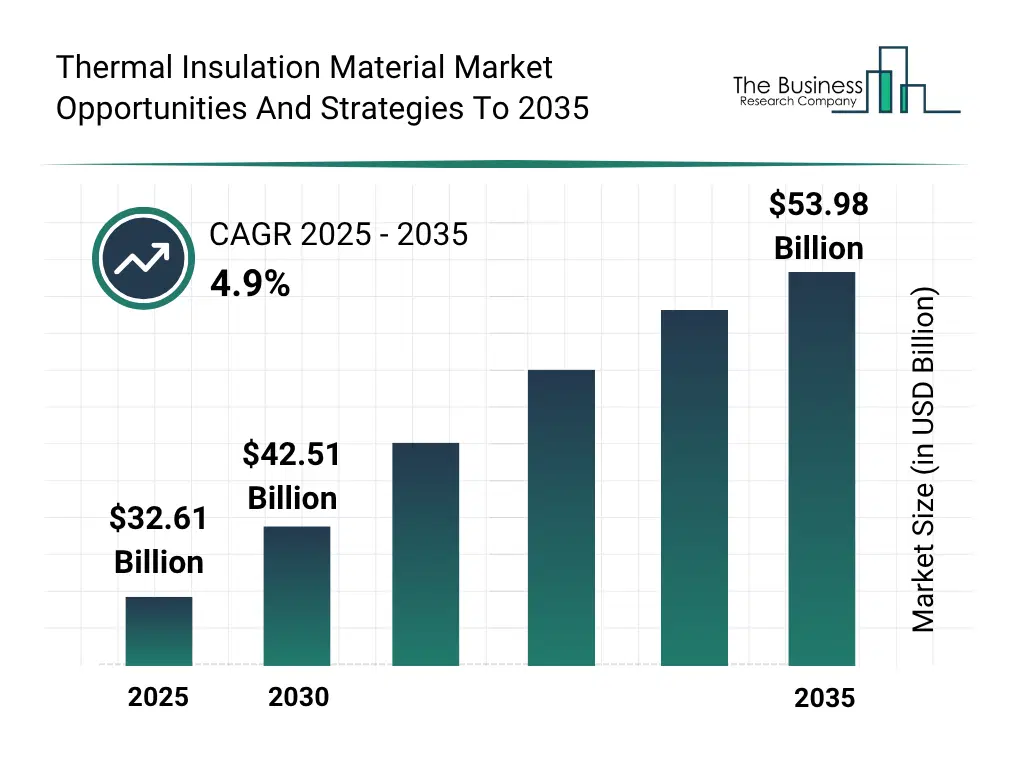
Thermal Insulation Material Market Size
The global thermal insulation material market reached a value of nearly $32,611.9 million in 2025, having grown at a compound annual growth rate (CAGR) of 5.8% since 2020. The market is expected to grow from $32,611.9 million in 2025 to $42,511.9 million in 2030 at a rate of 5.4%. The market is then expected to grow at a CAGR of 4.9% from 2030 and reach $53,981.7 million in 2035. Growth in the historic period resulted from growth in construction activities, rising demand for energy-efficient buildings, growth in demand for temperature-controlled storage facilities and net-zero carbon and decarbonization targets. Factors that negatively affected growth in the historic period were high installation costs and disposal and recycling challenges. Going forward, expansion of semiconductor and electronics manufacturing facilities, increasing government incentives for energy-efficient construction, stringent building energy codes and thermal performance standards and building retrofit and renovation activities will drive the growth. Factors that could hinder the growth of the thermal insulation material market in the future include fluctuating raw material prices, lack of skilled workforce and installation complexities and impact of trade wars and tariffs.
Thermal Insulation Material Market Segmentation
The thermal insulation material market is segmented by product, by building type and by material type.By Product –
The thermal insulation material market is segmented by product into:
- a) Roof Insulation
- b) Wall Insulation
- c) Floor Insulation
by building type –
The thermal insulation material market is segmented by building type into:
- a) Residential Building
- b) Non-Residential Building
By Material Type –
The thermal insulation material market is segmented by material type into:
- a) Stone Wool
- b) Glass Wool
- c) Plastic Foam
- d) Natural Fibers
- e) Other Material Types
By Geography - The thermal insulation material market is segmented by geography into:
- China
- India
- Japan
- Australia
- Indonesia
- South Korea
- USA
- Canada
- Brazil
- France
- Germany
- UK
- Italy
- Spain
- Russia
-
o Asia Pacific
o Africa