
Thermostatic Mixing Valves (TMVs) Market Report 2026
Global Outlook – By Valve Type (Emergency Thermostatic Mixing Valves, High Or Low Thermostatic Mixing Valves, Point-Of-Use Thermostatic Mixing Valves, Standard Thermostatic Mixing Valves), By Nominal Diameter (Nominal Diameter (DN) 15, Nominal Diameter (DN) 20, Nominal Diameter (DN) 25), By Capacity (Up To 5 Gallons Per Minute (GPM), 5 To 10 Gallons Per Minute (GPM), 10 To 15 Gallons Per Minute (GPM)), By Application (Residential, Commercial, Industrial) – Market Size, Trends, Strategies, and Forecast to 2030
Thermostatic Mixing Valves (TMVs) Market Overview
• Thermostatic Mixing Valves (TMVs) market size has reached to $1.21 billion in 2025 • Expected to grow to $1.58 billion in 2030 at a compound annual growth rate (CAGR) of 5.6% • Growth Driver: Rising Residential And Commercial Construction Sector Fuels Growth In The Thermostatic Mixing Valves Market • North America was the largest region in 2025 and Asia-Pacific is the fastest growing region.Market Gains By 2030 – Top Opportunities By Segment
Market Gain identifies the most promising market opportunities by highlighting the segments or products expected to generate the highest incremental revenue growth over the next five years.
What Is Covered Under Thermostatic Mixing Valves (TMVs) Market?
Thermostatic mixing valves (TMVs) are devices that control water temperature in plumbing systems by blending hot and cold water to ensure a steady, safe temperature at faucets and showers. They help prevent scalding and burns, protecting sensitive individuals and ensuring consistent comfort. Thermostatic mixing valves (TMVs) also improve energy efficiency by minimizing the need for excessive heating or cooling. The main types of thermostatic mixing valves are emergency thermostatic mixing valves, high- or low-thermostatic mixing valves, point-of-use thermostatic mixing valves, and standard thermostatic mixing valves. Emergency thermostatic mixing valves provide rapid water temperature control for safety showers and eye wash stations, preventing scalding during emergencies. The nominal diameter, such as nominal diameter (DN) 15, nominal diameter (DN) 20, and nominal diameter (DN) 25, has different capacities, including up to 5 gallons per minute (GPM), 5 to 10 gallons per minute (GPM), and 10 to 15 gallons per minute (GPM). It is used for various applications such as residential, commercial, and industrial.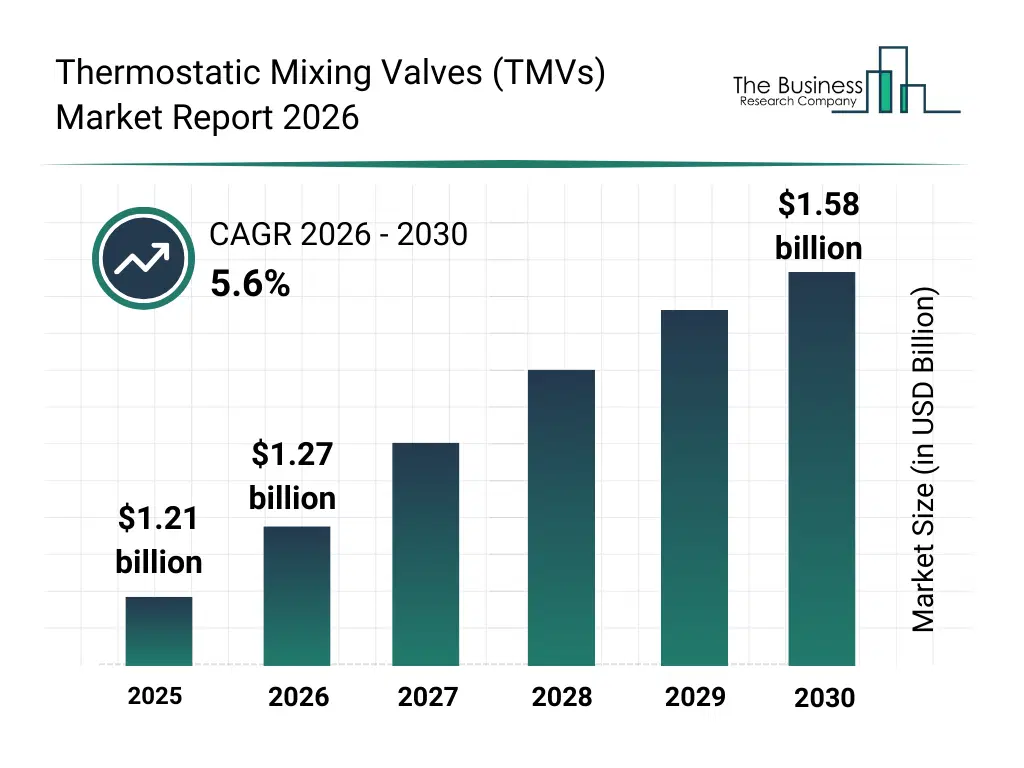
What Is The Thermostatic Mixing Valves (TMVs) Market Size and Share 2026?
The thermostatic mixing valves (tmvs) market size has grown strongly in recent years. It will grow from $1.21 billion in 2025 to $1.27 billion in 2026 at a compound annual growth rate (CAGR) of 5.4%. The growth in the historic period can be attributed to implementation of building safety codes, growth of residential construction, rising awareness of scald prevention, expansion of commercial plumbing infrastructure, demand for consistent water temperature control.What Is The Thermostatic Mixing Valves (TMVs) Market Growth Forecast?
The thermostatic mixing valves (tmvs) market size is expected to see strong growth in the next few years. It will grow to $1.58 billion in 2030 at a compound annual growth rate (CAGR) of 5.6%. The growth in the forecast period can be attributed to increasing investments in smart buildings, growth of healthcare and elderly care facilities, rising focus on water and energy efficiency, expansion of commercial real estate projects, stricter plumbing compliance requirements. Major trends in the forecast period include rising adoption of point of use temperature control, increased demand for anti scald safety solutions, growth of energy efficient plumbing systems, expansion of tmvs in healthcare facilities, standardization of plumbing safety regulations.
Global Thermostatic Mixing Valves (TMVs) Market Segmentation
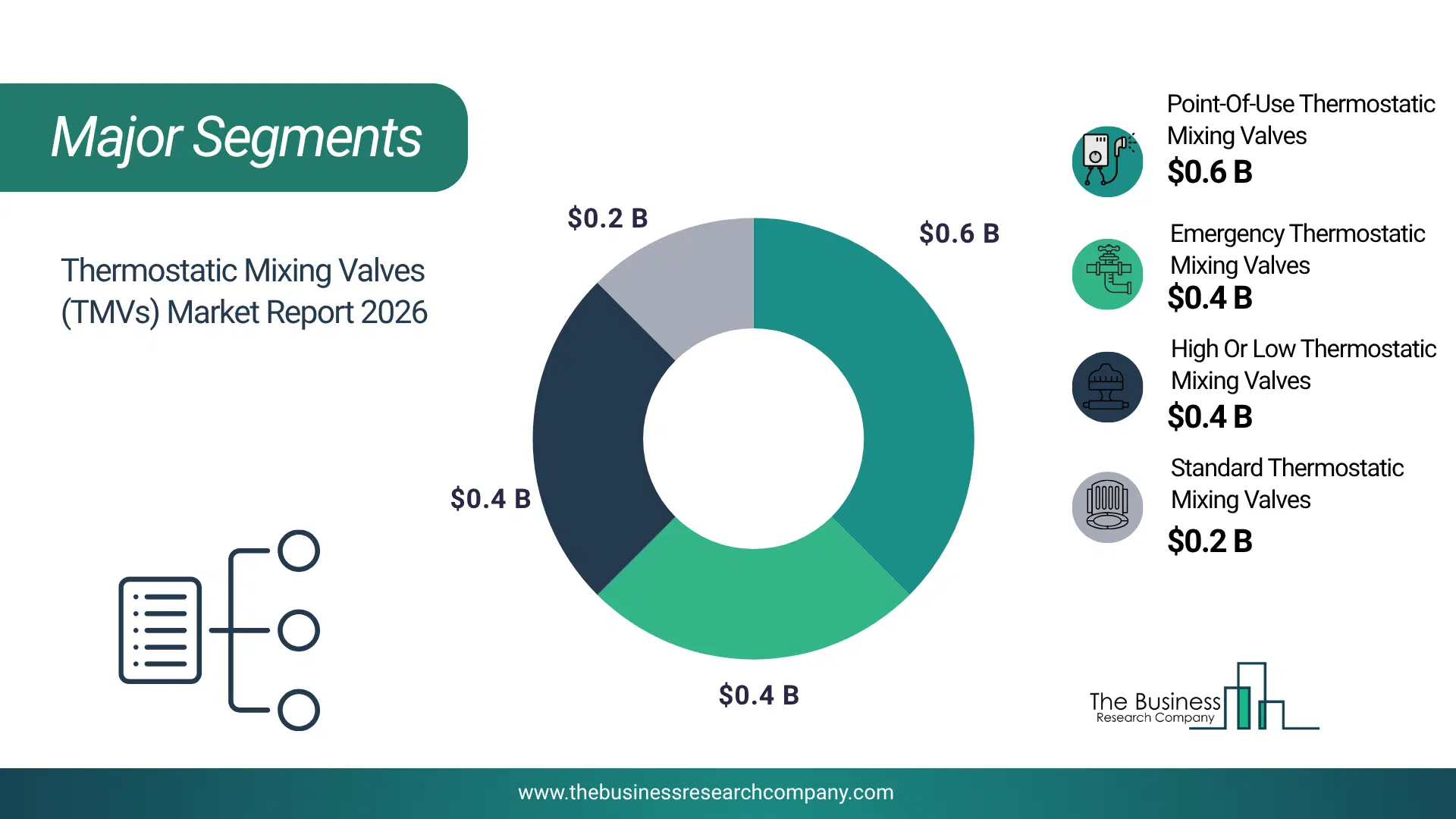
1) By Valve Type: Emergency Thermostatic Mixing Valves, High Or Low Thermostatic Mixing Valves, Point-Of-Use Thermostatic Mixing Valves, Standard Thermostatic Mixing Valves 2) By Nominal Diameter: Nominal Diameter (DN) 15, Nominal Diameter (DN) 20, Nominal Diameter (DN) 25 3) By Capacity: Up To 5 Gallons Per Minute (GPM), 5 To 10 Gallons Per Minute (GPM), 10 To 15 Gallons Per Minute (GPM) 4) By Application: Residential, Commercial, Industrial Subsegments: 1) By Emergency Thermostatic Mixing Valves: Thermostatic Mixing Valves For Safety Showers, Thermostatic Mixing Valves For Eyewash Stations 2) By High Or Low Thermostatic Mixing Valves: High Flow Thermostatic Mixing Valves, Low Flow Thermostatic Mixing Valves 3) By Point-of-Use Thermostatic Mixing Valves: Residential Point-Of-Use TMVs, Commercial Point-Of-Use TMVs 4) By Standard Thermostatic Mixing Valves: Domestic Standard TMVs, Industrial Standard TMVs The top segments in the thermostatic mixing valves (tmvs) market will be: • Point-Of-Use Thermostatic Mixing Valves will reach $0.56 Billion by 2030. • Emergency Thermostatic Mixing Valves will reach $0.42 Billion by 2030. • High Or Low Thermostatic Mixing Valves will reach $0.38 Billion by 2030. • Standard Thermostatic Mixing Valves will reach $0.22 Billion by 2030.What Are The Drivers Of The Thermostatic Mixing Valves (TMVs) Market?
The growing residential and commercial construction sector is expected to propel the growth of the thermostatic mixing valves (TMVs) market going forward. Residential construction refers to building homes and apartments for living, while commercial construction refers to building structures for commercial and institutional purposes. The rise in residential and commercial construction is attributed to urbanization, population, economic development, infrastructure investments, and demand for housing and commercial spaces. Thermostatic mixing valves are crucial for ensuring safety, comfort, and energy efficiency in residential and commercial buildings, controlling water temperature, and enhancing user experience and operational effectiveness. For instance, in July 2024, according to the United States Census Bureau, a US-based government administration, in June 2023, privately owned homes were occurring at a seasonally adjusted annual rate of 1.41 million, a 4.4 % higher than the May 2023 rate of 1.31 million. Furthermore, in August 2023, according to a report published by the Center for Sustainable Systems, a US-based research center, by 2050, commercial building floor space is expected to reach 124.6 billion square feet, a 29% increase from 2022. Therefore, the growing residential and commercial construction sector is driving the growth of the thermostatic mixing valves (TMVs) industry. The increasing investments in infrastructure are expected to propel the growth of the thermostatic mixing valves (TMVs) market going forward. Investments in infrastructure involve funding the construction and improvement of foundational facilities and systems, boosting demand for associated markets and products. Increasing investments in infrastructure are driven by urbanization and smart city development, which create higher demand for construction and related products. Investments in infrastructure drive demand for thermostatic mixing valves (TMVs) by increasing the construction and upgrading of buildings and facilities that require safe and regulated hot water systems. For instance, in July 2024, according to the Office for National Statistics (ONS), a UK-based government department, in 2023, total investment in the infrastructure sector reached £13.8 billion (around USD 17.3 billion) at constant prices, representing a 3.9% increase from 2022. Therefore, The increasing investments in infrastructure are driving the growth of the thermostatic mixing valves (TMVs) industry.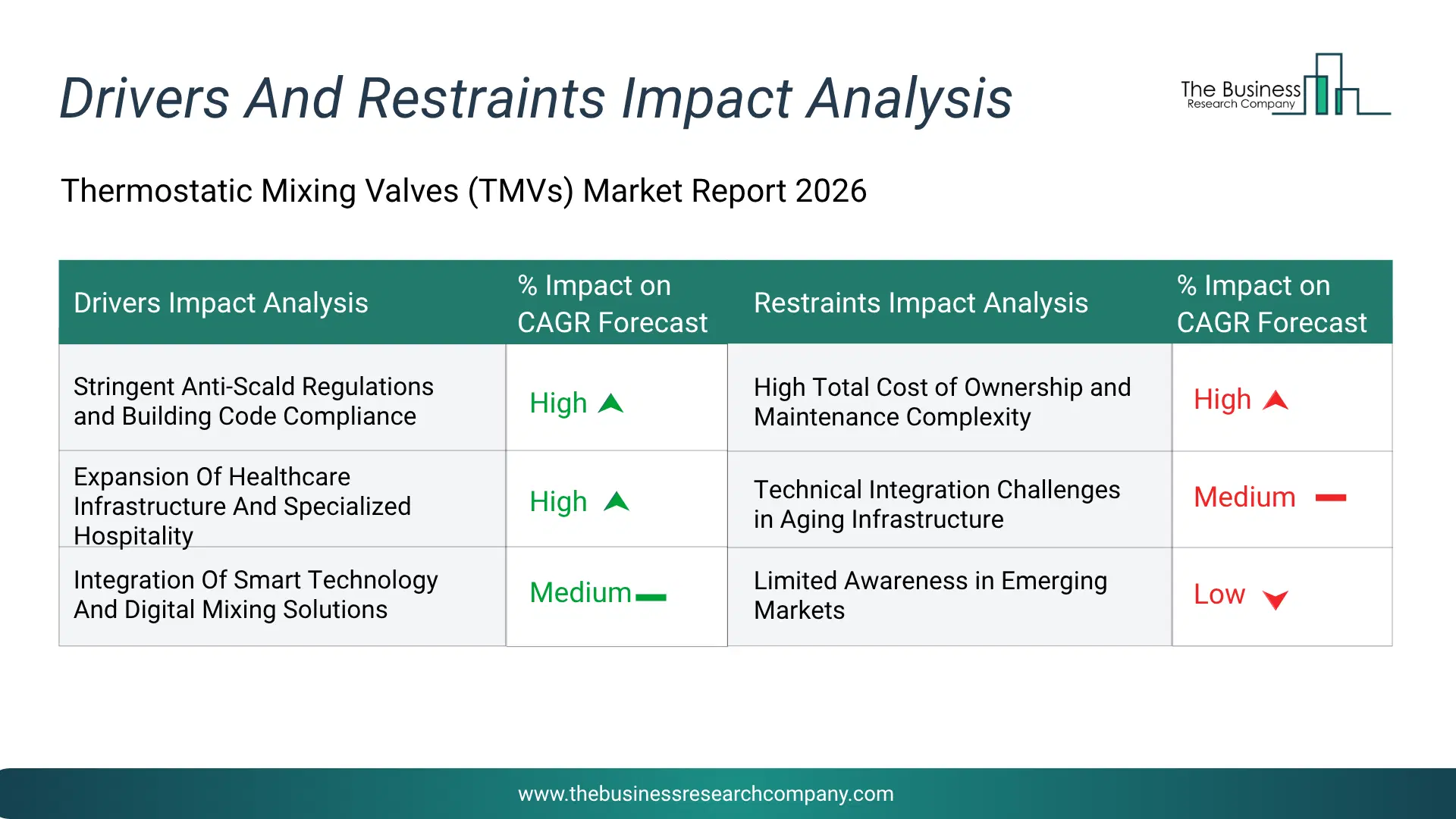
Infographic Chart Showing Key Market Drivers Analysis And Restraints For Thermostatic Mixing Valves (Tmvs) Market
The chart presents an impact analysis of key drivers and restraints, quantifying their relative influence on the market's growth rate and helping assess the balance between growth enablers and limiting factors. This chart offers a high-level perspective; the full report contains more detailed insights.
How Will The Drivers Impact Growth In The Global Thermostatic Mixing Valves (TMVs) Market?
• Stringent Anti-Scald Regulations and Building Code Compliance (High) – During the forecast period, the implementation of stringent anti-scald regulations and evolving building code compliance requirements is expected to become a key growth driver for the thermostatic mixing valves (TMVs) market by 2030. Regulatory authorities across developed and developing regions are mandating the installation of temperature control devices in plumbing systems to minimize the risk of burns and ensure occupant safety. This has accelerated the adoption of TMVs in residential buildings, hospitals, schools, and public facilities. Compliance with standardized safety norms is further encouraging retrofitting activities in older infrastructure. As regulatory frameworks continue to tighten globally, manufacturers are focusing on certified and high-performance valve solutions. • Expansion Of Healthcare Infrastructure And Specialized Hospitality (High) – During the forecast period, the expansion of healthcare infrastructure and specialized hospitality facilities is expected to emerge as a major factor driving the expansion of the thermostatic mixing valves (TMVs) market by 2030. The increasing construction of hospitals, clinics, elderly care centers, and premium hotels is generating strong demand for precise and reliable water temperature control systems. These environments require consistent thermal regulation to ensure hygiene, patient safety, and user comfort across various applications such as bathing, sterilization, and sanitation. Additionally, rising investments in healthcare modernization and high-end hospitality projects are supporting the integration of advanced plumbing solutions. • Integration Of Smart Technology And Digital Mixing Solutions (Medium) – During the forecast period, the integration of smart technology and digital mixing solutions is expected to act as a key growth catalyst for the thermostatic mixing valves (TMVs) market by 2030. The increasing adoption of smart buildings and connected infrastructure is encouraging the deployment of digitally controlled TMVs with features such as remote monitoring, automated temperature adjustment, and system diagnostics. These advanced solutions enhance operational efficiency, reduce water and energy wastage, and enable predictive maintenance. Growing interest in IoT-enabled plumbing systems across commercial and industrial facilities is further accelerating this trend.How Will The Restraints Impact Growth In The Global Thermostatic Mixing Valves (TMVs) Market?
• High Total Cost of Ownership and Maintenance Complexity (High) – During the forecast period, high total cost of ownership and maintenance complexity are restricting the growth of the thermostatic mixing valves (TMVs) market. Ongoing maintenance requirements and higher installation costs are limiting adoption, particularly in cost-sensitive projects. • Technical Integration Challenges in Aging Infrastructure (High) – During the forecast period, technical integration challenges in aging infrastructure are restricting the growth of the thermostatic mixing valves (TMVs) market. Retrofitting TMVs into older plumbing systems is creating compatibility issues and increasing installation complexity. • Limited Awareness in Emerging Markets (Medium) – During the forecast period, limited awareness in emerging markets is restricting the growth of the thermostatic mixing valves (TMVs) market. Lack of knowledge regarding safety benefits and regulatory requirements is reducing adoption in developing regions.Key Players In The Global Thermostatic Mixing Valves (TMVs) Market
Major companies operating in the thermostatic mixing valves (tmvs) market are Honeywell International Inc., Danfoss A/S, Pegler Yorkshire Group Limited, Watts Water Technologies Company, Bradley Company LLC, Reliance Worldwide Corporation, Caleffi S.p.A., Morris Group International Inc., Hans Sasserath GmbH & Co. KG, ThermOmegaTech Inc., Armstrong International Inc., Galvin Engineering Pty Ltd., ESBE AB, Encon Safety Products Inc., Lehry Instrumentation and Valves Pvt. Ltd., Leonard Valve Company, Geann Industrial Co. Ltd., Afriso-Euro-Index GmbH, Bianchi F.lli S.p.A., Dolphy India Pvt. Ltd.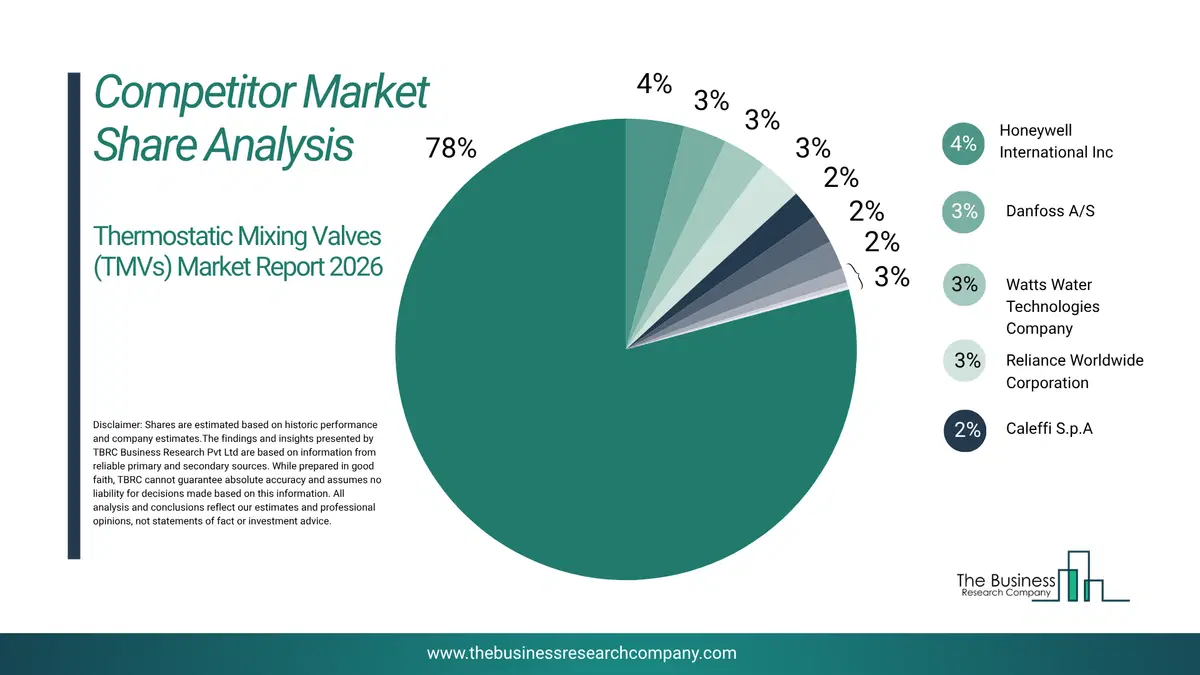
This chart is for illustrative purposes; the full report includes a detailed competitor analysis and comprehensive overview of the top 10 companies in the market.
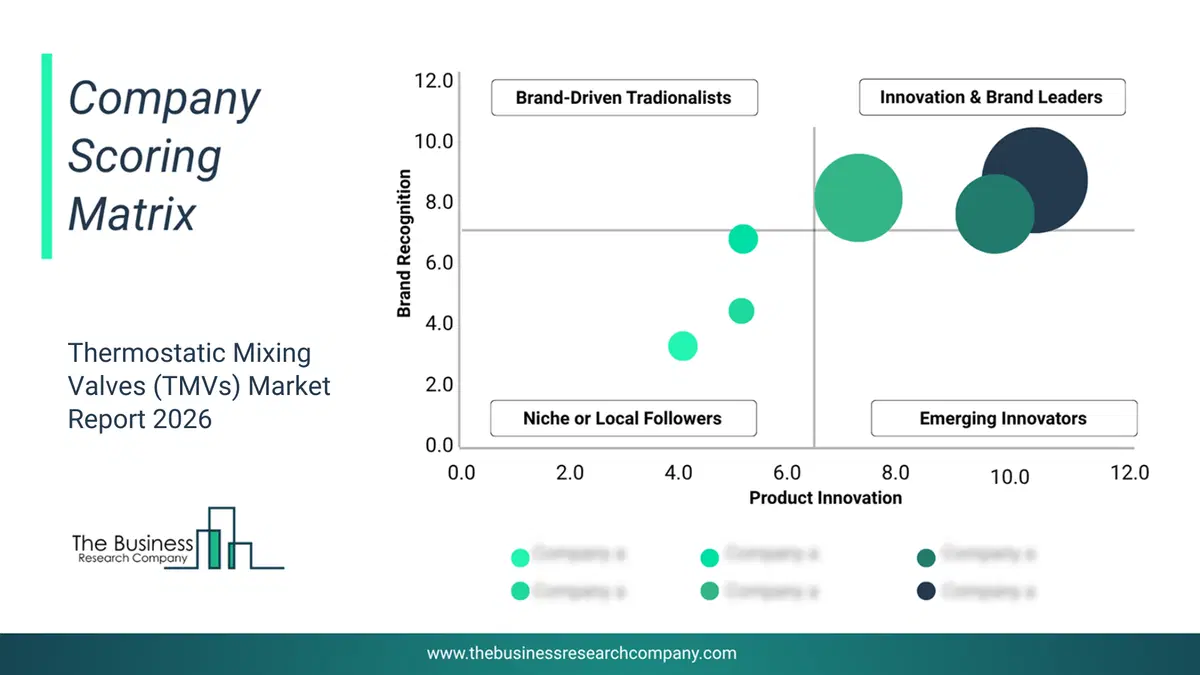
This chart maps companies by product innovation and brand strength, with bubble size indicating relative revenue, helping identify market leaders, challengers, and niche players. This is an illustrative chart; the full report provides a complete and accurate competitive analysis.
What Are Latest Mergers And Acquisitions In The Thermostatic Mixing Valves (TMVs) Market?
In September 2023, Galvin Engineering, an Australia-based manufacturer of lead-free plumbing products, partnered with RMC Reliance Valves. The partnership aims to introduce the Lead Safe CliniMix Healthcare Thermostatic Mixing Valves (TMV), combining their expertise to provide reliable and innovative solutions in the Australian plumbing industry. RMC Reliance Valves is an Australia-based manufacturer of thermostatic mixing valves (TMVs) aimed at improving the safety and efficiency of water heating systems.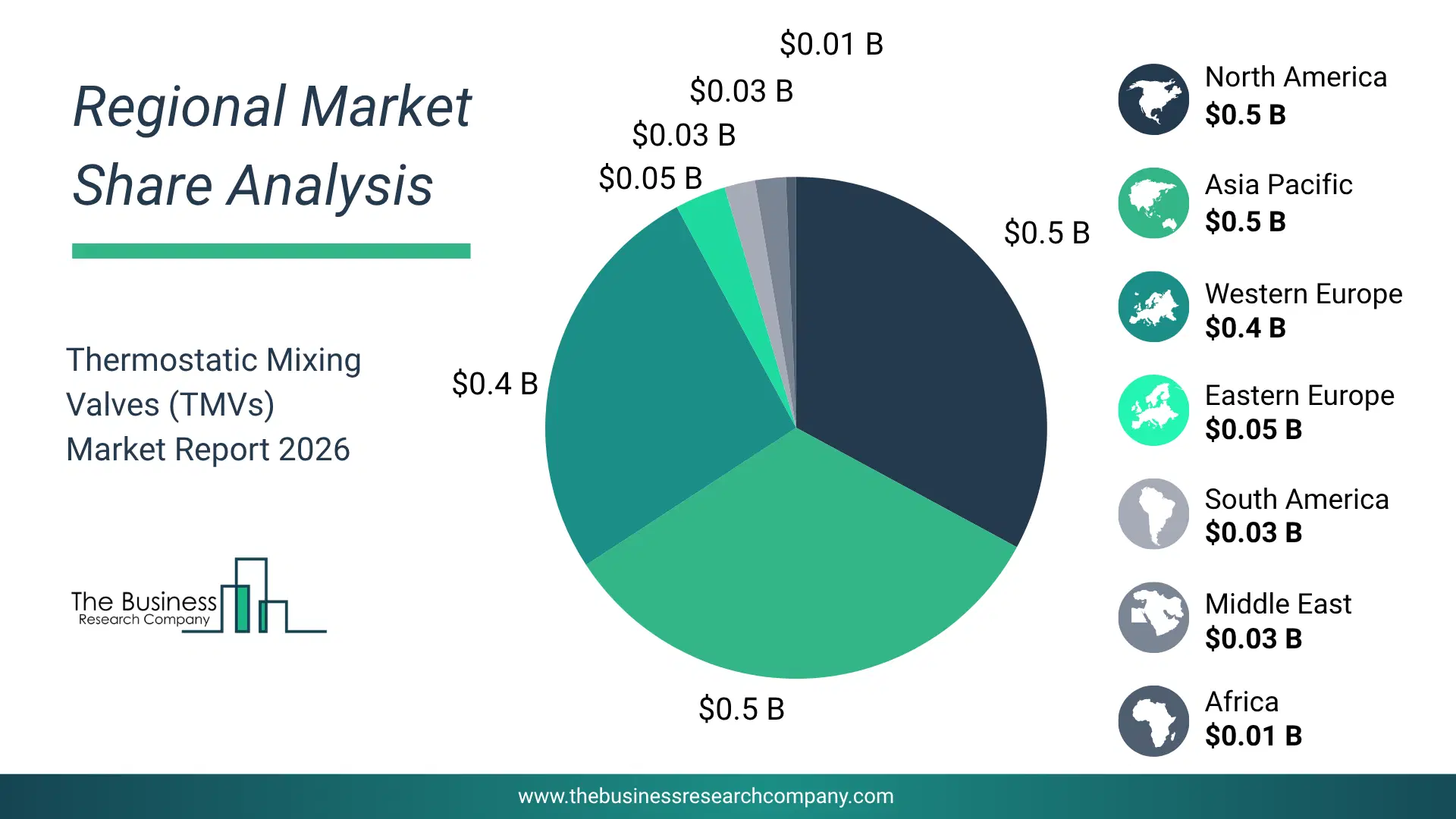
Regional Outlook
North America was the largest region in the thermostatic mixing valves (TMVs) market in 2025. Asia-Pacific is expected to be the fastest-growing region in the forecast period. The regions covered in this market report are Asia-Pacific, South East Asia, Western Europe, Eastern Europe, North America, South America, Middle East, Africa The countries covered in this market report are Australia, Brazil, China, France, Germany, India, Indonesia, Japan, Taiwan, Russia, South Korea, UK, USA, Canada, Italy, Spain.What Defines the Thermostatic Mixing Valves (TMVs) Market?
The thermostatic mixing valves (TMVs) market consists of sales of high-pressure thermostatic mixing valves, low-pressure thermostatic mixing valves, point-of-use thermostatic mixing valves, centralized thermostatic mixing valves, and digital thermostatic mixing valves. Values in this market are ‘factory gate’ values, that is, the value of goods sold by the manufacturers or creators of the goods, whether to other entities (including downstream manufacturers, wholesalers, distributors, and retailers) or directly to end customers. The value of goods in this market includes related services sold by the creators of the goods.How is Market Value Defined and Measured?
The market value is defined as the revenues that enterprises gain from the sale of goods and/or services within the specified market and geography through sales, grants, or donations in terms of the currency (in USD unless otherwise specified). The revenues for a specified geography are consumption values that are revenues generated by organizations in the specified geography within the market, irrespective of where they are produced. It does not include revenues from resales along the supply chain, either further along the supply chain or as part of other products.
This chart presents market attractiveness based on a quantitative evaluation of growth, competition, strategic alignment, and risk, offering a clear view of opportunity areas for decision-making. This chart is for illustrative purposes; the full report contains the complete analysis.

This chart highlights the Total Addressable Market (TAM) by estimating the maximum revenue opportunity using an assumption-driven approach, supporting strategic planning and opportunity sizing across markets. The chart is illustrative; the full report provides a more comprehensive analysis.
What Key Data and Analysis Are Included in the Thermostatic Mixing Valves (TMVs) Market Report 2026?
The thermostatic mixing valves (tmvs) market research report is one of a series of new reports from The Business Research Company that provides market statistics, including industry global market size, regional shares, competitors with the market share, detailed market segments, market trends and opportunities, and any further data you may need to thrive in the thermostatic mixing valves (tmvs) industry. The market research report delivers a complete perspective of everything you need, with an in-depth analysis of the current and future state of the industry.Thermostatic Mixing Valves TMVs Market Report Forecast Analysis
| Report Attribute | Details |
|---|---|
| Market Size Value In 2026 | $1.27 billion |
| Revenue Forecast In 2030 | $1.58 billion |
| Growth Rate | CAGR of 5.4% from 2026 to 2030 |
| Base Year For Estimation | 2025 |
| Actual Estimates/Historical Data | 2020-2025 |
| Forecast Period | 2026 - 2030 |
| Market Representation | Revenue in USD Billion and CAGR from 2026 to 2030 |
| Segments Covered | Valve Type, Nominal Diameter, Capacity, Application |
| Regional Scope | Asia-Pacific, Western Europe, Eastern Europe, North America, South America, Middle East, Africa |
| Country Scope | The countries covered in the report are Australia, Brazil, China, France, Germany, India, Indonesia, Japan, Taiwan, Russia, South Korea, UK, USA, Canada, Italy, Spain. |
| Key Companies Profiled | Honeywell International Inc., Danfoss A/S, Pegler Yorkshire Group Limited, Watts Water Technologies Company, Bradley Company LLC, Reliance Worldwide Corporation, Caleffi S.p.A., Morris Group International Inc., Hans Sasserath GmbH & Co. KG, ThermOmegaTech Inc., Armstrong International Inc., Galvin Engineering Pty Ltd., ESBE AB, Encon Safety Products Inc., Lehry Instrumentation and Valves Pvt. Ltd., Leonard Valve Company, Geann Industrial Co. Ltd., Afriso-Euro-Index GmbH, Bianchi F.lli S.p.A., Dolphy India Pvt. Ltd. |
| Customization Scope | Request for Customization |
| Pricing And Purchase Options | Explore Purchase Options |