
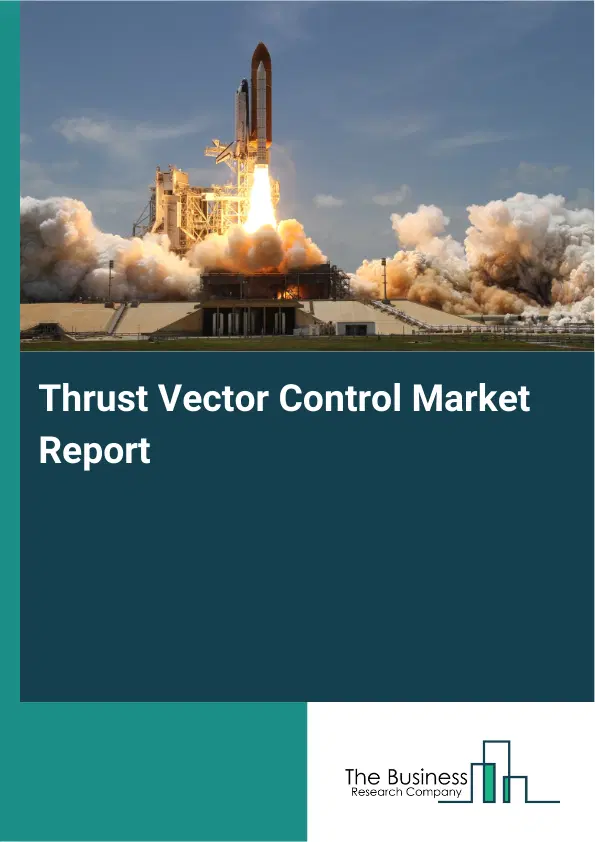
Thrust Vector Control Market Report 2026
Global Outlook – By Type (Gimbal Nozzle, Thrusters, Flex Nozzle, Rotating Nozzle, Other Types), By System (Thrust Vector Actuation System, Thrust Vector Injection System, Thrust Vector Thruster System), By Application (Launch Vehicles, Satellites, Missiles, Fighter Aircraft), By End-User (Space Agencies, Defense ) – Market Size, Trends, Strategies, and Forecast to 2030
Thrust Vector Control Market Overview
• Thrust Vector Control market size has reached to $13.94 billion in 2025 • Expected to grow to $20.91 billion in 2030 at a compound annual growth rate (CAGR) of 8.4% • Growth Driver: The Thrust Vector Control Market Surges Amidst Rising Demand for Corporate and Military Satellites • Market Trend: 3D Printing Breakthroughs Propel Innovation In The Thrust Vector Control Market • North America was the largest region in 2025 and Asia-Pacific is the fastest growing region.What Is Covered Under Thrust Vector Control Market?
Thrust vector control (TVC), also known as thrust vectoring, refers to the capability of an airplane's rocket or another vehicle to regulate altitude or angular velocity by directing its forward momentum from its engine or motor. This system is used in aircraft to control the axial thrust and provide attitude control. The main types of thrust vector control are gimbal nozzle, thrusters, flex nozzle, rotating nozzle, and others. A thruster is a propellant device utilized by spaceships and watercraft for station holding, attitude control, reaction control, and long-duration, low-thrust acceleration. The various systems include thrust vector actuation systems, thrust vector injection systems, and thrust vector thruster systems that are used in launch vehicles, satellites, missiles, and fighter aircraft, which are used by space agencies and defense sectors.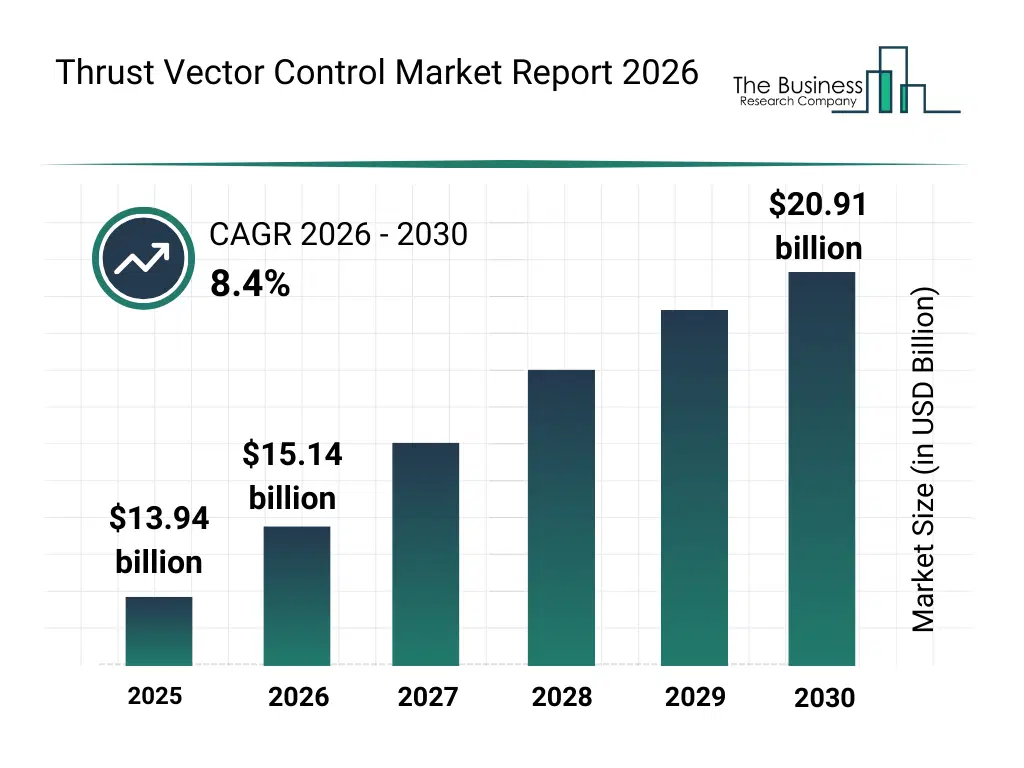
What Is The Thrust Vector Control Market Size and Share 2026?
The thrust vector control market size has grown strongly in recent years. It will grow from $13.94 billion in 2025 to $15.14 billion in 2026 at a compound annual growth rate (CAGR) of 8.6%. The growth in the historic period can be attributed to increasing adoption of thrust vector control systems in ballistic missiles and launch vehicles, modernization of fighter aircraft requiring advanced electrohydraulic and electromechanical tvc systems, development of precision electromechanical actuators to improve attitude control accuracy, rising defense spending supporting integration of modular control electronics in tactical platforms, early shift from purely hydraulic systems to hybrid electro hydrostatic solutions for better reliability.What Is The Thrust Vector Control Market Growth Forecast?
The thrust vector control market size is expected to see strong growth in the next few years. It will grow to $20.91 billion in 2030 at a compound annual growth rate (CAGR) of 8.4%. The growth in the forecast period can be attributed to growing demand for reusable launch vehicles requiring highly responsive tvc systems, increasing integration of lightweight high-efficiency actuators in next-generation missiles and spacecraft, rising emphasis on advanced control electronics for improved guidance and stability, expansion of commercial space missions boosting adoption of electromechanical tvc technologies, development of fully electric tvc architectures to reduce maintenance and system complexity. Major trends in the forecast period include advanced electromechanical actuator optimization, miniaturization of tvc systems for small launch vehicles, increasing adoption of modular thrust vectoring architectures, development of high-precision control electronics for extreme environments, integration of hybrid tvc mechanisms for enhanced maneuverability.
Global Thrust Vector Control Market Segmentation
1) By Type: Gimbal Nozzle, Thrusters, Flex Nozzle, Rotating Nozzle, Other Types 2) By System: Thrust Vector Actuation System, Thrust Vector Injection System, Thrust Vector Thruster System 3) By Application: Launch Vehicles, Satellites, Missiles, Fighter Aircraft 4) By End-User: Space Agencies, Defense Subsegments: 1) By Gimbal Nozzle: Gimbaled Rocket Nozzles, Gimbaled Engine Nozzles 2) By Thrusters: Reaction Control Thrusters (RCS), Auxiliary Thrusters 3) By Flex Nozzle: Flex Nozzle Systems, Variable Geometry Nozzles 4) By Rotating Nozzle: Rotating Jet Nozzles, Roll Control Nozzles 5) By Other Types: Thrust Vectoring Systems for UAVs, Innovative Thrust Vector Control Mechanisms, Combined Control SystemsWhat Is Driver Of The Thrust Vector Control Market?
The rising demand for corporate and military satellites is expected to propel the growth of the thrust vector control market going forward. Corporate satellites refer to those that are created and marketed for commercial, academic, non-profit, or civilian reasons (through commercial contracts) rather than military usage. A military satellite is a satellite that is launched into space to perform purposes such as transmissions, navigation, and surveillance connected to a range of military duties on the Earth's surface. The increasing need for commercial and military satellites enhances thrust vector control, which allows a rocket or launching vehicle to adjust its flight direction by varying the strength of its engine and is an essential component of the space or aerospace movement. For instance, in January 2024, according to Space Foundation, a nonprofit organization, global launch activity reached record levels for the third year in a row, with 223 attempts and 212 successful missions. Commercial launches jumped 50% compared to 2022. The United States saw a 33% increase in launch attempts, while China, India, and Japan also reported heightened activity. Therefore, the rising demand for corporate and military satellites is driving the thrust vector control industry.Key Players In The Global Thrust Vector Control Market
Major companies operating in the thrust vector control market are General Electric Company, Raytheon Technologies Corporation, The Boeing Company, Bharat Dynamics Limited, Northrop Grumman, Honeywell International Inc., Hindustan Aeronautics Limited, BAE Systems, Safran S.A., Eaton Corporation plc, Thales Group, L3Harris Technologies Inc., Rolls-Royce Holdings plc, Kawasaki Heavy Industries Ltd., Israel Aerospace Industries, Pratt and Whitney, MBDA, Moog Inc., Woodward Inc, Aerojet Rocketdyne Holdings Inc., Sierra Nevada Corporation, JASC Corporation, SABCA (Sociétés Anonyme Belge de Constructions Aéronautiques), Almatech SA, Wickman Spacecraft and Propulsion Company, Jansen Aircraft Systems Control Inc.
This chart is for illustrative purposes; the full report includes a detailed competitor analysis and comprehensive overview of the top 10 companies in the market.
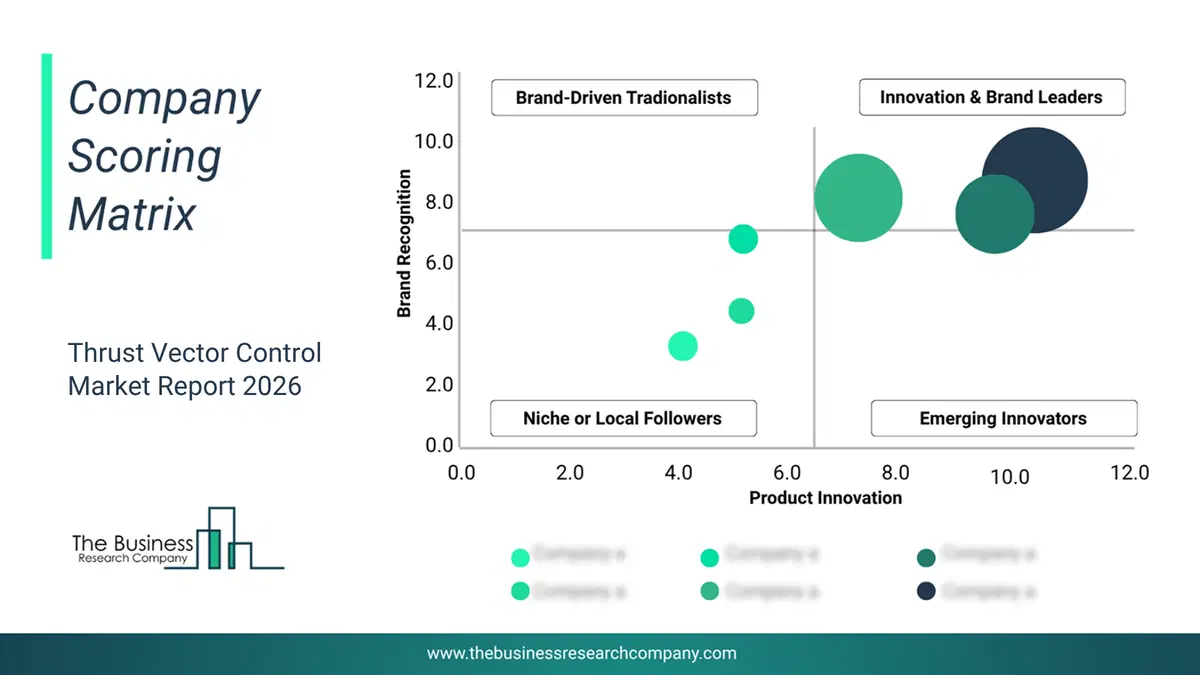
This chart maps companies by product innovation and brand strength, with bubble size indicating relative revenue, helping identify market leaders, challengers, and niche players. This is an illustrative chart; the full report provides a complete and accurate competitive analysis.
Global Thrust Vector Control Market Trends and Insights
Major companies operating in thrust vector control are focused on developing innovative 3D-printed products to enhance their market position and improve the performance of space launch systems. The advancement of 3D printing technology is a key trend gaining traction in the thrust vector control market, as it enables the production of complex and high-performance components with reduced manufacturing time and cost. For instance, in May 2023, Relativity Space, a US-based manufacturer of aerospace technologies, launched Terran 1, the first test rocket composed entirely of 3D-printed parts, standing 100 feet tall and 7.5 feet wide. The rocket featured nine engines produced through additive manufacturing using a groundbreaking copper alloy capable of withstanding temperatures exceeding 6,000 degrees Fahrenheit. The 3D printing process, known as laser powder bed fusion, digitally slices a computer model into thin layers, allowing for precise construction of intricate components essential for thrust vector control systems and overall vehicle performance.What Are Latest Mergers And Acquisitions In The Thrust Vector Control Market? Safran Acquires Collins Aerospace's Actuation And Flight Control Business
In July 2023, Safran, a France-based aerospace and defense company, acquired Collins Aerospace's actuation and flight control business from Collins Aerospace for $1.8 billion. With this acquisition, Collins Aerospace aims to enhance its actuation and flight control business by integrating advanced technologies and products, thereby improving the performance, safety, and efficiency of both commercial and military aircraft systems. Collins Aerospace is a US-based multinational aerospace and defense company that provides thrust vector control.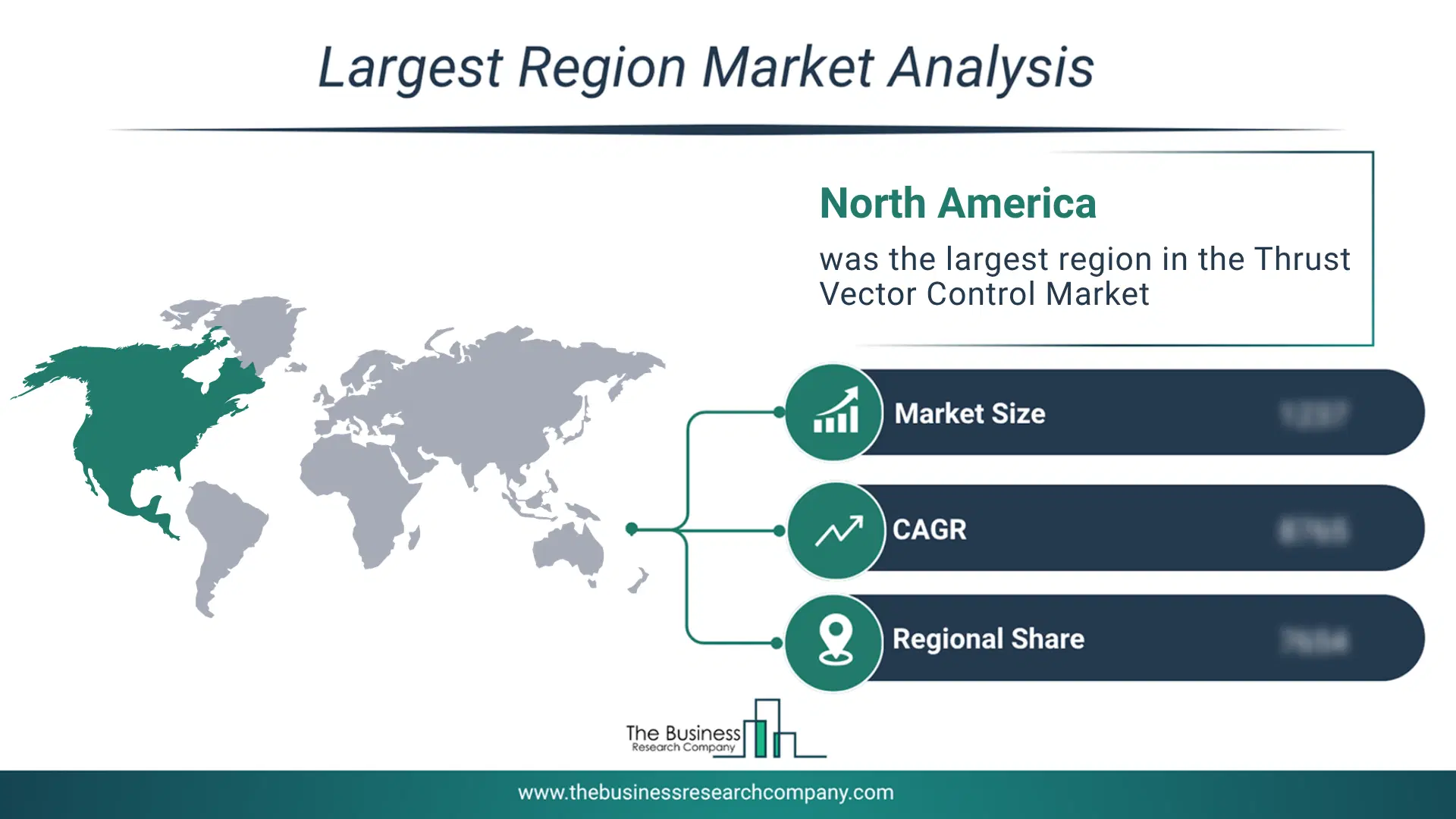
Regional Insights
North America was the largest region in the thrust vector control market in 2025. Asia-Pacific is expected to be the fastest-growing region in the forecast period. The regions covered in this market report are Asia-Pacific, South East Asia, Western Europe, Eastern Europe, North America, South America, Middle East, Africa. The countries covered in this market report are Australia, Brazil, China, France, Germany, India, Indonesia, Japan, Taiwan, Russia, South Korea, UK, USA, Canada, Italy, SpainWhat Defines the Thrust Vector Control Market?
The thrust vector control market consists of sales of electromechanical TVC systems, electrohydraulic TVC systems, electro hydrostatic TVC systems, electromechanical actuators, and modular control electronics units. Values in this market are ‘factory gate’ values, that is the value of goods sold by the manufacturers or creators of the goods, whether to other entities (including downstream manufacturers, wholesalers, distributors, and retailers) or directly to end customers. The value of goods in this market includes related services sold by the creators of the goods.How is Market Value Defined and Measured?
The market value is defined as the revenues that enterprises gain from the sale of goods and/or services within the specified market and geography through sales, grants, or donations in terms of the currency (in USD unless otherwise specified). The revenues for a specified geography are consumption values that are revenues generated by organizations in the specified geography within the market, irrespective of where they are produced. It does not include revenues from resales along the supply chain, either further along the supply chain or as part of other products.
This chart presents market attractiveness based on a quantitative evaluation of growth, competition, strategic alignment, and risk, offering a clear view of opportunity areas for decision-making. This chart is for illustrative purposes; the full report contains the complete analysis.

This chart highlights the Total Addressable Market (TAM) by estimating the maximum revenue opportunity using an assumption-driven approach, supporting strategic planning and opportunity sizing across markets. The chart is illustrative; the full report provides a more comprehensive analysis.
What Key Data and Analysis Are Included in the Thrust Vector Control Market Report 2026?
The thrust vector control market research report is one of a series of new reports from The Business Research Company that provides market statistics, including industry global market size, regional shares, competitors with the market share, detailed market segments, market trends and opportunities, and any further data you may need to thrive in the thrust vector control industry. The market research report delivers a complete perspective of everything you need, with an in-depth analysis of the current and future state of the industry.Thrust Vector Control Market Report Forecast Analysis
| Report Attribute | Details |
|---|---|
| Market Size Value In 2026 | $15.14 billion |
| Revenue Forecast In 2030 | $20.91 billion |
| Growth Rate | CAGR of 8.4% from 2026 to 2030 |
| Base Year For Estimation | 2025 |
| Actual Estimates/Historical Data | 2020-2025 |
| Forecast Period | 2026 - 2030 |
| Market Representation | Revenue in USD Billion and CAGR from 2026 to 2030 |
| Segments Covered | Type, System, Application, End-User |
| Regional Scope | Asia-Pacific, Western Europe, Eastern Europe, North America, South America, Middle East, Africa |
| Country Scope | The countries covered in the thrust vector control market report are Australia, Brazil, China, France, Germany, India, Indonesia, Japan, Taiwan, Russia, South Korea, UK, USA, Canada, Italy, Spain |
| Key Companies Profiled | General Electric Company, Raytheon Technologies Corporation, The Boeing Company, Bharat Dynamics Limited, Northrop Grumman, Honeywell International Inc., Hindustan Aeronautics Limited, BAE Systems, Safran S.A., Eaton Corporation plc, Thales Group, L3Harris Technologies Inc., Rolls-Royce Holdings plc, Kawasaki Heavy Industries Ltd., Israel Aerospace Industries, Pratt and Whitney, MBDA, Moog Inc., Woodward Inc, Aerojet Rocketdyne Holdings Inc., Sierra Nevada Corporation, JASC Corporation, SABCA (Sociétés Anonyme Belge de Constructions Aéronautiques), Almatech SA, Wickman Spacecraft and Propulsion Company, Jansen Aircraft Systems Control Inc. |
| Customization Scope | Request for Customization |
| Pricing And Purchase Options | Explore Purchase Options |