

Tiny Homes Global Market Opportunities And Strategies To 2035
By Product Type (Mobile Tiny Homes, Stationary Tiny Homes), By Construction Type (On Site Built, Prefabricated), By Material (Composite, Concrete, Steel, Wood), By Distribution Channel (Direct Sales, Distributors), By Application (Household, Commercial, Industrial, Other Applications), And By Region, Opportunities And Strategies – Global Forecast To 2035
Tiny Homes Market Definition
Tiny homes refer to compact residential structures typically ranging from less than 100 square feet to around 400 square feet, designed to maximize space efficiency and minimize environmental impact. These homes are used by individuals, couples and small families seeking affordable housing, minimalist lifestyles or sustainable living solutions. The tiny homes market consists of revenues generated by entities (organizations, sole traders and partnerships) that design, manufacture, construct and sell compact residential structures optimized for space efficiency, affordability and sustainability. The market includes both mobile and stationary units that cater to residential, commercial and institutional users. These homes are typically built using innovative construction techniques and materials to ensure functionality within limited space while complying with local building codes and standards.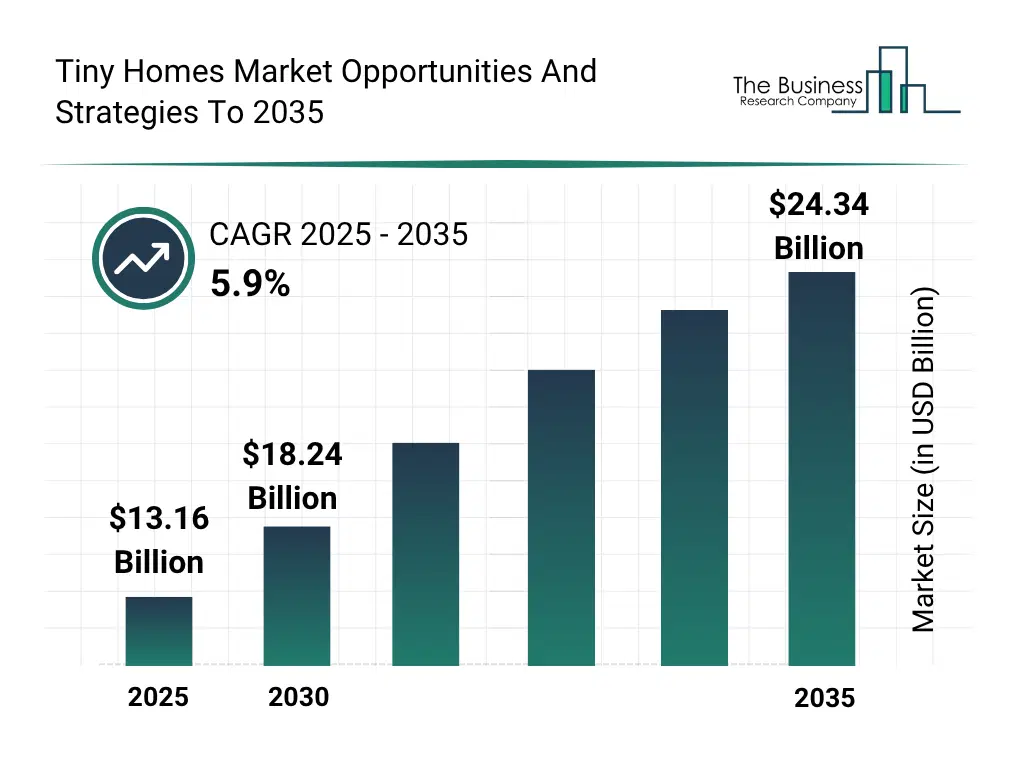
Tiny Homes Market Size
The global tiny homes market reached a value of nearly $13,164.4 million in 2025, having grown at a compound annual growth rate (CAGR) of 7.3% since 2020. The market is expected to grow from $13,164.4 million in 2025 to $18,240.6 million in 2030 at a rate of 6.7%. The market is then expected to grow at a CAGR of 5.9% from 2030 and reach $24,338.8 million in 2035. Growth in the historic period resulted from rising housing prices, increase in demand for green buildings, growing popularity of modular and prefabricated houses and expansion of remote work and digital nomad lifestyles. Factors that negatively affected growth in the historic period were rising financing barriers and lack of standardized building codes for tiny homes. Going forward, growing appeal of minimalist lifestyles, increasing demand for mobile and relocatable homes, rising focus on affordable housing and increasing urban land scarcity will drive the growth. Factors that could hinder the growth of the tiny homes market in the future include infrastructure challenges such as water, sewage and electricity connections, restrictive zoning laws and building regulations and impact of trade wars and tariffs.
Tiny Homes Market Segmentation
The tiny homes market is segmented by product type, by construction type, by material, by distribution channel and by application.By Product Type –
The tiny homes market is segmented by product type into:
- a) Mobile Tiny Homes
- b) Stationary Tiny Homes
By Construction Type –
The tiny homes market is segmented by construction type into:
- a) On-Site Built
- b) Prefabricated
By Material –
The tiny homes market is segmented by material into:
- a) Composite
- b) Concrete
- c) Steel
- d) Wood
By Distribution Channel –
The tiny homes market is segmented by distribution channel into:
- a) Direct Sales
- b) Distributors
By Application –
The tiny homes market is segmented by application into:
- a) Household
- b) Commercial
- c) Industrial
- d) Other Applications
By Geography - The tiny homes market is segmented by geography into:
- China
- India
- Japan
- Australia
- Indonesia
- South Korea
- USA
- Canada
- Brazil
- France
- Germany
- UK
- Italy
- Spain
- Russia
-
o Asia Pacific
o Africa