
Tissue Engineered Skin Substitute Market Report 2026
Global Outlook – By Product (Acellular Skin Substitutes, Biologic Skin Substitute, Cellular Skin Substitutes, Synthetic Skin Substitutes), By Material (Synthetic, Natural), By Technology (Laser Assisted Bio-Printing, Robotic Technology, Other Technologies), By Application (Chronic Wounds, Acute Wounds, Other Applications), By End User (Hospital, Specialty Clinics, Ambulatory Surgical Centers, Research Laboratory) - Market Size, Trends, Strategies, and Forecast to 2030
Tissue Engineered Skin Substitute Market Overview
• Tissue Engineered Skin Substitute market size has reached to $2.03 billion in 2025 • Expected to grow to $3.06 billion in 2030 at a compound annual growth rate (CAGR) of 8.5% • Growth Driver: Increasing Incidence Of Accidents Is Driving The Growth Of The Tissue-Engineered Skin Substitute Market. • Market Trend: Advancements In Tissue-Engineered Skin Substitute Enhanced Market Growth • North America was the largest region in 2025.What Is Covered Under Tissue Engineered Skin Substitute Market?
A tissue-engineered skin substitute refers to a lab-created material designed to mimic the properties of natural skin. A tissue-engineered skin substitute utilizes a combination of cells, biomaterials, and growth factors to create a functional skin-like layer that promotes healing and restores skin integrity in patients with severe wounds or burns. The main products of tissue-engineered skin substitutes are acellular skin substitutes, biologic skin substitutes, cellular skin substitutes, and synthetic skin substitutes. Acellular skin substitutes are made from materials that have had all cells removed, leaving behind a scaffold that supports the body's own cells to grow and repair the skin. The various materials include synthetic and natural ones. It is made using different technologies, including laser-assisted bio-printing, 3-dimensional (3D), robotic technology, others for varying applications such as chronic wounds and acute wounds, and others. The end users includes hospitals, specialty clinics, ambulatory surgical centers, and research laboratories.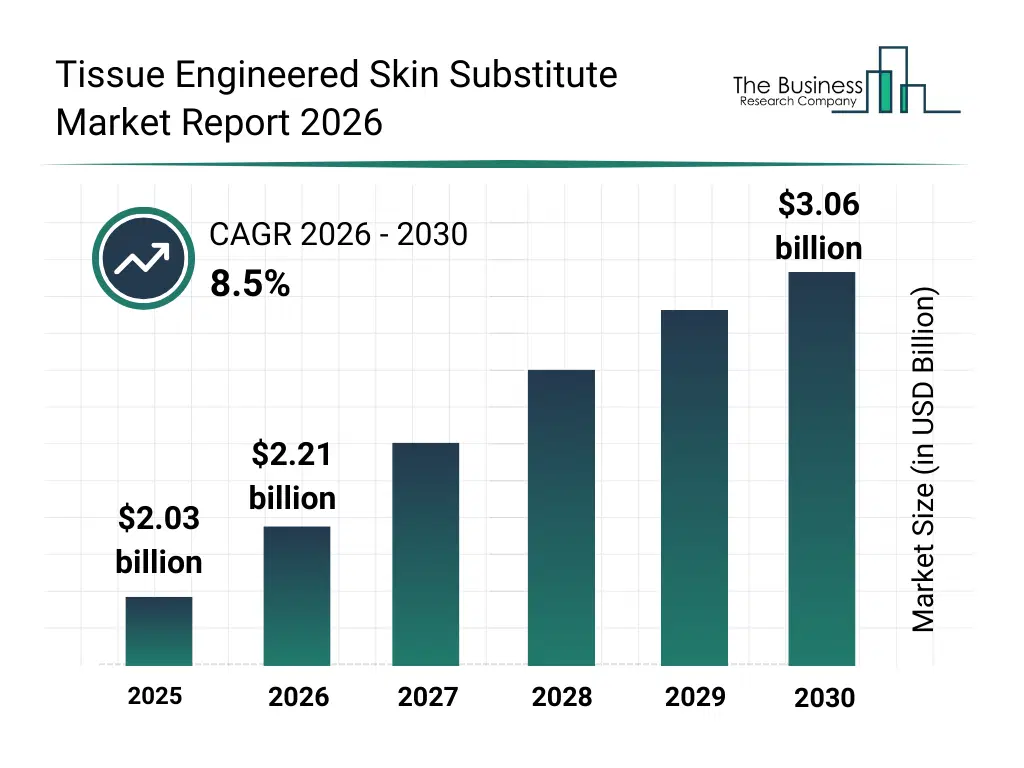
What Is The Tissue Engineered Skin Substitute Market Size and Share 2026?
The tissue engineered skin substitute market size has grown strongly in recent years. It will grow from $2.03 billion in 2025 to $2.21 billion in 2026 at a compound annual growth rate (CAGR) of 8.8%. The growth in the historic period can be attributed to increasing incidence of chronic wounds and burns, expansion of reconstructive surgery procedures, rising adoption of biologic wound care products, growth in clinical research on skin regeneration, availability of advanced biomaterials.What Is The Tissue Engineered Skin Substitute Market Growth Forecast?
The tissue engineered skin substitute market size is expected to see strong growth in the next few years. It will grow to $3.06 billion in 2030 at a compound annual growth rate (CAGR) of 8.5%. The growth in the forecast period can be attributed to increasing aging population with wound care needs, rising demand for regenerative medicine solutions, expansion of personalized tissue engineering applications, growing investment in bioprinting technologies, increasing focus on faster healing and reduced scarring. Major trends in the forecast period include increasing adoption of 3d bioprinted skin constructs, rising use of stem cell-based skin substitutes, growing integration of advanced biomaterials, expansion of personalized wound healing solutions, enhanced focus on rapid skin regeneration technologies.
Global Tissue Engineered Skin Substitute Market Segmentation
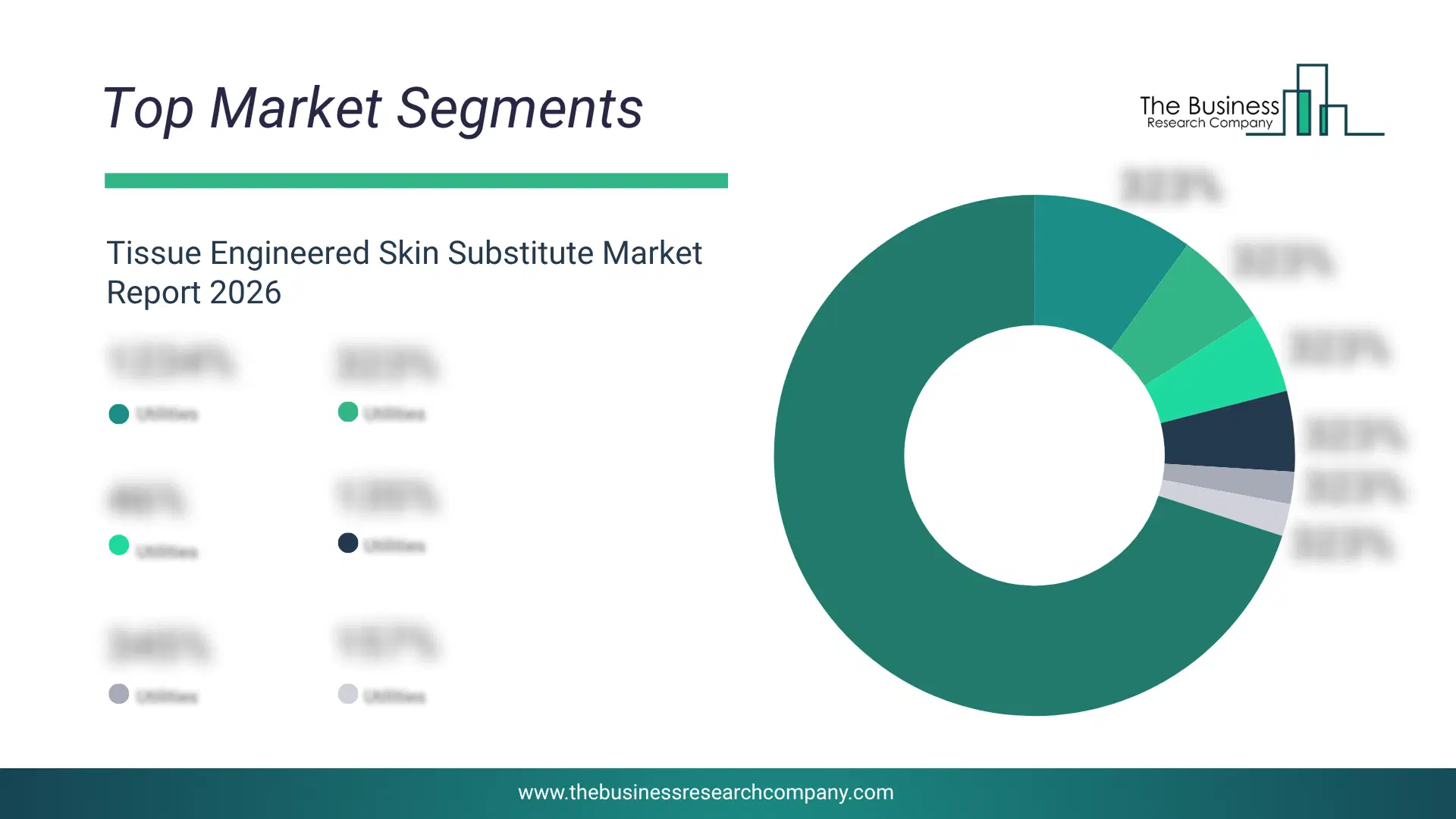
1) By Product: Acellular Skin Substitutes, Biologic Skin Substitute, Cellular Skin Substitutes, Synthetic Skin Substitutes 2) By Material: Synthetic, Natural 3) By Technology: Laser Assisted Bio-Printing, Robotic Technology, Other Technologies 4) By Application: Chronic Wounds, Acute Wounds, Other Applications 5) By End User: Hospital, Specialty Clinics, Ambulatory Surgical Centers, Research Laboratory Subsegments: 1) By Acellular Skin Substitutes: Decellularized Dermis, Collagen-Based Scaffolds, Amniotic Membrane 2) By Biologic Skin Substitutes: Living Cell-Containing Substitutes, Allogeneic Skin Grafts, Xenogeneic Skin Grafts 3) By Cellular Skin Substitutes: Cultured Epithelial Autografts (CEA), Dermal Substitutes with Cells, Stem Cell-Derived Skin Constructs 4) By Synthetic Skin Substitutes: Polymer-Based Scaffolds, Biodegradable Scaffolds, Hydrogel-Based SubstitutesWhat Is The Driver Of The Tissue Engineered Skin Substitute Market?
The increasing incidence of accidents is expected to propel the growth of the tissue-engineered skin substitute market going forward. The increasing incidence of accidents can be due to higher traffic volumes, distracted driving, inadequate road maintenance, and a rise in the use of mobile devices while driving. Tissue-engineered skin substitutes help by providing a functional and biocompatible replacement for damaged skin, promoting faster healing, and reducing complications such as infections and scarring. For instance, in November 2025, according to the National Highway Traffic Safety Administration (NHTSA), a US-based government agency, in 2023, estimated injuries from traffic crashes rose to 2,442,581, a 2.5% increase over the 2.38 million injured in 2022. Therefore, the increasing incidence of accidents is driving the growth of the tissue-engineered skin substitute market.Key Players In The Global Tissue Engineered Skin Substitute Market
Major companies operating in the tissue engineered skin substitute market are Stryker Corporation, DePuy Synthes, Smith & Nephew Plc, ConvaTec Group PLC, Mallinckrodt Pharmaceuticals plc, Integra LifeSciences Holdings Corporation, Gunze Limited, Organogenesis Inc., LifeNet Health Inc., MiMedx Group Inc., Vericel Corporation, AlloSource Inc., Sientra Inc., PolyNovo Limited, Avita Medical Limited, Tissue Regenix Group, PolarityTE, Promethean LifeSciences Inc., Regenicin Inc., Kerecis Ltd.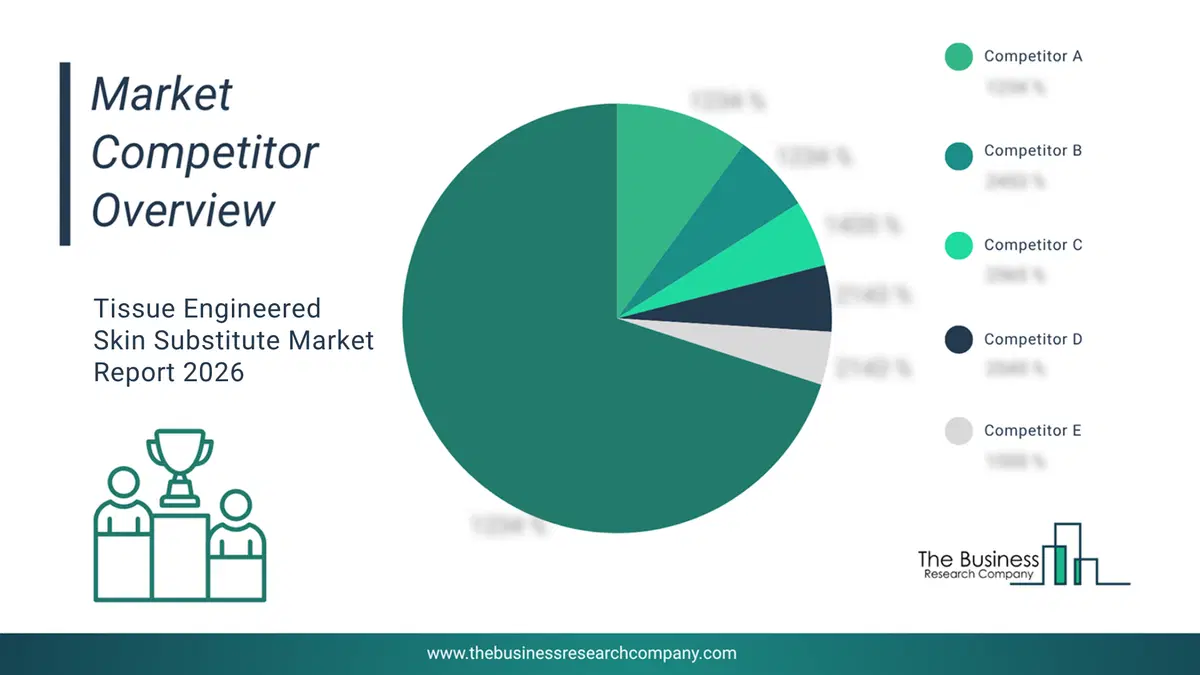
This chart is for illustrative purposes; the full report includes a detailed competitor analysis and comprehensive overview of the top 10 companies in the market.
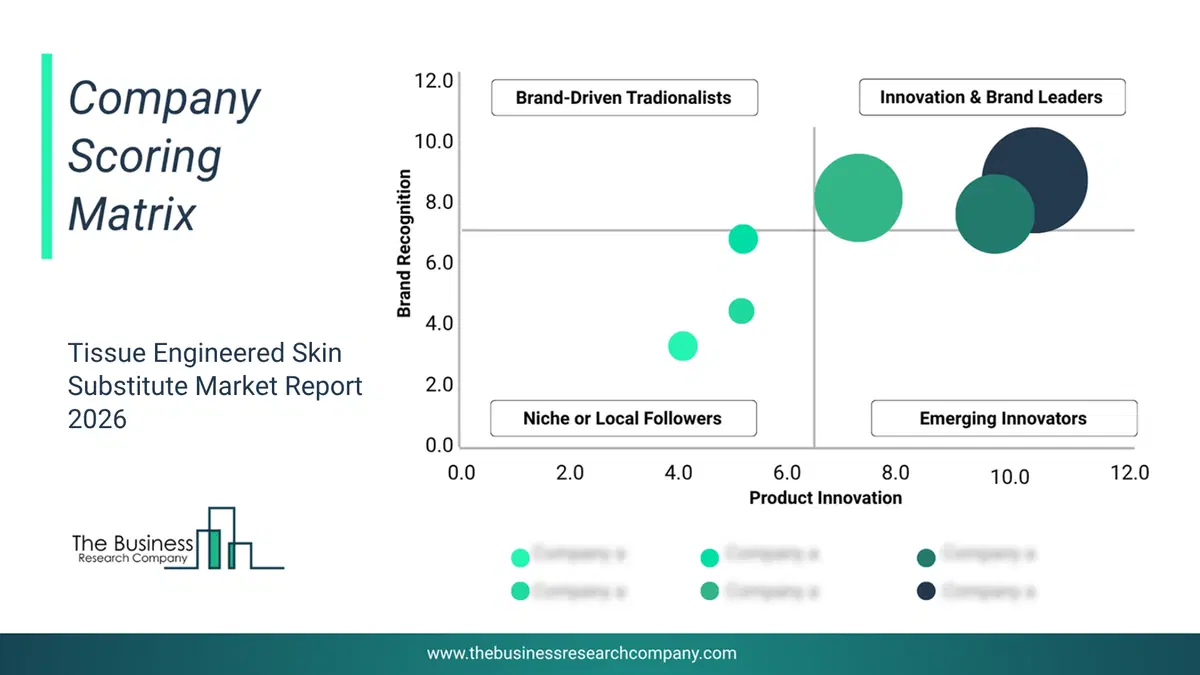
This chart maps companies by product innovation and brand strength, with bubble size indicating relative revenue, helping identify market leaders, challengers, and niche players. This is an illustrative chart; the full report provides a complete and accurate competitive analysis.
Global Tissue Engineered Skin Substitute Market Trends and Insights
Major companies operating in the tissue-engineered skin substitute market are focusing on innovating laser technologies with improved wavelengths, such as advanced biofabricated dermo-epidermal graft systems, to gain a competitive advantage. A bio-fabricated dermo-epidermal graft system combines living skin cells with a scaffold to generate full-thickness skin substitutes that mimic human skin structure and support integration after grafting. For instance, in July 2024, CUTISS AG, a Switzerland-based regenerative medicine company, introduced the next-generation graft system DenovoSkin, a personalized bioengineered skin graft that uses a small biopsy from the patient to grow a large dermo-epidermal skin substitute with improved donor-site conservation, enhanced graft integration, and reduced scarring. This innovation offers faster healing and better cosmetic outcomes. The trend supports broader adoption of advanced wound care and reconstructive therapies, though cost and manufacturing scale remain constraints.What Are Latest Mergers And Acquisitions In The Tissue Engineered Skin Substitute Market?
In March 2023, Aziyo Biologics Inc., a US-based regenerative medicine company, partnered with Sientra Inc. This partnership aims to expand the distribution of Aziyo's SimpliDerm product line, a tissue-engineered skin substitute, under which Sientra will have non-exclusive rights to market, sell, and distribute SimpliDerm in the U.S. for specific uses in reconstruction surgery. Sientra Inc. is a US-based company specializing in aesthetic medicine and plastic surgery implants.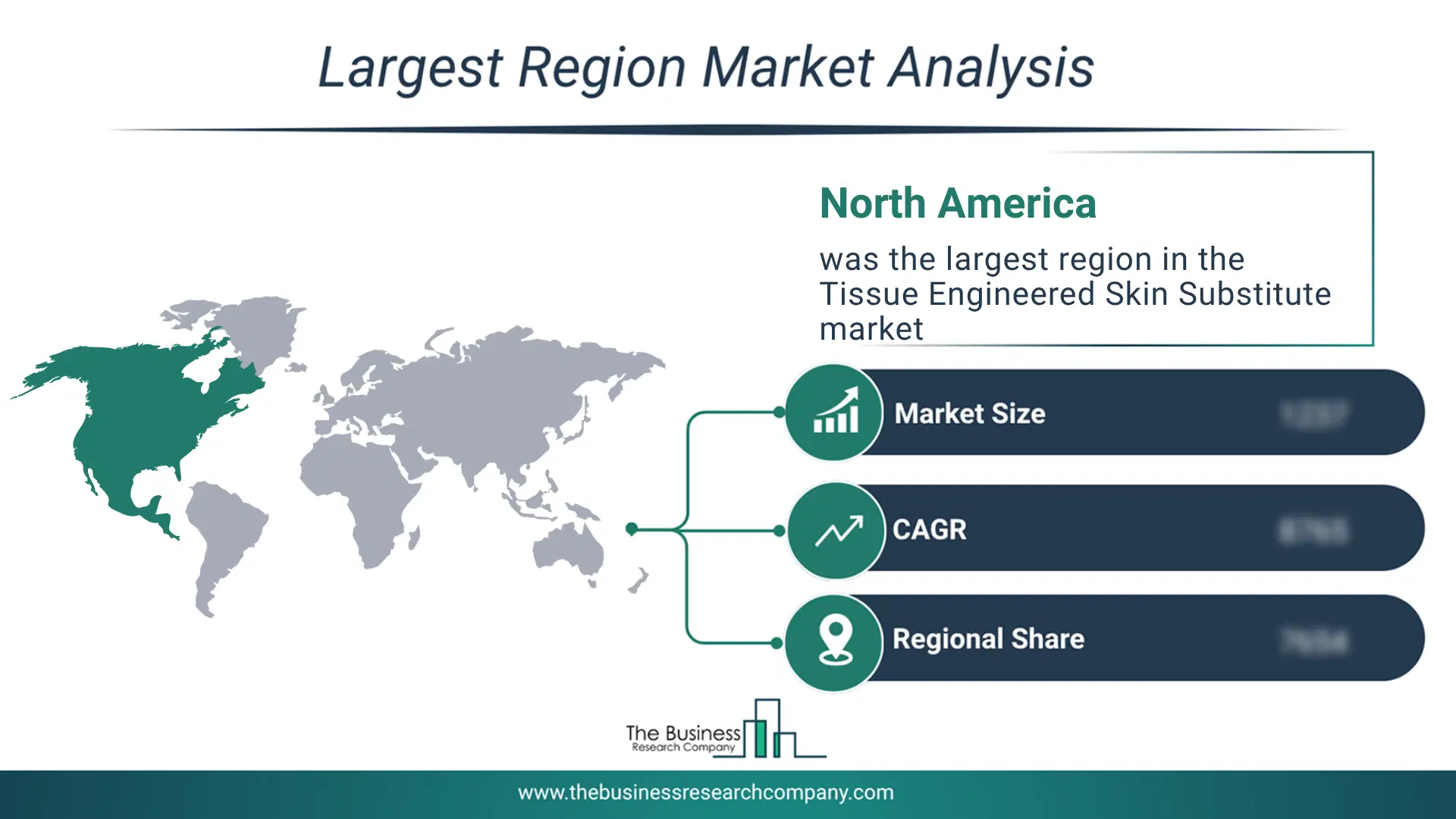
Regional Outlook
North America was the largest region in the tissue engineered skin substitute market in 2025. The regions covered in this market report are Asia-Pacific, South East Asia, Western Europe, Eastern Europe, North America, South America, Middle East, Africa. The countries covered in this market report are Australia, Brazil, China, France, Germany, India, Indonesia, Japan, Taiwan, Russia, South Korea, UK, USA, Canada, Italy, Spain.What Defines the Tissue Engineered Skin Substitute Market?
The tissue-engineered skin substitute market consists of sales of products including apligraf, dermagraft, epicel, matristem, and stratagraft. Values in this market are factory gate values, that is, the value of goods sold by the manufacturers or creators of the goods, whether to other entities (including downstream manufacturers, wholesalers, distributors, and retailers) or directly to end customers. The value of goods in this market includes related services sold by the creators of the goods.How is Market Value Defined and Measured?
The market value is defined as the revenues that enterprises gain from the sale of goods and/or services within the specified market and geography through sales, grants, or donations in terms of the currency (in USD unless otherwise specified). The revenues for a specified geography are consumption values that are revenues generated by organizations in the specified geography within the market, irrespective of where they are produced. It does not include revenues from resales along the supply chain, either further along the supply chain or as part of other products.
This chart presents market attractiveness based on a quantitative evaluation of growth, competition, strategic alignment, and risk, offering a clear view of opportunity areas for decision-making. This chart is for illustrative purposes; the full report contains the complete analysis.

This chart highlights the Total Addressable Market (TAM) by estimating the maximum revenue opportunity using an assumption-driven approach, supporting strategic planning and opportunity sizing across markets. The chart is illustrative; the full report provides a more comprehensive analysis.
What Key Data and Analysis Are Included in the Tissue Engineered Skin Substitute Market Report 2026?
The tissue engineered skin substitute market research report is one of a series of new reports from The Business Research Company that provides market statistics, including industry global market size, regional shares, competitors with the market share, detailed market segments, market trends and opportunities, and any further data you may need to thrive in the tissue engineered skin substitute industry. The market research report delivers a complete perspective of everything you need, with an in-depth analysis of the current and future state of the industry.Tissue Engineered Skin Substitute Market Report Forecast Analysis
| Report Attribute | Details |
|---|---|
| Market Size Value In 2026 | $2.21 billion |
| Revenue Forecast In 2030 | $3.06 billion |
| Growth Rate | CAGR of 8.5% from 2026 to 2030 |
| Base Year For Estimation | 2025 |
| Actual Estimates/Historical Data | 2020-2025 |
| Forecast Period | 2026 - 2030 |
| Market Representation | Revenue in USD Billion and CAGR from 2026 to 2030 |
| Segments Covered | Product, Material, Technology, Application, End User |
| Regional Scope | Asia-Pacific, Western Europe, Eastern Europe, North America, South America, Middle East, Africa |
| Country Scope | The countries covered in the report are Australia, Brazil, China, France, Germany, India, Indonesia, Japan, Taiwan, Russia, South Korea, UK, USA, Canada, Italy, Spain |
| Key Companies Profiled | Stryker Corporation, DePuy Synthes, Smith & Nephew Plc, ConvaTec Group PLC, Mallinckrodt Pharmaceuticals plc, Integra LifeSciences Holdings Corporation, Gunze Limited, Organogenesis Inc., LifeNet Health Inc., MiMedx Group Inc., Vericel Corporation, AlloSource Inc., Sientra Inc., PolyNovo Limited, Avita Medical Limited, Tissue Regenix Group, PolarityTE, Promethean LifeSciences Inc., Regenicin Inc., Kerecis Ltd. |
| Customization Scope | Request for Customization |
| Pricing And Purchase Options | Explore Purchase Options |