

Tourette Syndrome Market Report 2026
Global Outlook – By Types (Motor Tics, Vocal Tics ), By Diagnosis (Blood Diagnosis, Imaging Diagnosis, Other Diagnosis), By Type Of Treatment (Medications, Behavioral Therapy, Neuromodulation Therapies, Complementary And Alternative Medicine, Other Therapies), By Severity Of Syndrome (Mild, Moderate, Severe), By End Users (Individuals With Tourette Syndrome, Healthcare Professionals, Educational Institutions, Non-Profit Organizations, Research Institutions) - Market Size, Trends, Strategies, and Forecast to 2030
Tourette Syndrome Market Overview
• Tourette Syndrome market size has reached to $2.15 billion in 2025 • Expected to grow to $3.48 billion in 2030 at a compound annual growth rate (CAGR) of 10% • Growth Driver: Increasing Government Initiatives Driving The Growth Of The Market Due To Rising Investments In Neurological Research And Healthcare • Market Trend: Advances In Dopamine 1 Receptor Antagonists Improving Safety And Efficacy • North America was the largest region in 2025 and Asia-Pacific is the fastest growing region.What Is Covered Under Tourette Syndrome Market?
Tourette syndrome (TS) is a neurological disorder marked by involuntary, repetitive movements and vocalizations known as tics. It usually begins in childhood and can vary in severity. TS is influenced by both genetic and environmental factors, with symptoms often worsening during times of stress or excitement. Treatments such as behavioral therapy and medication can help manage and reduce the frequency of tics. The main tourette syndrome types are motor tics and vocal tics. Motor tics are sudden, involuntary movements of the body, such as blinking, head jerking, or shoulder shrugging. It can be diagnosed using blood diagnosis, imaging diagnosis, and others and can be treated with medications, behavioral therapy, neuromodulation therapies, complementary and alternative medicine, and others. It can be mild, moderate, and severe and is used by individuals with tourette syndrome, healthcare professionals, educational institutions, non-profit organizations, and research institutions.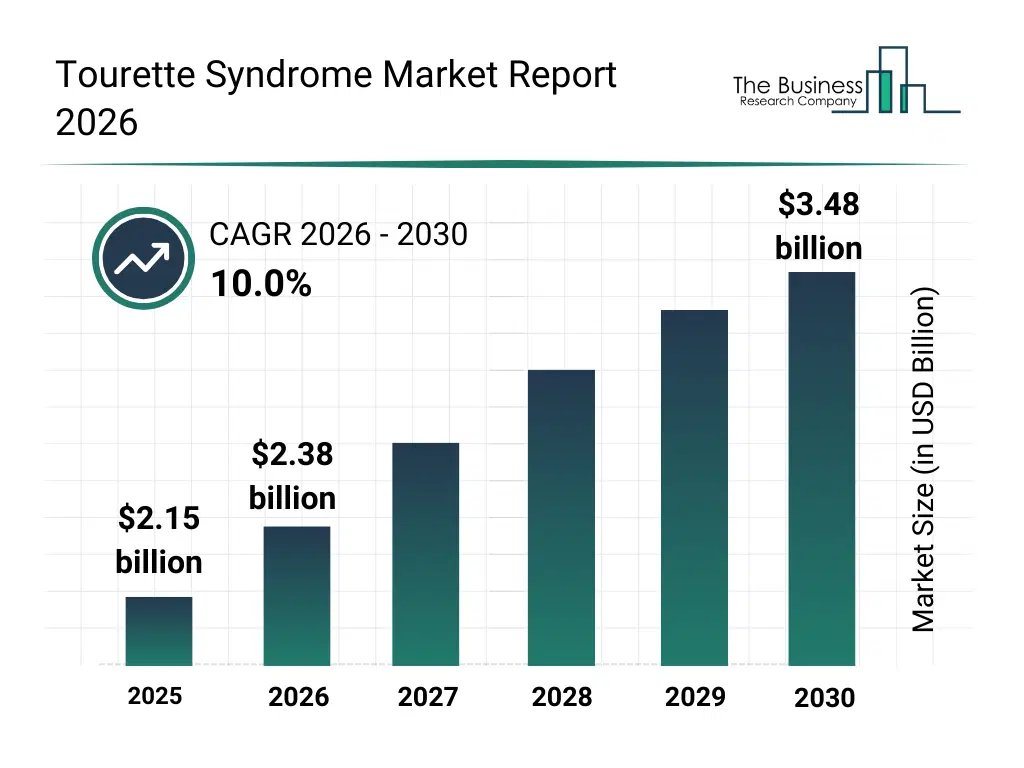
What Is The Tourette Syndrome Market Size and Share 2026?
The tourette syndrome market size has grown rapidly in recent years. It will grow from $2.15 billion in 2025 to $2.38 billion in 2026 at a compound annual growth rate (CAGR) of 10.3%. The growth in the historic period can be attributed to improved clinical understanding of tic disorders, increased diagnosis rates in pediatric populations, expansion of neurological research funding, availability of standardized diagnostic criteria, growth in behavioral therapy adoption.What Is The Tourette Syndrome Market Growth Forecast?
The tourette syndrome market size is expected to see rapid growth in the next few years. It will grow to $3.48 billion in 2030 at a compound annual growth rate (CAGR) of 10.0%. The growth in the forecast period can be attributed to increasing investment in precision neurology research, rising development of personalized treatment pathways, expansion of digital therapeutic tools, growing focus on non-invasive neuromodulation approaches, increasing global awareness initiatives. Major trends in the forecast period include increasing focus on early and accurate diagnosis, growing adoption of behavioral and digital therapies, rising research on genetic and neurobiological factors, expansion of multidisciplinary care approaches, improved awareness and screening programs.
Global Tourette Syndrome Market Segmentation
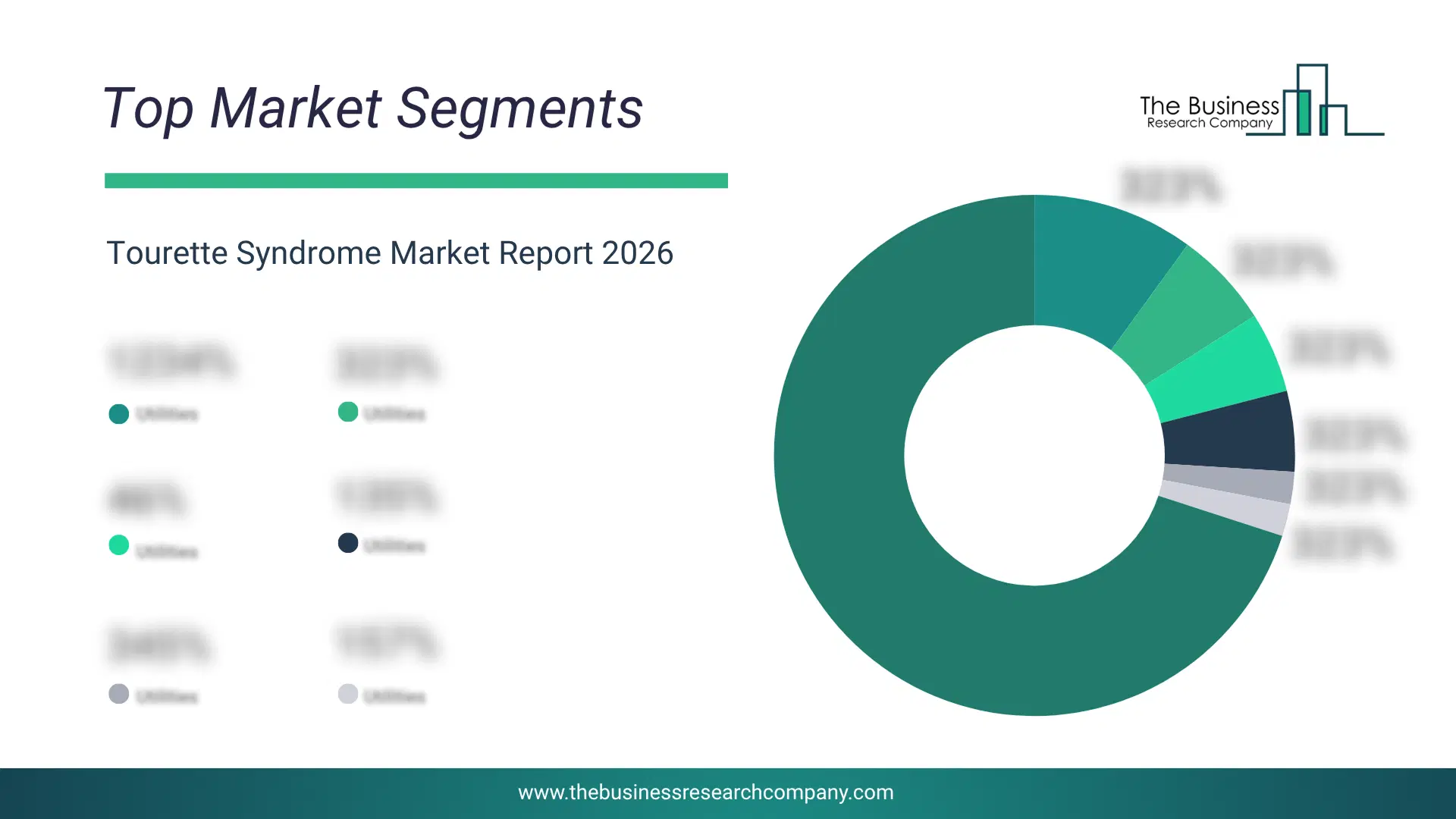
1) By Types: Motor Tics, Vocal Tics 2) By Diagnosis: Blood Diagnosis, Imaging Diagnosis, Other Diagnosis 3) By Type Of Treatment: Medications, Behavioral Therapy, Neuromodulation Therapies, Complementary And Alternative Medicine, Other Therapies 4) By Severity Of Syndrome: Mild, Moderate, Severe 5) By End Users: Individuals With Tourette Syndrome, Healthcare Professionals, Educational Institutions, Non-Profit Organizations, Research Institutions Subsegments: 1) By Motor Tics: Simple Motor Tics, Complex Motor Tics 2) By Vocal Tics: Simple Vocal Tics, Complex Vocal TicsWhat Is The Driver Of The Tourette Syndrome Market?
The increasing government initiatives for neurological disorders are expected to fuel the growth of the tourette syndrome market. Government initiatives are programs, policies, or actions implemented by authorities to address specific public needs, promote development, or improve societal well-being. Government initiatives for neurological disorders fuel tourette syndrome advancements by increasing funding for research and treatment programs, leading to improved diagnostic tools, better therapeutic options, and greater public awareness, ultimately enhancing patient care and support. For instance, in February 2025, according to a report published by the Department of Health and Social Care, a UK-based ministerial department, the Medical Research Council (MRC) established the first two MRC Centres of Research Excellence (CoRE) in December 2024, each dedicated to gene therapy research and valued at up to $65 million (£50 million) over 14 years. The MRC CoRE in therapeutic genomics aims to drive transformative advancements in rare genetic disorders by developing scalable processes to adapt successful genetic therapies for new conditions, facilitating the creation of personalized treatments. Therefore, increasing government initiatives for neurological disorders propel the growth of the tourette syndrome industry.Key Players In The Global Tourette Syndrome Market
Major companies operating in the tourette syndrome market are Teva Pharmaceutical Industries Ltd, Neurocrine Biosciences Inc, Jazz Pharmaceuticals plc, Eisai Co Ltd, Kyowa Kirin Co Ltd, AbbVie Inc, SciSparc Ltd, Emalex Biosciences Inc, Pfizer Inc, H Lundbeck AS, Otsuka Pharmaceutical Co Ltd, Sage Therapeutics Inc, Axsome Therapeutics Inc, Johnson and Johnson Services Inc, Horizon Therapeutics Plc, Medtronic plc, Noema Pharma Inc, Asarina Pharma AB, EuMentis Therapeutics Inc, Synendos Therapeutics Inc, Catalyst Pharmaceuticals Inc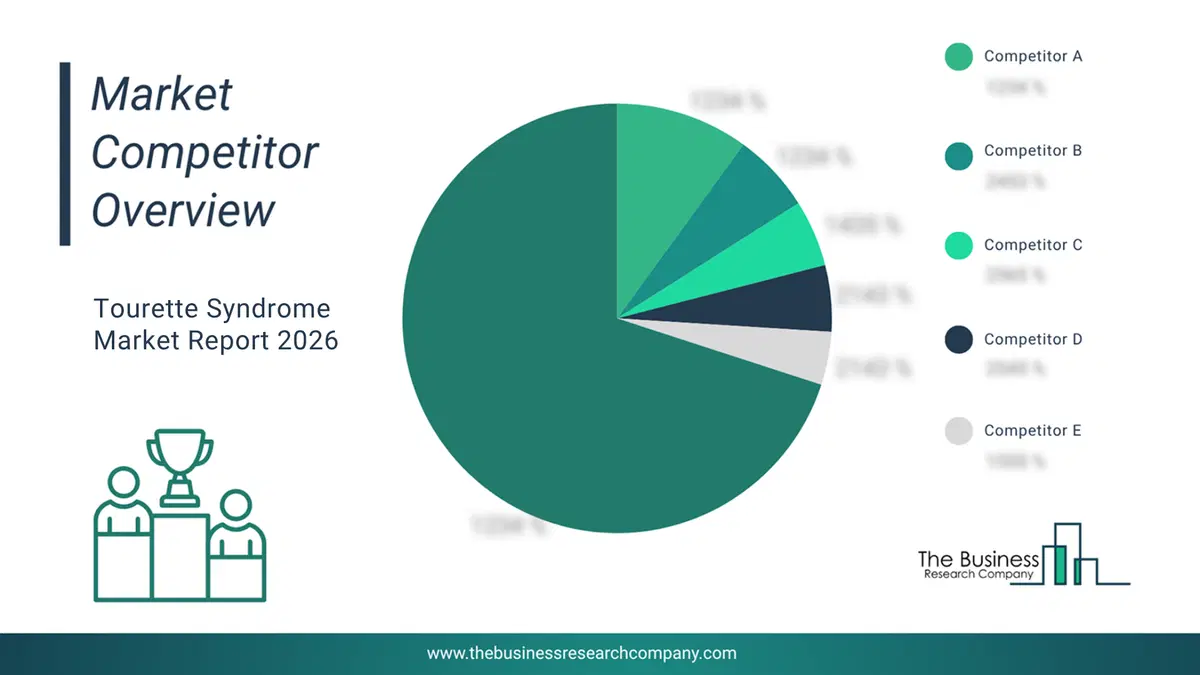
This chart is for illustrative purposes; the full report includes a detailed competitor analysis and comprehensive overview of the top 10 companies in the market.
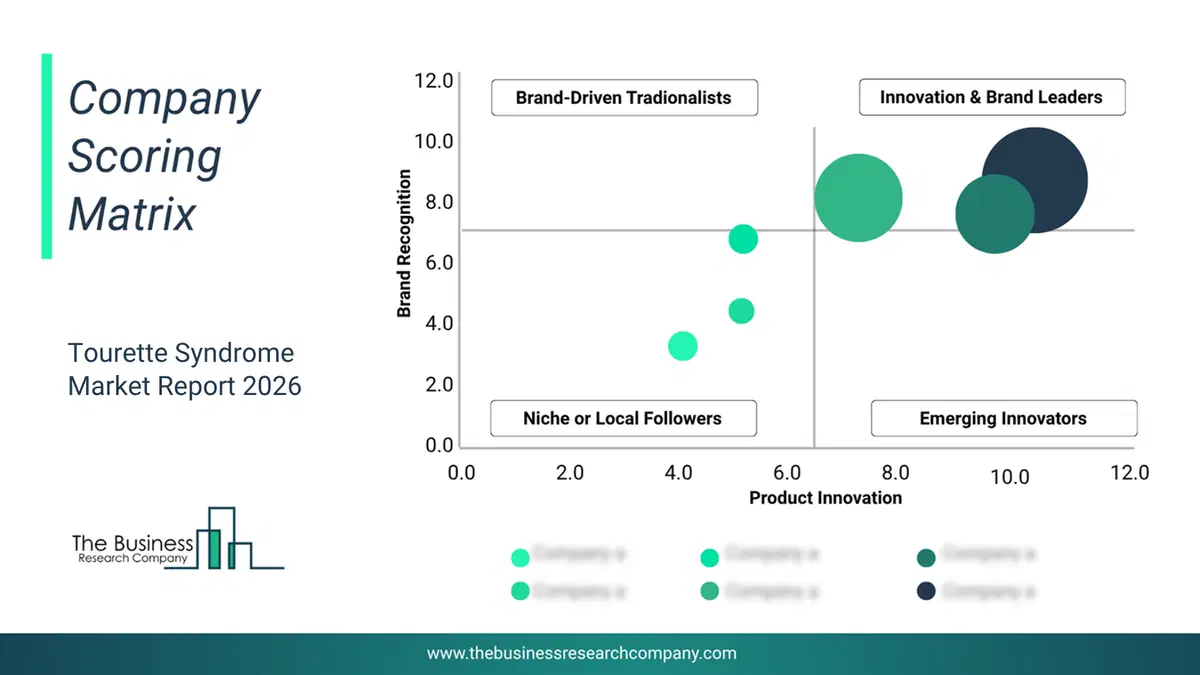
This chart maps companies by product innovation and brand strength, with bubble size indicating relative revenue, helping identify market leaders, challengers, and niche players. This is an illustrative chart; the full report provides a complete and accurate competitive analysis.
Global Tourette Syndrome Market Trends and Insights
Major companies operating in the tourette syndrome market are focusing on integrating dopamine 1 (D1) receptor antagonists to gain a competitive advantage. D1 receptor antagonists are drugs that block dopamine D1 receptors in the brain, reducing dopamine activity to help manage neurological or psychiatric conditions. For instance, in March 2023, Emalex Biosciences, a US-based biopharmaceutical company, launched a Phase 3 trial of ecopipam, a first in-class small molecule drug that selectively blocks D1 receptors rather than D2 receptors used by existing antipsychotics. Ecopipam demonstrated significantly lower relapse rates in pediatric patients: 41.9% relapse versus 68.1% with placebo (hazard ratio 0.5, p = 0.0084) and maintained reductions in vocal and motor tics with generally good tolerability (common side effects included somnolence, insomnia, anxiety, fatigue, headache). This trend toward a more targeted pharmacological mechanism expands therapeutic options and could drive adoption, though long term real world safety and access remain to be seen.What Are Latest Mergers And Acquisitions In The Tourette Syndrome Market?
In February 2025, Relmada Therapeutics Inc., a US-based biotechnology company, acquired Sepranolone, a Phase 2b ready neurosteroid, from Asarina Pharma AB for an undisclosed amount. The acquisition aligns with Relmada's mission to address unmet needs in treating central nervous system (CNS) disorders. Sepranolone is promising results in Phase 2a trials, with significant reductions in tics and improvements in quality of life, alongside strong safety data. Asarina Pharma AB is a Sweden-based provider of tourette syndrome treatment.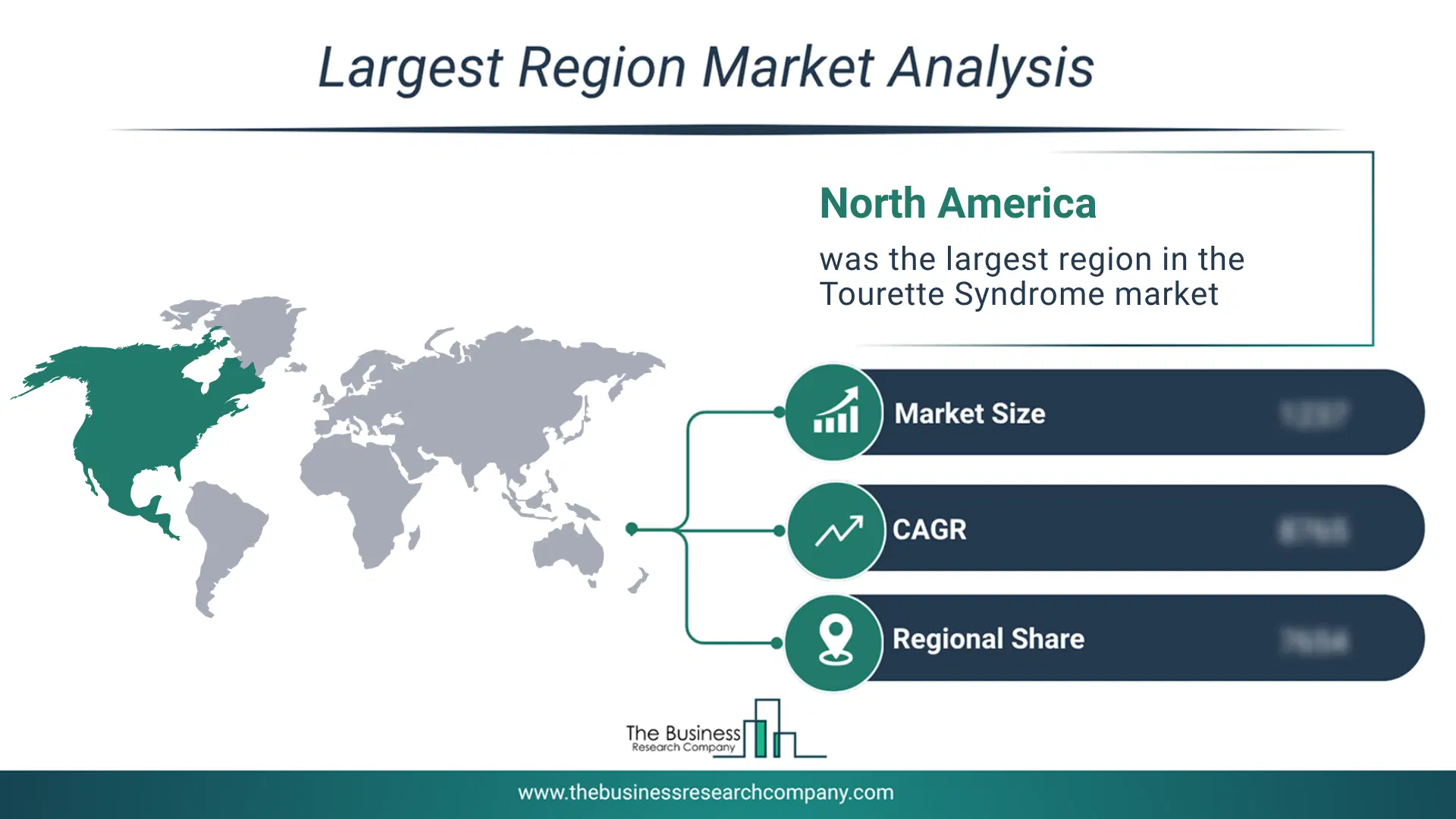
Regional Outlook
North America was the largest region in the tourette syndrome market in 2025. Asia-Pacific is expected to be the fastest-growing region in the forecast period. The regions covered in this market report are Asia-Pacific, South East Asia, Western Europe, Eastern Europe, North America, South America, Middle East, Africa. The countries covered in this market report are Australia, Brazil, China, France, Germany, India, Indonesia, Japan, Taiwan, Russia, South Korea, UK, USA, Canada, Italy, Spain.What Defines the Tourette Syndrome Market?
The tourette syndrome market consists of sales of sensory stimulation devices, neurofeedback devices, speech and communication aids, mental health support apps. Values in this market are ‘factory gate’ values, that is the value of goods sold by the manufacturers or creators of the goods, whether to other entities (including downstream manufacturers, wholesalers, distributors and retailers) or directly to end customers. The value of goods in this market includes related services sold by the creators of the goods.How is Market Value Defined and Measured?
The market value is defined as the revenues that enterprises gain from the sale of goods and/or services within the specified market and geography through sales, grants, or donations in terms of the currency (in USD unless otherwise specified). The revenues for a specified geography are consumption values that are revenues generated by organizations in the specified geography within the market, irrespective of where they are produced. It does not include revenues from resales along the supply chain, either further along the supply chain or as part of other products.
This chart presents market attractiveness based on a quantitative evaluation of growth, competition, strategic alignment, and risk, offering a clear view of opportunity areas for decision-making. This chart is for illustrative purposes; the full report contains the complete analysis.

This chart highlights the Total Addressable Market (TAM) by estimating the maximum revenue opportunity using an assumption-driven approach, supporting strategic planning and opportunity sizing across markets. The chart is illustrative; the full report provides a more comprehensive analysis.
What Key Data and Analysis Are Included in the Tourette Syndrome Market Report 2026?
The tourette syndrome market research report is one of a series of new reports from The Business Research Company that provides market statistics, including industry global market size, regional shares, competitors with the market share, detailed market segments, market trends and opportunities, and any further data you may need to thrive in the tourette syndrome industry. The market research report delivers a complete perspective of everything you need, with an in-depth analysis of the current and future state of the industry.Tourette Syndrome Market Report Forecast Analysis
| Report Attribute | Details |
|---|---|
| Market Size Value In 2026 | $2.38 billion |
| Revenue Forecast In 2030 | $3.48 billion |
| Growth Rate | CAGR of 10% from 2026 to 2030 |
| Base Year For Estimation | 2025 |
| Actual Estimates/Historical Data | 2020-2025 |
| Forecast Period | 2026 - 2030 |
| Market Representation | Revenue in USD Billion and CAGR from 2026 to 2030 |
| Segments Covered | Types, Diagnosis, Type Of Treatment, Severity Of Syndrome, End Users |
| Regional Scope | Asia-Pacific, Western Europe, Eastern Europe, North America, South America, Middle East, Africa |
| Country Scope | The countries covered in the report are Australia, Brazil, China, France, Germany, India, Indonesia, Japan, Taiwan, Russia, South Korea, UK, USA, Canada, Italy, Spain |
| Key Companies Profiled | Teva Pharmaceutical Industries Ltd, Neurocrine Biosciences Inc, Jazz Pharmaceuticals plc, Eisai Co Ltd, Kyowa Kirin Co Ltd, AbbVie Inc, SciSparc Ltd, Emalex Biosciences Inc, Pfizer Inc, H Lundbeck AS, Otsuka Pharmaceutical Co Ltd, Sage Therapeutics Inc, Axsome Therapeutics Inc, Johnson and Johnson Services Inc, Horizon Therapeutics Plc, Medtronic plc, Noema Pharma Inc, Asarina Pharma AB, EuMentis Therapeutics Inc, Synendos Therapeutics Inc, Catalyst Pharmaceuticals Inc |
| Customization Scope | Request for Customization |
| Pricing And Purchase Options | Explore Purchase Options |