
Tourette Syndrome Treatment Market Report 2026
Global Outlook – By Drug Class (Antiadrenergic Agents, Antipsychotic Agents, Atypical Antipsychotic Agents, Carbonic Anhydrase Inhibitor Anticonvulsants, Other Drug Classes), By Distribution Channel (Hospital Pharmacies, Retail Pharmacies, Online Pharmacies), By Application (Children, Adult) - Market Size, Trends, Strategies, and Forecast to 2030
Tourette Syndrome Treatment Market Overview
• Tourette Syndrome Treatment market size has reached to $2.48 billion in 2025 • Expected to grow to $3.38 billion in 2030 at a compound annual growth rate (CAGR) of 6.4% • Growth Driver: Healthcare Expenditure's Influence On Tourette Syndrome Treatment Market Growth • Market Trend: Advances In Dopamine 1 Receptor Antagonists Improving Safety And Efficacy • North America was the largest region in 2025 and Asia-Pacific is the fastest growing region.What Is Covered Under Tourette Syndrome Treatment Market?
The Tourette syndrome treatment refers to the management of symptoms associated with tourette syndrome, including tics and behavioral manifestations. It encompasses a range of interventions, including medication, behavioral therapies, and supportive services, aimed at reducing the frequency and severity of symptoms and improving the overall quality of life for individuals with tourette syndrome. The main drug classes for tourette syndrome treatment are antiadrenergic agents, antipsychotic agents, atypical antipsychotic agents, carbonic anhydrase inhibitors, anticonvulsants, and others. Antiadrenergic agents are medications that block or inhibit the effects of adrenaline and noradrenaline. These are sold through various distribution channels, such as hospital pharmacies, retail pharmacies, and online pharmacies, and are used in both child and adult applications.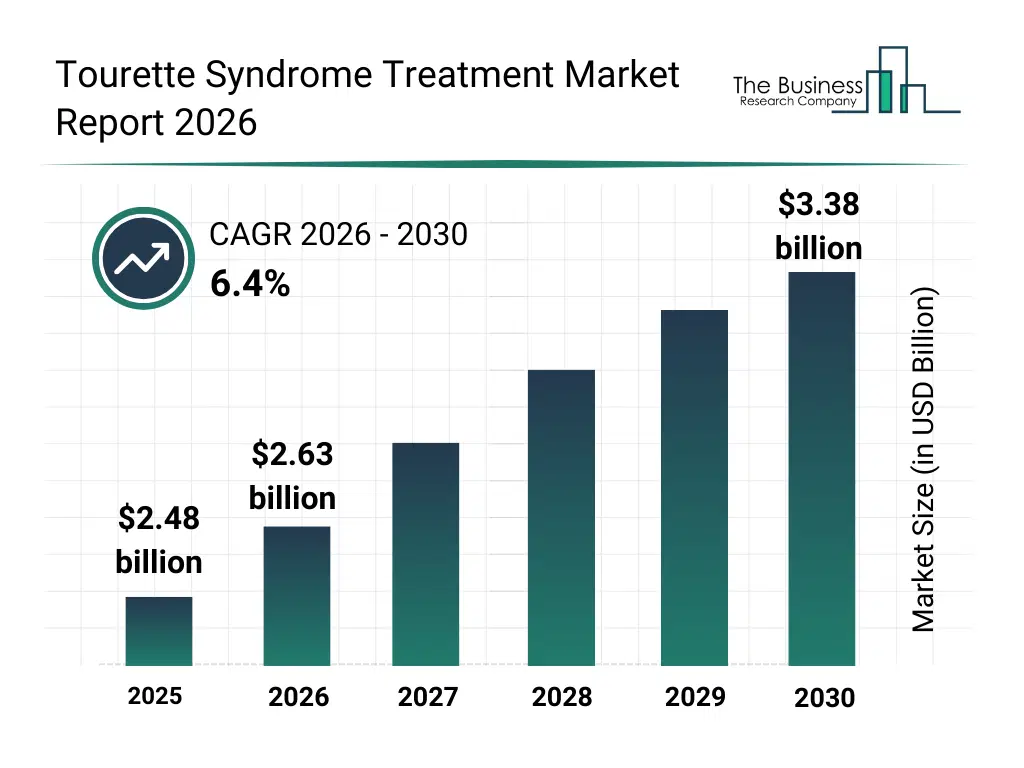
What Is The Tourette Syndrome Treatment Market Size and Share 2026?
The tourette syndrome treatment market size has grown strongly in recent years. It will grow from $2.48 billion in 2025 to $2.63 billion in 2026 at a compound annual growth rate (CAGR) of 6.0%. The growth in the historic period can be attributed to availability of established antipsychotic medications, increased clinical acceptance of behavioral therapies, expansion of specialty neurology clinics, growing diagnosis of tourette syndrome, improved access to treatment services.What Is The Tourette Syndrome Treatment Market Growth Forecast?
The tourette syndrome treatment market size is expected to see strong growth in the next few years. It will grow to $3.38 billion in 2030 at a compound annual growth rate (CAGR) of 6.4%. The growth in the forecast period can be attributed to increasing investment in next-generation drug development, rising focus on personalized medicine approaches, expansion of teletherapy and remote care models, growing demand for safer long-term treatments, increasing clinical trial activity. Major trends in the forecast period include increasing use of targeted pharmacological therapies, growing adoption of comprehensive behavioral intervention for tics, expansion of combination therapy approaches, rising development of novel drug classes, improved patient monitoring and follow-up.
Global Tourette Syndrome Treatment Market Segmentation
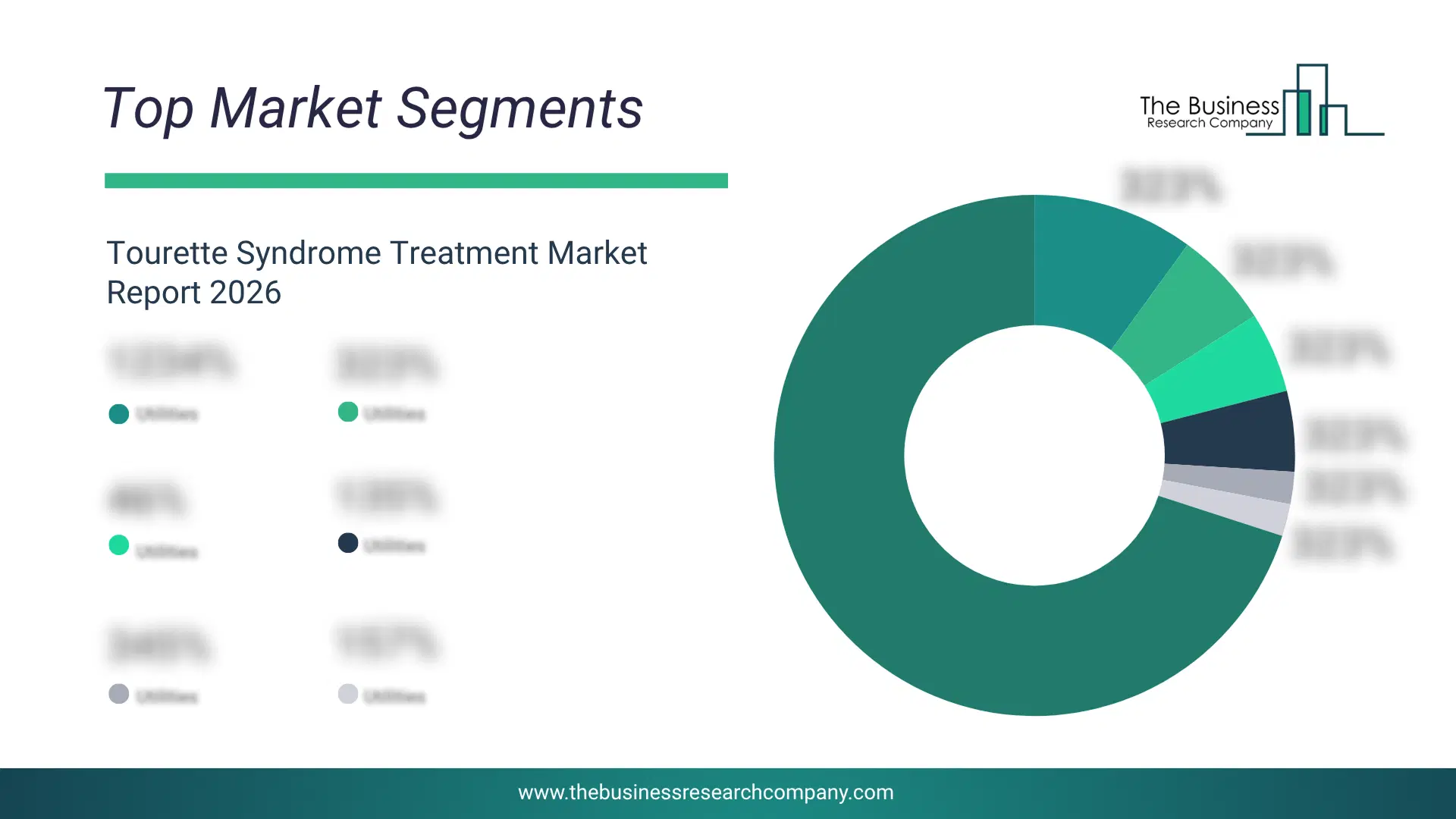
1) By Drug Class: Antiadrenergic Agents, Antipsychotic Agents, Atypical Antipsychotic Agents, Carbonic Anhydrase Inhibitor Anticonvulsants, Other Drug Classes 2) By Distribution Channel: Hospital Pharmacies, Retail Pharmacies, Online Pharmacies 3) By Application: Children, Adult Subsegments: 1) By Antiadrenergic Agents: Alpha-2 Adrenergic Agonists, Beta-Blockers 2) By Antipsychotic Agents: Typical Antipsychotics, Atypical Antipsychotics 3) By Atypical Antipsychotic Agents: Risperidone, Aripiprazole 4) By Carbonic Anhydrase Inhibitor Anticonvulsants: Topiramate, Zonisamide 5) By Other Drug Classes: Dopamine-Depleting Agents, Gabaergic DrugsWhat Is The Driver Of The Tourette Syndrome Treatment Market?
The increase in healthcare expenditure is expected to propel the growth of the tourette syndrome treatment market going forward. Healthcare expenditure refers to the total amount of money spent on healthcare goods and services, including medical treatments, medications, hospitalizations, and preventive care, within a specified period, reflecting the overall cost of healthcare provision within a population. Healthcare expenditure is rising due to the increasing cost of advanced medical technologies, aging populations, and the prevalence of chronic diseases. Healthcare expenditure in Tourette syndrome treatment is utilized for developing advanced diagnostic tools, medications, and behavioral therapies. It also supports ongoing research, patient education, and access to specialized care services. For instance, in May 2024, according to the Office for National Statistics, a UK-based government department, reported that total healthcare expenditure saw a 5.6% increase in nominal terms from 2022 to 2023, marking a significant acceleration compared to the 0.9% growth observed in 2022. Therefore, the increase in healthcare expenditure is driving the growth of the tourette syndrome treatment industry.Key Players In The Global Tourette Syndrome Treatment Market
Major companies operating in the tourette syndrome treatment market are AbbVie Inc., Otsuka Pharmaceutical Co. Ltd., Jazz Pharmaceuticals plc, Supernus Pharmaceuticals, Neurocrine Biosciences, Sunovion Pharmaceuticals Inc., Kyowa Kirin Co. Ltd., SciSparc Ltd., Emalex Biosciences Inc., Relmada Therapeutics Inc., Reviva Pharmaceuticals Inc., Catalyst Pharmaceuticals Inc., Psyadon Pharmaceuticals Inc., Sage Therapeutics Inc., Ipsen Pharma, Aptinyx Inc., Zynerba Pharma Inc., Teva Pharmaceutical Industries Ltd., H Lundbeck AS, NeuroSigma Inc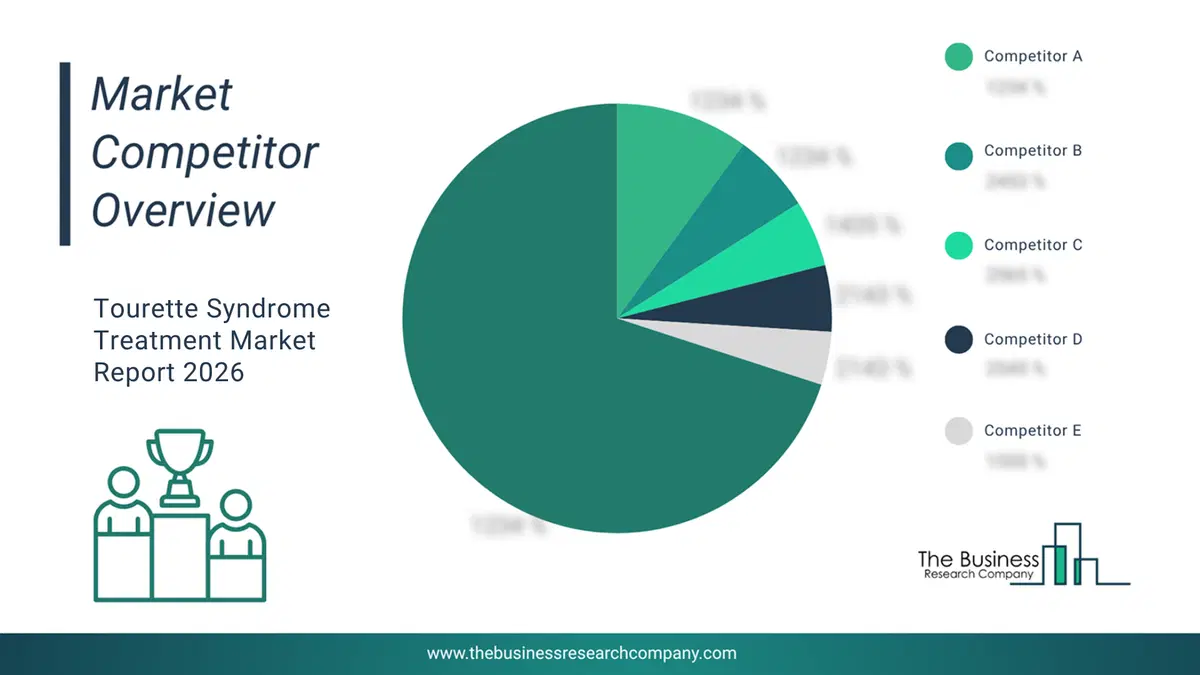
This chart is for illustrative purposes; the full report includes a detailed competitor analysis and comprehensive overview of the top 10 companies in the market.
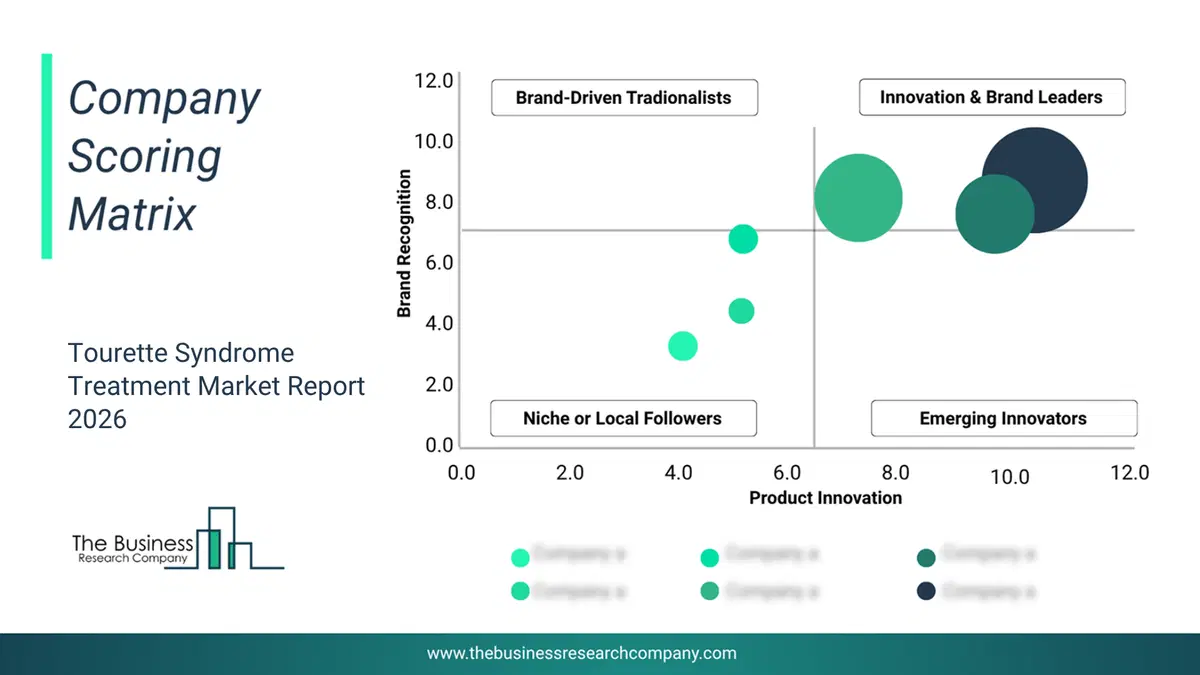
This chart maps companies by product innovation and brand strength, with bubble size indicating relative revenue, helping identify market leaders, challengers, and niche players. This is an illustrative chart; the full report provides a complete and accurate competitive analysis.
Global Tourette Syndrome Treatment Market Trends and Insights
Major companies operating in the tourette syndrome treatment market are focusing on targeted dopamine 1 receptor antagonists to gain a competitive advantage. D1 receptor antagonists are drugs that block dopamine D1 receptors in the brain, reducing dopamine activity to help manage neurological or psychiatric conditions. For instance, in March 2023, Emalex Biosciences, a US-based biopharmaceutical company, launched the Phase 3 study of ecopipam, a first-in-class small-molecule drug that selectively blocks D1 receptors and is not an antipsychotic. Eopipam demonstrated durable reductions in motor and vocal tics over 12 months with minimal metabolic side effects and no significant weight gain compared to traditional D2-targeting antipsychotics. This trend toward more precise, better-tolerated drug mechanisms enhances the probability of regulatory approval and broader adoption, though long-term safety and real world effectiveness remain to be fully established.What Are Latest Mergers And Acquisitions In The Tourette Syndrome Treatment Market?
In February 2025, Relmada Therapeutics Inc., a US-based biotechnology company, acquired Sepranolone, a Phase 2b ready neurosteroid, from Asarina Pharma AB for an undisclosed amount. The acquisition aligns with Relmada's mission to address unmet needs in treating central nervous system (CNS) disorders. Sepranolone is promising results in Phase 2a trials, with significant reductions in tics and improvements in quality of life, alongside strong safety data. Asarina Pharma AB is a Sweden-based provider of tourette syndrome treatment.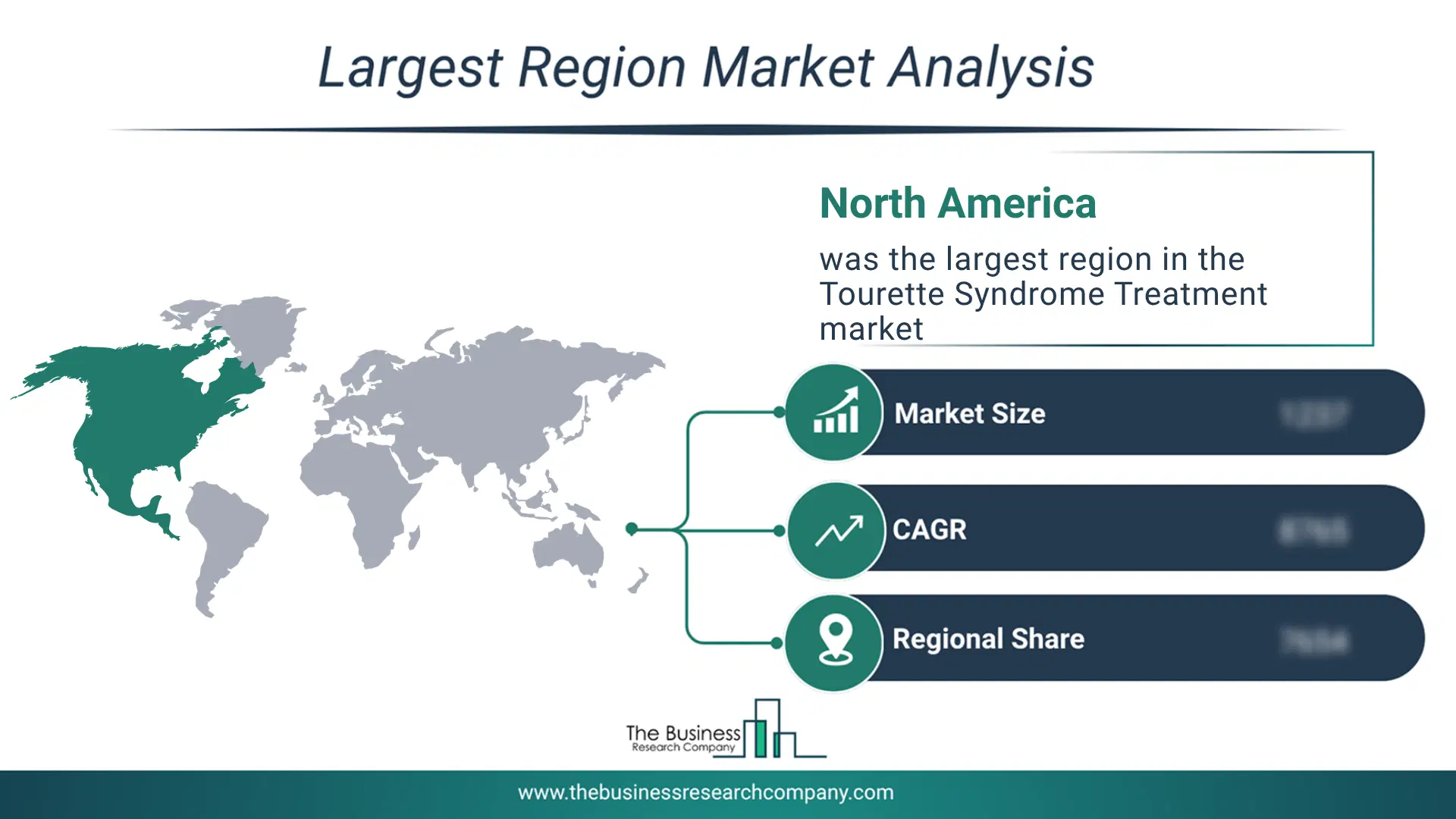
Regional Outlook
North America was the largest region in the tourette syndrome treatment market in 2025. Asia-Pacific is expected to be the fastest-growing region in the forecast period. The regions covered in this market report are Asia-Pacific, South East Asia, Western Europe, Eastern Europe, North America, South America, Middle East, Africa. The countries covered in this market report are Australia, Brazil, China, France, Germany, India, Indonesia, Japan, Taiwan, Russia, South Korea, UK, USA, Canada, Italy, Spain.What Defines the Tourette Syndrome Treatment Market?
The tourette syndrome treatment market consists of revenues earned by entities by providing services, such as pharmacotherapy, behavioral therapies, neurostimulation techniques, and supportive services used during the process. The market value includes the value of related goods sold by the service provider or included within the service offering. The Tourette syndrome treatment market also includes sales of antipsychotics, wrist devices, and non-antipsychotic medications. Values in this market are ‘factory gate’ values, that is the value of goods sold by the manufacturers or creators of the goods, whether to other entities (including downstream manufacturers, wholesalers, distributors and retailers) or directly to end customers. The value of goods in this market includes related services sold by the creators of the goods.How is Market Value Defined and Measured?
The market value is defined as the revenues that enterprises gain from the sale of goods and/or services within the specified market and geography through sales, grants, or donations in terms of the currency (in USD unless otherwise specified). The revenues for a specified geography are consumption values that are revenues generated by organizations in the specified geography within the market, irrespective of where they are produced. It does not include revenues from resales along the supply chain, either further along the supply chain or as part of other products.
This chart presents market attractiveness based on a quantitative evaluation of growth, competition, strategic alignment, and risk, offering a clear view of opportunity areas for decision-making. This chart is for illustrative purposes; the full report contains the complete analysis.

This chart highlights the Total Addressable Market (TAM) by estimating the maximum revenue opportunity using an assumption-driven approach, supporting strategic planning and opportunity sizing across markets. The chart is illustrative; the full report provides a more comprehensive analysis.
What Key Data and Analysis Are Included in the Tourette Syndrome Treatment Market Report 2026?
The tourette syndrome treatment market research report is one of a series of new reports from The Business Research Company that provides market statistics, including industry global market size, regional shares, competitors with the market share, detailed market segments, market trends and opportunities, and any further data you may need to thrive in the tourette syndrome treatment industry. The market research report delivers a complete perspective of everything you need, with an in-depth analysis of the current and future state of the industry.Tourette Syndrome Treatment Market Report Forecast Analysis
| Report Attribute | Details |
|---|---|
| Market Size Value In 2026 | $2.63 billion |
| Revenue Forecast In 2030 | $3.38 billion |
| Growth Rate | CAGR of 6.4% from 2026 to 2030 |
| Base Year For Estimation | 2025 |
| Actual Estimates/Historical Data | 2020-2025 |
| Forecast Period | 2026 - 2030 |
| Market Representation | Revenue in USD Billion and CAGR from 2026 to 2030 |
| Segments Covered | Drug Class, Distribution Channel, Application |
| Regional Scope | Asia-Pacific, Western Europe, Eastern Europe, North America, South America, Middle East, Africa |
| Country Scope | The countries covered in the report are Australia, Brazil, China, France, Germany, India, Indonesia, Japan, Taiwan, Russia, South Korea, UK, USA, Canada, Italy, Spain |
| Key Companies Profiled | AbbVie Inc., Otsuka Pharmaceutical Co. Ltd., Jazz Pharmaceuticals plc, Supernus Pharmaceuticals, Neurocrine Biosciences, Sunovion Pharmaceuticals Inc., Kyowa Kirin Co. Ltd., SciSparc Ltd., Emalex Biosciences Inc., Relmada Therapeutics Inc., Reviva Pharmaceuticals Inc., Catalyst Pharmaceuticals Inc., Psyadon Pharmaceuticals Inc., Sage Therapeutics Inc., Ipsen Pharma, Aptinyx Inc., Zynerba Pharma Inc., Teva Pharmaceutical Industries Ltd., H Lundbeck AS, NeuroSigma Inc |
| Customization Scope | Request for Customization |
| Pricing And Purchase Options | Explore Purchase Options |