
Traceability Analytics Artificial Intelligence (AI) Market Report 2026
Global Outlook – By Component (Software, Hardware, Services), By Deployment Mode (On-Premises, Cloud), By Enterprise Size (Small And Medium Enterprises, Large Enterprises), By Application (Supply Chain Monitoring, Regulatory Compliance, Quality Control, Transaction Verification), By End-User (Banking, Financial Services, And Insurance (BFSI), Healthcare, Retail And E-Commerce, Manufacturing, Logistics, Other End-Users) – Market Size, Trends, Strategies, and Forecast to 2030
Traceability Analytics Artificial Intelligence (AI) Market Overview
• Traceability Analytics Artificial Intelligence (AI) market size has reached to $4.22 billion in 2025 • Expected to grow to $12.54 billion in 2030 at a compound annual growth rate (CAGR) of 24.4% • Growth Driver: The Expansion Of The Logistics Industry Is Driving Market Growth Due To Enhanced Supply Chain Visibility And Efficiency • Market Trend: Innovations In Artificial Intelligence (AI) Technology Enhance Supply Chain Traceability And Risk Intelligence • North America was the largest region in 2025 and Asia-Pacific is the fastest growing region.What Is Covered Under Traceability Analytics Artificial Intelligence (AI) Market?
Traceability analytics artificial intelligence (AI) refers to AI-driven systems that track, document, and analyze the full lifecycle of data, models, and decisions across complex processes. It provides end-to-end visibility into data sources, transformations, and analytical outcomes. It is used to ensure transparency, accountability, and auditability of AI-driven insights. It helps organizations meet compliance requirements, manage risk, and validate the reliability of analytical and decision-making processes. The main components of traceability analytics artificial intelligence include software, hardware, and services. Software refers to solutions that use artificial intelligence to track, analyze, and verify the movement and transformation of data, products, or transactions across complex systems to improve transparency and accountability. The systems are deployed through on-premises and cloud models and are adopted across enterprises of different sizes, including small and medium enterprises and large enterprises. The various applications involved are supply chain monitoring, regulatory compliance, quality control, and transaction verification and are used by end users such as banking, financial services, and insurance, healthcare, retail and electronic commerce, manufacturing, logistics, and other end users.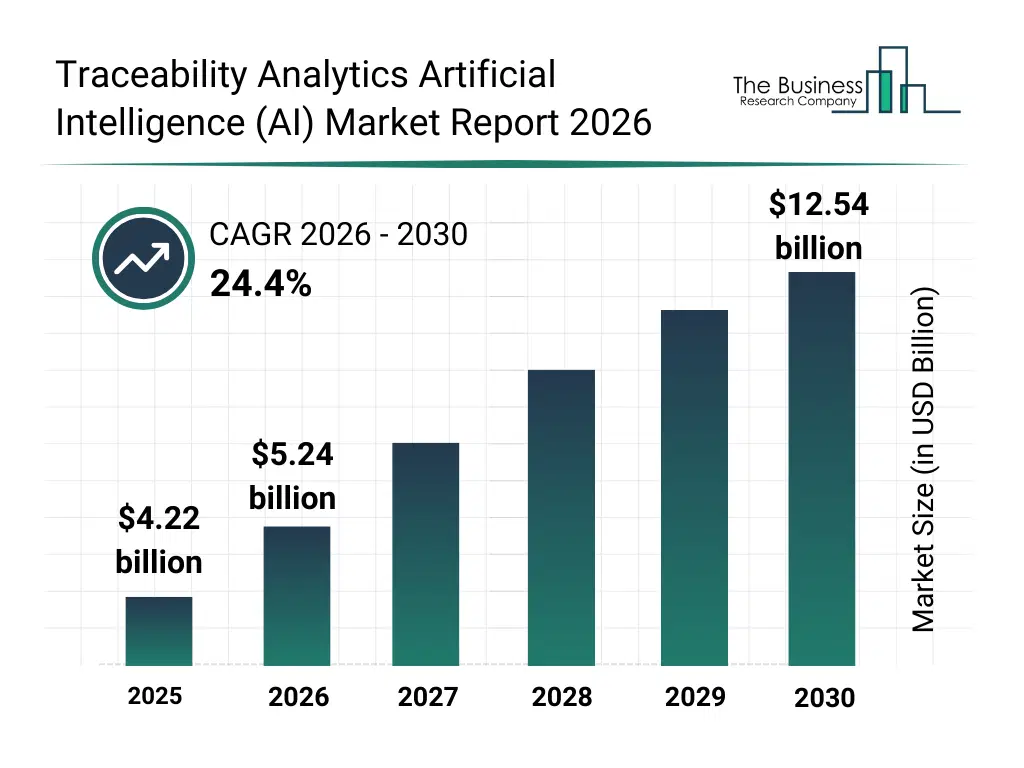
What Is The Traceability Analytics Artificial Intelligence (AI) Market Size and Share 2026?
The traceability analytics artificial intelligence (AI) market size has grown exponentially in recent years. It will grow from $4.22 billion in 2025 to $5.24 billion in 2026 at a compound annual growth rate (CAGR) of 24.2%. The growth in the historic period can be attributed to growing regulatory compliance requirements, rising adoption of enterprise data governance, increasing incidents of data breaches and fraud, expansion of digital transformation initiatives, demand for operational transparency.What Is The Traceability Analytics Artificial Intelligence (AI) Market Growth Forecast?
The traceability analytics artificial intelligence (AI) market size is expected to see exponential growth in the next few years. It will grow to $12.54 billion in 2030 at a compound annual growth rate (CAGR) of 24.4%. The growth in the forecast period can be attributed to advancement in ai model governance frameworks, increasing cross-border data regulations, growth of autonomous decision systems, rising enterprise cloud migration, expansion of supply chain digitization. Major trends in the forecast period include rising demand for explainable and transparent ai, expansion of data lineage and provenance tools, integration of predictive traceability analytics, increased focus on regulatory and compliance automation, growth of real-time monitoring and audit trail solutions.
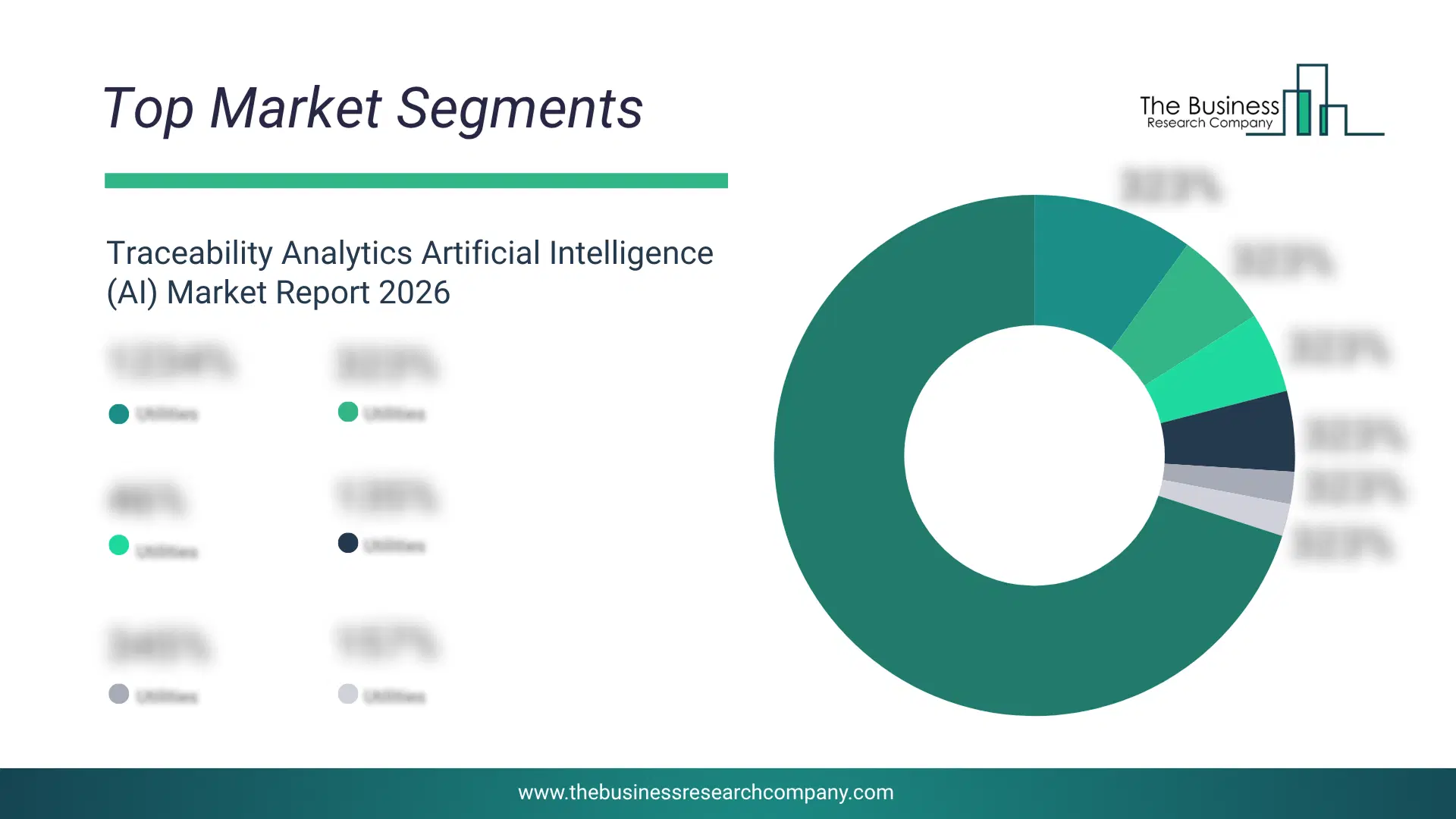
Global Traceability Analytics Artificial Intelligence (AI) Market Segmentation
1) By Component: Software, Hardware, Services 2) By Deployment Mode: On-Premises, Cloud 3) By Enterprise Size: Small And Medium Enterprises, Large Enterprises 4) By Application: Supply Chain Monitoring, Regulatory Compliance, Quality Control, Transaction Verification 5) By End-User: Banking, Financial Services, And Insurance (BFSI), Healthcare, Retail And E-Commerce, Manufacturing, Logistics, Other End-Users Subsegments: 1) By Software: Traceability Analytics Software, Data Integration And Management Software, Visualization And Reporting Software, Predictive And Prescriptive Analytics Software, Compliance And Audit Software 2) By Hardware: Data Center Servers, Edge Computing Devices, Sensors And Tracking Devices, Storage And Memory Systems, Networking Infrastructure 3) By Services: Consulting Services, System Integration Services, Data Analysis And Modeling Services, Monitoring And Optimization Services, Support And Maintenance ServicesWhat Is The Driver Of The Traceability Analytics Artificial Intelligence (AI) Market?
The growth in the logistics industry is expected to propel the growth of the traceability analytics artificial intelligence (AI) market going forward. The logistics industry encompasses the planning, implementation, and coordination of the efficient movement and storage of goods, services, and information from origin to consumption. The growth in the logistics industry is primarily driven by the expansion of global e-commerce, which demands faster and more efficient delivery systems to meet rising consumer expectations for quick and reliable shipping. Expanding logistics operations requires advanced traceability solutions to track shipments, optimize routes, and ensure transparency across complex supply chains. For instance, in July 2025, according to the Department for Transport, a UK-based ministerial department, in 2024, UK-registered HGVs transporting goods internationally moved 5.7 million tonnes, reflecting a 4% rise compared to 2023. Therefore, growth in the logistics industry is driving the growth of the traceability analytics artificial intelligence (AI) industry.Key Players In The Global Traceability Analytics Artificial Intelligence (AI) Market
Major companies operating in the traceability analytics artificial intelligence (AI) market are Microsoft Corporation, Siemens AG, International Business Machines Corporation (IBM), Oracle Corporation, Schneider Electric SE, Honeywell International Inc., SAP SE, Infosys Limited, Wipro Limited, Rockwell Automation Inc., Avery Dennison Corporation, Zebra Technologies Corporation, Axway Software S.A., TraceLink Inc., Overhaul Group Inc., OPTEL Group Inc., TrusTrace AB, TradeBeyond Inc., Treefera Ltd., Scantrust SA, Verofax Limited, Kezzler AS, Tilkal SAS, and Traceology Inc.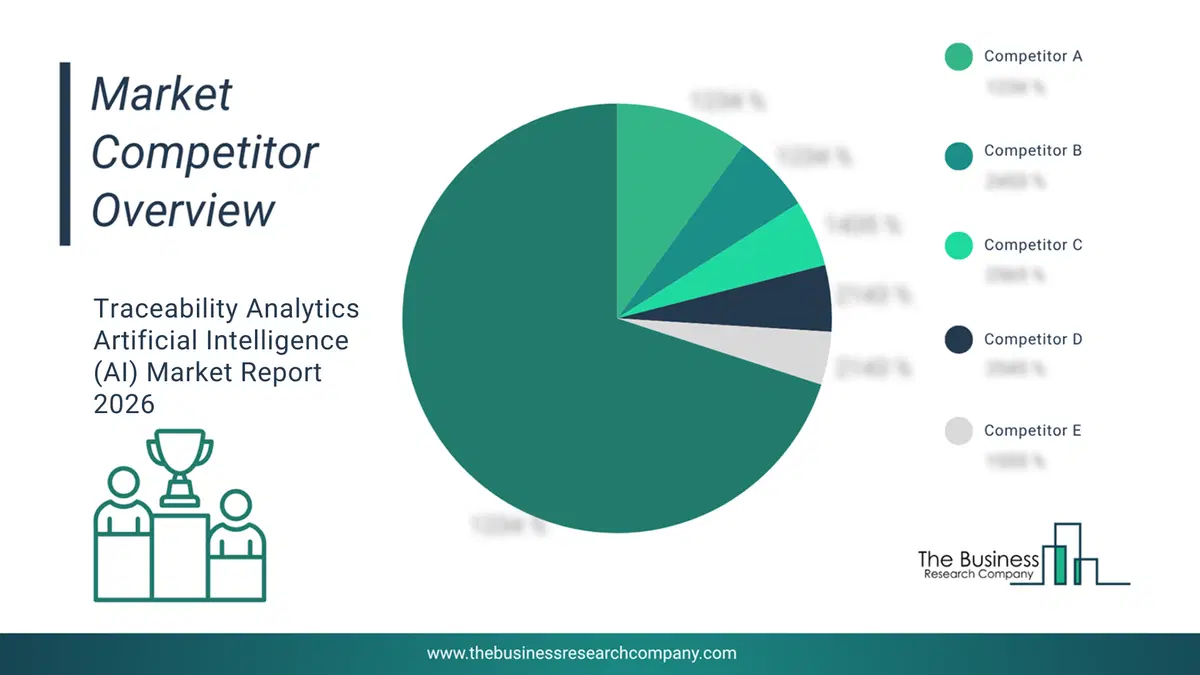
This chart is for illustrative purposes; the full report includes a detailed competitor analysis and comprehensive overview of the top 10 companies in the market.
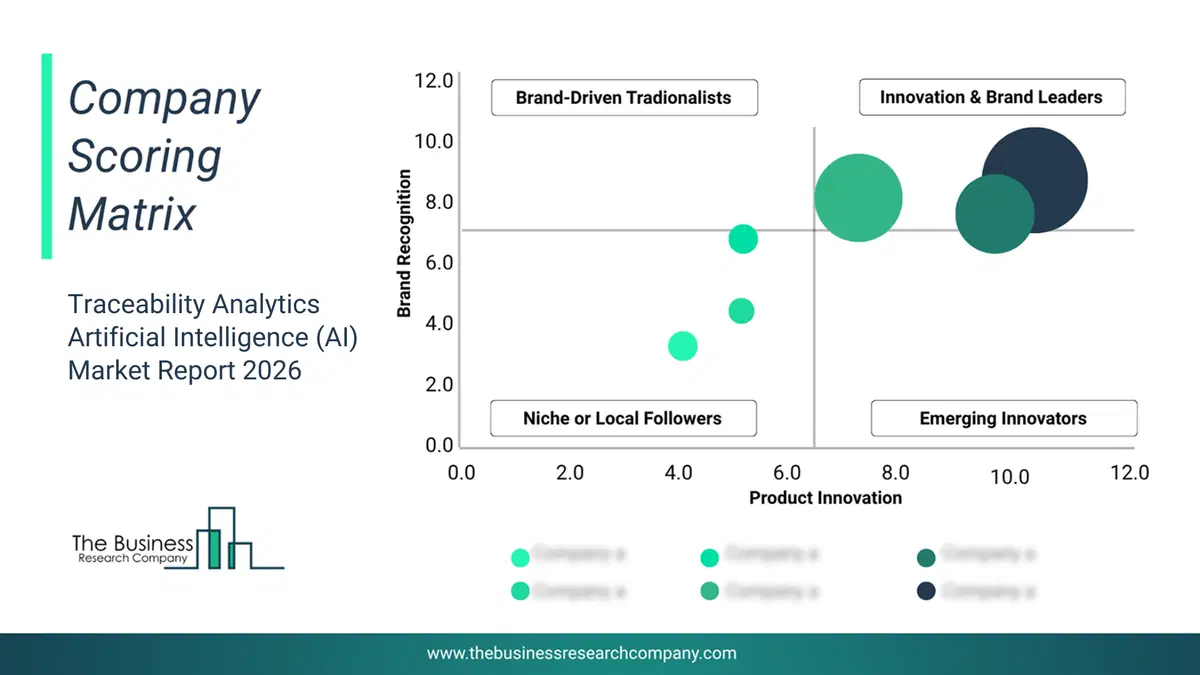
This chart maps companies by product innovation and brand strength, with bubble size indicating relative revenue, helping identify market leaders, challengers, and niche players. This is an illustrative chart; the full report provides a complete and accurate competitive analysis.
Global Traceability Analytics Artificial Intelligence (AI) Market Trends and Insights
Major companies operating in the traceability analytics artificial intelligence (AI) market are focusing on developing advanced artificial intelligence-driven analytics platforms to improve supply chain visibility, compliance, and risk detection. Artificial intelligence-driven analytics platforms leverage machine learning and advanced computational models to process vast and complex datasets and deliver meaningful insights, also support predictive intelligence, pattern detection, and real-time decision-making while minimizing the need for manual involvement. For instance, in May 2025, TrusTrace, a Sweden-based supply chain traceability and compliance data management company, launched the TrusTrace AI-Powered Supply Chain Data Hub. The platform enables intelligent aggregation and analysis of supplier, brand-owned, and third-party traceability data while supporting trusted data reuse across compliance and sustainability initiatives. It is designed to enhance risk management. The solution applies artificial intelligence-driven analytics to verified traceability records, helping organizations identify hidden supply chain risks and support scalable, compliant, and ethically governed traceability operations.What Are Latest Mergers And Acquisitions In The Traceability Analytics Artificial Intelligence (AI) Market?
In July 2024, Exiger LLC, a US-based supply chain risk and analytics artificial intelligence company, acquired Versed AI Ltd. for an undisclosed amount. The acquisition aims to integrate Versed AI’s advanced data mapping, supplier discovery, and automated visibility technologies into Exiger’s platform, enhancing end-to-end supply chain transparency, risk identification, and regulatory compliance. Versed AI Ltd is a UK-based provider of artificial intelligence-driven supply chain traceability and analytics solutions focused on uncovering hidden supplier relationships and improving multi-tier visibility.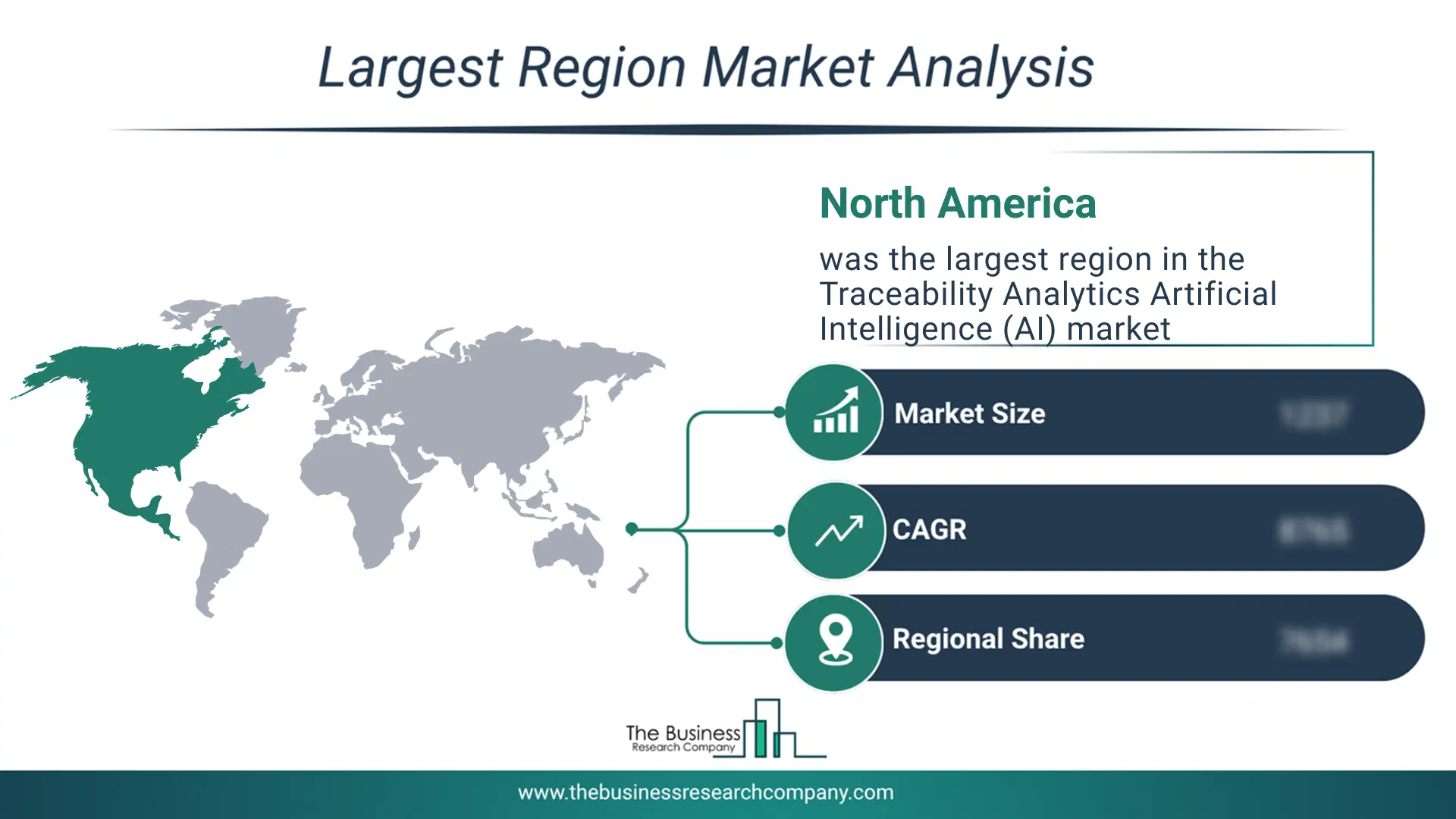
Regional Outlook
North America was the largest region in the traceability analytics AI market in 2025. Asia-Pacific is expected to be the fastest-growing region in the forecast period. The regions covered in this market report are Asia-Pacific, South East Asia, Western Europe, Eastern Europe, North America, South America, Middle East, Africa. The countries covered in this market report are Australia, Brazil, China, France, Germany, India, Indonesia, Japan, Taiwan, Russia, South Korea, UK, USA, Canada, Italy, Spain.What Defines the Traceability Analytics Artificial Intelligence (AI) Market?
The traceability analytics artificial intelligence (AI) market consists of revenues earned by entities by providing services such as end-to-end data tracking, audit trail generation, anomaly detection, root cause analysis, regulatory compliance reporting, process optimization insights, transaction verification, supply chain monitoring, reporting dashboards, and predictive traceability analytics. The market value includes the value of related goods sold by the service provider or included within the service offering. Thetraceability analytics artificial intelligence (AI) market includes sales of data lineage tracking models, process traceability models, transaction tracing models, supply chain traceability models, event correlation models, and provenance-aware models. Values in this market are ‘factory gate’ values, that is, the value of goods sold by the manufacturers or creators of the goods, whether to other entities (including downstream manufacturers, wholesalers, distributors, and retailers) or directly to end customers. The value of goods in this market includes related services sold by the creators of the goods.How is Market Value Defined and Measured?
The market value is defined as the revenues that enterprises gain from the sale of goods and/or services within the specified market and geography through sales, grants, or donations in terms of the currency (in USD unless otherwise specified). The revenues for a specified geography are consumption values that are revenues generated by organizations in the specified geography within the market, irrespective of where they are produced. It does not include revenues from resales along the supply chain, either further along the supply chain or as part of other products.
This chart presents market attractiveness based on a quantitative evaluation of growth, competition, strategic alignment, and risk, offering a clear view of opportunity areas for decision-making. This chart is for illustrative purposes; the full report contains the complete analysis.

This chart highlights the Total Addressable Market (TAM) by estimating the maximum revenue opportunity using an assumption-driven approach, supporting strategic planning and opportunity sizing across markets. The chart is illustrative; the full report provides a more comprehensive analysis.
What Key Data and Analysis Are Included in the Traceability Analytics Artificial Intelligence (AI) Market Report 2026?
The traceability analytics artificial intelligence (ai) market research report is one of a series of new reports from The Business Research Company that provides market statistics, including industry global market size, regional shares, competitors with the market share, detailed market segments, market trends and opportunities, and any further data you may need to thrive in the traceability analytics artificial intelligence (ai) industry. The market research report delivers a complete perspective of everything you need, with an in-depth analysis of the current and future state of the industry.Traceability Analytics Artificial Intelligence (AI) Market Report Forecast Analysis
| Report Attribute | Details |
|---|---|
| Market Size Value In 2026 | $5.24 billion |
| Revenue Forecast In 2030 | $12.54 billion |
| Growth Rate | CAGR of 24.2% from 2026 to 2030 |
| Base Year For Estimation | 2025 |
| Actual Estimates/Historical Data | 2020-2025 |
| Forecast Period | 2026 - 2030 |
| Market Representation | Revenue in USD Billion and CAGR from 2026 to 2030 |
| Segments Covered | Component, Deployment Mode, Enterprise Size, Application, End-User |
| Regional Scope | Asia-Pacific, Western Europe, Eastern Europe, North America, South America, Middle East, Africa |
| Country Scope | The countries covered in the report are Australia, Brazil, China, France, Germany, India, Indonesia, Japan, Taiwan, Russia, South Korea, UK, USA, Canada, Italy, Spain. |
| Key Companies Profiled | Microsoft Corporation, Siemens AG, International Business Machines Corporation (IBM), Oracle Corporation, Schneider Electric SE, Honeywell International Inc., SAP SE, Infosys Limited, Wipro Limited, Rockwell Automation Inc., Avery Dennison Corporation, Zebra Technologies Corporation, Axway Software S.A., TraceLink Inc., Overhaul Group Inc., OPTEL Group Inc., TrusTrace AB, TradeBeyond Inc., Treefera Ltd., Scantrust SA, Verofax Limited, Kezzler AS, Tilkal SAS, and Traceology Inc. |
| Customization Scope | Request for Customization |
| Pricing And Purchase Options | Explore Purchase Options |