

Travel Retail Global Market Opportunities And Strategies To 2035
By Product Type (Perfume And Cosmetics, Wine And Spirit, Luxury Goods, Electronics, Food And Confectionery, Tobacco, Fashion And Accessories, Other Product Types), By Channel (Airports, Cruise Lines, Border, Down Town And Hotel Shops, Railway Stations, Other Channels), By End-User (Children (Less Than 18 Years Old), Youth (18-30 Years Old), Middle-Aged (31-59 Years Old), The Elder (Greater Than 60 Years Old)), And By Region, Opportunities And Strategies – Global Forecast To 2035
Travel Retail Market Definition
Travel retail refers to the sale of goods and services to travelers in transit locations such as airports, airlines, cruise ships, ferries, border shops and international terminals. It includes duty-free and duty-paid retail formats offering products such as perfumes, cosmetics, alcohol, tobacco, fashion, electronics, confectionery and luxury goods in a travel-oriented environment. The primary purpose of travel retail is to capture consumer spending during travel journeys by providing convenient, premium and exclusive shopping experiences. The travel retail market covered in this report consists of revenues generated by entities (organizations, sole traders and partnerships) by selling consumer goods to travelers through retail outlets located in travel and transit environments. The market includes duty-free and duty-paid retail formats operating in airports, cruise ships, border shops, railway stations and designated downtown travel retail zones.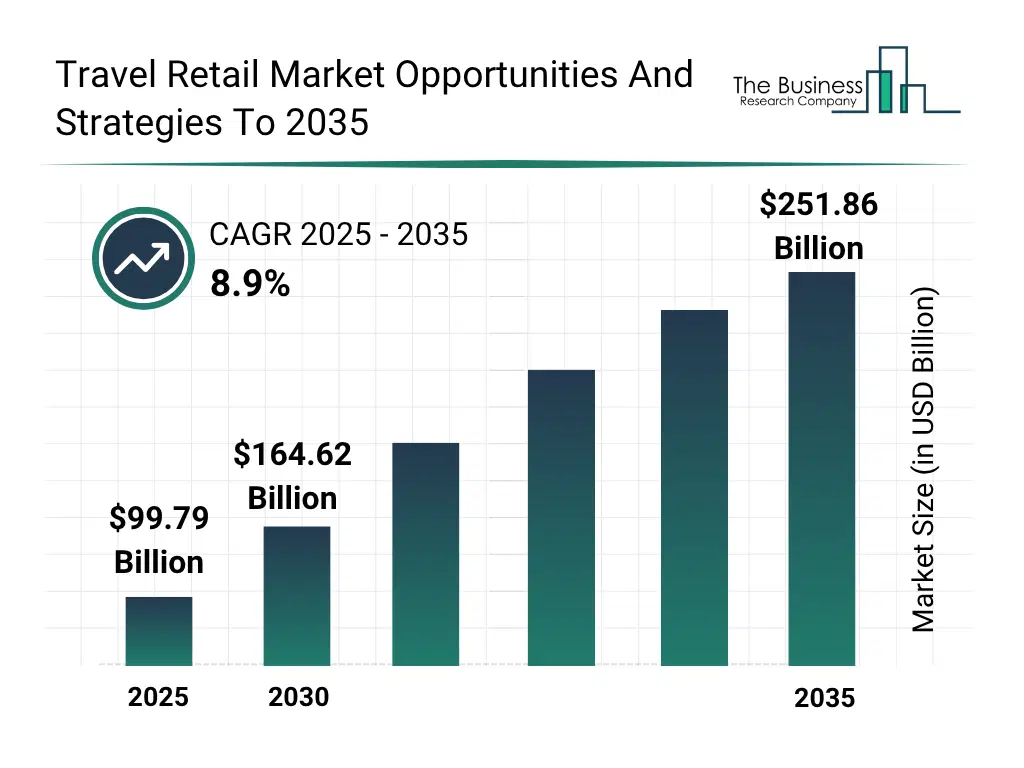
Travel Retail Market Size
The global travel retail market reached a value of nearly $99,793.6 million in 2025, having grown at a compound annual growth rate (CAGR) of 18.1% since 2020. The market is expected to grow from $99,793.6 million in 2025 to $164,620.8 million in 2030 at a rate of 10.5%. The market is then expected to grow at a CAGR of 8.9% from 2030 and reach $251,858.1 million in 2035. Growth in the historic period resulted from rise in business travel, high-net-worth individual growth, surge in cruise tourism and rise of duty-free and tax-saving incentives. Factors that negatively affected growth in the historic period were high airport concession fees and competition from e-commerce and digital channels. Going forward, growth of international tourism, increasing airport infrastructure investment and modernization projects, growth in luxury and premium goods demand and rise of gen z and millennial traveler will drive the growth. Factors that could hinder the growth of the travel retail market in the future include complex customs compliance and product restrictions, staffing challenges and trade war and tariffs.
Travel Retail Market Segmentation
The travel retail market is segmented by product type, by channel and by end-user.By Product Type –
The travel retail market is segmented by product type into:
- a) Perfume And Cosmetics
- b) Wine And Spirit
- c) Luxury Goods
- d) Electronics
- e) Food And Confectionery
- f) Tobacco
- g) Fashion And Accessories
- h) Other Product Types
By Channel –
The travel retail market is segmented by channel into:
- a) Airports
- b) Cruise Lines
- c) Border
- d) Down Town And Hotel Shops
- e) Railway Stations
- f) Other Channels
By End-User –
The travel retail market is segmented by end-user into:
- a) Children (Less Than 18 Years Old)
- b) Youth (18-30 Years Old)
- c) Middle-Aged (31-59 Years Old)
- d) 60 Years Old
By Geography - The travel retail market is segmented by geography into:
- China
- India
- Japan
- Australia
- Indonesia
- South Korea
- USA
- Canada
- Brazil
- France
- Germany
- UK
- Italy
- Spain
- Russia
-
o Asia Pacific
o Africa