

Trigeminal Neuralgia Treatment Market Report 2026
Global Outlook – By Treatment Type (Medications, Surgery, Other Treatment Types), By Distribution Channel (Hospital Pharmacies, Retail Pharmacies, Online Pharmacies), By End-User (Hospitals, Specialty Clinics, Ambulatory Surgical Centers, Other End-Users) - Market Size, Trends, Strategies, and Forecast to 2030
Trigeminal Neuralgia Treatment Market Overview
• Trigeminal Neuralgia Treatment market size has reached to $0.73 billion in 2025 • Expected to grow to $1 billion in 2030 at a compound annual growth rate (CAGR) of 6.4% • Growth Driver: The Rise In Neurological Disorders Driving The Growth Of The Trigeminal Neuralgia Treatment Market Due To Aging Population And Increased Disease Prevalence • Market Trend: Innovative Minimally Invasive Nerve Ablation Offers Precise Relief For Chronic Facial Pain • North America was the largest region in 2025 and Asia-Pacific is the fastest growing region.What Is Covered Under Trigeminal Neuralgia Treatment Market?
Trigeminal neuralgia treatment involves medical strategies to manage the severe, sharp facial pain caused by trigeminal neuralgia, which affects the trigeminal nerve. The main goal of trigeminal neuralgia treatment is to alleviate pain, reduce the frequency and intensity of episodes, and address the underlying nerve irritation, ultimately enhancing the patient’s quality of life. The main types of trigeminal neuralgia treatment are medications, surgery, and others. Medications are drugs or compounds designed to treat trigeminal neuralgia, reducing pain by controlling nerve activity. It is distributed through various distribution channels such as hospital pharmacies, retail pharmacies, and online pharmacies and us sed by several end-users, including hospitals, specialty clinics, ambulatory surgical centers, and others.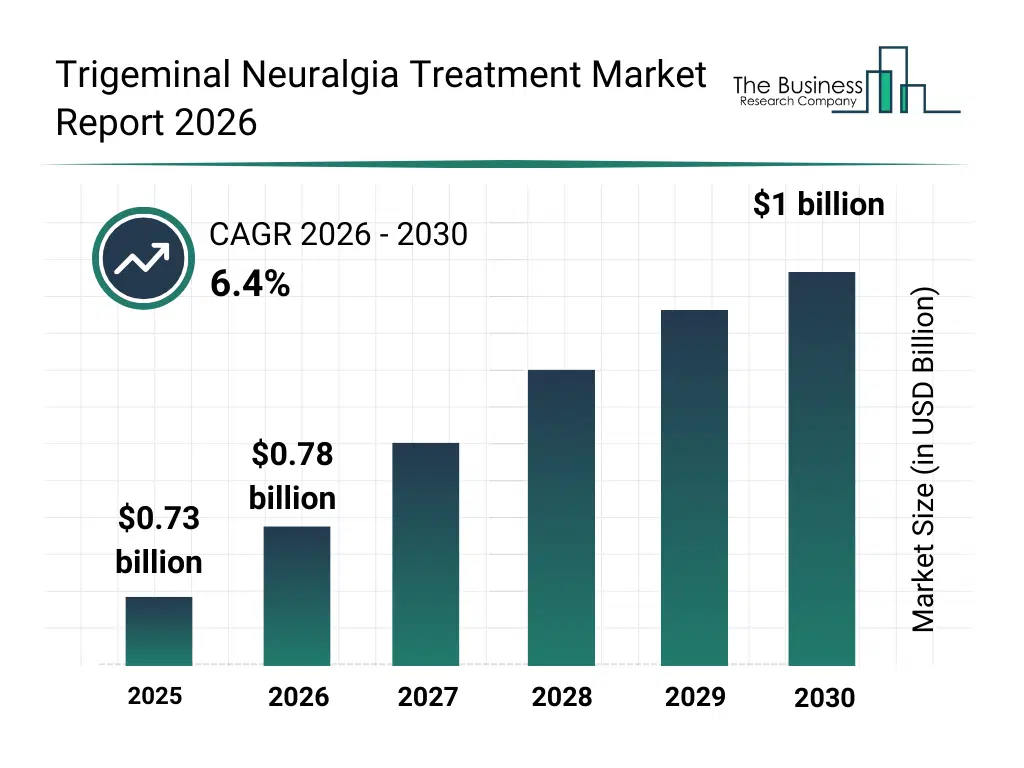
What Is The Trigeminal Neuralgia Treatment Market Size and Share 2026?
The trigeminal neuralgia treatment market size has grown strongly in recent years. It will grow from $0.73 billion in 2025 to $0.78 billion in 2026 at a compound annual growth rate (CAGR) of 6.7%. The growth in the historic period can be attributed to increasing diagnosis rates of trigeminal neuralgia, reliance on pharmacological pain management, expansion of neurology specialty services, improved imaging for nerve disorders, growing availability of surgical treatment options.What Is The Trigeminal Neuralgia Treatment Market Growth Forecast?
The trigeminal neuralgia treatment market size is expected to see strong growth in the next few years. It will grow to $1 billion in 2030 at a compound annual growth rate (CAGR) of 6.4%. The growth in the forecast period can be attributed to increasing demand for durable pain relief solutions, rising adoption of gamma knife radiosurgery, expansion of outpatient surgical centers, growing focus on patient quality-of-life outcomes, advancements in neurosurgical techniques. Major trends in the forecast period include increasing use of advanced anticonvulsant medications, rising adoption of minimally invasive surgical procedures, growing preference for stereotactic radiosurgery, expansion of multidisciplinary pain management approaches, enhanced focus on long-term symptom control.
Global Trigeminal Neuralgia Treatment Market Segmentation
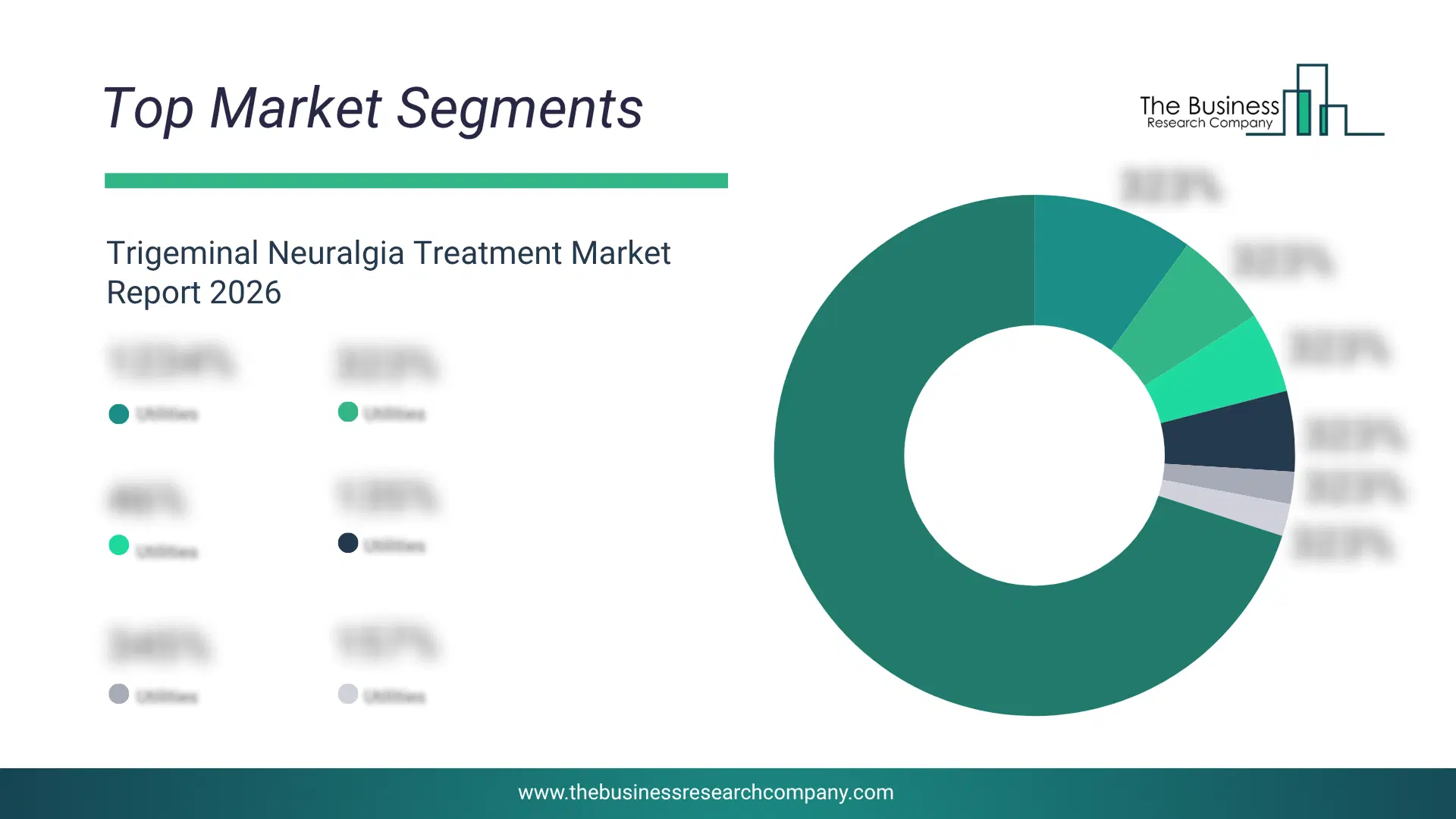
1) By Treatment Type: Medications, Surgery, Other Treatment Types 2) By Distribution Channel: Hospital Pharmacies, Retail Pharmacies, Online Pharmacies 3) By End-User: Hospitals, Specialty Clinics, Ambulatory Surgical Centers, Other End-Users Subsegments: 1) By Medications: Anticonvulsants, Muscle Relaxants, Antidepressants 2) By Surgery: Microvascular Decompression Surgery, Gamma Knife Radiosurgery, Rhizotomy 3) By Other Treatment Types: Nerve Blocks, Stereotactic Radiosurgery, Physical TherapyWhat Are The Drivers Of The Trigeminal Neuralgia Treatment Market?
The rising prevalence of neurological disorders is expected to propel the growth of the trigeminal neuralgia treatment market going forward. Neurological disorders refer to a range of conditions affecting the brain, spinal cord, and nerves. The rising prevalence of neurological disorders is primarily due to the aging population, as older age increases the risk of conditions like Alzheimer’s, Parkinson’s, and stroke. Trigeminal neuralgia treatments support patients by relieving intense facial pain, reducing nerve irritation, enhancing quality of life, and preventing further neurological damage. For instance, in March 2023, according to the Alzheimer's Association, a US-based nonprofit voluntary health organization, in 2023, approximately 6.7 million Americans aged 65 and older are living with Alzheimer's dementia, and this number is projected to rise to 13.8 million by 2060. Therefore, the rising prevalence of neurological disorders is driving the growth of the trigeminal neuralgia treatment industry. The growing geriatric population is expected to propel the growth of the trigeminal neuralgia treatment market going forward. The geriatric population refers to individuals who are typically 65 years and older often associated with increased healthcare needs due to age-related physiological changes, chronic illnesses, and functional limitations. The growing geriatric population is due to increased life expectancy, advancements in healthcare, lower birth rates, improved living standards, better disease management, reduced infant mortality, enhanced nutrition, and access to medical innovations. Trigeminal neuralgia treatment helps the geriatric population by alleviating severe facial pain, improving daily functioning, and enhancing overall quality of life in older adults. For instance, in October 2024, according to World Health Organization, a Switzerland-based intergovernmental organization, the global population of individuals aged 60 and older is projected to hit 1.4 billion by 2030, making up one in every six people worldwide. This figure is expected to double to 2.1 billion by 2050, with the number of people aged 80 and above set to triple, reaching 426 million. Therefore, the aging population is driving the growth of the trigeminal neuralgia treatment industry.Key Players In The Global Trigeminal Neuralgia Treatment Market
Major companies operating in the trigeminal neuralgia treatment market are Novartis AG, Sandoz, Sun Pharmaceutical Industries Ltd., Apotex Inc., Lupin Limited, Taro Pharmaceutical Industries Ltd., Torrent Pharmaceuticals Ltd., Kriya Therapeutics, Convergence Pharmaceuticals Limited, Noema Pharma AG, Max Healthcare, Oxford Cannabinoid Technologies Holdings Plc, NanoVibronix, Pfizer Inc., GlaxoSmithKline plc, Teva Pharmaceutical Industries Ltd., Medtronic plc, Boston Scientific Corporation, Abbott Laboratories, Elekta, Accuray Inc., UCB S.A., Eli Lilly and Company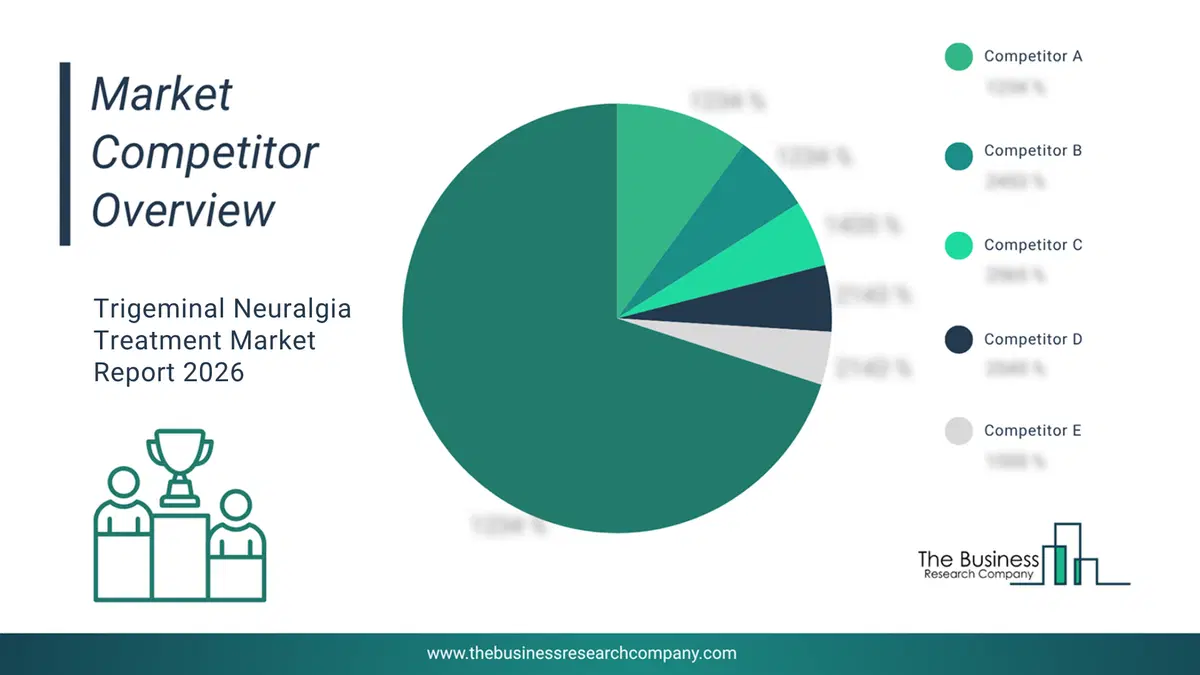
This chart is for illustrative purposes; the full report includes a detailed competitor analysis and comprehensive overview of the top 10 companies in the market.
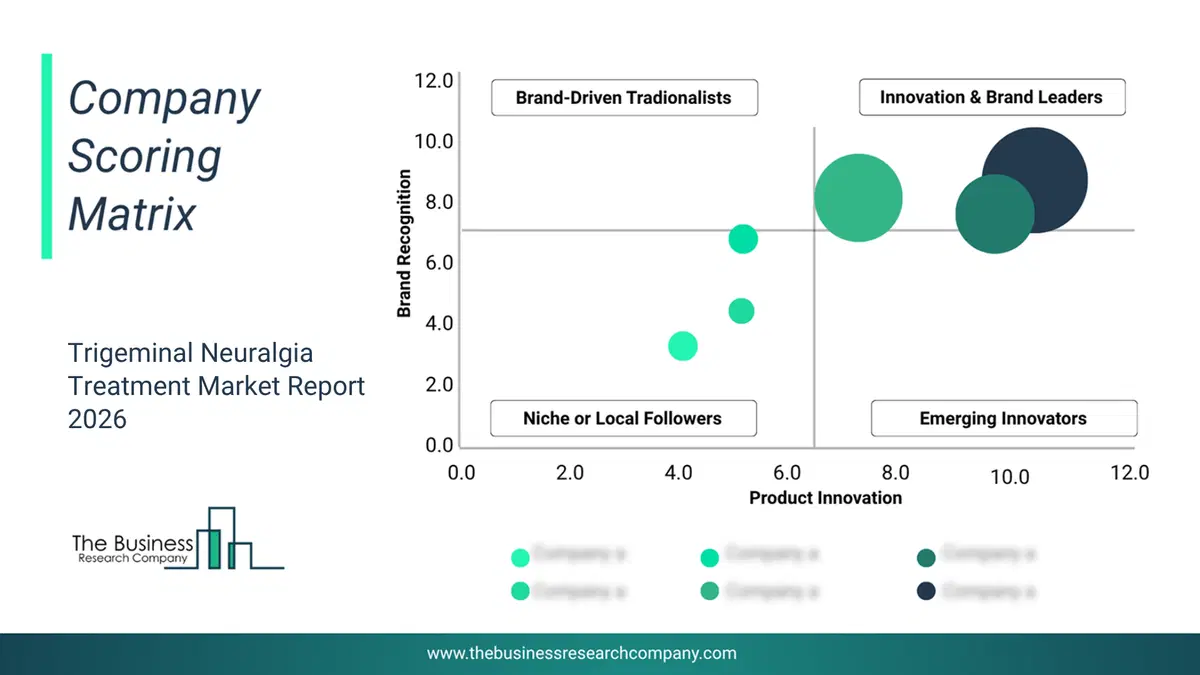
This chart maps companies by product innovation and brand strength, with bubble size indicating relative revenue, helping identify market leaders, challengers, and niche players. This is an illustrative chart; the full report provides a complete and accurate competitive analysis.
Global Trigeminal Neuralgia Treatment Market Trends and Insights
Major companies in the trigeminal neuralgia treatment market are focusing on developing innovative solutions such as minimally invasive nerve ablation to improve patient outcomes, reduce procedure-related complications, and enhance overall quality of life for individuals suffering from severe facial pain. Minimally invasive nerve ablation is a medical procedure that uses heat, cold, or chemical agents to selectively destroy or disable nerves causing pain, with minimal damage to surrounding tissues. For instance, in August 2025, NeuroOne Medical Technologies Corporation, a US-based medical technology company, received approval from the U.S. Food and Drug Administration (FDA) for the OneRF Trigeminal Nerve Ablation System, authorizing its use for treating trigeminal neuralgia, a chronic facial pain condition. The system features a multi-contact radiofrequency probe that enables precise pain localization, stimulation, and customized ablation using a single electrode. It operates with temperature-controlled lesioning to improve accuracy and safety, potentially reducing procedure time and enhancing patient comfort. The system is minimally invasive and delivers targeted radiofrequency energy to ablate nerve fibers responsible for chronic facial pain, such as trigeminal neuralgia.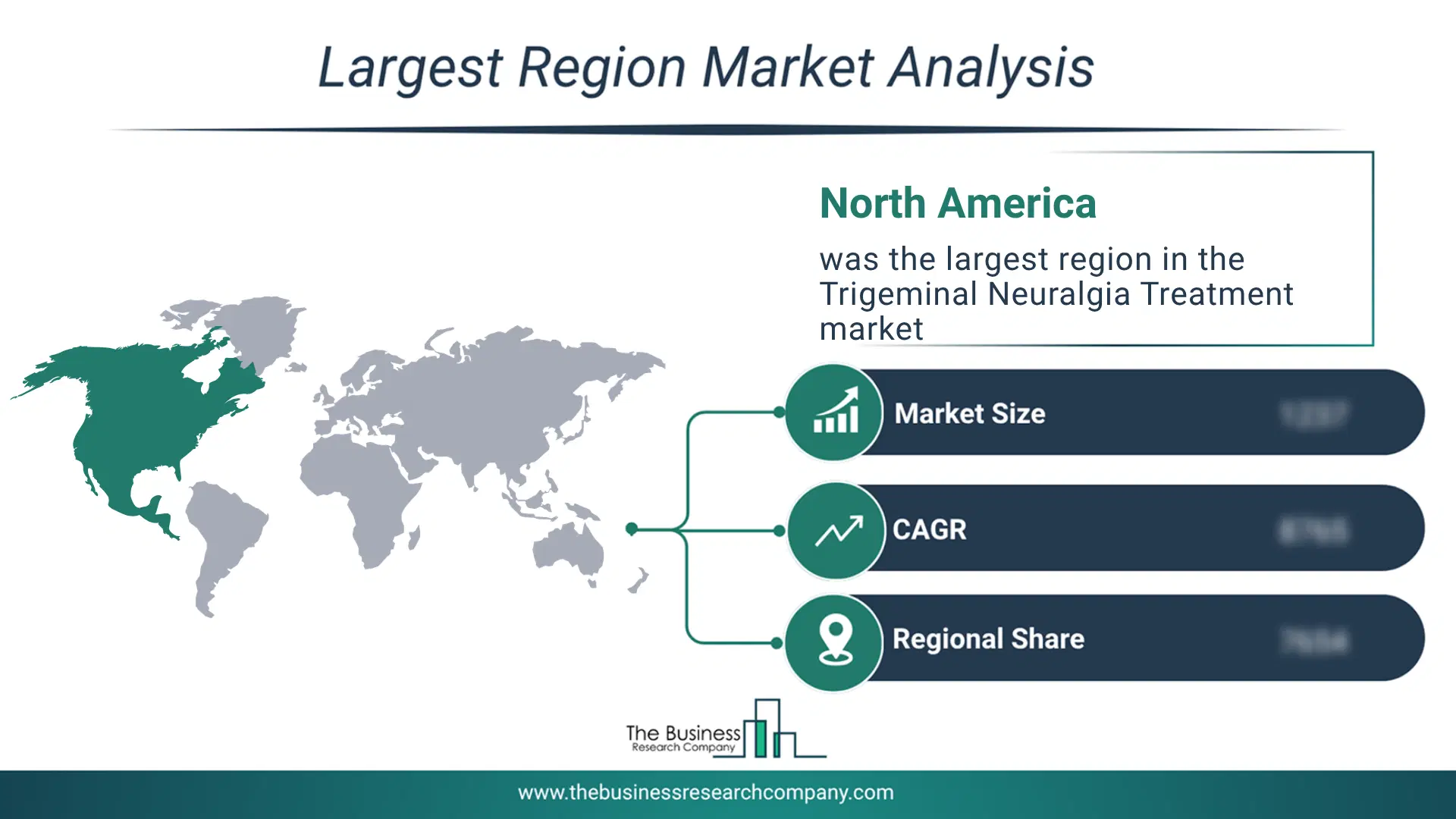
Regional Outlook
North America was the largest region in the trigeminal neuralgia treatment market in 2025. Asia-Pacific is expected to be the fastest-growing region in the forecast period. The regions covered in this market report are Asia-Pacific, South East Asia, Western Europe, Eastern Europe, North America, South America, Middle East, Africa. The countries covered in this market report are Australia, Brazil, China, France, Germany, India, Indonesia, Japan, Taiwan, Russia, South Korea, UK, USA, Canada, Italy, Spain.What Defines the Trigeminal Neuralgia Treatment Market?
The trigeminal neuralgia treatment market consists of revenues earned by entities by providing services such as physical therapy, patient education, and supportive care. The market value includes the value of related goods sold by the service provider or included within the service offering. The trigeminal neuralgia treatment market also includes sales of anticonvulsants, muscle relaxants, and tricyclic antidepressants (TCAs). Values in this market are ‘factory gate’ values, that is, the value of goods sold by the manufacturers or creators of the goods, whether to other entities (including downstream manufacturers, wholesalers, distributors, and retailers) or directly to end customers. The value of goods in this market includes related services sold by the creators of the goods.How is Market Value Defined and Measured?
The market value is defined as the revenues that enterprises gain from the sale of goods and/or services within the specified market and geography through sales, grants, or donations in terms of the currency (in USD unless otherwise specified). The revenues for a specified geography are consumption values that are revenues generated by organizations in the specified geography within the market, irrespective of where they are produced. It does not include revenues from resales along the supply chain, either further along the supply chain or as part of other products.
This chart presents market attractiveness based on a quantitative evaluation of growth, competition, strategic alignment, and risk, offering a clear view of opportunity areas for decision-making. This chart is for illustrative purposes; the full report contains the complete analysis.

This chart highlights the Total Addressable Market (TAM) by estimating the maximum revenue opportunity using an assumption-driven approach, supporting strategic planning and opportunity sizing across markets. The chart is illustrative; the full report provides a more comprehensive analysis.
What Key Data and Analysis Are Included in the Trigeminal Neuralgia Treatment Market Report 2026?
The trigeminal neuralgia treatment market research report is one of a series of new reports from The Business Research Company that provides market statistics, including industry global market size, regional shares, competitors with the market share, detailed market segments, market trends and opportunities, and any further data you may need to thrive in the trigeminal neuralgia treatment industry. The market research report delivers a complete perspective of everything you need, with an in-depth analysis of the current and future state of the industry.Trigeminal Neuralgia Treatment Market Report Forecast Analysis
| Report Attribute | Details |
|---|---|
| Market Size Value In 2026 | $0.78 billion |
| Revenue Forecast In 2030 | $1 billion |
| Growth Rate | CAGR of 6.4% from 2026 to 2030 |
| Base Year For Estimation | 2025 |
| Actual Estimates/Historical Data | 2020-2025 |
| Forecast Period | 2026 - 2030 |
| Market Representation | Revenue in USD Billion and CAGR from 2026 to 2030 |
| Segments Covered | Treatment Type, Distribution Channel, End-User |
| Regional Scope | Asia-Pacific, Western Europe, Eastern Europe, North America, South America, Middle East, Africa |
| Country Scope | The countries covered in the report are Australia, Brazil, China, France, Germany, India, Indonesia, Japan, Taiwan, Russia, South Korea, UK, USA, Canada, Italy, Spain |
| Key Companies Profiled | Novartis AG, Sandoz, Sun Pharmaceutical Industries Ltd., Apotex Inc., Lupin Limited, Taro Pharmaceutical Industries Ltd., Torrent Pharmaceuticals Ltd., Kriya Therapeutics, Convergence Pharmaceuticals Limited, Noema Pharma AG, Max Healthcare, Oxford Cannabinoid Technologies Holdings Plc, NanoVibronix, Pfizer Inc., GlaxoSmithKline plc, Teva Pharmaceutical Industries Ltd., Medtronic plc, Boston Scientific Corporation, Abbott Laboratories, Elekta, Accuray Inc., UCB S.A., Eli Lilly and Company |
| Customization Scope | Request for Customization |
| Pricing And Purchase Options | Explore Purchase Options |