

Tropical Spastic Paraparesis Market Report 2026
Global Outlook – By Disease Type (Tropical Spastic Paraparesis, HIV Associated Myelopathy, Multiple Sclerosis), By Treatment Modality (Pharmaceuticals, Physiotherapy, Surgical Interventions), By Patient Demographics (Pediatric Patients, Adult Patients, Geriatric Patients), By Diagnostic Technique (Magnetic Resonance Imaging (MRI), Lumbar Puncture), By End Use Industry (Hospitals, Clinics, Diagnostic Centers, Other End Use Industries) - Market Size, Trends, Strategies, and Forecast to 2030
Tropical Spastic Paraparesis Market Overview
• Tropical Spastic Paraparesis market size has reached to $0.83 billion in 2025 • Expected to grow to $1.13 billion in 2030 at a compound annual growth rate (CAGR) of 6.4% • Growth Driver: Impact Of Aging Population On Healthcare Advancements • North America was the largest region in 2025 and Asia-Pacific is the fastest growing region.What Is Covered Under Tropical Spastic Paraparesis Market?
Tropical spastic paraparesis is a chronic, progressive neurological disorder primarily affecting the spinal cord, leading to weakness, stiffness (spasticity), and difficulty in movement, particularly in the lower limbs. It is most commonly associated with infection by the human T-lymphotropic virus type 1 (HTLV-1) and is also referred to as HTLV-1-Associated Myelopathy (HAM/TSP). Symptoms develop gradually, often over years, and may include bladder dysfunction, sensory disturbances, and mild cognitive impairment. The main tropical spastic paraparesis diseases are tropical spastic paraparesis, hiv associated myelopathy, and multiple sclerosis. Tropical spastic paraparesis is a neurological disorder caused by chronic infection with the human T-lymphotropic virus type I (HTLV-1). It can be treated using pharmaceuticals, physiotherapy, and surgical interventions and is used for pediatric patients, adult patients, and geriatric patients. The diagnostic techniques for this condition include magnetic resonance imaging (mri) and lumbar puncture and are used by hospitals, clinics, diagnostic centers, and others.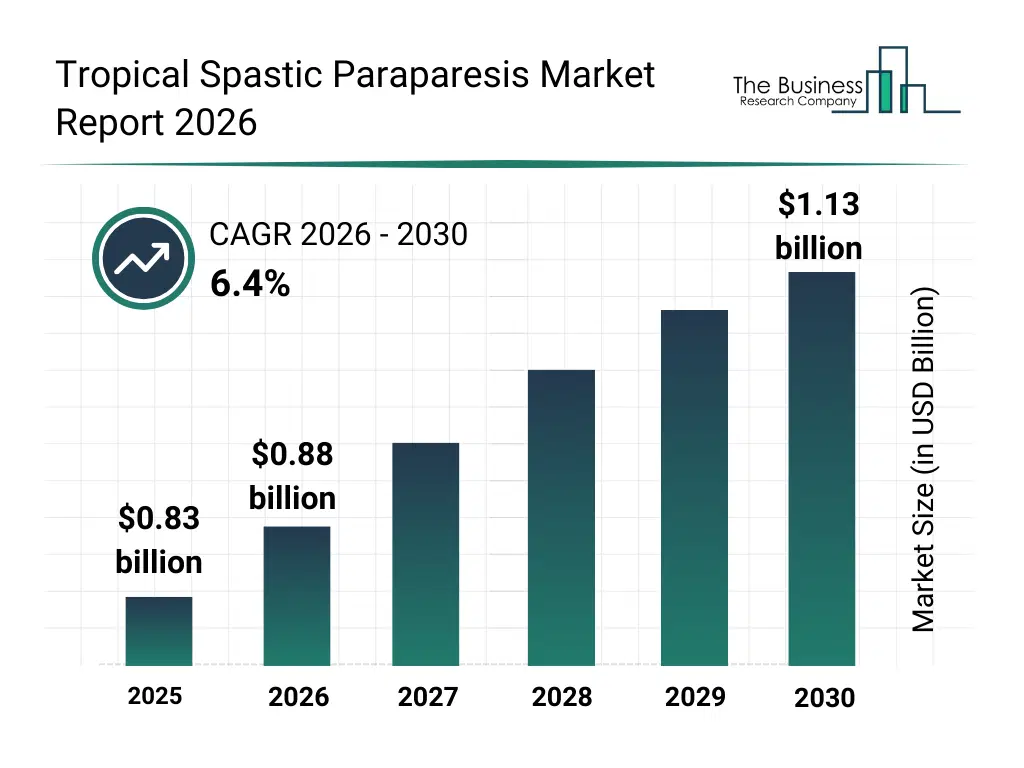
What Is The Tropical Spastic Paraparesis Market Size and Share 2026?
The tropical spastic paraparesis market size has grown strongly in recent years. It will grow from $0.83 billion in 2025 to $0.88 billion in 2026 at a compound annual growth rate (CAGR) of 6.6%. The growth in the historic period can be attributed to increasing prevalence of htlv-1 infection, limited availability of disease-modifying therapies, growing neurological disorder awareness, expansion of diagnostic imaging access, rising demand for supportive care services.What Is The Tropical Spastic Paraparesis Market Growth Forecast?
The tropical spastic paraparesis market size is expected to see strong growth in the next few years. It will grow to $1.13 billion in 2030 at a compound annual growth rate (CAGR) of 6.4%. The growth in the forecast period can be attributed to advancements in antiviral research, growing investments in rare neurological disorder research, expansion of precision diagnostics, increasing focus on long-term disease management, improved patient access to specialized care. Major trends in the forecast period include increasing focus on htlv-1 targeted diagnostics, rising adoption of multidisciplinary treatment approaches, growing emphasis on early disease detection, expansion of supportive physiotherapy programs, improved disease awareness and screening initiatives.
Global Tropical Spastic Paraparesis Market Segmentation
1) By Disease Type: Tropical Spastic Paraparesis, HIV Associated Myelopathy, Multiple Sclerosis 2) By Treatment Modality: Pharmaceuticals, Physiotherapy, Surgical Interventions 3) By Patient Demographics: Pediatric Patients, Adult Patients, Geriatric Patients 4) By Diagnostic Technique: Magnetic Resonance Imaging (MRI), Lumbar Puncture 5) By End Use Industry: Hospitals, Clinics, Diagnostic Centers, Other End Use Industries Subsegments: 1) By Tropical Spastic Paraparesis: Early Stage Tropical Spastic Paraparesis, Late Stage Tropical Spastic Paraparesis 2) By HIV Associated Myelopathy: Acute HIV Associated Myelopathy, Chronic HIV Associated Myelopathy 3) By Multiple Sclerosis: Relapsing-Remitting Multiple Sclerosis, Primary Progressive Multiple Sclerosis, Secondary Progressive Multiple SclerosisWhat Are The Drivers Of The Tropical Spastic Paraparesis Market?
The growing geriatric population is expected to propel the growth of the tropical spastic paraparesis market going forward. The geriatric population refers to individuals who are typically 65 years and older often associated with increased healthcare needs due to age-related physiological changes, chronic illnesses, and functional limitations. The growing geriatric population is due to increased life expectancy, advancements in healthcare, lower birth rates, improved living standards, better disease management, reduced infant mortality, enhanced nutrition, and access to medical innovations. Tropical spastic paraparesis, a chronic neurodegenerative disorder affecting motor function, underscores the need for enhanced geriatric healthcare by highlighting the importance of early diagnosis, specialized rehabilitation, and long-term care strategies that improve mobility, independence, and overall quality of life in aging populations. For instance, in October 2024, according to World Health Organization, a Switzerland-based intergovernmental organization, the global population of individuals aged 60 and older is projected to hit 1.4 billion by 2030, making up one in every six people worldwide. This figure is expected to double to 2.1 billion by 2050, with the number of people aged 80 and above set to triple, reaching 426 million. Therefore, the aging population is driving the growth of the tropical spastic paraparesis industry. The increase in healthcare spending is expected to propel the growth of the tropical spastic paraparesis market going forward. Healthcare spending refers to the total financial resources dedicated to medical services, treatments, medicines, public health, and healthcare infrastructure. Rising healthcare spending is driven by aging populations, the increasing burden of chronic and infectious diseases, advanced medical technologies, and expanded access to care. Increased healthcare spending supports tropical spastic paraparesis treatment by funding research for new therapies, strengthening diagnostic capabilities, and improving access to specialized neurological care. For instance, in May 2024, according to the Office for National Statistics, a U.K.-based government department, U.K. healthcare expenditure reached $364 billion (£297.2 billion) in 2023, marking sustained growth in national healthcare investment. Therefore, the increase in healthcare spending is driving the growth of the tropical spastic paraparesis industry. The improvement of healthcare facilities is expected to propel the growth of the tropical spastic paraparesis market going forward. Healthcare facilities are establishments that offer medical care and services, such as hospitals, clinics, and diagnostic centers, to treat and support patients. Healthcare facilities are improving due to several factors such as increased investment in healthcare infrastructure, a focus on patient-centered care, population growth, and aging. Improvement of healthcare facilities can be significantly enhanced through the integration of specialized care and research initiatives focused on tropical spastic paraparesis, as addressing this rare neurological disorder promotes the development of advanced diagnostic tools, targeted treatment protocols, and multidisciplinary expertise, ultimately fostering better patient outcomes, more efficient resource allocation, and raising awareness of underrepresented diseases in healthcare systems. For instance, in May 2023, according to the American Health Care Association, a US-based nonprofit organization, the United States had 6,129 hospitals, representing a 0.591% increase from the previous year when there were 6,093 hospitals. Therefore, the improvement of healthcare facilities is driving the growth of the tropical spastic paraparesis industry.Key Players In The Global Tropical Spastic Paraparesis Market
Major companies operating in the tropical spastic paraparesis market are Pfizer Inc., Merck & Co. Inc., Bayer AG, Sanofi SA, Bristol‑Myers Squibb Company, AstraZeneca Plc, Novartis AG, Eli Lilly and Company, Takeda Pharmaceutical Company Limited, Teva Pharmaceutical Industries Ltd., UCB S.A., Viatris Inc., Biogen Inc., Ionis Pharmaceuticals, H Lundbeck A/S, AC Immune, VectorY Therapeutics, Verge Genomics, ViroMed Co. Ltd., Coya Therapeutics Inc., AgeneBio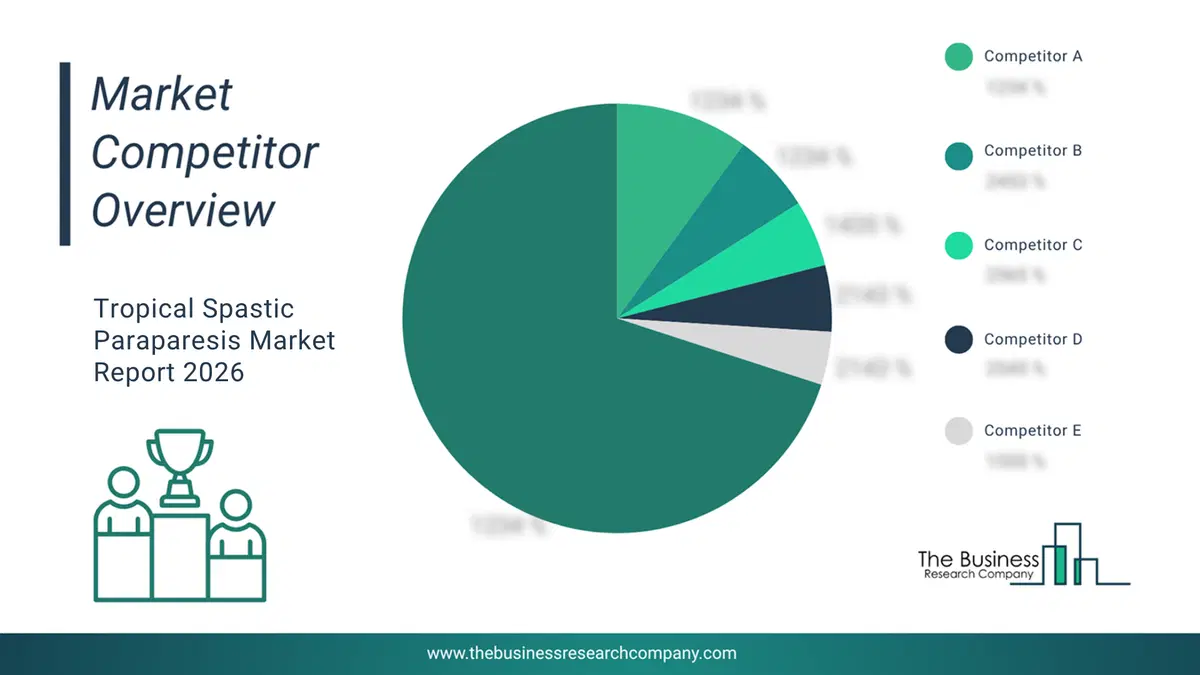
This chart is for illustrative purposes; the full report includes a detailed competitor analysis and comprehensive overview of the top 10 companies in the market.
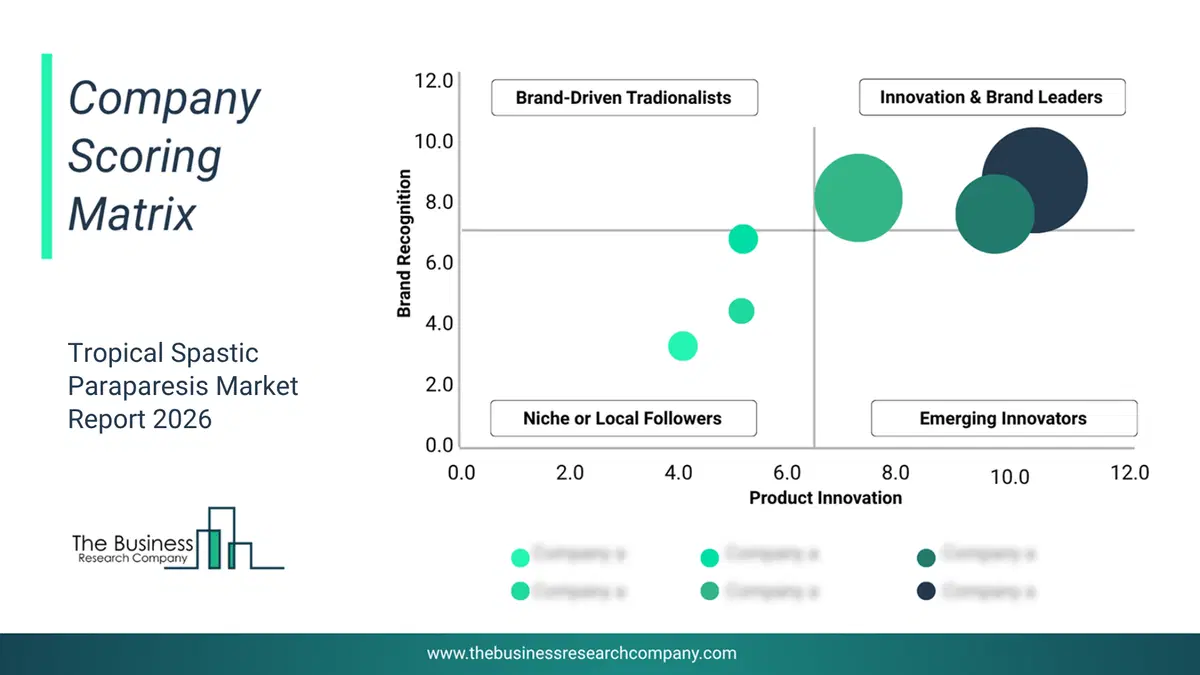
This chart maps companies by product innovation and brand strength, with bubble size indicating relative revenue, helping identify market leaders, challengers, and niche players. This is an illustrative chart; the full report provides a complete and accurate competitive analysis.
Regional Outlook
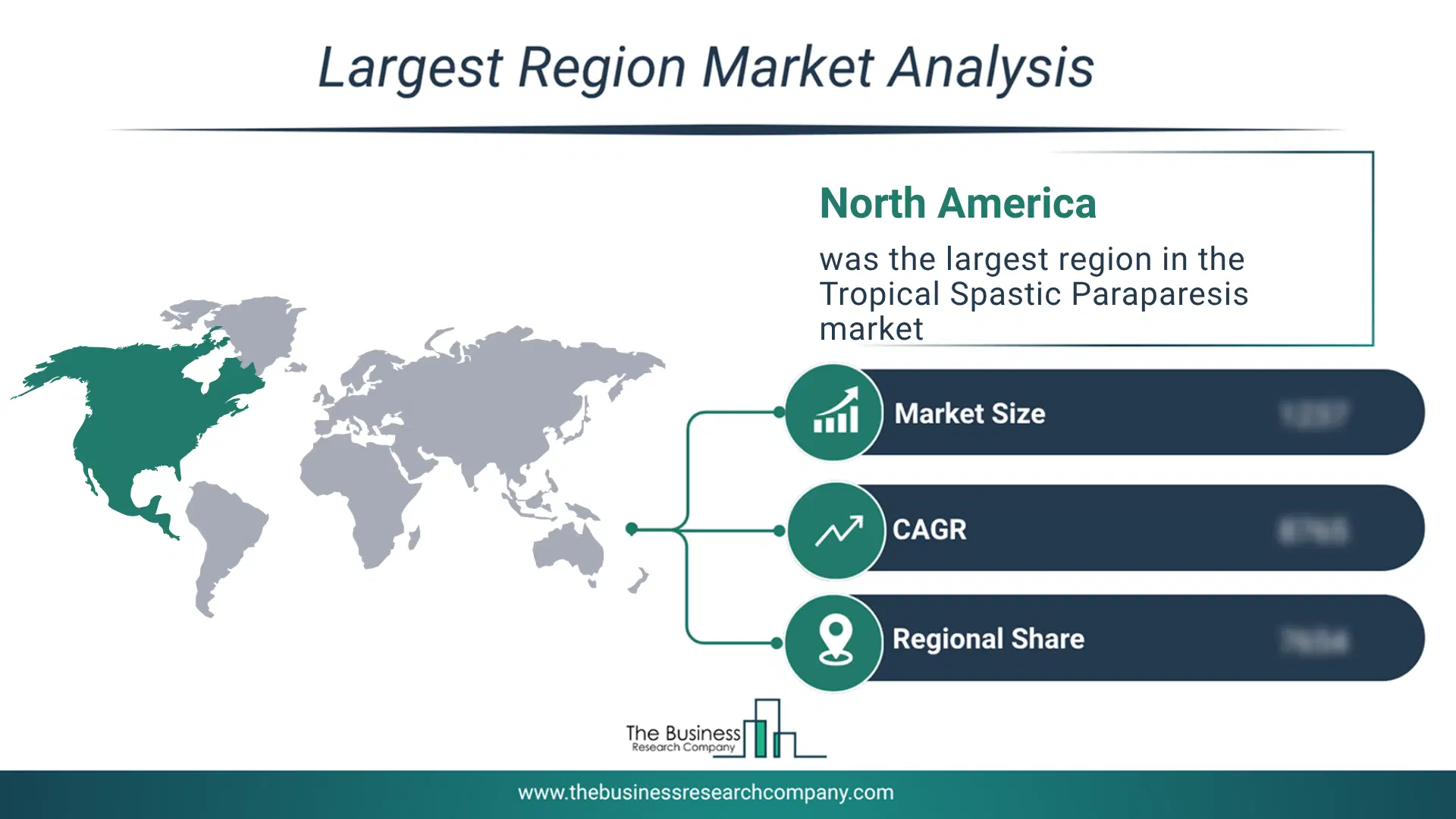
North America was the largest region in the tropical spastic paraparesis market in 2025. Asia-Pacific is expected to be the fastest-growing region in the forecast period. The regions covered in this market report are Asia-Pacific, South East Asia, Western Europe, Eastern Europe, North America, South America, Middle East, Africa. The countries covered in this market report are Australia, Brazil, China, France, Germany, India, Indonesia, Japan, Taiwan, Russia, South Korea, UK, USA, Canada, Italy, Spain.What Defines the Tropical Spastic Paraparesis Market?
The tropical spastic paraparesis market consists of revenues earned by entities by providing services such as neurological consultation and diagnosis, spasticity management, mobility assistance training and home healthcare services. The market value includes the value of related goods sold by the service provider or included within the service offering. The tropical spastic paraparesis market also includes sales of antiviral medications, muscle relaxants, mobility aids and bladder control products. Values in this market are ‘factory gate’ values, that is the value of goods sold by the manufacturers or creators of the goods, whether to other entities (including downstream manufacturers, wholesalers, distributors and retailers) or directly to end customers. The value of goods in this market includes related services sold by the creators of the goods.How is Market Value Defined and Measured?
The market value is defined as the revenues that enterprises gain from the sale of goods and/or services within the specified market and geography through sales, grants, or donations in terms of the currency (in USD unless otherwise specified). The revenues for a specified geography are consumption values that are revenues generated by organizations in the specified geography within the market, irrespective of where they are produced. It does not include revenues from resales along the supply chain, either further along the supply chain or as part of other products.
This chart presents market attractiveness based on a quantitative evaluation of growth, competition, strategic alignment, and risk, offering a clear view of opportunity areas for decision-making. This chart is for illustrative purposes; the full report contains the complete analysis.

This chart highlights the Total Addressable Market (TAM) by estimating the maximum revenue opportunity using an assumption-driven approach, supporting strategic planning and opportunity sizing across markets. The chart is illustrative; the full report provides a more comprehensive analysis.
What Key Data and Analysis Are Included in the Tropical Spastic Paraparesis Market Report 2026?
The tropical spastic paraparesis market research report is one of a series of new reports from The Business Research Company that provides market statistics, including industry global market size, regional shares, competitors with the market share, detailed market segments, market trends and opportunities, and any further data you may need to thrive in the tropical spastic paraparesis industry. The market research report delivers a complete perspective of everything you need, with an in-depth analysis of the current and future state of the industry.Tropical Spastic Paraparesis Market Report Forecast Analysis
| Report Attribute | Details |
|---|---|
| Market Size Value In 2026 | $0.88 billion |
| Revenue Forecast In 2030 | $1.13 billion |
| Growth Rate | CAGR of 6.4% from 2026 to 2030 |
| Base Year For Estimation | 2025 |
| Actual Estimates/Historical Data | 2020-2025 |
| Forecast Period | 2026 - 2030 |
| Market Representation | Revenue in USD Billion and CAGR from 2026 to 2030 |
| Segments Covered | Disease Type, Treatment Modality, Patient Demographics, Diagnostic Technique, End Use Industry |
| Regional Scope | Asia-Pacific, Western Europe, Eastern Europe, North America, South America, Middle East, Africa |
| Country Scope | The countries covered in the report are Australia, Brazil, China, France, Germany, India, Indonesia, Japan, Taiwan, Russia, South Korea, UK, USA, Canada, Italy, Spain |
| Key Companies Profiled | Pfizer Inc., Merck & Co. Inc., Bayer AG, Sanofi SA, Bristol‑Myers Squibb Company, AstraZeneca Plc, Novartis AG, Eli Lilly and Company, Takeda Pharmaceutical Company Limited, Teva Pharmaceutical Industries Ltd., UCB S.A., Viatris Inc., Biogen Inc., Ionis Pharmaceuticals, H Lundbeck A/S, AC Immune, VectorY Therapeutics, Verge Genomics, ViroMed Co. Ltd., Coya Therapeutics Inc., AgeneBio |
| Customization Scope | Request for Customization |
| Pricing And Purchase Options | Explore Purchase Options |