
Trypsin-EDTA Solution For Cell Dissociation Market Report 2026
Global Outlook – By Type (0.25% Solution, 0.05% Solution), By Distribution Channel (Online Sales, Direct Sales, Retail), By Application (Insulin Manufacturing, Vaccines Manufacturing, Cell Culture, Other Applications) - Market Size, Trends, Strategies, and Forecast to 2030
Trypsin-EDTA Solution For Cell Dissociation Market Overview
• Trypsin-EDTA Solution For Cell Dissociation market size has reached to $1.33 billion in 2025 • Expected to grow to $2.03 billion in 2030 at a compound annual growth rate (CAGR) of 8.8% • Growth Driver: Rising Chronic Disease Prevalence Boosts Market Growth For Trypsin-EDTA Solution In Cell Dissociation • Market Trend: Innovative Advancements In Trypsin-EDTA Solutions • North America was the largest region in 2025 and Asia-Pacific is the fastest growing region.What Is Covered Under Trypsin-EDTA Solution For Cell Dissociation Market?
Trypsin-EDTA solution is a cell dissociation reagent that merges trypsin, an enzyme that degrades proteins, with EDTA, a chelating agent that sequesters calcium ions, to detach adherent cells from culture vessel surfaces for subsequent processing or analysis. It is used for cell dissociation because it effectively breaks down proteins and disrupts cell adhesion, allowing for the detachment and harvesting of cells from culture surfaces. The main trypsin-EDTA solution for cell dissociation includes 0.25% solution and 0.05% solution. A 0.25% trypsin-EDTA solution is a cell dissociation reagent composed of 0.25% trypsin and EDTA commonly used in cell culture to detach adherent cells by breaking down proteins that mediate cell adhesion. It can be distributed by various distribution channels, including online sales, direct sales, and retail, and is applied for insulin manufacturing, vaccine manufacturing, cell culture, and others.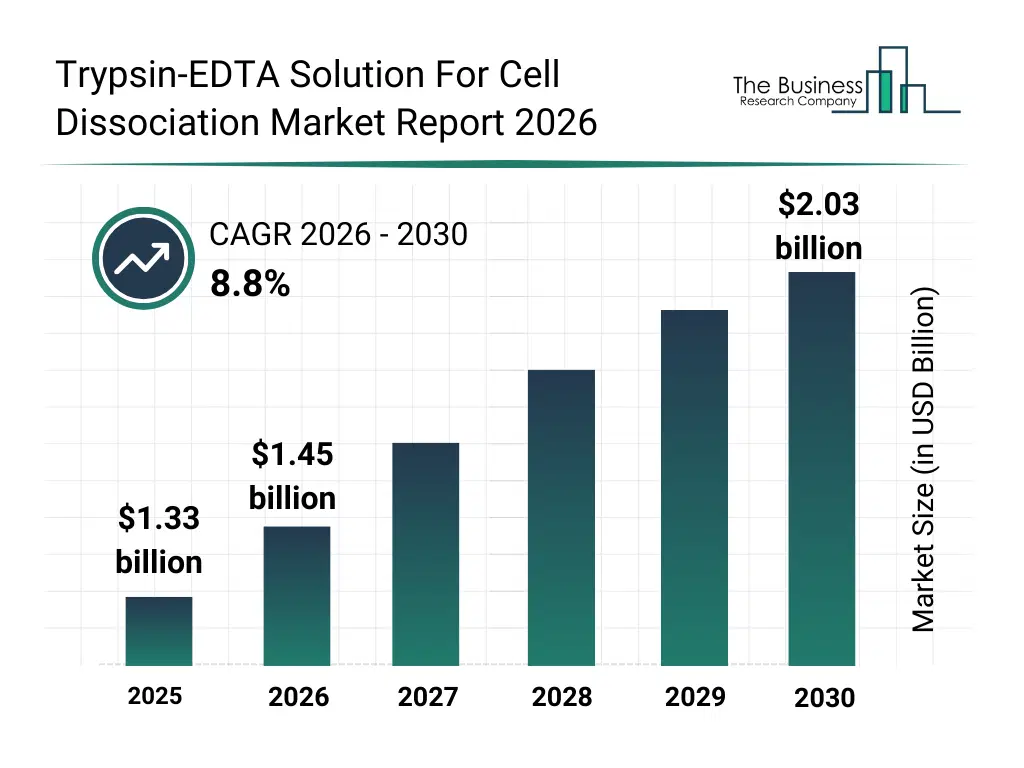
What Is The Trypsin-EDTA Solution For Cell Dissociation Market Size and Share 2026?
The trypsin-edta solution for cell dissociation market size has grown strongly in recent years. It will grow from $1.33 billion in 2025 to $1.45 billion in 2026 at a compound annual growth rate (CAGR) of 9.1%. The growth in the historic period can be attributed to expansion of cell culture based research activities, increasing production of biologics and vaccines, wider adoption of adherent cell lines, growth of academic and clinical research laboratories, improved availability of standardized reagents.What Is The Trypsin-EDTA Solution For Cell Dissociation Market Growth Forecast?
The trypsin-edta solution for cell dissociation market size is expected to see strong growth in the next few years. It will grow to $2.03 billion in 2030 at a compound annual growth rate (CAGR) of 8.8%. The growth in the forecast period can be attributed to growing demand for cell-based therapies, increasing scale-up of biopharmaceutical manufacturing, rising focus on automation in cell processing, expansion of regenerative medicine research, higher regulatory emphasis on process consistency. Major trends in the forecast period include increasing adoption of serum-free cell dissociation reagents, rising demand for consistent cell harvesting solutions, growing use in large-scale biomanufacturing, expansion of stem cell and primary cell applications, enhanced focus on reproducibility and cell viability.
Global Trypsin-EDTA Solution For Cell Dissociation Market Segmentation
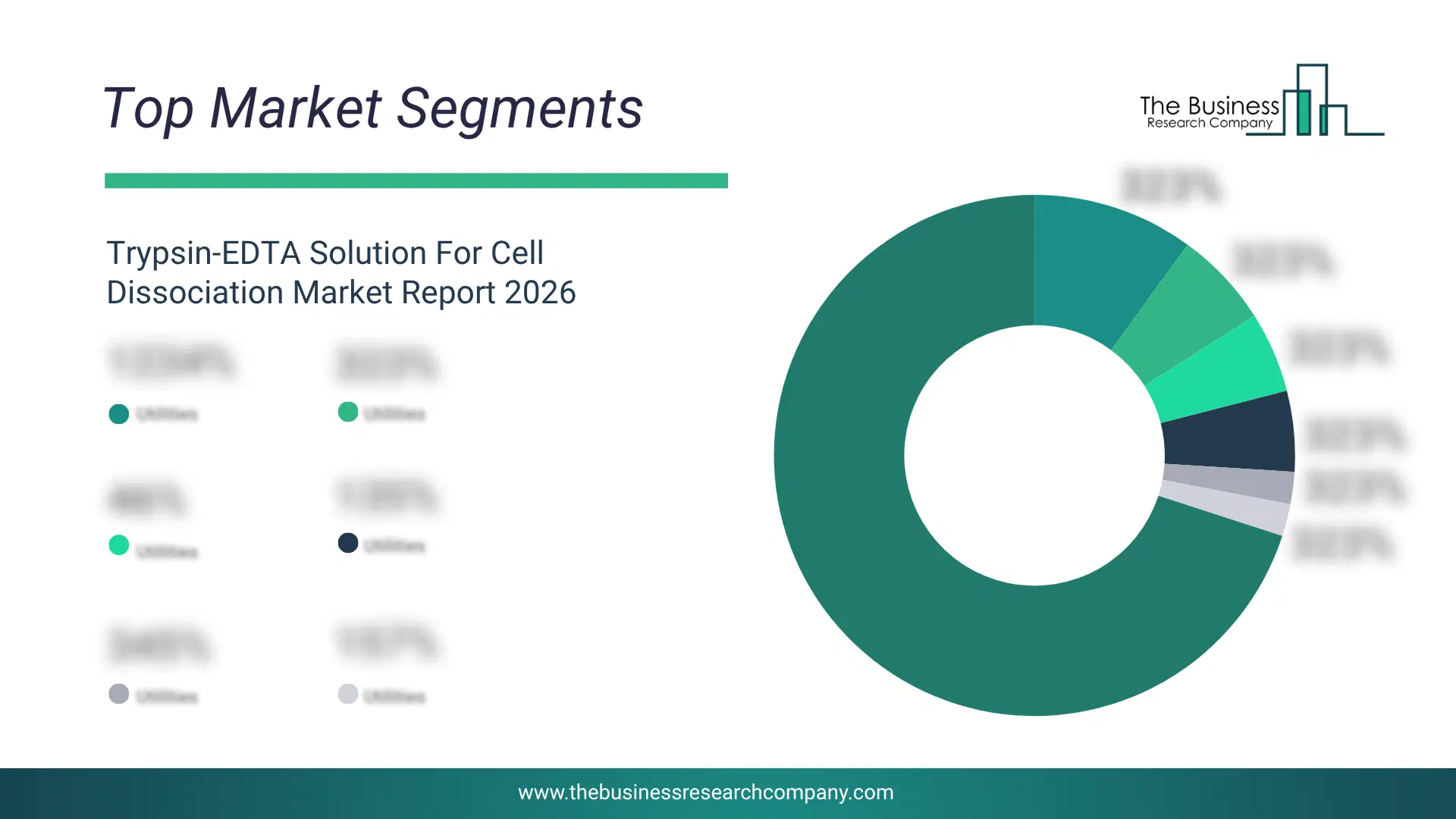
1) By Type: 0.25% Solution, 0.05% Solution 2) By Distribution Channel: Online Sales, Direct Sales, Retail 3) By Application: Insulin Manufacturing, Vaccines Manufacturing, Cell Culture, Other Applications Subsegments: 1) By 0.25% Solution: General Cell Culture, Adherent Cell Lines, Suspension Cell Lines, Tissue-Derived Cells 2) By 0.05% Solution: Gentler Dissociation for Sensitive Cells, Primary Cell Cultures, Stem Cell Cultures, Short-Term Cell CulturesWhat Are The Drivers Of The Trypsin-EDTA Solution For Cell Dissociation Market?
The rising prevalence of chronic diseases is expected to propel the growth of the trypsin-EDTA solution for cell dissociation market going forward. Chronic diseases are long-lasting health conditions that persist for extended periods, often for a lifetime, and typically require ongoing medical management, such as diabetes, heart disease, and chronic respiratory conditions. Chronic diseases are rising due to factors such as aging populations, increased prevalence of risk factors like poor diet and physical inactivity, and advances in medical technology that lead to longer detection and management of these conditions. Trypsin-EDTA solution is used for cell dissociation in chronic disease research to effectively detach and harvest cells from tissues or cultures for further analysis or therapeutic application. For instance, in February 2024, according to a report published by the World Health Organization (WHO), a Switzerland-based intergovernmental organization, approximately 20 million new cancer cases were reported in 2022, along with 9.7 million deaths. By 2050, the number of new cancer cases is projected to rise to over 35 million, representing a 77% increase from the 2022 figures. Therefore, the rising prevalence of chronic diseases is driving the growth of the trypsin-EDTA solution for cell dissociation industry. The growing demand for personalized medicine is expected to drive the growth of the trypsin-EDTA solution for cell dissociation market going forward. Personalized medicine is a medical approach that tailors treatment and healthcare decisions to the individual characteristics, needs, and genetic profile of each patient. The growing demand for personalized medicine is driven by advancements in genomics, targeted therapies, and the increasing prevalence of chronic diseases that require more precise treatment approaches. Trypsin-EDTA solution for cell dissociation plays a role in personalized medicine by enabling efficient cell culture and manipulation, which is essential for research and development in cell-based therapies and regenerative medicine. For instance, in February 2024, according to the Personalized Medicine Coalition, a US-based non-profit organization, in 2023, the FDA approved 16 new personalized treatments for rare disease patients, up from six in 2022. The newly approved personalized treatments for 2023 also include seven cancer drugs and three for other diseases and conditions. Therefore, the growing demand for personalized medicine is driving the growth of the trypsin-EDTA solution for cell dissociation industry.Key Players In The Global Trypsin-EDTA Solution For Cell Dissociation Market
Major companies operating in the trypsin-edta solution for cell dissociation market are Thermo Fisher Scientific Inc., Merck KGaA, GE Healthcare, Corning Incorporated, Lonza Group AG, VWR International LLC, Sartorius AG, STEMCELL Technologies Inc., Miltenyi Biotec B.V. & Co. KG, MP Biomedicals LLC, American Type Culture Collection (ATCC), Cyagen Biosciences Inc., HiMedia Laboratories Private Limited, FUJIFILM Irvine Scientific Inc., Nacalai Tesque Inc., Creative Dynamics Inc., PromoCell GmbH, Biological Industries Israel Beit Haemek Ltd., Worthington Biochemical Corporation, Capricorn Scientific GmbH, PAN-Biotech GmbH, Cell Applications Inc., Innovative Cell Technologies Inc., Wisent Bioproducts Inc., ZenBio Inc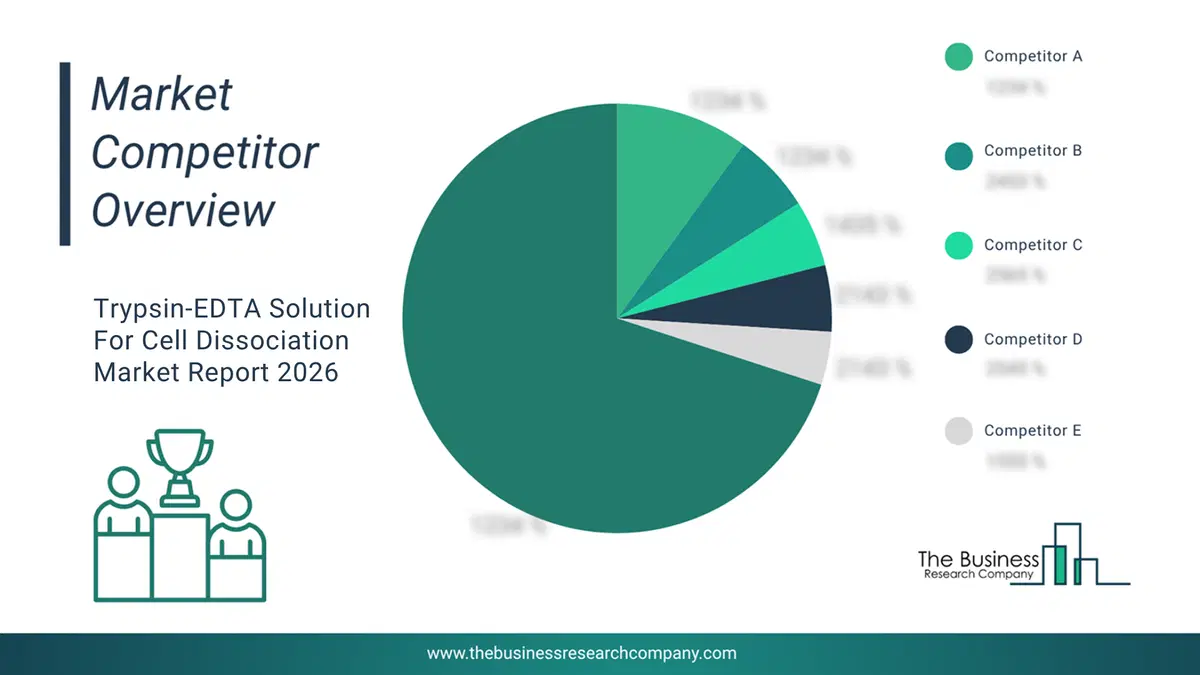
This chart is for illustrative purposes; the full report includes a detailed competitor analysis and comprehensive overview of the top 10 companies in the market.
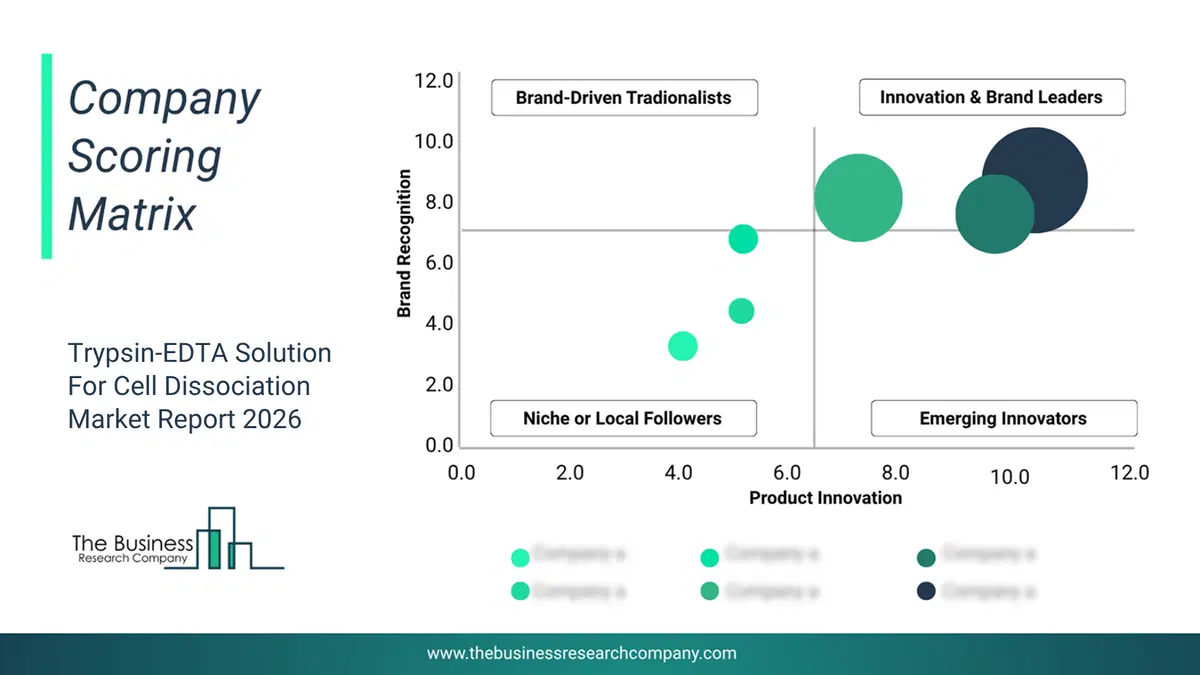
This chart maps companies by product innovation and brand strength, with bubble size indicating relative revenue, helping identify market leaders, challengers, and niche players. This is an illustrative chart; the full report provides a complete and accurate competitive analysis.
Global Trypsin-EDTA Solution For Cell Dissociation Market Trends and Insights
Major companies operating in the trypsin-EDTA solution for cell dissociation are developing innovative products, such as animal-based ECM dissociation solutions, to gain a competitive edge in the market. Animal-based ECM dissociation solutions are enzymatic or chemical formulations derived from animal sources used to break down extracellular matrix components and facilitate the detachment of cells from tissue or culture surfaces. For instance, in February 2023, TheWell Bioscience, a US-based biomedical technology company, launched the VitroGel Organoid Recovery Solution. The VitroGel Organoid Recovery Solution offers a groundbreaking advancement by enabling rapid and efficient recovery of organoids from both animal-based extracellular matrix (ECM) and synthetic VitroGel hydrogels. It achieves complete dissociation of animal-based ECM in just 2 minutes, with the entire cell harvesting process completed in only 15 minutes, a significant improvement compared to the leading solution that takes over 60 minutes. Designed for high-quality, intact organoid recovery, this solution provides superior yields, cell viability, and quality for passaging, cryopreservation, or biochemical analysis. Additionally, it operates at room temperature, eliminating the need for heat or cooling equipment and facilitating full lab automation for high-throughput organoid production.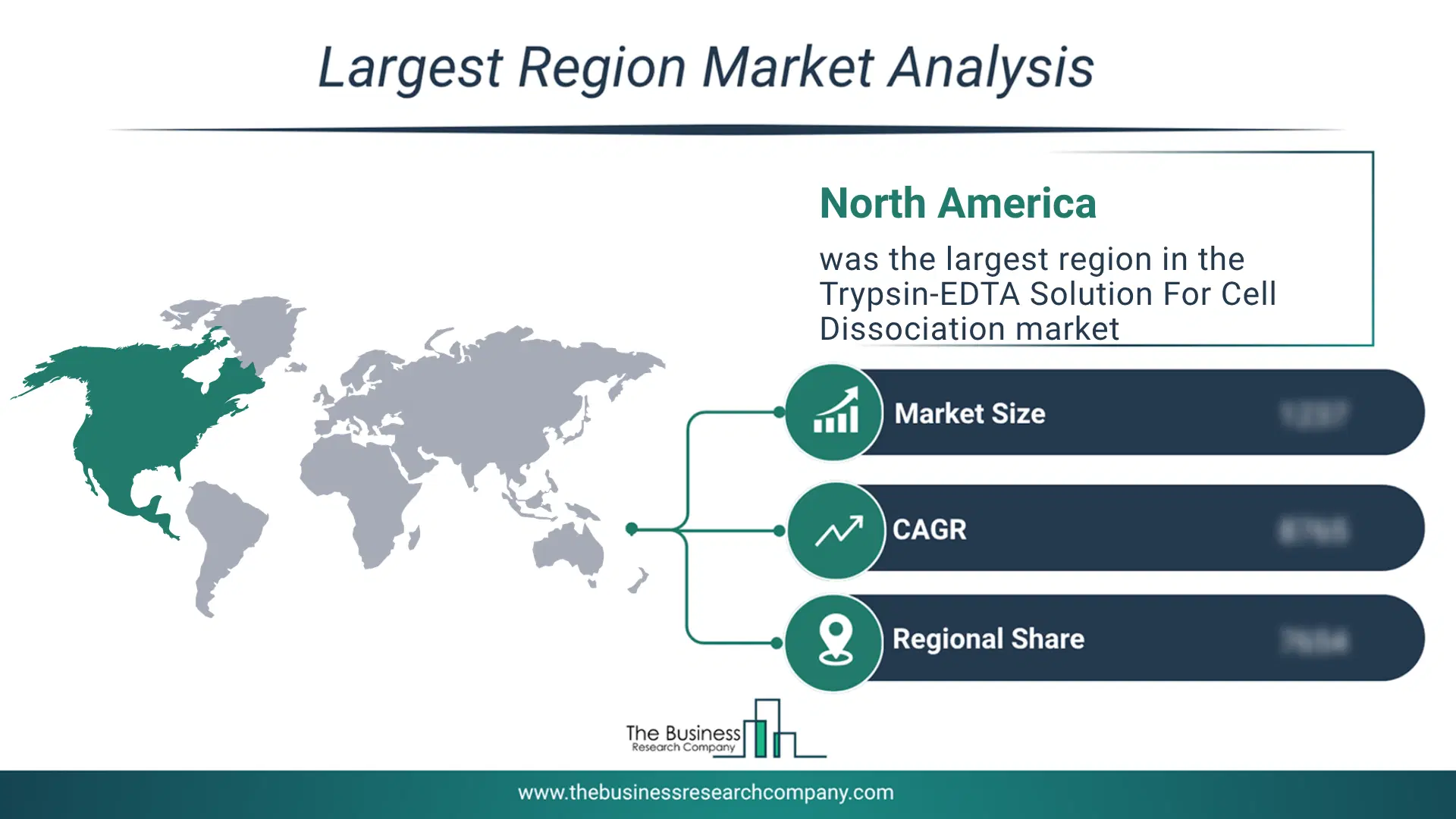
Regional Outlook
North America was the largest region in the trypsin-EDTA solution for cell dissociation market in 2025. Asia-Pacific is expected to be the fastest-growing region in the forecast period. The regions covered in this market report are Asia-Pacific, South East Asia, Western Europe, Eastern Europe, North America, South America, Middle East, Africa. The countries covered in this market report are Australia, Brazil, China, France, Germany, India, Indonesia, Japan, Taiwan, Russia, South Korea, UK, USA, Canada, Italy, Spain.What Defines the Trypsin-EDTA Solution For Cell Dissociation Market?
The trypsin-EDTA solution for cell dissociation market consists of sales of buffered trypsin-EDTA solution, trypsin-free cell dissociation solutions, enzyme-free cell dissociation solutions and trypsin- EDTA solutions with phenol red. Values in this market are ‘factory gate’ values, that is the value of goods sold by the manufacturers or creators of the goods, whether to other entities (including downstream manufacturers, wholesalers, distributors and retailers) or directly to end customers. The value of goods in this market includes related services sold by the creators of the goods.How is Market Value Defined and Measured?
The market value is defined as the revenues that enterprises gain from the sale of goods and/or services within the specified market and geography through sales, grants, or donations in terms of the currency (in USD unless otherwise specified). The revenues for a specified geography are consumption values that are revenues generated by organizations in the specified geography within the market, irrespective of where they are produced. It does not include revenues from resales along the supply chain, either further along the supply chain or as part of other products.
This chart presents market attractiveness based on a quantitative evaluation of growth, competition, strategic alignment, and risk, offering a clear view of opportunity areas for decision-making. This chart is for illustrative purposes; the full report contains the complete analysis.

This chart highlights the Total Addressable Market (TAM) by estimating the maximum revenue opportunity using an assumption-driven approach, supporting strategic planning and opportunity sizing across markets. The chart is illustrative; the full report provides a more comprehensive analysis.
What Key Data and Analysis Are Included in the Trypsin-EDTA Solution For Cell Dissociation Market Report 2026?
The trypsin-edta solution for cell dissociation market research report is one of a series of new reports from The Business Research Company that provides market statistics, including industry global market size, regional shares, competitors with the market share, detailed market segments, market trends and opportunities, and any further data you may need to thrive in the trypsin-edta solution for cell dissociation industry. The market research report delivers a complete perspective of everything you need, with an in-depth analysis of the current and future state of the industry.Trypsin-EDTA Solution For Cell Dissociation Market Report Forecast Analysis
| Report Attribute | Details |
|---|---|
| Market Size Value In 2026 | $1.45 billion |
| Revenue Forecast In 2030 | $2.03 billion |
| Growth Rate | CAGR of 8.8% from 2026 to 2030 |
| Base Year For Estimation | 2025 |
| Actual Estimates/Historical Data | 2020-2025 |
| Forecast Period | 2026 - 2030 |
| Market Representation | Revenue in USD Billion and CAGR from 2026 to 2030 |
| Segments Covered | Type, Distribution Channel, Application |
| Regional Scope | Asia-Pacific, Western Europe, Eastern Europe, North America, South America, Middle East, Africa |
| Country Scope | The countries covered in the report are Australia, Brazil, China, France, Germany, India, Indonesia, Japan, Taiwan, Russia, South Korea, UK, USA, Canada, Italy, Spain |
| Key Companies Profiled | Thermo Fisher Scientific Inc., Merck KGaA, GE Healthcare, Corning Incorporated, Lonza Group AG, VWR International LLC, Sartorius AG, STEMCELL Technologies Inc., Miltenyi Biotec B.V. & Co. KG, MP Biomedicals LLC, American Type Culture Collection (ATCC), Cyagen Biosciences Inc., HiMedia Laboratories Private Limited, FUJIFILM Irvine Scientific Inc., Nacalai Tesque Inc., Creative Dynamics Inc., PromoCell GmbH, Biological Industries Israel Beit Haemek Ltd., Worthington Biochemical Corporation, Capricorn Scientific GmbH, PAN-Biotech GmbH, Cell Applications Inc., Innovative Cell Technologies Inc., Wisent Bioproducts Inc., ZenBio Inc |
| Customization Scope | Request for Customization |
| Pricing And Purchase Options | Explore Purchase Options |