
Tuberous Sclerosis Drug Market Report 2026
Global Outlook – By Drug Class (Targeted Therapy, Immunotherapy, Symptomatic Treatment), By Route Of Administration (Oral, Intravenous, Subcutaneous), By Treatment Stage (Initial Diagnosis, Chronic Management, Recurrent Management), By Distribution Channel (Hospital Pharmacies, Retail Pharmacies, Online Pharmacies), By End-Users (Hospitals, Homecare, Specialty Clinics, Other End-Users) – Market Size, Trends, Strategies, and Forecast to 2030
Tuberous Sclerosis Drug Market Overview
• Tuberous Sclerosis Drug market size has reached to $0.85 billion in 2025 • Expected to grow to $1.26 billion in 2030 at a compound annual growth rate (CAGR) of 8.1% • Growth Driver: Rising Incidence Of Chronic Diseases Fueling The Growth Of The Market Due To Lifestyle Changes And Increased Health Complications • Market Trend: Innovative mTOR Therapy Targets Tumor Growth And Seizures • North America was the largest region in 2025 and Asia-Pacific is the fastest growing region.What Is Covered Under Tuberous Sclerosis Drug Market?
Tuberous sclerosis drug is a medication used to treat symptoms of tuberous sclerosis complex (TSC), a genetic disorder that causes benign tumors in multiple organs, especially the brain, kidneys, heart, lungs, and skin. The main goal is to reduce tumor size, control seizures, and manage other related symptoms. It helps to improve the quality of life by targeting the underlying cellular abnormalities. The main drug classes in the tuberous sclerosis drug are targeted therapy, immunotherapy, and symptomatic treatment. Targeted therapy refers to the use of drugs that specifically target the molecular pathways involved in the growth of tumors associated with tuberous sclerosis. The various routes of administration include oral, intravenous, and subcutaneous, with treatment stages encompassing initial diagnosis, chronic management, and recurrent management. Distribution channels include hospital pharmacies, retail pharmacies, and online pharmacies catering to end-users such as hospitals, home care, specialty clinics, and others.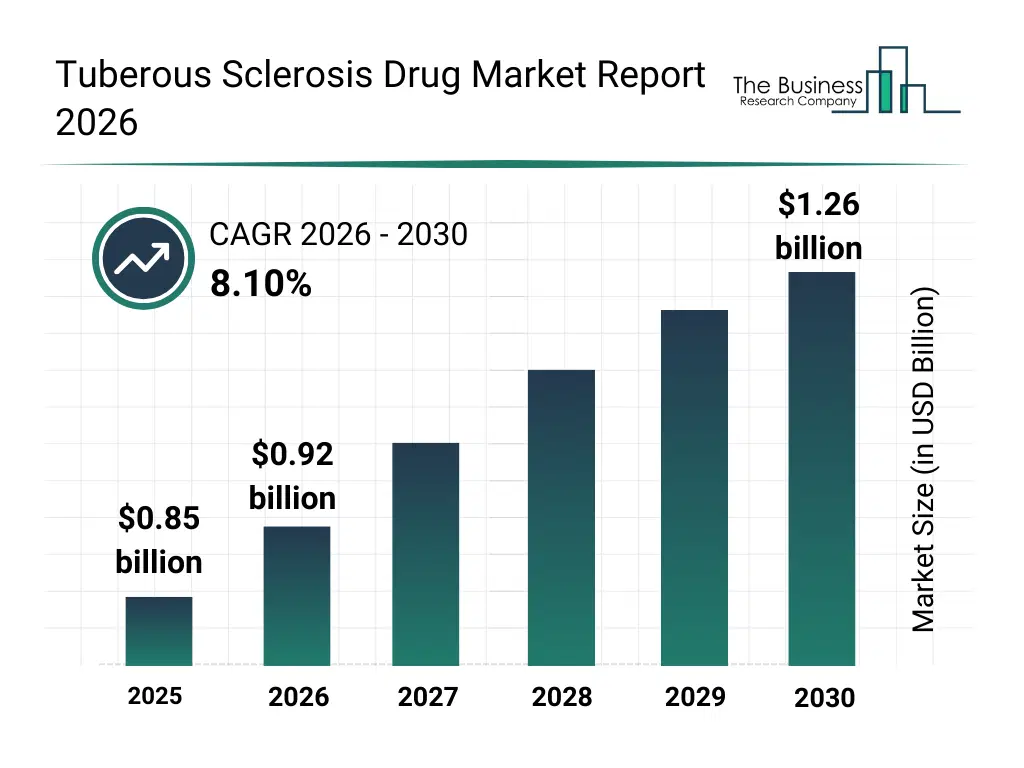
What Is The Tuberous Sclerosis Drug Market Size and Share 2026?
The tuberous sclerosis drug market size has grown strongly in recent years. It will grow from $0.85 billion in 2025 to $0.92 billion in 2026 at a compound annual growth rate (CAGR) of 8.1%. The growth in the historic period can be attributed to rare disease awareness, genetic research, orphan drug incentives, hospital specialty care, seizure disorder management.What Is The Tuberous Sclerosis Drug Market Growth Forecast?
The tuberous sclerosis drug market size is expected to see strong growth in the next few years. It will grow to $1.26 billion in 2030 at a compound annual growth rate (CAGR) of 8.1%. The growth in the forecast period can be attributed to precision medicine growth, expanded newborn screening, orphan drug funding, improved diagnosis, biologic therapy development. Major trends in the forecast period include growth of targeted mtor inhibitor therapies, expansion of rare disease drug development, focus on seizure management, increasing genetic diagnosis rates, long-term symptom management strategies.
Global Tuberous Sclerosis Drug Market Segmentation
1) By Drug Class: Targeted Therapy, Immunotherapy, Symptomatic Treatment 2) By Route Of Administration: Oral, Intravenous, Subcutaneous 3) By Treatment Stage: Initial Diagnosis, Chronic Management, Recurrent Management 4) By Distribution Channel: Hospital Pharmacies, Retail Pharmacies, Online Pharmacies 5) By End-Users: Hospitals, Homecare, Specialty Clinics, Other End-Users Subsegments: 1) By Targeted Therapy: Mammalian Target Of Rapamycin (mTOR) Inhibitors, Vascular Endothelial Growth Factor (VEGF) Inhibitors, Tyrosine Kinase Inhibitors 2) By Immunotherapy: Monoclonal Antibodies, Cytokine Therapy 3) By Symptomatic Treatment: Antiepileptic Drugs, Corticosteroids, Behavioral Therapy MedicationsWhat Is The Driver Of The Tuberous Sclerosis Drug Market?
The rising incidence of chronic diseases is expected to propel the growth of the tuberous sclerosis drug market going forward. Chronic diseases refer to long-term medical conditions that typically progress slowly and require ongoing management. It includes conditions such as diabetes, heart disease, hypertension, arthritis, chronic respiratory diseases, cancer, and obesity. The increasing prevalence of chronic diseases is due to lifestyle changes, particularly poor diet and lack of physical activity, which contribute to long-term health complications. Tuberous sclerosis drugs aid chronic disease management by targeting the underlying causes of conditions such as tuberous sclerosis complex (TSC), offering effective treatments for tumor growth and seizure control. They improve patient quality of life by providing long-term symptom management and reducing the need for frequent hospital visits. For instance, in June 2024, according to the National Health Service, a UK-based government department, 3,615,330 individuals registered with a general practitioner (GP) were diagnosed with non-diabetic hyperglycemia or pre-diabetes in 2023, marking an 18% increase from 3,065,825 cases in 2022. Therefore, the rising incidence of chronic diseases is driving the growth of the tuberous sclerosis drug industry.Key Players In The Global Tuberous Sclerosis Drug Market
Major companies operating in the tuberous sclerosis drug market are Novartis AG, Dr. Reddy’s Laboratories Ltd., Pfizer Inc., Teva Pharmaceutical Industries Ltd., Viatris Inc., Sun Pharmaceutical Industries Ltd., Cipla Limited, Aurobindo Pharma Ltd., Lupin Limited, Zydus Lifesciences Ltd., Glenmark Pharmaceuticals Ltd., Hikma Pharmaceuticals PLC, Alembic Pharmaceuticals Ltd., Torrent Pharmaceuticals Ltd., Intas Pharmaceuticals Ltd., Amneal Pharmaceuticals Inc., Alkem Laboratories Ltd., Wockhardt Ltd., Hetero Drugs Ltd., Mylan N.V., Accord Healthcare Ltd., Apotex Inc., Sandoz Group AG, Fresenius Kabi AG, Macleods Pharmaceuticals Ltd.
This chart is for illustrative purposes; the full report includes a detailed competitor analysis and comprehensive overview of the top 10 companies in the market.
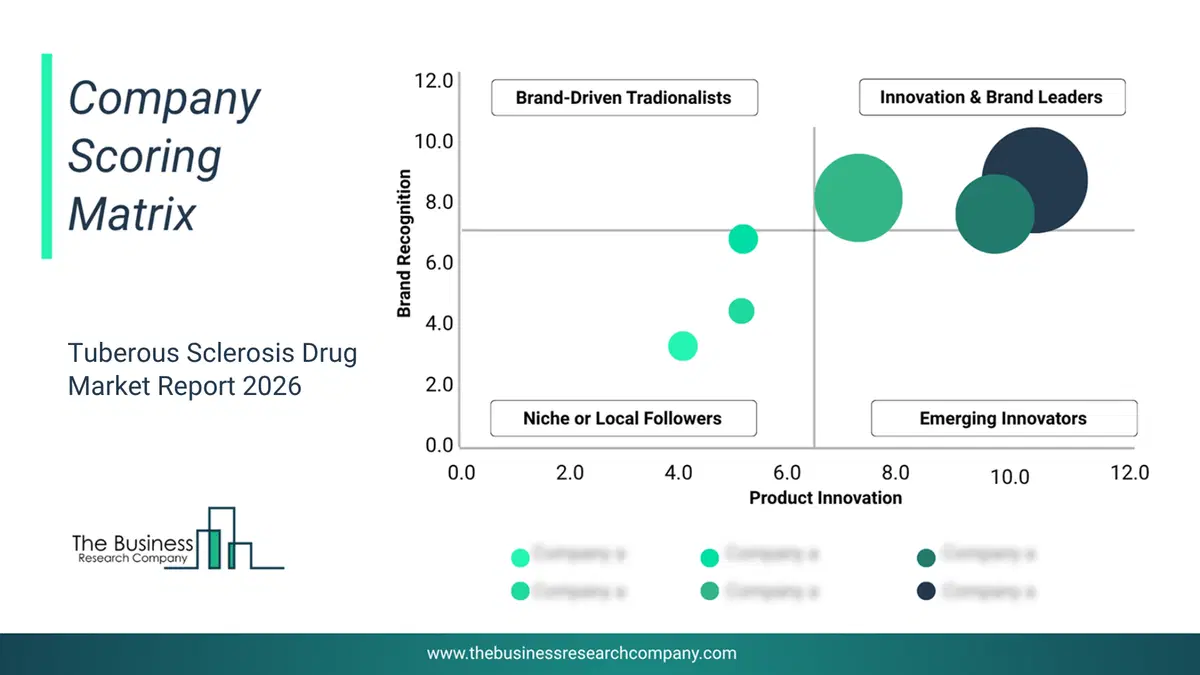
This chart maps companies by product innovation and brand strength, with bubble size indicating relative revenue, helping identify market leaders, challengers, and niche players. This is an illustrative chart; the full report provides a complete and accurate competitive analysis.
Global Tuberous Sclerosis Drug Market Trends and Insights
Major companies operating in the tuberous sclerosis drug market are focusing on developing innovative products, such as mammalian target of rapamycin (mTOR) inhibitors, to effectively reduce tumor growth, control seizures, and address the underlying molecular pathways of the disease. A mammalian target of rapamycin (mTOR) inhibitor refers to a class of drugs that block the activity of the mTOR protein, a key regulator of cell growth, proliferation, and survival. For instance, in August 2024, Upsher-Smith Laboratories LLC, a US-based pharmaceutical company, launched TORPENZ (everolimus) tablets in 2.5 mg, 5 mg, 7.5 mg, and 10 mg strengths, used in patients with tuberous sclerosis complex (TSC). TORPENZ is an oral mammalian target of rapamycin (mTOR) inhibitor used in patients with tuberous sclerosis complex (TSC) that works by inhibiting the overactive mammalian target of rapamycin (mTOR) pathway responsible for uncontrolled cell growth in tuberous sclerosis complex (TSC), helping to reduce the size of benign tumors and manage symptoms such as seizures.What Are Latest Mergers And Acquisitions In The Tuberous Sclerosis Drug Market?
In February 2025, Immedica Pharma AB, a Sweden-based pharmaceutical company, acquired Marinus Pharmaceuticals Inc. for $151 million. With this acquisition, Immedica aims to expand its presence in the rare seizure disorder market and enhance its neuroscience portfolio with ganaxolone, aligning with its strategy to broaden global reach and strengthen its pipeline in rare central nervous system (CNS) conditions. Marinus Pharmaceuticals Inc. is a US-based biopharmaceutical company developing innovative treatments for rare seizure disorders such as tuberous sclerosis.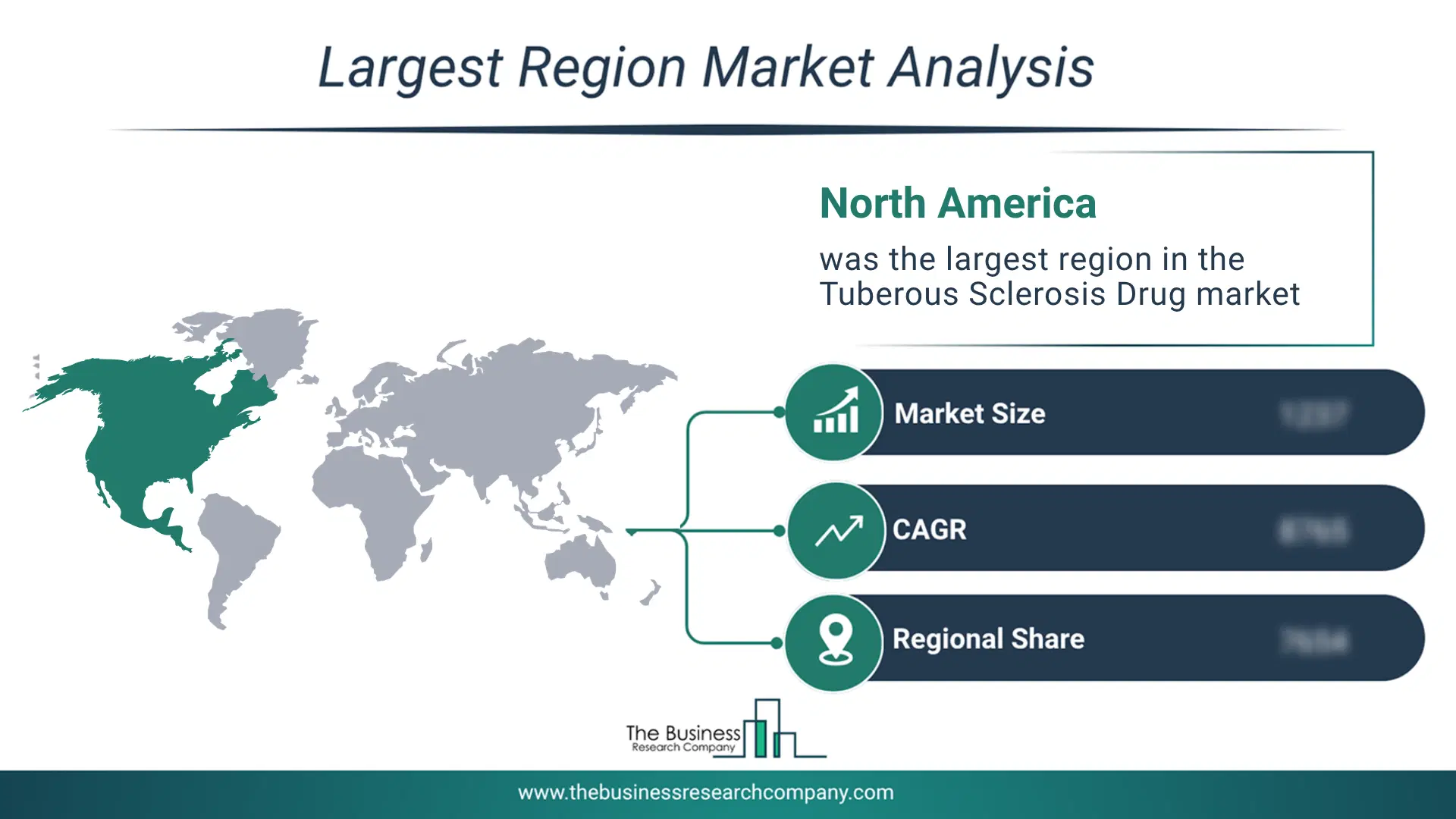
Regional Insights
North America was the largest region in the tuberous sclerosis drug market in 2025. Asia-Pacific is expected to be the fastest-growing region in the forecast period. The regions covered in this market report are Asia-Pacific, South East Asia, Western Europe, Eastern Europe, North America, South America, Middle East, Africa. The countries covered in this market report are Australia, Brazil, China, France, Germany, India, Indonesia, Japan, Taiwan, Russia, South Korea, UK, USA, Canada, Italy, Spain.What Defines the Tuberous Sclerosis Drug Market?
The tuberous sclerosis drug market consists of sales of topical treatments, psychiatric medications, and supportive care therapies used to manage the various symptoms and complications of tuberous sclerosis complex. Values in this market are ‘factory gate’ values, that is the value of goods sold by the manufacturers or creators of the goods, whether to other entities (including downstream manufacturers, wholesalers, distributors and retailers) or directly to end customers. The value of goods in this market includes related services sold by the creators of the goods.How is Market Value Defined and Measured?
The market value is defined as the revenues that enterprises gain from the sale of goods and/or services within the specified market and geography through sales, grants, or donations in terms of the currency (in USD unless otherwise specified). The revenues for a specified geography are consumption values that are revenues generated by organizations in the specified geography within the market, irrespective of where they are produced. It does not include revenues from resales along the supply chain, either further along the supply chain or as part of other products.
This chart presents market attractiveness based on a quantitative evaluation of growth, competition, strategic alignment, and risk, offering a clear view of opportunity areas for decision-making. This chart is for illustrative purposes; the full report contains the complete analysis.

This chart highlights the Total Addressable Market (TAM) by estimating the maximum revenue opportunity using an assumption-driven approach, supporting strategic planning and opportunity sizing across markets. The chart is illustrative; the full report provides a more comprehensive analysis.
What Key Data and Analysis Are Included in the Tuberous Sclerosis Drug Market Report 2026?
The tuberous sclerosis drug market research report is one of a series of new reports from The Business Research Company that provides market statistics, including industry global market size, regional shares, competitors with the market share, detailed market segments, market trends and opportunities, and any further data you may need to thrive in the tuberous sclerosis drug industry. The market research report delivers a complete perspective of everything you need, with an in-depth analysis of the current and future state of the industry.Tuberous Sclerosis Drug Market Report Forecast Analysis
| Report Attribute | Details |
|---|---|
| Market Size Value In 2026 | $0.92 billion |
| Revenue Forecast In 2030 | $1.26 billion |
| Growth Rate | CAGR of 8.1% from 2026 to 2030 |
| Base Year For Estimation | 2025 |
| Actual Estimates/Historical Data | 2020-2025 |
| Forecast Period | 2026 - 2030 |
| Market Representation | Revenue in USD Billion and CAGR from 2026 to 2030 |
| Segments Covered | Drug Class, Route Of Administration, Treatment Stage, Distribution Channel, End-Users |
| Regional Scope | Asia-Pacific, Western Europe, Eastern Europe, North America, South America, Middle East, Africa |
| Country Scope | The countries covered in the report are Australia, Brazil, China, France, Germany, India, Indonesia, Japan, Taiwan, Russia, South Korea, UK, USA, Canada, Italy, Spain. |
| Key Companies Profiled | Novartis AG, Dr. Reddy’s Laboratories Ltd., Pfizer Inc., Teva Pharmaceutical Industries Ltd., Viatris Inc., Sun Pharmaceutical Industries Ltd., Cipla Limited, Aurobindo Pharma Ltd., Lupin Limited, Zydus Lifesciences Ltd., Glenmark Pharmaceuticals Ltd., Hikma Pharmaceuticals PLC, Alembic Pharmaceuticals Ltd., Torrent Pharmaceuticals Ltd., Intas Pharmaceuticals Ltd., Amneal Pharmaceuticals Inc., Alkem Laboratories Ltd., Wockhardt Ltd., Hetero Drugs Ltd., Mylan N.V., Accord Healthcare Ltd., Apotex Inc., Sandoz Group AG, Fresenius Kabi AG, Macleods Pharmaceuticals Ltd. |
| Customization Scope | Request for Customization |
| Pricing And Purchase Options | Explore Purchase Options |