

Tubulin Inhibitors For Breast Cancer Market Report 2026
Global Outlook – By Drug Class (Taxanes, Vinca Alkaloids, Epothilones, Other Drug Classes), By Mechanism Of Action (Microtubule Destabilizers, Microtubule Polymerization Inhibitors, Modulators Of Tubulin Dynamics, Targeted Microtubule-Associated Proteins), By Stage Of Breast Cancer (Early-stage Breast Cancer, Locally Advanced Breast Cancer, Metastatic Breast Cancer), By Treatment Approach (Chemotherapy, Combination Therapy, Adjuvant Therapy, Neoadjuvant Therapy), By Application (Hospital, Clinic, Drug Center, Other Applications) – Market Size, Trends, Strategies, and Forecast to 2030
Tubulin Inhibitors For Breast Cancer Market Overview
• Tubulin Inhibitors For Breast Cancer market size has reached to $1.94 billion in 2025 • Expected to grow to $2.78 billion in 2030 at a compound annual growth rate (CAGR) of 7.4% • Growth Driver: Growing Prevalence Of Chronic Diseases Fueling The Market Due To The Need For Effective Therapies • Market Trend: Targeted Therapies Transforming Tubulin Inhibitor Use In Breast Cancer • North America was the largest region in 2025 and Asia-Pacific is the fastest growing region.What Is Covered Under Tubulin Inhibitors For Breast Cancer Market?
Tubulin inhibitors for breast cancer refer to a class of drugs that disrupt the function of tubulin, a key protein involved in cell division, thereby preventing cancer cells from multiplying. They are used to inhibit tumor growth and induce cancer cell death by interfering with microtubule dynamics essential for mitosis. The main drug classes of tubulin inhibitors for breast cancer are colchicine, taxanes, vinca alkaloids, epothilones, and other drug classes. Colchicine is a tubulin inhibitor that disrupts microtubule polymerization and is being explored for its potential in cancer treatment, including breast cancer. These drugs have mechanisms of action such as microtubule destabilization, microtubule polymerization inhibition, modulation of tubulin dynamics, and targeting of microtubule-associated proteins for various breast cancer stages, including early-stage breast cancer, locally advanced breast cancer, and metastatic breast cancer. Treatment approaches include chemotherapy, combination therapy, adjuvant therapy, and neoadjuvant therapy, and are applied in applications such as hospitals, clinics, drug centers, and others.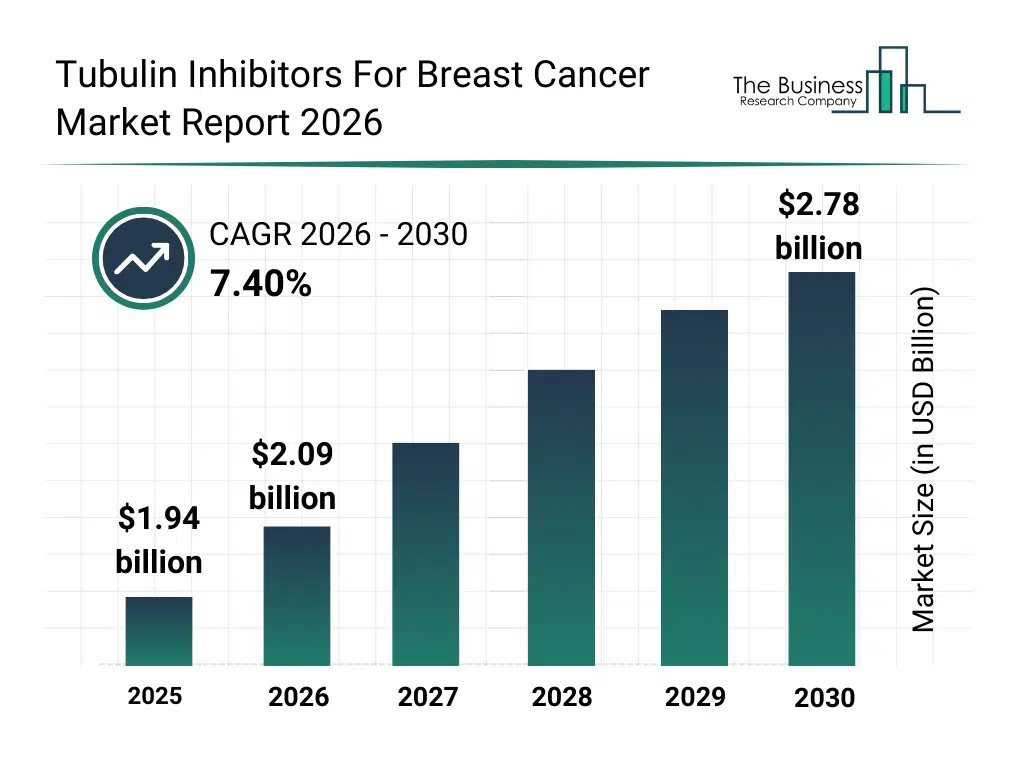
What Is The Tubulin Inhibitors For Breast Cancer Market Size and Share 2026?
The tubulin inhibitors for breast cancer market size has grown strongly in recent years. It will grow from $1.94 billion in 2025 to $2.09 billion in 2026 at a compound annual growth rate (CAGR) of 7.7%. The growth in the historic period can be attributed to limited availability of tubulin inhibitor drugs, reliance on conventional chemotherapy, increasing breast cancer prevalence, growing hospital-based oncology treatments, adoption of standard treatment protocols.What Is The Tubulin Inhibitors For Breast Cancer Market Growth Forecast?
The tubulin inhibitors for breast cancer market size is expected to see strong growth in the next few years. It will grow to $2.78 billion in 2030 at a compound annual growth rate (CAGR) of 7.4%. The growth in the forecast period can be attributed to development of novel colchicine, taxanes, vinca alkaloids, and epothilones, expansion of neoadjuvant and adjuvant therapies, rising investment in personalized and targeted therapies, increasing regulatory approvals for new formulations, integration of digital health and clinical decision support tools. Major trends in the forecast period include rising use of tubulin inhibitors in early-stage breast cancer, expansion of combination and targeted therapies, increasing clinical trials for novel tubulin inhibitors, adoption of personalized medicine approaches, growing demand for outpatient and clinic-based treatments.
Global Tubulin Inhibitors For Breast Cancer Market Segmentation
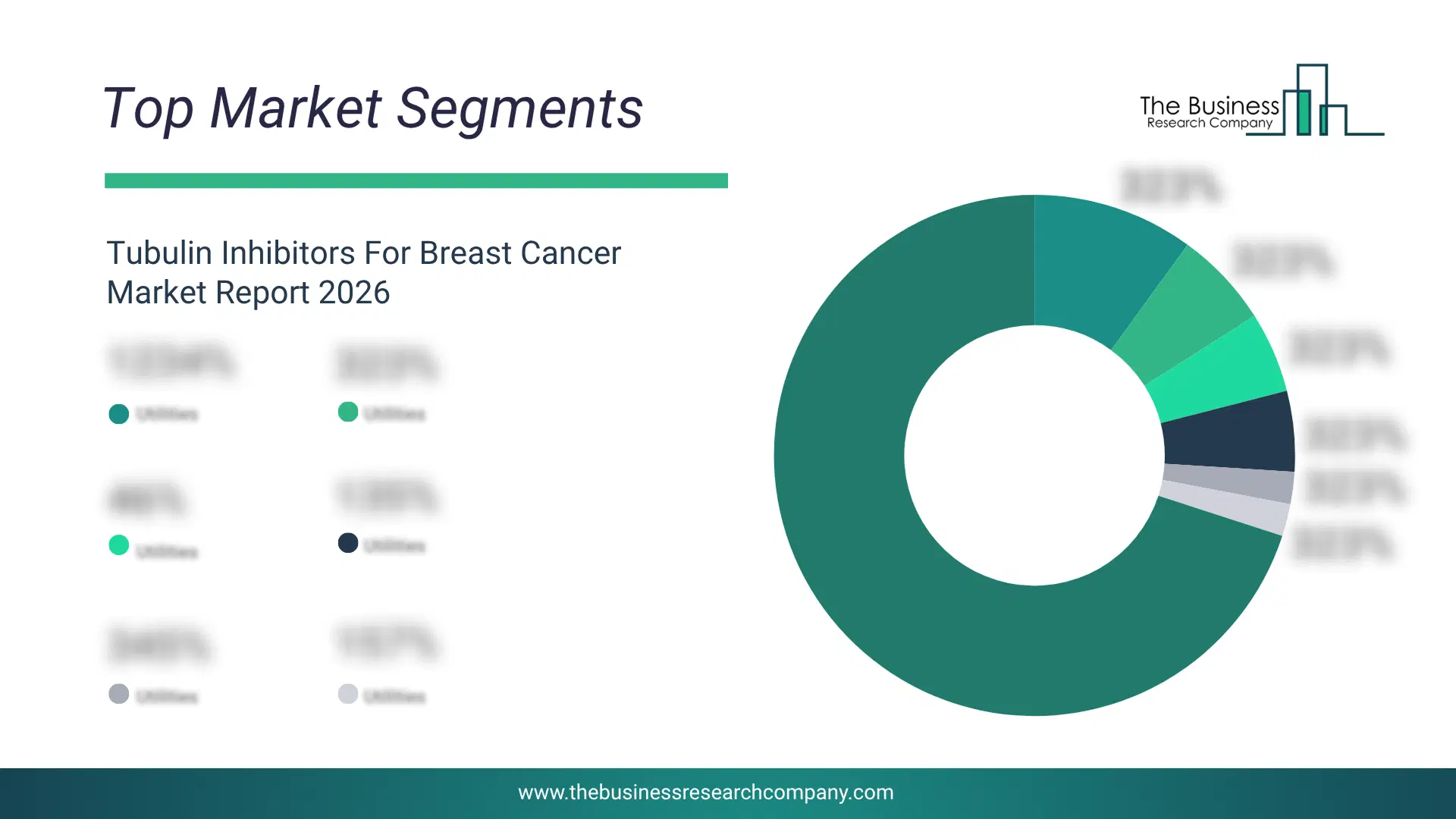
1) By Drug Class: Taxanes, Vinca Alkaloids, Epothilones, Other Drug Classes 2) By Mechanism Of Action: Microtubule Destabilizers, Microtubule Polymerization Inhibitors, Modulators Of Tubulin Dynamics, Targeted Microtubule-Associated Proteins 3) By Stage Of Breast Cancer: Early-stage Breast Cancer, Locally Advanced Breast Cancer, Metastatic Breast Cancer 4) By Treatment Approach: Chemotherapy, Combination Therapy, Adjuvant Therapy, Neoadjuvant Therapy 5) By Application: Hospital, Clinic, Drug Center, Other Applications Subsegments: 1) By Taxanes: Paclitaxel, Docetaxel 2) By Vinca Alkaloids: Vinorelbine, Vincristine, Vindesine 3) By Epothilones: Ixabepilone, Epothilone B Derivatives 4) By Other Drug Classes: Maytansinoids, Eribulin Mesylate, Cabazitaxel, DiscodermolideWhat Is The Driver Of The Tubulin Inhibitors For Breast Cancer Market?
The growing prevalence of chronic diseases is expected to propel the growth of the tubulin inhibitors for breast cancer market going forward. Chronic diseases are long-term health disorders, such as breast cancer, that are characterized by uncontrolled cell proliferation and high recurrence rates that necessitate ongoing treatment measures. The rise in chronic diseases is largely driven by sedentary lifestyles, which contribute to obesity, diabetes, and cardiovascular conditions. Tubulin inhibitors help chronic diseases by disrupting abnormal cell division, which can reduce inflammation, slow disease progression, and support the management of conditions linked to uncontrolled cellular proliferation. For instance, in April 2025, according to the National Breast Cancer Foundation, a US-based nonprofit organization, an estimated 316,950 women and 2,800 men are diagnosed with invasive breast cancer, and an additional 59,080 new cases of non-invasive (in situ) breast cancer are diagnosed. Therefore, the growing prevalence of chronic diseases is driving the growth of the tubulin inhibitors for breast cancer industry.Key Players In The Global Tubulin Inhibitors For Breast Cancer Market
Major companies operating in the tubulin inhibitors for breast cancer market are Pfizer Inc., F. Hoffmann-La Roche Ltd., Sanofi S.A., Novartis AG, Eli Lilly and Company, Eisai Co. Ltd., Sun Pharmaceutical Industries Limited, Genentech Inc., Luye Pharma Group Ltd., CSPC Pharmaceutical Group Limited, Jiangsu Hengrui Pharmaceuticals Co. Ltd., Natco Pharma Limited, Samyang Biopharmaceuticals Corporation, Qilu Pharmaceutical Co. Ltd., Beijing Biostar Pharmaceuticals Co. Ltd., Beijing Youcare Pharmaceutical Group Co. Ltd., Teva Pharmaceutical Industries Ltd., Fresenius Kabi AG, Dr. Reddy’s Laboratories Ltd., Cipla Ltd., Hikma Pharmaceuticals PLC, Aurobindo Pharma Ltd., Accord Healthcare Ltd., Baxter International Inc., Mylan N.V. (Viatris Inc.), Intas Pharmaceuticals Ltd., Zydus Lifesciences Ltd.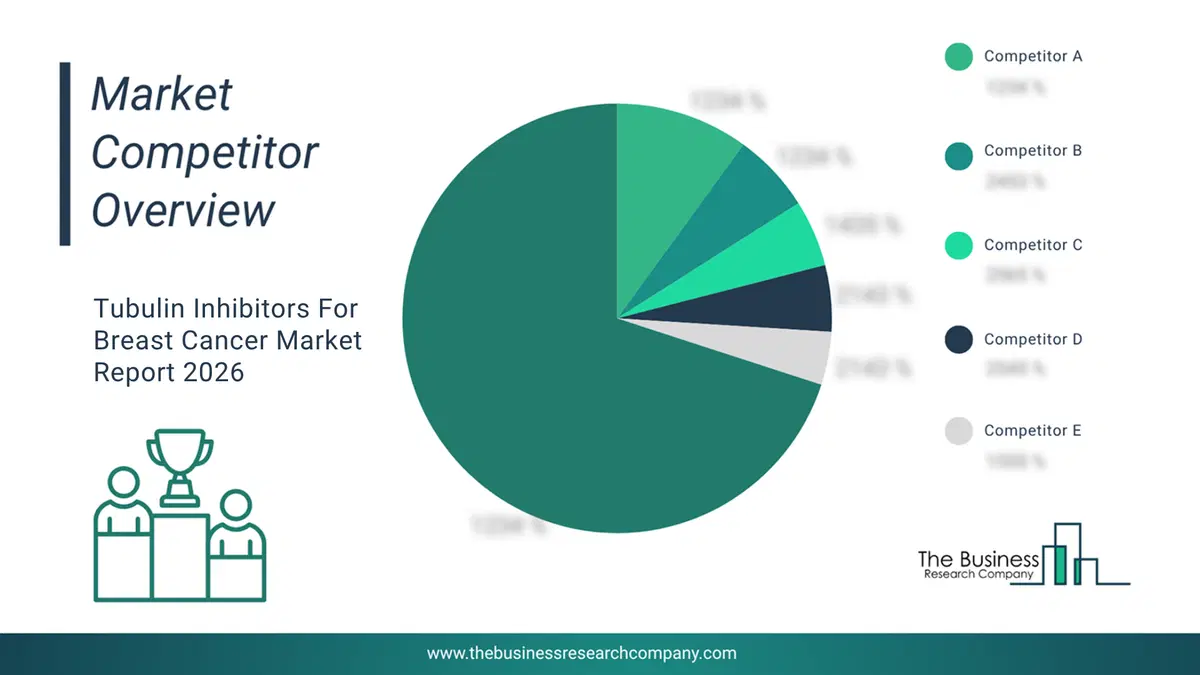
This chart is for illustrative purposes; the full report includes a detailed competitor analysis and comprehensive overview of the top 10 companies in the market.
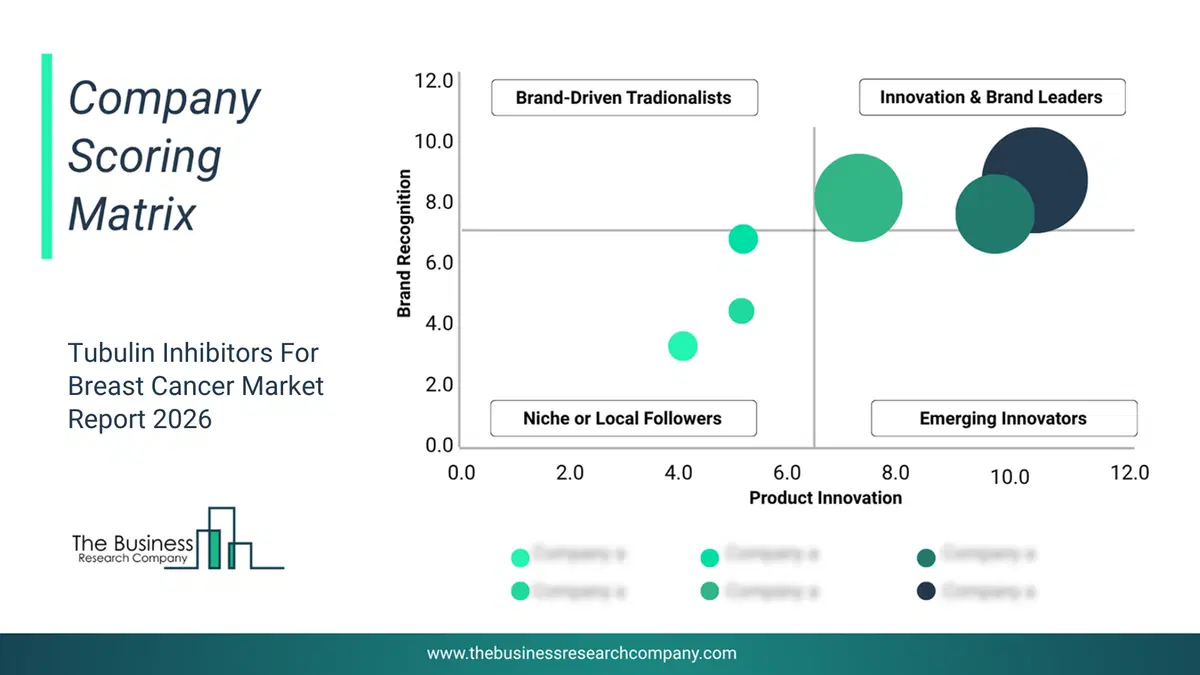
This chart maps companies by product innovation and brand strength, with bubble size indicating relative revenue, helping identify market leaders, challengers, and niche players. This is an illustrative chart; the full report provides a complete and accurate competitive analysis.
Global Tubulin Inhibitors For Breast Cancer Market Trends and Insights
Major companies operating in the tubulin inhibitors for breast cancer market are developing innovative treatment approaches, such as antibody-drug conjugates (ADCs), to improve therapeutic precision and minimize side effects. ADCs combining tubulin inhibitors link effective anti-mitotic drugs to monoclonal antibodies that precisely target breast cancer cells, allowing the medicine to be delivered directly to the tumor site. This focused method improves the efficiency of tubulin inhibitors while simultaneously reducing systemic toxicity. For instance, in December 2023, Roche, a Switzerland-based pharmaceutical company, continued the expansion of Kadcyla (ado-trastuzumab emtansine), a HER2-targeted ADC that delivers the tubulin inhibitor DM1 directly to HER2-positive breast cancer cells, enhancing outcomes in advanced breast cancer cases. This innovative treatment improves outcomes in patients with advanced breast cancer by providing a more customized, powerful, and safe therapeutic strategy.What Are Latest Mergers And Acquisitions In The Tubulin Inhibitors For Breast Cancer Market?
In February 2024, AbbVie, a US-based biopharmaceutical company, acquired ImmunoGen for an undisclosed amount. Through this acquisition, AbbVie expanded its oncology portfolio by acquiring ImmunoGen's antibody-drug conjugate (ADC) technology. The company's principal product, ELAHERE, is authorized for treating FRα-positive platinum-resistant ovarian cancer. ImmunoGen is a US-based company that specializes in the development of targeted cancer therapeutics using ADC technology.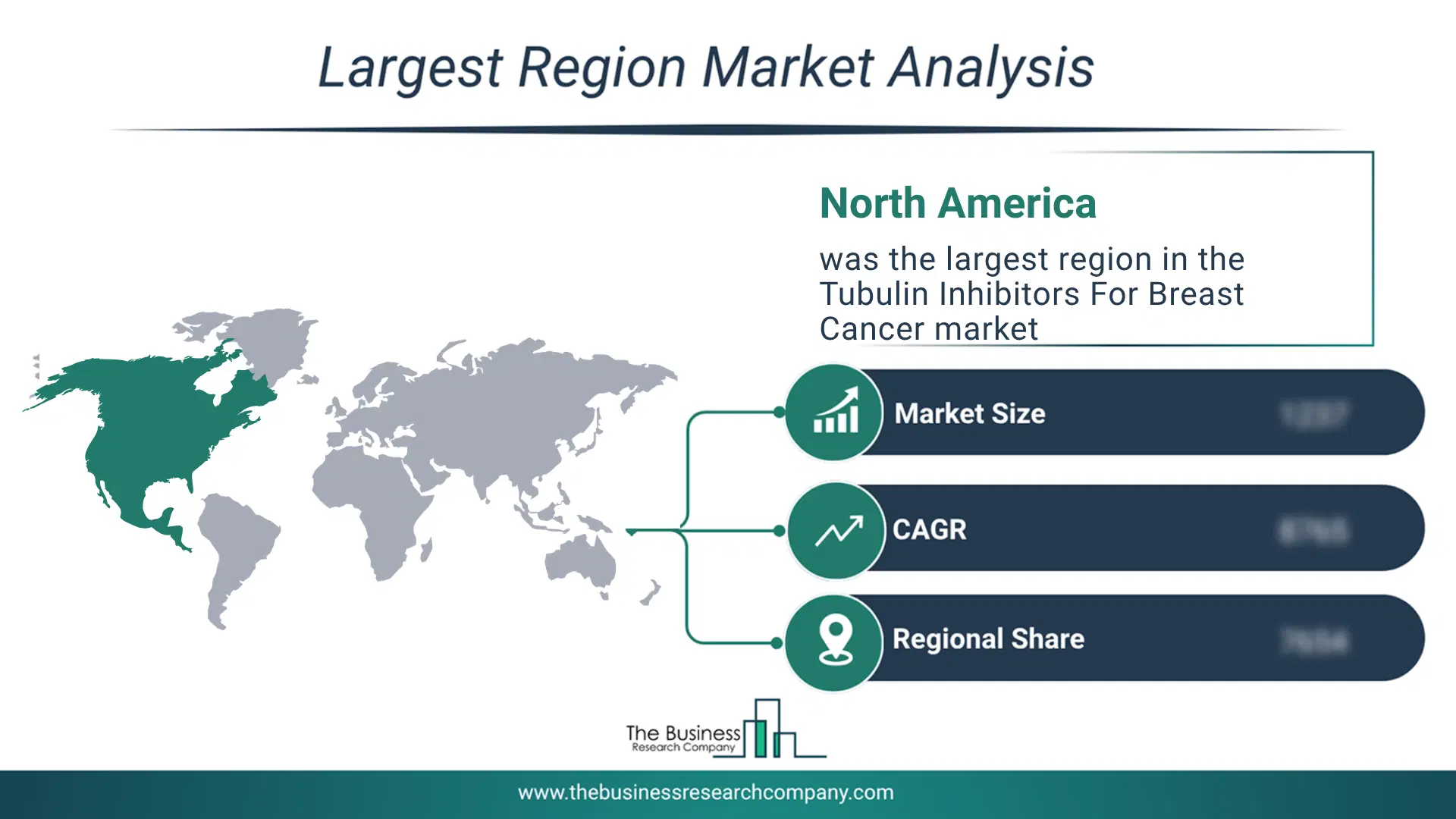
Regional Insights
North America was the largest region in the tubulin inhibitors for breast cancer market in 2025. Asia-Pacific is expected to be the fastest-growing region in the forecast period. The regions covered in this market report are Asia-Pacific, South East Asia, Western Europe, Eastern Europe, North America, South America, Middle East, Africa. The countries covered in this market report are Australia, Brazil, China, France, Germany, India, Indonesia, Japan, Taiwan, Russia, South Korea, UK, USA, Canada, Italy, Spain.What Defines the Tubulin Inhibitors For Breast Cancer Market?
The tubulin inhibitors for breast cancer market consist of sales of paclitaxel, docetaxel, ixabepilone, and eribulin mesylate. Values in this market are ‘factory gate’ values, that is, the value of goods sold by the manufacturers or creators of the goods, whether to other entities (including downstream manufacturers, wholesalers, distributors, and retailers) or directly to end customers. The value of goods in this market includes related services sold by the creators of the goods.How is Market Value Defined and Measured?
The market value is defined as the revenues that enterprises gain from the sale of goods and/or services within the specified market and geography through sales, grants, or donations in terms of the currency (in USD unless otherwise specified). The revenues for a specified geography are consumption values that are revenues generated by organizations in the specified geography within the market, irrespective of where they are produced. It does not include revenues from resales along the supply chain, either further along the supply chain or as part of other products.
This chart presents market attractiveness based on a quantitative evaluation of growth, competition, strategic alignment, and risk, offering a clear view of opportunity areas for decision-making. This chart is for illustrative purposes; the full report contains the complete analysis.

This chart highlights the Total Addressable Market (TAM) by estimating the maximum revenue opportunity using an assumption-driven approach, supporting strategic planning and opportunity sizing across markets. The chart is illustrative; the full report provides a more comprehensive analysis.
What Key Data and Analysis Are Included in the Tubulin Inhibitors For Breast Cancer Market Report 2026?
The tubulin inhibitors for breast cancer market research report is one of a series of new reports from The Business Research Company that provides market statistics, including industry global market size, regional shares, competitors with the market share, detailed market segments, market trends and opportunities, and any further data you may need to thrive in the tubulin inhibitors for breast cancer industry. The market research report delivers a complete perspective of everything you need, with an in-depth analysis of the current and future state of the industry.Tubulin Inhibitors For Breast Cancer Market Report Forecast Analysis
| Report Attribute | Details |
|---|---|
| Market Size Value In 2026 | $2.09 billion |
| Revenue Forecast In 2030 | $2.78 billion |
| Growth Rate | CAGR of 7.7% from 2026 to 2030 |
| Base Year For Estimation | 2025 |
| Actual Estimates/Historical Data | 2020-2025 |
| Forecast Period | 2026 - 2030 |
| Market Representation | Revenue in USD Billion and CAGR from 2026 to 2030 |
| Segments Covered | Drug Class, Mechanism Of Action, Stage Of Breast Cancer, Treatment Approach, Application |
| Regional Scope | Asia-Pacific, Western Europe, Eastern Europe, North America, South America, Middle East, Africa |
| Country Scope | The countries covered in the report are Australia, Brazil, China, France, Germany, India, Indonesia, Japan, Taiwan, Russia, South Korea, UK, USA, Canada, Italy, Spain. |
| Key Companies Profiled | Pfizer Inc., F. Hoffmann-La Roche Ltd., Sanofi S.A., Novartis AG, Eli Lilly and Company, Eisai Co. Ltd., Sun Pharmaceutical Industries Limited, Genentech Inc., Luye Pharma Group Ltd., CSPC Pharmaceutical Group Limited, Jiangsu Hengrui Pharmaceuticals Co. Ltd., Natco Pharma Limited, Samyang Biopharmaceuticals Corporation, Qilu Pharmaceutical Co. Ltd., Beijing Biostar Pharmaceuticals Co. Ltd., Beijing Youcare Pharmaceutical Group Co. Ltd., Teva Pharmaceutical Industries Ltd., Fresenius Kabi AG, Dr. Reddy’s Laboratories Ltd., Cipla Ltd., Hikma Pharmaceuticals PLC, Aurobindo Pharma Ltd., Accord Healthcare Ltd., Baxter International Inc., Mylan N.V. (Viatris Inc.), Intas Pharmaceuticals Ltd., Zydus Lifesciences Ltd. |
| Customization Scope | Request for Customization |
| Pricing And Purchase Options | Explore Purchase Options |