

Tumor Microenvironment Market Report 2026
Global Outlook – By Cancer Type (Lung Cancer, Colorectal Cancer, Breast Cancer, Prostate Cancer, Bladder Cancer, Kidney Cancer, Other Cancer Types), By Target (T Cells, Tumor-Associated Macrophages (TAMs), Myeloid-Derived Suppressor Cells (MDSCs), Cancer-Associated Fibroblasts (CAFs), Regulatory T Cells (Tregs), Other Targets), By Therapy (Monoclonal Antibodies, Cytokines, Cancer Vaccines, Oncolytic Viruses, Adoptive Cell Therapies, Other Therapies), By End User (Biopharmaceutical Companies, Hospitals, Diagnostic Laboratories, Research Institutes, Contract Research Organizations, Other End Users) - Market Size, Trends, Strategies, and Forecast to 2030
Tumor Microenvironment Market Overview
• Tumor Microenvironment market size has reached to $1.54 billion in 2025 • Expected to grow to $2.73 billion in 2030 at a compound annual growth rate (CAGR) of 12.1% • Growth Driver: Rising Cancer Incidence Fuels Growth In The Market Due To Aging Populations And Increasing Cancer Cell Proliferation • Market Trend: Aubex Therapeutics Launches Novel Compounds To Revolutionize Cancer Treatment By Targeting The Tumor Microenvironment • North America was the largest region in 2025 and Asia-Pacific is the fastest growing region.What Is Covered Under Tumor Microenvironment Market?
The tumor microenvironment (TME) refers to the complex and dynamic environment surrounding a tumor. It includes blood vessels, immune cells, fibroblasts, signaling molecules, and the extracellular matrix. The TME plays a crucial role in tumor growth, progression, and response to therapy. Interactions between tumor cells and their microenvironment can promote cancer development and resistance to treatment. The main cancer types of tumor microenvironment include lung cancer, colorectal cancer, breast cancer, prostate cancer, bladder cancer, kidney cancer, and others. Lung cancer refers to malignant tumors originating in the lungs, commonly classified as non-small cell or small cell lung cancer. The tumor microenvironment in lung cancer is highly immunosuppressive, influencing response to immunotherapy and targeted treatments. The various targets include T cells, tumor-associated macrophages (TAMs), myeloid-derived suppressor cells (MDSCs), cancer-associated fibroblasts (CAFs), regulatory T cells (Tregs), and others. The multiple therapies are monoclonal antibodies, cytokines, cancer vaccines, oncolytic viruses, adoptive cell therapies, and others that cater to end users such as biopharmaceutical companies, hospitals, diagnostic laboratories, research institutes, contract research organizations, and others.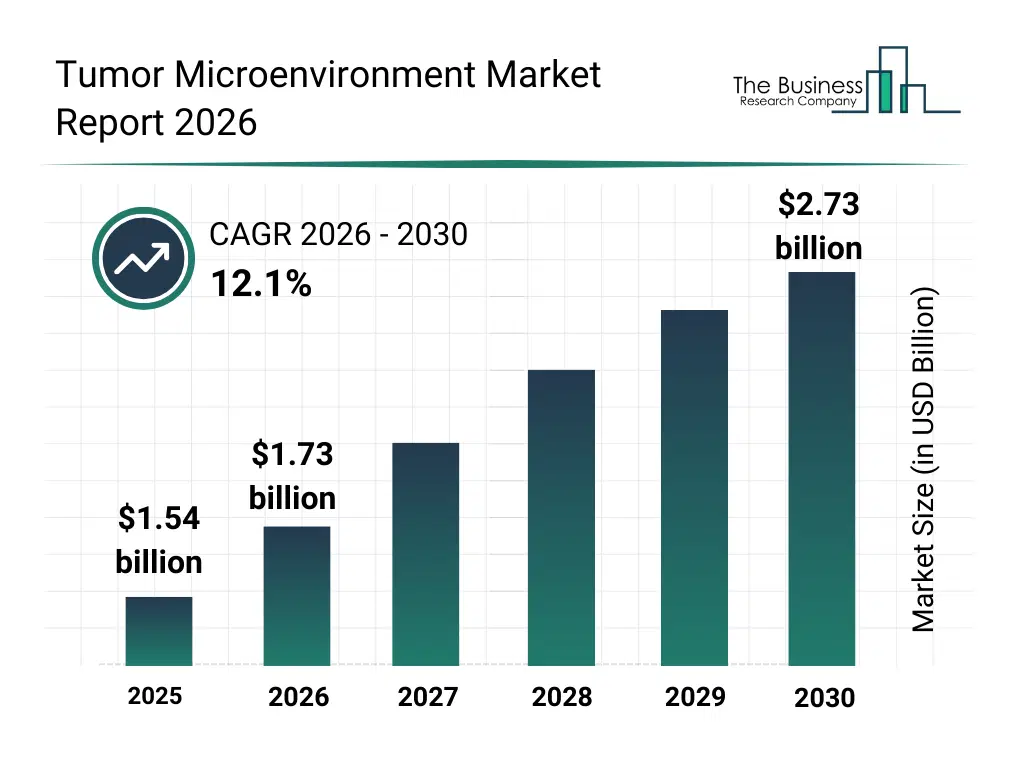
What Is The Tumor Microenvironment Market Size and Share 2026?
The tumor microenvironment market size has grown rapidly in recent years. It will grow from $1.54 billion in 2025 to $1.73 billion in 2026 at a compound annual growth rate (CAGR) of 12.4%. The growth in the historic period can be attributed to advancements in cancer biology research, increased understanding of tumor-immune interactions, expansion of immuno-oncology pipelines, growth in academic and clinical cancer research, availability of advanced laboratory technologies.What Is The Tumor Microenvironment Market Growth Forecast?
The tumor microenvironment market size is expected to see rapid growth in the next few years. It will grow to $2.73 billion in 2030 at a compound annual growth rate (CAGR) of 12.1%. The growth in the forecast period can be attributed to increasing investments in personalized oncology therapies, rising demand for next-generation immunotherapies, expansion of translational cancer research, growing collaboration between pharma and research institutes, increasing clinical trial activity in oncology. Major trends in the forecast period include increasing focus on immune cell modulation strategies, rising development of tme-targeted therapies, growing use of biomarker-based patient stratification, expansion of combination immunotherapy approaches, enhanced application of advanced molecular profiling.
Global Tumor Microenvironment Market Segmentation
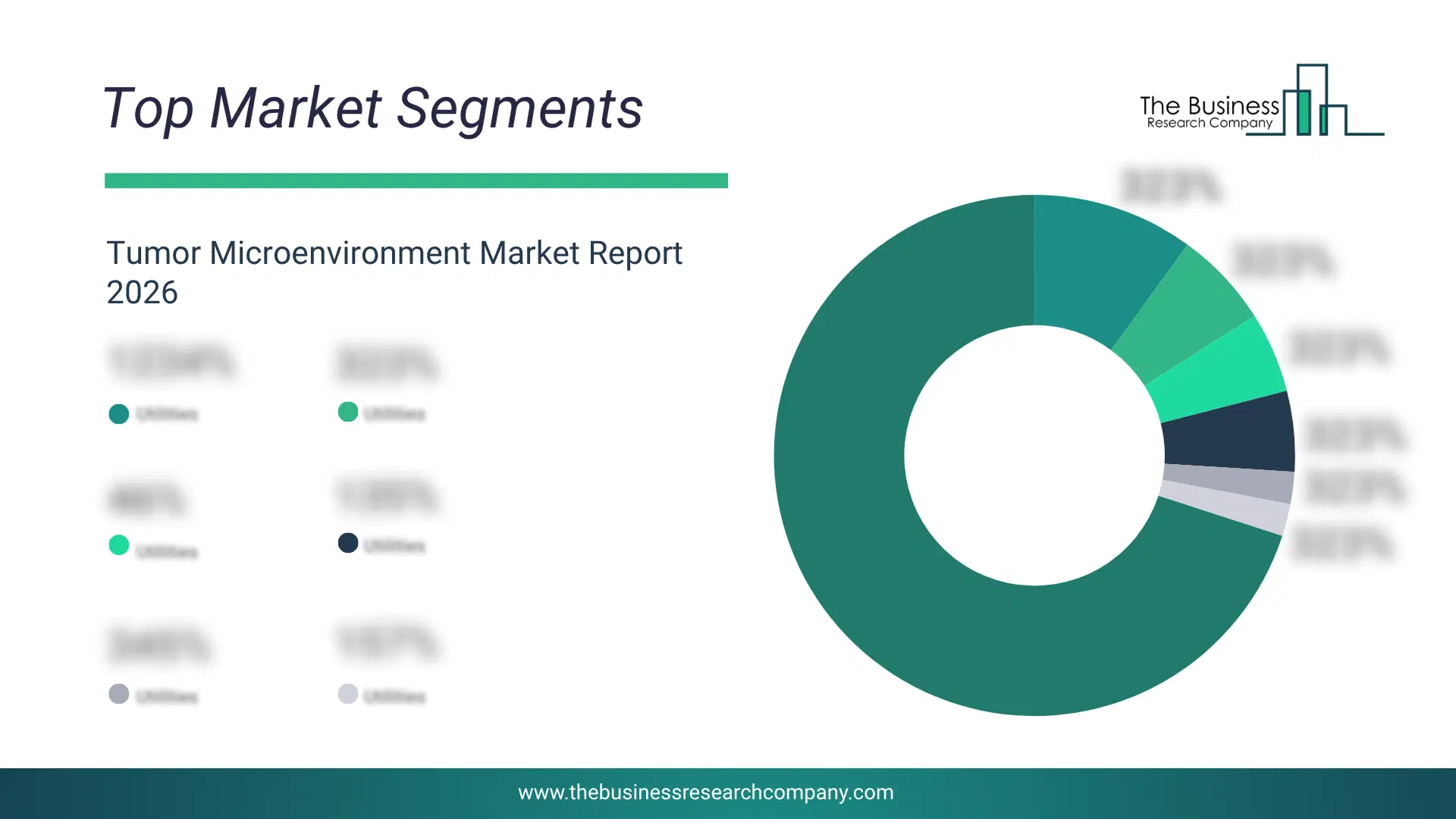
1) By Cancer Type: Lung Cancer, Colorectal Cancer, Breast Cancer, Prostate Cancer, Bladder Cancer, Kidney Cancer, Other Cancer Types 2) By Target: T Cells, Tumor-Associated Macrophages (TAMs), Myeloid-Derived Suppressor Cells (MDSCs), Cancer-Associated Fibroblasts (CAFs), Regulatory T Cells (Tregs), Other Targets 3) By Therapy: Monoclonal Antibodies, Cytokines, Cancer Vaccines, Oncolytic Viruses, Adoptive Cell Therapies, Other Therapies 4) By End User: Biopharmaceutical Companies, Hospitals, Diagnostic Laboratories, Research Institutes, Contract Research Organizations, Other End Users Subsegments: 1) By Lung Cancer: Non-Small Cell Lung Cancer (NSCLC), Small Cell Lung Cancer (SCLC) 2) By Colorectal Cancer: Colon Cancer, Rectal Cancer 3) By Breast Cancer: Hormone Receptor Positive Breast Cancer, Triple-Negative Breast Cancer, HER2-Positive Breast Cancer 4) By Prostate Cancer: Hormone-Sensitive Prostate Cancer, Castration-Resistant Prostate Cancer 5) By Bladder Cancer: Non-Muscle Invasive Bladder Cancer (NMIBC), Muscle Invasive Bladder Cancer (MIBC) 6) By Kidney Cancer: Renal Cell Carcinoma (RCC), Urothelial Carcinoma of the Renal Pelvis 7) By Other Cancer Types: Pancreatic Cancer, Head and Neck Cancer, Ovarian CancerWhat Is The Driver Of The Tumor Microenvironment Market?
The rising cancer incidence is expected to propel the growth of the tumor microenvironment market going forward. Cancer refers to a group of diseases characterized by the uncontrolled growth and spread of abnormal cells in the body. The increasing incidence of cancer can be attributed to aging populations, as the risk of developing cancer rises with age due to prolonged exposure to environmental factors and a decline in the body's ability to repair cellular damage. The tumor microenvironment (TME) supports cancer by supplying nutrients, fostering immune evasion, and enhancing cancer cell proliferation and metastasis through signaling pathways and interactions with surrounding cells and the extracellular matrix. For instance, in July 2024, according to the Australian Institute of Health and Welfare, an Australia-based government agency, in Australia the number of cancer cases diagnosed increased from 160,570 in 2022 to 164,694 in 2023, reflecting a notable rise over the year. Therefore, the rising cancer incidence is driving the growth of the tumor microenvironment industry.Key Players In The Global Tumor Microenvironment Market
Major companies operating in the tumor microenvironment market are Pfizer Inc., Johnson & Johnson, Merck & Co. Inc., AbbVie Inc., Bayer AG, Sanofi S.A., AstraZeneca plc, Novartis International AG, GlaxoSmithKline plc, Takeda Pharmaceutical Company Limited, Eli Lilly and Company, Gilead Sciences Inc., Amgen Inc., Boehringer Ingelheim GmbH, Regeneron Pharmaceuticals Inc., Genentech Inc., BeiGene Ltd., MacroGenics Inc., Arcus Biosciences Inc., Adaptimmune Therapeutics plc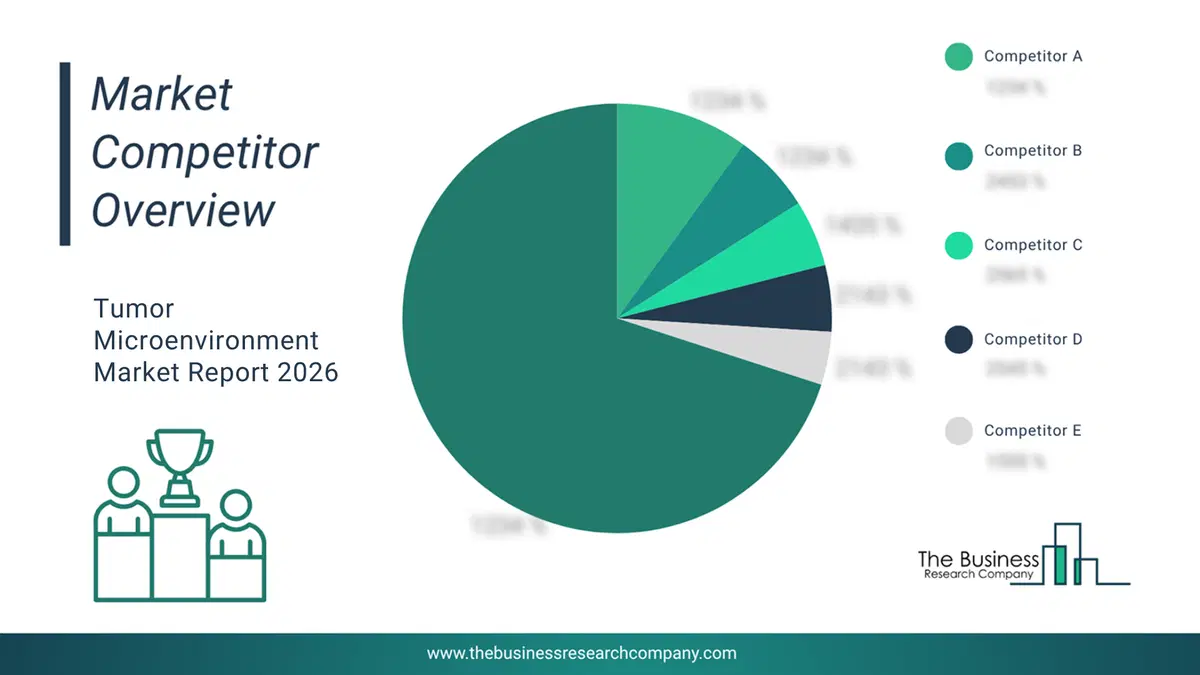
This chart is for illustrative purposes; the full report includes a detailed competitor analysis and comprehensive overview of the top 10 companies in the market.
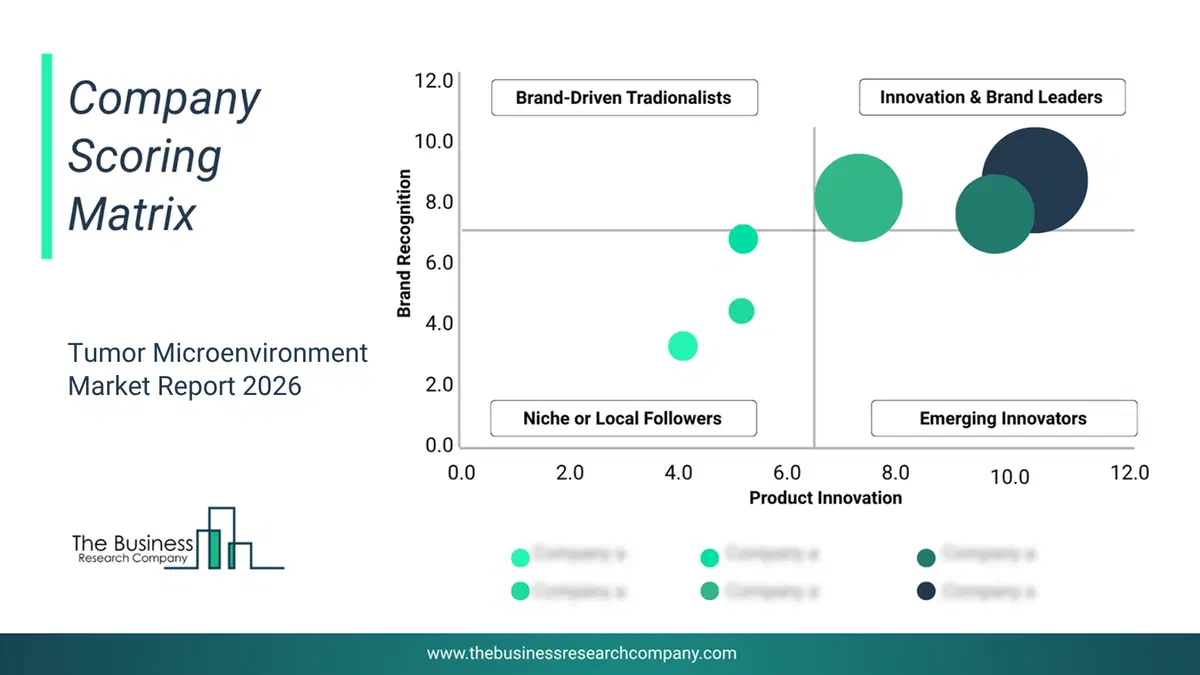
This chart maps companies by product innovation and brand strength, with bubble size indicating relative revenue, helping identify market leaders, challengers, and niche players. This is an illustrative chart; the full report provides a complete and accurate competitive analysis.
Global Tumor Microenvironment Market Trends and Insights
Major companies operating in the tumor microenvironment market are focusing on developing innovative treatment options, such as targeted treatments to enhance treatment efficacy and overcome resistance mechanisms. Targeted treatments are therapies designed to specifically identify and attack cancer cells based on unique molecular markers, without affecting most normal cells. For instance, in April 2024, Aubex Therapeutics Inc., a US-based biotechnology company, unveiled a new class of substances aimed at transforming cancer treatment by specifically targeting the tumor microenvironment (TME). These innovative compounds are designed to interact with the complex network within the TME, which includes cancer cells, immune cells, blood vessels, and stromal components. By modulating these interactions, Aubex’s approach enhances the immune system’s ability to fight tumors and disrupts the processes that support tumor growth and metastasis. This strategy is intended to overcome resistance to conventional therapies, offering a promising alternative for patients who have not responded to existing treatment options.What Are Latest Mergers And Acquisitions In The Tumor Microenvironment Market?
In September 2023, Coherus BioSciences Inc., a US-based biotech company, acquired Surface Oncology Inc. for an undisclosed amount. With this acquisition, Coherus BioSciences aims to strengthen its immuno-oncology portfolio by advancing innovative cancer therapies that target the tumor microenvironment and expand treatment options for patients. Surface Oncology Inc. is a US-based company that focused on developing next-generation antibody therapies targeting the tumor microenvironment.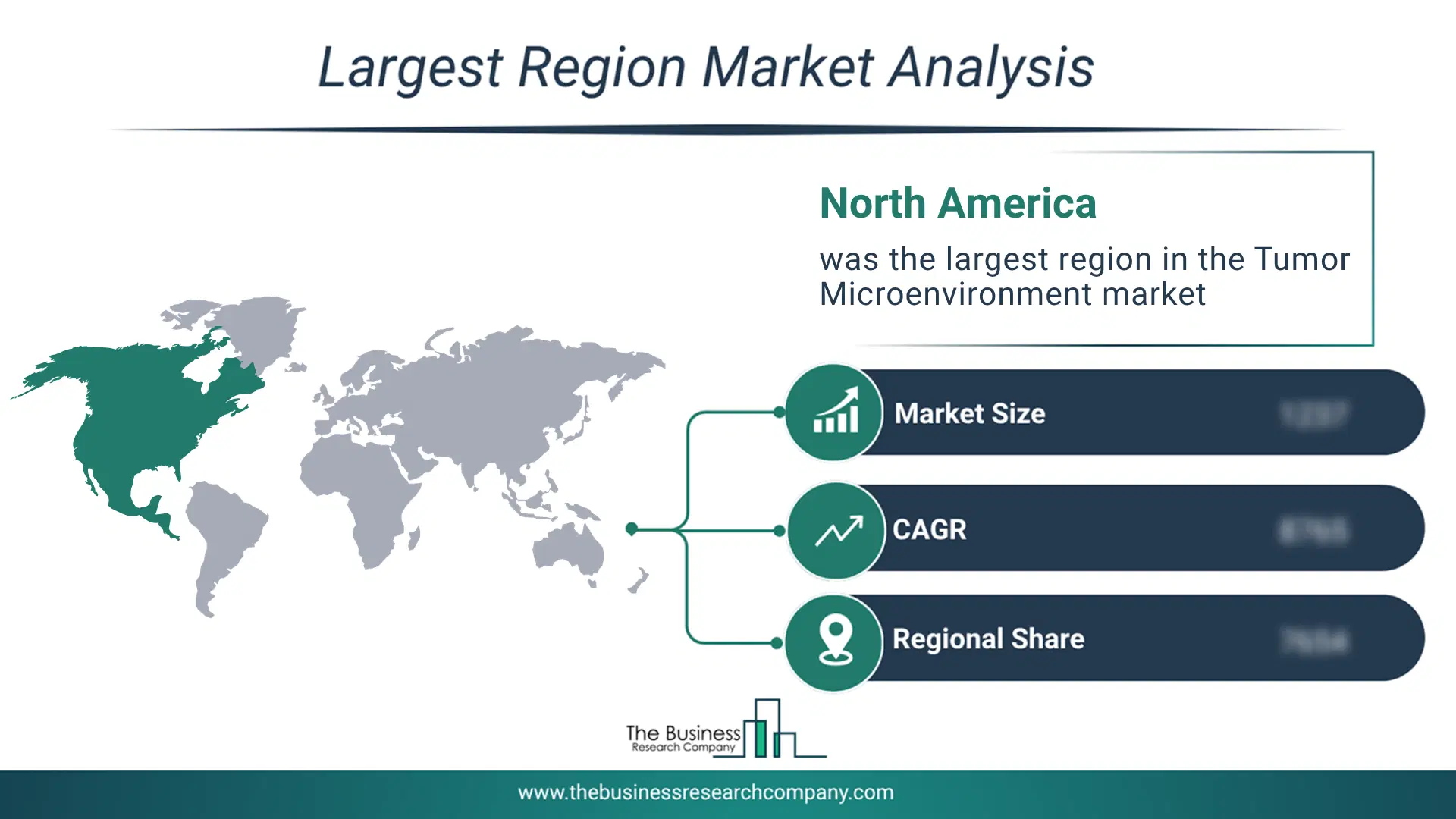
Regional Outlook
North America was the largest region in the tumor microenvironment market in 2025. Asia-Pacific is expected to be the fastest-growing region in the forecast period. The regions covered in this market report are Asia-Pacific, South East Asia, Western Europe, Eastern Europe, North America, South America, Middle East, Africa. The countries covered in this market report are Australia, Brazil, China, France, Germany, India, Indonesia, Japan, Taiwan, Russia, South Korea, UK, USA, Canada, Italy, Spain.What Defines the Tumor Microenvironment Market?
The tumor microenvironment market consists of revenues earned by entities by providing services such as immune suppression, angiogenesis support, and inflammation maintenance. The market value includes the value of related goods sold by the service provider or included within the service offering. The tumor microenvironment market also includes sales of cytokines and chemokines, matrix metalloproteinases, and exosomes and microvesicles. Values in this market are ‘factory gate’ values, that is, the value of goods sold by the manufacturers or creators of the goods, whether to other entities (including downstream manufacturers, wholesalers, distributors, and retailers) or directly to end customers. The value of goods in this market includes related services sold by the creators of the goods.How is Market Value Defined and Measured?
The market value is defined as the revenues that enterprises gain from the sale of goods and/or services within the specified market and geography through sales, grants, or donations in terms of the currency (in USD unless otherwise specified). The revenues for a specified geography are consumption values that are revenues generated by organizations in the specified geography within the market, irrespective of where they are produced. It does not include revenues from resales along the supply chain, either further along the supply chain or as part of other products.
This chart presents market attractiveness based on a quantitative evaluation of growth, competition, strategic alignment, and risk, offering a clear view of opportunity areas for decision-making. This chart is for illustrative purposes; the full report contains the complete analysis.

This chart highlights the Total Addressable Market (TAM) by estimating the maximum revenue opportunity using an assumption-driven approach, supporting strategic planning and opportunity sizing across markets. The chart is illustrative; the full report provides a more comprehensive analysis.
What Key Data and Analysis Are Included in the Tumor Microenvironment Market Report 2026?
The tumor microenvironment market research report is one of a series of new reports from The Business Research Company that provides market statistics, including industry global market size, regional shares, competitors with the market share, detailed market segments, market trends and opportunities, and any further data you may need to thrive in the tumor microenvironment industry. The market research report delivers a complete perspective of everything you need, with an in-depth analysis of the current and future state of the industry.Tumor Microenvironment Market Report Forecast Analysis
| Report Attribute | Details |
|---|---|
| Market Size Value In 2026 | $1.73 billion |
| Revenue Forecast In 2030 | $2.73 billion |
| Growth Rate | CAGR of 12.1% from 2026 to 2030 |
| Base Year For Estimation | 2025 |
| Actual Estimates/Historical Data | 2020-2025 |
| Forecast Period | 2026 - 2030 |
| Market Representation | Revenue in USD Billion and CAGR from 2026 to 2030 |
| Segments Covered | Cancer Type, Target, Therapy, End User |
| Regional Scope | Asia-Pacific, Western Europe, Eastern Europe, North America, South America, Middle East, Africa |
| Country Scope | The countries covered in the report are Australia, Brazil, China, France, Germany, India, Indonesia, Japan, Taiwan, Russia, South Korea, UK, USA, Canada, Italy, Spain |
| Key Companies Profiled | Pfizer Inc., Johnson & Johnson, Merck & Co. Inc., AbbVie Inc., Bayer AG, Sanofi S.A., AstraZeneca plc, Novartis International AG, GlaxoSmithKline plc, Takeda Pharmaceutical Company Limited, Eli Lilly and Company, Gilead Sciences Inc., Amgen Inc., Boehringer Ingelheim GmbH, Regeneron Pharmaceuticals Inc., Genentech Inc., BeiGene Ltd., MacroGenics Inc., Arcus Biosciences Inc., Adaptimmune Therapeutics plc |
| Customization Scope | Request for Customization |
| Pricing And Purchase Options | Explore Purchase Options |