
Ultrasound And Electrosurgical Energy Dissectors Market Report 2026
Global Outlook – By Type (Ultrasound Devices, Electrosurgical Devices), By Application (Cardiology, Gynecology, General Surgery, Urology, Bariatric Surgery, Other Applications), By End-User (Hospitals, Ambulatory Surgical Centers, Other End Users) – Market Size, Trends, Strategies, and Forecast to 2030
Ultrasound And Electrosurgical Energy Dissectors Market Overview
• Ultrasound And Electrosurgical Energy Dissectors market size has reached to $6.86 billion in 2025 • Expected to grow to $9.47 billion in 2030 at a compound annual growth rate (CAGR) of 6.5% • Growth Driver: Rising Demand For Minimally Invasive Surgeries Drives Growth Of Ultrasound And Electrosurgical Energy Dissectors Market • Market Trend: Innovations in Hybrid Ultrasound and Electrosurgical Energy Devices Enhance Surgical Precision and Workflow Efficiency • North America was the largest region in 2025.What Is Covered Under Ultrasound And Electrosurgical Energy Dissectors Market?
An ultrasound and electrosurgical energy dissector refers to surgical instruments that use high-frequency sound waves (ultrasound) and electrical energy to dissect tissue during surgical procedures. They are commonly used in surgeries where precise tissue dissection with minimal bleeding and damage to surrounding tissues is crucial, such as in neurosurgery, liver surgery, and thyroid surgery. The main types of ultrasound and electrosurgical energy dissectors are ultrasound devices and electrosurgical devices. Ultrasound devices refer to medical instruments that use high-frequency sound waves to create images of the inside of the body for diagnostic and therapeutic purposes. It has various applications in cardiology, gynecology, general surgery, urology, bariatric surgery, and others and is utilized by end users such as hospitals, ambulatory surgical centers, and others.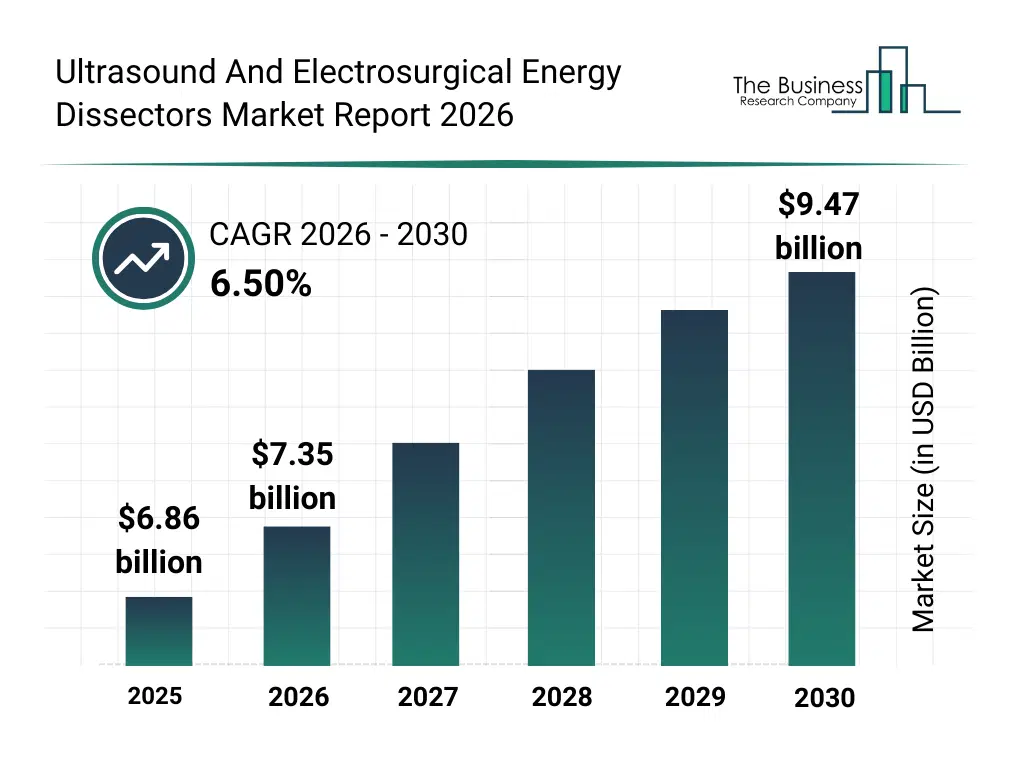
What Is The Ultrasound And Electrosurgical Energy Dissectors Market Size and Share 2026?
The ultrasound and electrosurgical energy dissectors market size has grown strongly in recent years. It will grow from $6.86 billion in 2025 to $7.35 billion in 2026 at a compound annual growth rate (CAGR) of 7.2%. The growth in the historic period can be attributed to increasing complexity of surgical procedures, rising use of energy-based surgical instruments, expansion of tertiary care hospitals, growing surgeon preference for precision dissection tools, increased adoption in neurosurgical and general surgeries.What Is The Ultrasound And Electrosurgical Energy Dissectors Market Growth Forecast?
The ultrasound and electrosurgical energy dissectors market size is expected to see strong growth in the next few years. It will grow to $9.47 billion in 2030 at a compound annual growth rate (CAGR) of 6.5%. The growth in the forecast period can be attributed to increasing demand for hybrid energy surgical systems, rising adoption of minimally invasive procedures, growing investments in advanced operating room technologies, expansion of outpatient surgical centers, continuous innovation in energy-based surgical devices. Major trends in the forecast period include increasing integration of ultrasound and electrosurgical modalities, rising demand for advanced tissue dissection systems, growing adoption of bipolar and monopolar energy devices, expansion of high-precision surgical applications, enhanced focus on reduced blood loss and faster recovery.
Global Ultrasound And Electrosurgical Energy Dissectors Market Segmentation
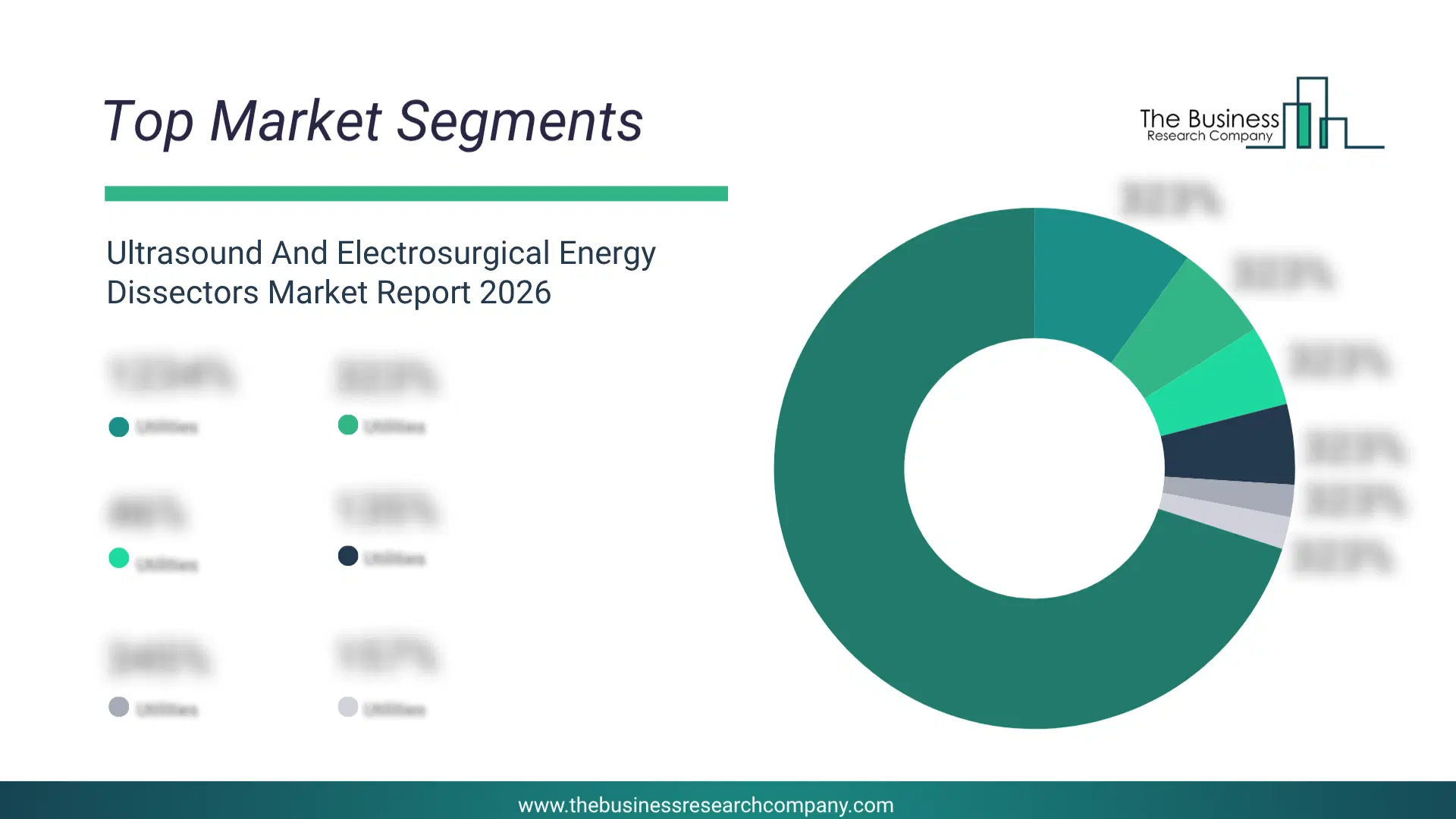
1) By Type: Ultrasound Devices, Electrosurgical Devices 2) By Application: Cardiology, Gynecology, General Surgery, Urology, Bariatric Surgery, Other Applications 3) By End-User: Hospitals, Ambulatory Surgical Centers, Other End Users Subsegments: 1) By Ultrasound Devices: Ultrasonic Surgical Scalpels, Ultrasonic Tissue Dissection Systems, High-Frequency Ultrasonic Devices 2) By Electrosurgical Devices: Monopolar Electrosurgical Devices, Bipolar Electrosurgical Devices, Electrosurgical Generators, Electrosurgical ElectrodesWhat Are The Drivers Of The Ultrasound And Electrosurgical Energy Dissectors Market?
The rising demand for minimally invasive surgeries (MIS) is expected to propel the growth of the ultrasound and electrosurgical energy dissectors market going forward. Minimally invasive surgeries (MIS) refer to surgical procedures performed through small incisions or natural body openings, which aim to reduce trauma, minimize postoperative pain, shorten recovery times, and limit scarring. This shift towards less invasive techniques is increasing the adoption of advanced tools like ultrasound and electrosurgical energy dissectors, enabling surgeons to perform complex procedures with greater precision and reduced tissue damage. For instance, in June 2025, according to the American Society of Plastic Surgeons (ASPS), a US-based nonprofit organization, the total number of cosmetic minimally invasive procedures grew to over 28.5 million in 2024, reflecting a 1.5% increase year-over-year. Among these, neuromodulator injections rose to 9,883,711 procedures, marking a 4% increase from 2023. Therefore, the rise in demand for minimally invasive surgeries is driving the growth of the ultrasound and electrosurgical energy dissectors industry. The rising healthcare expenditure is expected to propel the growth of the ultrasound and electrosurgical energy dissectors market going forward. Healthcare expenditure refers to the total financial resources spent by individuals, organizations, or governments on preventing, treating, and managing health conditions. Healthcare expenditure is increasing due to advancements in medical technology, as new diagnostic tools, treatments, and innovative therapies often come at higher costs, leading to greater overall spending in healthcare. Rising healthcare expenditure supports the adoption of ultrasound and electrosurgical energy dissectors by enabling hospitals and surgical centers to invest in advanced, precision-driven tissue-dissection technologies that improve procedural efficiency and patient outcomes. For instance, in December 2024, according to the Centers for Medicare & Medicaid Services, a US-based agency responsible for administering the Medicare and Medicaid programs, in 2023, U.S. health care expenditures increased by 7.5%, climbing to $4.9 trillion, or roughly $14,570 for each individual. Therefore, the rising healthcare expenditure is driving the growth of the ultrasound and electrosurgical energy dissectors industry.Key Players In The Global Ultrasound And Electrosurgical Energy Dissectors Market
Major companies operating in the ultrasound and electrosurgical energy dissectors market are Johnson & Johnson, Medtronic PLC, Becton Dickinson and Company, Stryker Corporation, Medline Industries Inc., B. Braun Melsungen AG, Olympus Corporation, Smith & Nephew PLC, Arthrex Inc., Integra LifeSciences Corporation, ConMed Corporation, Applied Medical Resources Corporation, Symmetry Surgical Inc., Bovie Medical Corporation, Aspen Surgical Products Inc., BOWA-electronic GmbH & Co. KG, Söring GmbH, Encision Inc., Erbe Elektromedizin GmbH, Ellman International Inc.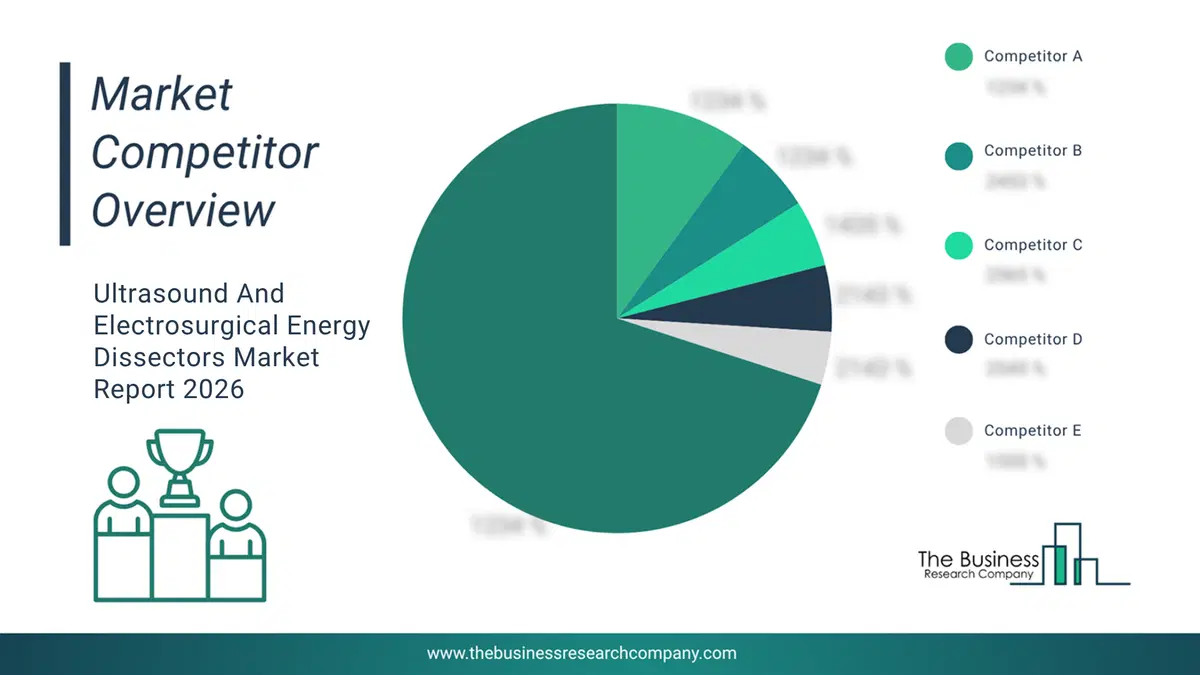
This chart is for illustrative purposes; the full report includes a detailed competitor analysis and comprehensive overview of the top 10 companies in the market.
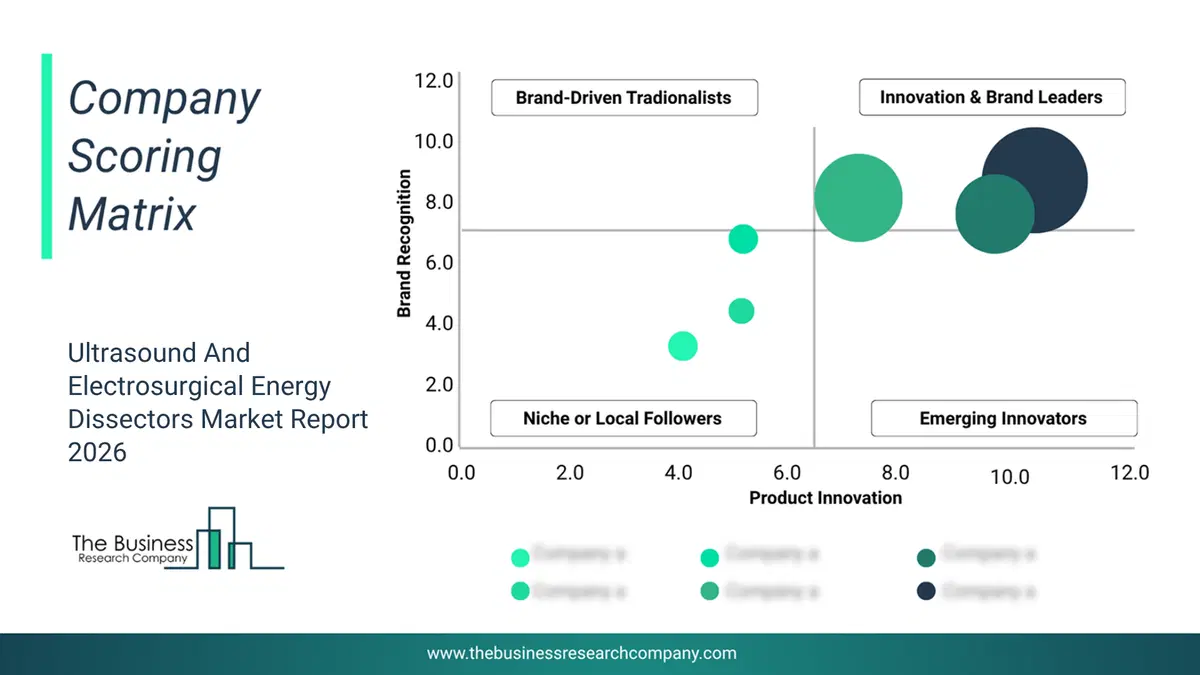
This chart maps companies by product innovation and brand strength, with bubble size indicating relative revenue, helping identify market leaders, challengers, and niche players. This is an illustrative chart; the full report provides a complete and accurate competitive analysis.
Global Ultrasound And Electrosurgical Energy Dissectors Market Trends and Insights
Major companies operating in the ultrasound and electrosurgical energy dissectors market are focusing on developing advanced hybrid platforms that integrate ultrasonic and bipolar technologies to improve precision, reduce instrument exchange, and enhance surgical safety. Hybrid platforms refer to surgical energy generators that can simultaneously power multiple device types, such as ultrasonic and hybrid energy instruments, from a single unit, streamlining operations and reducing workflow complexity. For instance, in November 2023, Olympus Corporation, a Japan-based medical device company, launched the ESG 410 Surgical Energy Generator, a next-generation system featuring a hybrid-ultrasonic socket capable of powering both THUNDERBEAT (hybrid energy) and SONICBEAT (ultrasonic) devices. Designed to optimize surgical workflow and minimize the risk of thermal injury, the ESG 410 enables precise tissue dissection, coagulation, and energy control in complex surgical procedures.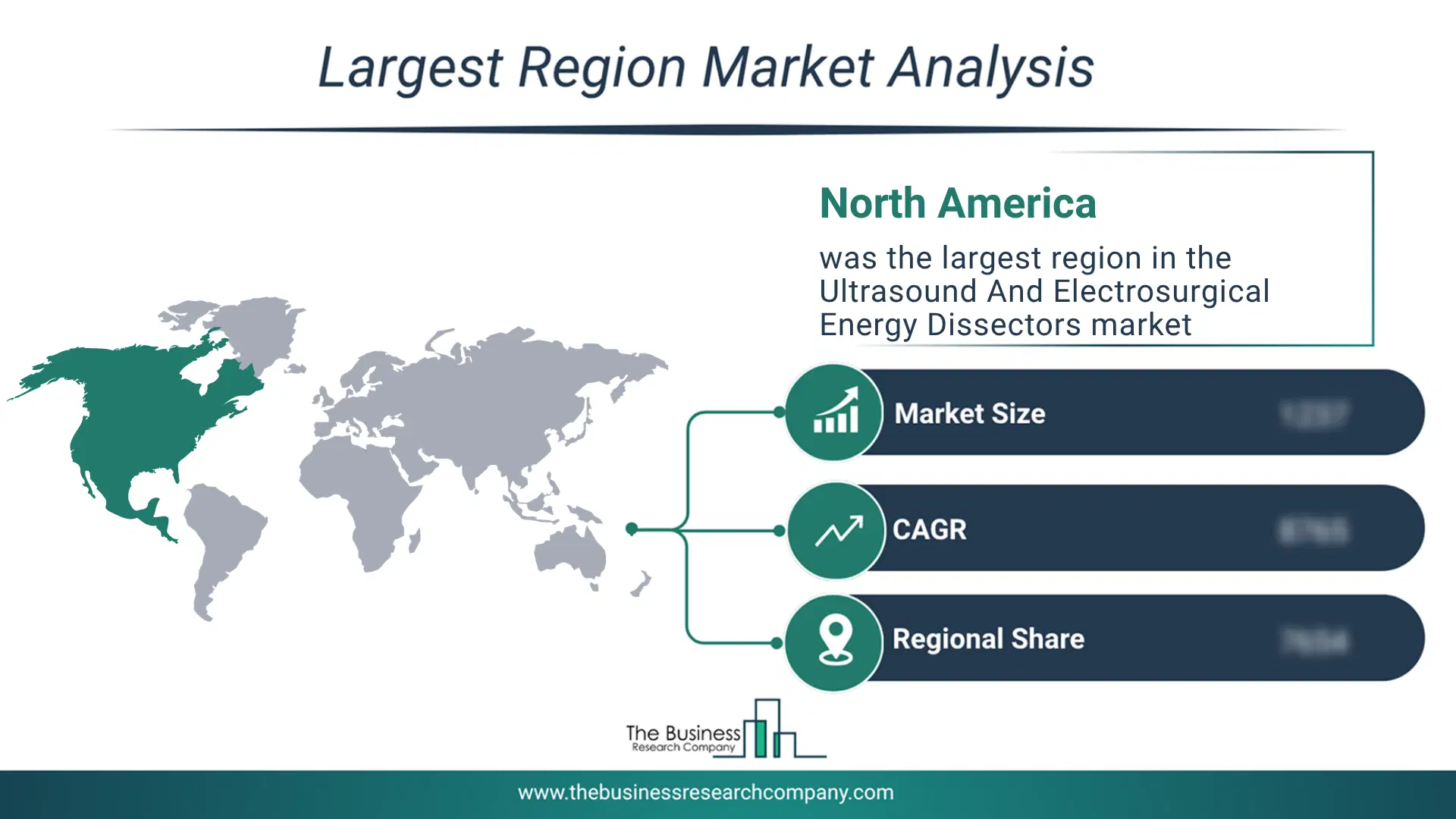
Regional Outlook
North America was the largest region in the ultrasound and electrosurgical energy dissector market in 2025. The regions covered in this market report are Asia-Pacific, South East Asia, Western Europe, Eastern Europe, North America, South America, Middle East, Africa. The countries covered in this market report are Australia, Brazil, China, France, Germany, India, Indonesia, Japan, Taiwan, Russia, South Korea, UK, USA, Canada, Italy, SpainWhat Defines the Ultrasound And Electrosurgical Energy Dissectors Market?
The ultrasound and electrosurgical energy dissector market consists of sales of harmonic scalpels, monopolar electrosurgery, bipolar electrosurgery, and sonopet ultrasonic aspirator. Values in this market are ‘factory gate’ values, that is the value of goods sold by the manufacturers or creators of the goods, whether to other entities (including downstream manufacturers, wholesalers, distributors, and retailers) or directly to end customers. The value of goods in this market includes related services sold by the creators of the goods.How is Market Value Defined and Measured?
The market value is defined as the revenues that enterprises gain from the sale of goods and/or services within the specified market and geography through sales, grants, or donations in terms of the currency (in USD unless otherwise specified). The revenues for a specified geography are consumption values that are revenues generated by organizations in the specified geography within the market, irrespective of where they are produced. It does not include revenues from resales along the supply chain, either further along the supply chain or as part of other products.
This chart presents market attractiveness based on a quantitative evaluation of growth, competition, strategic alignment, and risk, offering a clear view of opportunity areas for decision-making. This chart is for illustrative purposes; the full report contains the complete analysis.

This chart highlights the Total Addressable Market (TAM) by estimating the maximum revenue opportunity using an assumption-driven approach, supporting strategic planning and opportunity sizing across markets. The chart is illustrative; the full report provides a more comprehensive analysis.
What Key Data and Analysis Are Included in the Ultrasound And Electrosurgical Energy Dissectors Market Report 2026?
The ultrasound and electrosurgical energy dissectors market research report is one of a series of new reports from The Business Research Company that provides market statistics, including industry global market size, regional shares, competitors with the market share, detailed market segments, market trends and opportunities, and any further data you may need to thrive in the ultrasound and electrosurgical energy dissectors industry. The market research report delivers a complete perspective of everything you need, with an in-depth analysis of the current and future state of the industry.Ultrasound And Electrosurgical Energy Dissectors Market Report Forecast Analysis
| Report Attribute | Details |
|---|---|
| Market Size Value In 2026 | $7.35 billion |
| Revenue Forecast In 2030 | $9.47 billion |
| Growth Rate | CAGR of 6.5% from 2026 to 2030 |
| Base Year For Estimation | 2025 |
| Actual Estimates/Historical Data | 2020-2025 |
| Forecast Period | 2026 - 2030 |
| Market Representation | Revenue in USD Billion and CAGR from 2026 to 2030 |
| Segments Covered | Type, Application, End-User |
| Regional Scope | Asia-Pacific, Western Europe, Eastern Europe, North America, South America, Middle East, Africa |
| Country Scope | The countries covered in the report are Australia, Brazil, China, France, Germany, India, Indonesia, Japan, Taiwan, Russia, South Korea, UK, USA, Canada, Italy, Spain. |
| Key Companies Profiled | Johnson & Johnson, Medtronic PLC, Becton Dickinson and Company, Stryker Corporation, Medline Industries Inc., B. Braun Melsungen AG, Olympus Corporation, Smith & Nephew PLC, Arthrex Inc., Integra LifeSciences Corporation, ConMed Corporation, Applied Medical Resources Corporation, Symmetry Surgical Inc., Bovie Medical Corporation, Aspen Surgical Products Inc., BOWA-electronic GmbH & Co. KG, Söring GmbH, Encision Inc., Erbe Elektromedizin GmbH, Ellman International Inc. |
| Customization Scope | Request for Customization |
| Pricing And Purchase Options | Explore Purchase Options |