
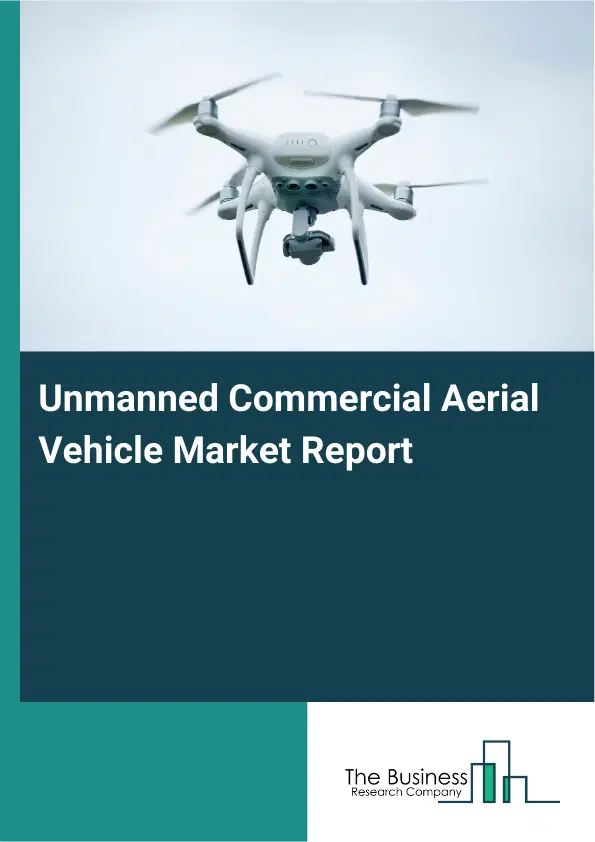
Unmanned Commercial Aerial Vehicle Market Report 2026
Global Outlook – By Segment (Fixed-Wing UAVs, Multi-Rotor Aerial Vehicles, Rotary Blade Type UAV ), By Mode Of Operation (Remotely Piloted, Optionally Piloted, Fully Autonomous), By End-User (Agriculture, Energy, Public utilities, Construction, Media and Entertainment, Government, Others ) – Market Size, Trends, Strategies, and Forecast to 2030
Unmanned Commercial Aerial Vehicle Market Overview
• Unmanned Commercial Aerial Vehicle market size has reached to $26.19 billion in 2025 • Expected to grow to $46.4 billion in 2030 at a compound annual growth rate (CAGR) of 12.2% • Growth Driver: Increasing Adoption in Agriculture for Precision Farming Driving The Market Growth Due to Enhance Crop Monitoring and Resource Optimization • Market Trend: Unleashing The Potential Of Ultra-Compact Ai-Powered Video Analytics In Uavs • Asia-Pacific was the largest region in 2025 and North America is the fastest growing region.Market Gains By 2030 – Top Opportunities By Segment
Market Gain identifies the most promising market opportunities by highlighting the segments or products expected to generate the highest incremental revenue growth over the next five years.
What Is Covered Under Unmanned Commercial Aerial Vehicle Market?
The unmanned commercial aerial vehicles refer to miniature pilotless vehicles, controlled to carry small payloads, perform delivery and minor services, and conduct commercial inspections and operations such as photography and videography. The main types of unmanned commercial aerial vehicles (UCAVs) are fixed-wing UAVs, multi-rotor aerial vehicles, and rotary blade type UAVs. A fixed-wing drone is a plane that doesn't have a human pilot on board. Fixed-wing UAVs can be commanded remotely by a human or autonomously by onboard systems. The different modes of operations include remotely piloted, optionally piloted, and fully autonomous and are used in various sectors such as agriculture, energy, public utilities, construction, media and entertainment, government, and others.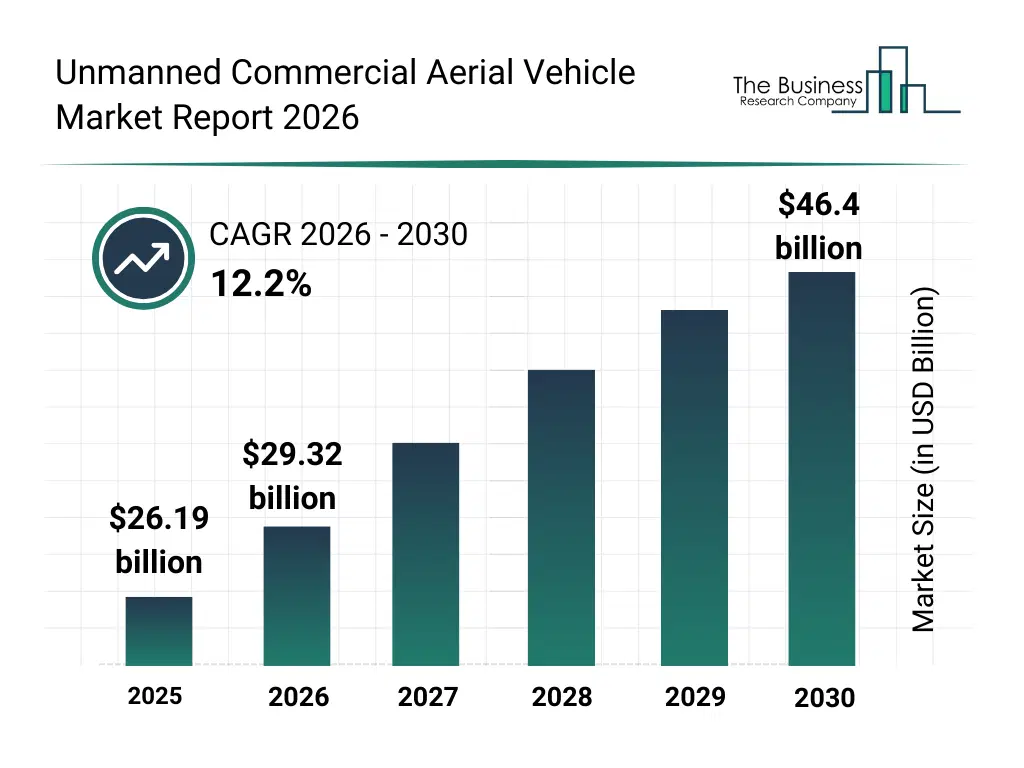
What Is The Unmanned Commercial Aerial Vehicle Market Size and Share 2026?
The unmanned commercial aerial vehicle market size has grown rapidly in recent years. It will grow from $26.19 billion in 2025 to $29.32 billion in 2026 at a compound annual growth rate (CAGR) of 12.0%. The growth in the historic period can be attributed to early adoption of drones for aerial photography and videography, advancements in lightweight drone design and battery technology, growth in commercial surveying and inspection applications, regulatory approvals enabling commercial drone operations, increasing use of drones for small payload delivery and logistics trials.What Is The Unmanned Commercial Aerial Vehicle Market Growth Forecast?
The unmanned commercial aerial vehicle market size is expected to see rapid growth in the next few years. It will grow to $46.4 billion in 2030 at a compound annual growth rate (CAGR) of 12.2%. The growth in the forecast period can be attributed to rising demand for drones in e-commerce and last-mile delivery, advancements in autonomous navigation and ai-powered flight control, growth in commercial drone services for surveying, inspection, and mapping, expansion of drone fleets in urban air mobility and logistics, integration of drones with IoT and real-time data analytics for commercial operations. Major trends in the forecast period include last-mile delivery optimization, advanced aerial photography & videography, lightweight commercial uav design, payload customization for businesses, automated surveying & inspection solutions.
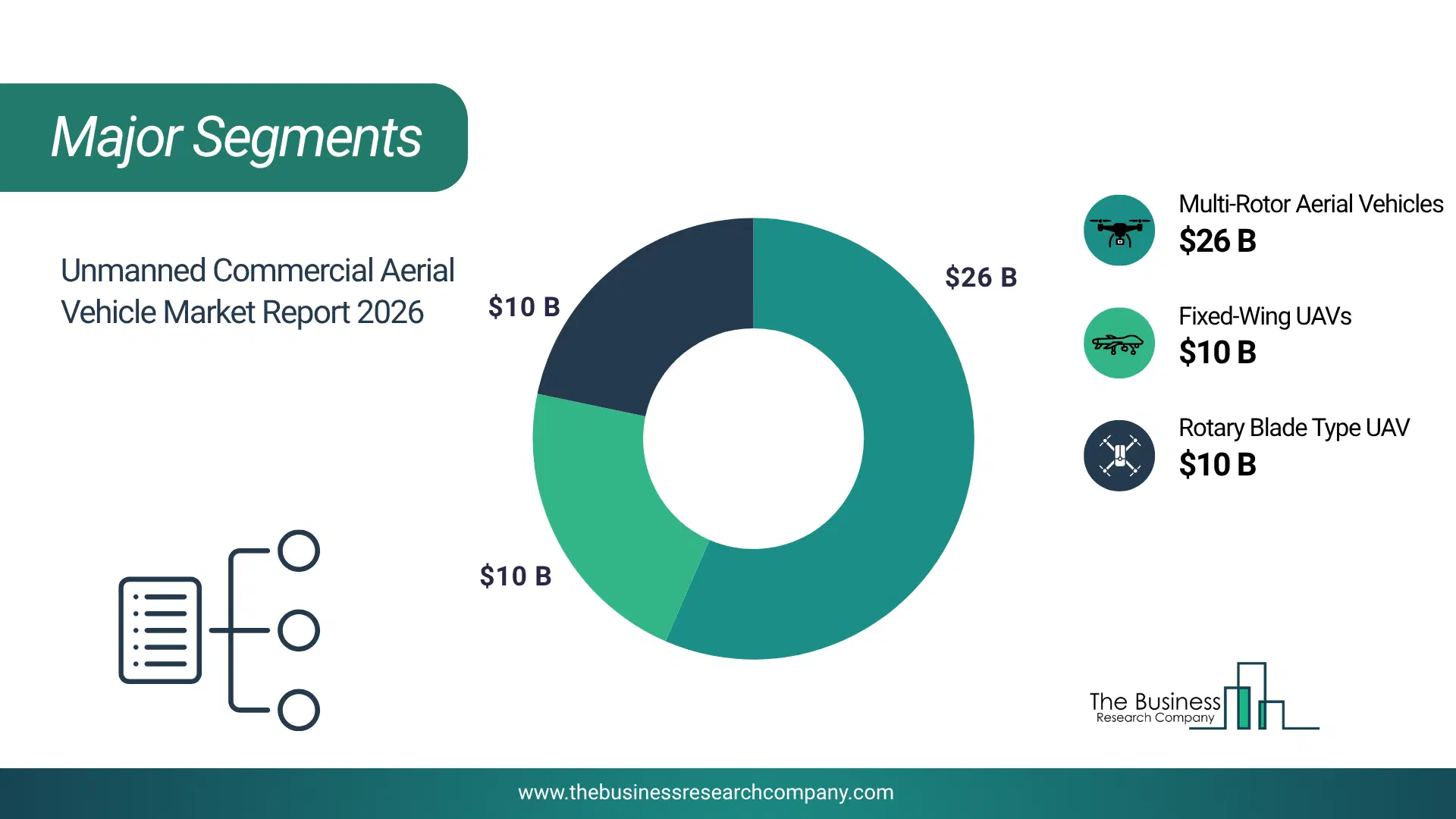
Global Unmanned Commercial Aerial Vehicle Market Segmentation
1) By Segment: Fixed-Wing UAVs, Multi-Rotor Aerial Vehicles, Rotary Blade Type UAV 2) By Mode Of Operation: Remotely Piloted, Optionally Piloted, Fully Autonomous 3) By End-User: Agriculture, Energy, Public utilities, Construction, Media and Entertainment, Government, Others The top segments in the unmanned commercial aerial vehicle market will be: • Multi-Rotor Aerial Vehicles will reach $25.98 Billion by 2030. • Fixed-Wing UAVs will reach $10.26 Billion by 2030. • Rotary Blade Type UAV will reach $9.98 Billion by 2030.What Is Driver Of The Unmanned Commercial Aerial Vehicle Market?
The increasing adoption in agriculture for precision farming is expected to propel the growth of the unmanned commercial aerial vehicle market going forward. Precision farming refers to the use of technology and data-driven techniques to monitor and manage crops and soil conditions in a way that optimizes efficiency, increases yield, and reduces waste. The adoption in agriculture for precision farming is rising due to the increasing need for efficient, sustainable farming practices that maximize crop yields while minimizing resource use and environmental impact. Unmanned commercial aerial vehicles support precision farming by providing high-resolution aerial imaging, real-time monitoring of crop health, soil conditions, and irrigation needs, enabling farmers to make data-driven decisions that optimize resource use, improve yields, and reduce environmental impact. For instance, in January 2024, according to the Government Accountability Office, a US-based government agency, in 2023, 27% of farms and ranches in the U.S. adopted precision agriculture practices for managing crops or livestock. Therefore, the increasing adoption in agriculture for precision farming is driving the growth of the unmanned commercial aerial vehicle industry.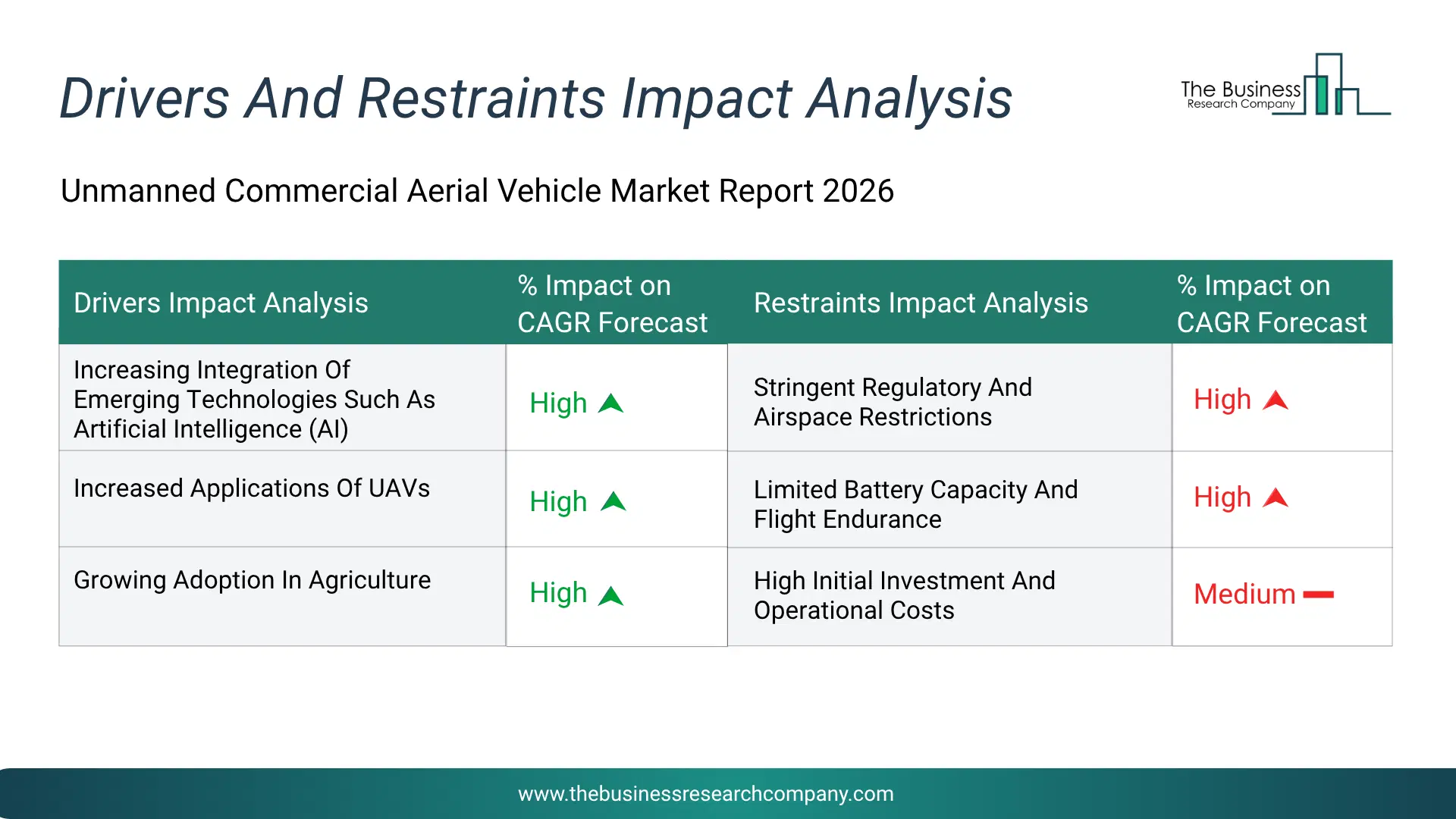
Infographic Chart Showing Key Market Drivers Analysis And Restraints For Unmanned Commercial Aerial Vehicle Market
The chart presents an impact analysis of key drivers and restraints, quantifying their relative influence on the market's growth rate and helping assess the balance between growth enablers and limiting factors. This chart offers a high-level perspective; the full report contains more detailed insights.
How Will The Drivers Impact Growth In The Global Unmanned Commercial Aerial Vehicle Market?
• Increasing Integration Of Emerging Technologies Such As Artificial Intelligence (AI) (High) – During the forecast period, the increasing integration of emerging technologies such as artificial intelligence (AI) is expected to become a key growth driver for the unmanned commercial aerial vehicle market by 2030. The increasing integration of artificial intelligence (AI) is significantly driving the unmanned commercial aerial vehicle market by enhancing the operational efficiency and autonomy of UAV systems. AI-powered UAVs can perform automated navigation, object detection, route optimization, and real-time decision-making with minimal human intervention. These advanced capabilities improve the accuracy and reliability of commercial drone operations across industries such as logistics, surveillance, agriculture, and infrastructure inspection. AI integration also enables predictive maintenance and intelligent data analytics, helping organizations reduce operational downtime and maintenance costs. Furthermore, advancements in machine learning and computer vision technologies are expanding the ability of UAVs to operate in complex and dynamic environments. Businesses are increasingly adopting AI-enabled drones to improve productivity, reduce labor dependency, and accelerate operational workflows. • Increased Applications Of UAVs (High) – During the forecast period, the increased applications of UAVs are expected to emerge as a major factor driving the expansion of the unmanned commercial aerial vehicle market by 2030. The increasing applications of UAVs across diverse commercial sectors are strongly contributing to the growth of the unmanned commercial aerial vehicle market. UAVs are being widely utilized in aerial photography, surveying, construction monitoring, disaster management, environmental assessment, logistics, and public safety operations. Their ability to access remote or hazardous areas safely and efficiently makes them highly valuable for commercial operations requiring real-time data collection and monitoring. Businesses are adopting UAVs to improve operational speed, reduce manual inspection costs, and enhance accuracy in data acquisition. In addition, the growing use of drones in e-commerce delivery and smart city projects is expanding their commercial relevance globally. Technological advancements in sensors, imaging systems, and communication technologies are further broadening the range of UAV applications across industries. • Growing Adoption In Agriculture (High) – During the forecast period, the growing adoption in agriculture is expected to act as a key growth catalyst for the unmanned commercial aerial vehicle market by 2030. The growing adoption of unmanned commercial aerial vehicles in agriculture is acting as a major driver for market expansion due to the rising demand for precision farming and efficient crop management solutions. Agricultural UAVs help farmers monitor crop health, analyze soil conditions, assess irrigation needs, and optimize pesticide and fertilizer application with greater accuracy. These capabilities enable farmers to improve crop productivity while minimizing resource wastage and operational costs. UAVs also support large-scale farm monitoring through high-resolution aerial imaging and real-time field analysis, helping agricultural businesses make informed decisions quickly. Increasing labor shortages in the agricultural sector are further encouraging the adoption of automated drone technologies for farming operations. Governments and agricultural organizations are also promoting the use of advanced farming technologies to improve food production efficiency and sustainability.How Will The Restraints Impact Growth In The Global Unmanned Commercial Aerial Vehicle Market?
• Stringent Regulatory And Airspace Restrictions (High) – During the forecast period, the stringent regulatory and airspace restrictions are one of the major restraints affecting the growth of the unmanned commercial aerial vehicle market. Governments and aviation authorities across several countries have implemented strict regulations regarding UAV operations, flight permissions, altitude limitations, pilot certifications, and no-fly zones to ensure public safety and national security. These regulatory complexities often delay commercial drone deployments and increase compliance costs for operators and manufacturers. Restrictions related to beyond visual line of sight (BVLOS) operations and urban air mobility also limit the scalability of commercial UAV applications such as logistics and delivery services. Inconsistent regulations across different countries further create operational challenges for companies expanding internationally. Additionally, concerns regarding privacy, cybersecurity, and unauthorized drone usage continue to encourage tighter government oversight. These regulatory barriers can slow innovation, restrict operational flexibility, and hinder widespread adoption of unmanned commercial aerial vehicles across industries. • Limited Battery Capacity And Flight Endurance (High) – During the forecast period, the limited battery capacity and flight endurance remain significant restraints for the unmanned commercial aerial vehicle market, particularly in applications requiring long-duration operations or heavy payload transportation. Most commercial UAVs rely on battery-powered systems that offer restricted flight times, typically limiting operational efficiency for large-scale industrial, agricultural, and logistics applications. Frequent battery replacement and recharging requirements increase operational downtime and reduce productivity in continuous monitoring or delivery operations. Payload limitations associated with battery-powered UAVs also restrict their ability to transport heavier equipment or cargo over long distances. Environmental conditions such as strong winds, extreme temperatures, and high-altitude operations can further impact battery performance and reduce flight stability. Although battery technologies are advancing gradually, current energy storage limitations continue to constrain the full commercial potential of UAV systems. These operational limitations can discourage adoption among businesses seeking reliable long-range and high-endurance aerial solutions. • High Initial Investment And Operational Costs (High) – During the forecast period, the high initial investment and operational costs act as a major restraint for the unmanned commercial aerial vehicle market, especially for small and medium-sized enterprises. Commercial UAV deployment often requires substantial spending on advanced drone platforms, imaging sensors, AI-based software, communication systems, maintenance infrastructure, and operator training programs. In addition, organizations must invest in regulatory compliance, insurance coverage, cybersecurity systems, and regular software upgrades to ensure safe and lawful operations. The cost of integrating UAV systems into existing enterprise workflows can also be significant for industries with limited digital infrastructure. Maintenance expenses and the need for skilled technical personnel further increase the total cost of ownership for commercial drone operations. For many businesses, uncertainty regarding return on investment and operational scalability may delay purchasing decisions. As a result, high financial barriers continue to limit broader adoption of unmanned commercial aerial vehicles across several commercial sectors.Key Players In The Global Unmanned Commercial Aerial Vehicle Market
Major companies operating in the unmanned commercial aerial vehicle market are AeroVironment Inc., BAE Systems plc, SZ DJI Technology Co. Ltd. (DJI), Elbit Systems Ltd., General Atomics Aeronautical Systems Inc., Israel Aerospace Industries Ltd. (IAI), Lockheed Martin Corporation, Northrop Grumman Corporation, Parrot SA, Textron Inc., The Boeing Company, 3D Robotics Inc., Science Applications International Corporation (SAIC), Denel Dynamics (Pty) Ltd, Ambarella Inc., Aurora Flight Sciences a Boeing Company, Challis Heliplane Uav Inc, Draganfly Inc., General Dynamics Corporation, Aerospace Industry, Prox Dynamics AS (Prox Dynamics was acquired by FLIR Systems), Thales Group, Turkish Aerospace Industries Inc. (TAI), PrecisionHawk Inc., Aeryon Labs Inc., Yamaha Motor Co. Ltd., Ascending Technologies, ZeroTech Robotics, Vision Aerial, Volansi Inc., WiBotic Inc., Wing, Xer Technologies, Yuneec International Co. Ltd.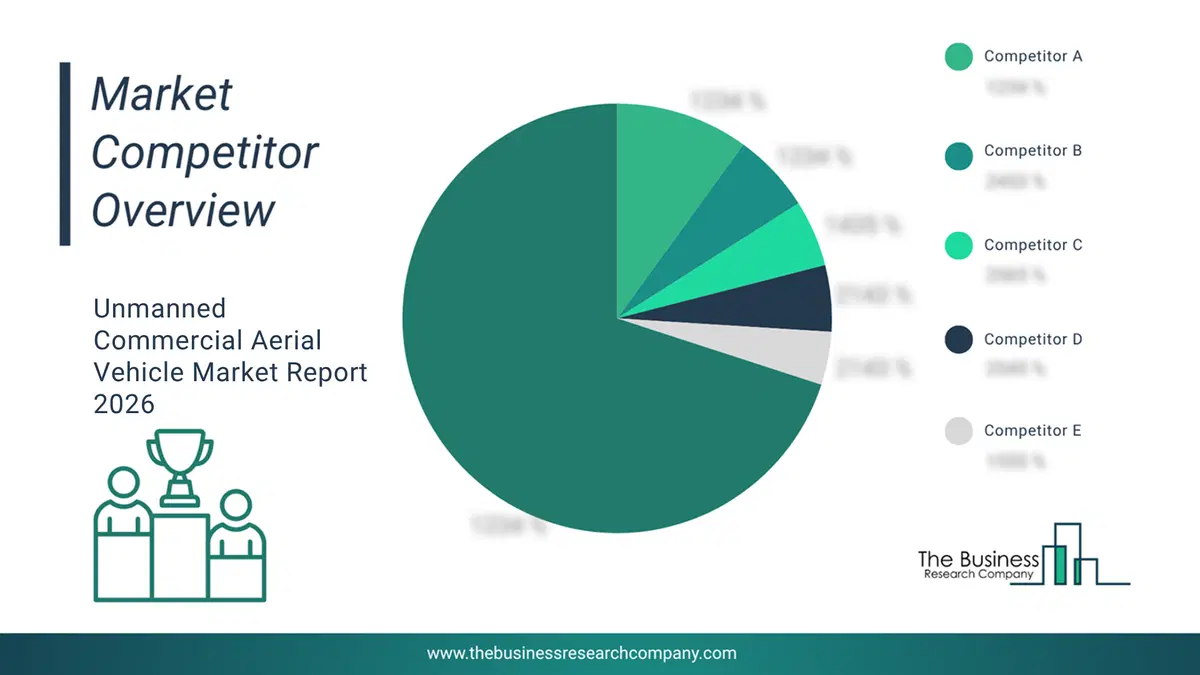
This chart is for illustrative purposes; the full report includes a detailed competitor analysis and comprehensive overview of the top 10 companies in the market.
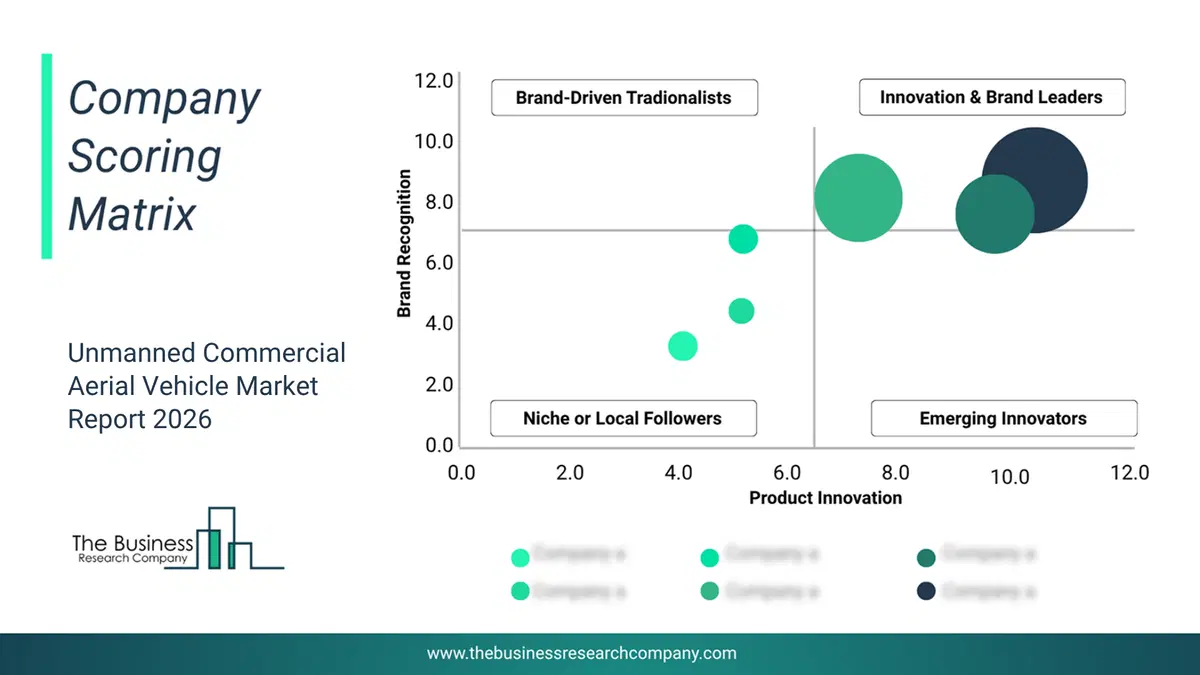
This chart maps companies by product innovation and brand strength, with bubble size indicating relative revenue, helping identify market leaders, challengers, and niche players. This is an illustrative chart; the full report provides a complete and accurate competitive analysis.
Global Unmanned Commercial Aerial Vehicle Market Trends and Insights
Major companies operating in unmanned commercial aerial vehicles market are developing innovative Ultra-Compact AI-Powered Video Analytics Product such as Jupiter Drones to drive the revenues in the market. Jupiter Drones, is an innovative, drone-oriented solution appropriate for a variety of drone applications and adaptable to different camera setups. For instance, in October 2023, Maris-Tech, Israel-based leader in providing AI edge video and analytics technologies, launched Jupiter Drones. Jupiter Drones is appropriate for a broad range of professional civilian, homeland security, and defence applications. It satisfies the varied and evolving requirements of the drone market. The device is small, light, and specially designed to fit different drone camera combinations. It also comes with an optional AI acceleration module that can be added.What Are Latest Mergers And Acquisitions In The Unmanned Commercial Aerial Vehicle Market? Airbus SE's Game-Changing Acquisition Of Aerovel UAV
In May 2024, Airbus SE, a Netherlands-based company that manufactures aircraft manufacturing commercial company acquired Aerovel for an undisclosed amount. With this acquisition, Airbus aims to enhance its capabilities in unmanned aerial vehicles (UAVs) and autonomous flight technologies, leveraging Aerovel's expertise in vertical take-off and landing (VTOL) systems to expand its presence in both commercial and defense markets, while driving innovation in aerial mobility solutions. Aerovel SE is a US-based aerospace company that manufactures UAVs.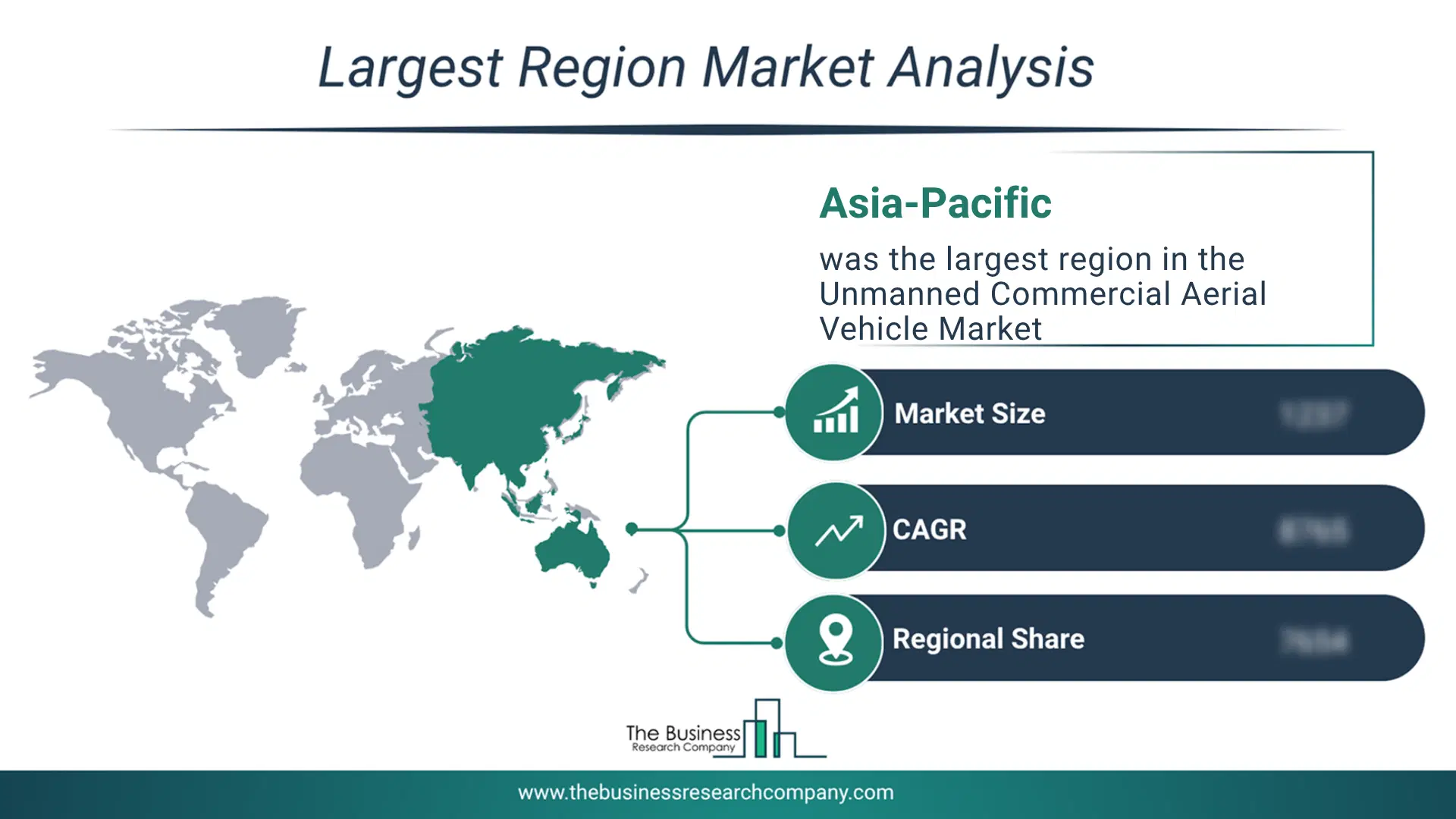
Regional Insights
Asia-Pacific was the largest region in unmanned commercial aerial vehicle market in 2025. North America is expected to be the fastest-growing region in the unmanned commercial aerial vehicle market during the forecast period. The regions covered in this market report are Asia-Pacific, South East Asia, Western Europe, Eastern Europe, North America, South America, Middle East, Africa. The countries covered in this market report are Australia, Brazil, China, France, Germany, India, Indonesia, Japan, Taiwan, Russia, South Korea, UK, USA, Canada, Italy, SpainWhat Defines the Unmanned Commercial Aerial Vehicle Market?
The unmanned commercial aerial vehicles market consists of sales of remotely piloted and unpiloted aerial vehicles for business purposes such as delivery, surveys, and photography. Values in this market are factory gate values, that is the value of goods sold by the manufacturers or creators of the goods, whether to other entities (including downstream manufacturers, wholesalers, distributors, and retailers) or directly to end customers. The value of goods in this market includes related services sold by the creators of the goods.How is Market Value Defined and Measured?
The market value is defined as the revenues that enterprises gain from the sale of goods and/or services within the specified market and geography through sales, grants, or donations in terms of the currency (in USD unless otherwise specified). The revenues for a specified geography are consumption values that are revenues generated by organizations in the specified geography within the market, irrespective of where they are produced. It does not include revenues from resales along the supply chain, either further along the supply chain or as part of other products.
This chart presents market attractiveness based on a quantitative evaluation of growth, competition, strategic alignment, and risk, offering a clear view of opportunity areas for decision-making. This chart is for illustrative purposes; the full report contains the complete analysis.

This chart highlights the Total Addressable Market (TAM) by estimating the maximum revenue opportunity using an assumption-driven approach, supporting strategic planning and opportunity sizing across markets. The chart is illustrative; the full report provides a more comprehensive analysis.
What Key Data and Analysis Are Included in the Unmanned Commercial Aerial Vehicle Market Report 2026?
The unmanned commercial aerial vehicle market research report is one of a series of new reports from The Business Research Company that provides market statistics, including industry global market size, regional shares, competitors with the market share, detailed market segments, market trends and opportunities, and any further data you may need to thrive in the unmanned commercial aerial vehicle industry. The market research report delivers a complete perspective of everything you need, with an in-depth analysis of the current and future state of the industry.Unmanned Commercial Aerial Vehicle Market Report Forecast Analysis
| Report Attribute | Details |
|---|---|
| Market Size Value In 2026 | $29.32 billion |
| Revenue Forecast In 2030 | $46.4 billion |
| Growth Rate | CAGR of 12.0% from 2026 to 2030 |
| Base Year For Estimation | 2025 |
| Actual Estimates/Historical Data | 2020-2025 |
| Forecast Period | 2026 - 2030 |
| Market Representation | Revenue in USD Billion and CAGR from 2026 to 2030 |
| Segments Covered | Segment, Mode Of Operation, End-User |
| Regional Scope | Asia-Pacific, Western Europe, Eastern Europe, North America, South America, Middle East, Africa |
| Country Scope | The countries covered in the report are Australia, Brazil, China, France, Germany, India, Indonesia, Japan, Taiwan, Russia, South Korea, UK, USA, Canada, Italy, Spain. |
| Key Companies Profiled | AeroVironment Inc., BAE Systems plc, SZ DJI Technology Co. Ltd. (DJI), Elbit Systems Ltd., General Atomics Aeronautical Systems Inc., Israel Aerospace Industries Ltd. (IAI), Lockheed Martin Corporation, Northrop Grumman Corporation, Parrot SA, Textron Inc., The Boeing Company, 3D Robotics Inc., Science Applications International Corporation (SAIC), Denel Dynamics (Pty) Ltd, Ambarella Inc., Aurora Flight Sciences a Boeing Company, Challis Heliplane Uav Inc, Draganfly Inc., General Dynamics Corporation, Aerospace Industry, Prox Dynamics AS (Prox Dynamics was acquired by FLIR Systems), Thales Group, Turkish Aerospace Industries Inc. (TAI), PrecisionHawk Inc., Aeryon Labs Inc., Yamaha Motor Co. Ltd., Ascending Technologies, ZeroTech Robotics, Vision Aerial, Volansi Inc., WiBotic Inc., Wing, Xer Technologies, Yuneec International Co. Ltd. |
| Customization Scope | Request for Customization |
| Pricing And Purchase Options | Explore Purchase Options |