
Upper-Limb Home Therapy Robot Market Report 2026
Global Outlook – By Product Type (Exoskeleton Robots, Wearable Robots), By Therapy Type (Active Therapy, Passive Therapy, Assistive Therapy, Other Therapy Types), By Distribution Channel (Online, Offline), By Application (Stroke Rehabilitation, Orthopedic Rehabilitation, Neurological Rehabilitation, Other Applications) – Market Size, Trends, Strategies, and Forecast to 2030
Upper-Limb Home Therapy Robot Market Overview
• Upper-Limb Home Therapy Robot market size has reached to $1.7 billion in 2025 • Expected to grow to $4.08 billion in 2030 at a compound annual growth rate (CAGR) of 19% • Growth Driver: Impact Of Increasing Neurological Disorders On The Market Due To Rising Prevalence And Aging Population • Market Trend: Intelligent Rehabilitation Technologies For Motor Recovery • North America was the largest region in 2025 and Asia-Pacific is the fastest growing region.What Is Covered Under Upper-Limb Home Therapy Robot Market?
Upper-limb home therapy robot refers to a robotic system designed to aid patients in performing rehabilitation exercises for the upper limbs, including the arms, shoulders, and hands, within a home environment. It enables consistent, guided, and repetitive training to improve motor function, strength, and coordination during recovery. The main product types of upper-limb home therapy robots are exoskeleton robots, end-effector robots, wearable robots, and others. Exoskeleton robots are wearable robotic devices designed to support or enhance a person’s movement and physical capabilities. Therapy offerings cover active therapy, passive therapy, assistive therapy, and others and are distributed through online and offline. These are applied in stroke rehabilitation, orthopedic rehabilitation, neurological rehabilitation, and others, serving end-users including hospitals, rehabilitation centers, homecare settings, and others.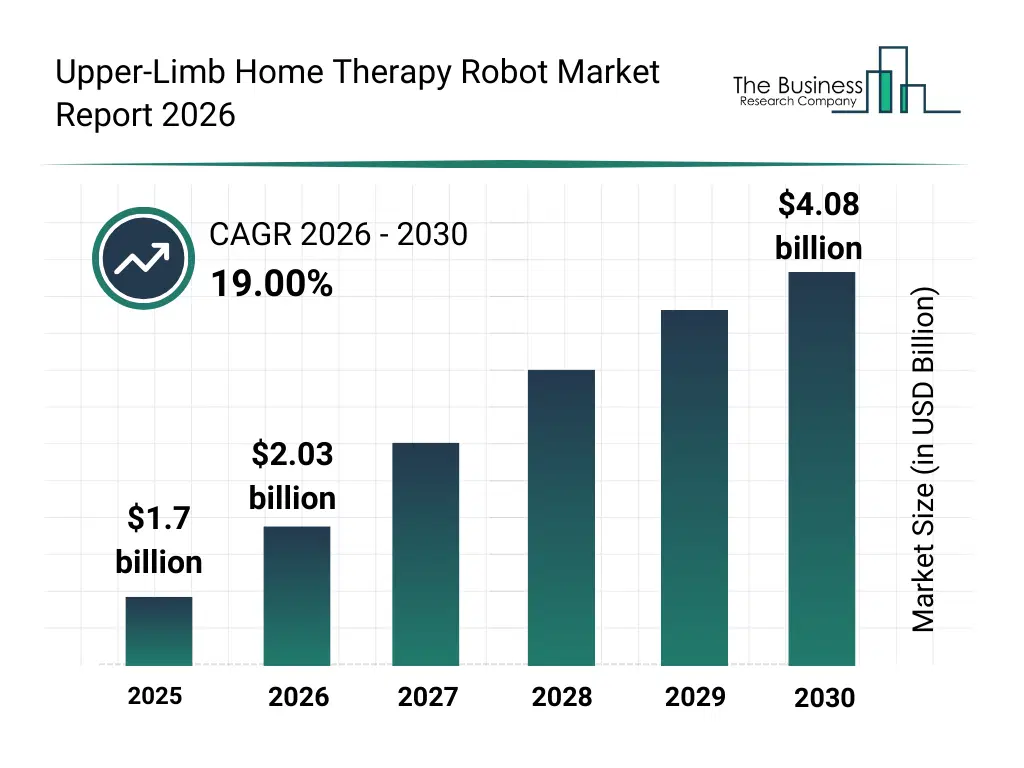
What Is The Upper-Limb Home Therapy Robot Market Size and Share 2026?
The upper-limb home therapy robot market size has grown rapidly in recent years. It will grow from $1.7 billion in 2025 to $2.03 billion in 2026 at a compound annual growth rate (CAGR) of 19.3%. The growth in the historic period can be attributed to increase in stroke cases, shortage of rehabilitation professionals, demand for continuous therapy, growth in home healthcare, advances in rehabilitation robotics.What Is The Upper-Limb Home Therapy Robot Market Growth Forecast?
The upper-limb home therapy robot market size is expected to see rapid growth in the next few years. It will grow to $4.08 billion in 2030 at a compound annual growth rate (CAGR) of 19.0%. The growth in the forecast period can be attributed to remote rehabilitation adoption, ai-guided therapy systems, aging population growth, expansion of tele-rehabilitation, patient-centric recovery solutions. Major trends in the forecast period include home-based robotic rehabilitation, repetitive motion therapy automation, personalized therapy programs, compact and user-friendly robot designs, remote therapy monitoring.
Global Upper-Limb Home Therapy Robot Market Segmentation
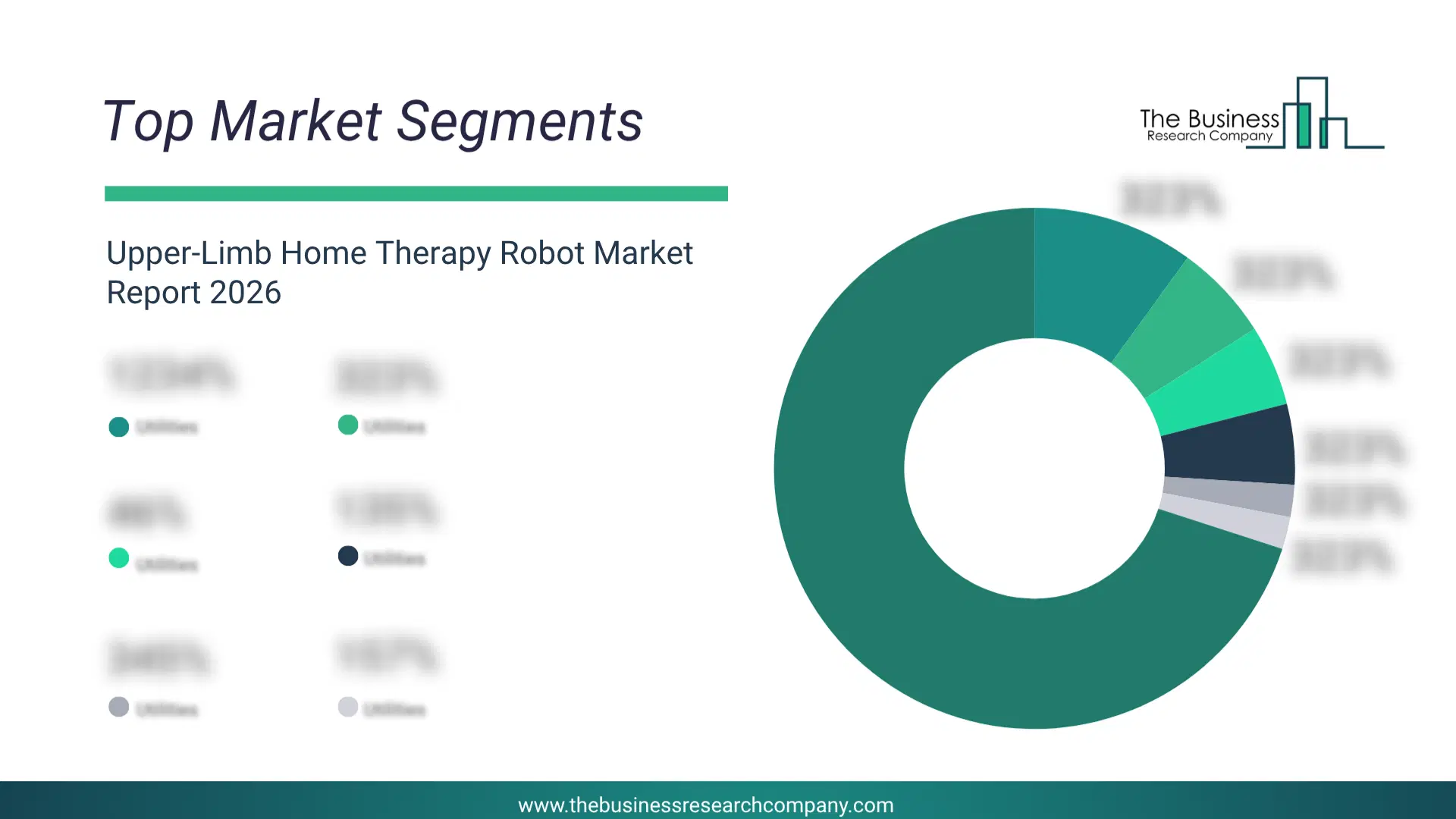
1) By Product Type: Exoskeleton Robots, Wearable Robots 2) By Therapy Type: Active Therapy, Passive Therapy, Assistive Therapy, Other Therapy Types 3) By Distribution Channel: Online, Offline 4) By Application: Stroke Rehabilitation, Orthopedic Rehabilitation, Neurological Rehabilitation, Other Applications Subsegments: 1) By Exoskeleton Robots: Active Exoskeleton Robots, Passive Exoskeleton Robots, Hybrid Exoskeleton Robots 2) By Wearable Robots: Upper Arm Wearable Robots, Forearm Wearable Robots, Hand Wearable RobotsWhat Is The Driver Of The Upper-Limb Home Therapy Robot Market?
The increasing prevalence of neurological disorders is expected to propel the growth of the upper-limb home therapy robot market going forward. Neurological disorders refer to medical conditions that disrupt the normal functioning of the nervous system, affecting movement, cognition, or sensory abilities. The rise in neurological disorders is mainly due to the aging population, as older individuals are more prone to brain cell degeneration and age-related neurological conditions. Upper-limb home therapy robots assist patients with neurological disorders by enabling consistent, personalized arm exercises that promote neuroplasticity and accelerate recovery of impaired motor skills. For instance, in March 2023, according to the Alzheimer’s Association, a US-based non-profit organization, in 2023, approximately 6.7 million Americans aged 65 and older are living with Alzheimer’s dementia. Therefore, the increasing prevalence of neurological disorders is driving the growth of the upper-limb home therapy robot industry.Key Players In The Global Upper-Limb Home Therapy Robot Market
Major companies operating in the upper-limb home therapy robot market are Neofect, Motus Nova, HandyRehab, Motorika Medical Ltd., Saebo Inc., Myomo Inc., Fourier Intelligence, Rehab-Robotics Company Limited, Bionik Laboratories Corp., Tyromotion GmbH, Hocoma AG, Kinova Robotics, Focal Meditech BV, RehaMove Systems, Aretech LLC, Imago Rehab Inc., Rehabtronics Inc., Technaid S.L., MediTouch Ltd., H Robotics Inc., ReWalk Robotics Ltd., Ekso Bionics Holdings Inc.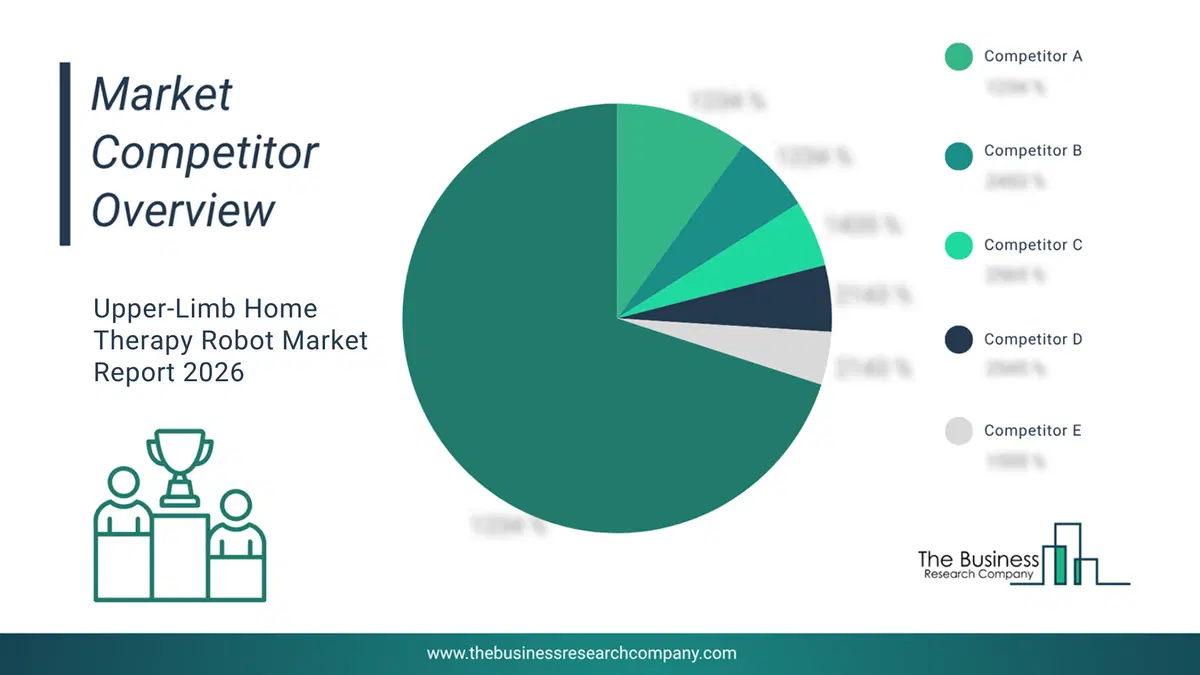
This chart is for illustrative purposes; the full report includes a detailed competitor analysis and comprehensive overview of the top 10 companies in the market.
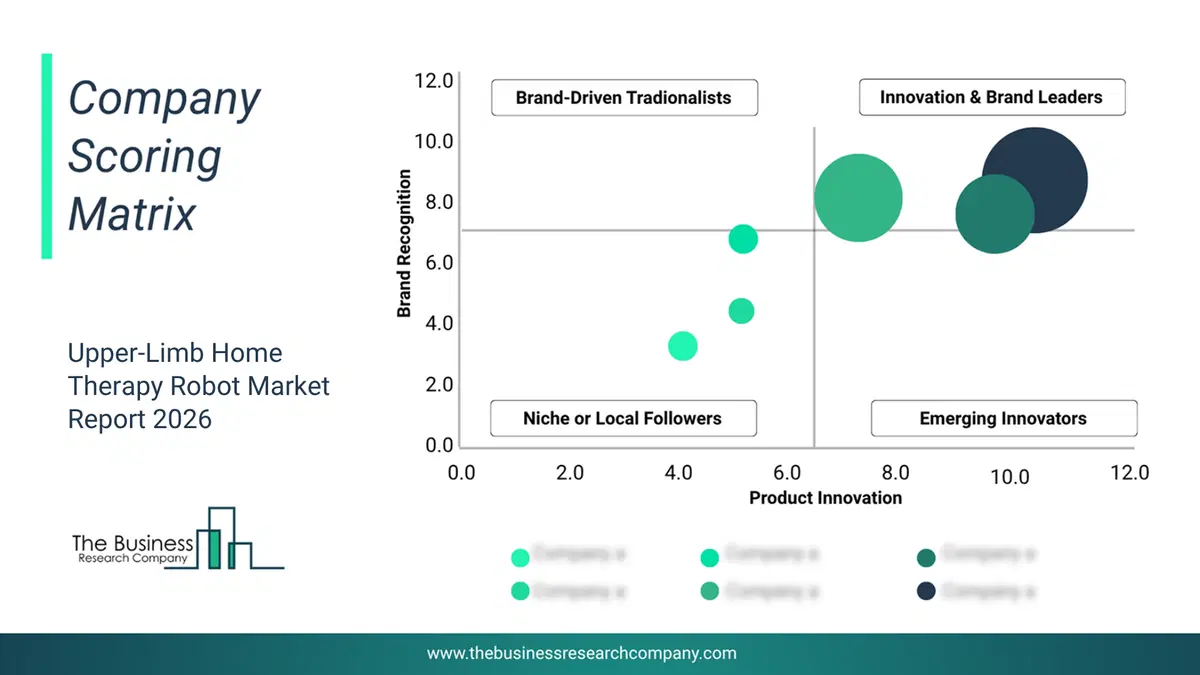
This chart maps companies by product innovation and brand strength, with bubble size indicating relative revenue, helping identify market leaders, challengers, and niche players. This is an illustrative chart; the full report provides a complete and accurate competitive analysis.
Global Upper-Limb Home Therapy Robot Market Trends and Insights
Major companies operating in the upper-limb home therapy robot market are focusing on developing advanced solutions, such as rehabilitation robots to provide personalized therapy and accelerate recovery for patients with neurological or musculoskeletal impairments. Rehabilitation robots refer to automated or robotic devices designed to assist, support, and enhance the recovery of patients’ motor functions, particularly in the upper or lower limbs, through guided exercises, repetitive movements, and therapy personalization. For instance, in November 2023, Shanghai Siyi Intelligent Technology Co. Ltd., a China-based technology company, launched the upper limb rehabilitation robot (SY-UEA2) and the hand rehabilitation robot (BCI) SY-BR09 to provide targeted home-based therapy and improve motor recovery. The syrebo upper limb rehabilitation robot (SY-UEA2) enhances arm and shoulder recovery through precise optical-positioning control, adaptive training modes, and real-time motion feedback for full-cycle rehabilitation at home or in clinics. The hand rehabilitation robot (BCI) SY-BR09 uses brain-computer interface and flexible robotics to restore fine motor control, promoting neural rewiring and faster recovery for stroke and nerve injury patients. Together, they deliver intelligent, interactive, and personalized neurorehabilitation that improves independence, mobility, and quality of life.What Are Latest Mergers And Acquisitions In The Upper-Limb Home Therapy Robot Market?
In September 2025, the International Conference on Rehabilitation Robotics, a US-based academic conference, partnered with the Indonesian Association of Physical Medicine and Rehabilitation to foster knowledge exchange and support the development of cutting-edge rehabilitation technologies in Indonesia. With this partnership aims to advance rehabilitation robotics in Asia-Oceania by enhancing clinician training, promoting affordable clinical adoption, fostering collaborative research, and expanding access to robotic therapies in diverse healthcare settings. The Indonesian Association of Physical Medicine and Rehabilitation is an Indonesia-based professional society for physical medicine and rehabilitation that offers the upper-limb home therapy robot.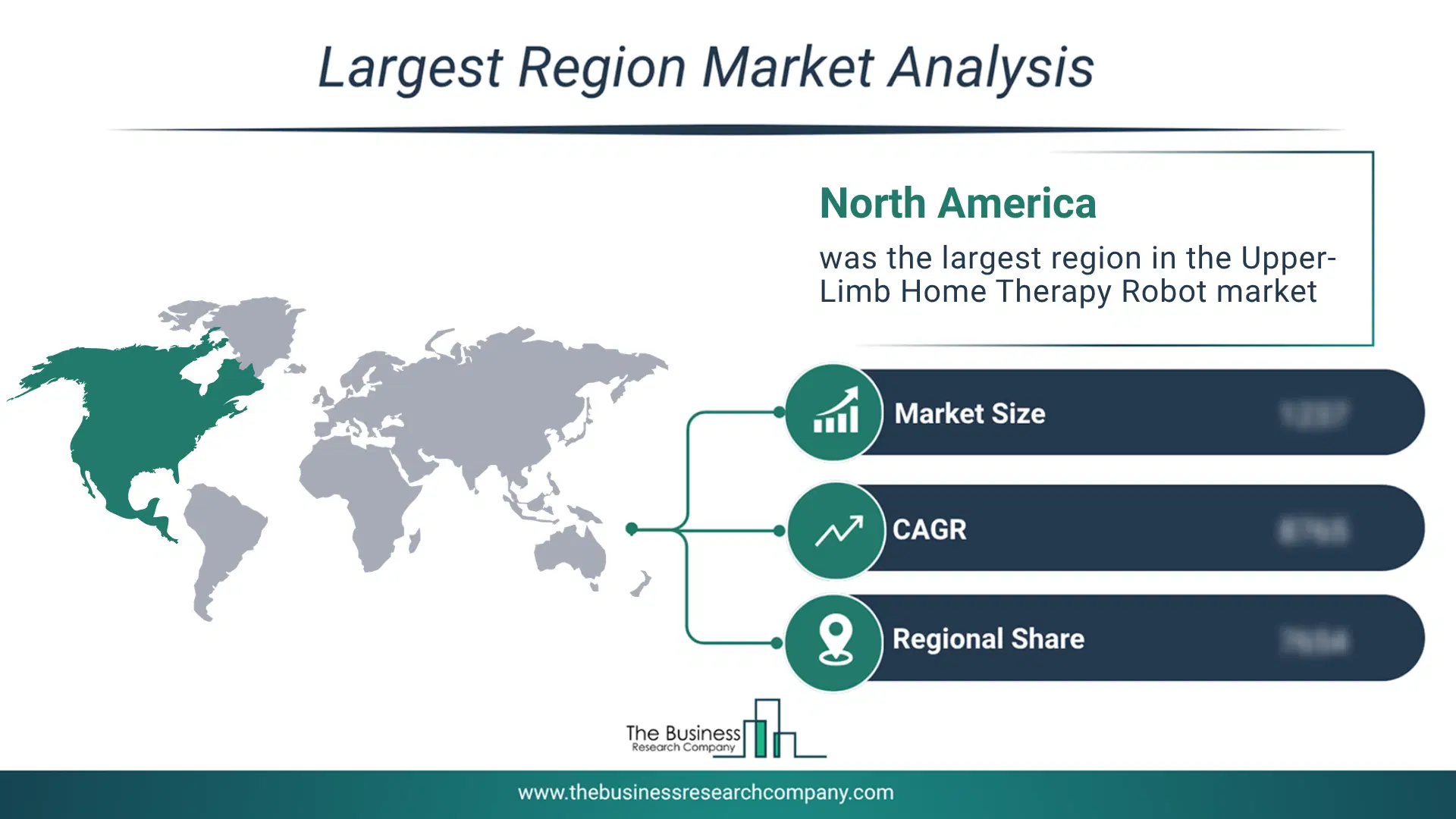
Regional Outlook
North America was the largest region in the upper-limb home therapy Robot market in 2025. Asia-Pacific is expected to be the fastest-growing region in the forecast period. The regions covered in this market report are Asia-Pacific, South East Asia, Western Europe, Eastern Europe, North America, South America, Middle East, Africa. The countries covered in this market report are Australia, Brazil, China, France, Germany, India, Indonesia, Japan, Taiwan, Russia, South Korea, UK, USA, Canada, Italy, SpainWhat Defines the Upper-Limb Home Therapy Robot Market?
The upper-limb home therapy robot market consists of revenues earned by entities by providing services such as motor function rehabilitation, muscle strength training, and range of motion improvement. The market value includes the value of related goods sold by the service provider or included within the service offering. The upper-limb home therapy robot market also includes sales of robotic rehabilitation systems, assistive training robots, and interactive therapy robots. Values in this market are ‘factory gate’ values; that is, the value of goods sold by the manufacturers or creators of the goods, whether to other entities (including downstream manufacturers, wholesalers, distributors, and retailers) or directly to end customers. The value of goods in this market includes related services sold by the creators of the goods.How is Market Value Defined and Measured?
The market value is defined as the revenues that enterprises gain from the sale of goods and/or services within the specified market and geography through sales, grants, or donations in terms of the currency (in USD unless otherwise specified). The revenues for a specified geography are consumption values that are revenues generated by organizations in the specified geography within the market, irrespective of where they are produced. It does not include revenues from resales along the supply chain, either further along the supply chain or as part of other products.
This chart presents market attractiveness based on a quantitative evaluation of growth, competition, strategic alignment, and risk, offering a clear view of opportunity areas for decision-making. This chart is for illustrative purposes; the full report contains the complete analysis.

This chart highlights the Total Addressable Market (TAM) by estimating the maximum revenue opportunity using an assumption-driven approach, supporting strategic planning and opportunity sizing across markets. The chart is illustrative; the full report provides a more comprehensive analysis.
What Key Data and Analysis Are Included in the Upper-Limb Home Therapy Robot Market Report 2026?
The upper-limb home therapy robot market research report is one of a series of new reports from The Business Research Company that provides market statistics, including industry global market size, regional shares, competitors with the market share, detailed market segments, market trends and opportunities, and any further data you may need to thrive in the upper-limb home therapy robot industry. The market research report delivers a complete perspective of everything you need, with an in-depth analysis of the current and future state of the industry.Upper-Limb Home Therapy Robot Market Report Forecast Analysis
| Report Attribute | Details |
|---|---|
| Market Size Value In 2026 | $2.03 billion |
| Revenue Forecast In 2030 | $4.08 billion |
| Growth Rate | CAGR of 19% from 2026 to 2030 |
| Base Year For Estimation | 2025 |
| Actual Estimates/Historical Data | 2020-2025 |
| Forecast Period | 2026 - 2030 |
| Market Representation | Revenue in USD Billion and CAGR from 2026 to 2030 |
| Segments Covered | Product Type, Therapy Type, Distribution Channel, Application |
| Regional Scope | Asia-Pacific, Western Europe, Eastern Europe, North America, South America, Middle East, Africa |
| Country Scope | The countries covered in the report are Australia, Brazil, China, France, Germany, India, Indonesia, Japan, Taiwan, Russia, South Korea, UK, USA, Canada, Italy, Spain. |
| Key Companies Profiled | Neofect, Motus Nova, HandyRehab, Motorika Medical Ltd., Saebo Inc., Myomo Inc., Fourier Intelligence, Rehab-Robotics Company Limited, Bionik Laboratories Corp., Tyromotion GmbH, Hocoma AG, Kinova Robotics, Focal Meditech BV, RehaMove Systems, Aretech LLC, Imago Rehab Inc., Rehabtronics Inc., Technaid S.L., MediTouch Ltd., H Robotics Inc., ReWalk Robotics Ltd., Ekso Bionics Holdings Inc. |
| Customization Scope | Request for Customization |
| Pricing And Purchase Options | Explore Purchase Options |