
Urinary pH Modifier Market Report 2026
Global Outlook – By Drug (Potassium Acid Phosphate, Sodium Bicarbonate, Sodium Citrate, Potassium Citrate), By Dosage (Injection, Tablets, Solution, Powder, Other Dosages), By Indication (Alkalosis, Alkylating Agent Cystitis, Diabeitc Ketoacidosis, Metabolic Acidosis, Other Indications), By Distribution Channel (Online Retail, Pharmacies, Supermarkets, Health Food Stores), By End-User (Hospitals, Clinics, Home Care) – Market Size, Trends, Strategies, and Forecast to 2030
Urinary pH Modifier Market Overview
• Urinary pH Modifier market size has reached to $3.16 billion in 2025 • Expected to grow to $4.11 billion in 2030 at a compound annual growth rate (CAGR) of 5.4% • Growth Driver: Rising Prevalence Of Renal Failure Driving The Growth Of The Market Due To Increasing Cases Of Chronic Kidney Disease • North America was the largest region in 2025.What Is Covered Under Urinary pH Modifier Market?
Urinary pH modifiers are medications designed to regulate the acidity or alkalinity of urine. They are commonly used to treat conditions such as urinary tract infections, kidney stones, and certain metabolic imbalances. By adjusting urinary pH, these agents can enhance drug solubility, promote excretion, and reduce the risk of crystal or stone formation. The main drugs of urinary pH modifiers are potassium acid phosphate, sodium bicarbonate, sodium citrate, and potassium citrate. Potassium acid phosphate is a mineral supplement that acidifies urine, supports kidney function, and helps prevent kidney stones by maintaining phosphate and electrolyte balance. It is available in various dosage forms such as injection, tablets, solution, powder, and others for several indications such as alkalosis, alkylating agent cystitis, asystole, gastroesophageal reflux disease, diabetic ketoacidosis, hyperkalemia, hyponatremia, indigestion, metabolic acidosis, and others. It is distributed through various distribution channels such as online retail, pharmacies, supermarkets, and health food stores and is used by various end-users including hospitals, clinics, and home care.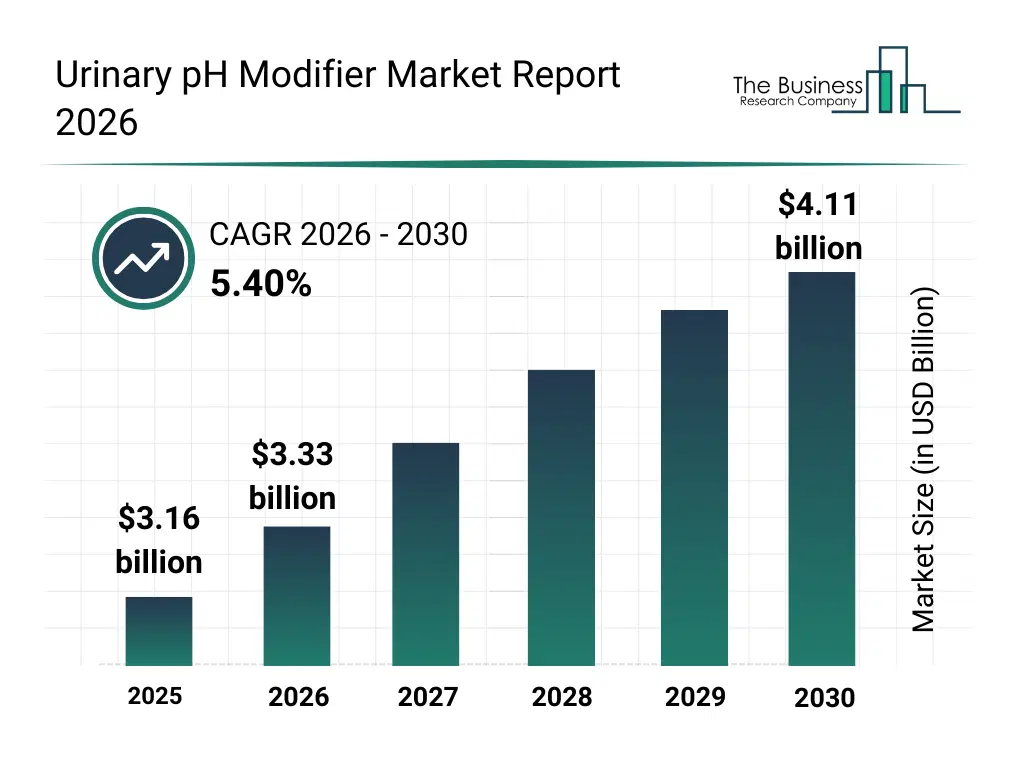
What Is The Urinary pH Modifier Market Size and Share 2026?
The urinary ph modifier market size has grown strongly in recent years. It will grow from $3.16 billion in 2025 to $3.33 billion in 2026 at a compound annual growth rate (CAGR) of 5.5%. The growth in the historic period can be attributed to high incidence of urinary tract disorders, clinical reliance on sodium bicarbonate, hospital-based electrolyte correction, increased kidney stone prevalence, emergency care usage.What Is The Urinary pH Modifier Market Growth Forecast?
The urinary ph modifier market size is expected to see strong growth in the next few years. It will grow to $4.11 billion in 2030 at a compound annual growth rate (CAGR) of 5.4%. The growth in the forecast period can be attributed to aging population growth, rising metabolic disorder cases, outpatient care expansion, demand for oral dosage forms, preventive urology adoption. Major trends in the forecast period include rising use in kidney stone management, growing adoption in metabolic acidosis treatment, increased demand for oral alkalizing agents, expansion of home-based urinary care, shift toward combination electrolyte therapies.
Global Urinary pH Modifier Market Segmentation
1) By Drug: Potassium Acid Phosphate, Sodium Bicarbonate, Sodium Citrate, Potassium Citrate 2) By Dosage: Injection, Tablets, Solution, Powder, Other Dosages 3) By Indication: Alkalosis, Alkylating Agent Cystitis, Diabeitc Ketoacidosis, Metabolic Acidosis, Other Indications 4) By Distribution Channel: Online Retail, Pharmacies, Supermarkets, Health Food Stores 5) By End-User: Hospitals, Clinics, Home Care Subsegments: 1) By Potassium Acid Phosphate: Monobasic Potassium Phosphate, Dibasic Potassium Phosphate, Combination Formulations 2) By Sodium Bicarbonate: Oral Sodium Bicarbonate Tablets, Intravenous Sodium Bicarbonate Injection, Effervescent Sodium Bicarbonate Powder 3) By Sodium Citrate: Sodium Citrate Dihydrate, Sodium Citrate Anhydrous, Sodium Citrate Oral Solution 4) By Potassium Citrate: Potassium Citrate Extended-Release Tablets, Potassium Citrate Oral Solution, Combination Therapy With Other Alkalizing AgentsWhat Are The Drivers Of The Urinary pH Modifier Market?
The increasing prevalence of renal failure is expected to propel the growth of the urinary pH modifiers market going forward. Renal failure is a condition in which the kidneys lose their ability to filter waste, balance fluids, and regulate electrolytes, leading to toxin buildup in the body. The increasing prevalence of renal failure is primarily driven by the rising incidence of diabetes, which damages kidney filtration over time, leading to chronic kidney disease and eventual renal failure. The prevalence of renal failure drives the demand for urinary pH modifiers, as they help manage acid-base imbalances, prevent kidney stone formation, and reduce complications in impaired kidney function. For instance, in June 2023, according to Kidney Research UK, a UK-based non-profit charitable organization, 7.19 million people in the UK, accounting for over 10% of the population, are affected by chronic kidney disease. This number is projected to rise to 7.61 million by 2033. Therefore, the increasing prevalence of renal failure is driving the growth of the urinary pH modifiers industry. The expanding awareness of preventive healthcare is expected to propel the growth of the urinary pH modifiers market going forward. Preventive healthcare involves measures taken to prevent diseases, rather than treating them after they occur. Preventive healthcare is rising as more people recognize the importance of managing health early to avoid chronic diseases and future medical expenses. Preventive healthcare drives the demand for urinary pH modifiers by promoting early management of urinary tract health. These products help balance urine pH, lowering the risk of infections and kidney stones. For instance, in July 2024, according to the National Health Service (NHS) England, a UK-based government department, as of May 2024, 51.8% of older adult care home residents had received the spring vaccination, and by June 2024, this figure had increased to 63.3%, showing a rise of 11.5 percentage points. Therefore, the expanding awareness of preventive healthcare is driving the growth of the urinary pH modifiers industry.Key Players In The Global Urinary pH Modifier Market
Major companies operating in the urinary ph modifier market are Intas Pharmaceuticals Ltd., Apex Laboratories Pvt. Ltd., Cipla Limited, Sun Pharmaceutical Industries Ltd., Dr. Reddy’s Laboratories Ltd., Lupin Limited, Zydus Lifesciences Limited, Torrent Pharmaceuticals Ltd., Glenmark Pharmaceuticals Ltd., Abbott Laboratories, Pfizer Inc., Bayer AG, Sanofi S.A., Teva Pharmaceutical Industries Ltd., Aurobindo Pharma Limited, Mylan N.V., Virbac, Vetoquinol, Orion Pharma Animal Health, Millpledge Ltd.
This chart is for illustrative purposes; the full report includes a detailed competitor analysis and comprehensive overview of the top 10 companies in the market.
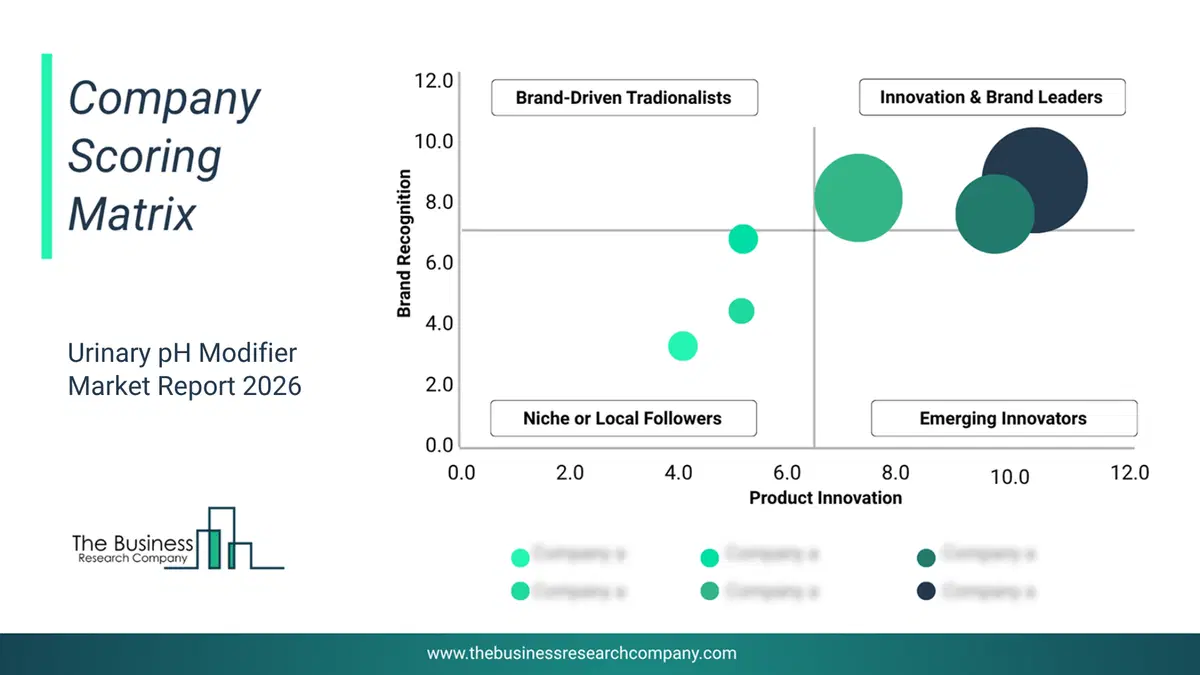
This chart maps companies by product innovation and brand strength, with bubble size indicating relative revenue, helping identify market leaders, challengers, and niche players. This is an illustrative chart; the full report provides a complete and accurate competitive analysis.
Global Urinary pH Modifier Market Trends and Insights
What Are Latest Mergers And Acquisitions In The Urinary pH Modifier Market?
In September 2023, Jones-Hamilton Co., a US-based manufacturer of natural acidifiers for the pet food industry, partnered with BSM Partners to advance Pet Health Through Science and Innovation. The partnership aims to accelerate the growth and application of SBSPet in the pet food industry by leveraging BSM Partners' scientific expertise and strategic insights. The collaboration aims to promote pet wellness through innovative use of sodium bisulfate, enhance product quality and safety, and educate the industry on the benefits of natural acidifiers in pet nutrition. BSM Partners is a US-based company that specializes in veterinary nutrition research.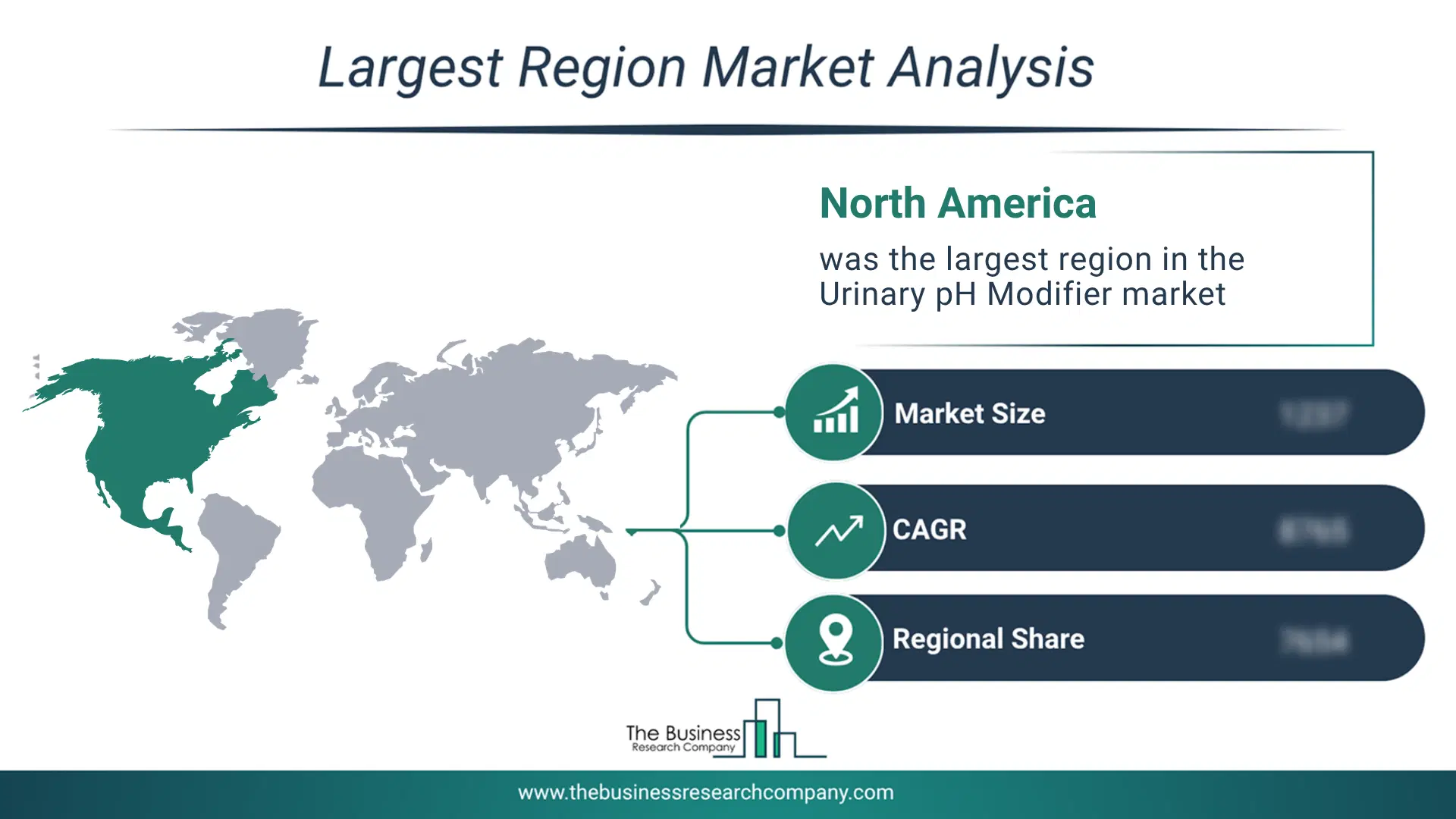
Regional Insights
North America was the largest region in the urinary pH modifier market in 2025. The regions covered in this market report are Asia-Pacific, South East Asia, Western Europe, Eastern Europe, North America, South America, Middle East, Africa. The countries covered in this market report are Australia, Brazil, China, France, Germany, India, Indonesia, Japan, Taiwan, Russia, South Korea, UK, USA, Canada, Italy, Spain.What Defines the Urinary pH Modifier Market?
The urinary pH modifier market consists of sales of magnesium hydroxide, ammonium chloride, and acetazolamide. Values in this market are ‘factory gate’ values, that is, the value of goods sold by the manufacturers or creators of the goods, whether to other entities (including downstream manufacturers, wholesalers, distributors, and retailers) or directly to end customers. The value of goods in this market includes related services sold by the creators of the goods.How is Market Value Defined and Measured?
The market value is defined as the revenues that enterprises gain from the sale of goods and/or services within the specified market and geography through sales, grants, or donations in terms of the currency (in USD unless otherwise specified). The revenues for a specified geography are consumption values that are revenues generated by organizations in the specified geography within the market, irrespective of where they are produced. It does not include revenues from resales along the supply chain, either further along the supply chain or as part of other products.
This chart presents market attractiveness based on a quantitative evaluation of growth, competition, strategic alignment, and risk, offering a clear view of opportunity areas for decision-making. This chart is for illustrative purposes; the full report contains the complete analysis.

This chart highlights the Total Addressable Market (TAM) by estimating the maximum revenue opportunity using an assumption-driven approach, supporting strategic planning and opportunity sizing across markets. The chart is illustrative; the full report provides a more comprehensive analysis.
What Key Data and Analysis Are Included in the Urinary pH Modifier Market Report 2026?
The urinary ph modifier market research report is one of a series of new reports from The Business Research Company that provides market statistics, including industry global market size, regional shares, competitors with the market share, detailed market segments, market trends and opportunities, and any further data you may need to thrive in the urinary ph modifier industry. The market research report delivers a complete perspective of everything you need, with an in-depth analysis of the current and future state of the industry.Urinary pH Modifier Market Report Forecast Analysis
| Report Attribute | Details |
|---|---|
| Market Size Value In 2026 | $3.33 billion |
| Revenue Forecast In 2030 | $4.11 billion |
| Growth Rate | CAGR of 5.5% from 2026 to 2030 |
| Base Year For Estimation | 2025 |
| Actual Estimates/Historical Data | 2020-2025 |
| Forecast Period | 2026 - 2030 |
| Market Representation | Revenue in USD Billion and CAGR from 2026 to 2030 |
| Segments Covered | Drug, Dosage, Indication, Distribution Channel, End-User |
| Regional Scope | Asia-Pacific, Western Europe, Eastern Europe, North America, South America, Middle East, Africa |
| Country Scope | The countries covered in the report are Australia, Brazil, China, France, Germany, India, Indonesia, Japan, Taiwan, Russia, South Korea, UK, USA, Canada, Italy, Spain. |
| Key Companies Profiled | Intas Pharmaceuticals Ltd., Apex Laboratories Pvt. Ltd., Cipla Limited, Sun Pharmaceutical Industries Ltd., Dr. Reddy’s Laboratories Ltd., Lupin Limited, Zydus Lifesciences Limited, Torrent Pharmaceuticals Ltd., Glenmark Pharmaceuticals Ltd., Abbott Laboratories, Pfizer Inc., Bayer AG, Sanofi S.A., Teva Pharmaceutical Industries Ltd., Aurobindo Pharma Limited, Mylan N.V., Virbac, Vetoquinol, Orion Pharma Animal Health, Millpledge Ltd. |
| Customization Scope | Request for Customization |
| Pricing And Purchase Options | Explore Purchase Options |