
Urolithiasis Management Devices Market Report 2026
Global Outlook – By Product Type (Lithotripters, Ureteroscopes), By Treatment Type (Extracorporeal Shock Wave Lithotripsy (ESWL), Intracorporeal Lithotripsy, Percutaneous Nephrolithotomy, Other Treatment Types), By End Users (Hospitals, Clinics, Ambulatory Surgical Centers) – Market Size, Trends, Strategies, and Forecast to 2030
Urolithiasis Management Devices Market Overview
• Urolithiasis Management Devices market size has reached to $1.69 billion in 2025 • Expected to grow to $2.21 billion in 2030 at a compound annual growth rate (CAGR) of 5.4% • Growth Driver: The Rise in Chronic Kidney Disease Prevalence Fueling the Growth of the Urolithiasis Management Devices Market • Market Trend: Exciting Technology-Based Product Launches In The Urolithiasis Management Devices Market • North America was the largest region in 2025 and Asia-Pacific is the fastest growing region.What Is Covered Under Urolithiasis Management Devices Market?
Urolithiasis management devices refer to medical tools and devices used in the diagnosis, treatment, and management of urolithiasis, which is the formation of stones (calculi) in the urinary tract. They are primarily used for retrieving, breaking, or aiding the passage of kidney stones, providing minimally invasive treatment options. These devices aim to address the challenges posed by kidney stones by offering efficient and less intrusive solutions for their management. The main product types of urolithiasis management devices include lithotripters and ureteroscopes. Lithotripters are medical devices used to break kidney stones into smaller pieces using shock waves or laser technology, facilitating their passage through the urinary tract. These are used for various treatments, such as extracorporeal shock wave lithotripsy (ESWL), intracorporeal lithotripsy, percutaneous nephrolithotomy, and others, by several end users, including hospitals, clinics, and ambulatory surgical centers.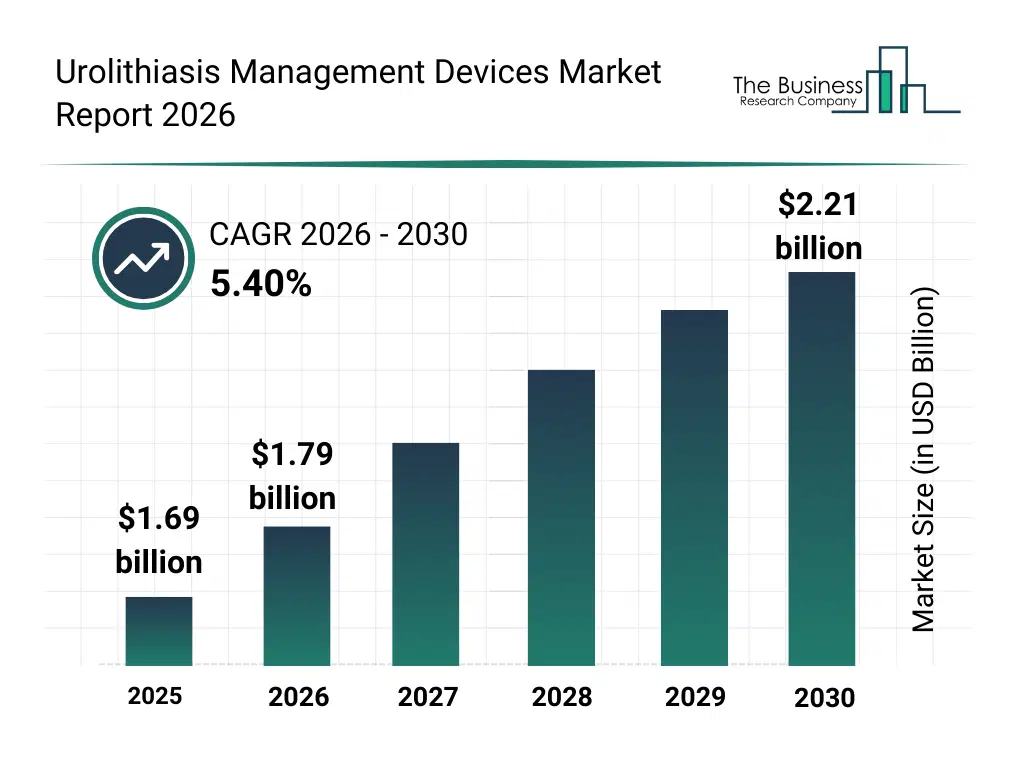
What Is The Urolithiasis Management Devices Market Size and Share 2026?
The urolithiasis management devices market size has grown strongly in recent years. It will grow from $1.69 billion in 2025 to $1.79 billion in 2026 at a compound annual growth rate (CAGR) of 6.3%. The growth in the historic period can be attributed to increasing incidence of kidney stone disease, expansion of urology departments, rising adoption of endoscopic stone management, advancements in lithotripsy technology, improved access to urological care.What Is The Urolithiasis Management Devices Market Growth Forecast?
The urolithiasis management devices market size is expected to see strong growth in the next few years. It will grow to $2.21 billion in 2030 at a compound annual growth rate (CAGR) of 5.4%. The growth in the forecast period can be attributed to increasing demand for minimally invasive urology treatments, rising healthcare expenditure on specialty care, expansion of ambulatory surgical centers, technological advancements in laser lithotripsy, growing focus on faster recovery procedures. Major trends in the forecast period include increasing adoption of minimally invasive stone removal devices, rising demand for laser-based lithotripsy systems, growing use of flexible ureteroscopes, expansion of outpatient urology procedures, enhanced focus on treatment efficiency and patient recovery.
Global Urolithiasis Management Devices Market Segmentation
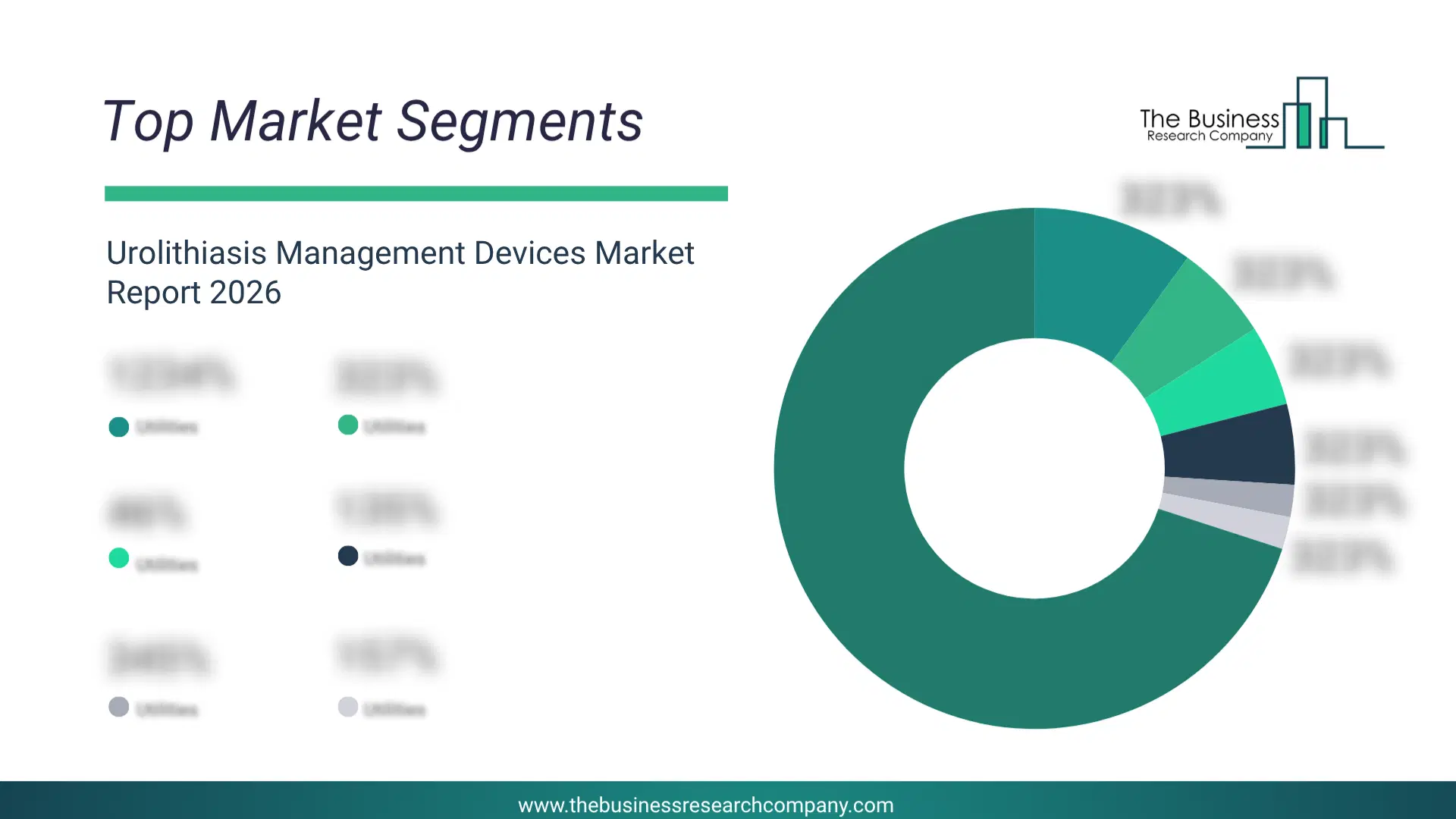
1) By Product Type: Lithotripters, Ureteroscopes 2) By Treatment Type: Extracorporeal Shock Wave Lithotripsy (ESWL), Intracorporeal Lithotripsy, Percutaneous Nephrolithotomy, Other Treatment Types 3) By End Users: Hospitals, Clinics, Ambulatory Surgical Centers Subsegments: 1) By Lithotripters: Extracorporeal Shock Wave Lithotripters (Eswl), Laser Lithotripters, Pneumatic Lithotripters 2) By Ureteroscopes: Rigid Ureteroscopes, Flexible UreteroscopesWhat Is The Driver Of The Urolithiasis Management Devices Market?
The rising prevalence of chronic kidney disease (CKD) is expected to propel the growth of the urolithiasis management devices market going forward. CKD refers to the progressive decline in kidney function, often leading to kidney stones due to impaired filtration, mineral imbalances, and reduced ability to eliminate waste. As the global burden of CKD increases, so does the demand for medical devices that assist in managing and removing kidney stones, relieving obstruction, and improving patient outcomes. For instance, in June 2023, according to the Kidney Research UK, a UK-based, charity dedicated to funding research into kidney disease, by 2033, the population affected by CKD stages 3–5 is expected to rise to around 3.9 million. Therefore, the rising prevalence of chronic kidney disease is driving the growth of the urolithiasis management devices industry.Key Players In The Global Urolithiasis Management Devices Market
Major companies operating in the urolithiasis management devices market are Medtronic plc, Siemens Healthineers AG, Boston Scientific Corporation, Olympus Corporation, Rocamed SAM, DirexGroup, Cook Medical Inc., Karl Storz SE & Co. KG, C. R. Bard Inc., MTS Medical LLC, Richard Wolf GmbH, Dornier MedTech GmbH, EDAP TMS, EMS Electro Medical Systems SA, Shenzhen Huikang Medical Apparatus, Storz Medical AG, Allengers Medical Systems, JenaSurgical GmbH, ELMED Medical Systems, Allium Medical Solutions Ltd., Elmed Lithotripsy Systems Inc.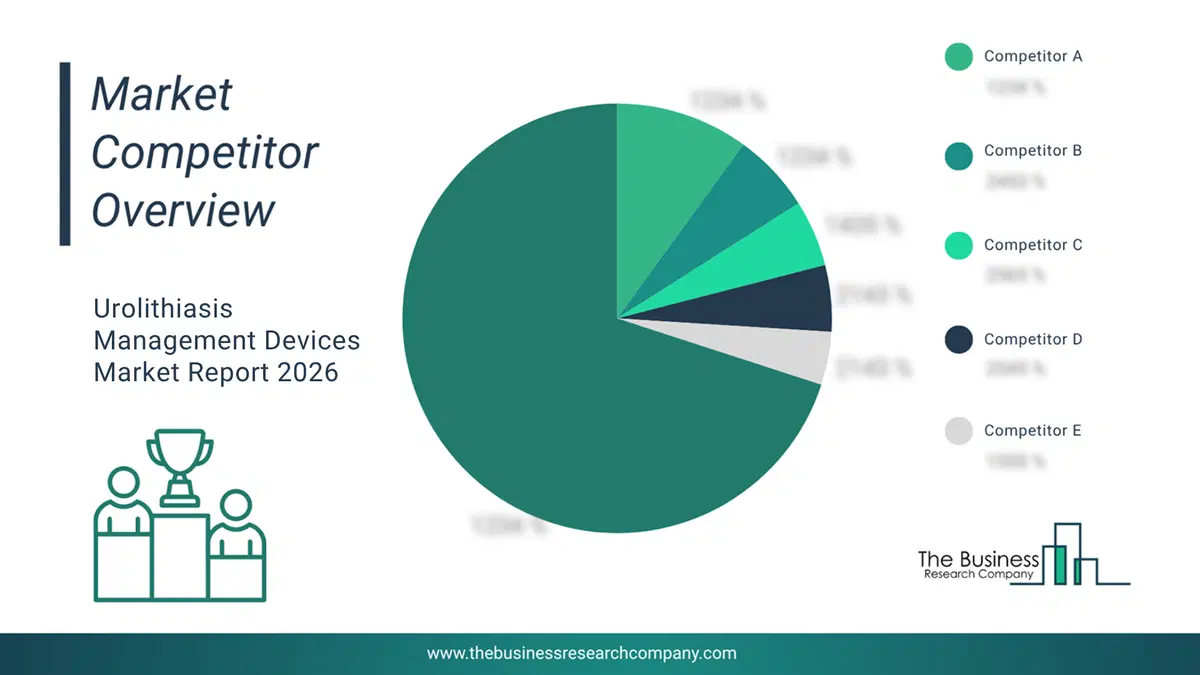
This chart is for illustrative purposes; the full report includes a detailed competitor analysis and comprehensive overview of the top 10 companies in the market.
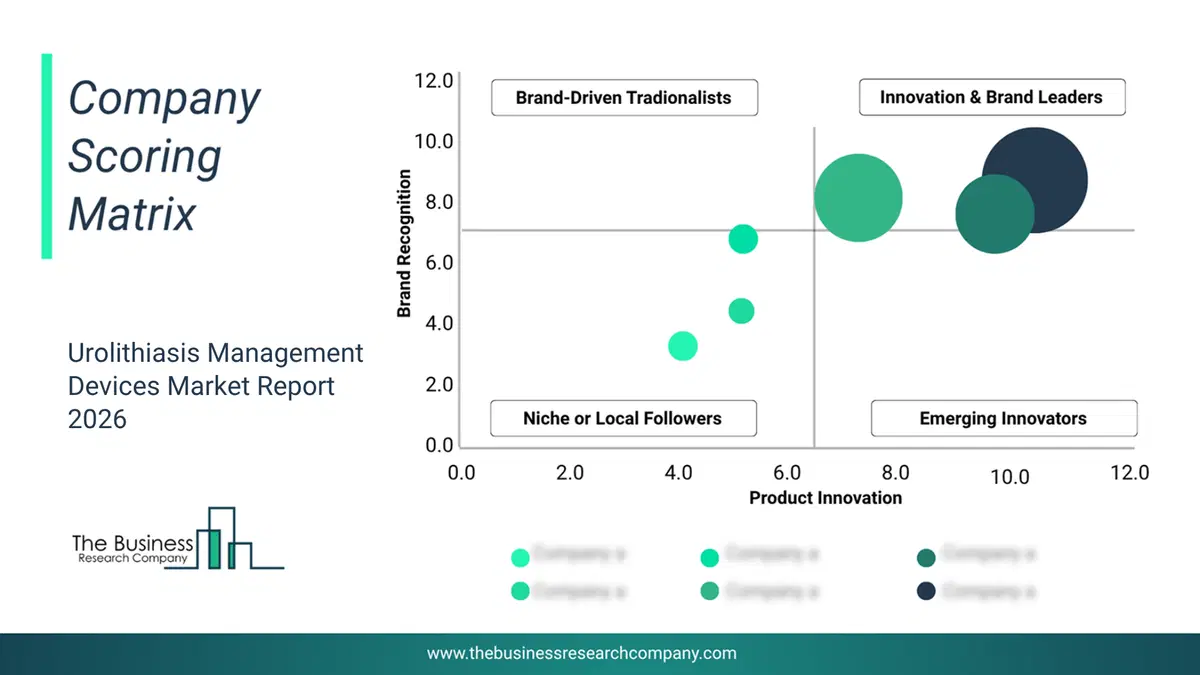
This chart maps companies by product innovation and brand strength, with bubble size indicating relative revenue, helping identify market leaders, challengers, and niche players. This is an illustrative chart; the full report provides a complete and accurate competitive analysis.
Global Urolithiasis Management Devices Market Trends and Insights
Major companies operating in the urolithiasis management devices market are developing innovative, technology-based products, such as thulium fiber laser (TFL) technology-based laser machines, to gain a competitive edge in the market. Thulium Fiber Laser (TFL) technology represents an advanced laser system used in the management and treatment of urolithiasis, or urinary stones. For instance, in July 2023, Coloplast AS, a Denmark-based company engaged in urology-related medical devices and services, launched the Coloplast TFL Drive, the first laser product to grind kidney stones to dust. This innovative, all-in-one thulium fiber laser system is designed for lithotripsy, BPH (Benign prostatic hyperplasia) treatment, and precise soft tissue procedures. It delivers faster, safer treatments, offering surgical versatility and highly effective intra-operative performance using the latest Thulium Fiber Laser (TFL) technology.What Are Latest Mergers And Acquisitions In The Urolithiasis Management Devices Market?
In September 2025, Olympus Corporation Japan-based medical technology company partnered with MacroLux Medical to distribute single-use urology products globally. This partnership aims to expand Olympus’s urology portfolio by offering innovative single-use devices that enhance surgical precision, safety, and workflow efficiency. MacroLux Medical Technology Co. Ltd., a China-based technology company that provides urolithiasis management devices.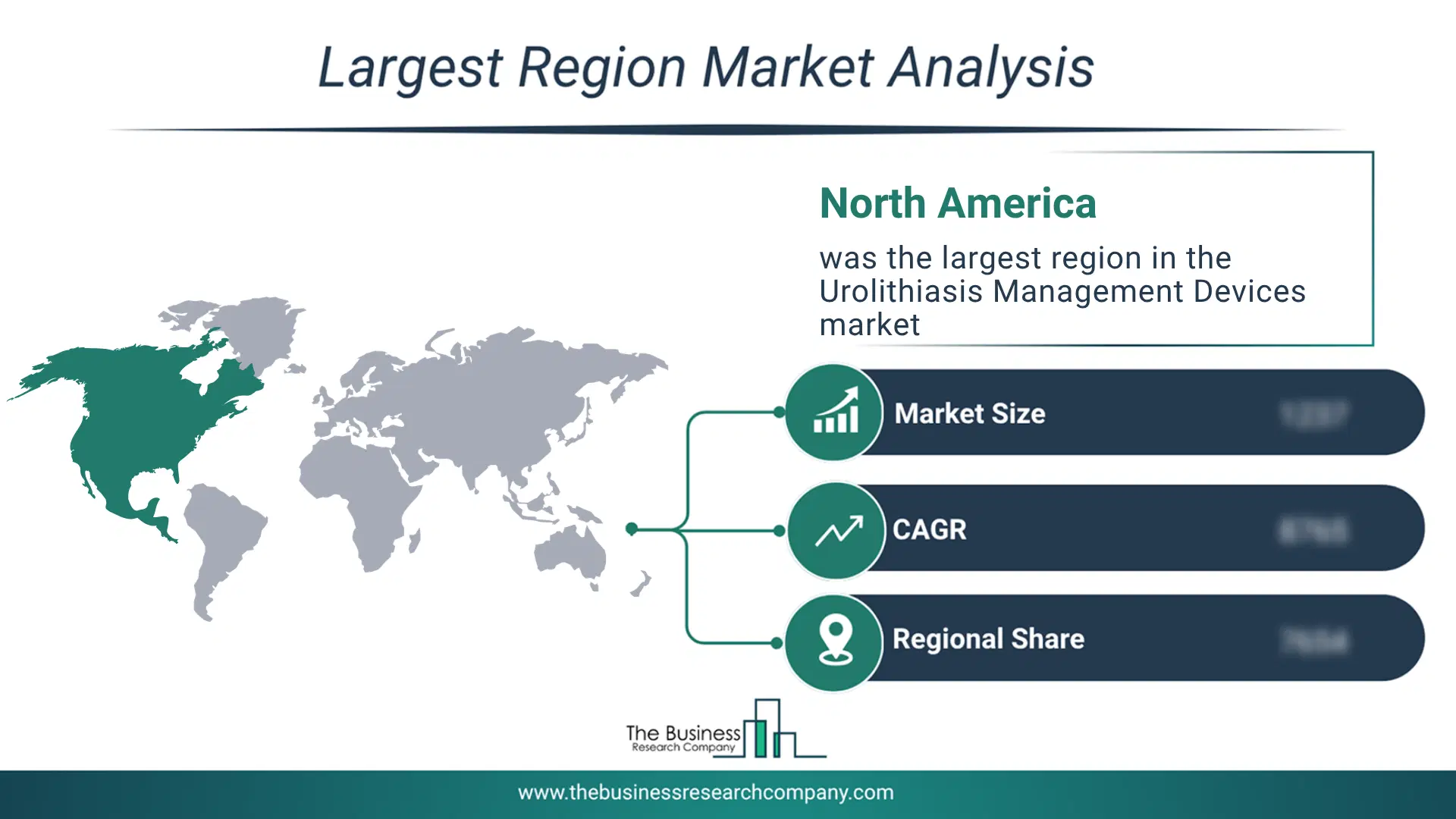
Regional Outlook
North America was the largest region in the urolithiasis management devices market in 2025. Asia-Pacific is expected to be the fastest-growing region in the forecast period. The regions covered in this market report are Asia-Pacific, South East Asia, Western Europe, Eastern Europe, North America, South America, Middle East, Africa. The countries covered in this market report are Australia, Brazil, China, France, Germany, India, Indonesia, Japan, Taiwan, Russia, South Korea, UK, USA, Canada, Italy, SpainWhat Defines the Urolithiasis Management Devices Market?
The urolithiasis management devices market consists of sales of nephroscopes, stone retrieval baskets, stone extraction balloons, and ureteral stents. Values in this market are ‘factory gate’ values, that is the value of goods sold by the manufacturers or creators of the goods, whether to other entities (including downstream manufacturers, wholesalers, distributors and retailers) or directly to end customers. The value of goods in this market includes related services sold by the creators of the goods.How is Market Value Defined and Measured?
The market value is defined as the revenues that enterprises gain from the sale of goods and/or services within the specified market and geography through sales, grants, or donations in terms of the currency (in USD unless otherwise specified). The revenues for a specified geography are consumption values that are revenues generated by organizations in the specified geography within the market, irrespective of where they are produced. It does not include revenues from resales along the supply chain, either further along the supply chain or as part of other products.
This chart presents market attractiveness based on a quantitative evaluation of growth, competition, strategic alignment, and risk, offering a clear view of opportunity areas for decision-making. This chart is for illustrative purposes; the full report contains the complete analysis.

This chart highlights the Total Addressable Market (TAM) by estimating the maximum revenue opportunity using an assumption-driven approach, supporting strategic planning and opportunity sizing across markets. The chart is illustrative; the full report provides a more comprehensive analysis.
What Key Data and Analysis Are Included in the Urolithiasis Management Devices Market Report 2026?
The urolithiasis management devices market research report is one of a series of new reports from The Business Research Company that provides market statistics, including industry global market size, regional shares, competitors with the market share, detailed market segments, market trends and opportunities, and any further data you may need to thrive in the urolithiasis management devices industry. The market research report delivers a complete perspective of everything you need, with an in-depth analysis of the current and future state of the industry.Urolithiasis Management Devices Market Report Forecast Analysis
| Report Attribute | Details |
|---|---|
| Market Size Value In 2026 | $1.79 billion |
| Revenue Forecast In 2030 | $2.21 billion |
| Growth Rate | CAGR of 5.4% from 2026 to 2030 |
| Base Year For Estimation | 2025 |
| Actual Estimates/Historical Data | 2020-2025 |
| Forecast Period | 2026 - 2030 |
| Market Representation | Revenue in USD Billion and CAGR from 2026 to 2030 |
| Segments Covered | Product Type, Treatment Type, End Users |
| Regional Scope | Asia-Pacific, Western Europe, Eastern Europe, North America, South America, Middle East, Africa |
| Country Scope | The countries covered in the report are Australia, Brazil, China, France, Germany, India, Indonesia, Japan, Taiwan, Russia, South Korea, UK, USA, Canada, Italy, Spain. |
| Key Companies Profiled | Medtronic plc, Siemens Healthineers AG, Boston Scientific Corporation, Olympus Corporation, Rocamed SAM, DirexGroup, Cook Medical Inc., Karl Storz SE & Co. KG, C. R. Bard Inc., MTS Medical LLC, Richard Wolf GmbH, Dornier MedTech GmbH, EDAP TMS, EMS Electro Medical Systems SA, Shenzhen Huikang Medical Apparatus, Storz Medical AG, Allengers Medical Systems, JenaSurgical GmbH, ELMED Medical Systems, Allium Medical Solutions Ltd., Elmed Lithotripsy Systems Inc. |
| Customization Scope | Request for Customization |
| Pricing And Purchase Options | Explore Purchase Options |