

Valley Fever Market Report 2026
Global Outlook – By Types Of Treatment (Fluconazole, Itraconazole, Voriconazole, Posaconazole, Others Types Of Treatment), By Site Of Infection (Skin, Lungs, Liver, Bones, Heart, Brain, Membranes That Surround The Brain And Spinal Cord, Other Sites Of Infection), By End-Users (Human, Cattle, Sheep And Goats, Camel, Other End-Users) - Market Size, Trends, Strategies, and Forecast to 2030
Valley Fever Market Overview
• Valley Fever market size has reached to $1.05 billion in 2025 • Expected to grow to $1.35 billion in 2030 at a compound annual growth rate (CAGR) of 5.1% • Growth Driver: Increasing Exposure To Fungus Spores Driving Infection Rates Due To Environmental And Human Activity Changes • Market Trend: Innovative Vaccine Development Advancing Protection Against Fungal Infections • North America was the largest region in 2025.What Is Covered Under Valley Fever Market?
Valley fever, also called coccidioidomycosis, is a fungal infection that primarily affects the lungs and can cause symptoms such as cough, fever, fatigue, and chest pain, with some cases resulting in severe complications. It is caused by inhaling airborne spores of the coccidioides fungi, which are commonly present in dry, dusty soil and can become airborne when the soil is disturbed. The main treatment types of valley fever are fluconazole, itraconazole, voriconazole, posaconazole, others. Fluconazole is an antifungal medication commonly used to treat fungal infections by inhibiting the growth of fungi. The various site of infection include skin, lungs, liver, bones, heart, brain, membranes that surround the brain and spinal cord, others. These are used by various end-users such as human, cattle, sheep and goats, camel, others.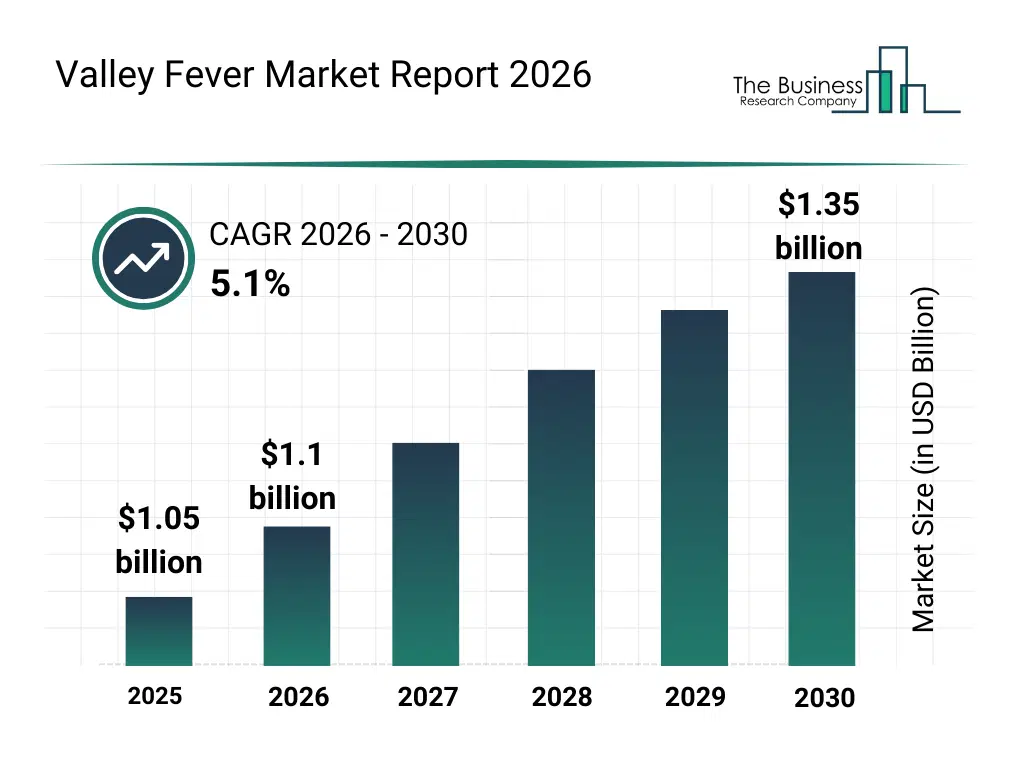
What Is The Valley Fever Market Size and Share 2026?
The valley fever market size has grown strongly in recent years. It will grow from $1.05 billion in 2025 to $1.1 billion in 2026 at a compound annual growth rate (CAGR) of 5.4%. The growth in the historic period can be attributed to improved clinical recognition of fungal infections, availability of established antifungal medications, rising reported cases in endemic areas, increased diagnostic testing, expansion of infectious disease treatment centers.What Is The Valley Fever Market Growth Forecast?
The valley fever market size is expected to see strong growth in the next few years. It will grow to $1.35 billion in 2030 at a compound annual growth rate (CAGR) of 5.1%. The growth in the forecast period can be attributed to growing focus on rapid diagnostic tools, increasing investment in novel antifungal therapies, expansion of disease surveillance programs, rising awareness of climate-related disease spread, increasing demand for effective long-term treatment options. Major trends in the forecast period include increasing focus on early diagnosis and treatment, growing use of antifungal drug therapies, rising awareness in endemic regions, expansion of combination treatment approaches, increasing research into fungal disease management.
Global Valley Fever Market Segmentation
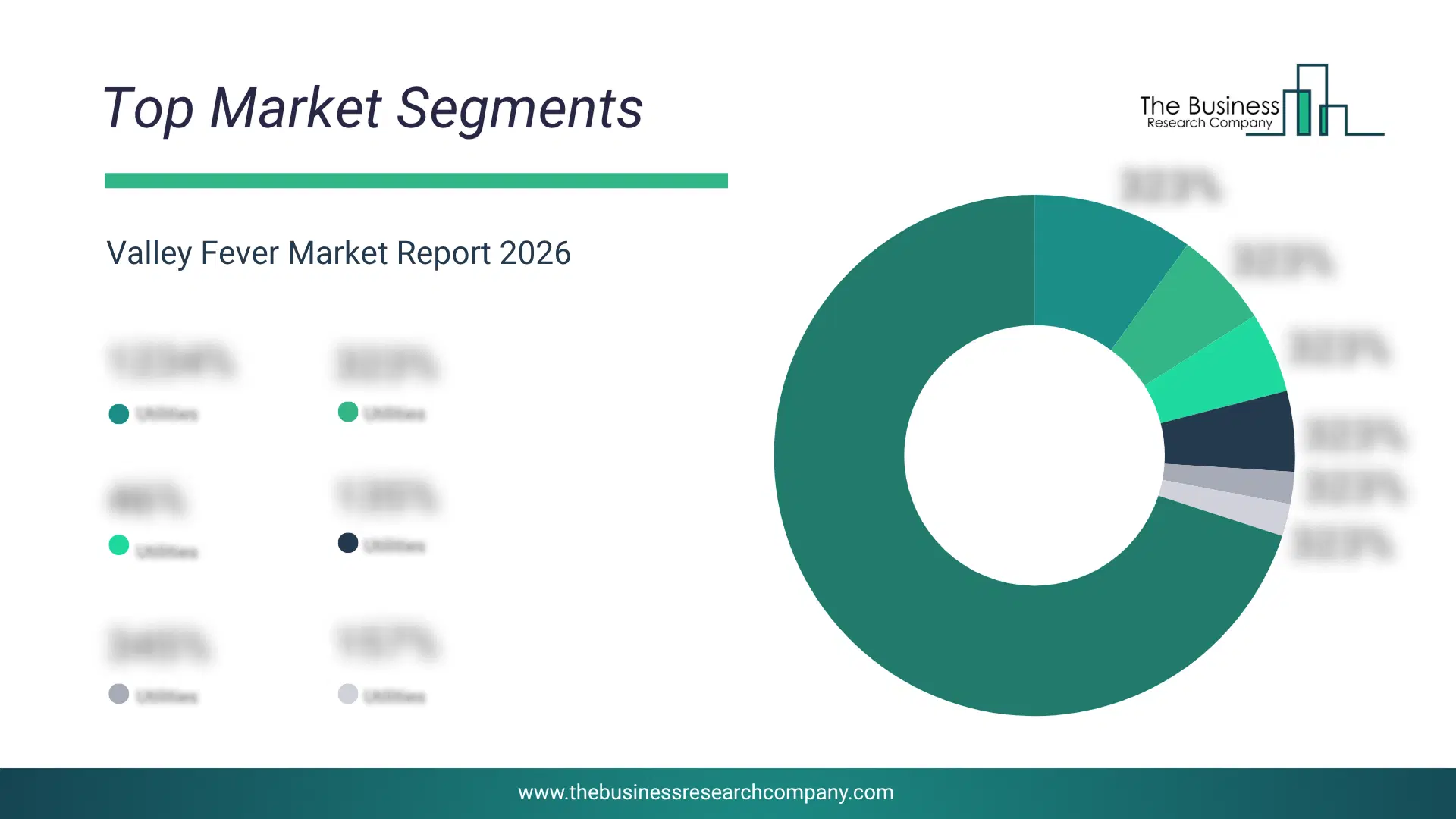
1) By Types Of Treatment: Fluconazole, Itraconazole, Voriconazole, Posaconazole, Others Types Of Treatment 2) By Site Of Infection: Skin, Lungs, Liver, Bones, Heart, Brain, Membranes That Surround The Brain And Spinal Cord, Other Sites Of Infection 3) By End-Users: Human, Cattle, Sheep And Goats, Camel, Other End-Users Subsegments: 1) By Fluconazole Type: Oral Fluconazole, Intravenous Fluconazole 2) By Itraconazole Type: Capsule Itraconazole, Oral Solution Itraconazole 3) By Voriconazole Type: Oral Voriconazole, Intravenous Voriconazole 4) By Posaconazole Type: Oral Suspension Posaconazole, Delayed-Release Tablets Posaconazole, Intravenous Posaconazole 5) By Other Treatment Types: Combination Therapy, Adjunctive TherapyWhat Are The Drivers Of The Valley Fever Market?
The rising exposure to fungus spores is expected to propel the valley fever market going forward. Fungus spores are microscopic reproductive units produced by fungi that can spread through air, water, or surfaces, enabling the fungus to grow and reproduce in new environments. The exposure to fungus spores is increasing due to deforestation and changing weather patterns, which disturb soil and promote spore release, resulting to a higher risk of infections such as valley fever, especially in arid regions where the coccidioides fungus thrives. Valley fever treatment helps patients exposed to fungal spores by reducing symptoms, preventing complications, and controlling fungal growth, ultimately improving recovery and quality of life. For instance, in September 2024, according to the International Society for Infectious Diseases, a US-based non-profit organization, each year, invasive fungal infections impact about 6.5 million individuals, resulting in nearly 3.8 million fatalities, of which approximately 2.5 million are directly attributed to these infections. Therefore, the rising exposure to fungus spores is driving the growth of the valley fever industry. The rising healthcare facilities is expected to propel the growth of the valley fever market going forward. Healthcare facilities refer to the essential physical facilities, systems, and resources needed to provide effective healthcare services. Expanding healthcare facilities is due to advancements in medical technology, as innovations such as telemedicine, robotic surgery, and AI-driven diagnostics require upgraded facilities, specialized equipment, and enhanced healthcare delivery systems to improve patient outcomes and efficiency. Healthcare facilities support valley fever by providing early diagnosis, antifungal treatments, patient education, and ongoing care to manage symptoms and prevent complications. For instance, in July 2025, according to Eurostat, Luxembourg-based statistical office of the European Union, the EU recorded 511 hospital beds per 100,000 people in 2023, while Bulgaria reported the highest ratio in the region at 864 beds per 100,000 people. Therefore, the expanding healthcare infrastructure is driving the growth of the valley fever industry.Key Players In The Global Valley Fever Market
Major companies operating in the valley fever market are Merck & Co Inc, Fresenius Kabi, Dr Reddys Laboratories, Mankind Pharma, Atom Pharma, Cerata Pharmaceuticals, Pfizer Inc, Novartis AG, Sanofi S A, GlaxoSmithKline plc, Bayer AG, Astellas Pharma Inc, Abbott Laboratories Inc, SCYNEXIS Inc, Leadiant Biosciences Inc, Amplyx Pharmaceuticals Inc, Johnson & Johnson, Bristol Myers Squibb, Gilead Sciences Inc, Viatris Inc, Teva Pharmaceuticals USA Inc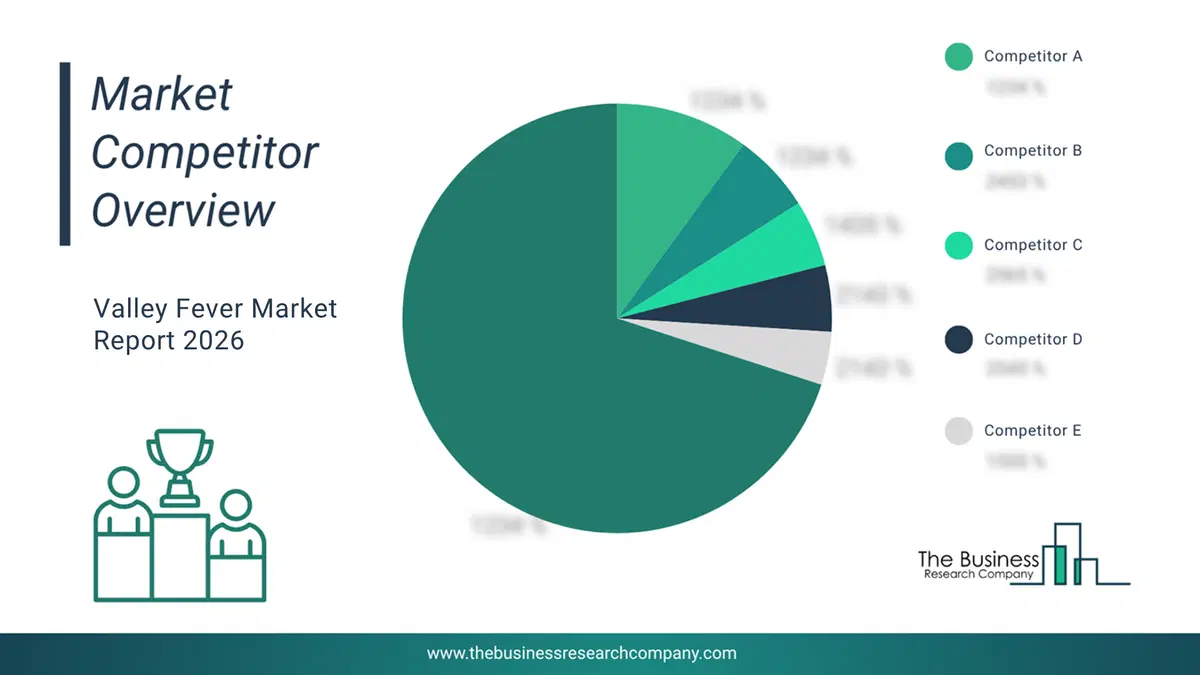
This chart is for illustrative purposes; the full report includes a detailed competitor analysis and comprehensive overview of the top 10 companies in the market.
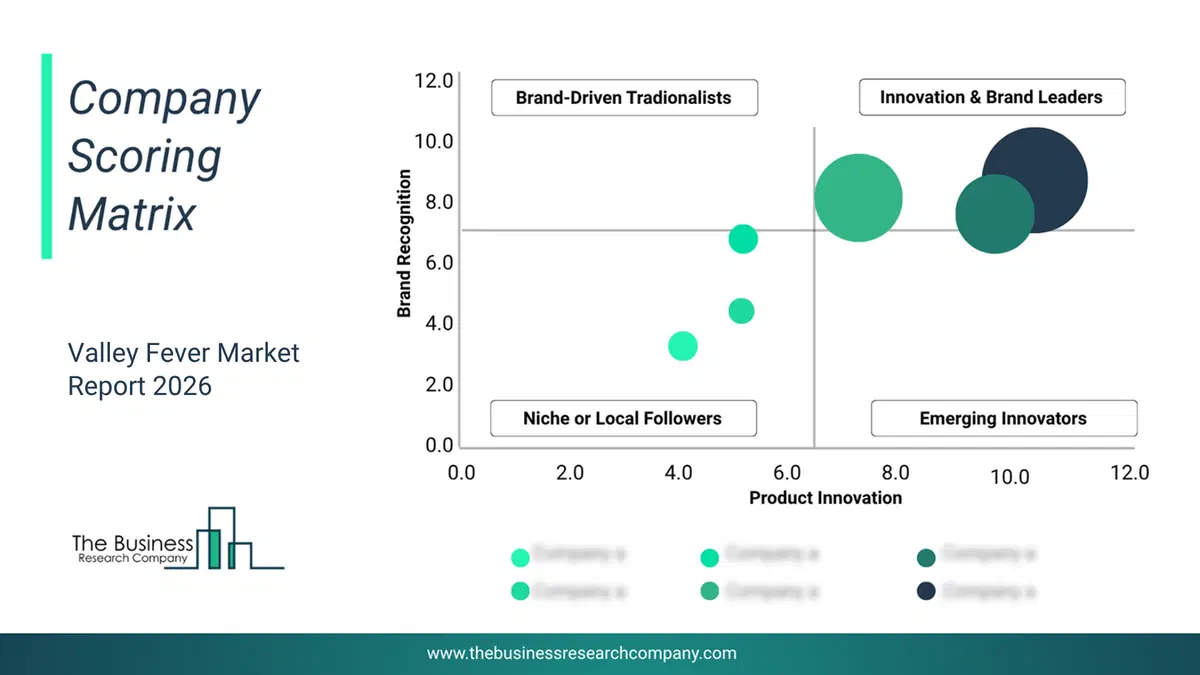
This chart maps companies by product innovation and brand strength, with bubble size indicating relative revenue, helping identify market leaders, challengers, and niche players. This is an illustrative chart; the full report provides a complete and accurate competitive analysis.
Global Valley Fever Market Trends and Insights
Major companies operating in the valley fever market are focusing on developing innovative vaccines for valley fever to address the rising threat of fungal infections. Valley fever vaccines aim to protect people by leveraging advanced science and manufacturing techniques, enhancing public health and safety. For instance, in August 2024, Anivive Lifesciences Inc., a US-based pet pharmaceutical company, received a contract worth up to $33 million from the National Institute of Allergy and Infectious Diseases (NIAID), a US-based government agency to develop a human Valley Fever vaccine. The funding will support additional manufacturing, formulation, extensive safety testing, and a Phase 1 clinical trial, aiming to deliver the first vaccine to prevent a serious systemic fungal infection.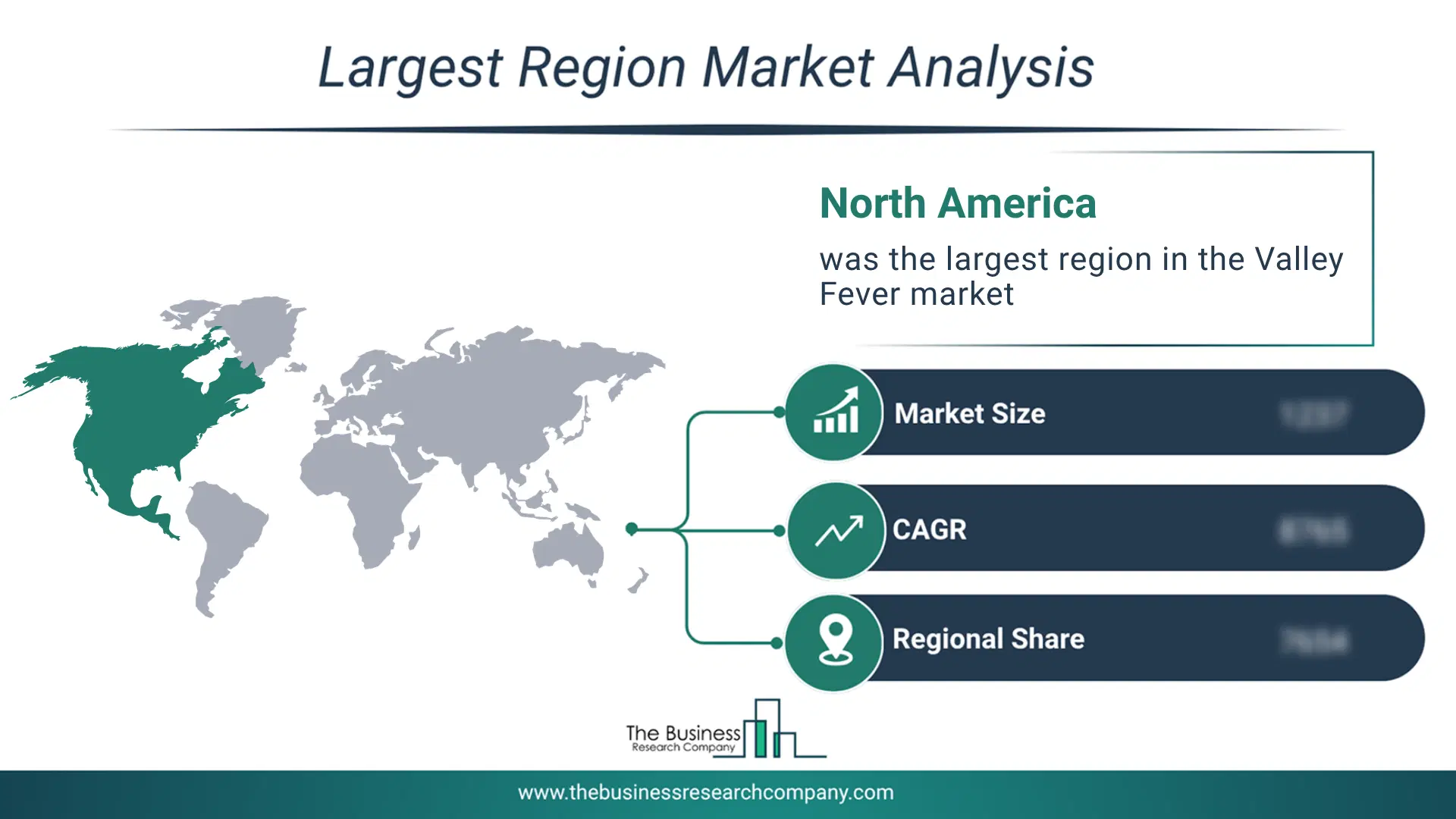
Regional Outlook
North America was the largest region in the valley fever market in 2025. The regions covered in this market report are Asia-Pacific, South East Asia, Western Europe, Eastern Europe, North America, South America, Middle East, Africa. The countries covered in this market report are Australia, Brazil, China, France, Germany, India, Indonesia, Japan, Taiwan, Russia, South Korea, UK, USA, Canada, Italy, Spain.What Defines the Valley Fever Market?
The valley fever market consists of sales of antifungal medications and steroids. Values in this market are ‘factory gate’ values, that is the value of goods sold by the manufacturers or creators of the goods, whether to other entities (including downstream manufacturers, wholesalers, distributors and retailers) or directly to end customers. The value of goods in this market includes related services sold by the creators of the goods.How is Market Value Defined and Measured?
The market value is defined as the revenues that enterprises gain from the sale of goods and/or services within the specified market and geography through sales, grants, or donations in terms of the currency (in USD unless otherwise specified). The revenues for a specified geography are consumption values that are revenues generated by organizations in the specified geography within the market, irrespective of where they are produced. It does not include revenues from resales along the supply chain, either further along the supply chain or as part of other products.
This chart presents market attractiveness based on a quantitative evaluation of growth, competition, strategic alignment, and risk, offering a clear view of opportunity areas for decision-making. This chart is for illustrative purposes; the full report contains the complete analysis.

This chart highlights the Total Addressable Market (TAM) by estimating the maximum revenue opportunity using an assumption-driven approach, supporting strategic planning and opportunity sizing across markets. The chart is illustrative; the full report provides a more comprehensive analysis.
What Key Data and Analysis Are Included in the Valley Fever Market Report 2026?
The valley fever market research report is one of a series of new reports from The Business Research Company that provides market statistics, including industry global market size, regional shares, competitors with the market share, detailed market segments, market trends and opportunities, and any further data you may need to thrive in the valley fever industry. The market research report delivers a complete perspective of everything you need, with an in-depth analysis of the current and future state of the industry.Valley Fever Market Report Forecast Analysis
| Report Attribute | Details |
|---|---|
| Market Size Value In 2026 | $1.1 billion |
| Revenue Forecast In 2030 | $1.35 billion |
| Growth Rate | CAGR of 5.1% from 2026 to 2030 |
| Base Year For Estimation | 2025 |
| Actual Estimates/Historical Data | 2020-2025 |
| Forecast Period | 2026 - 2030 |
| Market Representation | Revenue in USD Billion and CAGR from 2026 to 2030 |
| Segments Covered | Types Of Treatment, Site Of Infection, End-Users |
| Regional Scope | Asia-Pacific, Western Europe, Eastern Europe, North America, South America, Middle East, Africa |
| Country Scope | The countries covered in the report are Australia, Brazil, China, France, Germany, India, Indonesia, Japan, Taiwan, Russia, South Korea, UK, USA, Canada, Italy, Spain |
| Key Companies Profiled | Merck & Co Inc, Fresenius Kabi, Dr Reddys Laboratories, Mankind Pharma, Atom Pharma, Cerata Pharmaceuticals, Pfizer Inc, Novartis AG, Sanofi S A, GlaxoSmithKline plc, Bayer AG, Astellas Pharma Inc, Abbott Laboratories Inc, SCYNEXIS Inc, Leadiant Biosciences Inc, Amplyx Pharmaceuticals Inc, Johnson & Johnson, Bristol Myers Squibb, Gilead Sciences Inc, Viatris Inc, Teva Pharmaceuticals USA Inc |
| Customization Scope | Request for Customization |
| Pricing And Purchase Options | Explore Purchase Options |