
Vegan Food Market Report 2026
Global Outlook – By Product Substitute (Dairy Alternative, Meat Substitute, Other Product Substitutes ), By Source (Wheat, Soy, Oats, Almond, Other Sources), By Distribution Channel (Online, Offline ) – Market Size, Trends, Strategies, and Forecast to 2030
Vegan Food Market Overview
• Vegan Food market size has reached to $31.09 billion in 2025 • Expected to grow to $52.67 billion in 2030 at a compound annual growth rate (CAGR) of 11.2% • Growth Driver: Increasing Concern About Environment • Market Trend: Innovative Plant-Based Chicken-Style Products Beyond Meat Expands Offerings To Satisfy Diverse Consumer Preferences • Asia-Pacific was the largest region in 2025 and Western Europe is the fastest growing region.Market Gains By 2030 – Top Opportunities By Segment
Market Gain identifies the most promising market opportunities by highlighting the segments or products expected to generate the highest incremental revenue growth over the next five years.
What Is Covered Under Vegan Food Market?
Vegan foods are foods that are produced without the use of animal ingredients or animal-derived ingredients. The primary focus of vegan foods is ethical, environmental, and health-conscious eating that avoids exploiting animals. The main product substitute of vegan food are dairy alternative, meat substitute, other product substitutes. Dairy alternatives are products that are used as substitutes for dairy products, such as milk, cheese, and butter. The source are wheat, soy, oats, almond, other sources, that are distributed online and offline.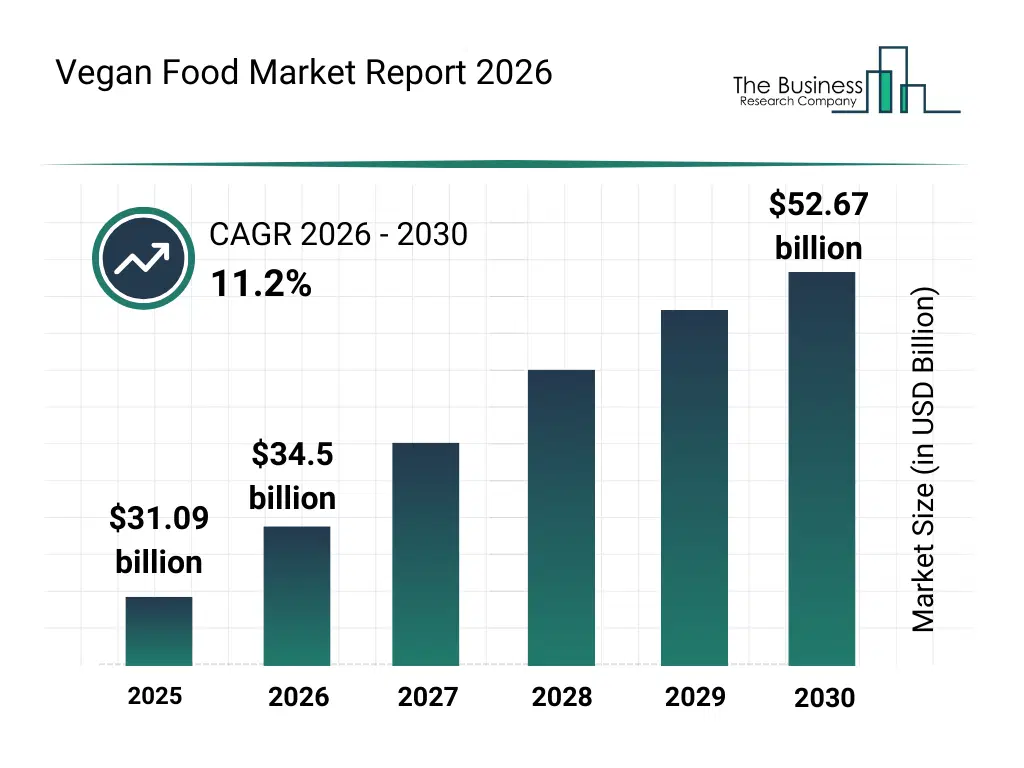
What Is The Vegan Food Market Size and Share 2026?
The vegan food market size has grown rapidly in recent years. It will grow from $31.09 billion in 2025 to $34.5 billion in 2026 at a compound annual growth rate (CAGR) of 11.0%. The growth in the historic period can be attributed to growth in vegetarian and flexitarian populations, rising health and wellness awareness, expansion of plant-based dairy alternatives, increasing availability of vegan retail options, investment in food innovation.What Is The Vegan Food Market Growth Forecast?
The vegan food market size is expected to see rapid growth in the next few years. It will grow to $52.67 billion in 2030 at a compound annual growth rate (CAGR) of 11.2%. The growth in the forecast period can be attributed to startups growing demand for sustainable diets, rising investments in plant-based food innovation, expansion of foodservice vegan menus, increasing focus on allergen-free formulations, growth of alternative protein sources. Major trends in the forecast period include increasing demand for plant-based protein alternatives, rising expansion of vegan ready-to-eat products, growing focus on clean and natural ingredients, expansion of online vegan food retail, enhanced innovation in texture and taste replication.
Global Vegan Food Market Segmentation
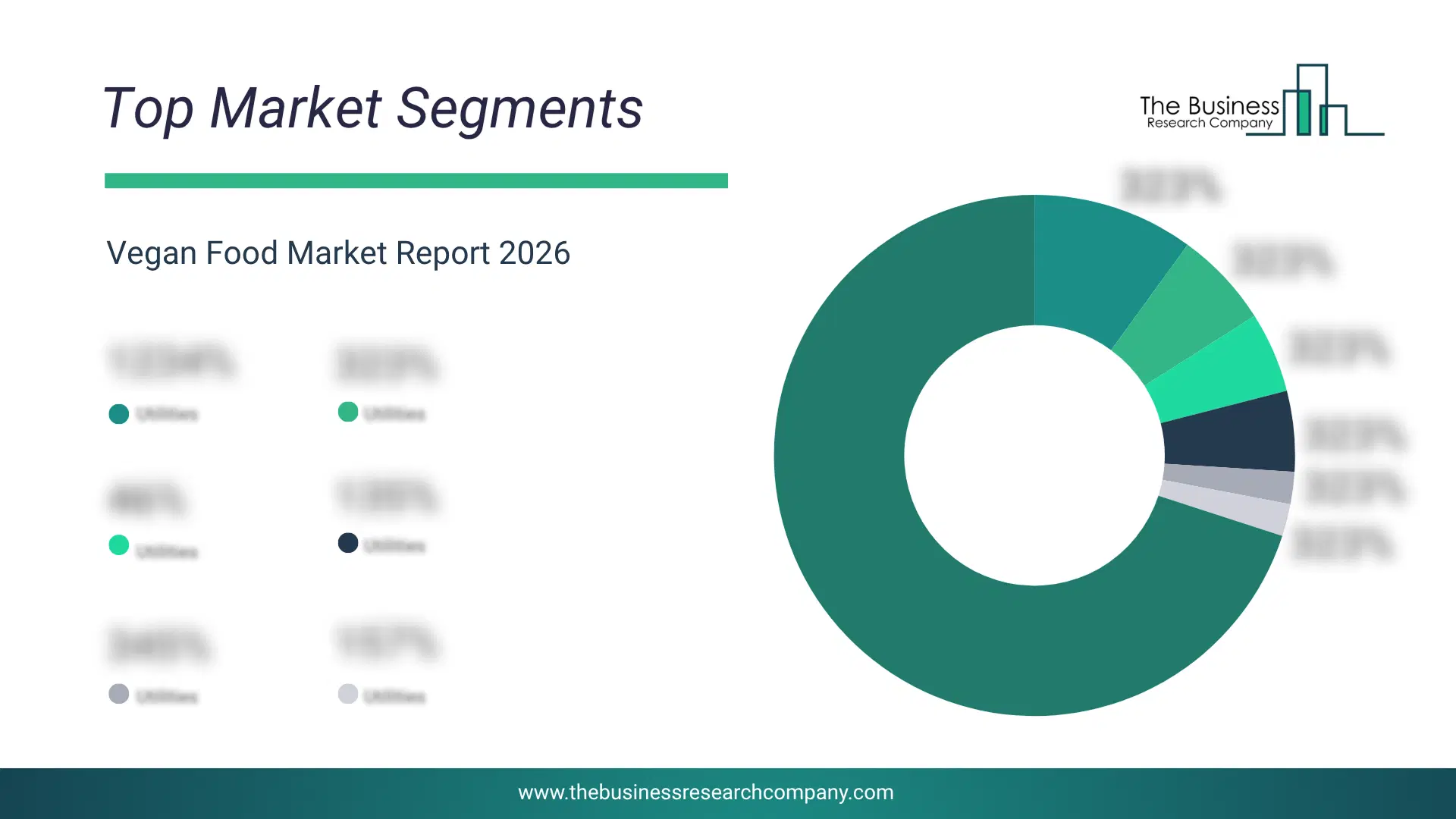
1) By Product Substitute: Dairy Alternative, Meat Substitute, Other Product Substitutes 2) By Source: Wheat, Soy, Oats, Almond, Other Sources 3) By Distribution Channel: Online, Offline Subsegments: 1) By Dairy Alternative: Plant-Based Milk, Plant-Based Cheese, Plant-Based Yogurt, Plant-Based Butter, Plant-Based Ice Cream 2) By Meat Substitute: Plant-Based Meat, Vegan Sausages, Vegan Burgers, Vegan Chicken And Other Poultry Substitutes, Vegan Seafood Alternatives 3) By Other Product Substitutes: Plant-Based Eggs, Vegan Sweets And Snacks, Vegan Sauces And Condiments, Vegan Ready Meals And Snacks The top segments in the vegan food market will be: • Meat Substitute will reach $23.01 Billion by 2030. • Dairy Alternative will reach $21.2 Billion by 2030. • Other Product Substitutes will reach $8.13 Billion by 2030.What Is The Driver Of The Vegan Food Market?
An increase in concern about the environment among the population is driving the growth of the vegan food market. Rearing and breeding livestock such as pigs, hens, cows, and goats on farms contributes to the greenhouse effect. Greenhouse gases are released from the agriculture of livestock such as cows, and the gases are released to block the atmospheric heat from escaping, which increases the overall temperature. The demand for animal meat requires the excess practice of animal farming. Thus, an increase in the number of consumers of vegan food market eliminates the demand for excessive animal farming, following a decrease in greenhouse gas emissions in the environment. For instance, in July 2023, according to the Office for National Statistics, a UK-based government department, in Great Britain, 86.5% of adults have made lifestyle changes to address environmental issues, with 73.6% reporting some changes and 12.8% having made significant adjustments. Therefore, growing environmental concerns continue to drive the expansion of the vegan food industry.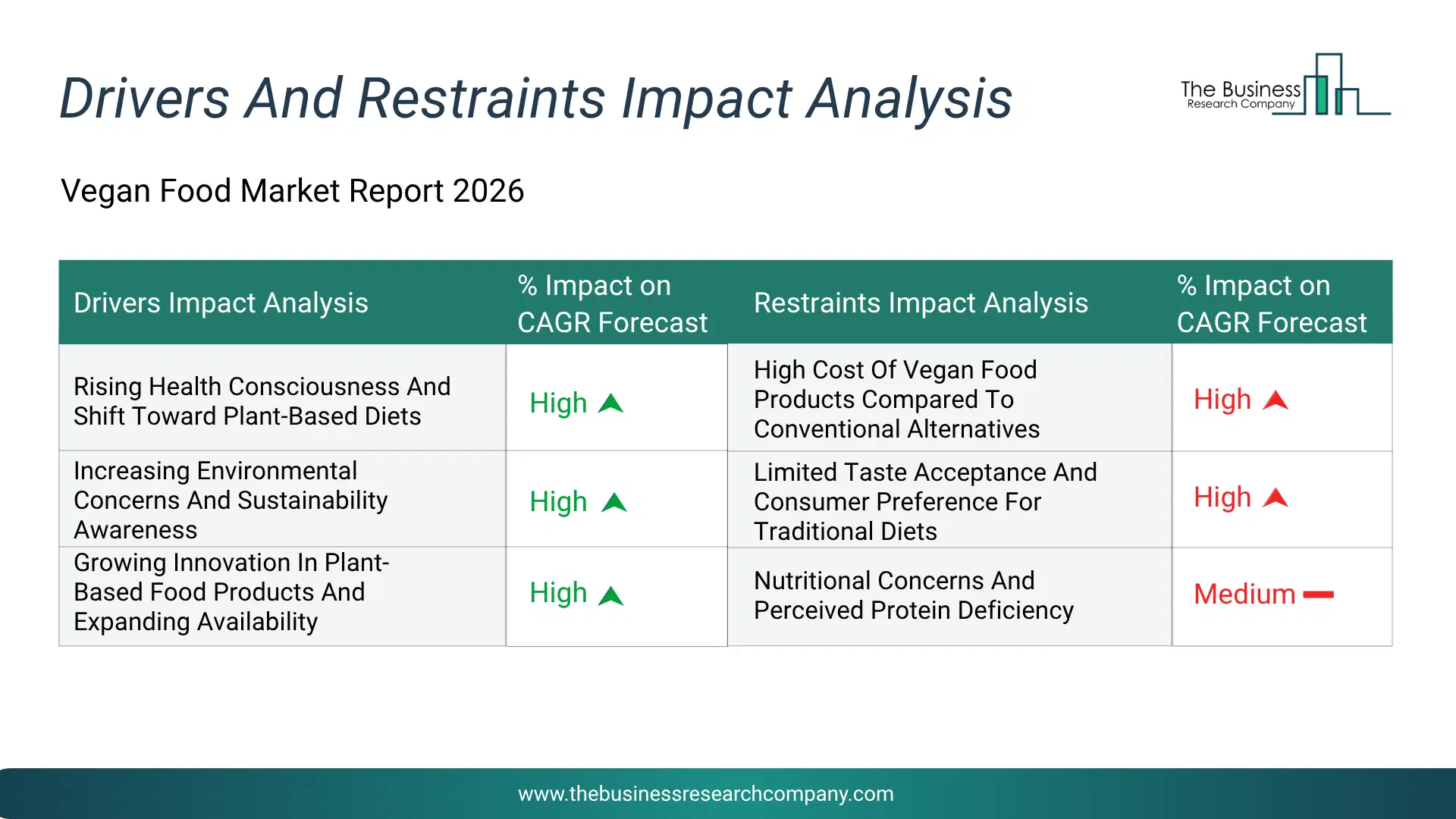
Infographic Chart Showing Key Market Drivers Analysis And Restraints For Vegan Food Market
The chart presents an impact analysis of key drivers and restraints, quantifying their relative influence on the market's growth rate and helping assess the balance between growth enablers and limiting factors. This chart offers a high-level perspective; the full report contains more detailed insights.
How Will The Drivers Impact Growth In The Global Vegan Food Market?
• Rising Health Consciousness And Shift Toward Plant-Based Diets (High) – During the forecast period, the rising health consciousness and shift toward plant-based diets is expected to become a key growth driver for the vegan food market by 2030. Consumers are increasingly seeking foods that support weight management, heart health, and overall wellness, encouraging greater adoption of vegan alternatives. Growing awareness of the nutritional benefits associated with plant-based ingredients is influencing purchasing decisions across multiple age groups. Food manufacturers are responding by introducing products with enhanced protein content, clean-label ingredients, and functional health benefits. This transition toward healthier eating habits is strengthening long-term demand for vegan food products. • Increasing Environmental Concerns And Sustainability Awareness (High) – During the forecast period, the increasing environmental concerns and sustainability awareness is expected to emerge as a major factor driving the expansion of the vegan food market by 2030. Consumers are becoming more conscious of the environmental impact associated with traditional food production, including greenhouse gas emissions, water consumption, and land use. Vegan food products are increasingly viewed as sustainable alternatives that align with environmentally responsible lifestyles. Food producers are also adopting sustainable sourcing and production practices to meet evolving consumer expectations. • Growing Innovation In Plant-Based Food Products And Expanding Availability (High) – During the forecast period, the growing innovation in plant-based food products and expanding availability is expected to act as a key growth catalyst for the vegan food market by 2030. Continuous advancements in food processing technologies, ingredient formulations, and taste enhancement are improving the quality and appeal of vegan products. Manufacturers are expanding product portfolios to cater to diverse consumer preferences across dairy, meat, snacks, and ready-to-eat categories. At the same time, wider availability through supermarkets, specialty stores, restaurants, and online platforms is increasing product accessibility.How Will The Restraints Impact Growth In The Global Vegan Food Market?
• High Cost Of Vegan Food Products Compared To Conventional Alternatives (High) – During the forecast period, the vegan food products, especially plant-based meat and dairy substitutes, are often priced higher due to specialized ingredients, processing technologies, and lower economies of scale. This price premium discourages price-sensitive consumers from adopting vegan diets on a regular basis. In emerging markets, affordability remains a key barrier, limiting widespread penetration beyond niche consumer segments. As a result, higher costs restrict volume sales and slow down mass-market adoption. This acts as a restraint by limiting demand expansion despite growing awareness and interest in vegan foods. • Limited Taste Acceptance And Consumer Preference For Traditional Diets (High) – During the forecast period, the despite innovation, many consumers still perceive vegan food products as inferior in taste, texture, or overall eating experience compared to conventional animal-based foods. Deep-rooted cultural and dietary habits further reinforce preference for traditional diets, especially in regions with strong culinary heritage. This hesitation reduces repeat purchases and slows the transition from trial to regular consumption. Consequently, manufacturers face challenges in achieving consistent demand growth. This acts as a restraint by restricting consumer acceptance and delaying large-scale market expansion. • Nutritional Concerns And Perceived Protein Deficiency (High) – During the forecast period, the some consumers believe that vegan diets may lack essential nutrients such as protein, vitamin B12, iron, and omega-3 fatty acids, creating hesitation toward fully adopting plant-based foods. This perception, whether accurate or not, influences purchasing behavior and limits the shift away from animal-based products. Lack of awareness about fortified vegan options further amplifies these concerns. As a result, consumers may only partially adopt vegan foods rather than fully transitioning. This acts as a restraint by reducing the potential consumption volume and slowing overall market growth.Key Players In The Global Vegan Food Market
Major companies operating in the vegan food market are Amy's Kitchen, VITASOY International Holdings Ltd., Beyond Meat, Tofutti Brands Inc., Plamil Foods Ltd., Danone S.A., Eden Foods Inc., Whitewave Foods Company Inc., Sun Opta Inc., Pascual Group, Blue Diamond Growers, Archer Daniel Midland Company, Earth's Own Food Company Inc., Panos Brand LLC., Hain Celestial Group Inc., Living Harvest Food Inc., Morningstar Farms, MGP Ingredients Inc., Sonic Biochem Extractions Limited, DuPont de Nemours Inc., The Nisshin Oillio Group, Schouten Europe, Alpha Foods, Corbion Biotech Inc., 22 Days Nutrition, Annie's Homegrown, Earth Balance, Field Roast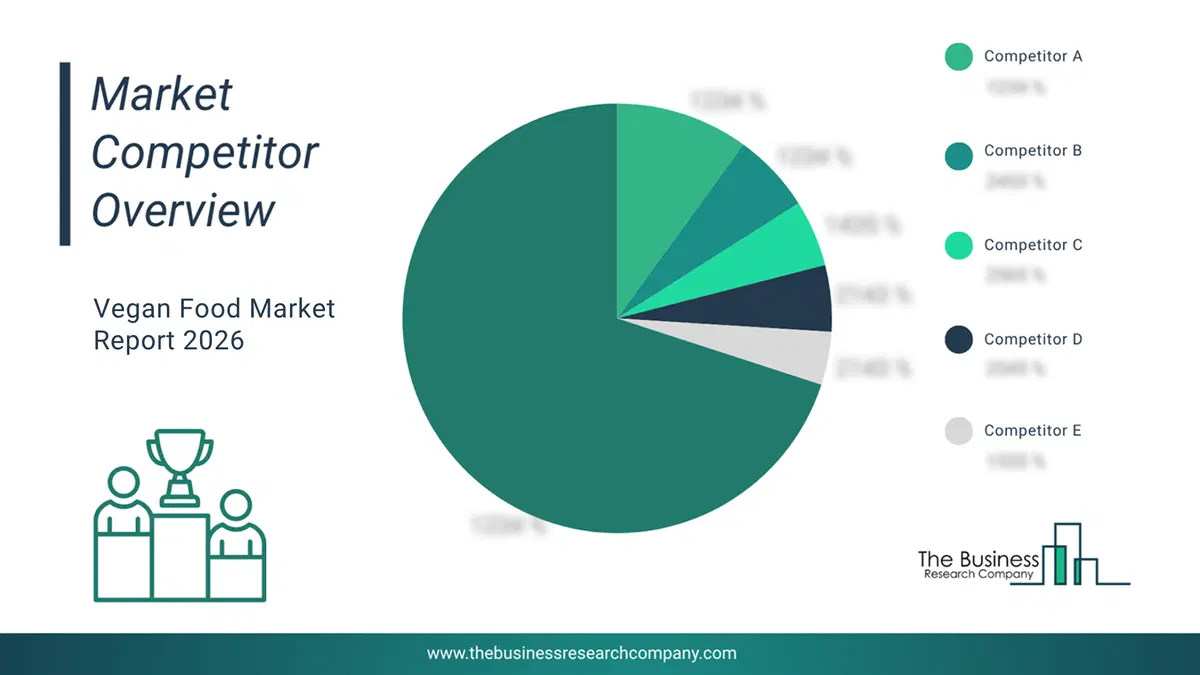
This chart is for illustrative purposes; the full report includes a detailed competitor analysis and comprehensive overview of the top 10 companies in the market.
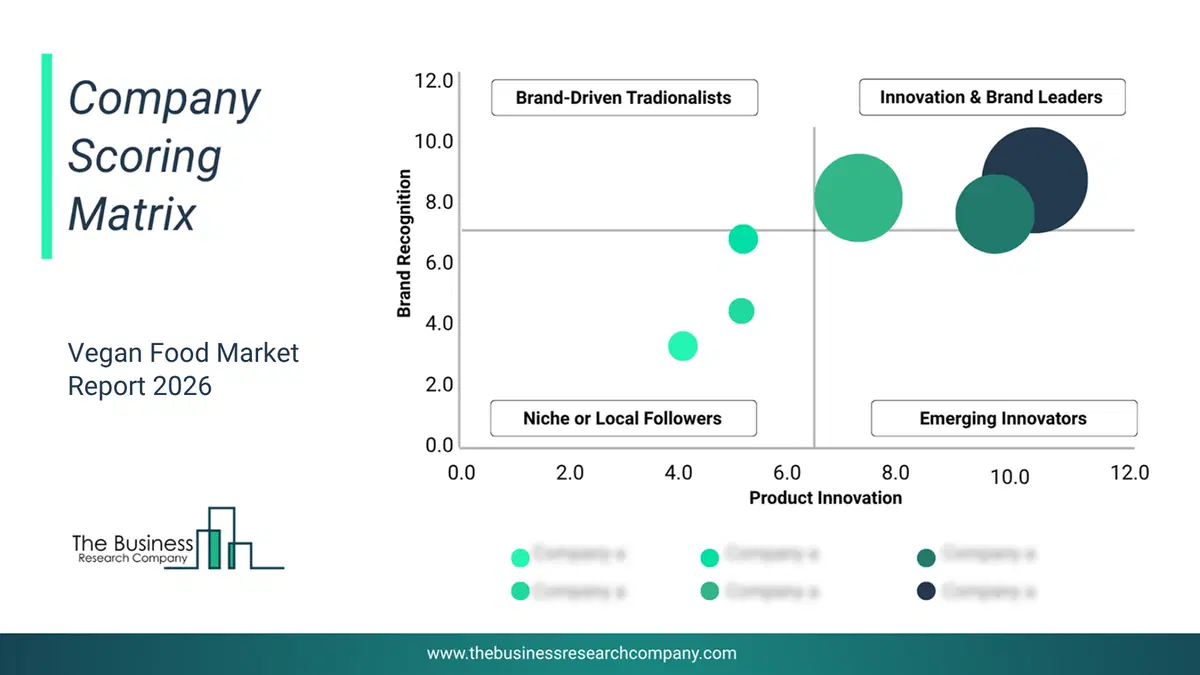
This chart maps companies by product innovation and brand strength, with bubble size indicating relative revenue, helping identify market leaders, challengers, and niche players. This is an illustrative chart; the full report provides a complete and accurate competitive analysis.
Global Vegan Food Market Trends and Insights
Major companies operating in the vegan food market are focusing on innovative products like plant-based chicken-style products to better meet the needs of their existing consumers. Plant-based chicken-style products are manufactured from a range of plant-based components, including soy, protein from peas, jackfruit, and wheat protein, and are intended to taste and feel like genuine chicken. For instance, in April 2023, Beyond Meat, Inc., a US-based manufacturer of plant-based meat alternatives, growing its product line in the UK with a variety of delectable plant-based items that resemble chicken, including the recently released Beyond Burger Chicken-Style, Beyond Fillet, and Beyond Nuggets. The new Beyond Chicken-Style products, like the rest of the Beyond Meat line, are manufactured from plant-based components and are meant to look, cook, and taste like their animal counterparts. These delectable new additions are perfect for carnivores, flexitarians, vegetarians, and vegans alike since they are crispy on the exterior and very supple and juicy on the inside owing to the golden breading.What Are Latest Mergers And Acquisitions In The Vegan Food Market?
In August 2025, v2food Pty Ltd, an Australian-based plant-based meat producer company specializing in developing innovative plant-based proteins, acquired Daring Foods, Inc. for an undisclosed amount. Through this acquisition, v2food aims to accelerate its presence in the U.S. plant-based meat market, particularly in vegan chicken products, by integrating Daring Foods’ established product line and U.S. retail footprint, thereby simplifying and accelerating its global expansion in plant-based proteins. Daring Foods, Inc., is a U.S.-based company specializing in vegan chicken alternatives.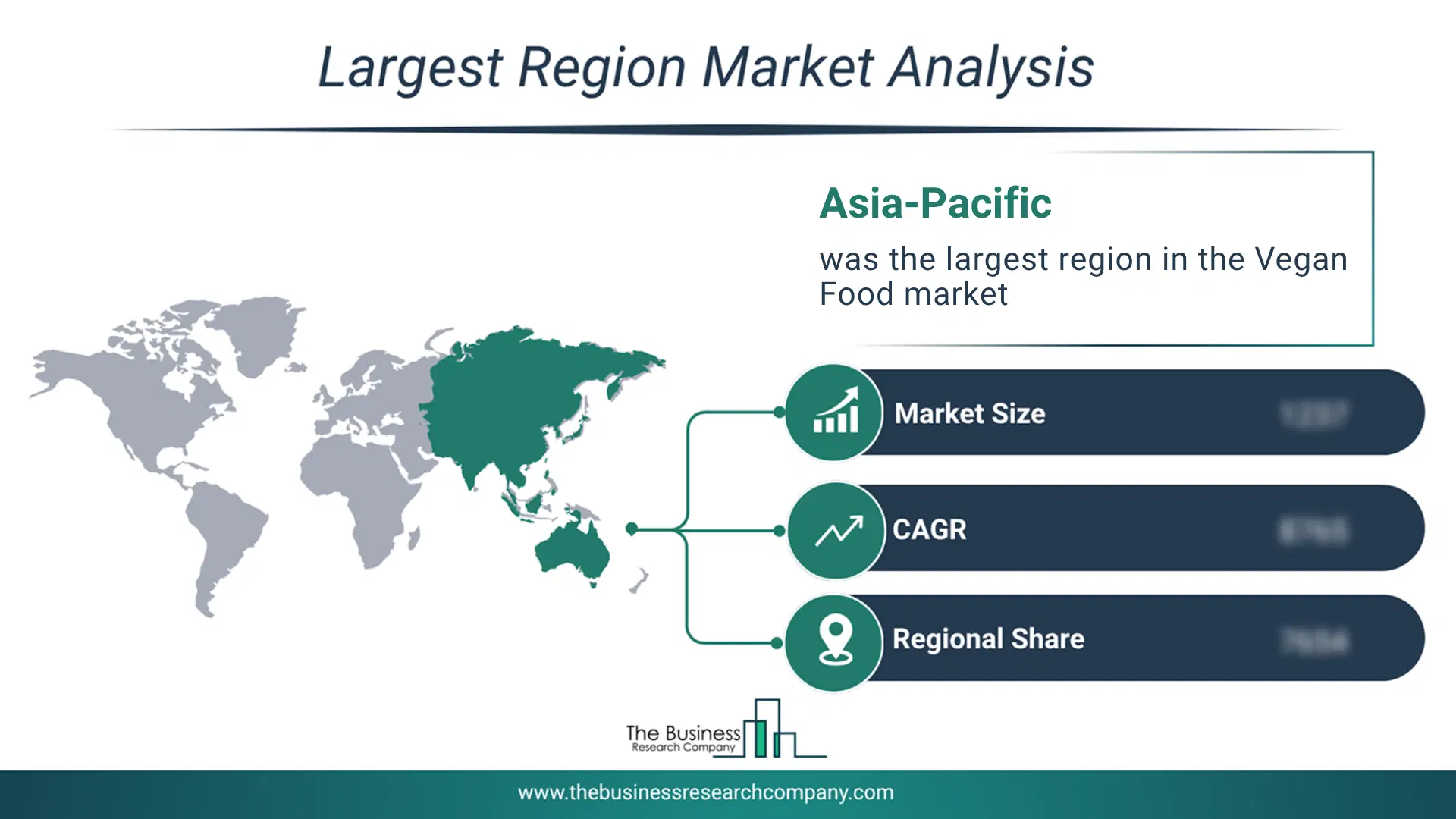
Regional Outlook
Asia-Pacific was the largest region in the vegan food market in 2025. Western Europe was the second-largest region in the vegan food market report. The regions covered in this market report are Asia-Pacific, South East Asia, Western Europe, Eastern Europe, North America, South America, Middle East and Africa. The countries covered in this market report are China, India, Japan, Australia, Indonesia, South Korea, Bangladesh, Thailand, Vietnam, Malaysia, Singapore, Philippines, Hong Kong, Taiwan, New Zealand, UK, Germany, France, Italy, Spain, Austria, Belgium, Denmark, Finland, Ireland, Netherlands, Norway, Portugal, Sweden, Switzerland, Russia, Czech Republic, Poland, Romania, Ukraine, USA, Canada, Mexico, Brazil, Chile, Argentina, Colombia, Peru, Saudi Arabia, Israel, Iran, Turkey, UAE, Egypt, Nigeria, South Africa.What Defines the Vegan Food Market?
The vegan food market consists of sales of vegan fruits and vegetables, legumes such as vegan peas, vegan beans, plant protein-based tofu, and plant protein-based meat. Values in this market are factory gate values, that is the value of goods sold by the manufacturers or creators of the goods, whether to other entities (including downstream manufacturers, wholesalers, distributors and retailers) or directly to end customers. The value of goods in this market includes related services sold by the creators of the goods.How is Market Value Defined and Measured?
The market value is defined as the revenues that enterprises gain from the sale of goods and/or services within the specified market and geography through sales, grants, or donations in terms of the currency (in USD unless otherwise specified). The revenues for a specified geography are consumption values that are revenues generated by organizations in the specified geography within the market, irrespective of where they are produced. It does not include revenues from resales along the supply chain, either further along the supply chain or as part of other products.
This chart presents market attractiveness based on a quantitative evaluation of growth, competition, strategic alignment, and risk, offering a clear view of opportunity areas for decision-making. This chart is for illustrative purposes; the full report contains the complete analysis.

This chart highlights the Total Addressable Market (TAM) by estimating the maximum revenue opportunity using an assumption-driven approach, supporting strategic planning and opportunity sizing across markets. The chart is illustrative; the full report provides a more comprehensive analysis.
What Key Data and Analysis Are Included in the Vegan Food Market Report 2026?
The vegan food market research report is one of a series of new reports from The Business Research Company that provides market statistics, including industry global market size, regional shares, competitors with the market share, detailed market segments, market trends and opportunities, and any further data you may need to thrive in the vegan food industry. The market research report delivers a complete perspective of everything you need, with an in-depth analysis of the current and future state of the industry.Vegan Food Market Report Forecast Analysis
| Report Attribute | Details |
|---|---|
| Market Size Value In 2026 | $34.5 billion |
| Revenue Forecast In 2030 | $52.67 billion |
| Growth Rate | CAGR of 11.0% from 2026 to 2030 |
| Base Year For Estimation | 2025 |
| Actual Estimates/Historical Data | 2020-2025 |
| Forecast Period | 2026 - 2030 |
| Market Representation | Revenue in USD Billion and CAGR from 2026 to 2030 |
| Segments Covered | Product Substitute, Source, Distribution Channel |
| Regional Scope | Asia-Pacific, Western Europe, Eastern Europe, North America, South America, Middle East, Africa |
| Country Scope | The countries covered in the report are Australia, Brazil, China, France, Germany, India, Indonesia, Japan, Taiwan, Russia, South Korea, UK, USA, Canada, Italy, Spain. |
| Key Companies Profiled | Amy's Kitchen, VITASOY International Holdings Ltd., Beyond Meat, Tofutti Brands Inc., Plamil Foods Ltd., Danone S.A., Eden Foods Inc., Whitewave Foods Company Inc., Sun Opta Inc., Pascual Group, Blue Diamond Growers, Archer Daniel Midland Company, Earth's Own Food Company Inc., Panos Brand LLC., Hain Celestial Group Inc., Living Harvest Food Inc., Morningstar Farms, MGP Ingredients Inc., Sonic Biochem Extractions Limited, DuPont de Nemours Inc., The Nisshin Oillio Group, Schouten Europe, Alpha Foods, Corbion Biotech Inc., 22 Days Nutrition, Annie's Homegrown, Earth Balance, Field Roast |
| Customization Scope | Request for Customization |
| Pricing And Purchase Options | Explore Purchase Options |