
Vehicle-To-Infrastructure (V2I) Communication Market Report 2026
Global Outlook – By Component (Hardware, Software, Services), By Technology (Big Data Analytics, Smart Sensors), By Application (Dedicated Short Range Communication (DSRC), Cellular, Wi-Fi, WiMax, Bluetooth) – Market Size, Trends, Strategies, and Forecast to 2030
Vehicle-To-Infrastructure (V2I) Communication Market Overview
• Vehicle-To-Infrastructure (V2I) Communication market size has reached to $0.71 billion in 2025 • Expected to grow to $2.58 billion in 2030 at a compound annual growth rate (CAGR) of 28.6% • Growth Driver: Impact Of Automobile Theft On Vehicle-to-Infrastructure (V2I) Communication Market • Market Trend: Cloud-Based V2N And V2X Integration Enhances Road Safety And Connectivity • North America was the largest region in 2025.What Is Covered Under Vehicle-To-Infrastructure (V2I) Communication Market?
Vehicle-to-infrastructure (V2I) communication refers to the exchange of data and information between vehicles and roadside infrastructure elements such as traffic signals, road signs, toll booths, and parking meters. This communication allows vehicles to interact with the surrounding infrastructure to improve traffic flow, enhance safety, and enable advanced transportation services. The main components of vehicle-to-infrastructure (V2I) communication are hardware, software, and services. Hardware refers to physical components used in V2I communication, including onboard units (OBUs), roadside units (RSUs), antennas, sensors, and communication modules. The different types of technology, including big data analytics and smart sensors, are used in a variety of applications, such as dedicated short-range communication (DSRC), cellular, Wi-Fi, WiMAX, and Bluetooth.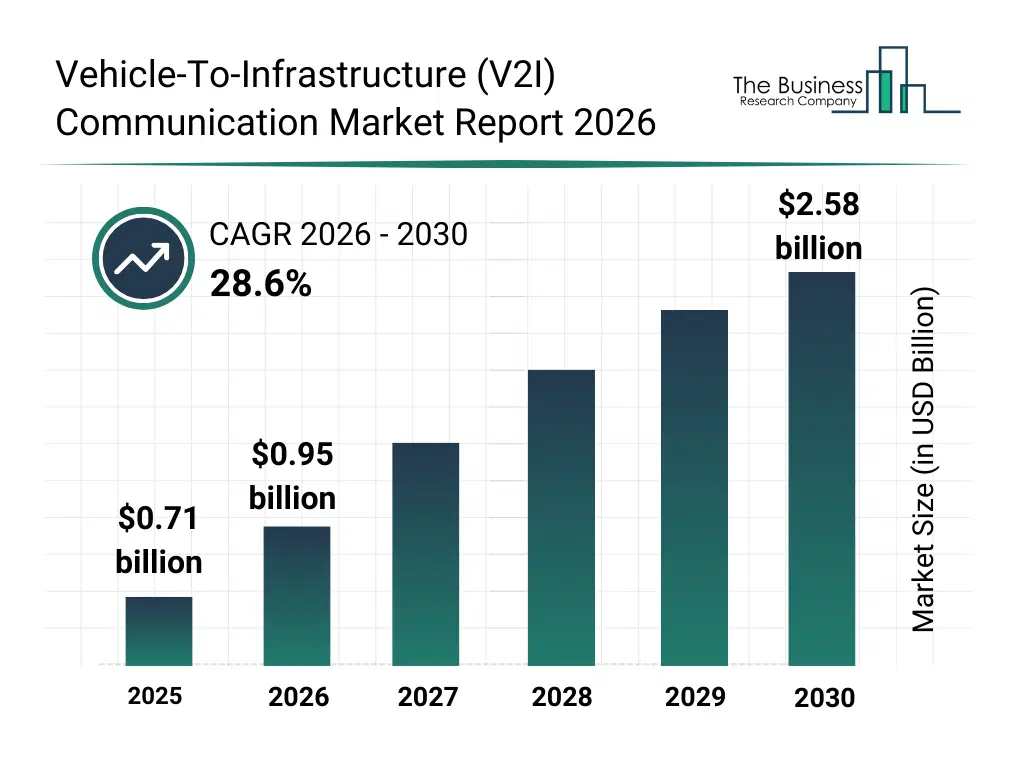
What Is The Vehicle-To-Infrastructure (V2I) Communication Market Size and Share 2026?
The vehicle-to-infrastructure (v2i) communication market size has grown exponentially in recent years. It will grow from $0.71 billion in 2025 to $0.95 billion in 2026 at a compound annual growth rate (CAGR) of 34.1%. The growth in the historic period can be attributed to expansion of intelligent transportation systems, rising urban traffic congestion, early adoption of connected vehicle pilots, increasing government investments in smart roads, deployment of roadside communication infrastructure.What Is The Vehicle-To-Infrastructure (V2I) Communication Market Growth Forecast?
The vehicle-to-infrastructure (v2i) communication market size is expected to see exponential growth in the next few years. It will grow to $2.58 billion in 2030 at a compound annual growth rate (CAGR) of 28.6%. The growth in the forecast period can be attributed to increasing rollout of autonomous vehicle infrastructure, rising investments in smart city transportation, expansion of 5g-enabled v2i networks, growing demand for real-time traffic optimization, increasing integration with electric vehicle ecosystems. Major trends in the forecast period include increasing deployment of smart traffic signal integration, rising adoption of real-time traffic data exchange, growing use of edge-based roadside units, expansion of connected intersection solutions, enhanced focus on traffic safety optimization.
Global Vehicle-To-Infrastructure (V2I) Communication Market Segmentation
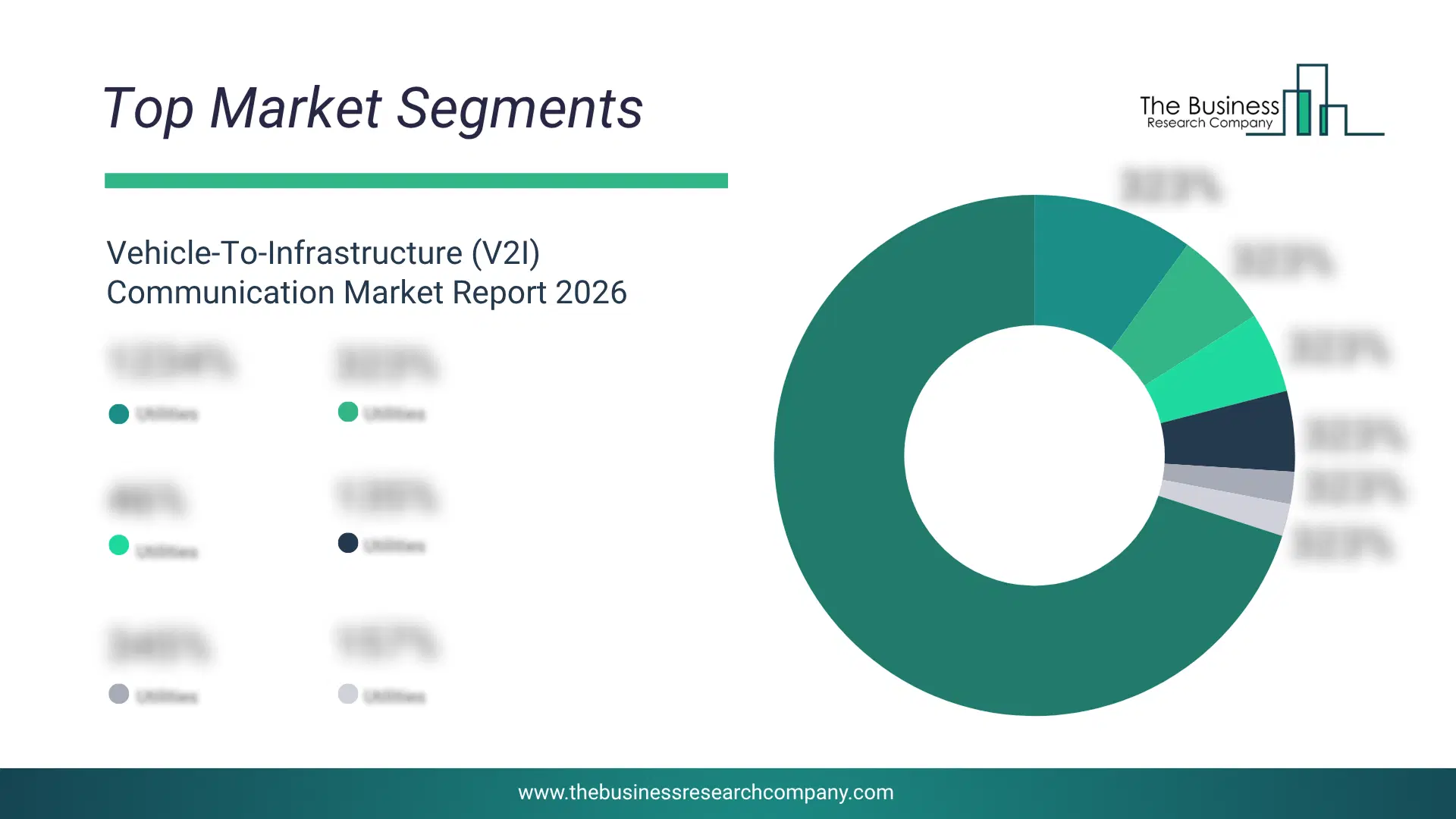
1) By Component: Hardware, Software, Services 2) By Technology: Big Data Analytics, Smart Sensors 3) By Application: Dedicated Short Range Communication (DSRC), Cellular, Wi-Fi, WiMax, Bluetooth Subsegments: 1) By Hardware: Onboard Units (Obus), Roadside Units (Rsus), Communication Modules, Sensors And Cameras 2) By Software: Communication Software, Data Analytics Software, Cloud Computing Software, Security Software 3) By Services: Installation And Maintenance Services, Consulting Services, Integration Services, Managed ServicesWhat Is The Driver Of The Vehicle-To-Infrastructure (V2I) Communication Market?
The increasing automobile theft is expected to propel vehicle-to-infrastructure (V2I) communication market growth going forward. Automobile thefts are the unauthorized taking or stealing of motor vehicles without the owner's consent or knowledge. The increasing number of automobile thefts is due to opportunistic reasons, such as leaving keys in the ignition while the vehicle is unattended or parking in poorly lit areas. Vehicle-to-infrastructure (V2I) communication aids in decreasing automobile thefts by enabling real-time tracking, remote immobilization, enhanced security features, deterring theft attempts, and facilitating the rapid recovery of stolen vehicles. For instance, in February 2024, according to a report published by the Equite Association, a Canada-based national organization, automobile theft in Canada increased from 70,082 to 70,475, an increase of 7.1% from 2022 to 2023. Therefore, the increasing automobile theft globally is driving the growth of the vehicle-to-infrastructure (V2I) communication industry.Key Players In The Global Vehicle-To-Infrastructure (V2I) Communication Market
Major companies operating in the vehicle-to-infrastructure (v2i) communication market are Toyota Motor Corp., Hitachi Ltd., Bosch Mobility Solutions, Cisco Systems Inc., DENSO Corporation, Qualcomm Technologies Inc., Continental AG, Magna International Inc., Nokia Corporation, Telefonaktiebolaget LM Ericsson, Aptiv PLC, NXP Semiconductors, Visteon Corporation, TransCore LP, SWARCO AG, Kapsch TrafficCom, Iteris Inc., Mitsubishi Electric Corporation, Econolite Group Inc., Autotalks Ltd., Commsignia Ltd., Cohda Wireless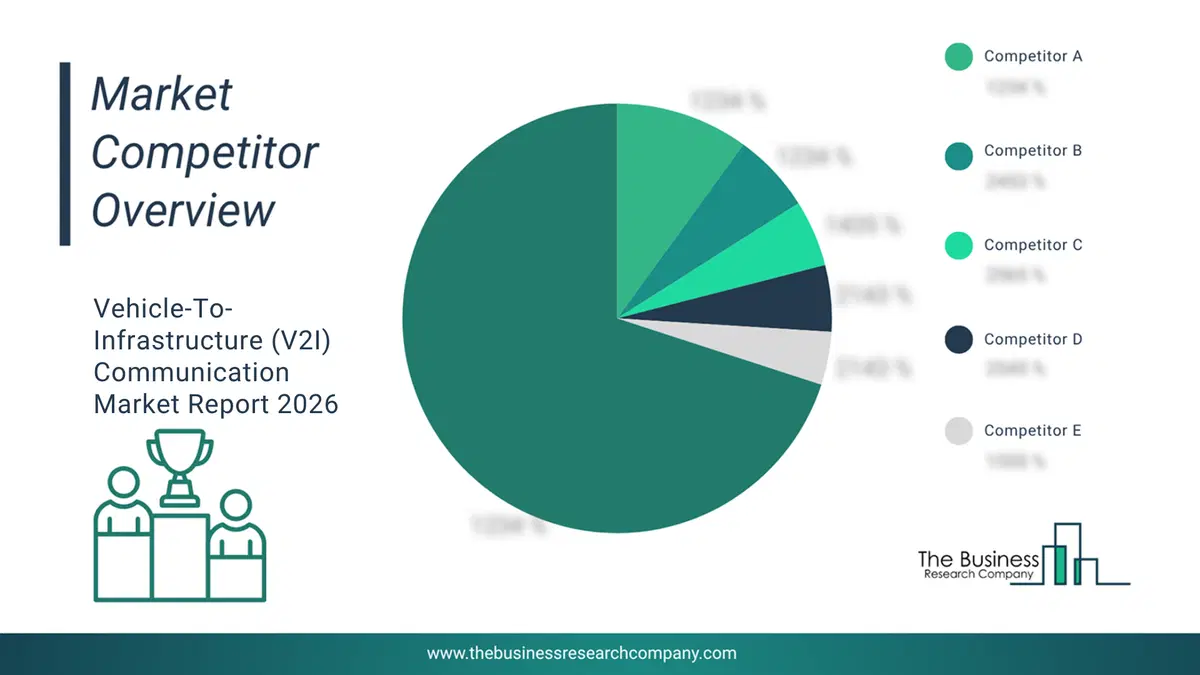
This chart is for illustrative purposes; the full report includes a detailed competitor analysis and comprehensive overview of the top 10 companies in the market.
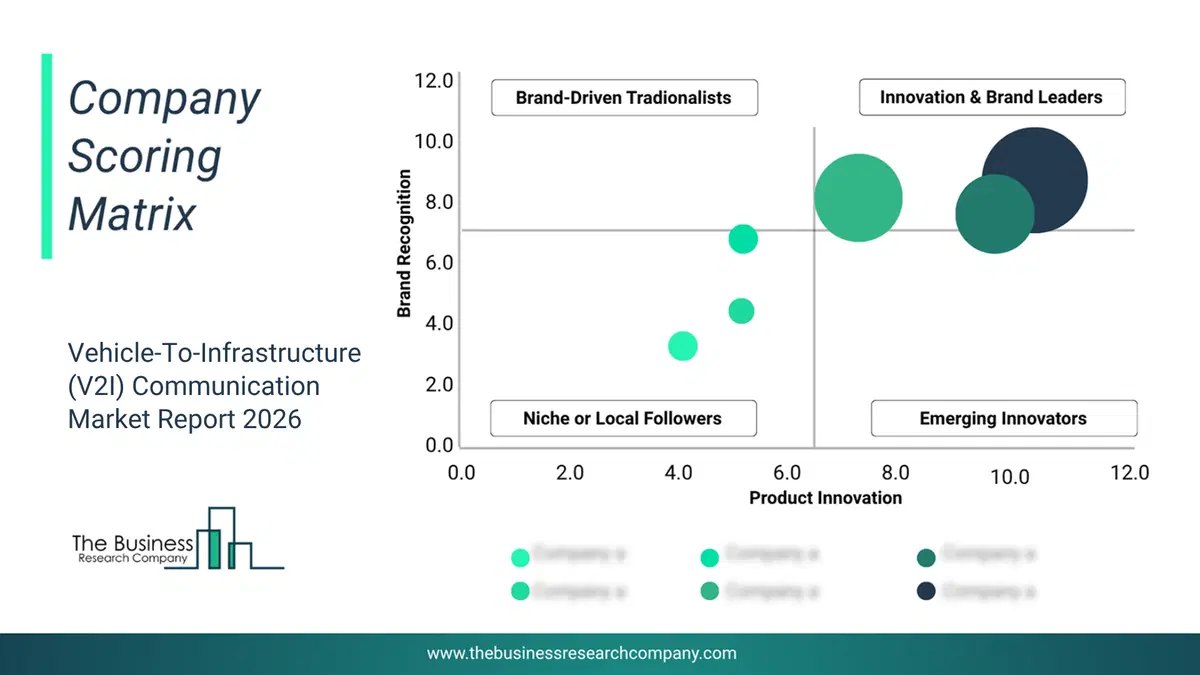
This chart maps companies by product innovation and brand strength, with bubble size indicating relative revenue, helping identify market leaders, challengers, and niche players. This is an illustrative chart; the full report provides a complete and accurate competitive analysis.
Global Vehicle-To-Infrastructure (V2I) Communication Market Trends and Insights
Major companies in the vehicle-to-infrastructure (V2I) communication market are developing innovative solutions using cloud-based V2N data to enhance road safety by delivering real-time warnings during critical traffic situations via direct V2X while extending connectivity through mobile networks. Cloud-based V2N data enables the collection, processing, and cloud-based access of vehicle-to-network information for real-time communication, analytics, and decision-making. For example, in September 2024, Commsignia, a US-based company that develops vehicle-to-everything (V2X) and intelligent transportation solutions, launched its Hybrid Suite to unify V2N and V2X communications, integrating direct V2X with cloud-based V2N data. This platform provides real-time traffic alerts, expands connectivity through mobile networks, and offers a single SDK for deployment across existing and new infrastructure. By harmonizing data streams and protocols, it supports automotive manufacturers in improving safety ratings, helps infrastructure operators streamline integration, and allows mobile network operators to leverage 5G capabilities, creating a scalable, interoperable ecosystem that boosts traffic safety and efficiency globally.What Are Latest Mergers And Acquisitions In The Vehicle-To-Infrastructure (V2I) Communication Market?
In January 2024, Danlaw Inc., a US-based vehicle-to-everything (V2X) technology provider, acquired Cohda Wireless for an undisclosed amount. This acquisition aims to enhance connected vehicle safety and smart city solutions through V2X technology integration, leveraging Cohda's V2X-Locate technology to improve positioning accuracy and facilitate real-time communication among vehicles, infrastructure, pedestrians, and other road users. Cohda Wireless is an Australia-based provider of connected vehicle solutions, including vehicle-to-infrastructure (V2I) communication technologies.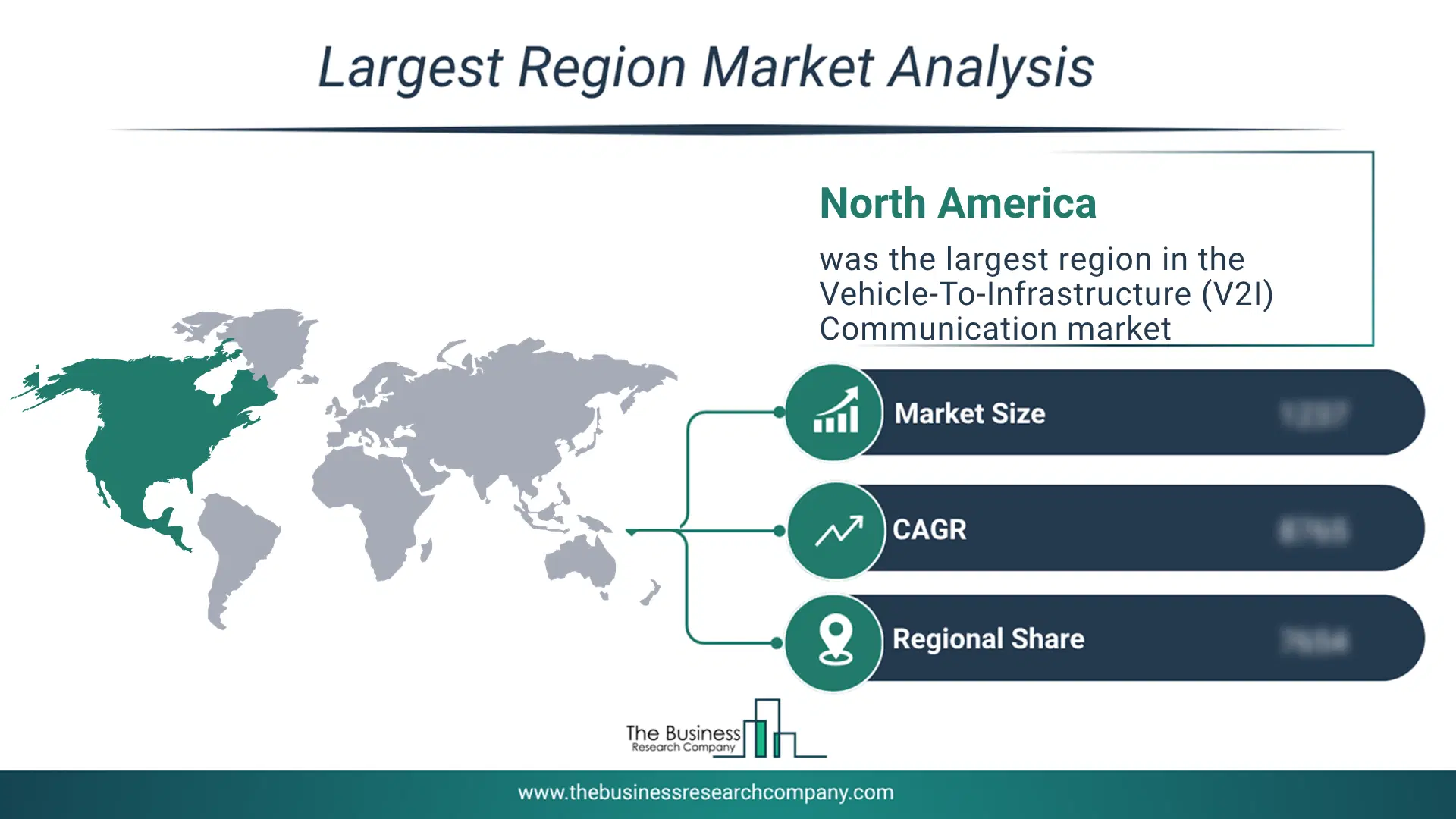
Regional Insights
North America was the largest region in the vehicle-to-infrastructure (V2I) communication market in 2025. The regions covered in this market report are Asia-Pacific, South East Asia, Western Europe, Eastern Europe, North America, South America, Middle East, Africa. The countries covered in this market report are Australia, Brazil, China, France, Germany, India, Indonesia, Japan, Taiwan, Russia, South Korea, UK, USA, Canada, Italy, Spain.What Defines the Vehicle-To-Infrastructure (V2I) Communication Market?
The vehicle-to-infrastructure (V2I) communication market consists of revenues earned by entities by providing services such as V2I communication solutions, traffic management services, fleet management systems, smart parking solutions, infrastructure maintenance and monitoring, data analytics, and insights. The market value includes the value of related goods sold by the service provider or included within the service offering. The vehicle-to-infrastructure (V2I) communication market also includes sales of onboard units (OBUs), roadside units (RSUs), sensors, communication modules, and antennas. Values in this market are ‘factory gate’ values, that is, the value of goods sold by the manufacturers or creators of the goods, whether to other entities (including downstream manufacturers, wholesalers, distributors, and retailers) or directly to end customers. The value of goods in this market includes related services sold by the creators of the goods.How is Market Value Defined and Measured?
The market value is defined as the revenues that enterprises gain from the sale of goods and/or services within the specified market and geography through sales, grants, or donations in terms of the currency (in USD unless otherwise specified). The revenues for a specified geography are consumption values that are revenues generated by organizations in the specified geography within the market, irrespective of where they are produced. It does not include revenues from resales along the supply chain, either further along the supply chain or as part of other products.
This chart presents market attractiveness based on a quantitative evaluation of growth, competition, strategic alignment, and risk, offering a clear view of opportunity areas for decision-making. This chart is for illustrative purposes; the full report contains the complete analysis.

This chart highlights the Total Addressable Market (TAM) by estimating the maximum revenue opportunity using an assumption-driven approach, supporting strategic planning and opportunity sizing across markets. The chart is illustrative; the full report provides a more comprehensive analysis.
What Key Data and Analysis Are Included in the Vehicle-To-Infrastructure (V2I) Communication Market Report 2026?
The vehicle-to-infrastructure (v2i) communication market research report is one of a series of new reports from The Business Research Company that provides market statistics, including industry global market size, regional shares, competitors with the market share, detailed market segments, market trends and opportunities, and any further data you may need to thrive in the vehicle-to-infrastructure (v2i) communication industry. The market research report delivers a complete perspective of everything you need, with an in-depth analysis of the current and future state of the industry.Vehicle-To-Infrastructure (V2I) Communication Market Report Forecast Analysis
| Report Attribute | Details |
|---|---|
| Market Size Value In 2026 | $0.95 billion |
| Revenue Forecast In 2030 | $2.58 billion |
| Growth Rate | CAGR of 28.6% from 2026 to 2030 |
| Base Year For Estimation | 2025 |
| Actual Estimates/Historical Data | 2020-2025 |
| Forecast Period | 2026 - 2030 |
| Market Representation | Revenue in USD Billion and CAGR from 2026 to 2030 |
| Segments Covered | Component, Technology, Application |
| Regional Scope | Asia-Pacific, Western Europe, Eastern Europe, North America, South America, Middle East, Africa |
| Country Scope | The Countries Covered In This Market Report Are Australia, Brazil, China, France, Germany, India, Indonesia, Japan, Taiwan, Russia, South Korea, Uk, Usa, Canada, Italy, Spain. |
| Key Companies Profiled | Toyota Motor Corp., Hitachi Ltd., Bosch Mobility Solutions, Cisco Systems Inc., DENSO Corporation, Qualcomm Technologies Inc., Continental AG, Magna International Inc., Nokia Corporation, Telefonaktiebolaget LM Ericsson, Aptiv PLC, NXP Semiconductors, Visteon Corporation, TransCore LP, SWARCO AG, Kapsch TrafficCom, Iteris Inc., Mitsubishi Electric Corporation, Econolite Group Inc., Autotalks Ltd., Commsignia Ltd., Cohda Wireless |
| Customization Scope | Request for Customization |
| Pricing And Purchase Options | Explore Purchase Options |