
Venous Thromboembolism Market Report 2026
Global Outlook – By Type (Deep Vein Thrombosis, Pulmonary Embolism, Other Types), By Treatment (Anti-Clotting Medications, Mechanical Devices, Thrombolytic Therapy, Other Treatment), By End Users (Hospitals, Homecare, Specialty Centers, Other End Users) - Market Size, Trends, Strategies, and Forecast to 2030
Venous Thromboembolism Market Overview
• Venous Thromboembolism market size has reached to $2.53 billion in 2025 • Expected to grow to $3.2 billion in 2030 at a compound annual growth rate (CAGR) of 5% • Growth Driver: Impact Of Healthcare Infrastructure Expansion On The Venous Thromboembolism Market • Market Trend: Advancing Device Capabilities In Venous Thrombus Management • North America was the largest region in 2025.What Is Covered Under Venous Thromboembolism Market?
Venous thromboembolism (VTE) refers to a medical condition characterized by the formation of blood clots within the veins, which can lead to potentially serious or life-threatening complications. common symptoms of VTE include leg pain and swelling, rapid breathing, chest pain and more. The various treatment methods, such as anticoagulant medications, devices and thrombolytic therapy, are used for the treatment of VTE. The main types of venous thromboembolism are deep vein thrombosis, pulmonary embolism and others. Deep vein thrombosis (DVT) is a medical condition characterized by the formation of blood clots in the deep veins of the body. The various treatment includes anti-clotting medications, mechanical devices, thrombolytic therapy and others that are used by various end-users such as hospitals, homecare, specialty centers and others.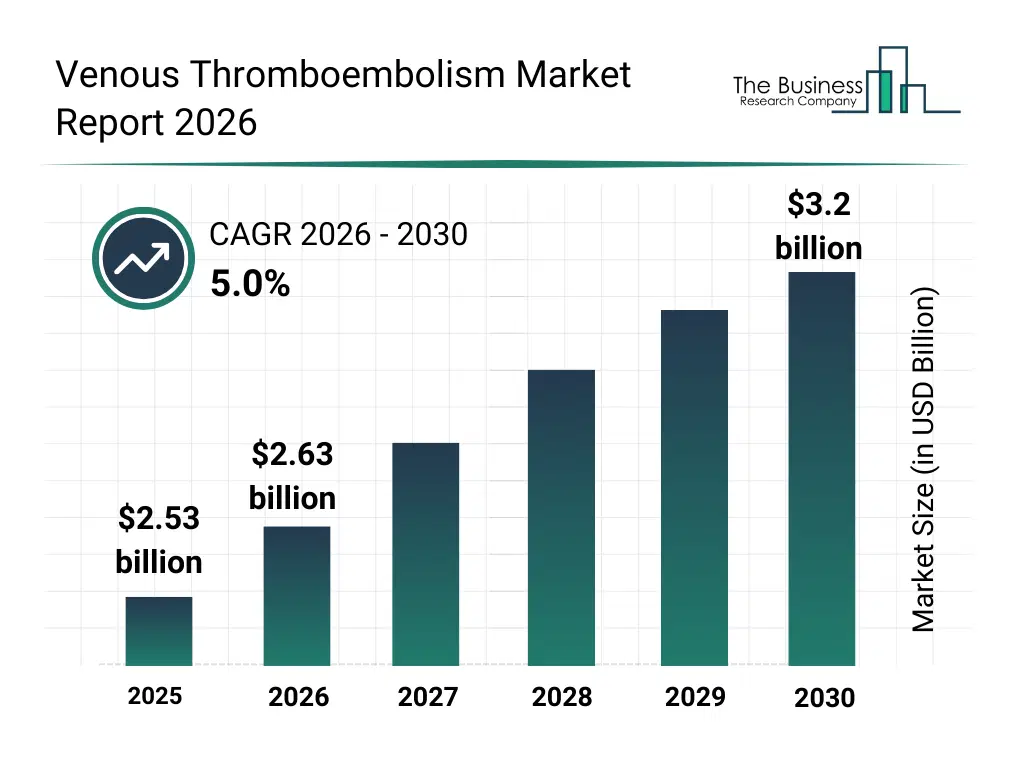
What Is The Venous Thromboembolism Market Size and Share 2026?
The venous thromboembolism market size has grown steadily in recent years. It will grow from $2.53 billion in 2025 to $2.63 billion in 2026 at a compound annual growth rate (CAGR) of 3.9%. The growth in the historic period can be attributed to increasing incidence of venous thromboembolism, aging population growth, rising prevalence of sedentary lifestyles, improved clinical awareness of vte risks, expansion of hospital-based thrombotic care.What Is The Venous Thromboembolism Market Growth Forecast?
The venous thromboembolism market size is expected to see steady growth in the next few years. It will grow to $3.2 billion in 2030 at a compound annual growth rate (CAGR) of 5.0%. The growth in the forecast period can be attributed to increasing adoption of personalized anticoagulant therapy, growing demand for minimally invasive treatment options, expansion of outpatient vte care models, rising investment in advanced diagnostic tools, increasing focus on preventive thrombosis management. Major trends in the forecast period include increasing adoption of novel oral anticoagulants, rising use of mechanical thrombectomy devices, growing focus on early diagnosis and risk stratification, expansion of home-based vte management programs, improved monitoring of anticoagulant therapy.
Global Venous Thromboembolism Market Segmentation
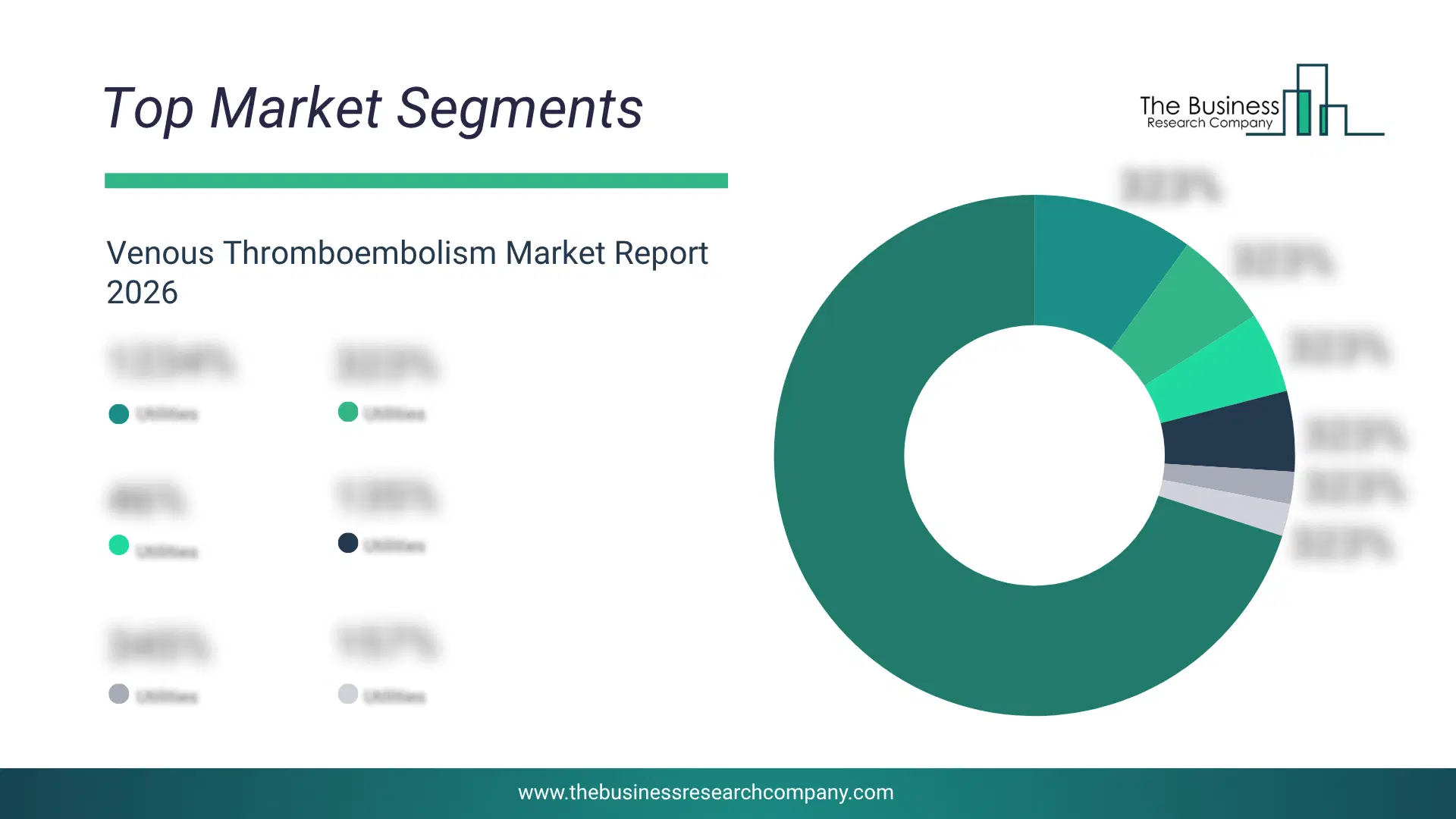
1) By Type: Deep Vein Thrombosis, Pulmonary Embolism, Other Types 2) By Treatment: Anti-Clotting Medications, Mechanical Devices, Thrombolytic Therapy, Other Treatment 3) By End Users: Hospitals, Homecare, Specialty Centers, Other End Users Subsegments: 1) By Deep Vein Thrombosis (DVT): Proximal DVT, Distal DVT, Asymptomatic DVT 2) By Pulmonary Embolism (PE): Acute PE, Chronic PE, Submassive PE 3) By Other Types: Thrombophlebitis, Superficial Vein Thrombosis, Post-Thrombotic SyndromeWhat Are The Drivers Of The Venous Thromboembolism Market?
The expansion of the healthcare infrastructure is expected to propel the growth of the venous thromboembolism market going forward. The healthcare industry refers to amalgamating and integrating the economic system's sectors that offer products and services for curing, preventing, rehabilitating and providing palliative care for patients. The expansion of the healthcare industry contributes to the development of Institutional infrastructure, policies, practices and educational programs necessary to support the implementation of VTE prevention protocols. For instance, in May 2023, according to the American Health Care Association, a US-based nonprofit organization, the number of hospitals in the US increased to 6,129 from 6,093 in 2022. Therefore, the expansion of the healthcare industry is driving the growth of the venous thromboembolism industry. The growing number of orthopedic procedures is expected to propel the growth of the venous thromboembolism market going forward. Orthopedic procedures refer to operations used to treat conditions affecting the spine and joints and correct skeletal malformations. Orthopedic procedures, such as total knee arthroplasty (TKA), total hip arthroplasty (THA), or hip fracture surgery (HFS), are associated with a high risk of VTE, as a result, there has been an increase in the adoption of compression devices for DVT prophylaxis. Compression devices are used to prevent blood clots from forming in the deep veins of the legs, which can lead to venous thromboembolism (VTE). For instance, in February 2023, according to research published by the National Library of Medicine, a US-based biomedical library, total hip arthroplasty (THA) and total knee arthroplasty (TKA) procedures are expected to increase by 719,364 and 1,222,988, respectively, by the year 2040. Moreover, TKAs are anticipated to total 2,917,959 by 2060, whereas THAs are anticipated to total 1,982,099 by that time. Therefore, the increasing number of orthopedic procedures is driving the growth of the venous thromboembolism industry.Key Players In The Global Venous Thromboembolism Market
Major companies operating in the venous thromboembolism market are Pfizer Inc., Johnson and Johnson Limited, Merck and Co Inc, AbbVie Inc, Bayer AG, Novartis AG, Sanofi‑Aventis LLC, Bristol‑Myers Squibb Company, GlaxoSmithKline plc, Eli Lilly and Co Ltd, Boehringer Ingelheim International GmbH, Teva Pharmaceutical Industries Ltd, Daiichi Sankyo Company Limited, Portola Pharmaceuticals Inc, Viatris Inc, AstraZeneca PLC, Medtronic plc, Boston Scientific Corporation, Stryker Corporation, Abbott Laboratories, AngioDynamics Inc, Terumo Corporation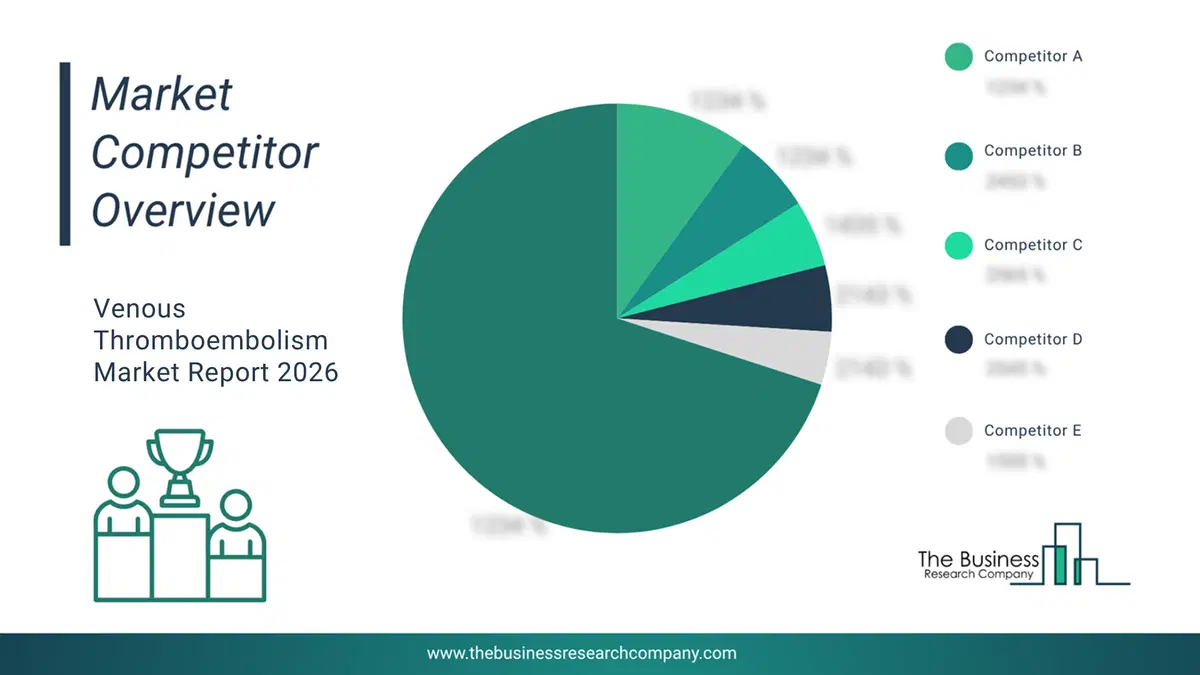
This chart is for illustrative purposes; the full report includes a detailed competitor analysis and comprehensive overview of the top 10 companies in the market.
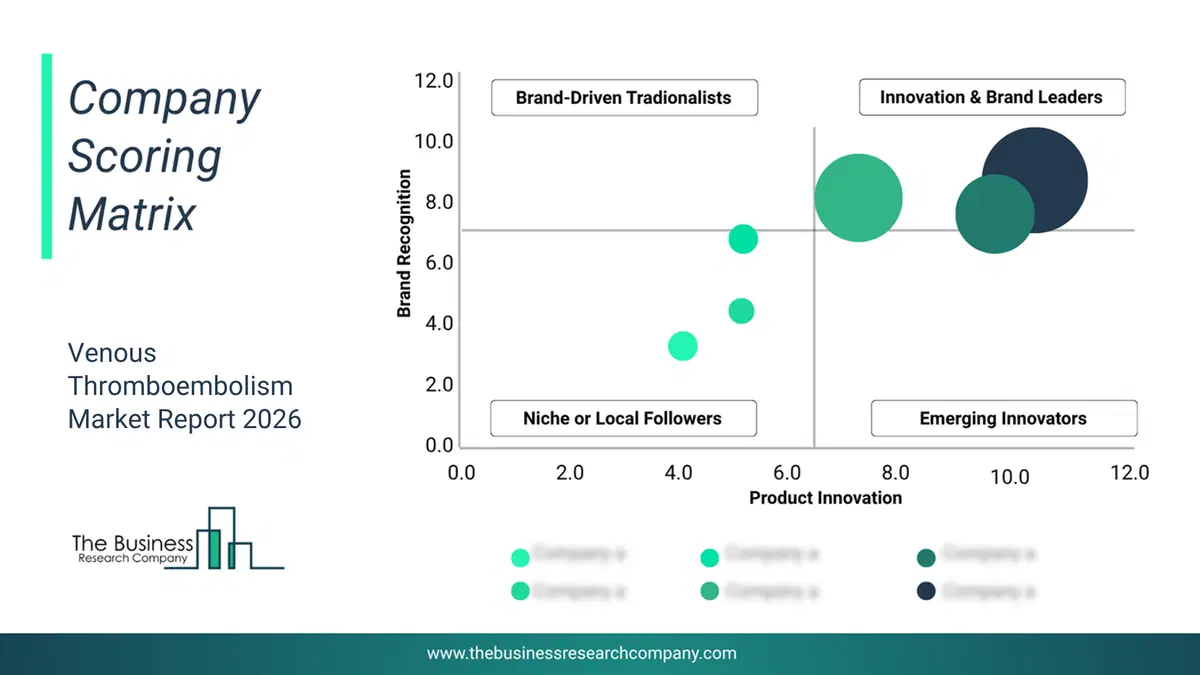
This chart maps companies by product innovation and brand strength, with bubble size indicating relative revenue, helping identify market leaders, challengers, and niche players. This is an illustrative chart; the full report provides a complete and accurate competitive analysis.
Global Venous Thromboembolism Market Trends and Insights
Major companies operating in the venous thromboembolism (VTE) market are focusing on incorporating advanced vascular-access sheath technology such as laser-cut hypotube sheaths to enhance efficiency, safety, and procedural control. Laser-cut hypotube sheath technology uses a thin-walled metal tube that is precision-cut by laser to create a sheath that is both flexible and structurally supportive, enabling capabilities such as smooth navigation through blood vessels, stable support during catheter delivery, and better hemostasis control during interventions. For instance, in January 2025, Penumbra Inc., a US-based medical-device manufacturer, launched Element Vascular Access System, a laser-cut hypotube sheath designed specifically for venous thromboembolism procedures, featuring the HemoLock dual-valve system for precise hemostasis control and an atraumatic tip design plus 17 F MaxID sizing for smooth delivery and compatibility with large-bore thrombectomy catheters. Element improves procedure efficiency, device trackability, and physician control, potentially enhancing safety and treatment outcomes in VTE interventions.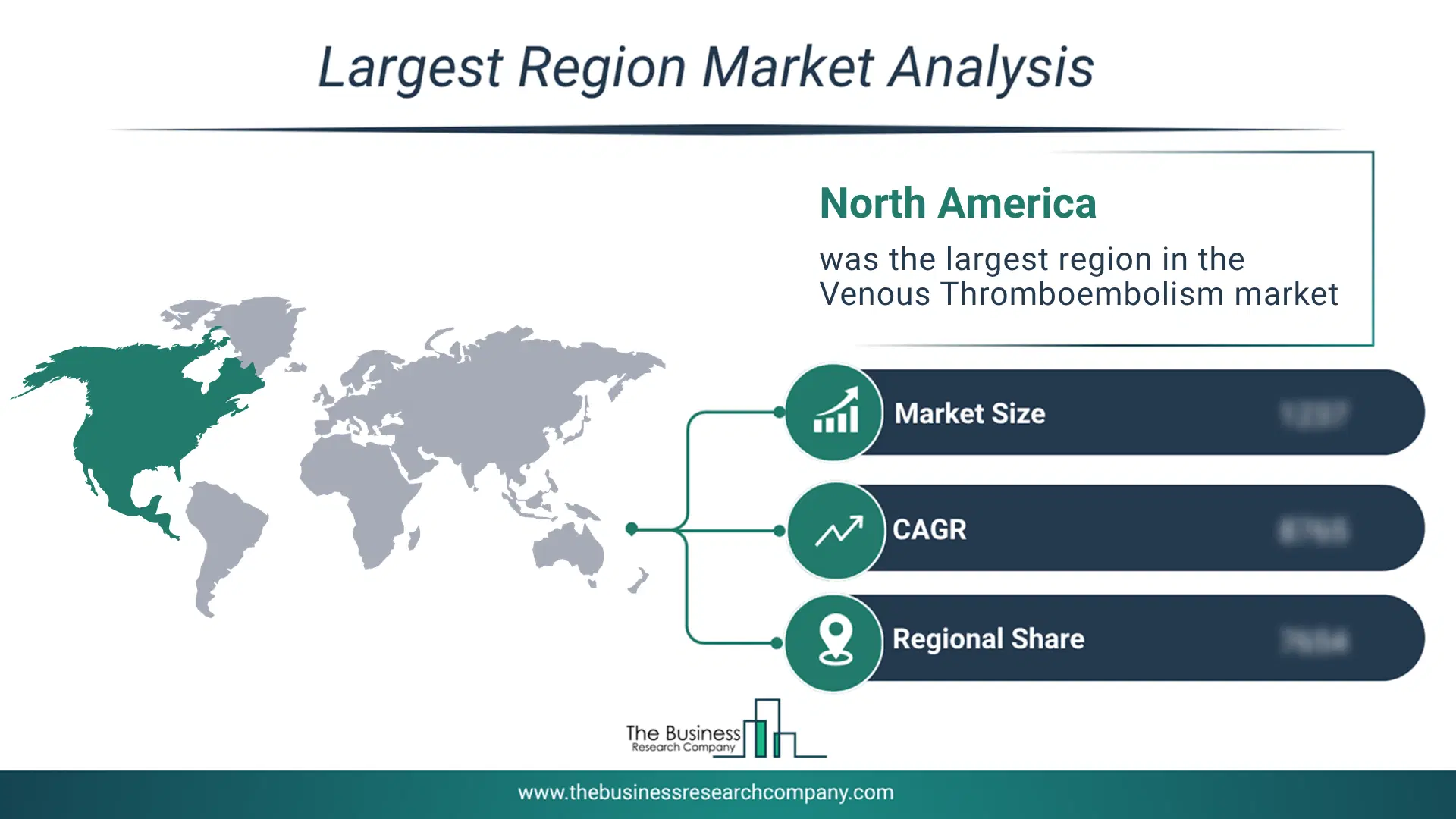
Regional Outlook
North America was the largest region in the venous thromboembolism market in 2025. The regions covered in this market report are Asia-Pacific, South East Asia, Western Europe, Eastern Europe, North America, South America, Middle East, Africa. The countries covered in this market report are Australia, Brazil, China, France, Germany, India, Indonesia, Japan, Taiwan, Russia, South Korea, UK, USA, Canada, Italy, Spain.What Defines the Venous Thromboembolism Market?
The venous thromboembolism market consists of revenues earned by entities by providing services such as surgical assistance and thrombolytic therapy. The market value includes the value of related goods sold by the service provider or included within the service offering. The venous thromboembolism market also includes the sales of heparin, apixaban, dabigatran, rivaroxaban, edoxaban and warfarin. Values in this market are ‘factory gate’ values, that is, the value of goods sold by the manufacturers or creators of the goods, whether to other entities (including downstream manufacturers, wholesalers, distributors and retailers) or directly to end customers. The value of goods in this market includes related services sold by the creators of the goods.How is Market Value Defined and Measured?
The market value is defined as the revenues that enterprises gain from the sale of goods and/or services within the specified market and geography through sales, grants, or donations in terms of the currency (in USD unless otherwise specified). The revenues for a specified geography are consumption values that are revenues generated by organizations in the specified geography within the market, irrespective of where they are produced. It does not include revenues from resales along the supply chain, either further along the supply chain or as part of other products.
This chart presents market attractiveness based on a quantitative evaluation of growth, competition, strategic alignment, and risk, offering a clear view of opportunity areas for decision-making. This chart is for illustrative purposes; the full report contains the complete analysis.

This chart highlights the Total Addressable Market (TAM) by estimating the maximum revenue opportunity using an assumption-driven approach, supporting strategic planning and opportunity sizing across markets. The chart is illustrative; the full report provides a more comprehensive analysis.
What Key Data and Analysis Are Included in the Venous Thromboembolism Market Report 2026?
The venous thromboembolism market research report is one of a series of new reports from The Business Research Company that provides market statistics, including industry global market size, regional shares, competitors with the market share, detailed market segments, market trends and opportunities, and any further data you may need to thrive in the venous thromboembolism industry. The market research report delivers a complete perspective of everything you need, with an in-depth analysis of the current and future state of the industry.Venous Thromboembolism Market Report Forecast Analysis
| Report Attribute | Details |
|---|---|
| Market Size Value In 2026 | $2.63 billion |
| Revenue Forecast In 2030 | $3.2 billion |
| Growth Rate | CAGR of 5% from 2026 to 2030 |
| Base Year For Estimation | 2025 |
| Actual Estimates/Historical Data | 2020-2025 |
| Forecast Period | 2026 - 2030 |
| Market Representation | Revenue in USD Billion and CAGR from 2026 to 2030 |
| Segments Covered | Type, Treatment, End Users |
| Regional Scope | Asia-Pacific, Western Europe, Eastern Europe, North America, South America, Middle East, Africa |
| Country Scope | The countries covered in the report are Australia, Brazil, China, France, Germany, India, Indonesia, Japan, Taiwan, Russia, South Korea, UK, USA, Canada, Italy, Spain |
| Key Companies Profiled | Pfizer Inc., Johnson and Johnson Limited, Merck and Co Inc, AbbVie Inc, Bayer AG, Novartis AG, Sanofi‑Aventis LLC, Bristol‑Myers Squibb Company, GlaxoSmithKline plc, Eli Lilly and Co Ltd, Boehringer Ingelheim International GmbH, Teva Pharmaceutical Industries Ltd, Daiichi Sankyo Company Limited, Portola Pharmaceuticals Inc, Viatris Inc, AstraZeneca PLC, Medtronic plc, Boston Scientific Corporation, Stryker Corporation, Abbott Laboratories, AngioDynamics Inc, Terumo Corporation |
| Customization Scope | Request for Customization |
| Pricing And Purchase Options | Explore Purchase Options |