
Ventilation System Market Report 2026
Global Outlook – By Product (Axial And Centrifugal Fans, Recovery Ventilation Systems), By Mounting Type (Wall-Mount Type, Ceiling-Mount Type, Cabinet-Mount Type), By Application (Residential, Non-Residential) – Market Size, Trends, Strategies, and Forecast to 2030
Ventilation System Market Overview
• Ventilation System market size has reached to $35.24 billion in 2025 • Expected to grow to $55.93 billion in 2030 at a compound annual growth rate (CAGR) of 9.7% • Growth Driver: Urbanization Trends Boosting Demand For Advanced Ventilation Solutions • Market Trend: Advancements In Mechanical Ventilators To Enhance Indoor Air Quality And Healthcare Efficiency • Asia-Pacific was the largest region in 2025 and North America is the fastest growing region.Market Gains By 2030 – Top Opportunities By Segment
Market Gain identifies the most promising market opportunities by highlighting the segments or products expected to generate the highest incremental revenue growth over the next five years.
What Is Covered Under Ventilation System Market?
A ventilation system is defined as a system in which clean outdoor air is intentionally delivered to an indoor space and stale air is removed. This may be accomplished by either mechanical or natural processes. The ventilation system is used to control indoor air quality by diluting and displacing indoor pollutants. This system is also used to control indoor humidity, temperature, and air motion to improve thermal satisfaction and comfort with other aspects of the indoor environment. The main types of ventilation systems are axial and centrifugal fans; heat recovery systems; and other products. Axial and centrifugal fans come in various designs and sizes to suit different applications, and the choice between them depends on factors such as the required airflow, pressure, and the specific use case. The different mount types include wall-mount type, ceiling-mount type, and cabinet-mount type, which are used in residential and non-residential applications.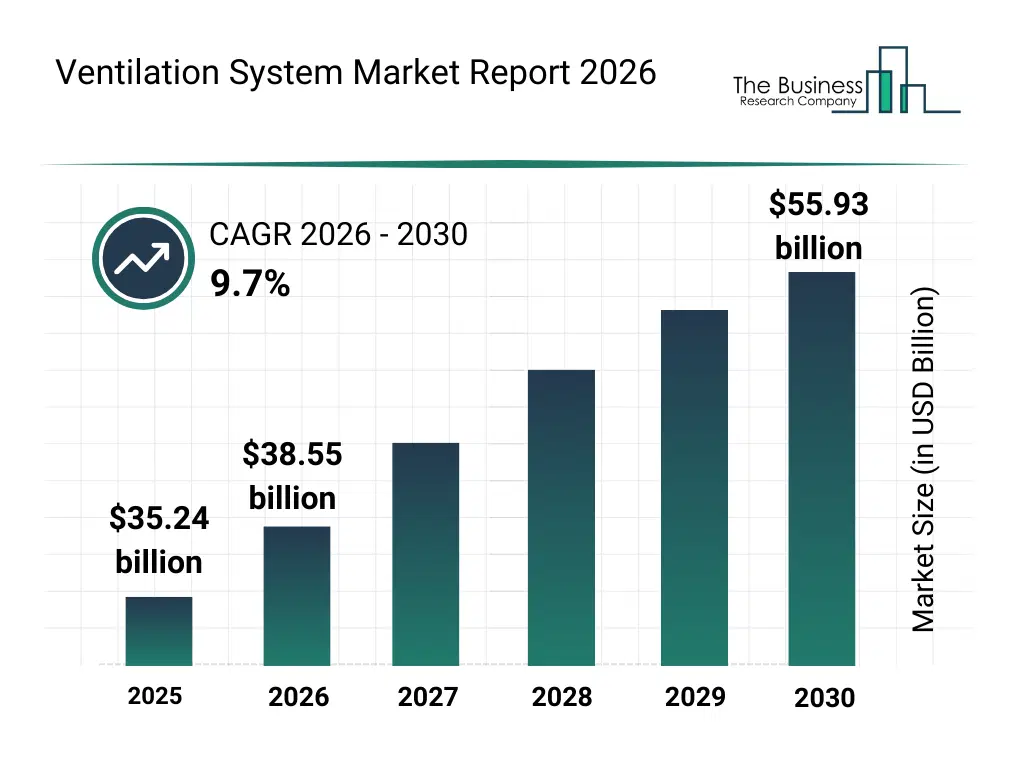
What Is The Ventilation System Market Size and Share 2026?
The ventilation system market size has grown strongly in recent years. It will grow from $35.24 billion in 2025 to $38.55 billion in 2026 at a compound annual growth rate (CAGR) of 9.4%. The growth in the historic period can be attributed to urban construction growth, industrial expansion, demand for thermal comfort, regulatory indoor air standards, commercial building development.What Is The Ventilation System Market Growth Forecast?
The ventilation system market size is expected to see strong growth in the next few years. It will grow to $55.93 billion in 2030 at a compound annual growth rate (CAGR) of 9.7%. The growth in the forecast period can be attributed to growth in green buildings, rising health awareness, smart building adoption, increasing residential construction, stricter air quality regulations. Major trends in the forecast period include growing adoption of energy recovery ventilation, rising demand for indoor air quality solutions, integration of smart ventilation controls, expansion of energy efficient fan technologies, increased focus on health and comfort standards.
Global Ventilation System Market Segmentation
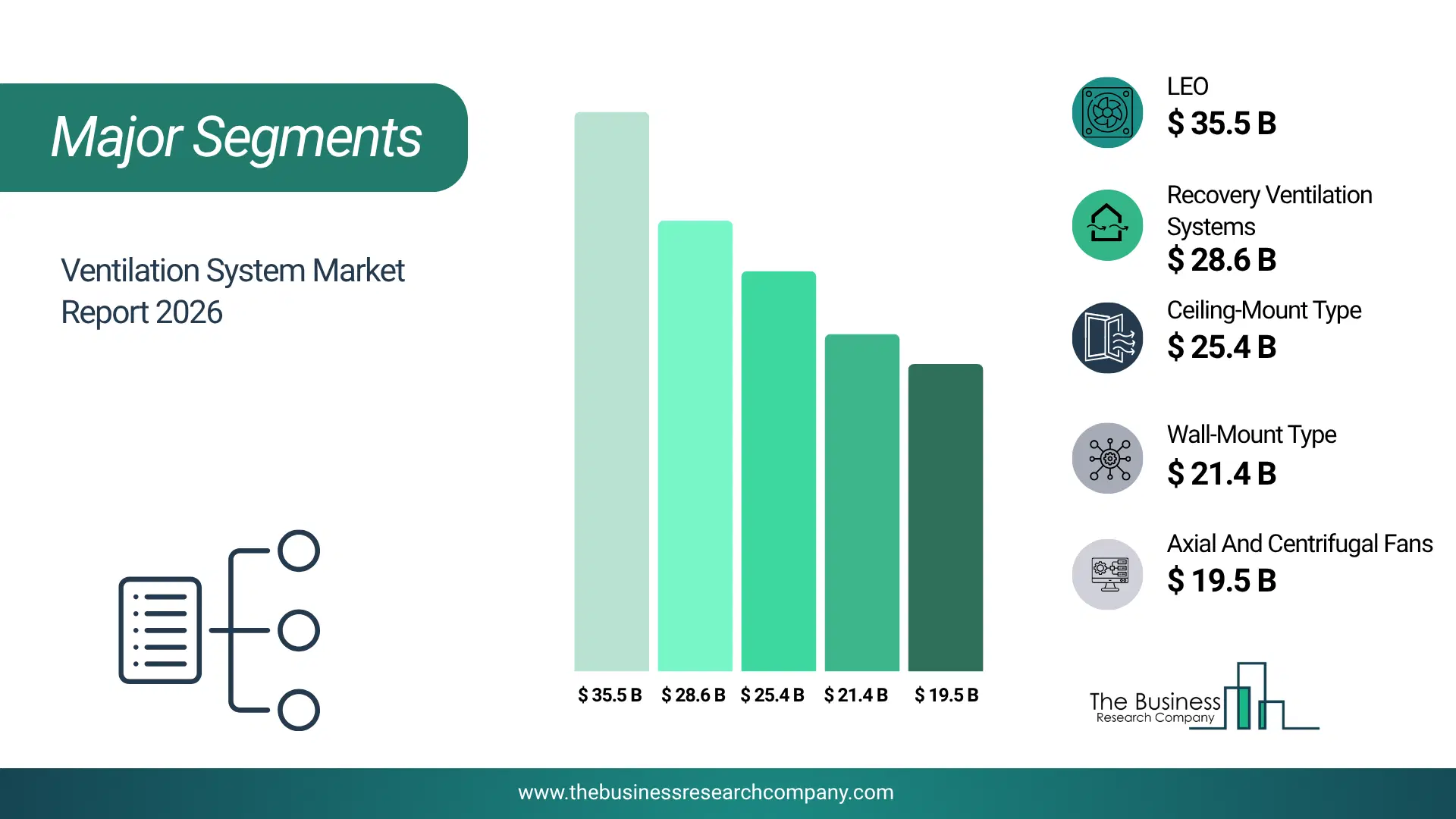
1) By Product: Axial And Centrifugal Fans, Recovery Ventilation Systems 2) By Mounting Type: Wall-Mount Type, Ceiling-Mount Type, Cabinet-Mount Type 3) By Application: Residential, Non-Residential Subsegments: 1) By Axial And Centrifugal Fans: Axial Fans, Centrifugal Fans, Mixed Flow Fans 2) By Recovery Ventilation Systems: Heat Recovery Ventilation (HRV) Systems, Energy Recovery Ventilation (ERV) Systems The top segments in the ventilation system market will be: • Non-Residential will reach $35552.84 Million by 2030. • Ceiling-Mount Type will reach $25456.79 Million by 2030. • Recovery Ventilation Systems will reach $28654.72 Million by 2030. • Axial And Centrifugal Fans will reach $19538.34 Million by 2030. • Wall-Mount Type will reach $21395.13 Million by 2030.What Is The Driver Of The Ventilation System Market?
Rising urbanization is expected to propel the growth of the ventilation system market going forward. Urbanization is the process in which cities expand, leading to an increasing percentage of the population living in urban areas. Ventilation system plays a crucial role in urbanization by enhancing air quality, mitigating heat island effects, and improving overall environmental comfort, thus fostering healthier living conditions that support sustainable city growth and resilience against climate challenges. For instance, in December 2024, Our World In Data, a UK-based non-profit organization, reported that by 2050, the world’s population is projected to rise to approximately 9.8 billion, with nearly 7 billion people living in urban areas. Therefore, the rising urbanization drives the ventilation system industry.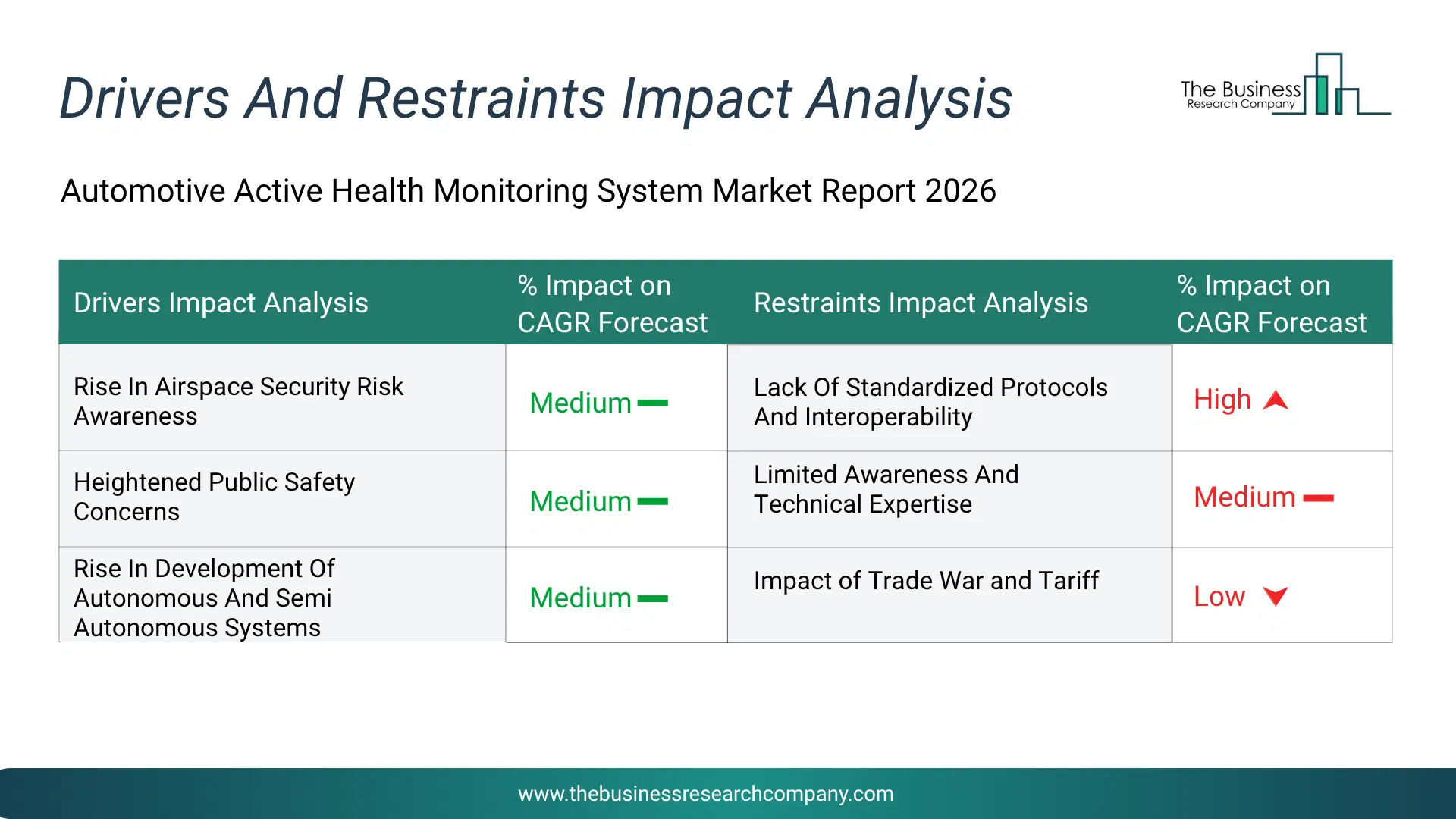
Infographic Chart Showing Key Market Drivers Analysis And Restraints For Ventilation System Market
The chart presents an impact analysis of key drivers and restraints, quantifying their relative influence on the market's growth rate and helping assess the balance between growth enablers and limiting factors. This chart offers a high-level perspective; the full report contains more detailed insights.
How Will The Drivers Impact Growth In The Global Ventilation System Market?
• Growth in Construction Activities Globally (Medium) – During the forecast period, the growth in construction activities globally will become a key driver of growth in the ventilation system market by 2030. as urbanization accelerates, population growth continues, and government-led infrastructure and housing investments expand across both developed and emerging economies, the volume of new residential, commercial, industrial, and institutional construction projects is projected to increase steadily, leading to heightened demand for ventilation systems across new-build and renovation applications. a growing construction base increases the frequency of ventilation system installations, upgrades, and replacements across diverse building types, driving sustained demand for air distribution systems, energy recovery ventilators, rooftop units, and integrated indoor air quality solutions. as a result, ventilation system manufacturers, distributors, and installation service providers are increasingly expanding production capacity, strengthening contractor networks, and enhancing project-based engineering and service capabilities to support rising construction activity and sustain long-term growth in the global ventilation system market. as a result, the growth in construction activities is anticipated to contributing to a 1.8%annual growth in the market. • Rising Focus on Energy-Efficient and Low-Carbon Buildings (Medium) – During the forecast period, the rising focus on energy-efficient and low-carbon buildings will emerge as a major factor driving the expansion of the market by 2030. as governments, developers, and building owners intensify efforts to reduce carbon emissions and achieve net-zero targets, there is a growing emphasis on constructing and retrofitting buildings that minimize energy consumption, optimize indoor environmental quality, and comply with stringent sustainability standards, leading to heightened demand for advanced ventilation systems designed for low energy use and high performance. enhanced energy codes and green building certifications are driving the adoption of heat recovery ventilators, energy-efficient fans and controls, and integrated system designs that reduce overall heating, ventilation, and air conditioning (hvac) energy loads, improve thermal comfort and decrease reliance on conventional mechanical cooling, driving steady ventilation system demand across residential, commercial, and multifamily sectors. as a result, ventilation product manufacturers, system designers, and installation and service providers are increasingly scaling production of energy-optimized units, enhancing engineering support for low-carbon building projects, and investing in training for advanced ventilation technologies to cater to the growing demand for energy-efficient buildings and sustain long-term growth in the global ventilation system market. consequently, the rising focus on energy-efficient and low-carbon buildings is projected to contributing to a 1.3% annual growth in the market. • Expansion of Industrial Infrastructure (Low) – During the forecast period, the expansion of industrial infrastructure will serve as a key growth catalyst for the market by 2030, as manufacturers increasingly adopt smart production systems to enhance automation and data-driven decision-making. as global economies pursue accelerated manufacturing investment, large-scale logistics facilities, and new energy projects, the total stock of industrial buildings and facilities in key regions is projected to grow significantly, leading to heightened demand for robust ventilation systems that ensure compliant air quality, efficient heat removal, and safe working environments. a larger industrial footprint increases the frequency of ventilation system installations, upgrades, and maintenance across critical sectors such as manufacturing plants, warehouses, chemical processing units, and energy facilities, driving steady demand for heavy-duty airflow solutions, energy recovery systems, and advanced filtration technologies. as a result, ventilation product manufacturers, system integrators, and service providers are increasingly scaling production capacities, enhancing engineering design support, and investing in localized service networks to cater to the growing industrial infrastructure base and sustain long-term growth in the global ventilation system market. therefore, this expansion of industrial infrastructure is projected to supporting to a 0.8% annual growth in the market. • Increasing Frequency of Extreme Weather and Climate Variability (Low) – During the forecast period, the increasing frequency of extreme weather and climate variability is driving increased demand for ventilation system. as global temperatures continue to rise, weather patterns become more unpredictable, and climate-related events such as heatwaves, wildfires, storms, and humidity swings occur with greater frequency, building owners and facility managers are placing heightened emphasis on resilient indoor environmental systems that can sustain healthy air quality, thermal comfort, and operational continuity under adverse conditions. more frequent extreme weather events increase the strain on conventional heating, ventilation, and air conditioning (hvac) and ventilation systems, driving demand for robust, adaptive ventilation solutions capable of maintaining balanced fresh air exchange, particulate filtration, and moisture control while withstanding rapid weather shifts and elevated pollutant loads. as a result, ventilation product manufacturers, systems integrators, and service providers are increasingly enhancing product durability, integrating climate-responsive controls, expanding modular and flexible system offerings, and investing in predictive analytical capabilities to cater to climate-impacted building environments and sustain long-term growth in the global ventilation system market. the increasing frequency of extreme weather and climate variability growth contribution during the forecast period in 2025 is 0.5%.How Will The Restraints Impact Growth In The Global Ventilation System Market?
• Expensive Maintenance and Servicing (Medium) – During the forecast period, the expensive maintenance and servicing remains a significant barrier to market expansion. persistent high costs associated with routine upkeep, component replacement, system calibrations, and emergency repairs are placing financial strain on building owners, facility managers, and small business operators, which in turn discourages frequent servicing and long-term system optimization. from a commercial and operational perspective, elevated maintenance expenditures for ventilation units, including labor charges for certified technicians, replacement of filters and motors, and periodic system overhauls, increase pressure on end users to defer service, extend maintenance intervals, and opt for minimal servicing options, often at the expense of system performance and longevity. these servicing cost dynamics, coupled with rising prices for specialized parts, fluctuating labor availability, and limited access to affordable service contracts, intensify operational burdens and heighten the risk of premature system degradation and unplanned downtime. as a result, ventilation system manufacturers, service providers, and facility owners may face constrained demand for proactive maintenance, more cautious upgrade strategies, and delayed investments in advanced servicing technologies and preventive support solutions. growth affected by expensive maintenance and servicing during the forecast period in 2025 is -1.8%. • Fluctuating Raw Material Prices (Medium) – During the forecast period, the fluctuating raw material prices a significant barrier to market expansion. volatility in the cost of key inputs such as steel, aluminum, copper, and electronic components is placing upward pressure on production and procurement costs for ventilation system manufacturers, which in turn limits competitive pricing and slows investment in new product development. from a commercial and operational perspective, large swings in raw material prices increase pressure on market participants to adjust product pricing, absorb cost increases, or renegotiate supplier contracts, often at the expense of margin stability and supply chain predictability. these pricing dynamics, coupled with ongoing volatility in global commodities markets, currency fluctuations, and supply constraints, intensify competitive pressures and heighten the risk of production delays, cost pass-through to end users, and reduced purchasing power among buyers. as a result, ventilation system manufacturers, distributors, and end users may face constrained profitability, more cautious growth strategies, and delayed investments in capacity expansion, advanced technologies, and value-added services. growth affected by fluctuating raw material prices during the forecast period in 2025 is -1.0%. • Impact of Trade Wars and Tariffs (Low) – During the forecast period, the trade war and tariffs remains a significant barrier to market expansion. escalating tariff barriers, retaliatory trade measures, and tariff rate fluctuations on imported components and raw materials are increasing production costs for ventilation system manufacturers and suppliers, which in turn limits competitive pricing and dampens global demand growth. from a commercial and operational perspective, the imposition of trade tariffs on key inputs, such as motors, heat exchangers, electronic controls, and steel, increases pressure on market participants to absorb higher material costs, revise sourcing strategies, and navigate complex customs requirements, often at the expense of margin sustainability and supply chain agility. these trade dynamics, coupled with currency volatility, extended lead times, and uncertainty in cross-border procurement, intensify competitive pressures and heighten the risk of supply disruptions across key product categories. as a result, ventilation system manufacturers, distributors, and end users may face constrained profitability, cautious expansion plans, and delayed investments in product innovation, production capacity, and international distribution networks. growth affected by trade war and tariffs during the forecast period in 2025 is -0.3%Key Players In The Global Ventilation System Market
Major companies operating in the ventilation system market are Panasonic, Daikin Industries Ltd, Carrier, Mitsubishi Electric, LG Electronics, Midea Group Co. Ltd., Johnson Controls, Twin City Fan and Blower, Greenheck Fan Corporation, Honeywell International Inc., Zhongshan Aden Environmental Technology Co. Ltd, Suzhou Mia Intelligent Technology Co. Ltd, Beijing Holtop Air Conditioning Co. Ltd, Shandong Beideli HVAC Equipment Co. Ltd, TLT-Turbo GmbH, Kemper GmbH, LK Metallwaren GmbH, ALNOR VENTILATION SYSTEMS LTD, Bluevent Air Systems Sp. Z O.o, Vent-Ex Sp. Z O.o., Entalpia Europe Sp. z o. o., KOMFOVENT, CaptiveAire Systems, Nortek Air Solutions, Constromech Fzco, Air Master Equipments Emirates LLC, Modern Systems for Environmental Tech. Co., Munters, Acme Engineering Prod., Eigenbrodt GmbH & Co, Atlas Air Conditioning, CFW Fans, Trox Africa, FabricAir South Africa, Univent, Daikin Egypt, Aerovent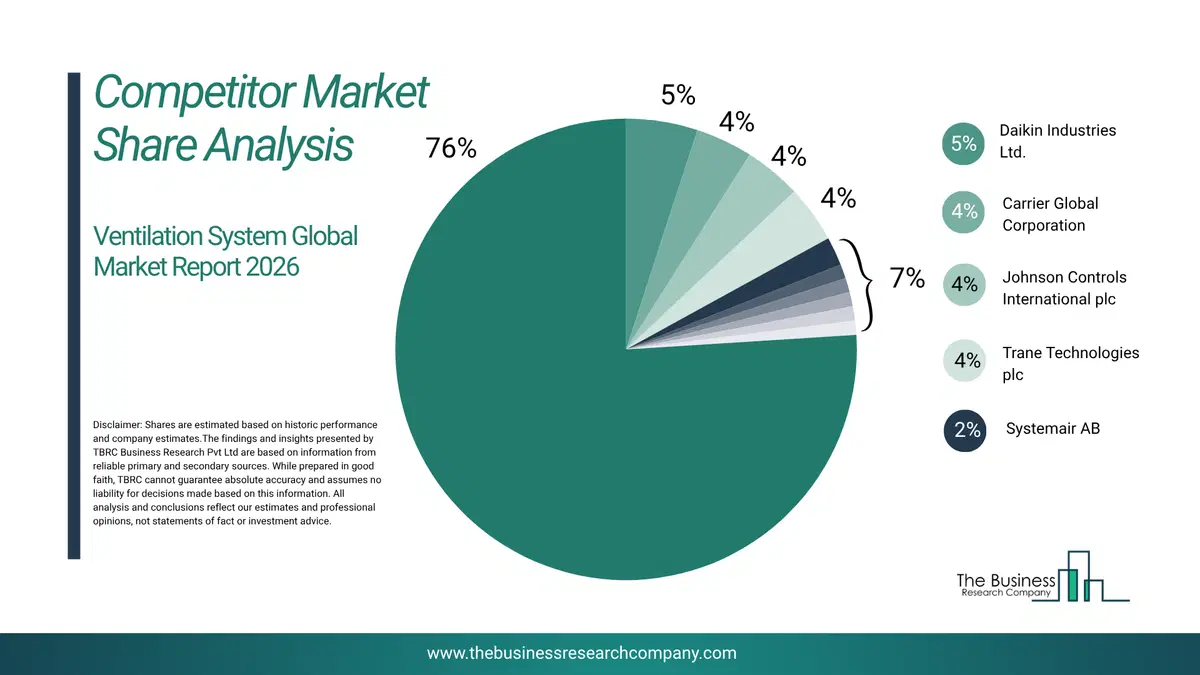
This chart is for illustrative purposes; the full report includes a detailed competitor analysis and comprehensive overview of the top 10 companies in the market.
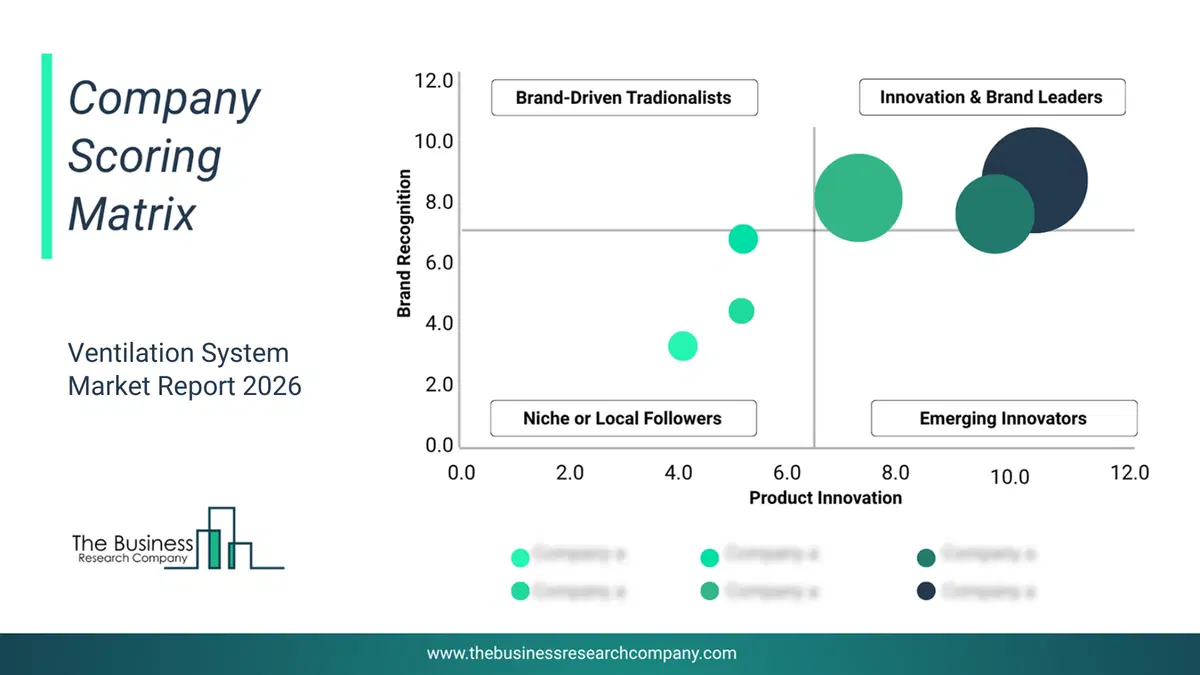
This chart maps companies by product innovation and brand strength, with bubble size indicating relative revenue, helping identify market leaders, challengers, and niche players. This is an illustrative chart; the full report provides a complete and accurate competitive analysis.
Global Ventilation System Market Trends and Insights
Major companies operating in the ventilation system market are focusing on developing innovative solutions, such as mechanical ventilators, to enhance indoor air quality, improve energy efficiency, reduce operational costs, and meet the rising demand for safe and healthy living and working environments. A mechanical ventilator is a medical device designed to assist or replace spontaneous breathing in patients who are unable to breathe adequately on their own due to illness, injury, surgery, or respiratory failure. For instance, in February 2024, Getinge, a Sweden-based medical technology company, launched the Servo-c mechanical ventilator in the Indian market, an innovative device designed for both pediatric and adult patients. The Servo-c features modular components for smart fleet management, CO2 monitoring, and the Servo Compass system for real-time visualization of lung mechanics, ensuring efficiency, uptime, and cost-effectiveness without relying on proprietary disposables. This launch strengthens the availability of advanced, affordable respiratory solutions in India.What Are Latest Mergers And Acquisitions In The Ventilation System Market?
In January 2025, Systemair AB, a Sweden‑based provider of indoor climate solutions, completed the full acquisition of Systemair HSK Türkiye for an undisclosed amount. This acquisition enables Systemair to strengthen its market presence in Turkey, expand its product and service offerings, enhance operational efficiency, and drive long-term growth in the region. Systemair HSK Türkiye is a Turkish-based company specializing in heating, ventilation, and air-conditioning (HVAC) solutions.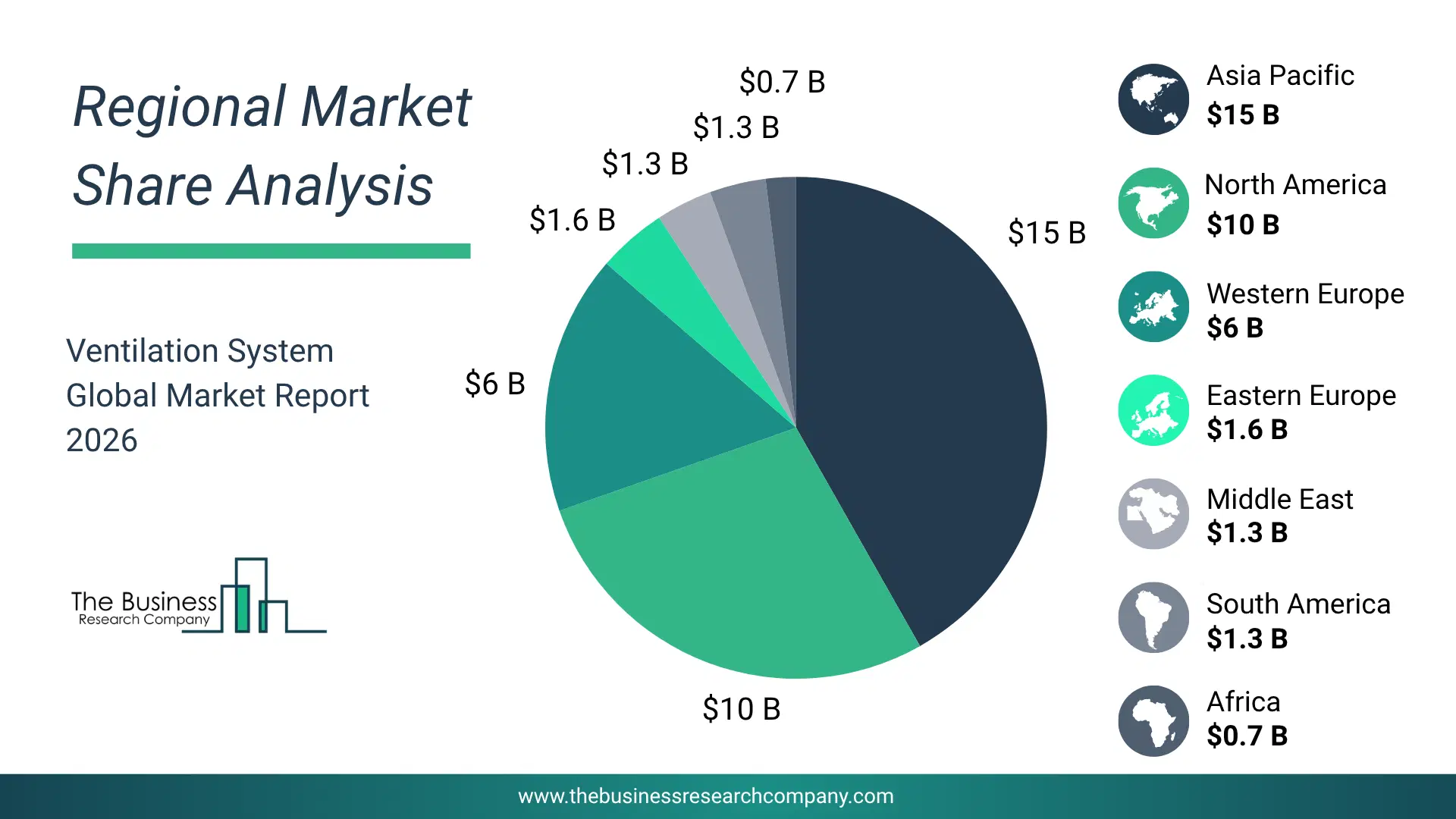
Regional Outlook
Asia-Pacific was the largest region in the ventilation system market in 2025. North America is expected to be the fastest-growing region in the forecast period. The regions covered in this market report are Asia-Pacific, South East Asia, Western Europe, Eastern Europe, North America, South America, Middle East, Africa The countries covered in this market report are Australia, Brazil, China, France, Germany, India, Indonesia, Japan, Taiwan, Russia, South Korea, UK, USA, Canada, Italy, Spain.What Defines the Ventilation System Market?
The ventilation system market consists of sales of an air filters and fan coil units. Values in this market are ‘factory gate’ values, that is the value of goods sold by the manufacturers or creators of the goods, whether to other entities (including downstream manufacturers, wholesalers, distributors, and retailers) or directly to end customers. The value of goods in this market includes related services sold by the creators of the goods.How is Market Value Defined and Measured?
The market value is defined as the revenues that enterprises gain from the sale of goods and/or services within the specified market and geography through sales, grants, or donations in terms of the currency (in USD unless otherwise specified). The revenues for a specified geography are consumption values that are revenues generated by organizations in the specified geography within the market, irrespective of where they are produced. It does not include revenues from resales along the supply chain, either further along the supply chain or as part of other products.
This chart presents market attractiveness based on a quantitative evaluation of growth, competition, strategic alignment, and risk, offering a clear view of opportunity areas for decision-making. This chart is for illustrative purposes; the full report contains the complete analysis.

This chart highlights the Total Addressable Market (TAM) by estimating the maximum revenue opportunity using an assumption-driven approach, supporting strategic planning and opportunity sizing across markets. The chart is illustrative; the full report provides a more comprehensive analysis.
What Key Data and Analysis Are Included in the Ventilation System Market Report 2026?
The ventilation system market research report is one of a series of new reports from The Business Research Company that provides market statistics, including industry global market size, regional shares, competitors with the market share, detailed market segments, market trends and opportunities, and any further data you may need to thrive in the ventilation system industry. The market research report delivers a complete perspective of everything you need, with an in-depth analysis of the current and future state of the industry.Ventilation System Market Report Forecast Analysis
| Report Attribute | Details |
|---|---|
| Market Size Value In 2026 | $38.55 billion |
| Revenue Forecast In 2030 | $55.93 billion |
| Growth Rate | CAGR of 9.4% from 2026 to 2030 |
| Base Year For Estimation | 2025 |
| Actual Estimates/Historical Data | 2020-2025 |
| Forecast Period | 2026 - 2030 - 2035 |
| Market Representation | Revenue in USD Billion and CAGR from 2026 to 2030 |
| Segments Covered | Product, Mounting Type, Application |
| Regional Scope | Asia-Pacific, Western Europe, Eastern Europe, North America, South America, Middle East, Africa |
| Country Scope | The countries covered in the report are Australia, Brazil, China, France, Germany, India, Indonesia, Japan, Taiwan, Russia, South Korea, UK, USA, Canada, Italy, Spain. |
| Key Companies Profiled | Panasonic, Daikin Industries Ltd, Carrier, Mitsubishi Electric, LG Electronics, Midea Group Co. Ltd., Johnson Controls, Twin City Fan and Blower, Greenheck Fan Corporation, Honeywell International Inc., Zhongshan Aden Environmental Technology Co. Ltd, Suzhou Mia Intelligent Technology Co. Ltd, Beijing Holtop Air Conditioning Co. Ltd, Shandong Beideli HVAC Equipment Co. Ltd, TLT-Turbo GmbH, Kemper GmbH, LK Metallwaren GmbH, ALNOR VENTILATION SYSTEMS LTD, Bluevent Air Systems Sp. Z O.o, Vent-Ex Sp. Z O.o., Entalpia Europe Sp. z o. o., KOMFOVENT, CaptiveAire Systems, Nortek Air Solutions, Constromech Fzco, Air Master Equipments Emirates LLC, Modern Systems for Environmental Tech. Co., Munters, Acme Engineering Prod., Eigenbrodt GmbH & Co, Atlas Air Conditioning, CFW Fans, Trox Africa, FabricAir South Africa, Univent, Daikin Egypt, Aerovent |
| Customization Scope | Request for Customization |
| Pricing And Purchase Options | Explore Purchase Options |