

Vestibular Neuronitis Treatment Market Report 2026
Global Outlook – By Treatment Type (Medication, Physical Therapy, Surgery, Alternative Therapy), By Route Of Administration (Oral, Intravenous, Intramuscular), By Age Group (Children, Adults, Elderly), By Symptoms (Sudden Vertigo, Balance Issues, Nausea And Vomiting, Dizziness, Trouble Concentrating), By End Users (Hospitals, Clinics, Other End Users) - Market Size, Trends, Strategies, and Forecast to 2030
Vestibular Neuronitis Treatment Market Overview
• Vestibular Neuronitis Treatment market size has reached to $2.2 billion in 2025 • Expected to grow to $2.92 billion in 2030 at a compound annual growth rate (CAGR) of 5.7% • Growth Driver: Rising Cases Of Viral Infections Fueling The Growth Of The Market Due To Increasing Infection-Related Vestibular Complications • Market Trend: Intranasal Therapies Revolutionizing Dizziness Treatment • North America was the largest region in 2025 and Asia-Pacific is the fastest growing region.What Is Covered Under Vestibular Neuronitis Treatment Market?
Vestibular neuronitis treatment refers to the medical care and physical therapy to help manage and ease the symptoms of vestibular neuronitis, a condition caused by inflammation of the vestibular nerve, leading to sudden vertigo, dizziness and balance issues. The main goal of treatment is to relieve these symptoms and help the body to recover. It mainly focuses on reducing inflammation of the vestibular nerve, managing symptoms, and promoting compensation by the brain through vestibular rehabilitation exercises. The main treatment types in the vestibular neuronitis treatment market are medication, physical therapy, surgery and alternative therapy. Medication refers to a substance or drug used to diagnose, treat, prevent, or relieve symptoms of a disease or medical condition. The different routes of administration include oral, intravenous, and intramuscular. The age groups affected range from children and adults to the elderly. Common symptoms include sudden vertigo, balance disturbances, nausea, vomiting, dizziness, and difficulty concentrating. Key end users of treatment include hospitals, clinics, and other healthcare providers.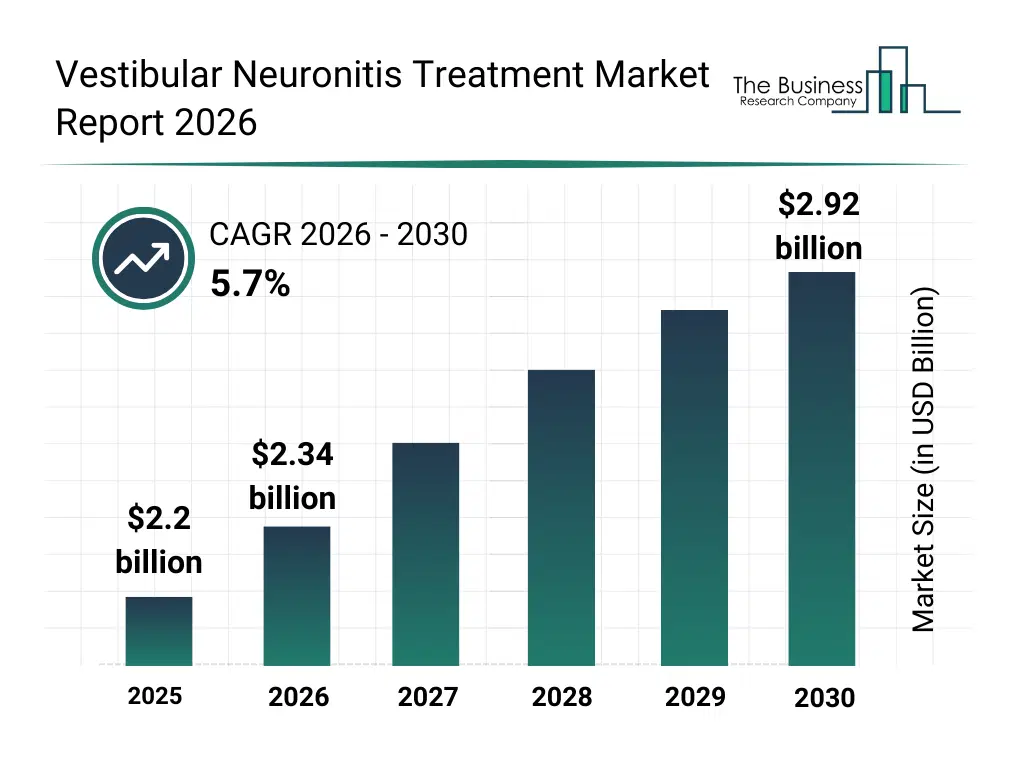
What Is The Vestibular Neuronitis Treatment Market Size and Share 2026?
The vestibular neuronitis treatment market size has grown strongly in recent years. It will grow from $2.2 billion in 2025 to $2.34 billion in 2026 at a compound annual growth rate (CAGR) of 6.1%. The growth in the historic period can be attributed to increasing incidence of viral inner ear infections, improved diagnosis of vestibular neuronitis, rising awareness of balance disorders, expansion of physical therapy services, increased access to neurological care.What Is The Vestibular Neuronitis Treatment Market Growth Forecast?
The vestibular neuronitis treatment market size is expected to see strong growth in the next few years. It will grow to $2.92 billion in 2030 at a compound annual growth rate (CAGR) of 5.7%. The growth in the forecast period can be attributed to increasing adoption of personalized rehabilitation programs, growing demand for non-surgical treatment options, expansion of tele-rehabilitation services, rising investment in vestibular research, increasing focus on faster neurological recovery. Major trends in the forecast period include increasing adoption of vestibular rehabilitation exercises, rising use of corticosteroid therapies, growing focus on early symptom management, expansion of outpatient treatment settings, improved multidisciplinary care approaches.
Global Vestibular Neuronitis Treatment Market Segmentation
1) By Treatment Type: Medication, Physical Therapy, Surgery, Alternative Therapy 2) By Route Of Administration: Oral, Intravenous, Intramuscular 3) By Age Group: Children, Adults, Elderly 4) By Symptoms: Sudden Vertigo, Balance Issues, Nausea And Vomiting, Dizziness, Trouble Concentrating 5) By End Users: Hospitals, Clinics, Other End Users Subsegments: 1) By Medication: Corticosteroids, Antihistamines, Benzodiazepines, Antiemetics, Antiviral Drugs, Antibiotics 2) By Physical Therapy: Vestibular Rehabilitation Therapy (VRT), Balance Training Exercises, Canalith Repositioning Maneuvers 3) By Surgery: Labyrinthectomy, Vestibular Nerve Section, Endolymphatic Sac Decompression 4) By Alternative Therapy: Acupuncture, Herbal Medicine, Chiropractic Therapy, Homeopathic Treatment, Dietary SupplementsWhat Are The Drivers Of The Vestibular Neuronitis Treatment Market?
The rising cases of viral infections are expected to propel the growth of the vestibular neuronitis treatment market going forward. Viral infections are illnesses caused by viruses that invade and replicate within the cells of a host organism, leading to various symptoms and potential damage to tissues. The increase in viral infections is largely due to global travel and urbanization, which lead to higher population density and increased human interactions, making it easier for viruses to spread through airborne droplets, direct contact and contaminated surfaces. Vestibular neuronitis treatment helps manage viral infections by reducing vestibular nerve inflammation, alleviating dizziness and balance issues, and supporting recovery through medications, rehabilitation therapy, and supportive care. For instance, in October 2024, according to UK Health Security Agency, a UK-based government agency, human immunodeficiency virus (HIV) diagnoses in England reached 6,008 in 2023, marking a 51% increase from 3,975 in 2022. Therefore, the rising cases of viral infections are driving the vestibular neuronitis treatment industry. The rising healthcare expenditures are expected to propel the growth of the vestibular neuronitis treatment market going forward. Healthcare expenditure refers to the total amount of money spent on medical services, treatments, facilities, research and public health initiatives to maintain or improve health outcomes. The increasing demand for healthcare funding is driven by the aging population, as older adults are more likely to develop balance problems due to inner ear degeneration, poor blood flow, and weaker nerve function. Healthcare expenditures drive vestibular neuronitis treatment by funding research, advancing medical technologies, and improving access to specialized care, which leads to better treatment options and faster recovery for patients. For instance, in December 2024, according to the Centers for Medicare & Medicaid Services (CMS), a US-based federal agency reported that national health expenditures (NHE) grew by 7.5% in 2023, outpacing the gross domestic product (GDP) growth of 6.1%. Between 2023 and 2032, average national health expenditures (NHE) is projected to grow at an average annual rate of 5.6%, resulting in an increase in the health spending share of domestic product (GDP) from 17.3% in 2022 to 19.7% in 2032. Therefore, the rising healthcare expenditures are driving the vestibular neuronitis treatment industry.Key Players In The Global Vestibular Neuronitis Treatment Market
Major companies operating in the vestibular neuronitis treatment market are Kaiser Permanente, Pfizer Inc., Johnson & Johnson, F. Hoffmann‑La Roche AG, Merck & Co. Inc., AbbVie Inc., Abbott Laboratories, Novartis AG, GSK plc, Bupa, Teva Pharmaceutical Industries Ltd., Cipla Limited, Dr. Reddy’s Laboratories Ltd., Zydus Lifesciences Limited, Prestige Consumer Healthcare Inc., Sun Pharmaceutical Industries Ltd., ANI Pharmaceuticals Inc., Sanofi S.A., H Lundbeck A/S, Otonomy Inc., Auris Medical Holding Ltd., Bayer AG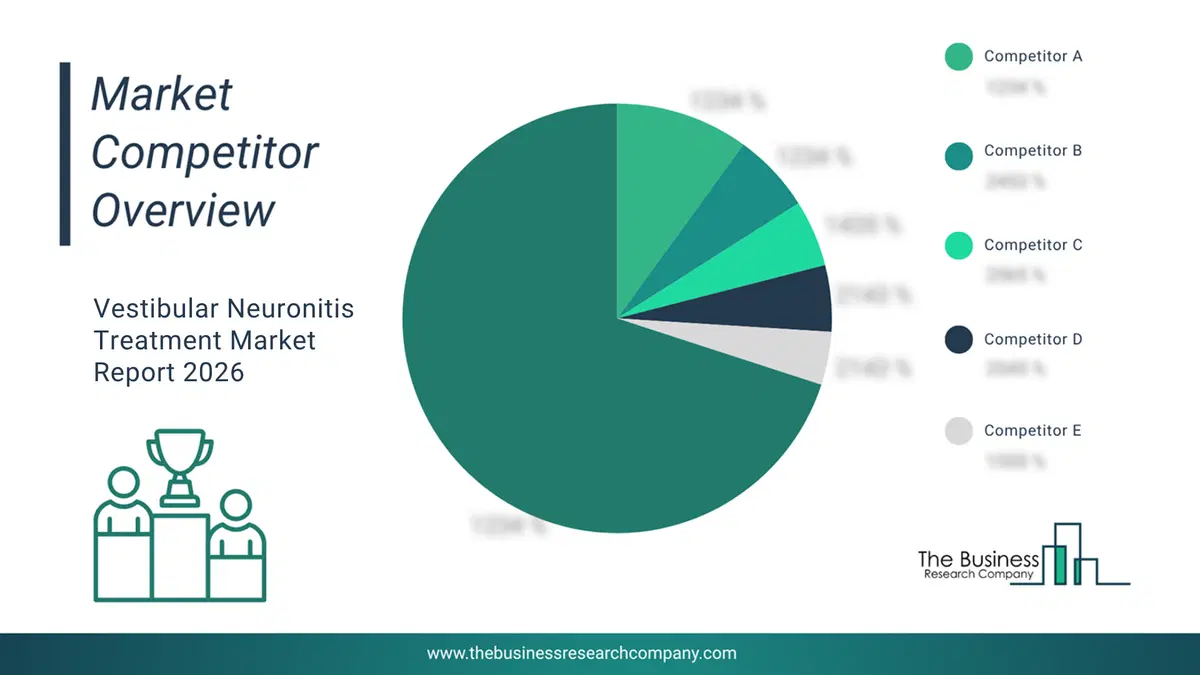
This chart is for illustrative purposes; the full report includes a detailed competitor analysis and comprehensive overview of the top 10 companies in the market.
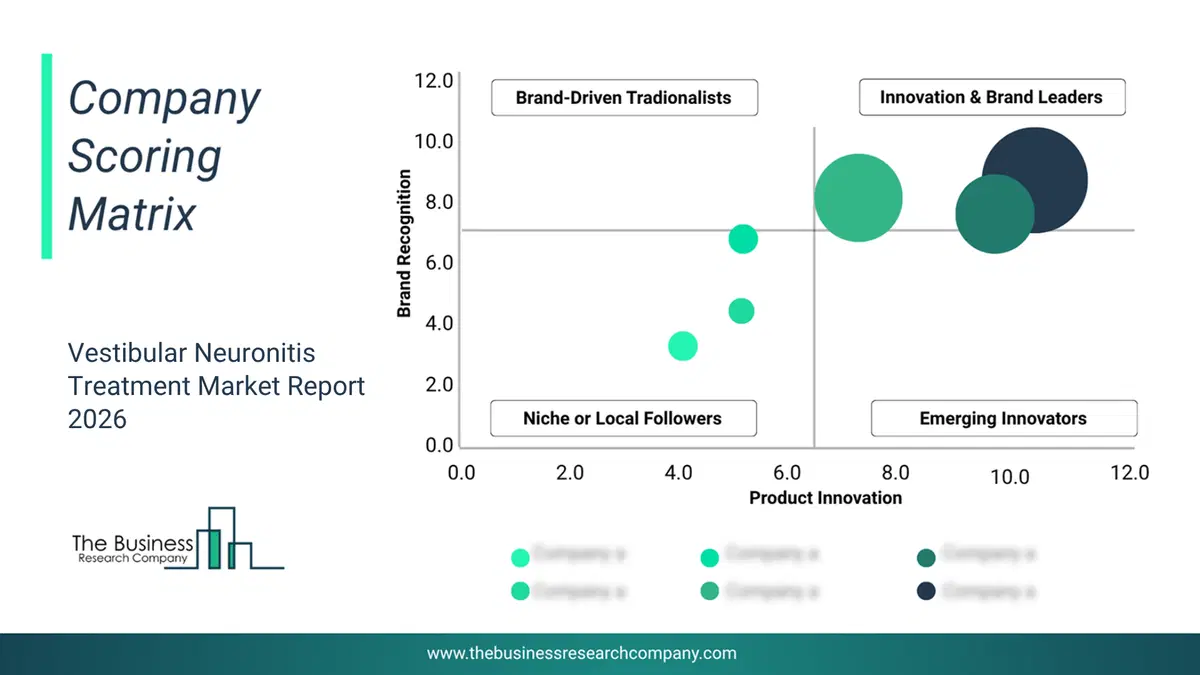
This chart maps companies by product innovation and brand strength, with bubble size indicating relative revenue, helping identify market leaders, challengers, and niche players. This is an illustrative chart; the full report provides a complete and accurate competitive analysis.
Global Vestibular Neuronitis Treatment Market Trends and Insights
Major companies operating in the vestibular neuronitis treatment market are focusing on developing innovative solutions, such as vestibular modulators to enhance vestibular compensation, accelerate recovery from vertigo, and improve treatment efficacy for patients suffering from balance disorders. Vestibular modulators are therapeutic agents that regulate vestibular system activity to improve balance, reduce vertigo, and enhance vestibular compensation. For instance, in June 2023, Altamira Therapeutics Ltd., a Switzerland-based biopharmaceutical company, investigational new drug (IND) clearance from U.S. Food and Drug Administration for AM-125 (betahistine nasal spray) in acute vestibular syndrome (AVS). AM-125 is a vestibular modulator that treats vestibular neuronitis by enhancing histamine release, improving vestibular compensation, and increasing inner ear blood flow to reduce vertigo and balance issues. Its intranasal delivery ensures faster absorption and higher bioavailability for quicker symptom relief.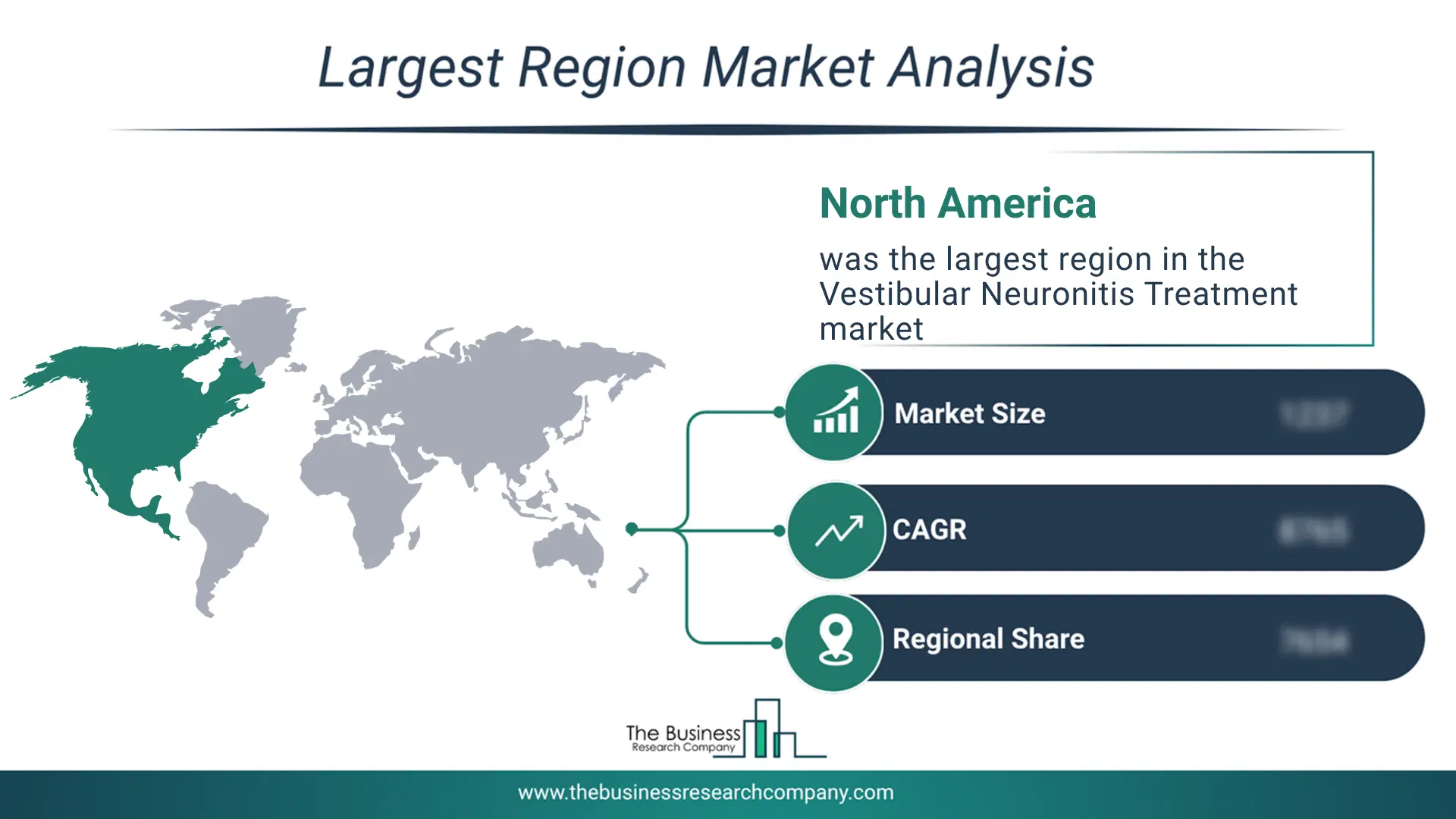
Regional Outlook
North America was the largest region in the vestibular neuronitis treatment market in 2025. Asia-Pacific is expected to be the fastest-growing region in the forecast period. The regions covered in this market report are Asia-Pacific, South East Asia, Western Europe, Eastern Europe, North America, South America, Middle East, Africa. The countries covered in this market report are Australia, Brazil, China, France, Germany, India, Indonesia, Japan, Taiwan, Russia, South Korea, UK, USA, Canada, Italy, Spain.What Defines the Vestibular Neuronitis Treatment Market?
The vestibular neuronitis treatment market consists of revenues earned by entities providing services such as diagnostic testing, lifestyle and dietary modifications, telemedicine, hospital and outpatient care, vestibular rehabilitation therapy and balance training exercises. The market value includes the value of related goods sold by the service provider or included within the service offering. The vestibular neuronitis market also includes sales of vestibular suppressants, anti-nausea medications, corticosteroids, vestibular rehabilitation devices and balance training equipment. Values in this market are ‘factory gate’ values, that is the value of goods sold by the manufacturers or creators of the goods, whether to other entities (including downstream manufacturers, wholesalers, distributors and retailers) or directly to end customers. The value of goods in this market includes related services sold by the creators of the goods.How is Market Value Defined and Measured?
The market value is defined as the revenues that enterprises gain from the sale of goods and/or services within the specified market and geography through sales, grants, or donations in terms of the currency (in USD unless otherwise specified). The revenues for a specified geography are consumption values that are revenues generated by organizations in the specified geography within the market, irrespective of where they are produced. It does not include revenues from resales along the supply chain, either further along the supply chain or as part of other products.
This chart presents market attractiveness based on a quantitative evaluation of growth, competition, strategic alignment, and risk, offering a clear view of opportunity areas for decision-making. This chart is for illustrative purposes; the full report contains the complete analysis.

This chart highlights the Total Addressable Market (TAM) by estimating the maximum revenue opportunity using an assumption-driven approach, supporting strategic planning and opportunity sizing across markets. The chart is illustrative; the full report provides a more comprehensive analysis.
What Key Data and Analysis Are Included in the Vestibular Neuronitis Treatment Market Report 2026?
The vestibular neuronitis treatment market research report is one of a series of new reports from The Business Research Company that provides market statistics, including industry global market size, regional shares, competitors with the market share, detailed market segments, market trends and opportunities, and any further data you may need to thrive in the vestibular neuronitis treatment industry. The market research report delivers a complete perspective of everything you need, with an in-depth analysis of the current and future state of the industry.Vestibular Neuronitis Treatment Market Report Forecast Analysis
| Report Attribute | Details |
|---|---|
| Market Size Value In 2026 | $2.34 billion |
| Revenue Forecast In 2030 | $2.92 billion |
| Growth Rate | CAGR of 5.7% from 2026 to 2030 |
| Base Year For Estimation | 2025 |
| Actual Estimates/Historical Data | 2020-2025 |
| Forecast Period | 2026 - 2030 |
| Market Representation | Revenue in USD Billion and CAGR from 2026 to 2030 |
| Segments Covered | Treatment Type, Route Of Administration, Age Group, Symptoms, End Users |
| Regional Scope | Asia-Pacific, Western Europe, Eastern Europe, North America, South America, Middle East, Africa |
| Country Scope | The countries covered in the report are Australia, Brazil, China, France, Germany, India, Indonesia, Japan, Taiwan, Russia, South Korea, UK, USA, Canada, Italy, Spain |
| Key Companies Profiled | Kaiser Permanente, Pfizer Inc., Johnson & Johnson, F. Hoffmann‑La Roche AG, Merck & Co. Inc., AbbVie Inc., Abbott Laboratories, Novartis AG, GSK plc, Bupa, Teva Pharmaceutical Industries Ltd., Cipla Limited, Dr. Reddy’s Laboratories Ltd., Zydus Lifesciences Limited, Prestige Consumer Healthcare Inc., Sun Pharmaceutical Industries Ltd., ANI Pharmaceuticals Inc., Sanofi S.A., H Lundbeck A/S, Otonomy Inc., Auris Medical Holding Ltd., Bayer AG |
| Customization Scope | Request for Customization |
| Pricing And Purchase Options | Explore Purchase Options |