
Veterinary Artificial Insemination Market Report 2026
Global Outlook – By Product (Normal Semen, Sexed Semen ), By Animal Type (Cattle, Swine, Ovine And Caprine, Equine, Other Animal Types), By Technique (Intracervical Insemination, Intrauterine Insemination, Intrauterine Tub Peritoneal Insemination, Intratubal Insemination), By End-Users (Veterinary Hospitals, Veterinary Clinics, Other End Users) – Market Size, Trends, Strategies, and Forecast to 2030
Veterinary Artificial Insemination Market Overview
• Veterinary Artificial Insemination market size has reached to $4.56 billion in 2025 • Expected to grow to $6.59 billion in 2030 at a compound annual growth rate (CAGR) of 7.7% • Growth Driver: Livestock Demand Surge And Market Growth In Veterinary Artificial Insemination • Market Trend: Innovative Initiatives In Veterinary Artificial Insemination And Livestock Care Services • North America was the largest region in 2025 and Asia-Pacific is the fastest growing region.What Is Covered Under Veterinary Artificial Insemination Market?
Veterinary artificial insemination (AI) is a procedure in which fresh male animal sperm, or a frozen-thawed sperm suspension is manually introduced into the female animal reproductive organs to overcome the logistical problems associated with natural copulation. The veterinary artificial insemination is used for selective breeding, genetic enhancement, overcoming infertility, and conservation in many animal species, including cattle, companion animals, wildlife animals. The main products of veterinary artificial insemination are normal semen and sexed semen. Normal semen is used for artificial insemination to enhance farm animals' genetics and reproduction. A typical ejaculation produces 1.5 to 5.0 milliliters of semen. In an average male, the number of sperm per milliliter of sperm ranges from 15 million to more than 200 million. It is used on cattle, swine, ovine and caprine, equine and others, with using techniques such as intracervical insemination, intrauterine insemination, intrauterine tub peritoneal insemination, intratubal insemination. It is done with the help of veterinary hospitals, veterinary clinics, and others.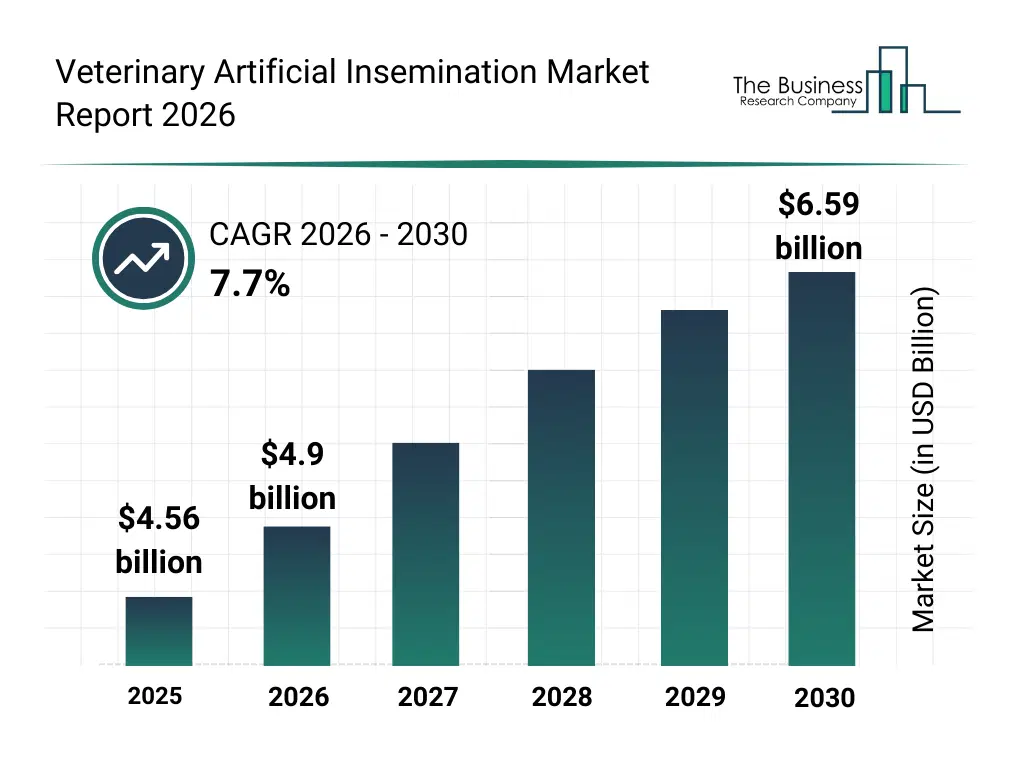
What Is The Veterinary Artificial Insemination Market Size and Share 2026?
The veterinary artificial insemination market size has grown strongly in recent years. It will grow from $4.56 billion in 2025 to $4.9 billion in 2026 at a compound annual growth rate (CAGR) of 7.6%. The growth in the historic period can be attributed to use of natural breeding methods, growing livestock population, increasing demand for high-quality animal progeny, development of basic semen preservation techniques, early adoption of veterinary ai in cattle.What Is The Veterinary Artificial Insemination Market Growth Forecast?
The veterinary artificial insemination market size is expected to see strong growth in the next few years. It will grow to $6.59 billion in 2030 at a compound annual growth rate (CAGR) of 7.7%. The growth in the forecast period can be attributed to advancements in sexed semen technology, rising investments in precision breeding, increasing adoption of intracervical and intrauterine insemination techniques, expansion of veterinary ai services in emerging markets, growing focus on wildlife and companion animal breeding programs. Major trends in the forecast period include rising adoption of sexed semen technology, increasing focus on genetic improvement in livestock, expansion of veterinary ai services, growing use of frozen semen for long-distance breeding, enhanced training and awareness programs for farmers.
Global Veterinary Artificial Insemination Market Segmentation
1) By Product: Normal Semen, Sexed Semen 2) By Animal Type: Cattle, Swine, Ovine And Caprine, Equine, Other Animal Types 3) By Technique: Intracervical Insemination, Intrauterine Insemination, Intrauterine Tub Peritoneal Insemination, Intratubal Insemination 4) By End-Users: Veterinary Hospitals, Veterinary Clinics, Other End Users Subsegments: 1) By Normal Semen: Fresh Semen, Frozen Semen 2) By Sexed Semen: X-Sorted Semen (Female), Y-Sorted Semen (Male)What Is The Driver Of The Veterinary Artificial Insemination Market?
The growing demand for livestock is expected to propel the growth of the veterinary artificial insemination market going forward. Livestock are domesticated animals raised in an agricultural setting to produce commodities such as meat, milk, eggs, wool, and leather. Livestock are rising because growing demand for animal-based food products drives increased farming and breeding to meet nutritional and market needs. Veterinary artificial insemination (AI) is a widely used technique in livestock production to breed animals by introducing semen into the female reproductive tract without natural mating, which improves the quality of the livestock and increases productivity. For instance, in July 2023, according to the Food and Agriculture Organization, a US-based specialized agency, world milk production in 2023 was forecast to increase to 944 million tonnes, up 0.9% from 2022, reflecting rising demand for animal-source foods as incomes increase and diets shift toward protein. Therefore, the growing demand for livestock is driving the growth of the veterinary artificial insemination industry.Key Players In The Global Veterinary Artificial Insemination Market
Major companies operating in the veterinary artificial insemination market are Swine Genetics International, Semex, Gènes Diffusion, CRV Holding B.V., Select Sires Inc., Shipley Swine Genetics, STgenetics, Hamilton Thorne Inc., Microptic, Medical Electronic Systems LLC., Magapor S.L., Proiser, Zoetis India Limited, GenePro Inc., IMV Technologies, Neogen Corporation, Bovine Elite LLC., Agtech Inc., Genex Cooperative Inc., Alta Genetics Inc., ABS Global Inc., Cogent Breeding Ltd., Viking Genetics, Inseme S.r.l., Semen Cardona S.L., Genus PLC, Trans Ova Genetics, Cattle Genetics Ltd., Cattle Breeding Services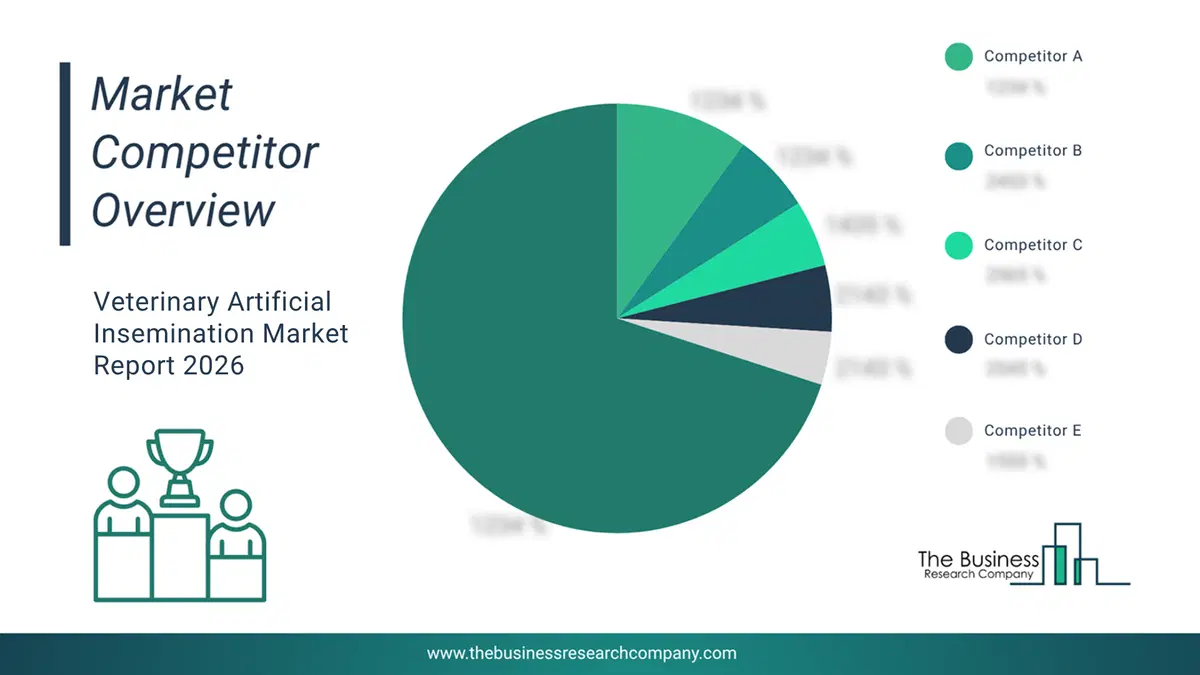
This chart is for illustrative purposes; the full report includes a detailed competitor analysis and comprehensive overview of the top 10 companies in the market.
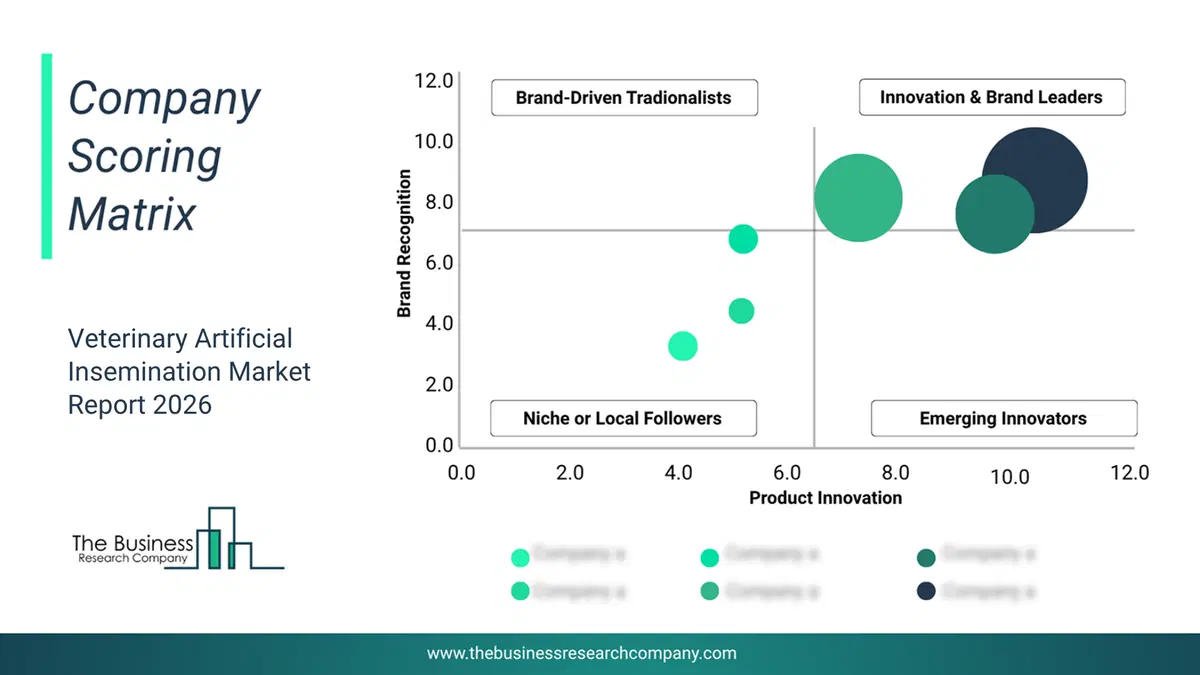
This chart maps companies by product innovation and brand strength, with bubble size indicating relative revenue, helping identify market leaders, challengers, and niche players. This is an illustrative chart; the full report provides a complete and accurate competitive analysis.
Global Veterinary Artificial Insemination Market Trends and Insights
Major companies and governments operating in the veterinary artificial insemination market are focused on developing innovative products, such as livestock care services, to provide reliable services to customers. Livestock care services encompass a wide range of professional practices to promote farm animals' health, well-being, and productivity. These services are essential for maintaining sustainable and profitable livestock production, ensuring the safety of animal products, and safeguarding public health. For instance, in April 2023, the Government of Himachal Pradesh, an India-based supreme governing authority, launched Project Sanjeevani. It is uniquely designed to provide doorstep veterinary services, particularly in remote areas. The project addresses livestock owners' challenges in accessing timely and quality veterinary care. By leveraging teleconsultation and mobile applications, veterinary professionals can connect with farmers in remote areas, provide real-time advice, and facilitate timely interventions. The doorstep veterinary services are expected to provide curative treatment, vaccination, artificial insemination, preventive care, and all animal husbandry-related information.What Are Latest Mergers And Acquisitions In The Veterinary Artificial Insemination Market?
In January 2025, IMV Technologies, a France-based healthcare technology company, acquired Conception Ro Main Inc. for an undisclosed amount. With this acquisition, IMV Technologies aimed to strengthen its portfolio in veterinary reproductive technologies and expand its presence in the livestock artificial insemination market through advanced automation and AI-driven solutions. Conception Ro Main Inc. is a Canada-based technology company that provides solutions that support veterinary artificial insemination, specifically within the swine industry.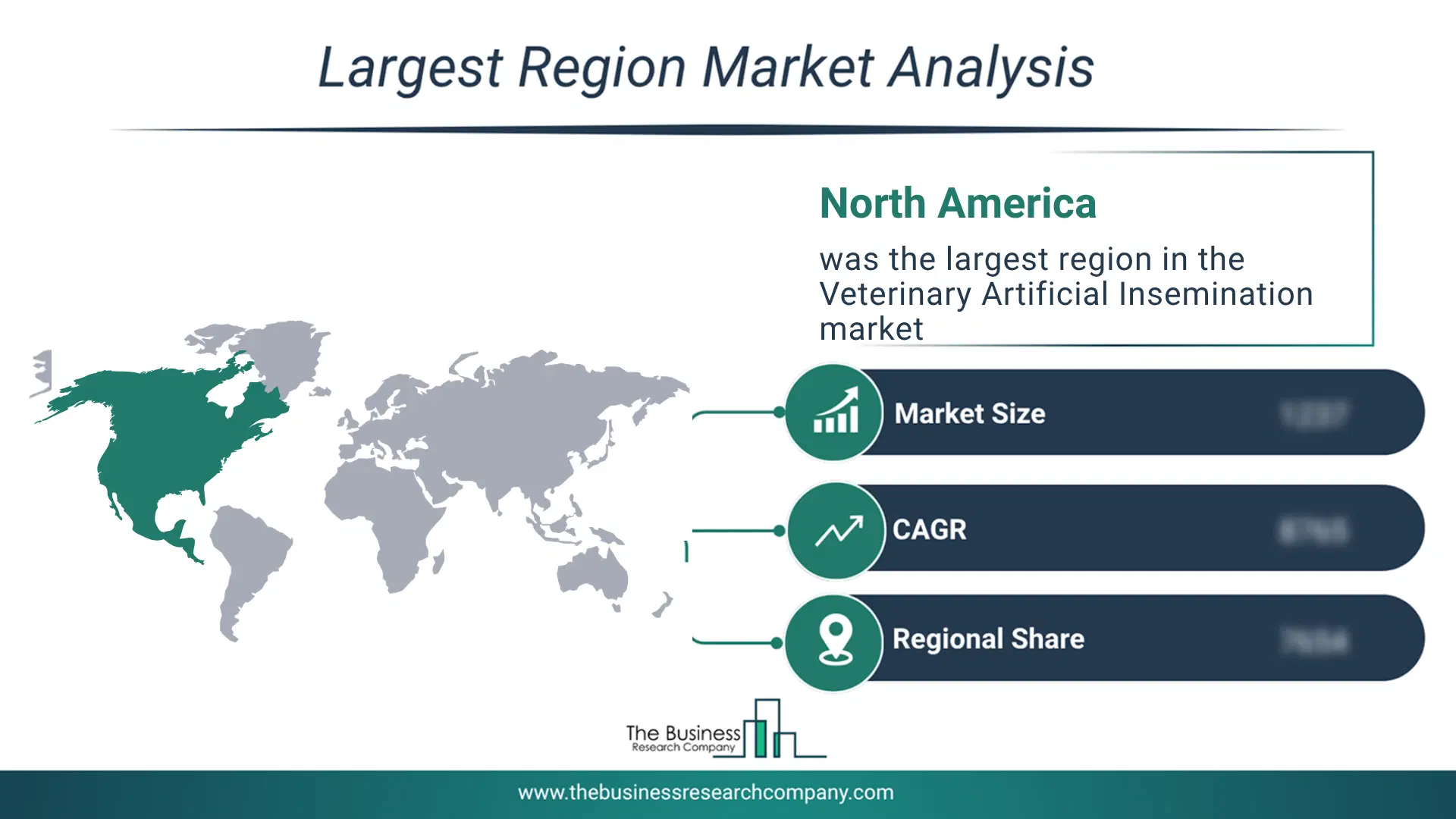
Regional Outlook
North America was the largest region in the veterinary artificial insemination market in 2025. Asia-Pacific is expected to be the fastest-growing region in the forecast period. The regions covered in this market report are Asia-Pacific, South East Asia, Western Europe, Eastern Europe, North America, South America, Middle East, Africa. The countries covered in this market report are Australia, Brazil, China, France, Germany, India, Indonesia, Japan, Taiwan, Russia, South Korea, UK, USA, Canada, Italy, SpainWhat Defines the Veterinary Artificial Insemination Market?
The veterinary artificial insemination market consists of revenues earned by entities by providing veterinary artificial insemination services such breeding, scientific doorstep AI facilities, crossbreeding, selective breeding, pure breeding. The market value includes the value of related goods sold by the service provider or included within the service offering. The veterinary artificial insemination market also includes sales of AI kits, AI gun, AI sheaths, clinical thermometer which are used in providing veterinary artificial insemination services. Values in this market are ‘factory gate’ values, that is the value of goods sold by the manufacturers or creators of the goods, whether to other entities (including downstream manufacturers, wholesalers, distributors and retailers) or directly to end customers. The value of goods in this market includes related services sold by the creators of the goods.How is Market Value Defined and Measured?
The market value is defined as the revenues that enterprises gain from the sale of goods and/or services within the specified market and geography through sales, grants, or donations in terms of the currency (in USD unless otherwise specified). The revenues for a specified geography are consumption values that are revenues generated by organizations in the specified geography within the market, irrespective of where they are produced. It does not include revenues from resales along the supply chain, either further along the supply chain or as part of other products.
This chart presents market attractiveness based on a quantitative evaluation of growth, competition, strategic alignment, and risk, offering a clear view of opportunity areas for decision-making. This chart is for illustrative purposes; the full report contains the complete analysis.

This chart highlights the Total Addressable Market (TAM) by estimating the maximum revenue opportunity using an assumption-driven approach, supporting strategic planning and opportunity sizing across markets. The chart is illustrative; the full report provides a more comprehensive analysis.
What Key Data and Analysis Are Included in the Veterinary Artificial Insemination Market Report 2026?
The veterinary artificial insemination market research report is one of a series of new reports from The Business Research Company that provides market statistics, including industry global market size, regional shares, competitors with the market share, detailed market segments, market trends and opportunities, and any further data you may need to thrive in the veterinary artificial insemination industry. The market research report delivers a complete perspective of everything you need, with an in-depth analysis of the current and future state of the industry.Veterinary Artificial Insemination Market Report Forecast Analysis
| Report Attribute | Details |
|---|---|
| Market Size Value In 2026 | $4.9 billion |
| Revenue Forecast In 2030 | $6.59 billion |
| Growth Rate | CAGR of 7.6% from 2026 to 2030 |
| Base Year For Estimation | 2025 |
| Actual Estimates/Historical Data | 2020-2025 |
| Forecast Period | 2026 - 2030 - 2030 |
| Market Representation | Revenue in USD Billion and CAGR from 2026 to 2030 |
| Segments Covered | Product, Animal Type, Technique, End-Users |
| Regional Scope | Asia-Pacific, Western Europe, Eastern Europe, North America, South America, Middle East, Africa |
| Country Scope | The countries covered in the report are Australia, Brazil, China, France, Germany, India, Indonesia, Japan, Taiwan, Russia, South Korea, UK, USA, Canada, Italy, Spain. |
| Key Companies Profiled | Swine Genetics International, Semex, Gènes Diffusion, CRV Holding B.V., Select Sires Inc., Shipley Swine Genetics, STgenetics, Hamilton Thorne Inc., Microptic, Medical Electronic Systems LLC., Magapor S.L., Proiser, Zoetis India Limited, GenePro Inc., IMV Technologies, Neogen Corporation, Bovine Elite LLC., Agtech Inc., Genex Cooperative Inc., Alta Genetics Inc., ABS Global Inc., Cogent Breeding Ltd., Viking Genetics, Inseme S.r.l., Semen Cardona S.L., Genus PLC, Trans Ova Genetics, Cattle Genetics Ltd., Cattle Breeding Services |
| Customization Scope | Request for Customization |
| Pricing And Purchase Options | Explore Purchase Options |