
Veterinary Autoimmune Disease Therapeutics Market Report 2026
Global Outlook – By Therapy Type (Corticosteroids, Azathioprine, Cyclosporine, Mycophenolate, Leflunomide, Cyclophosphamide), By Animal Type (Companion Animals, Livestock Animals, Other Animal Types), By Disease (Hypothyroidism, Pemphigus Disease, Canine Lupus, Auto-Immune Hemolytic Anemia, Bullous Pemphigoid, Discoid Lupus Erythematosus (DLE), Immune-Related Arthritis, Other Diseases), By Distribution Channel (Veterinary Hospitals, Veterinary Clinics) – Market Size, Trends, Strategies, and Forecast to 2030
Veterinary Autoimmune Disease Therapeutics Market Overview
• Veterinary Autoimmune Disease Therapeutics market size has reached to $3.46 billion in 2025 • Expected to grow to $4.61 billion in 2030 at a compound annual growth rate (CAGR) of 5.8% • Growth Driver: Increased Funding Propels Growth In Veterinary Research And Autoimmune Disease Treatments • Market Trend: Biocytogen Launches RenBiologics to Advance Veterinary Autoimmune Disease Therapies with Fully Human Antibodies • North America was the largest region in 2025.What Is Covered Under Veterinary Autoimmune Disease Therapeutics Market?
Veterinary autoimmune disease therapeutics refer to treatments designed to manage and alleviate animal autoimmune diseases. These therapeutics aim to modulate or suppress the immune response to reduce inflammation, prevent further tissue damage, and improve the affected animal's overall health and quality of life. Veterinary autoimmune disease therapeutics are critical for managing these complex conditions and require a tailored approach based on the specific disease, the severity of the condition, and the individual animal's needs. The main therapy types of veterinary autoimmune disease therapeutics are corticosteroids, azathioprine, cyclosporine, mycophenolate, leflunomide, cyclophosphamide, levothyroxine, folic acid, hydroxychloroquine, and chloroquine. Corticosteroids refer to a class of steroid hormones produced in the adrenal cortex. They are often used in medicine to reduce inflammation and suppress the immune system. For animals such as companion animals, livestock animals, and others with disease-type hypothyroidism, pemphigus disease, canine lupus, autoimmune Hemolytic anemia, bullous pemphigoid, discoid lupus erythematosus (DLE), immune-related arthritis, and others. It is distributed through veterinary hospitals and veterinary clinics.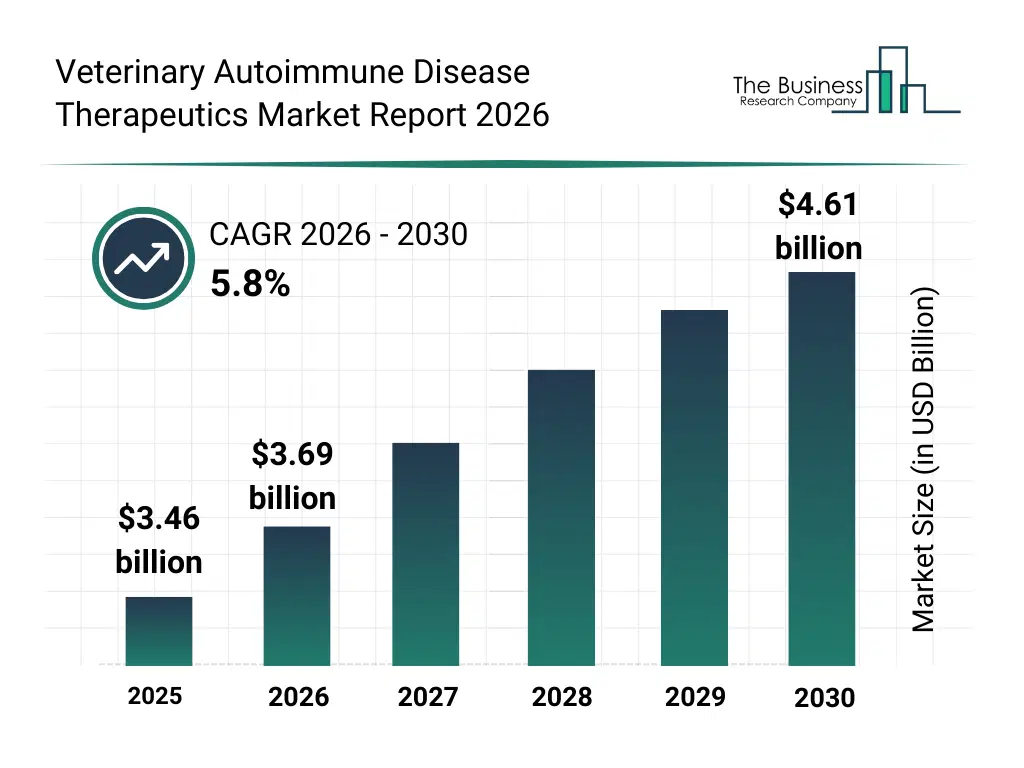
What Is The Veterinary Autoimmune Disease Therapeutics Market Size and Share 2026?
The veterinary autoimmune disease therapeutics market size has grown strongly in recent years. It will grow from $3.46 billion in 2025 to $3.69 billion in 2026 at a compound annual growth rate (CAGR) of 6.6%. The growth in the historic period can be attributed to limited treatment options for animal autoimmune diseases, high prevalence of hypothyroidism and pemphigus, reliance on corticosteroids as primary therapy, growing pet ownership, increasing veterinary consultations.What Is The Veterinary Autoimmune Disease Therapeutics Market Growth Forecast?
The veterinary autoimmune disease therapeutics market size is expected to see strong growth in the next few years. It will grow to $4.61 billion in 2030 at a compound annual growth rate (CAGR) of 5.8%. The growth in the forecast period can be attributed to advancements in immunomodulatory therapies, development of novel oral and injectable formulations, rising awareness of autoimmune conditions in companion animals, expansion of veterinary hospital and clinic networks, increasing adoption of precision medicine approaches. Major trends in the forecast period include rising use of corticosteroids and immunosuppressive therapies, increasing focus on companion animal autoimmune disease management, expansion of veterinary hospital and clinic networks, development of oral and injectable formulations for enhanced compliance, growing awareness of rare autoimmune diseases in animals.
Global Veterinary Autoimmune Disease Therapeutics Market Segmentation
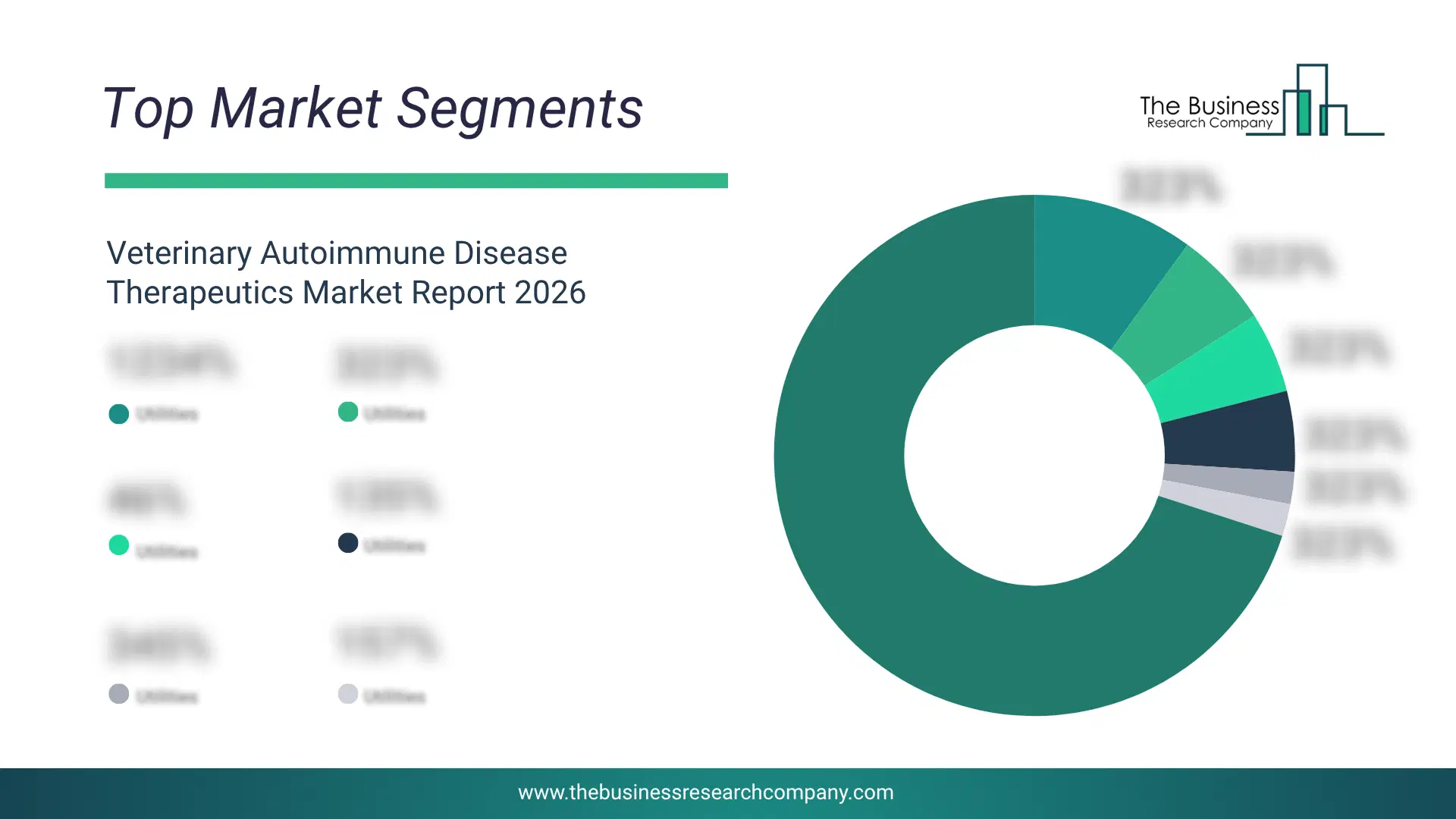
1) By Therapy Type: Corticosteroids, Azathioprine, Cyclosporine, Mycophenolate, Leflunomide, Cyclophosphamide 2) By Animal Type: Companion Animals, Livestock Animals, Other Animal Types 3) By Disease: Hypothyroidism, Pemphigus Disease, Canine Lupus, Auto-Immune Hemolytic Anemia, Bullous Pemphigoid, Discoid Lupus Erythematosus (DLE), Immune-Related Arthritis, Other Diseases 4) By Distribution Channel: Veterinary Hospitals, Veterinary Clinics Subsegments: 1) By Corticosteroids: Prednisone, Prednisolone, Dexamethasone, Methylprednisolone, Triamcinolone 2) By Azathioprine: Azathioprine Oral Tablets, Azathioprine Injectable Formulation 3) By Cyclosporine: Oral Cyclosporine (Atopica), Injectable Cyclosporine 4) By Mycophenolate: Mycophenolate Mofetil (Oral Form), Mycophenolate Sodium (Injectable Form) 5) By Leflunomide: Leflunomide Tablets (Oral), Leflunomide Injection 6) By Cyclophosphamide: Oral Cyclophosphamide, Injectable CyclophosphamideWhat Is The Driver Of The Veterinary Autoimmune Disease Therapeutics Market?
The increasing funding for research in veterinary medicine is expected to propel the growth of the veterinary autoimmune disease therapeutics market going forward. Veterinary medicine is the branch of medicine that deals with the prevention, diagnosis, and treatment of diseases, disorders, and injuries in animals. The increased funding for research in veterinary medicine can be attributed to rising zoonotic diseases, the growing pet industry, advances in animal health technology, agricultural demands, and wildlife conservation efforts. Funding for research in veterinary autoimmune disease supports studies on disease mechanisms, diagnostic tools, and treatment options, enhancing veterinary medicine's ability to diagnose and manage these conditions effectively. For instance, in September 2025, according to the American Veterinary Medical Association (AVMA), a US-based not-for-profit association, the USDA Veterinary Service Grant Program $3.8 million in 2024, up to $15 million in subsequent years. Therefore, the increased funding for research in veterinary medicine is driving the growth of the veterinary autoimmune disease therapeutics industry.Key Players In The Global Veterinary Autoimmune Disease Therapeutics Market
Major companies operating in the veterinary autoimmune disease therapeutics market are Pfizer Inc, Merck & Co Inc, AbbVie Inc., Sanofi S.A., Novartis AG, GlaxoSmithKline, Takeda Pharmaceutical Company, Amgen Inc., Teva Pharmaceuticals Industries Ltd., Zoetis Inc, Boehringer Ingelheim International GmbH, Sumitomo Pharma Co. Ltd., IDEXX Laboratories Inc., Cipla Inc., Mallinckrodt Pharmaceuticals, Virbac S.A, Dechra Pharmaceuticals plc, Neogen Corporation, Vetoquinol S.A., Norbrook Laboratories Limited, Heska Corporation, Bimeda Holdings PLC, Bayer Animal Health Inc, Aratana Therapeutics Inc, Hester Biosciences Limited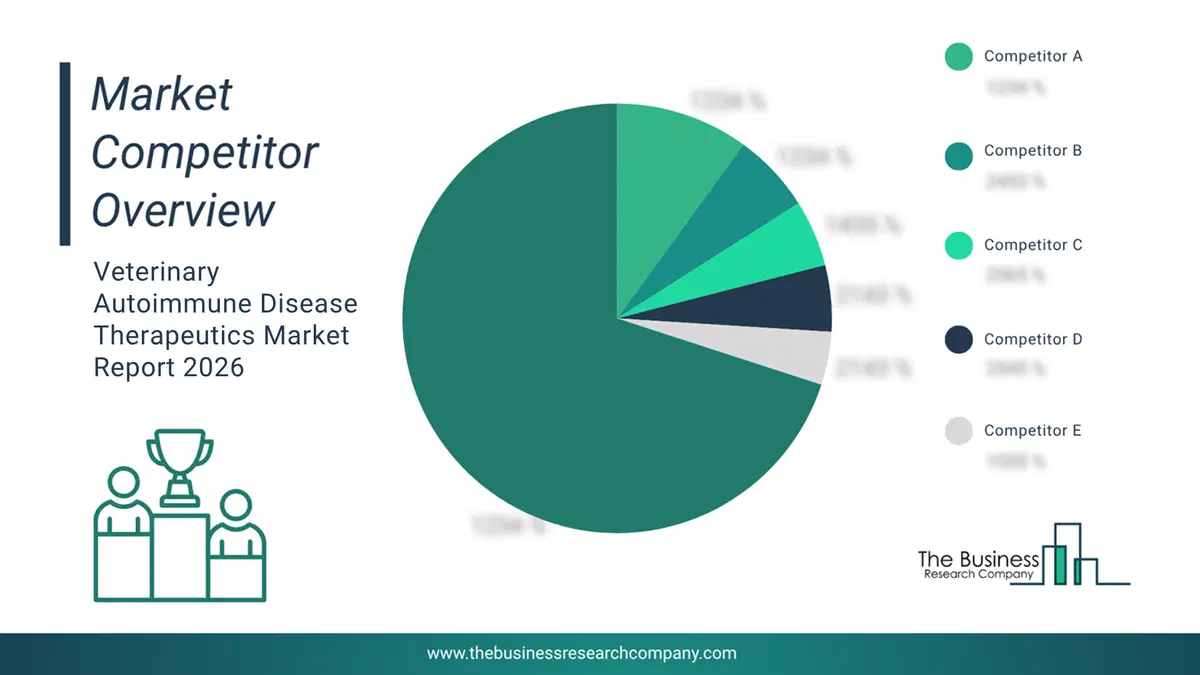
This chart is for illustrative purposes; the full report includes a detailed competitor analysis and comprehensive overview of the top 10 companies in the market.
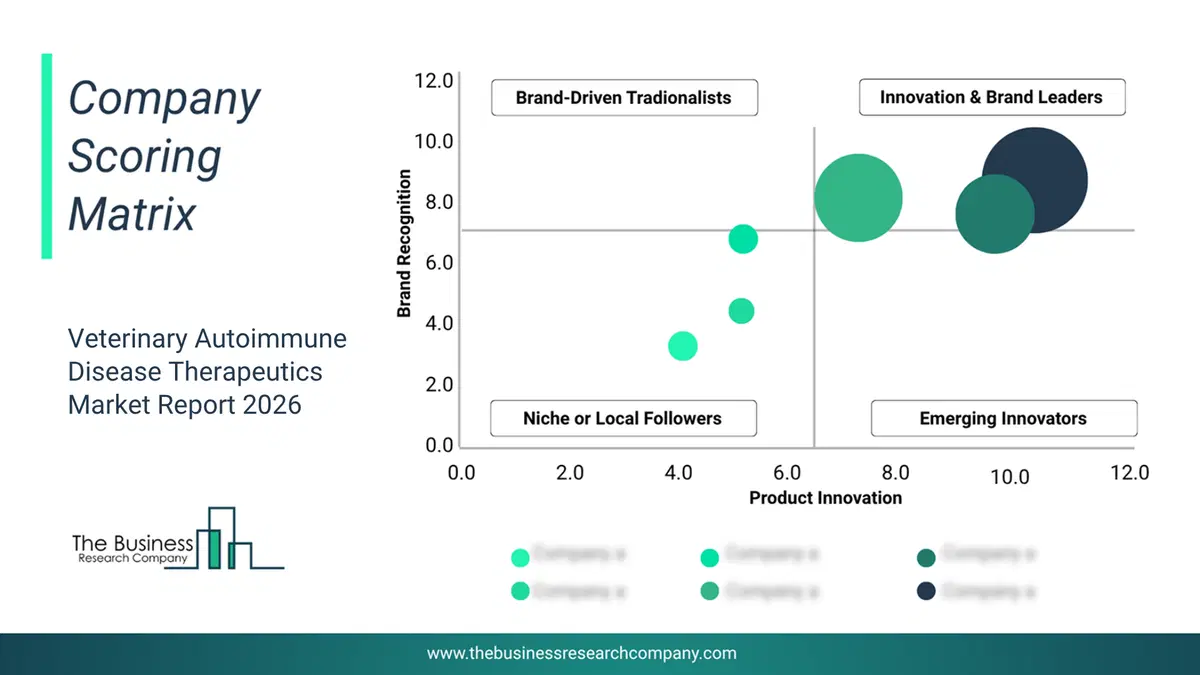
This chart maps companies by product innovation and brand strength, with bubble size indicating relative revenue, helping identify market leaders, challengers, and niche players. This is an illustrative chart; the full report provides a complete and accurate competitive analysis.
Global Veterinary Autoimmune Disease Therapeutics Market Trends and Insights
Major companies operating in the veterinary autoimmune disease therapeutics market are focusing on developing technologically advanced solutions. Such as RenBiologics to address several critical industry demands. RenBiologics develops innovative therapies for kidney-related conditions and chronic diseases, focusing on biologics and regenerative medicine to improve outcomes in areas like renal function and transplant success. For instance, in January 2024, according to the Biocytogen, a China-based biotechnology company, launched a new sub-brand, RenBiologics, to focus on the out-licensing of fully human antibodies for therapeutic development. This initiative aims to leverage Biocytogen's extensive library of over 400,000 fully human antibody sequences, generated through its proprietary RenMice platforms. RenBiologics will facilitate partnerships with pharmaceutical and biotechnology companies for the co-development and licensing of these antibodies, enhancing the potential for novel antibody-based therapeutics. The launch reflects Biocytogen's commitment to becoming a global resource in antibody discovery, with a vision to expedite the development of innovative treatments across various therapeutic areas.What Are Latest Mergers And Acquisitions In The Veterinary Autoimmune Disease Therapeutics Market?
In March 2024, AbbVie Inc., a US-based biopharmaceutical company that develops and sells medicines and solutions to address complex health issues, acquired Landos Biopharma for $137.5 million. With this acquisition, Abbvie aims to enhance its portfolio in inflammatory bowel diseases by advancing innovative therapies like NX-13, thereby addressing significant unmet needs in patient care. Landos Biopharma, Inc. is a US-based biopharmaceutical company that is advancing autoimmune therapies that could extend to treating similar conditions in animals.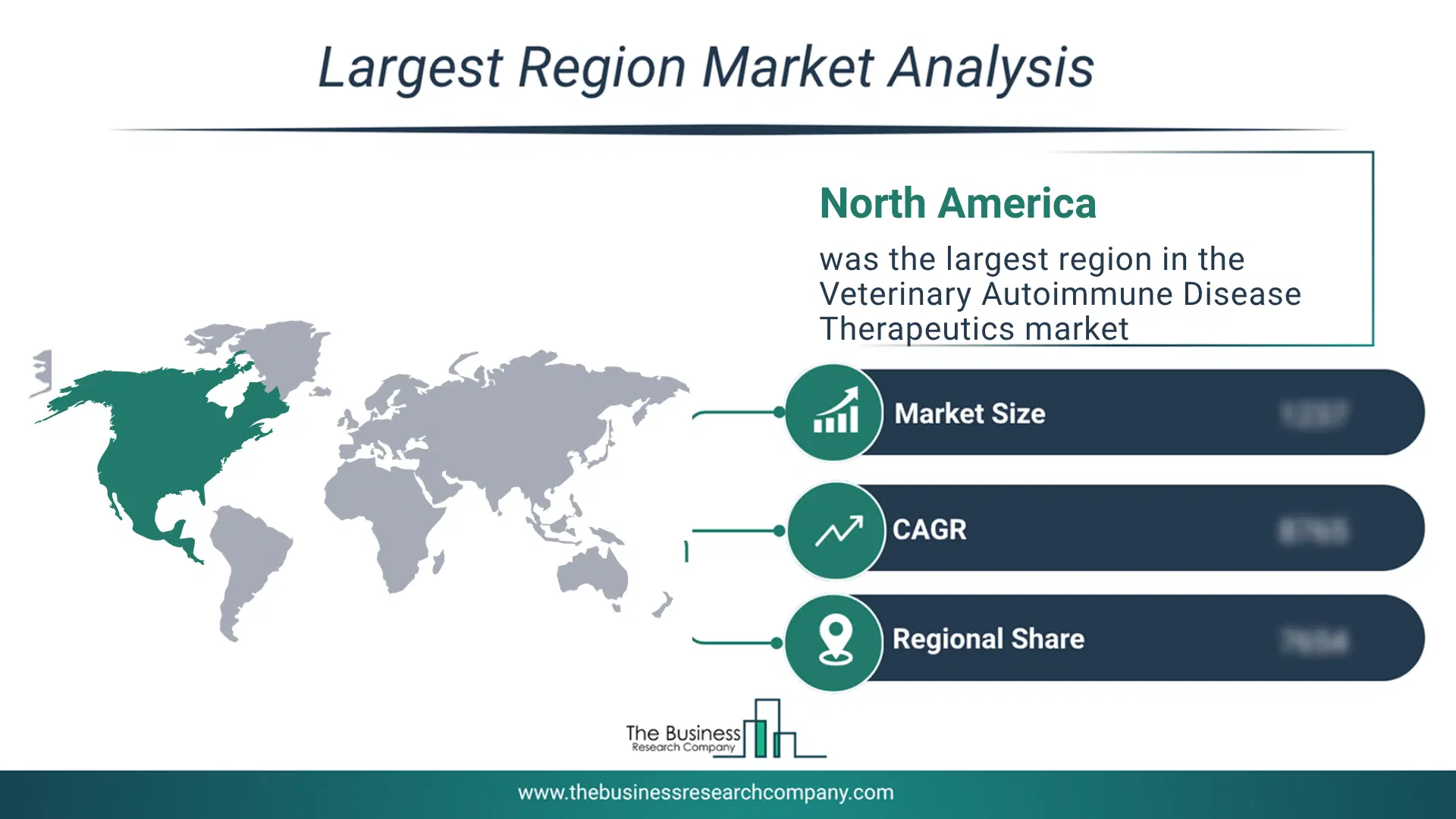
Regional Outlook
North America was the largest region in the veterinary autoimmune disease therapeutics market in 2025. The regions covered in this market report are Asia-Pacific, South East Asia, Western Europe, Eastern Europe, North America, South America, Middle East, Africa. The countries covered in this market report are Australia, Brazil, China, France, Germany, India, Indonesia, Japan, Taiwan, Russia, South Korea, UK, USA, Canada, Italy, SpainWhat Defines the Veterinary Autoimmune Disease Therapeutics Market?
The veterinary autoimmune disease therapeutics market consists of revenues earned by entities by providing immunosuppressive medications, biologic therapies, supportive therapies and complementary therapies. The market value includes the value of related goods sold by the service provider or included within the service offering. The veterinary autoimmune disease therapeutics market also includes sales of prednisone, mycophenolate mofetil, and methotrexate. Values in this market are ‘factory gate’ values, that is the value of goods sold by the manufacturers or creators of the goods, whether to other entities (including downstream manufacturers, wholesalers, distributors and retailers) or directly to end customers. The value of goods in this market includes related services sold by the creators of the goods.How is Market Value Defined and Measured?
The market value is defined as the revenues that enterprises gain from the sale of goods and/or services within the specified market and geography through sales, grants, or donations in terms of the currency (in USD unless otherwise specified). The revenues for a specified geography are consumption values that are revenues generated by organizations in the specified geography within the market, irrespective of where they are produced. It does not include revenues from resales along the supply chain, either further along the supply chain or as part of other products.
This chart presents market attractiveness based on a quantitative evaluation of growth, competition, strategic alignment, and risk, offering a clear view of opportunity areas for decision-making. This chart is for illustrative purposes; the full report contains the complete analysis.

This chart highlights the Total Addressable Market (TAM) by estimating the maximum revenue opportunity using an assumption-driven approach, supporting strategic planning and opportunity sizing across markets. The chart is illustrative; the full report provides a more comprehensive analysis.
What Key Data and Analysis Are Included in the Veterinary Autoimmune Disease Therapeutics Market Report 2026?
The veterinary autoimmune disease therapeutics market research report is one of a series of new reports from The Business Research Company that provides market statistics, including industry global market size, regional shares, competitors with the market share, detailed market segments, market trends and opportunities, and any further data you may need to thrive in the veterinary autoimmune disease therapeutics industry. The market research report delivers a complete perspective of everything you need, with an in-depth analysis of the current and future state of the industry.Veterinary Autoimmune Disease Therapeutics Market Report Forecast Analysis
| Report Attribute | Details |
|---|---|
| Market Size Value In 2026 | $3.69 billion |
| Revenue Forecast In 2030 | $4.61 billion |
| Growth Rate | CAGR of 6.6% from 2026 to 2030 |
| Base Year For Estimation | 2025 |
| Actual Estimates/Historical Data | 2020-2025 |
| Forecast Period | 2026 - 2030 - 2030 |
| Market Representation | Revenue in USD Billion and CAGR from 2026 to 2030 |
| Segments Covered | Therapy Type, Animal Type, Disease, Distribution Channel |
| Regional Scope | Asia-Pacific, Western Europe, Eastern Europe, North America, South America, Middle East, Africa |
| Country Scope | The countries covered in the report are Australia, Brazil, China, France, Germany, India, Indonesia, Japan, Taiwan, Russia, South Korea, UK, USA, Canada, Italy, Spain. |
| Key Companies Profiled | Pfizer Inc, Merck & Co Inc, AbbVie Inc., Sanofi S.A., Novartis AG, GlaxoSmithKline, Takeda Pharmaceutical Company, Amgen Inc., Teva Pharmaceuticals Industries Ltd., Zoetis Inc, Boehringer Ingelheim International GmbH, Sumitomo Pharma Co. Ltd., IDEXX Laboratories Inc., Cipla Inc., Mallinckrodt Pharmaceuticals, Virbac S.A, Dechra Pharmaceuticals plc, Neogen Corporation, Vetoquinol S.A., Norbrook Laboratories Limited, Heska Corporation, Bimeda Holdings PLC, Bayer Animal Health Inc, Aratana Therapeutics Inc, Hester Biosciences Limited |
| Customization Scope | Request for Customization |
| Pricing And Purchase Options | Explore Purchase Options |