
Veterinary Biologics Market Report 2026
Global Outlook – By Product (Vaccines, Diagnostic Kits, Immunomodulators, Antiserums And Antibodies, Other Products), By Disease Type (Bluetongue, Foot And Mouth Disease, Brucellosis And Tuberculosis, Other Disease Types), By Distribution Channel (Veterinary Hospitals, Veterinary Clinics, Other Distribution Channels), By Application (Production Animal, Companion Animal) – Market Size, Trends, Strategies, and Forecast to 2030
Veterinary Biologics Market Overview
• Veterinary Biologics market size has reached to $13.61 billion in 2025 • Expected to grow to $20.03 billion in 2030 at a compound annual growth rate (CAGR) of 8.2% • Growth Driver: Rising Pet Adoption Fuels Surge In Veterinary Biologics Market By Enhancing Pet Health And Well-Being • Market Trend: Merck Animal Health Launches USDA-Approved Vaccine For Avian Metapneumovirus To Address Poultry Respiratory Issues • North America was the largest region in 2025 and Asia-Pacific is the fastest growing region.What Is Covered Under Veterinary Biologics Market?
Veterinary biologics refers to biological products derived from living organisms, such as bacteria, viruses, or other microorganisms. Veterinary biologics are used in veterinary medicine to prevent, diagnose, or treat animal diseases. The main types of products included in veterinary biologics are vaccines, diagnostic kits, immunomodulators, antiserums and antibodies, and others. Vaccines refer to medical products designed to stimulate the immune system and provide protection against specific diseases. These are used to treat several diseases, including bluetongue, foot and mouth disease, brucellosis and tuberculosis, and others. These are sold through various distribution channels, such as veterinary hospitals, veterinary clinics, and others, for use in several applications, including production animals and companion animals.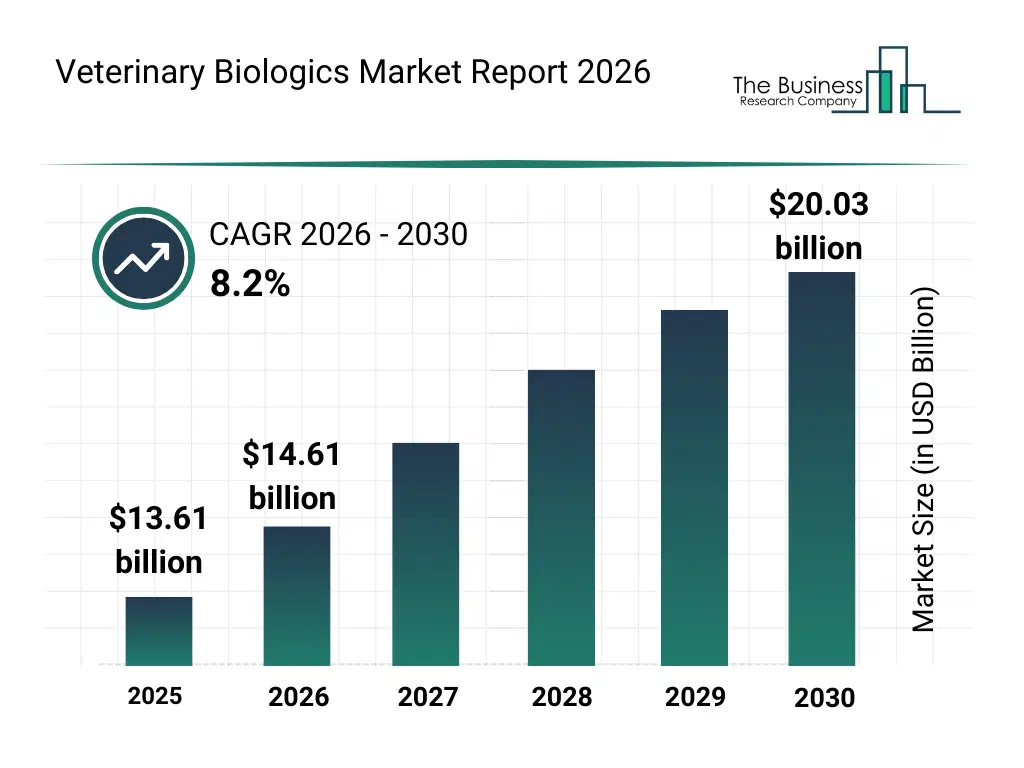
What Is The Veterinary Biologics Market Size and Share 2026?
The veterinary biologics market size has grown strongly in recent years. It will grow from $13.61 billion in 2025 to $14.61 billion in 2026 at a compound annual growth rate (CAGR) of 7.3%. The growth in the historic period can be attributed to growing prevalence of livestock diseases, rise in companion animal population, advancements in vaccine development, increased government funding for veterinary research, expansion of veterinary healthcare infrastructure.What Is The Veterinary Biologics Market Growth Forecast?
The veterinary biologics market size is expected to see strong growth in the next few years. It will grow to $20.03 billion in 2030 at a compound annual growth rate (CAGR) of 8.2%. The growth in the forecast period can be attributed to technological advancements in biologics, increasing adoption of precision medicine in animals, rise in global pet ownership, growing awareness about zoonotic diseases, expansion of veterinary diagnostics market. Major trends in the forecast period include increased focus on preventive animal healthcare, growing adoption of rapid diagnostic solutions, expansion of companion animal biologics, integration of immunomodulators in veterinary treatments, rising demand for livestock disease management solutions.
Global Veterinary Biologics Market Segmentation
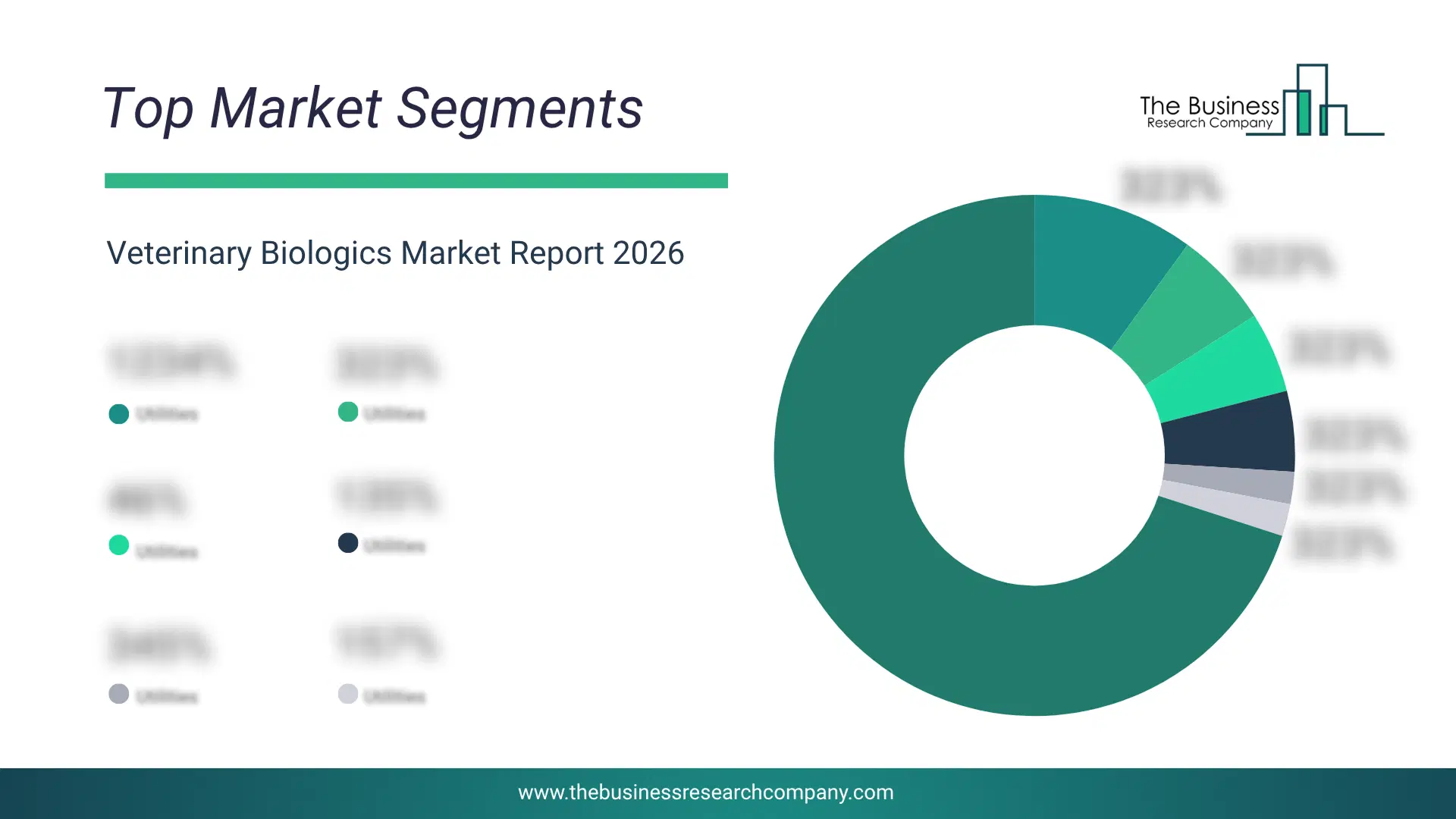
1) By Product: Vaccines, Diagnostic Kits, Immunomodulators, Antiserums And Antibodies, Other Products 2) By Disease Type: Bluetongue, Foot And Mouth Disease, Brucellosis And Tuberculosis, Other Disease Types 3) By Distribution Channel: Veterinary Hospitals, Veterinary Clinics, Other Distribution Channels 4) By Application: Production Animal, Companion Animal Subsegments: 1) By Vaccines: Live Attenuated Vaccines, Inactivated Vaccines, Recombinant Vaccines, DNA Vaccines 2) By Diagnostic Kits: Rapid Tests, Elisa Kits, Pcr-Based Diagnostic Kits 3) By Immunomodulators: Cytokines, Adjuvants, Immunostimulants 4) By Antiserums And Antibodies: Monoclonal Antibodies, Polyclonal Antibodies, Hyperimmune Serums 5) By Other Products: Probiotics, Prebiotics, Growth Factors, ToxoidsWhat Is The Driver Of The Veterinary Biologics Market?
The increasing adoption of pets is expected to propel the growth of the veterinary biologics market going forward. Pet adoption refers to the process of taking responsibility for a domesticated animal, often from a shelter, or rescue organization, to provide the animal with a permanent and caring home. Adoption of pets is rising due to increased awareness of animal welfare, as more people recognize the benefits of adopting rescued animals and choose adoption over purchasing pets. Veterinary biologics prevent the impact of various infectious diseases in pets, provide immunity, and control of zoonotic diseases, improve lifespan and quality of life, reduce veterinary healthcare costs, enhance reproductive health in pets, and offer more targeted and customized treatment options. For instance, in March 2025, according to the American Pet Products Association, a US-based non-profit association, ninety-four (94) million U.S. households own at least one pet, compared to eighty-two (82) million in 2023. Therefore, the increasing adoption of pets is driving the growth of the veterinary biologics industry.Key Players In The Global Veterinary Biologics Market
Major companies operating in the veterinary biologics market are Zoetis Inc., Merck Animal Health Inc., Boehringer Ingelheim Animal Health Inc., Elanco Animal Health, IDEXX Laboratories Inc., Virbac SA, Phibro Animal Health Corporation, Abaxis Inc., Bimeda Biologicals, Ceva Sante Animale S.A., Heska Corporation, Colorado Serum Company, Hester Biosciences Limited, INDICAL Bioscience GmbH, Intervet Inc., Hebei Veyong Animal Pharmaceutical Co. Ltd., Biomet Biologics LLC, CytoDyn Veterinary Medicine LLC, KM Biologics, HIPRA, Indian Immunologicals Ltd., Vetoquinol, Beijing SVA Vaccines Serums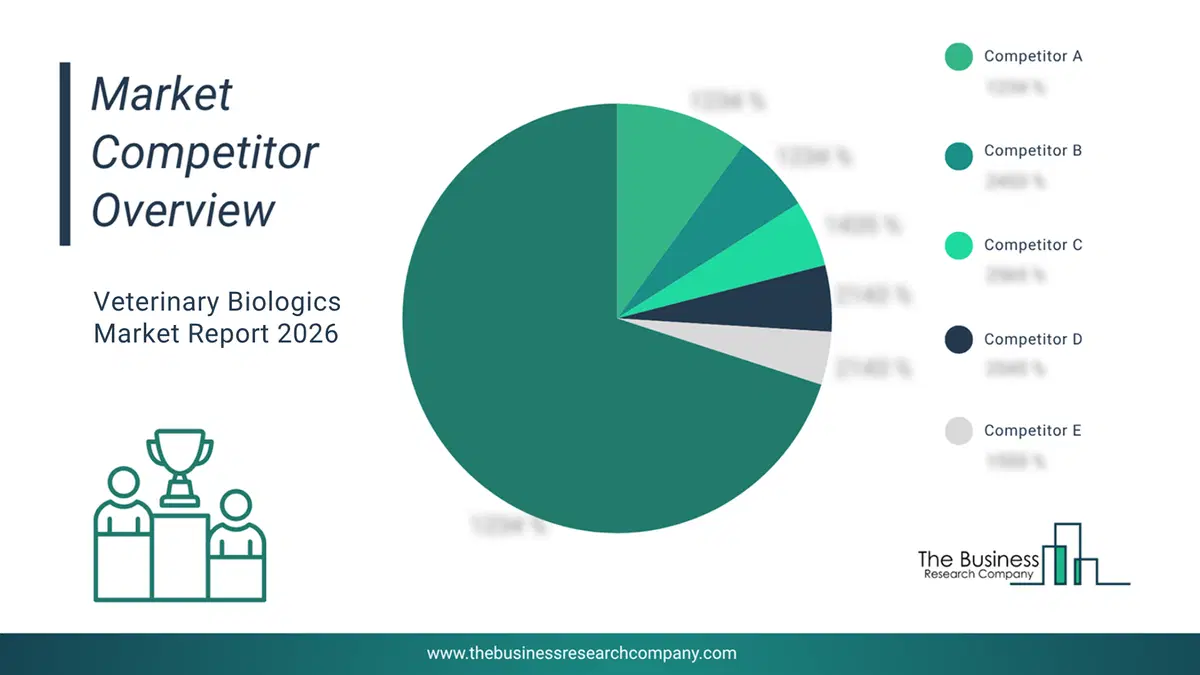
This chart is for illustrative purposes; the full report includes a detailed competitor analysis and comprehensive overview of the top 10 companies in the market.
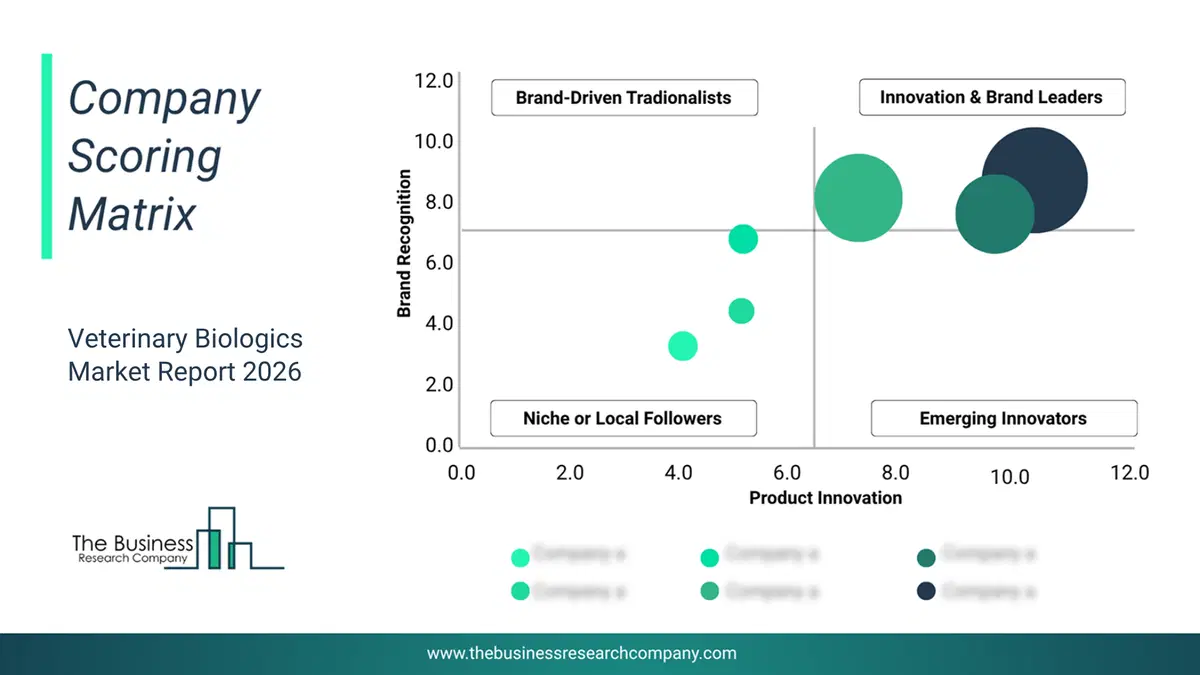
This chart maps companies by product innovation and brand strength, with bubble size indicating relative revenue, helping identify market leaders, challengers, and niche players. This is an illustrative chart; the full report provides a complete and accurate competitive analysis.
Global Veterinary Biologics Market Trends and Insights
Major companies operating in the veterinary biologics market are focusing on developing novel biologics such as vaccines to enhance animal health and disease prevention. A vaccine is a substance that stimulates the immune system to recognize and fight specific pathogens. It helps prevent infectious diseases by providing acquired immunity. For instance, in August 2024, Merck Animal Health, a US-based global animal health company, launched an experimental autogenous vaccine targeting avian metapneumovirus (aMPV) type B, receiving approval from the U.S. Department of Agriculture (USDA) for manufacturing and sale. Developed in collaboration with Cambridge Technologies, this vaccine aims to combat the severe respiratory issues caused by aMPV type B in poultry, which have led to significant economic losses since late 2023. Produced at a state-of-the-art facility in Minnesota, the vaccine features an oil and water emulsion formulation designed to minimize post-vaccination tissue reactions, addressing a critical gap in the market as no commercially licensed vaccines were previously available.What Are Latest Mergers And Acquisitions In The Veterinary Biologics Market?
In January 2024, Ceva Santé Animale, a France-based pharmaceutical company, acquired Scout Bio for an undisclosed amount. This acquisition strengthens Ceva’s biotechnology capabilities and accelerates its innovation in pet therapeutics, with a particular focus on advanced treatments for chronic diseases. The move aligns with the increasing demand for improved health solutions among pet owners. Scout Bio is a a US-based biotechnology company, specializes in providing critical data for developing effective veterinary biologics, such as vaccines and diagnostics.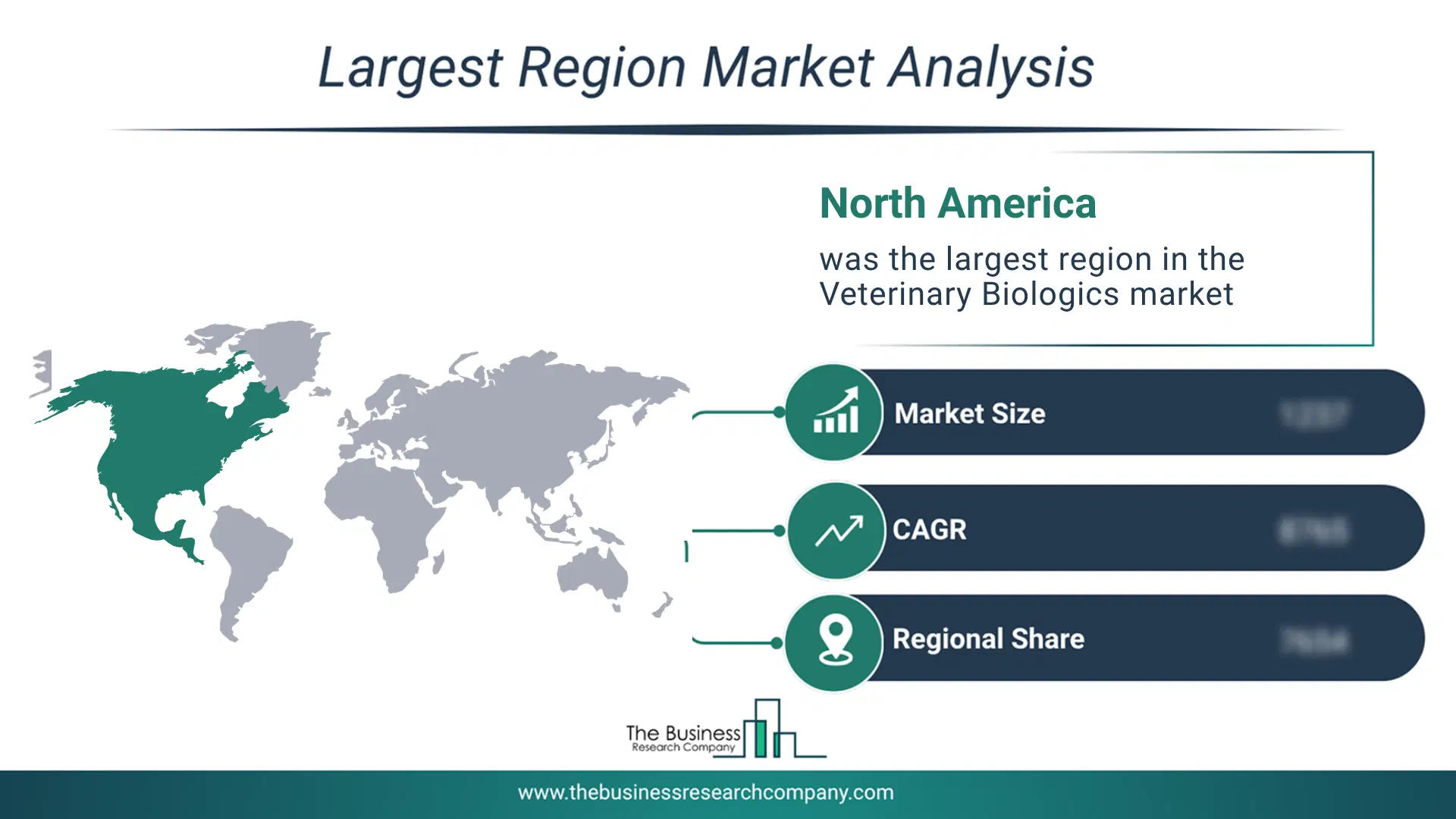
Regional Outlook
North America was the largest region in the veterinary biologics market in 2025. Asia-Pacific is expected to be the fastest-growing region in the forecast period. The regions covered in this market report are Asia-Pacific, South East Asia, Western Europe, Eastern Europe, North America, South America, Middle East, Africa. The countries covered in this market report are Australia, Brazil, China, France, Germany, India, Indonesia, Japan, Taiwan, Russia, South Korea, UK, USA, Canada, Italy, SpainWhat Defines the Veterinary Biologics Market?
The veterinary biologics market consists of sales of transplant tissues, recombinant proteins, and stem cells. Values in this market are ‘factory gate’ values, that is, the value of goods sold by the manufacturers or creators of the goods, whether to other entities (including downstream manufacturers, wholesalers, distributors, and retailers) or directly to end customers. The value of goods in this market includes related services sold by the creators of the goods.How is Market Value Defined and Measured?
The market value is defined as the revenues that enterprises gain from the sale of goods and/or services within the specified market and geography through sales, grants, or donations in terms of the currency (in USD unless otherwise specified). The revenues for a specified geography are consumption values that are revenues generated by organizations in the specified geography within the market, irrespective of where they are produced. It does not include revenues from resales along the supply chain, either further along the supply chain or as part of other products.
This chart presents market attractiveness based on a quantitative evaluation of growth, competition, strategic alignment, and risk, offering a clear view of opportunity areas for decision-making. This chart is for illustrative purposes; the full report contains the complete analysis.

This chart highlights the Total Addressable Market (TAM) by estimating the maximum revenue opportunity using an assumption-driven approach, supporting strategic planning and opportunity sizing across markets. The chart is illustrative; the full report provides a more comprehensive analysis.
What Key Data and Analysis Are Included in the Veterinary Biologics Market Report 2026?
The veterinary biologics market research report is one of a series of new reports from The Business Research Company that provides market statistics, including industry global market size, regional shares, competitors with the market share, detailed market segments, market trends and opportunities, and any further data you may need to thrive in the veterinary biologics industry. The market research report delivers a complete perspective of everything you need, with an in-depth analysis of the current and future state of the industry.Veterinary Biologics Market Report Forecast Analysis
| Report Attribute | Details |
|---|---|
| Market Size Value In 2026 | $14.61 billion |
| Revenue Forecast In 2030 | $20.03 billion |
| Growth Rate | CAGR of 7.3% from 2026 to 2030 |
| Base Year For Estimation | 2025 |
| Actual Estimates/Historical Data | 2020-2025 |
| Forecast Period | 2026 - 2030 - 2030 |
| Market Representation | Revenue in USD Billion and CAGR from 2026 to 2030 |
| Segments Covered | Product, Disease Type, Distribution Channel, Application |
| Regional Scope | Asia-Pacific, Western Europe, Eastern Europe, North America, South America, Middle East, Africa |
| Country Scope | The countries covered in the report are Australia, Brazil, China, France, Germany, India, Indonesia, Japan, Taiwan, Russia, South Korea, UK, USA, Canada, Italy, Spain. |
| Key Companies Profiled | Zoetis Inc., Merck Animal Health Inc., Boehringer Ingelheim Animal Health Inc., Elanco Animal Health, IDEXX Laboratories Inc., Virbac SA, Phibro Animal Health Corporation, Abaxis Inc., Bimeda Biologicals, Ceva Sante Animale S.A., Heska Corporation, Colorado Serum Company, Hester Biosciences Limited, INDICAL Bioscience GmbH, Intervet Inc., Hebei Veyong Animal Pharmaceutical Co. Ltd., Biomet Biologics LLC, CytoDyn Veterinary Medicine LLC, KM Biologics, HIPRA, Indian Immunologicals Ltd., Vetoquinol, Beijing SVA Vaccines Serums |
| Customization Scope | Request for Customization |
| Pricing And Purchase Options | Explore Purchase Options |