
Veterinary Dermatology Drugs Market Report 2026
Global Outlook – By Product Type (Antifungal Drugs, Antibacterial Drugs, Antiparasitic Drugs), By Animal Type (Companion Animal, Livestock Animal), By Drug Indication (Parasitic Infections, Allergic Infections, Other Indications), By Route Of Administration (Topical, Injectable, Oral), By Distribution Channel (Retail, Hospital Pharmacies, Online) – Market Size, Trends, Strategies, and Forecast to 2030
Veterinary Dermatology Drugs Market Overview
• Veterinary Dermatology Drugs market size has reached to $9.54 billion in 2025 • Expected to grow to $16.37 billion in 2030 at a compound annual growth rate (CAGR) of 11.4% • Growth Driver: Rising Pet Ownership Trends Fueling Growth In Veterinary Dermatology Drugs Market • Market Trend: Innovative Therapies Offering Effective And Convenient Solutions For Canine Skin Conditions • North America was the largest region in 2025 and Asia-Pacific is the fastest growing region.What Is Covered Under Veterinary Dermatology Drugs Market?
Veterinary dermatology drugs refer to medications designed to treat skin conditions in animals, including infections, allergies, and parasites. They are used to alleviate itching, inflammation, and promote healing of the skin. These drugs help improve the overall health and comfort of animals with dermatological issues. The main products of veterinary dermatology drugs are antifungal drugs, antibacterial drugs, and antiparasitic drugs. Antifungals refer to the medicines that stop the growth of fungi that cause infections that commonly affect skin, hair, and nails. The animals, which include companions and livestock, use medication for indications such as parasitic infections, allergic infections, and others by different routes of administration such as topical, injectable, and oral, distributed by various channels such as retail, hospital pharmacies, and online.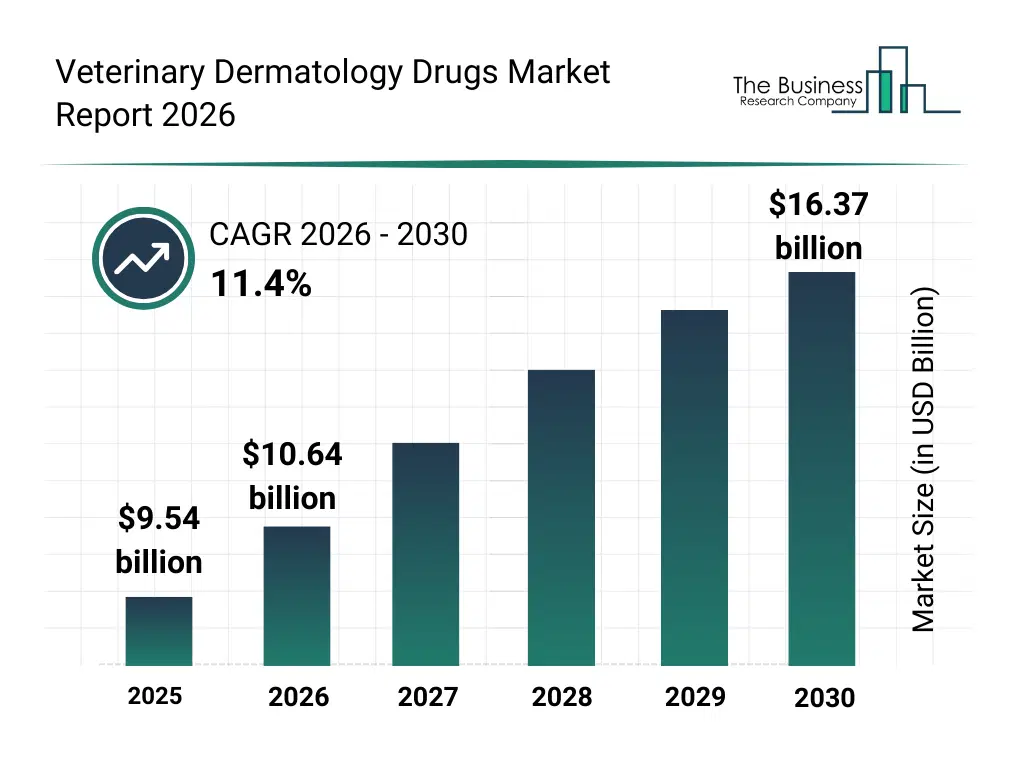
What Is The Veterinary Dermatology Drugs Market Size and Share 2026?
The veterinary dermatology drugs market size has grown rapidly in recent years. It will grow from $9.54 billion in 2025 to $10.64 billion in 2026 at a compound annual growth rate (CAGR) of 11.5%. The growth in the historic period can be attributed to limited awareness of animal dermatology, rising incidence of parasitic infections, adoption of traditional antifungal and antibacterial drugs, growth of companion animal ownership, development of basic topical treatments.What Is The Veterinary Dermatology Drugs Market Growth Forecast?
The veterinary dermatology drugs market size is expected to see rapid growth in the next few years. It will grow to $16.37 billion in 2030 at a compound annual growth rate (CAGR) of 11.4%. The growth in the forecast period can be attributed to advancements in precision dermatology drugs, increasing use of combination therapies, growing companion animal healthcare expenditure, rising prevalence of allergic skin conditions, expansion of hospital and retail pharmacy distribution channels. Major trends in the forecast period include rising prevalence of skin infections in companion animals, increasing demand for topical veterinary drugs, growth in online veterinary pharmacies, expansion of injectable and oral dermatology treatments, development of targeted antiparasitic therapies.
Global Veterinary Dermatology Drugs Market Segmentation
1) By Product Type: Antifungal Drugs, Antibacterial Drugs, Antiparasitic Drugs 2) By Animal Type: Companion Animal, Livestock Animal 3) By Drug Indication: Parasitic Infections, Allergic Infections, Other Indications 4) By Route Of Administration: Topical, Injectable, Oral 5) By Distribution Channel: Retail, Hospital Pharmacies, Online Subsegments: 1) By Antifungal Drugs: Azoles, Polyenes, Allylamines, Echinocandins 2) By Antibacterial Drugs: Beta-lactams, Tetracyclines, Macrolides, Lincosamides, Aminoglycosides 3) By Antiparasitic Drugs: Insecticides, Anthelmintics, Topical Treatments, Systemic TreatmentsWhat Is The Driver Of The Veterinary Dermatology Drugs Market?
The increase number of pet owners is expected to propel the growth of the veterinary dermatology drugs market going forward. Pet owners are individuals who own or adopt a pet animal. Pet owners are rising because more people are seeking companionship to cope with busy lifestyles and social isolation, which increases the demand for pets as emotional support and family members. Veterinary dermatology drugs help pet owners by effectively treating skin conditions in their pets, improving their pets’ comfort, health, and overall quality of life. For instance, in 2023, according to the Shelter Animals Count, a US-based non-governmental organization, of the animals in shelters and rescues in 2023, 4.8 million were adopted into loving homes. Therefore, the increasing number of pet owners drives the veterinary dermatology drugs industry.Key Players In The Global Veterinary Dermatology Drugs Market
Major companies operating in the veterinary dermatology drugs market are Elanco Animal Health Inc., Merck & Co. Inc., Zoetis Inc., Vetoquinol SA, Ceva Santé Animale, Virbac S.A., Bimeda Inc., IDEXX Laboratories Inc., SavaVet, Vetmedica, Mars Incorporated, Kindred Biosciences, Bayer Animal Health, Boehringer Ingelheim Vetmedica, Dechra Pharmaceuticals PLC, Norbrook Laboratories Limited, Heska Corporation, Biogénesis Bagó, Nexvet, Aratana Therapeutics, Phibro Animal Health Corporation, HIPRA, Kyoritsu Seiyaku Corporation
This chart is for illustrative purposes; the full report includes a detailed competitor analysis and comprehensive overview of the top 10 companies in the market.
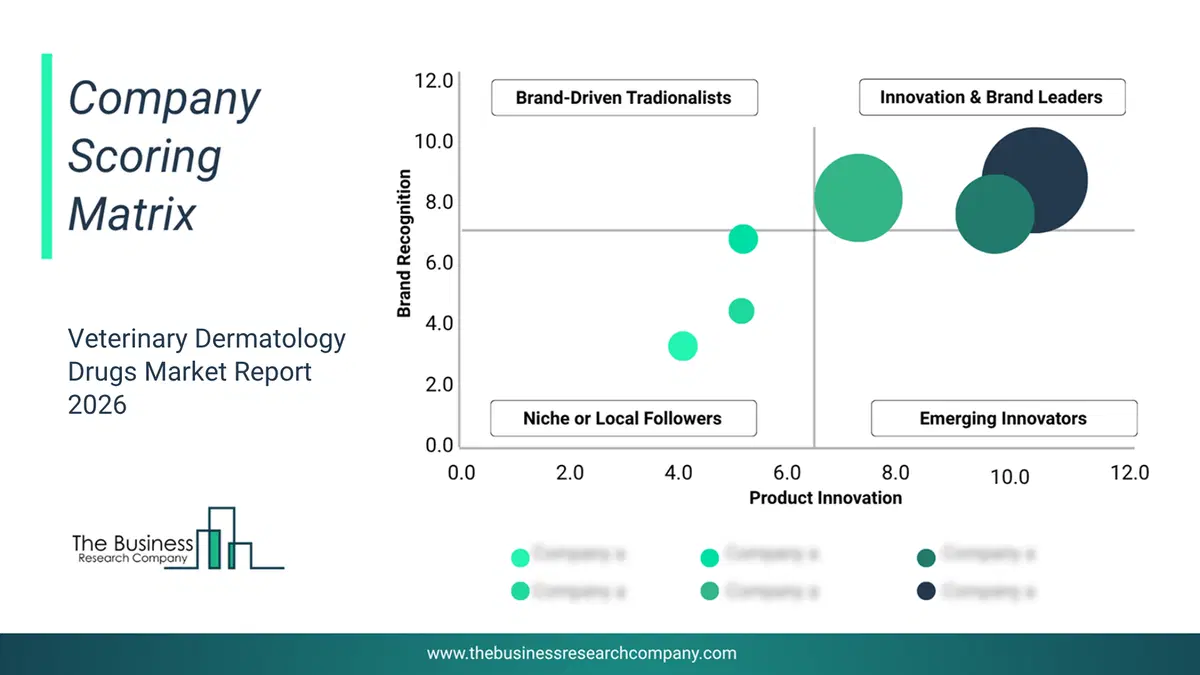
This chart maps companies by product innovation and brand strength, with bubble size indicating relative revenue, helping identify market leaders, challengers, and niche players. This is an illustrative chart; the full report provides a complete and accurate competitive analysis.
Global Veterinary Dermatology Drugs Market Trends and Insights
Major companies operating in the veterinary dermatology drugs market are focusing on developing innovative therapies such as Janus kinase (JAK) inhibitors and targeted oral treatments to improve therapeutic efficacy and enhance convenience for canine patients. JAK inhibitors are targeted therapies that block intracellular signaling pathways involved in allergic inflammation and pruritus, thereby disrupting the itch–scratch cycle and reducing disease severity, while once-daily oral therapies provide consistent dosing and ease of administration for long-term management of chronic dermatological conditions. For instance, in September 2024, Elanco Animal Health Incorporated, a US-based global animal health company, announced that the U.S. Food and Drug Administration (FDA) approved Zenrelia (ilunocitinib tablets) for the treatment of allergic and atopic dermatitis in dogs. Zenrelia is a once-daily oral JAK inhibitor that offers a safe, highly effective, and convenient treatment option, demonstrating reduced rebound itch and improved clinical remission rates compared to existing market incumbents, highlighting the growing emphasis on targeted and patient-friendly innovations in veterinary dermatology.What Are Latest Mergers And Acquisitions In The Veterinary Dermatology Drugs Market?
In January 2023, Animal Dermatology Group, Inc., a US-based veterinary dermatology company, acquired Golden Gate Veterinary Specialists for an undisclosed amount. The acquisition aims to enhance Animal Dermatology Group's capacity to provide specialized veterinary services by integrating Golden Gate Veterinary Specialists, thereby expanding their team of over 80 veterinary specialists and reinforcing their commitment to delivering high-quality, individualized care in dermatology, oncology, and internal medicine to meet the growing demand for outpatient veterinary specialty services. Golden Gate Veterinary Specialists is a US-based dermatological and surgical care specialty practice.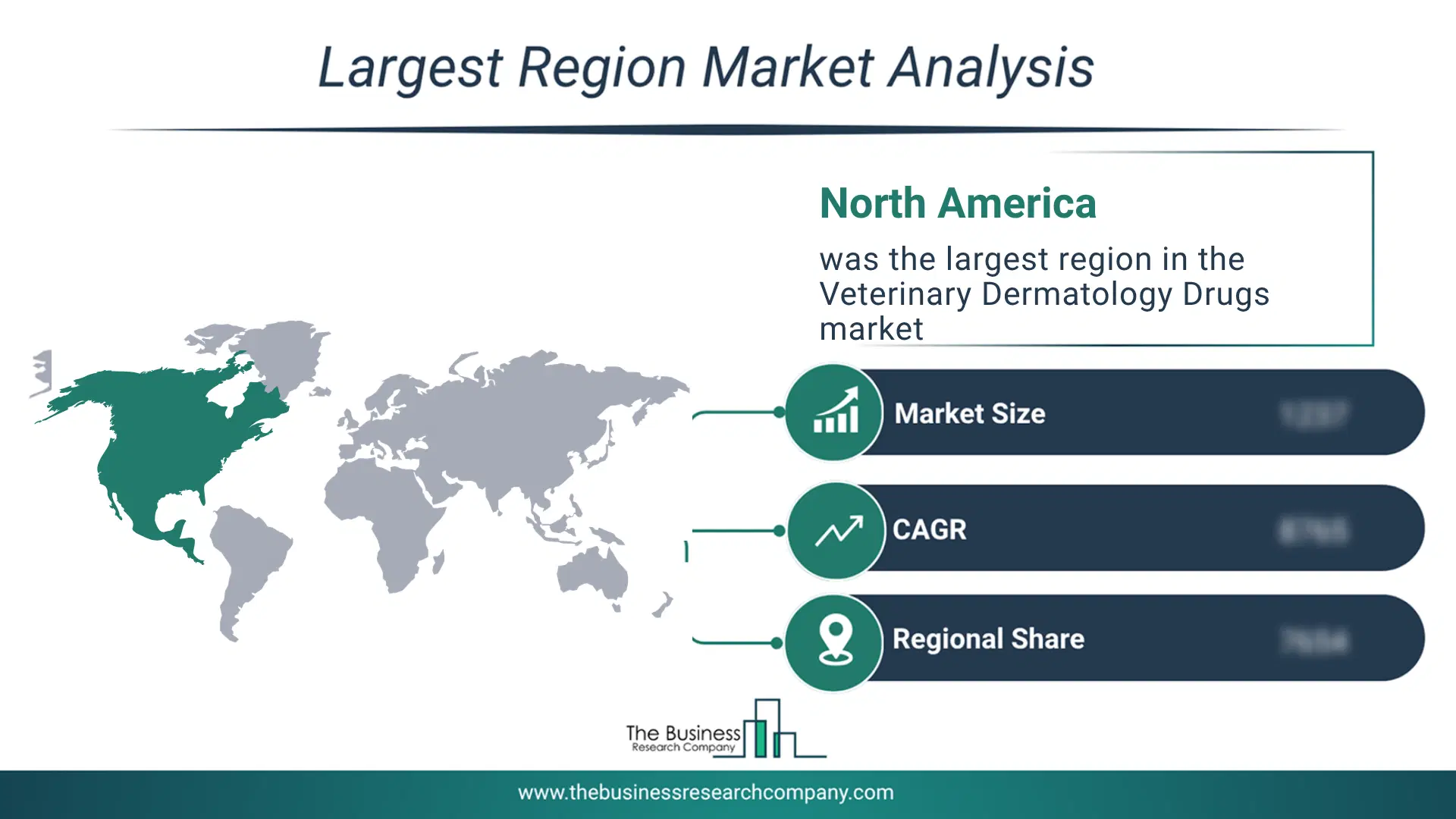
Regional Outlook
North America was the largest region in the veterinary dermatology drugs market in 2025. Asia-Pacific is expected to be the fastest-growing region in the veterinary dermatology drugs market report forecast period. The regions covered in this market report are Asia-Pacific, South East Asia, Western Europe, Eastern Europe, North America, South America, Middle East, Africa. The countries covered in this market report are Australia, Brazil, China, France, Germany, India, Indonesia, Japan, Taiwan, Russia, South Korea, UK, USA, Canada, Italy, SpainWhat Defines the Veterinary Dermatology Drugs Market?
The veterinary dermatology drugs market consists of sales of dicloxacillin, erythromycin, tetracycline, and retinoids, which are naturally occurring and synthetic compounds with vitamin A activity. Values in this market are ‘factory gate’ values, that is, the value of goods sold by the manufacturers or creators of the goods, whether to other entities (including downstream manufacturers, wholesalers, distributors, and retailers) or directly to end customers. The value of goods in this market includes related services sold by the creators of the goods.How is Market Value Defined and Measured?
The market value is defined as the revenues that enterprises gain from the sale of goods and/or services within the specified market and geography through sales, grants, or donations in terms of the currency (in USD unless otherwise specified). The revenues for a specified geography are consumption values that are revenues generated by organizations in the specified geography within the market, irrespective of where they are produced. It does not include revenues from resales along the supply chain, either further along the supply chain or as part of other products.
This chart presents market attractiveness based on a quantitative evaluation of growth, competition, strategic alignment, and risk, offering a clear view of opportunity areas for decision-making. This chart is for illustrative purposes; the full report contains the complete analysis.

This chart highlights the Total Addressable Market (TAM) by estimating the maximum revenue opportunity using an assumption-driven approach, supporting strategic planning and opportunity sizing across markets. The chart is illustrative; the full report provides a more comprehensive analysis.
What Key Data and Analysis Are Included in the Veterinary Dermatology Drugs Market Report 2026?
The veterinary dermatology drugs market research report is one of a series of new reports from The Business Research Company that provides market statistics, including industry global market size, regional shares, competitors with the market share, detailed market segments, market trends and opportunities, and any further data you may need to thrive in the veterinary dermatology drugs industry. The market research report delivers a complete perspective of everything you need, with an in-depth analysis of the current and future state of the industry.Veterinary Dermatology Drugs Market Report Forecast Analysis
| Report Attribute | Details |
|---|---|
| Market Size Value In 2026 | $10.64 billion |
| Revenue Forecast In 2030 | $16.37 billion |
| Growth Rate | CAGR of 11.5% from 2026 to 2030 |
| Base Year For Estimation | 2025 |
| Actual Estimates/Historical Data | 2020-2025 |
| Forecast Period | 2026 - 2030 - 2030 |
| Market Representation | Revenue in USD Billion and CAGR from 2026 to 2030 |
| Segments Covered | Product Type, Animal Type, Drug Indication, Route Of Administration, Distribution Channel |
| Regional Scope | Asia-Pacific, Western Europe, Eastern Europe, North America, South America, Middle East, Africa |
| Country Scope | The countries covered in the report are Australia, Brazil, China, France, Germany, India, Indonesia, Japan, Taiwan, Russia, South Korea, UK, USA, Canada, Italy, Spain. |
| Key Companies Profiled | Elanco Animal Health Inc., Merck & Co. Inc., Zoetis Inc., Vetoquinol SA, Ceva Santé Animale, Virbac S.A., Bimeda Inc., IDEXX Laboratories Inc., SavaVet, Vetmedica, Mars Incorporated, Kindred Biosciences, Bayer Animal Health, Boehringer Ingelheim Vetmedica, Dechra Pharmaceuticals PLC, Norbrook Laboratories Limited, Heska Corporation, Biogénesis Bagó, Nexvet, Aratana Therapeutics, Phibro Animal Health Corporation, HIPRA, Kyoritsu Seiyaku Corporation |
| Customization Scope | Request for Customization |
| Pricing And Purchase Options | Explore Purchase Options |