
Veterinary Disinfectant For Pets And Farms Market Report 2026
Global Outlook – By Product (Iodine, Lactic Acid, Hydrogen Peroxide, Phenolic Acid, Peracetic Acid, Quaternary Compounds, Chlorine, Chlorine Dioxide, Other Products), By Animal (Companion Animals, Cats, Dogs, Livestock Animals, Cattle, Poultry, Other Animals), By Form (Liquid, Powder, Wipes), By Application (Hand Sanitization, Surface Disinfection, Aerial Disinfection, Other Applications), By End Use (Veterinary Clinics, Veterinary Hospitals, Animal Care Facilities, Other End Users) – Market Size, Trends, Strategies, and Forecast to 2030
Veterinary Disinfectant For Pets And Farms Market Overview
• Veterinary Disinfectant For Pets And Farms market size has reached to $3.61 billion in 2025 • Expected to grow to $5.1 billion in 2030 at a compound annual growth rate (CAGR) of 6.9% • Growth Driver: Impact Of Rising Livestock Production On The Veterinary Disinfectant Market • Market Trend: Innovative Disinfection Products Enhance Hygiene And Disease Prevention • North America was the largest region in 2025.What Is Covered Under Veterinary Disinfectant For Pets And Farms Market?
A veterinary disinfectant for pets and farms is a chemical agent used to destroy or inhibit the growth of microorganisms on surfaces, equipment, or in the environment where animals are housed or treated. These disinfectants are specifically formulated to be safe for animals while effectively eliminating bacteria, viruses, fungi, and other pathogens that can cause diseases. The main products of veterinary disinfectant for pets and farms are iodine, lactic acid, hydrogen peroxide, phenolic acid, peracetic acid, quaternary compounds, chlorine, chlorine dioxide, chlorohexidine, and glut quat mixes. Iodine-based disinfectants are widely used in veterinary settings due to their effectiveness in killing bacteria, viruses, and fungi. These disinfectants often come in the form of iodophors, which are iodine combined with a carrier to enhance stability and efficacy. The various animals include companion animals, cats, dogs, livestock animals, cattle, poultry, and other animals and various forms include liquid, powder, and wipes. The various applications include hand sanitization, surface disinfection, aerial disinfection, and other applications used by various end users such as veterinary clinics, veterinary hospitals, animal care facilities, and other end users.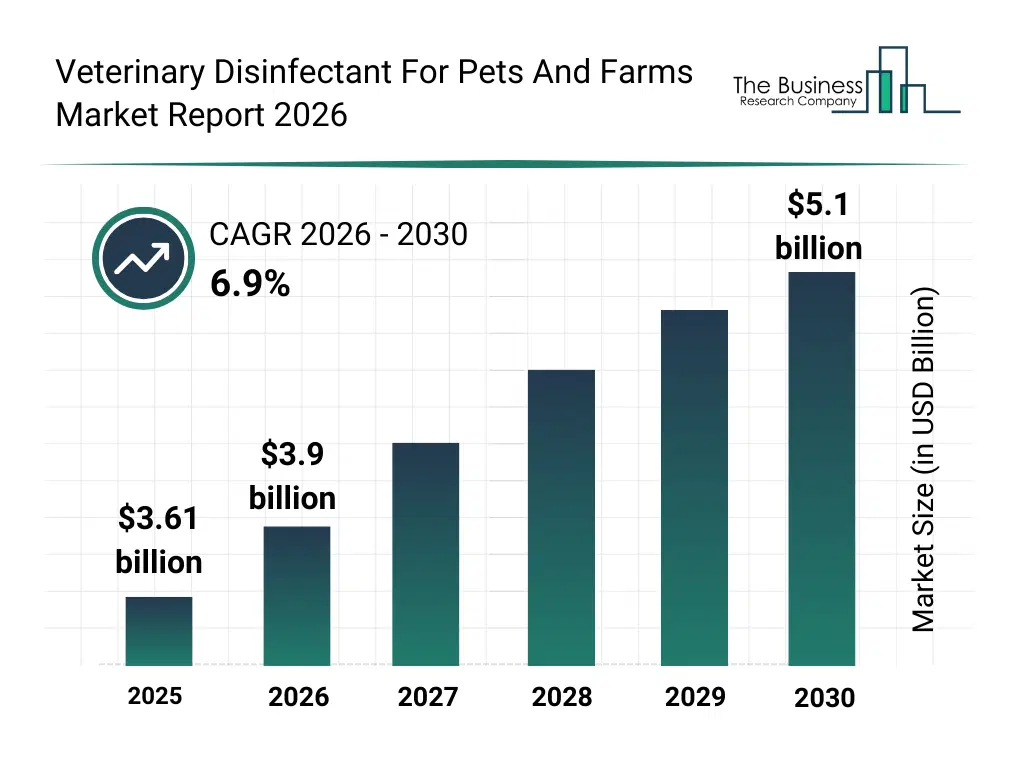
What Is The Veterinary Disinfectant For Pets And Farms Market Size and Share 2026?
The veterinary disinfectant for pets and farms market size has grown strongly in recent years. It will grow from $3.61 billion in 2025 to $3.9 billion in 2026 at a compound annual growth rate (CAGR) of 7.9%. The growth in the historic period can be attributed to increasing prevalence of animal-borne diseases, growing pet ownership, lack of awareness about farm sanitation in developing regions, rise in small-scale veterinary clinics, use of traditional chemical disinfectants.What Is The Veterinary Disinfectant For Pets And Farms Market Growth Forecast?
The veterinary disinfectant for pets and farms market size is expected to see strong growth in the next few years. It will grow to $5.1 billion in 2030 at a compound annual growth rate (CAGR) of 6.9%. The growth in the forecast period can be attributed to advancements in biodegradable disinfectants, integration of iot-based monitoring for sanitation, expansion of large-scale livestock farms, rising demand for multi-surface disinfectants, growing investment in veterinary healthcare infrastructure. Major trends in the forecast period include rise in pet and livestock disease awareness, demand for eco-friendly and non-toxic disinfectants, increasing adoption of automated cleaning solutions in farms, growth in veterinary healthcare facilities, stringent government regulations on animal hygiene.
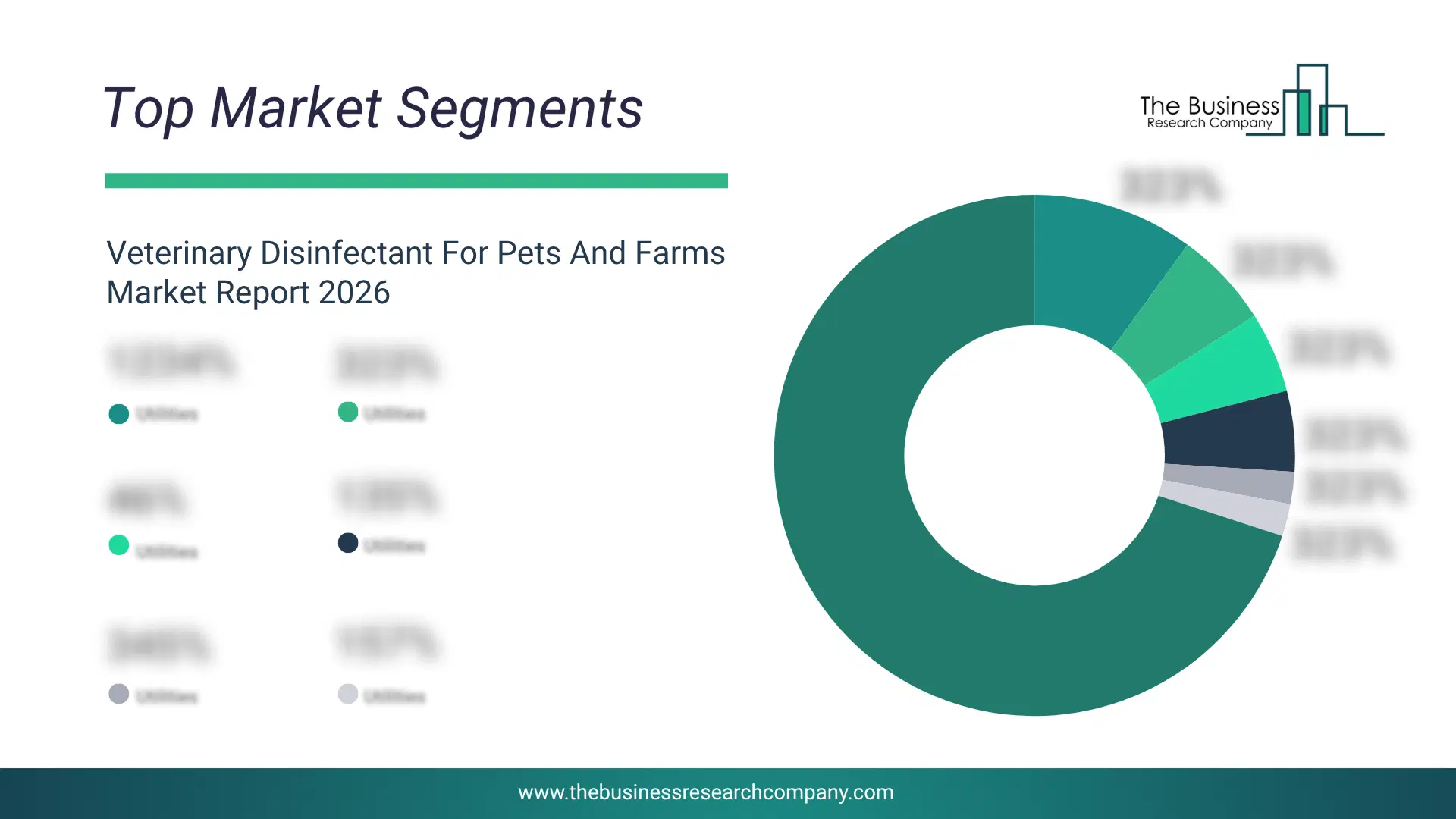
Global Veterinary Disinfectant For Pets And Farms Market Segmentation
1) By Product: Iodine, Lactic Acid, Hydrogen Peroxide, Phenolic Acid, Peracetic Acid, Quaternary Compounds, Chlorine, Chlorine Dioxide, Other Products 2) By Animal: Companion Animals, Cats, Dogs, Livestock Animals, Cattle, Poultry, Other Animals 3) By Form: Liquid, Powder, Wipes 4) By Application: Hand Sanitization, Surface Disinfection, Aerial Disinfection, Other Applications 5) By End Use: Veterinary Clinics, Veterinary Hospitals, Animal Care Facilities, Other End Users Subsegments: 1) By Iodine: Iodine-Based Solutions (Povidone-Iodine), Iodine Tinctures 2) By Lactic Acid: Lactic Acid-Based Disinfectants, Lactic Acid Formulations For Farm Use 3) By Hydrogen Peroxide: Hydrogen Peroxide Solutions, Hydrogen Peroxide-Based Disinfectants 4) By Phenolic Acid: Phenolic Disinfectants (Lysol), Phenolic-Based Cleaning Agents 5) By Peracetic Acid: Peracetic Acid Solutions, Peracetic Acid Disinfectants For Agricultural Use 6) By Quaternary Compounds: Quaternary Ammonium Chloride (QAC) Disinfectants, QAC-Based Cleaning Agents 7) By Chlorine: Sodium Hypochlorite, Chlorine-Based Disinfectants 8) By Chlorine Dioxide: Chlorine Dioxide-Based Solutions, Chlorine Dioxide Disinfectants For Veterinary Use 9) By Other Products: Organic Acid-Based Disinfectants, Essential Oils And Plant-Based Disinfectants, Alcohol-Based DisinfectantsWhat Is The Driver Of The Veterinary Disinfectant For Pets And Farms Market?
The rising livestock production is expected to propel the growth of the veterinary disinfectant for pets and the farm market going forward. Livestock production refers to breeding, raising, and managing domesticated animals to produce food, fiber, and other products. The increase in livestock production is due to favorable government policies and subsidies that promote farm modernization and expansion, increased productivity, and yield from scientific advancements in animal health, nutrition, and breeding. Veterinary disinfectants for pets and farms provide numerous benefits to livestock production by enhancing animal health, ensuring biosecurity, and improving overall farm efficiency. For instance, in July 2025, according to the Department for Environment Food and Rural Affairs, a UK-based government department, in 2024, total livestock output rose by £1.1 billion ($1.41 billion) (up 5.6%) from 2023, reaching £20.1 billion ($25.73 billion). This growth was largely driven by higher values in eggs (+35%), beef (+9.3%), and milk (+5.5%). Strong prices in these sectors boosted producer confidence, leading to increased annual production volumes for all three commodities. Therefore, the rising population of livestock and companion animals is driving the growth of veterinary disinfectant for pets and farm industry.Key Players In The Global Veterinary Disinfectant For Pets And Farms Market
Major companies operating in the veterinary disinfectant for pets and farms market are Ecolab Inc., Lanxess AG, Zoetis Inc., Empresas CMPC S.A., Clorox Healthcare, GEA Group AG, Kemin Industries Inc., Neogen Corporation, Manna Pro Products LLC, CID Lines NV, Bayer Animal Health, Merck Sharp & Dohme Corporation, Kersia Group, Evans Vanodine International plc, Albert Kerbl GmbH, Medentech Ltd., Sanosil AG, Quat-Chem Ltd., Virbac Animal Health, Kyron Laboratories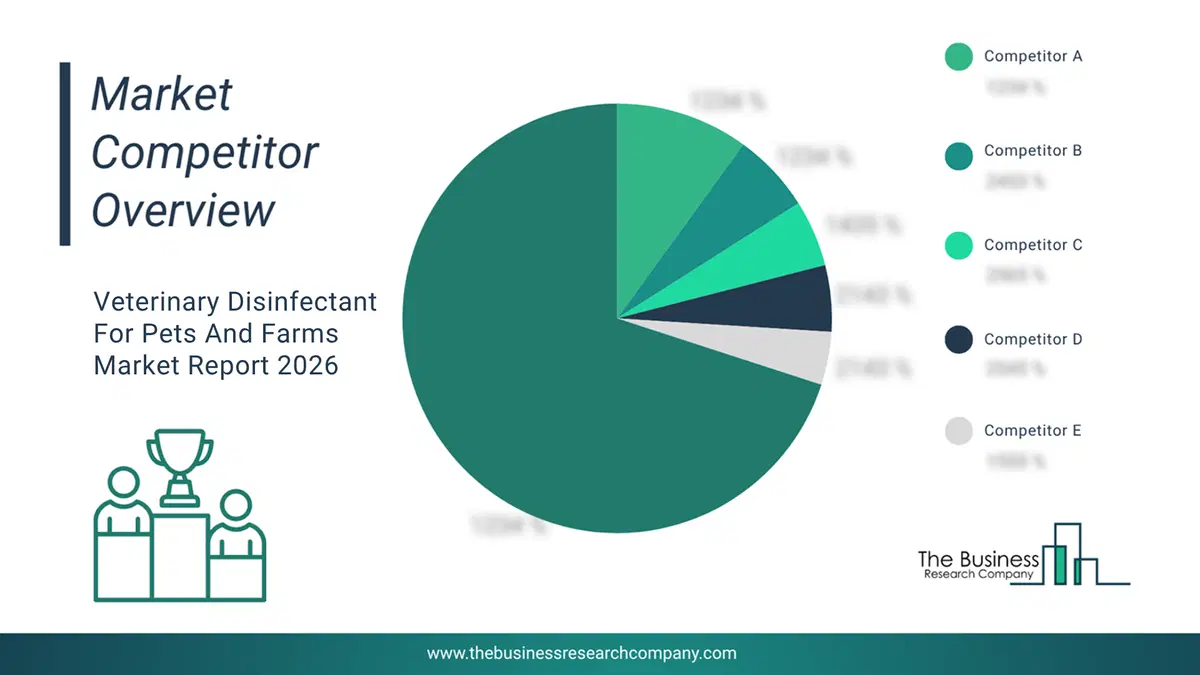
This chart is for illustrative purposes; the full report includes a detailed competitor analysis and comprehensive overview of the top 10 companies in the market.
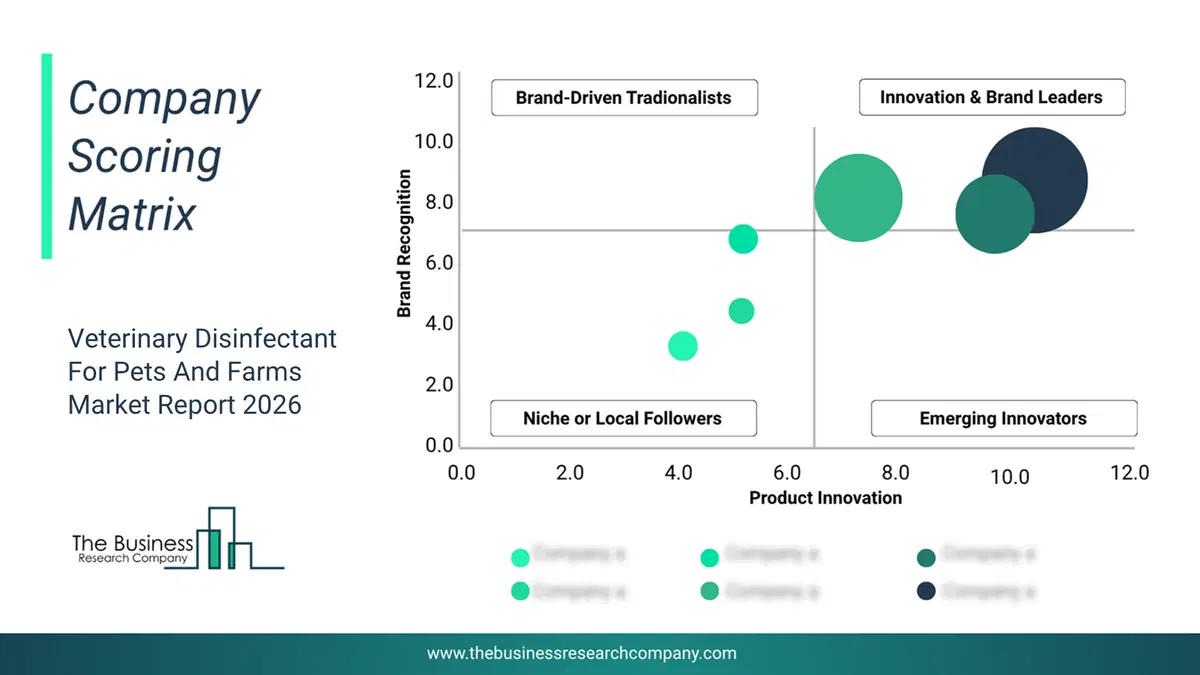
This chart maps companies by product innovation and brand strength, with bubble size indicating relative revenue, helping identify market leaders, challengers, and niche players. This is an illustrative chart; the full report provides a complete and accurate competitive analysis.
Global Veterinary Disinfectant For Pets And Farms Market Trends and Insights
Major companies operating in the veterinary disinfectant for pets and farms market are focused on developing innovative products, such as dual-action disinfectants, to enhance hygiene and prevent disease transmission. Dual-action disinfectants combine the ability to kill pathogens such as bacteria, viruses, and fungi with the capability to clean surfaces by removing dirt, grime, and organic matter in a single product. For instance, in April 2024, Neogen Corporation, a US-based food safety company, launched Neogen Farm Fluid MA. This product is specifically designed to cater to the needs of agricultural settings, offering advanced capabilities to sanitize and protect farm environments effectively. Neogen Farm Fluid MAX boasts a dual-action formula, combining powerful disinfection properties to eliminate a wide spectrum of pathogens, including bacteria, viruses, and fungi, with robust cleaning abilities that remove dirt, grime, and organic matter from surfaces. This dual functionality ensures thorough sanitation and enhances overall cleanliness, which is crucial for maintaining animal health and preventing disease outbreaks.What Are Latest Mergers And Acquisitions In The Veterinary Disinfectant For Pets And Farms Market?
In February 2024, Zenex Animal Health, a India based animal health company acquired Ayurvet for an undisclosed amount. This acquisition underscores Zenex’s strategy to enhance its product portfolio with Ayurvet’s expertise in safe and natural veterinary treatments. Ayurvet’s is an India based manufacturer of natural and safe herbal animal health care products, including care and disinfectant solutions for companion animals.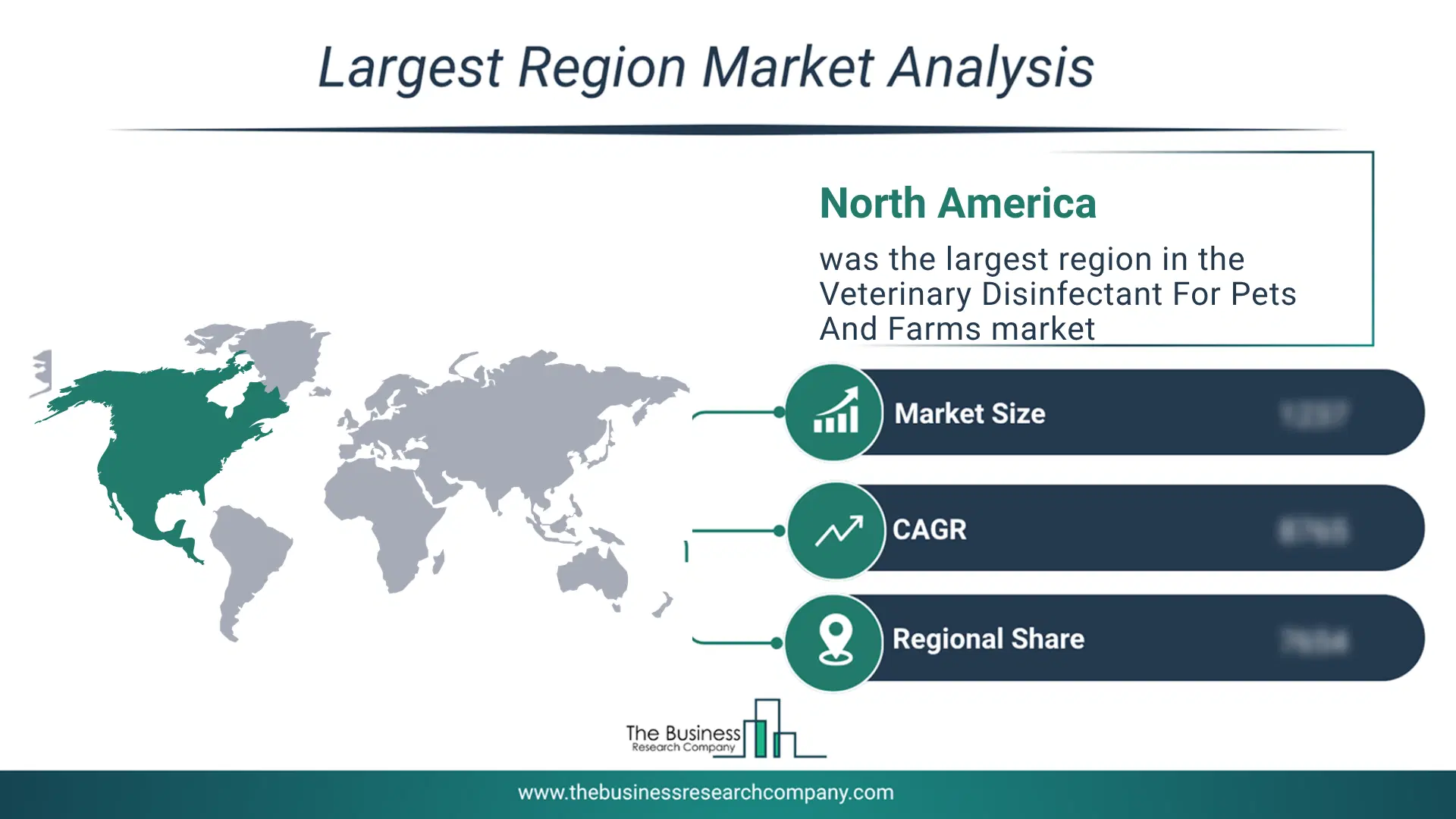
Regional Outlook
North America was the largest region in the veterinary disinfectant for pets and farms market in 2025. The regions covered in this market report are Asia-Pacific, South East Asia, Western Europe, Eastern Europe, North America, South America, Middle East, Africa. The countries covered in this market report are Australia, Brazil, China, France, Germany, India, Indonesia, Japan, Taiwan, Russia, South Korea, UK, USA, Canada, Italy, SpainWhat Defines the Veterinary Disinfectant For Pets And Farms Market?
The veterinary disinfectant for pets and farms market consists of sales kennel cleaners, stall disinfectants, cage cleaners, hoof disinfectants, and barn cleaners. Values in this market are ‘factory gate’ values, that is the value of goods sold by the manufacturers or creators of the goods, whether to other entities (including downstream manufacturers, wholesalers, distributors and retailers) or directly to end customers. The value of goods in this market includes related services sold by the creators of the goods.How is Market Value Defined and Measured?
The market value is defined as the revenues that enterprises gain from the sale of goods and/or services within the specified market and geography through sales, grants, or donations in terms of the currency (in USD unless otherwise specified). The revenues for a specified geography are consumption values that are revenues generated by organizations in the specified geography within the market, irrespective of where they are produced. It does not include revenues from resales along the supply chain, either further along the supply chain or as part of other products.
This chart presents market attractiveness based on a quantitative evaluation of growth, competition, strategic alignment, and risk, offering a clear view of opportunity areas for decision-making. This chart is for illustrative purposes; the full report contains the complete analysis.

This chart highlights the Total Addressable Market (TAM) by estimating the maximum revenue opportunity using an assumption-driven approach, supporting strategic planning and opportunity sizing across markets. The chart is illustrative; the full report provides a more comprehensive analysis.
What Key Data and Analysis Are Included in the Veterinary Disinfectant For Pets And Farms Market Report 2026?
The veterinary disinfectant for pets and farms market research report is one of a series of new reports from The Business Research Company that provides market statistics, including industry global market size, regional shares, competitors with the market share, detailed market segments, market trends and opportunities, and any further data you may need to thrive in the veterinary disinfectant for pets and farms industry. The market research report delivers a complete perspective of everything you need, with an in-depth analysis of the current and future state of the industry.Veterinary Disinfectant For Pets And Farms Market Report Forecast Analysis
| Report Attribute | Details |
|---|---|
| Market Size Value In 2026 | $3.9 billion |
| Revenue Forecast In 2030 | $5.1 billion |
| Growth Rate | CAGR of 7.9% from 2026 to 2030 |
| Base Year For Estimation | 2025 |
| Actual Estimates/Historical Data | 2020-2025 |
| Forecast Period | 2026 - 2030 - 2030 |
| Market Representation | Revenue in USD Billion and CAGR from 2026 to 2030 |
| Segments Covered | Product, Animal, Form, Application, End Use |
| Regional Scope | Asia-Pacific, Western Europe, Eastern Europe, North America, South America, Middle East, Africa |
| Country Scope | The countries covered in the report are Australia, Brazil, China, France, Germany, India, Indonesia, Japan, Taiwan, Russia, South Korea, UK, USA, Canada, Italy, Spain. |
| Key Companies Profiled | Ecolab Inc., Lanxess AG, Zoetis Inc., Empresas CMPC S.A., Clorox Healthcare, GEA Group AG, Kemin Industries Inc., Neogen Corporation, Manna Pro Products LLC, CID Lines NV, Bayer Animal Health, Merck Sharp & Dohme Corporation, Kersia Group, Evans Vanodine International plc, Albert Kerbl GmbH, Medentech Ltd., Sanosil AG, Quat-Chem Ltd., Virbac Animal Health, Kyron Laboratories |
| Customization Scope | Request for Customization |
| Pricing And Purchase Options | Explore Purchase Options |