

Video On Demand Market Report 2026
Global Outlook – By Component (Solutions, Services), By Platform Type (Smartphones, Tablets/Laptops, Smart TVs, Other Platform Types), By End-Users (Media, Entertainment, and Gaming, Travel and Hospitality, Education, Other End-Users) – Market Size, Trends, Strategies, and Forecast to 2030
Video On Demand Market Overview
• Video On Demand market size has reached to $153.35 billion in 2025 • Expected to grow to $323.69 billion in 2030 at a compound annual growth rate (CAGR) of 15.6% • Growth Driver: Digital Media Device Demand Fuels Video-On-Demand Market Growth • Market Trend: Innovative Technology Transforming The Video On-Demand Landscape • North America was the largest region in 2025 and Asia-Pacific is the fastest growing region.Market Gains By 2030 – Top Opportunities By Segment
Market Gain identifies the most promising market opportunities by highlighting the segments or products expected to generate the highest incremental revenue growth over the next five years.
What Is Covered Under Video On Demand Market?
Video on demand (VOD) is a media distribution system that enables users to access videos, TV shows, and films on demand without traditional broadcasting schedules, offering flexibility and convenience in content consumption. VoD services offer flexibility in terms of when and where users can watch content. The main components of video-on-demand are solutions and services. A solution refers to the software systems or tools designed to address specific challenges or needs within a particular domain. The various platforms involved are smartphones, tablets/Laptops, smart TVs, other platform types, which use a business model such as transactional video on demand, subscription video on demand, advertisement video on demand, and other business models. The end users are media, entertainment, gaming, travel, hospitality, education, and others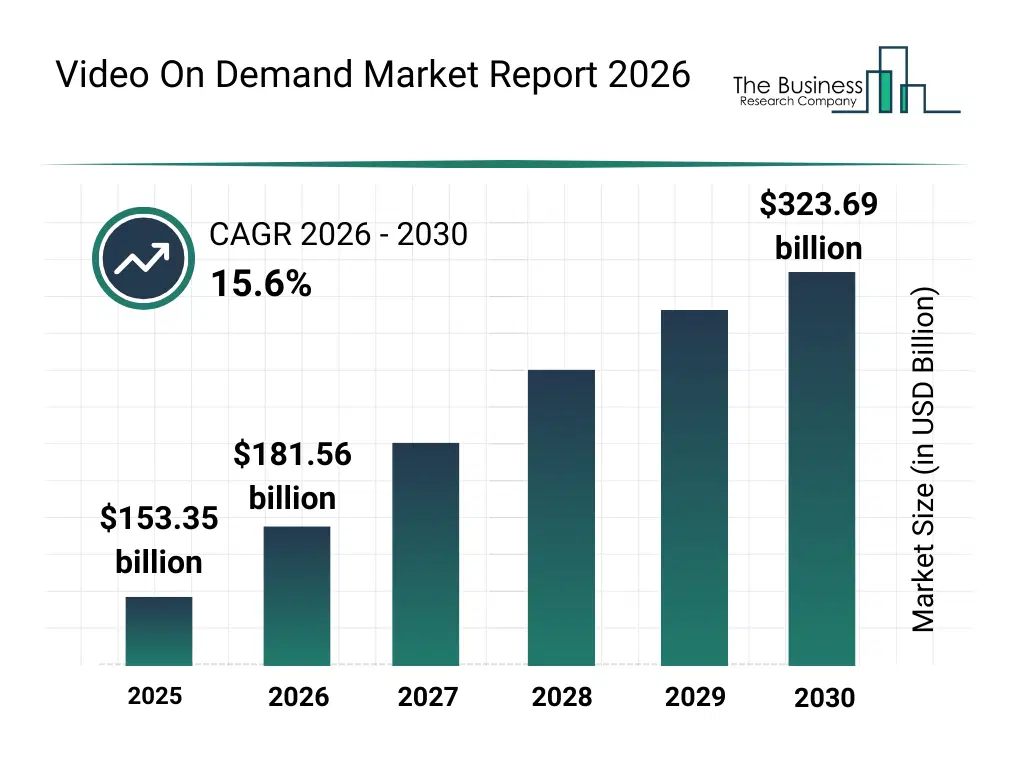
What Is The Video On Demand Market Size and Share 2026?
The video on demand market size has grown rapidly in recent years. It will grow from $153.35 billion in 2025 to $181.56 billion in 2026 at a compound annual growth rate (CAGR) of 18.4%. The growth in the historic period can be attributed to expansion of broadband and mobile internet access, growth in smart tv adoption, rising consumer preference for on-demand content, early success of subscription streaming platforms, increasing digital content production.What Is The Video On Demand Market Growth Forecast?
The video on demand market size is expected to see rapid growth in the next few years. It will grow to $323.69 billion in 2030 at a compound annual growth rate (CAGR) of 15.6%. The growth in the forecast period can be attributed to increasing investments in original digital content, rising adoption of immersive streaming formats, expansion of ad-supported streaming models, growing use of AI-driven viewer analytics, increasing demand for low-latency streaming technologies. Major trends in the forecast period include increasing adoption of personalized content recommendation engines, rising demand for multi-device streaming experiences, growing use of cloud-based content delivery, expansion of subscription-based streaming models, enhanced focus on user experience optimization.
Global Video On Demand Market Segmentation
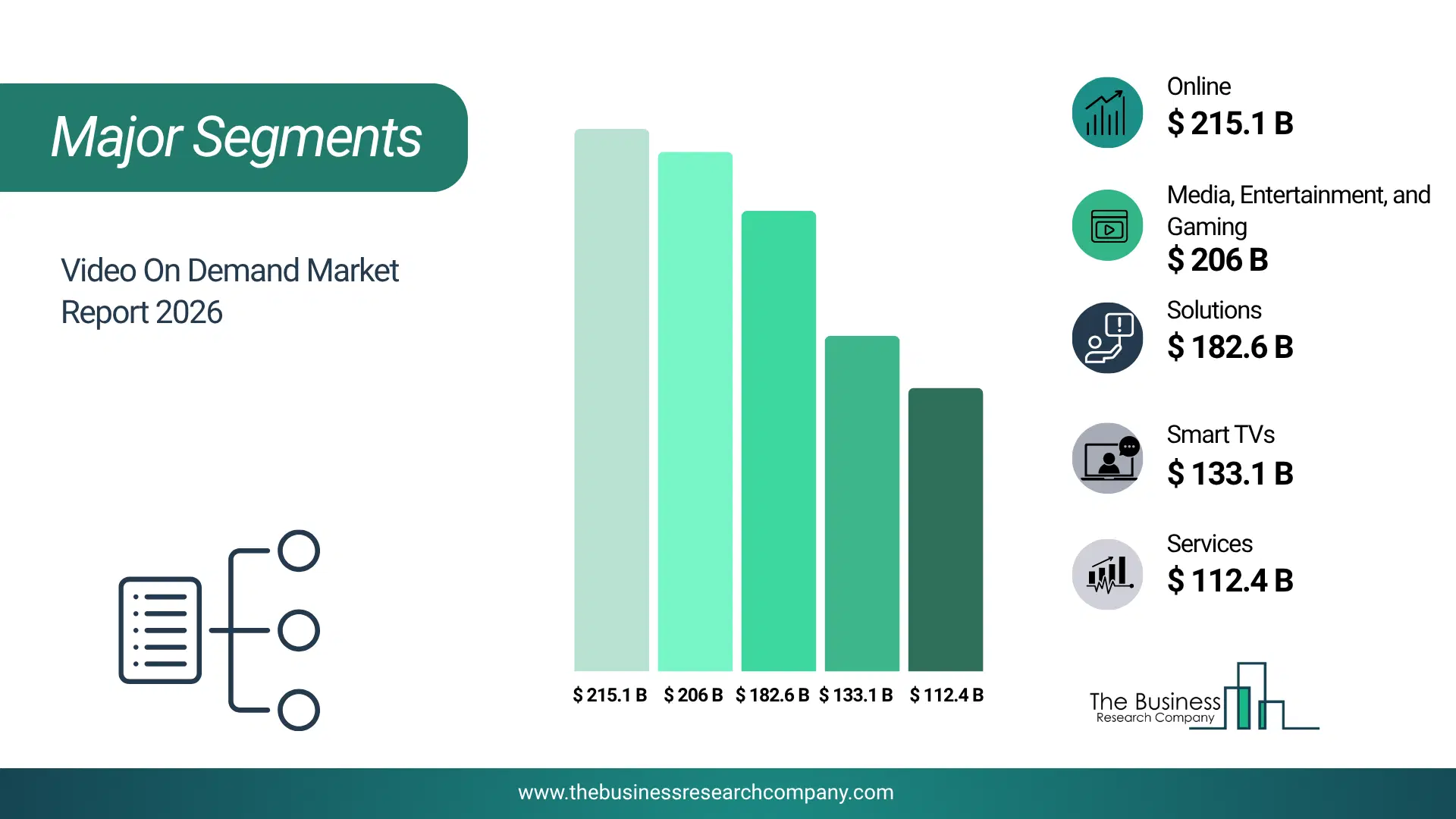
1) By Component: Solutions, Services 2) By Platform Type: Smartphones, Tablets/Laptops, Smart TVs, Other Platform Types 3) By End-Users: Media, Entertainment, and Gaming, Travel and Hospitality, Education, Other End-Users Subsegments: 1) By Solutions: Video Content Management, Video Streaming Solutions, Video Delivery Solutions, Video Encoding Solutions 2) By Services: Cloud-Based Services, Subscription-Based Services, Advertising-Based Services, Pay-Per-View Services The top segments in the video on demand market will be: • Subscription Video on Demand (SVOD) will reach $215189.74 Million by 2030. • Media, Entertainment, and Gaming will reach $206025.68 Million by 2030. • Solutions will reach $182632.01 Million by 2030. • Smart TVs will reach $133143.43 Million by 2030. • Services will reach $112390.52 Million by 2030.What Is The Driver Of The Video On Demand Market?
The surging demand for digital media devices is expected to propel the growth of the video-on-demand market going forward. A digital media device is any sort of instrument that records, processes, transmits, or displays digital information. The rise in digital media devices, such as smartphones, tablets, and smart TVs, is driven by increasing consumer demand for on-the-go entertainment and convenient access to digital content. VOD services offer a wide range of digital content, from movies to original programming, driving consumer investment in digital media devices for convenient access to favorite shows and movies via streaming platforms. For instance, in January 2025, according to Backlink, a Netherlands-based SEO agency, as of 2025, around 4.69 billion people globally use smartphones, marking an increase of 440 million users compared to 2024. Therefore, the surging demand for digital media devices is driving the growth of video on demand.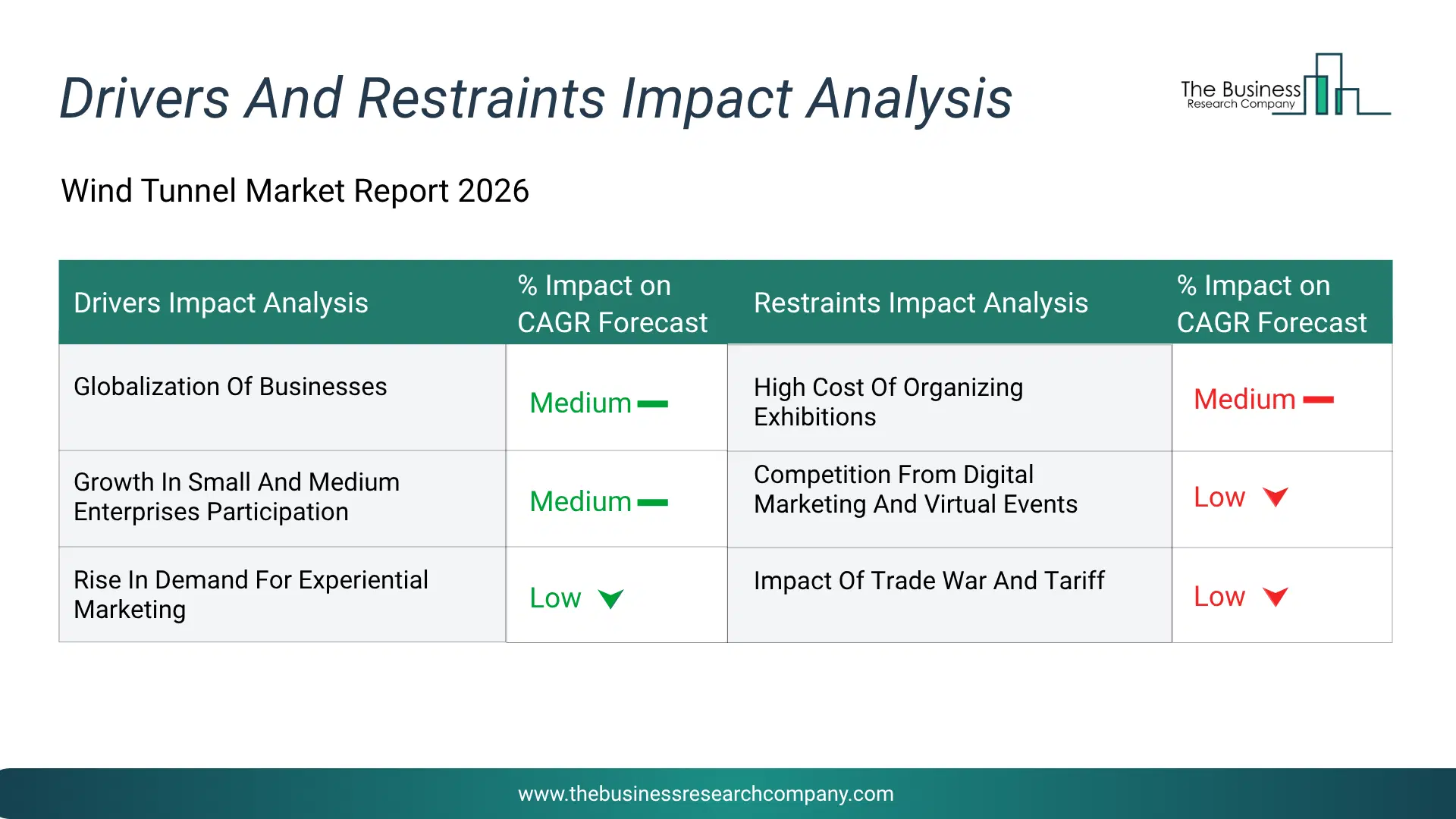
Infographic Chart Showing Key Market Drivers Analysis And Restraints For Video On Demand Market
The chart presents an impact analysis of key drivers and restraints, quantifying their relative influence on the market's growth rate and helping assess the balance between growth enablers and limiting factors. This chart offers a high-level perspective; the full report contains more detailed insights.
How Will The Drivers Impact Growth In The Global Video On Demand Market?
• Expansion of OTT Platforms (Medium) – During the forecast period, the expansion of ott platforms will become a key driver of growth in the video on demand market by 2030. as internet accessibility improves, smart device penetration rises, and investors continue to fund diverse streaming services, more consumers are adopting ott platforms as their primary choice for video content consumption across mobile, tablet, and connected tv devices. higher subscriber growth expanded content libraries spanning multiple genres and languages, and strategic partnerships between content creators and distribution platforms are intensifying demand for on-demand streaming services that cater to a wide spectrum of viewer preferences and viewing contexts. these expanded ott ecosystems require scalable infrastructure to support high-quality content delivery, personalized recommendations, seamless cross-device playback, and robust user engagement metrics that align with evolving consumption patterns. as a result, ott service providers and technology partners are increasingly enhancing platform capabilities, broadening content offerings, and investing in marketing and distribution strategies to capture larger audience segments and sustain long-term growth in the global video-on-demand market. as a result, expansion of ott platforms is anticipated to contributing to a 1.5% annual growth in the market. • Rapid Expansion of High-Speed Broadband Networks (Low) – During the forecast period, the rapid expansion of high-speed broadband networks will emerge as a major factor driving the expansion of the video on demand market by 2030. as broadband infrastructure continues to develop globally — supporting faster data rates, lower latency, and broader geographic coverage — demand for high-quality on-demand streaming services is intensifying among residential and mobile viewers. higher availability of fiber-to-the-home, docsis upgrades, and next-generation wireless broadband technologies enable smoother delivery of high-definition and ultra-high-definition vod content, supporting uninterrupted playback, adaptive bitrate streaming, and richer viewer experiences across multiple devices. these network-driven improvements require scalable delivery platforms, robust content distribution architectures, and edge-optimized caching to ensure consistent performance and quality of experience as data volumes surge. as a result, vod service providers and content delivery partners are increasingly investing in broadband-centric delivery optimization, integrating advanced network protocols, and collaborating with infrastructure providers to capitalize on the accelerating deployment of high-speed broadband and extend service reach in the global video-on-demand market. consequently, the rapid expansion of high-speed broadband networks is projected to contributing to a 1.0% annual growth in the market. • Rising Penetration of Smart TVs, Connected TVs, and Streaming Devices (Low) – During the forecast period, the rising penetration of smart tvs, connected tvs, and streaming devices will serve as a key growth catalyst for the video on demand market by 2030. as households increasingly adopt internet-enabled television hardware and streaming devices and large-screen viewing becomes a preferred mode of digital content consumption, demand for on-demand video services delivered through connected ecosystems is intensifying. higher connected tv adoption, expanding smart tv installations, and increased usage of streaming sticks and devices are driving sustained growth in vod viewership by enabling seamless access to digital content across living-room environments. these device-driven consumption patterns require robust platform compatibility, scalable content delivery, and optimized user interfaces to support high-quality streaming experiences across multiple operating systems and screen formats. as a result, video-on-demand platforms and technology providers are increasingly optimizing applications for connected devices and expanding content availability to capitalize on rising smart tv and streaming device penetration. therefore, rising penetration of smart tvs, connected tvs, and streaming devices is projected to supporting to a 0.8% annual growth in the market. • Expansion of Streaming Platforms and Subscription-Based Models (Low) – During the forecast period, the expansion of streaming platforms and subscription-based models accelerating the adoption of video on demand. as connectivity improves across emerging regions, telecom operators broaden their digital service portfolios, and global media companies continue to invest in localized content delivery, more consumers are adopting streaming services as their preferred mode of entertainment consumption across mobile, tablet, and connected tv devices. these expanded streaming ecosystems require scalable delivery infrastructure, robust subscription management frameworks, personalized recommendation engines, and seamless cross-device playback capabilities that align with evolving consumer expectations for high-quality, accessible digital content. as a result, service providers, telecom operators, and technology partners are increasingly launching new platforms, enhancing content libraries, and investing in marketing and distribution strategies to capture larger subscriber bases and sustain long-term growth in the global video-on-demand market. the expansion of streaming platforms and subscription-based models growth contribution during the forecast period in 2025 is 0.5%.How Will The Restraints Impact Growth In The Global Video On Demand Market?
• High Churn Rates Due to Low Switching Costs (Medium) – During the forecast period, the high churn rates due to low switching costs a significant barrier to market expansion. subscription-based streaming services inherently face low barriers to switching, as consumers can easily cancel one platform and subscribe to another without significant friction, while aggressive promotional offers and overlapping content libraries further dilute subscriber loyalty. from a customer retention perspective, vod platforms must continuously invest in fresh content, personalised recommendations, and engagement initiatives to maintain subscriber interest, which can significantly increase operational and content acquisition costs without guaranteeing long-term customer lock-in. these elevated churn dynamics and competitive switching behaviour increase revenue volatility, reduce predictable cash flow, and can discourage long-term investment in original content or platform enhancements. as a result, video-on-demand service providers may face heightened retention challenges, more cautious content spending strategies, and slower subscriber base expansion. growth affected by high churn rates due to low switching costs during the forecast period in 2025 is -2.0%. • Government Regulations and Content Censorship Rules (Low) – During the forecast period, the government regulations and content censorship rules remains a significant barrier to market expansion. operation of video-on-demand platforms involves compliance with evolving regulatory frameworks governing digital content, age classification, grievance redressal mechanisms, and content moderation standards, while platforms are also subject to oversight and enforcement actions by government authorities. from an operational and content development perspective, streaming providers must navigate complex compliance requirements, content review processes, and regulatory scrutiny, which can significantly extend approval timelines and increase the risk of content takedowns or platform restrictions. these regulatory constraints increase operational uncertainty, limit creative flexibility, and can discourage aggressive content investments or delay platform expansion strategies by market participants. as a result, video-on-demand service providers may face slower content rollouts, higher compliance costs, and more cautious growth and investment decisions. growth affected by high government regulations and content censorship rules during the forecast period in 2025 is -3.0%. • Regulatory and Censorship Constraints on Content Distribution (Low) – During the forecast period, the regulatory and censorship constraints on content distribution remains a significant barrier to market expansion. distribution of video-on-demand content involves adherence to government-imposed content regulations, censorship guidelines, and compliance requirements, while platforms are also subject to enforcement actions for streaming content deemed to violate legal or ethical standards. from a platform operations perspective, service providers must navigate content review processes, regulatory scrutiny, and the risk of platform-level restrictions or blocking orders, which can significantly disrupt content availability and service continuity. these regulatory constraints increase operational risk, reduce flexibility in content commissioning and distribution, and can discourage aggressive content investments or delay expansion decisions by existing platforms. as a result, video-on-demand providers may face cautious content strategies, elevated compliance costs, and slower growth in platform reach and user engagement. growth affected by regulatory and censorship constraints on content distribution during the forecast period in 2025 is -1.0%.Key Players In The Global Video On Demand Market
Major companies operating in the video on demand market are Netflix Inc, Paramount+, YouTube, Hulu, Disney+ Hotstar, Amazon Prime Video, Starz Inc., Apple TV+, Acorn TV, Max, Crunchyroll LLC, Vimeo Inc., Fandango Media LLC, Kaltura Inc., Tubi Inc, Mubi, MX Player, Crackle Plus LLC, BritBox, Kanopy, Dacast Inc., ESPN Inc., Discovery Plus, Rakuten TV, ViacomCBS Inc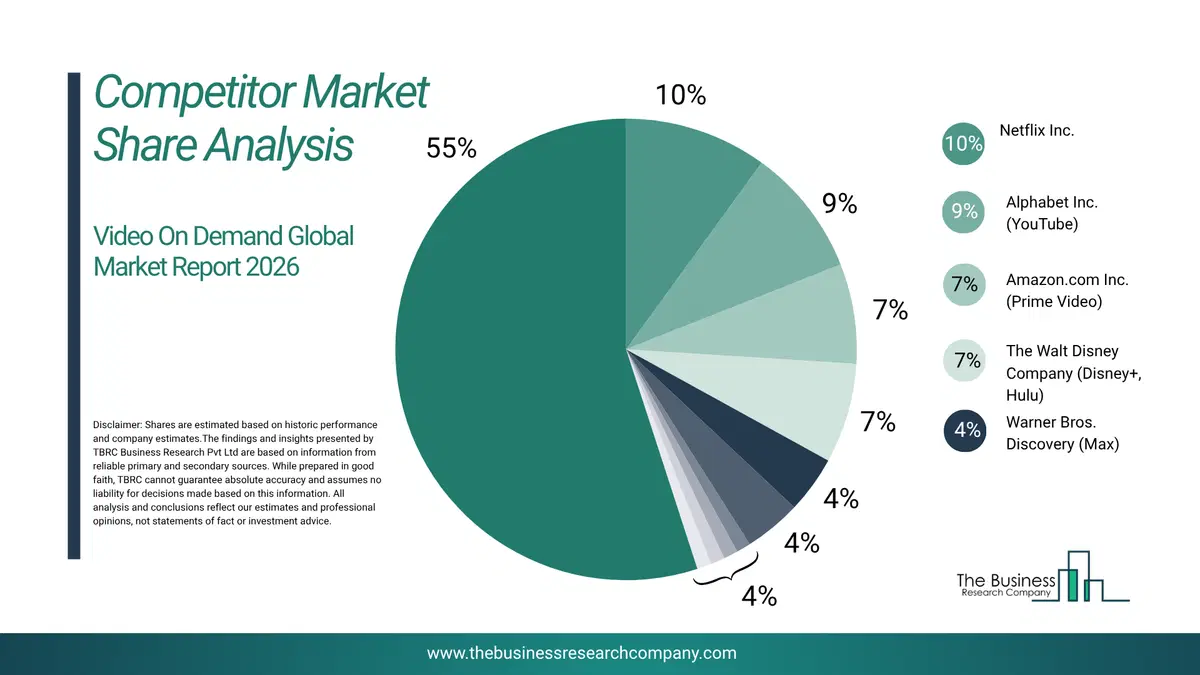
This chart is for illustrative purposes; the full report includes a detailed competitor analysis and comprehensive overview of the top 10 companies in the market.
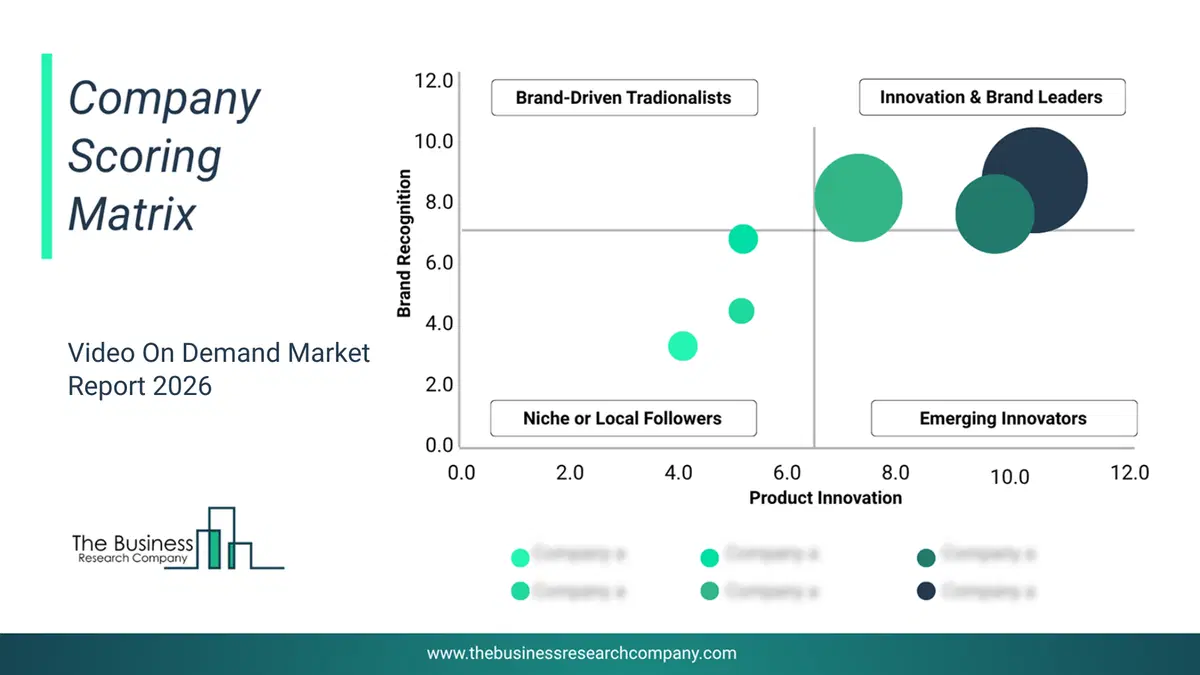
This chart maps companies by product innovation and brand strength, with bubble size indicating relative revenue, helping identify market leaders, challengers, and niche players. This is an illustrative chart; the full report provides a complete and accurate competitive analysis.
Global Video On Demand Market Trends and Insights
Major companies operating in the video-on-demand market are focusing on technological AI-based advancements, such as AI-based streaming technology, to ensure a smooth viewing experience across different devices and network conditions, enhancing user satisfaction and reducing buffering issues. These AI-based techniques are integrated into streaming platforms to enhance various aspects of content delivery, user experience, and content recommendation. For instance, in March 2024, Sportradar AG, a Switzerland-based sports technology company, launched Sportradar 4Sight, an AI-based streaming technology, to transform the presentation of the sport. The technology overlays ultra-fast data into live streams, delivering a continuous flow of engaging statistics that appear in real-time, from serve speed and ball bounces to total shots in each rally. This technology is engaging for the next generation of tennis fans, who want more immersive and personalized experiences.What Are Latest Mergers And Acquisitions In The Video On Demand Market?
In May 2023, Tata Communications, an India-based telecommunications company, acquired The Switch Enterprises LLC for approximately $58.8 million. Through this acquisition, Tata Communications aimed to introduce a new world of end-to-end video production and transmission of high-quality, high-speed, and more immersive live video experiences for viewers and fans, from event venues and racetracks to screens across varied equipment such as televisions, mobile devices, and others. The acquisition also aims to deliver a fast-paced, always-on, and interactive entertainment form for viewers. Switch Enterprises LLC is a US-based company that offers on-demand and streaming platforms on multiple screens and devices.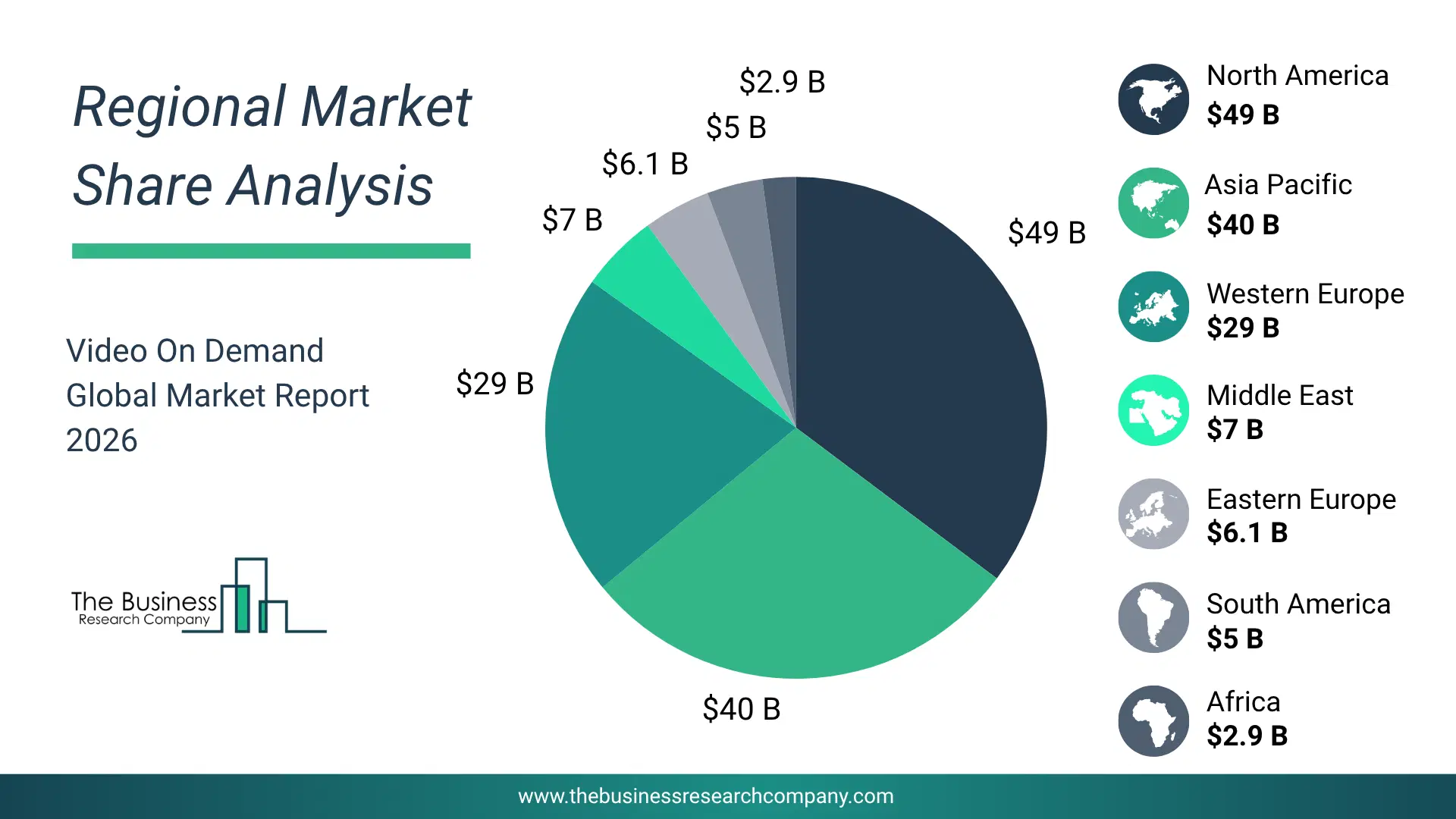
Regional Insights
North America was the largest region in the video on demand market in 2025. Asia-Pacific is expected to be the fastest-growing region in the forecast period. The regions covered in this market report are Asia-Pacific, South East Asia, Western Europe, Eastern Europe, North America, South America, Middle East, Africa. The countries covered in this market report are Australia, Brazil, China, France, Germany, India, Indonesia, Japan, Taiwan, Russia, South Korea, UK, USA, Canada, Italy, Spain.What Defines the Video On Demand Market?
The video-on-demand market includes revenues earned by entities by providing push video-on-demand (PVOD) services, satellite TV VOD, and cable TV VOD. The market value includes the value of related goods sold by the service provider or included within the service offering. Only goods and services traded between entities or sold to end consumers are included.How is Market Value Defined and Measured?
The market value is defined as the revenues that enterprises gain from the sale of goods and/or services within the specified market and geography through sales, grants, or donations in terms of the currency (in USD unless otherwise specified). The revenues for a specified geography are consumption values that are revenues generated by organizations in the specified geography within the market, irrespective of where they are produced. It does not include revenues from resales along the supply chain, either further along the supply chain or as part of other products.
This chart presents market attractiveness based on a quantitative evaluation of growth, competition, strategic alignment, and risk, offering a clear view of opportunity areas for decision-making. This chart is for illustrative purposes; the full report contains the complete analysis.

This chart highlights the Total Addressable Market (TAM) by estimating the maximum revenue opportunity using an assumption-driven approach, supporting strategic planning and opportunity sizing across markets. The chart is illustrative; the full report provides a more comprehensive analysis.
What Key Data and Analysis Are Included in the Video On Demand Market Report 2026?
The video on demand market research report is one of a series of new reports from The Business Research Company that provides market statistics, including industry global market size, regional shares, competitors with the market share, detailed market segments, market trends and opportunities, and any further data you may need to thrive in the video on demand industry. The market research report delivers a complete perspective of everything you need, with an in-depth analysis of the current and future state of the industry.Video On Demand Market Report Forecast Analysis
| Report Attribute | Details |
|---|---|
| Market Size Value In 2026 | $181.56 billion |
| Revenue Forecast In 2030 | $323.69 billion |
| Growth Rate | CAGR of 18.4% from 2026 to 2030 |
| Base Year For Estimation | 2025 |
| Actual Estimates/Historical Data | 2020-2025 |
| Forecast Period | 2026 - 2030 - 2035 |
| Market Representation | Revenue in USD Billion and CAGR from 2026 to 2030 |
| Segments Covered | Component, Platform Type, End-Users |
| Regional Scope | Asia-Pacific, Western Europe, Eastern Europe, North America, South America, Middle East, Africa |
| Country Scope | The countries covered in the report are Australia, Brazil, China, France, Germany, India, Indonesia, Japan, Taiwan, Russia, South Korea, UK, USA, Canada, Italy, Spain. |
| Key Companies Profiled | Netflix Inc, Paramount+, YouTube, Hulu, Disney+ Hotstar, Amazon Prime Video, Starz Inc., Apple TV+, Acorn TV, Max, Crunchyroll LLC, Vimeo Inc., Fandango Media LLC, Kaltura Inc., Tubi Inc, Mubi, MX Player, Crackle Plus LLC, BritBox, Kanopy, Dacast Inc., ESPN Inc., Discovery Plus, Rakuten TV, ViacomCBS Inc |
| Customization Scope | Request for Customization |
| Pricing And Purchase Options | Explore Purchase Options |