
Virtual Power Plant Market Report 2026
Global Outlook – By Technology (Distributed Generation, Demand Response, Mixed Asset), By Source (Renewable Energy, Cogeneration, Energy Storage), By End User (Industrial, Commercial, Residential) – Market Size, Trends, Strategies, and Forecast to 2030
Virtual Power Plant Market Overview
• Virtual Power Plant market size has reached to $3.37 billion in 2025 • Expected to grow to $8.68 billion in 2030 at a compound annual growth rate (CAGR) of 20.7% • Growth Driver: Renewable Energy Surge Propels Virtual Power Plant Market Growth • Market Trend: Focus On Battery Solutions For Enhanced Grid Flexibility And Energy Efficiency • North America was the largest region in 2025 and Middle East is the fastest growing region.Market Gains By 2030 – Top Opportunities By Segment
Market Gain identifies the most promising market opportunities by highlighting the segments or products expected to generate the highest incremental revenue growth over the next five years.
What Is Covered Under Virtual Power Plant Market?
A virtual power plant is a network of decentralized, moderate power-generating units operated by a single control system. The aim is to connect different energy sources into one cohesive unit, anything from solar and wind farms to energy assets and battery storage units. The main technologies in a virtual power plant are distribution generation, demand response and mixed assets. Distribution generation is a collection of DG installations (such as wind turbines, solar power plants, small hydro, and others) together with any other power generators that can work in tandem locally and are managed by a single control unit. The major sources are renewable energy, cogeneration and energy storage used by various end users such as industrial, commercial and residential.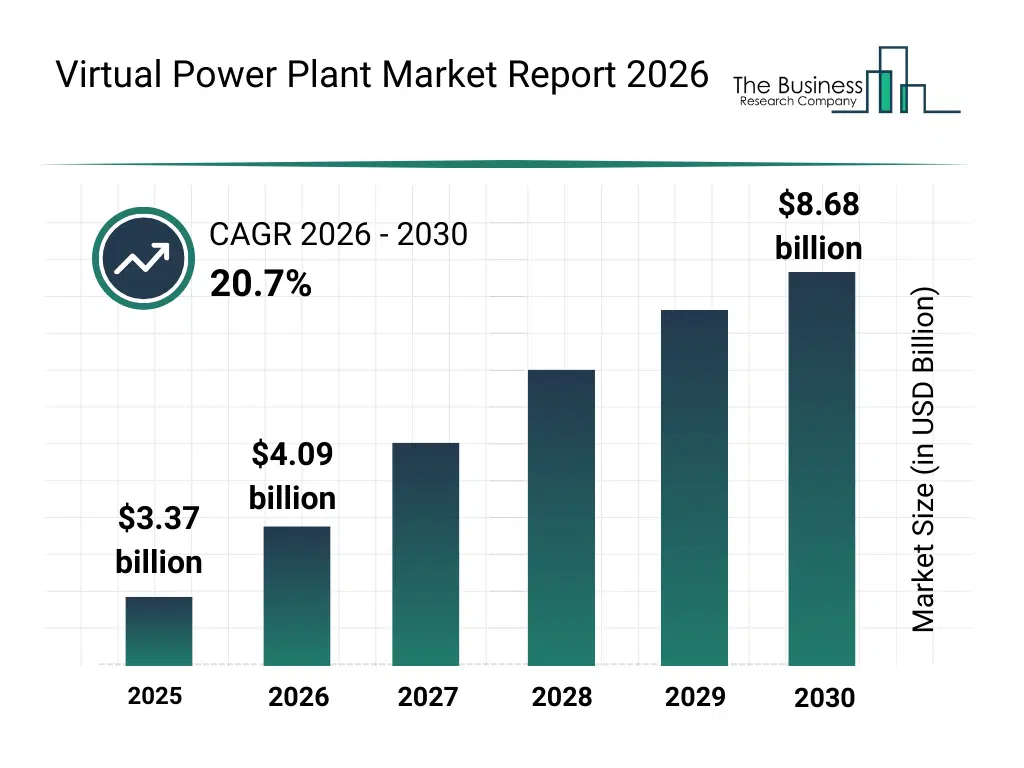
What Is The Virtual Power Plant Market Size and Share 2026?
The virtual power plant market size has grown exponentially in recent years. It will grow from $3.37 billion in 2025 to $4.09 billion in 2026 at a compound annual growth rate (CAGR) of 21.5%. The growth in the historic period can be attributed to growth of renewable energy installations, early adoption of distributed generation, advances in grid infrastructure, regulatory support for clean energy, rising energy demand from urbanization.What Is The Virtual Power Plant Market Growth Forecast?
The virtual power plant market size is expected to see exponential growth in the next few years. It will grow to $8.68 billion in 2030 at a compound annual growth rate (CAGR) of 20.7%. The growth in the forecast period can be attributed to integration of AI and predictive analytics in vpp, expansion of battery storage capacity, smart grid modernization, increased focus on decarbonization and sustainability, rising adoption of hybrid and mixed asset systems. Major trends in the forecast period include integration of distributed energy resources (ders), real-time energy management and optimization, hybrid energy systems deployment, demand response programs expansion, battery energy storage systems (bess) adoption.
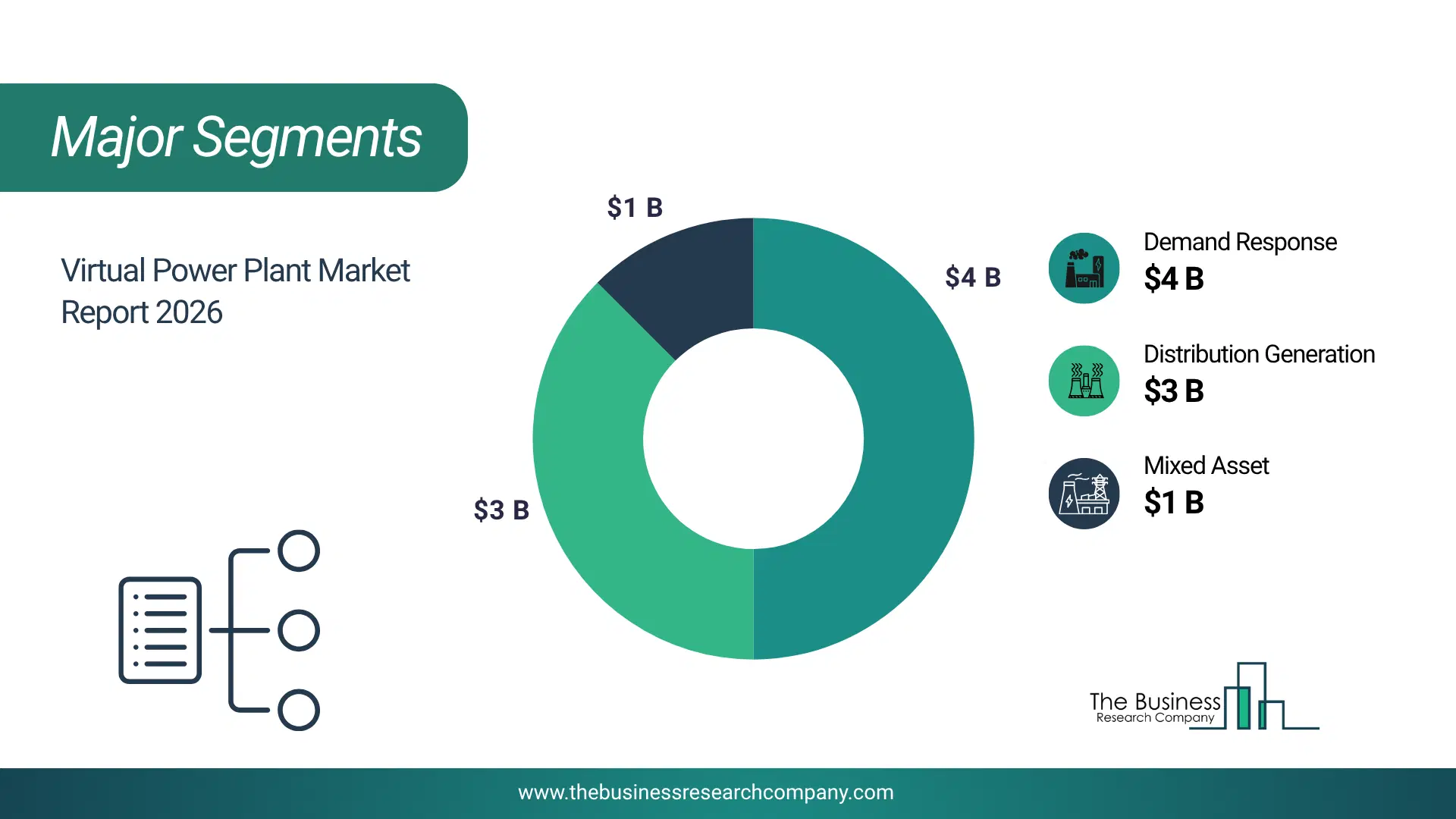
Global Virtual Power Plant Market Segmentation
1) By Technology: Distributed Generation, Demand Response, Mixed Asset 2) By Source: Renewable Energy, Cogeneration, Energy Storage 3) By End User: Industrial, Commercial, Residential Subsegments: 1) By Distributed Generation: Renewable Energy Sources (Solar, Wind), Combined Heat And Power (CHP) Systems 2) By Demand Response: Commercial Demand Response, Residential Demand Response, Industrial Demand Response 3) By Mixed Asset: Hybrid Energy Systems, Battery Energy Storage Systems (BESS) The top segments in the virtual power plant market will be: • Renewable Energy will reach $4779.45 Million by 2030. • Demand Response will reach $3817.34 Million by 2030. • Industrial will reach $4314.17 Million by 2030. • Distributed Generation will reach $3755.01 Million by 2030. • Energy Storage will reach $3375.71 Million by 2030.What Is The Driver Of The Virtual Power Plant Market?
Increasing demand for renewable energy is expected to propel the virtual power plant market going forward. Renewable energy refers to the energy that originates from natural resources that replenish more quickly than they are used up. Virtual power plants (VPPs) can balance the production and consumption of renewable energy, and forecasts can help direct consumer behavior as a form of demand response. For instance, in April 2023, according to a report published by the National Renewable Energy Laboratory (NREL), a US-based research institution dedicated to advancing renewable energy and energy efficiency technologies, global photovoltaic (PV) installations reached 231 gigawatts of direct current (GWdc), totaling 1.2 terawatts of direct current (TWdc) cumulatively in 2022. China's annual PV installations surged by 57%, accounting for 42% of global demand, primarily driven by distributed PV, while annual installations are forecast to exceed 300 GW by 2023 and surpass 400 GW by 2025. Therefore, increasing demand for renewable energy is driving the growth of the virtual power plant industry.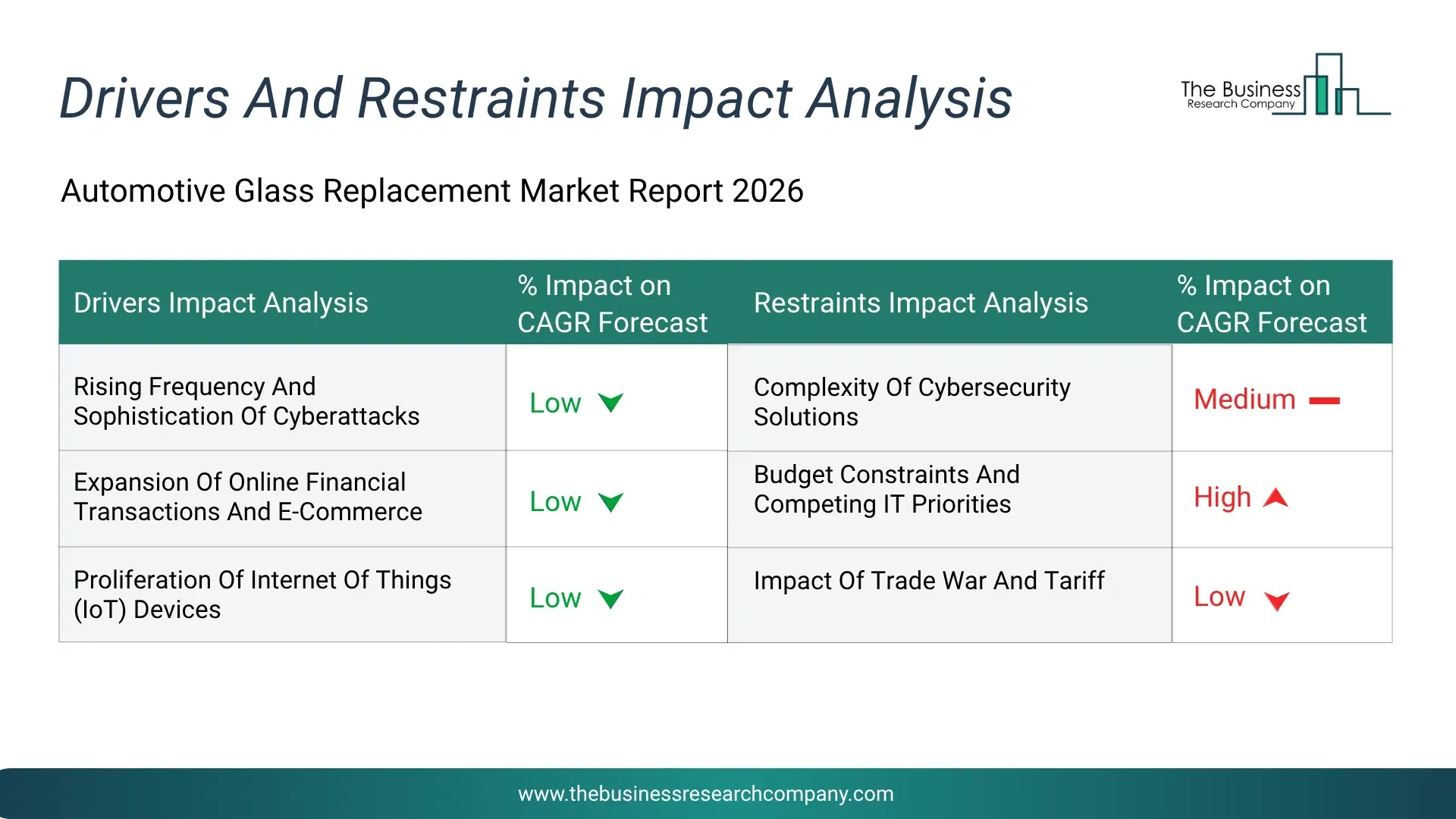
Infographic Chart Showing Key Market Drivers Analysis And Restraints For Virtual Power Plant Market
The chart presents an impact analysis of key drivers and restraints, quantifying their relative influence on the market's growth rate and helping assess the balance between growth enablers and limiting factors. This chart offers a high-level perspective; the full report contains more detailed insights.
How Will The Drivers Impact Growth In The Global Virtual Power Plant Market?
• Integration of Renewable Energy Sources (High) – During the forecast period, the integration of renewable energy sources will become a key driver of growth in the virtual power plant market by 2030. as governments accelerate decarbonization strategies and expand national renewable capacity targets, utilities and grid operators continue to connect higher volumes of solar, wind and distributed clean energy assets to power systems across developed and emerging economies, leading to greater demand for advanced coordination and grid-balancing solutions. a growing renewable energy base increases the need for real-time aggregation, load optimization and distributed resource orchestration across geographically dispersed assets, driving sustained demand for cloud-based energy management platforms, battery storage integration systems, demand response technologies and smart grid control software. as a result, virtual power plant providers are expanding software capabilities, strengthening partnerships with distributed energy asset owners and enhancing grid service functionalities to support renewable integration and sustain long-term growth in the global virtual power plant market. as a result, the growing integration of renewable energy sources is contributing to a 2.5% annual growth in the market. • Grid Modernization and Smart Grid Investments (Medium) – During the forecast period, the grid modernization and smart grid investments will emerge as a major factor driving the expansion of the market by 2030. as governments and utilities upgrade transmission and distribution infrastructure with advanced metering systems, digital substations, automated controls and real-time communication networks, power systems gain the intelligence and connectivity required to manage distributed energy resources more effectively. expanding smart grid infrastructure increases the need for coordinated aggregation, demand-side optimization and distributed resource orchestration across connected assets, which drives sustained demand for cloud-based energy management platforms, battery storage integration systems, demand response solutions and grid analytics software. as a result, virtual power plant providers are enhancing software interoperability, expanding grid services participation capabilities and aligning platform development with national grid modernization programs to support digital energy transformation and sustain long-term growth in the global virtual power plant market. consequently, the rising grid modernization and smart grid investments growth is projected to contributing to a 2.0% annual growth in the market. • Supportive Government Regulations and Incentives (Medium) – During the forecast period, the supportive government regulations and incentives will serve as a key growth catalyst for the market by 2030. as national governments implement clean energy mandates, expand tax credits for energy storage and introduce funding programs for distributed energy resource integration, utilities and private energy developers increase investments in decentralized generation and grid flexibility solutions. expanding policy support for renewable energy deployment and storage adoption increases the need for coordinated aggregation, demand-side management and real-time energy balancing across distributed assets, which drives sustained demand for cloud-based orchestration platforms, battery storage management systems, demand response technologies and grid optimization software. as a result, virtual power plant providers are strengthening regulatory compliance capabilities, expanding participation in capacity and ancillary service markets and aligning platform development strategies with national decarbonization and grid resilience programs to sustain long-term growth in the global virtual power plant market. therefore, growth in supportive government regulations and financial incentives is projected to supporting to a 1.5% annual growth in the market. • Rising Demand for Demand Response and Energy Flexibility (Low) – During the forecast period, the rising demand for demand response and energy flexibility is expected to be a key driver propelling growth in the virtual power plant market. As grid operators and utilities integrate higher volumes of intermittent renewable energy into national power systems, they require greater real-time balancing capabilities to maintain grid stability and prevent supply disruptions. Increasing reliance on flexible load management and distributed storage systems raises the need for coordinated aggregation, automated dispatch and dynamic energy optimization across geographically dispersed assets, which drives sustained demand for cloud-based orchestration platforms, battery storage management systems, demand response technologies and grid optimization software. As a result, virtual power plant providers are expanding distributed energy resource networks, enhancing real-time analytics capabilities and strengthening partnerships with utilities and grid operators to support capacity markets and ancillary service programs, which sustains long-term growth in the global virtual power plant market. The growth in demand response and energy flexibility growth contribution during the forecast period in 2025 is 1.0%.How Will The Restraints Impact Growth In The Global Virtual Power Plant Market?
• Technical Complexity and Interoperability Issues (High) – During the forecast period, technical complexity and interoperability issues are expected to restrain the growth of the virtual power plant market. Persistent challenges associated with integrating diverse distributed energy resources such as solar PV systems, wind turbines, battery storage units, electric vehicles and demand response assets into unified control platforms are placing operational and financial strain on utilities, aggregators and grid operators, which in turn discourages rapid large-scale VPP deployment and cross-platform coordination. From a commercial and system integration perspective, incompatibility between communication protocols, legacy grid infrastructure limitations, varying regional standards and fragmented software ecosystems increase pressure on stakeholders to invest in customized interfaces, middleware solutions and extended testing cycles, often at the expense of project timelines and scalability. These interoperability constraints, coupled with cybersecurity validation requirements, complex grid code compliance procedures and the need for continuous system synchronization across geographically dispersed assets, intensify operational burdens and heighten the risk of performance inconsistencies and delayed revenue realization from energy trading and ancillary services. As a result, VPP platform providers, utilities and distributed energy aggregators may face slower rollout strategies, higher integration costs and postponed investments in advanced orchestration and grid optimization solutions during the forecast period. Growth affected by technical complexity and interoperability issues during the forecast period in 2025 is -1.5%. • Impact of Trade War and Tariffs (Medium) – During the forecast period, grid infrastructure limitations are expected to restrict the growth of the virtual power plant market. Persistent constraints within aging transmission and distribution networks, limited grid flexibility and insufficient digitalization across legacy power systems are placing operational pressure on utilities, aggregators and distributed energy resource (DER) operators, which in turn discourages rapid large-scale VPP integration and participation in ancillary service markets. From a commercial and operational perspective, inadequate grid hosting capacity, interconnection bottlenecks and slow grid upgrade cycles increase the complexity and cost of connecting solar, wind, battery storage and demand response assets into coordinated virtual power plant platforms, often delaying project approvals and revenue realization. These infrastructure challenges, coupled with regional disparities in smart grid deployment, limited real-time visibility across distribution networks and prolonged permitting and upgrade timelines, intensify integration risks and heighten the likelihood of curtailment, congestion and underutilization of aggregated assets. As a result, VPP platform providers, utilities and energy service companies may face constrained scalability, cautious expansion strategies and deferred investments in advanced aggregation and grid balancing solutions during the forecast period. Growth affected by grid infrastructure limitations during the forecast period in 2025 is -1.0%. • Grid Infrastructure Limitations (Medium) – During the forecast period, trade wars and tariffs are expected to restrain the growth of the virtual power plant market by increasing cost pressures and operational complexity across distributed energy ecosystems. Escalating tariff barriers, retaliatory trade measures, and regulatory uncertainty around cross-border energy technology flows are raising procurement and compliance costs for VPP operators, aggregators, and technology providers, thereby reducing investment flexibility and slowing large-scale VPP deployment programs. From a commercial and operational standpoint, tariffs and trade restrictions on critical hardware such as smart meters, inverters, power electronics, grid-edge controllers, battery storage systems, communication modules, and advanced sensors significantly increase capital expenditure for VPP projects, particularly those reliant on imported components. Growth affected by trade wars and tariffs during the forecast period in 2025 is -0.3%.Key Players In The Global Virtual Power Plant Market
Major companies operating in the virtual power plant market are Robert Bosch GmbH; Hitachi Ltd.; Siemens AG; Engie SA; General Electric Ltd.; International Business Machines Corporation; Schneider Electric SE; Honeywell International Inc; Asea Brown Boveri Ltd.; AGL Energy Ltd.; Generac Holdings Inc.; EnerNOC Inc; Enel X Ltd.; Limejump Limited; Open Access Technology International Inc.; Stem Inc; Blueprint Power Technologies Inc.; Next Kraftwerke GmbH; Cpower Energy Management; Autogrid Systems Inc; Enbala Power Networks Inc; Blue Pillar Inc; Olivine Inc; Flexitricity Limited; Toshiba Energy Systems & Solutions Corporation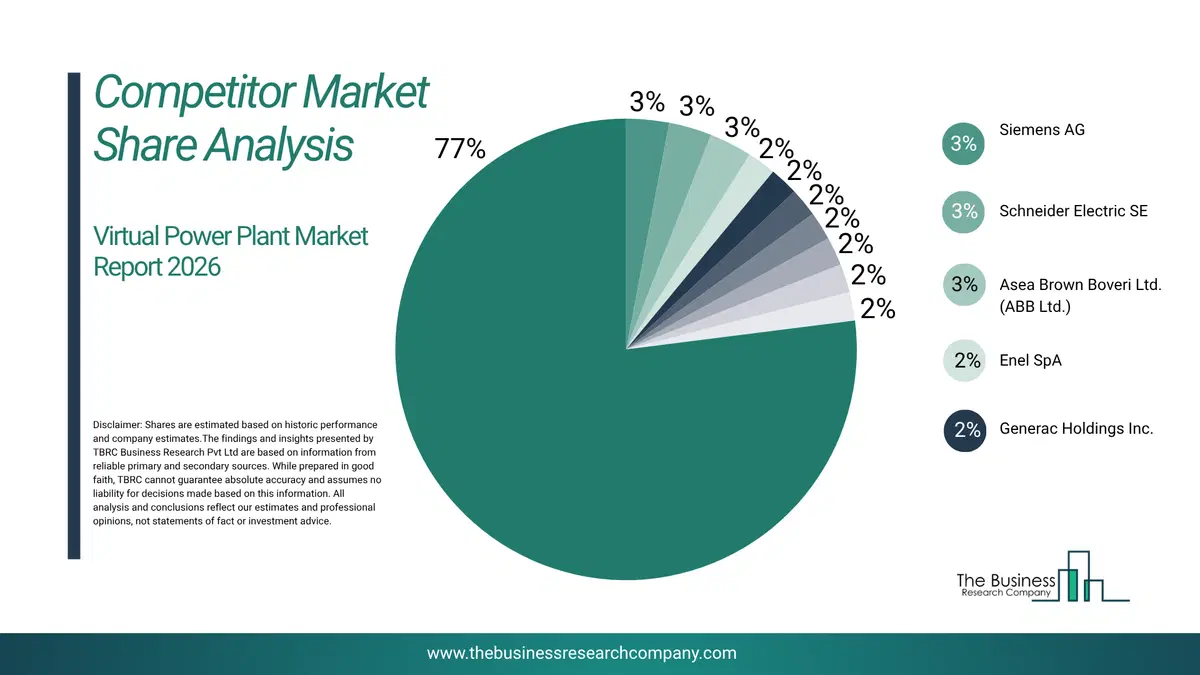
This chart is for illustrative purposes; the full report includes a detailed competitor analysis and comprehensive overview of the top 10 companies in the market.
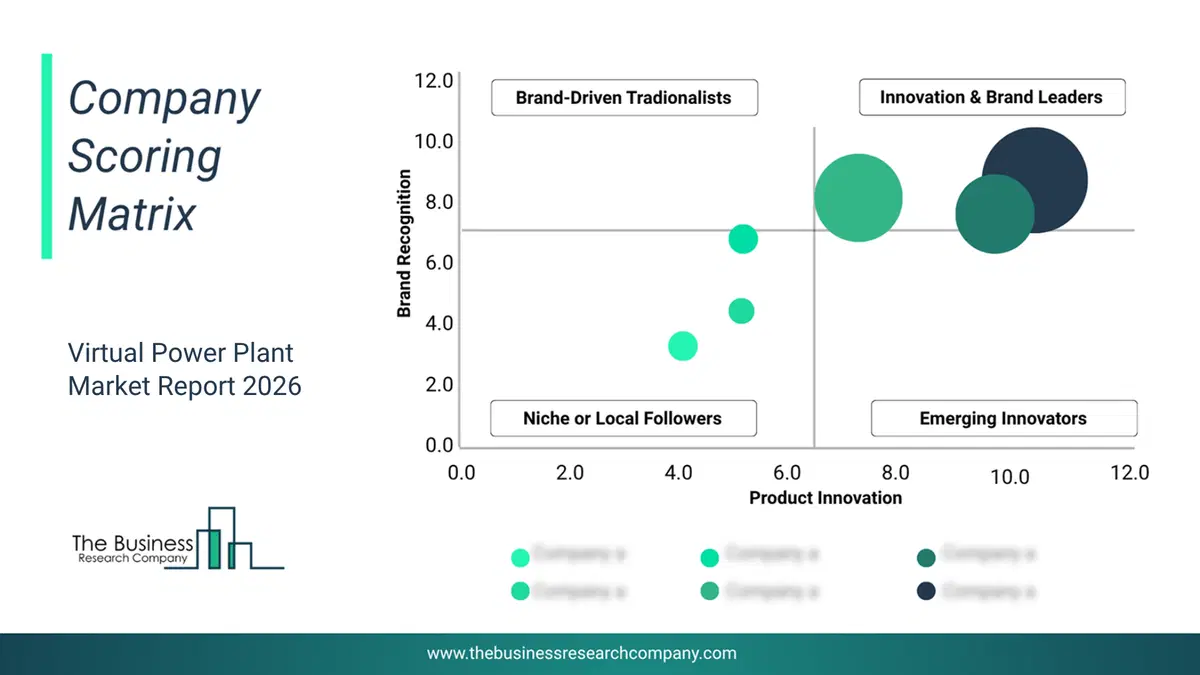
This chart maps companies by product innovation and brand strength, with bubble size indicating relative revenue, helping identify market leaders, challengers, and niche players. This is an illustrative chart; the full report provides a complete and accurate competitive analysis.
Global Virtual Power Plant Market Trends and Insights
Major companies operating in the virtual power plant market are focused on developing advanced solutions such as battery virtual power plants to meet rising demand for energy efficiency and grid flexibility, securing a competitive edge. Battery Virtual Power Plant refers to an advanced energy system that optimally integrates and manages distributed home batteries to enhance grid stability and offer financial incentives during peak demand events. For instance, in February 2023, SolarEdge Technologies, Inc., an Israel-based smart energy technology company, launched its pioneering battery virtual power plant in support of the National Grid ESO Demand Flexibility Service (DFS) in Great Britain. This innovative service is now accessible to a substantial number of SolarEdge Home Battery owners across Great Britain equipped with eligible smart meters. These homeowners can capitalize on financial incentives by utilizing their stored battery energy strategically during DFS peak demand events, contributing to grid stabilization. SolarEdge Home Battery owners with eligible export meters have the opportunity to maximize their financial gains further by exporting excess battery energy back into the grid. The cutting-edge technology developed by SolarEdge ensures seamless optimization of battery charge and discharge during each demand event, allowing homeowners to minimize grid consumption and earn incentives.What Are Latest Mergers And Acquisitions In The Virtual Power Plant Market?
In December 2023, Shell plc, a UK-based oil and gas company acquired EGO S.r.l. for an undisclosed amount. This acquisition aligns with Shell's strategy to enhance its position in the energy sector, especially within the renewable and distributed energy markets. By leveraging EGO's expertise in linking electricity producers and consumers, Shell seeks to enhance its capabilities in virtual power plant operations and broaden its overall energy portfolio. EGO S.r.l. is an Italy-based energy management company that provides virtual power plants.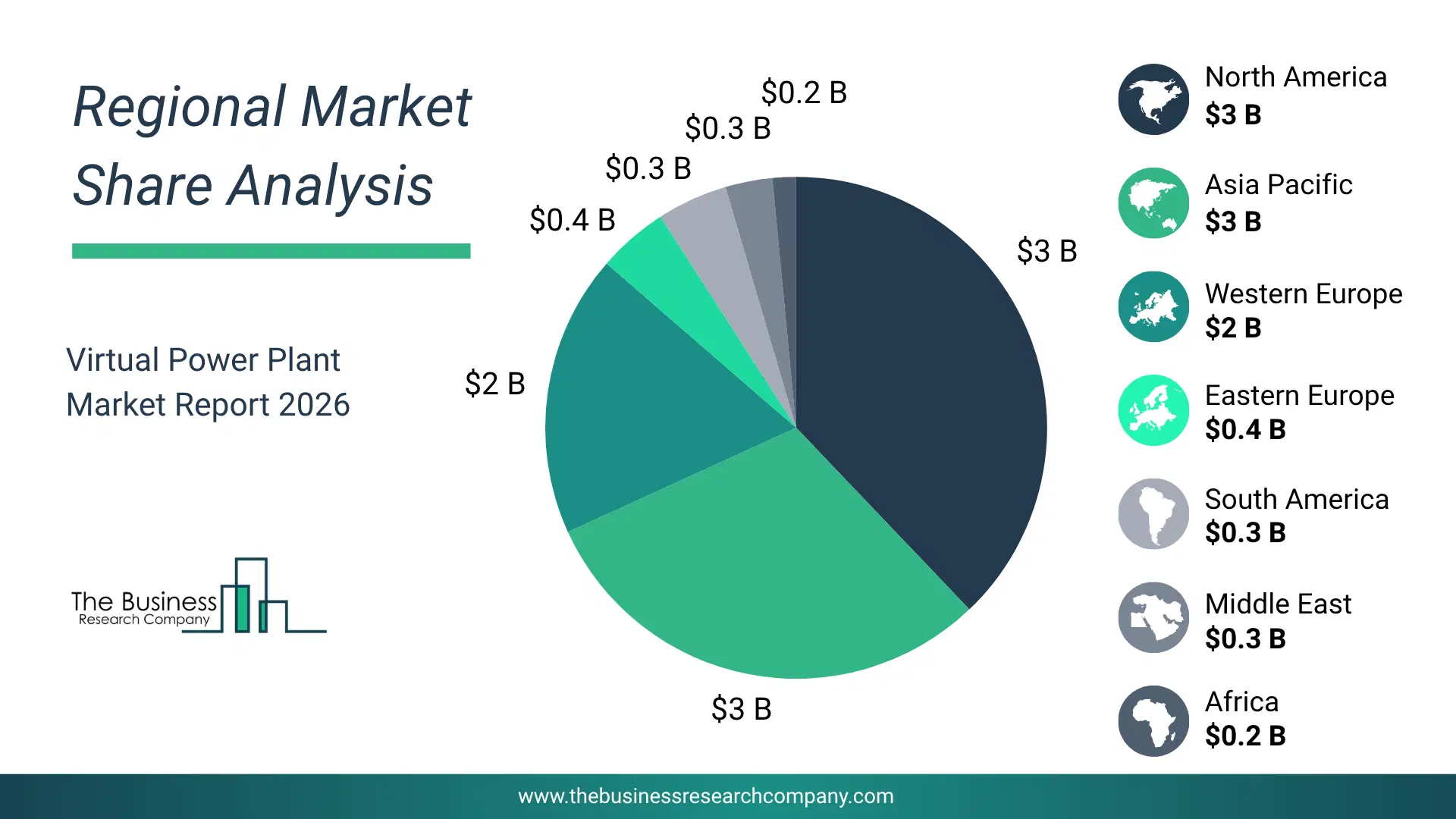
Regional Insights
North America was the largest region in the Virtual Power Plant market share in 2025. Middle East is expected to be the fastest-growing region in the forecast period. The regions covered in this market report are Asia-Pacific, South East Asia, Western Europe, Eastern Europe, North America, South America, Middle East, Africa. The countries covered in this market report are Australia, Brazil, China, France, Germany, India, Indonesia, Japan, Taiwan, Russia, South Korea, UK, USA, Canada, Italy, SpainWhat Defines the Virtual Power Plant Market?
The virtual power plant market consists of revenues earned by entities providing energy management systems, power consumers and storage systems services. The market value includes the value of related goods sold by the service provider or included within the service offering. The virtual power plant market also includes sales of thermal and renewable energy units and wind turbines. Values in this market are ‘factory gate’ values, that is the value of goods sold by the manufacturers or creators of the goods, whether to other entities (including downstream manufacturers, wholesalers, distributors, and retailers) or directly to end customers. The value of goods in this market includes related services sold by the creators of the goods.How is Market Value Defined and Measured?
The market value is defined as the revenues that enterprises gain from the sale of goods and/or services within the specified market and geography through sales, grants, or donations in terms of the currency (in USD unless otherwise specified). The revenues for a specified geography are consumption values that are revenues generated by organizations in the specified geography within the market, irrespective of where they are produced. It does not include revenues from resales along the supply chain, either further along the supply chain or as part of other products.
This chart presents market attractiveness based on a quantitative evaluation of growth, competition, strategic alignment, and risk, offering a clear view of opportunity areas for decision-making. This chart is for illustrative purposes; the full report contains the complete analysis.

This chart highlights the Total Addressable Market (TAM) by estimating the maximum revenue opportunity using an assumption-driven approach, supporting strategic planning and opportunity sizing across markets. The chart is illustrative; the full report provides a more comprehensive analysis.
What Key Data and Analysis Are Included in the Virtual Power Plant Market Report 2026?
The virtual power plant market research report is one of a series of new reports from The Business Research Company that provides market statistics, including industry global market size, regional shares, competitors with the market share, detailed market segments, market trends and opportunities, and any further data you may need to thrive in the virtual power plant industry. The market research report delivers a complete perspective of everything you need, with an in-depth analysis of the current and future state of the industry.Virtual Power Plant Market Report Forecast Analysis
| Report Attribute | Details |
|---|---|
| Market Size Value In 2026 | $4.09 billion |
| Revenue Forecast In 2030 | $8.68 billion |
| Growth Rate | CAGR of 21.5% from 2026 to 2030 |
| Base Year For Estimation | 2025 |
| Actual Estimates/Historical Data | 2020-2025 |
| Forecast Period | 2026 - 2030 - 2035 |
| Market Representation | Revenue in USD Billion and CAGR from 2026 to 2030 |
| Segments Covered | Technology, Source, End User |
| Regional Scope | Asia-Pacific, Western Europe, Eastern Europe, North America, South America, Middle East, Africa |
| Country Scope | The countries covered in the report are Australia, Brazil, China, France, Germany, India, Indonesia, Japan, Taiwan, Russia, South Korea, UK, USA, Canada, Italy, Spain. |
| Key Companies Profiled | Robert Bosch GmbH; Hitachi Ltd.; Siemens AG; Engie SA; General Electric Ltd.; International Business Machines Corporation; Schneider Electric SE; Honeywell International Inc; Asea Brown Boveri Ltd.; AGL Energy Ltd.; Generac Holdings Inc.; EnerNOC Inc; Enel X Ltd.; Limejump Limited; Open Access Technology International Inc.; Stem Inc; Blueprint Power Technologies Inc.; Next Kraftwerke GmbH; Cpower Energy Management; Autogrid Systems Inc; Enbala Power Networks Inc; Blue Pillar Inc; Olivine Inc; Flexitricity Limited; Toshiba Energy Systems & Solutions Corporation |
| Customization Scope | Request for Customization |
| Pricing And Purchase Options | Explore Purchase Options |