
Virtual Reality In Education Market Report 2026
Global Outlook – By Component (Hardware, Solutions And Software), By Deployment (Cloud, On-Premises), By Application (Academic And Training Institutions, Other Applications) – Market Size, Trends, Strategies, and Forecast to 2030
Virtual Reality In Education Market Overview
• Virtual Reality In Education market size has reached to $22.16 billion in 2025 • Expected to grow to $118.9 billion in 2030 at a compound annual growth rate (CAGR) of 39.8% • Growth Driver: The Rise In Internet Penetration Driving The Growth Of Market Due To Expanded Connectivity And Access • Market Trend: Innovative 3D Platforms Transform Learning Through Immersive, Experiential Classrooms Innovative System To Address The Need For Inclusive Training • North America was the largest region in 2025.Market Gains By 2030 – Top Opportunities By Segment
Market Gain identifies the most promising market opportunities by highlighting the segments or products expected to generate the highest incremental revenue growth over the next five years.
What Is Covered Under Virtual Reality In Education Market?
Virtual reality (VR) is an artificial environment created with software that is presented to the user so that the user stops believing and accepts it as a real environment. It is used to enhance student engagement, provide hands-on training, and facilitate complex concepts in subjects like science, history, and engineering. The main components of virtual reality in education are hardware, software, and solutions. The hardware component of VR in education involves devices used to project virtual reality content such as head-mounted displays, VR headsets, and projectors. Virtual reality in education can be deployed in the cloud, on-premises, and is applied in areas including residential, academic, and training institutions, among others.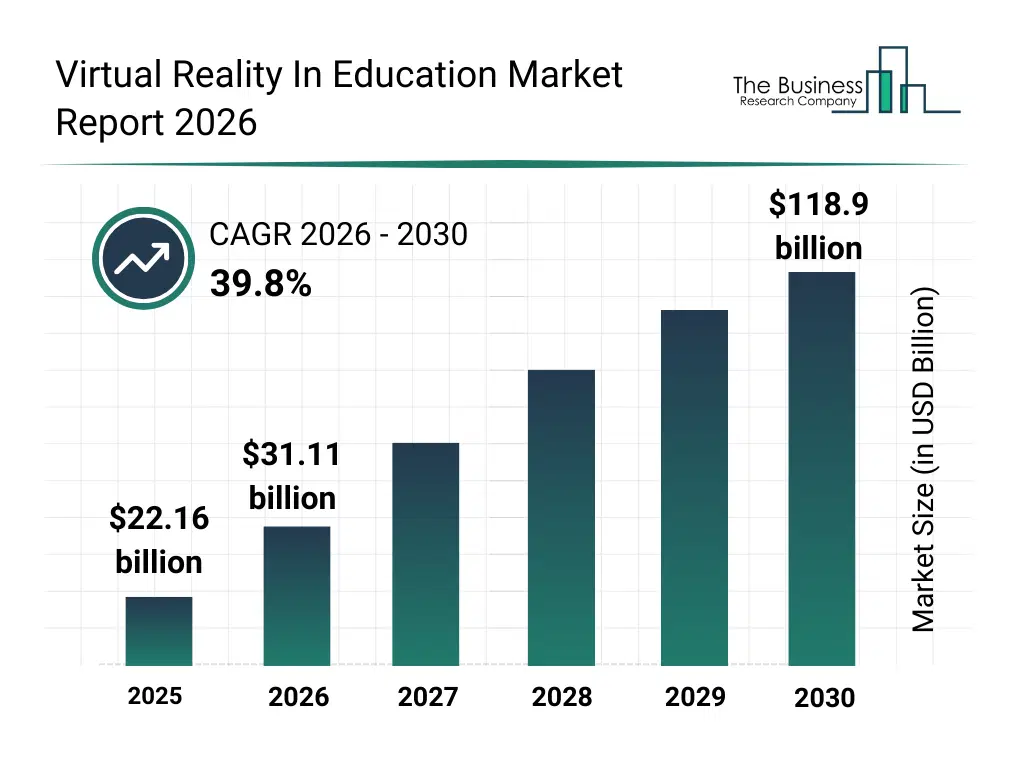
What Is The Virtual Reality In Education Market Size and Share 2026?
The virtual reality in education market size has grown exponentially in recent years. It will grow from $22.16 billion in 2025 to $31.11 billion in 2026 at a compound annual growth rate (CAGR) of 40.4%. The growth in the historic period can be attributed to increasing adoption of digital learning platforms, rising demand for interactive educational tools, expansion of e-learning infrastructure, availability of affordable vr hardware, growing focus on student engagement.What Is The Virtual Reality In Education Market Growth Forecast?
The virtual reality in education market size is expected to see exponential growth in the next few years. It will grow to $118.9 billion in 2030 at a compound annual growth rate (CAGR) of 39.8%. The growth in the forecast period can be attributed to increasing investments in immersive education technologies, rising demand for remote and hybrid learning models, expansion of vr content libraries for education, growing use of simulation-based training, increasing institutional spending on edtech infrastructure. Major trends in the forecast period include increasing adoption of immersive learning environments, rising use of vr-based skill training modules, growing integration of vr in stem education, expansion of remote and virtual classrooms, enhanced focus on experiential learning tools.
Global Virtual Reality In Education Market Segmentation
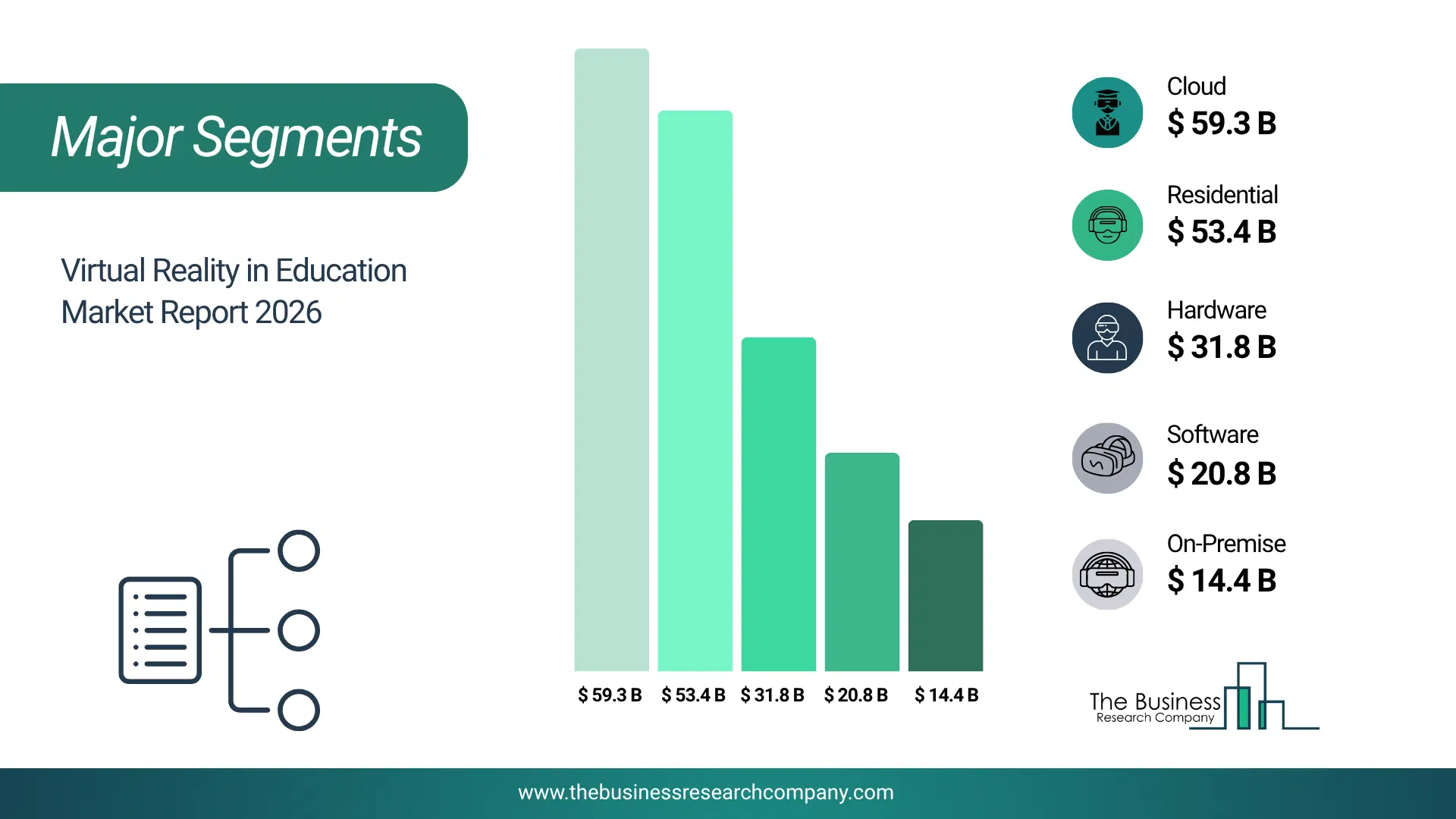
1) By Component: Hardware, Solutions And Software 2) By Deployment: Cloud, On-Premises 3) By Application: Academic And Training Institutions, Other Applications Subsegments: 1) By Hardware: VR Headsets, Motion Controllers, Haptic Feedback Devices, Tracking Sensors 2) By Solutions And Software: Immersive Learning Platforms, Simulation And Training Software, Content Creation Tools, Classroom Management And Analytics Software The top segments in the virtual reality in education market will be: • Residential will reach $53410.53 Million by 2030. • Cloud will reach $59357.47 Million by 2030. • Hardware will reach $31819.17 Million by 2030. • On-Premise will reach $14446.1 Million by 2030. • Software will reach $20795.8 Million by 2030.What Is The Driver Of The Virtual Reality In Education Market?
The increasing internet penetration is expected to propel the growth of virtual reality in the education market going forward. Internet penetration refers to the percentage of a population that has access to and regularly uses the internet. Increasing internet penetration is due to the expansion of network infrastructure, which improves connectivity by making internet access available to more people across urban and rural areas. Internet penetration drives the adoption of virtual reality in education by providing widespread, high-speed connectivity that enables seamless access to immersive learning experiences and interactive digital classrooms. For instance, in 2023, according to the Government of Canada, a Canada-based federal administration, by 2026, high-speed Internet access in Canada is projected to reach 98% of the population. This will further increase to 100% by 2030, achieving full Internet penetration nationwide. Furthermore, according to the International Telecommunication Union (ITU), a Switzerland-based agency for information and communication technologies, in 2022, global Internet use reached 5.1 billion people, accounting for 65% of the population. By 2023, this increased to 5.4 billion, representing 67% Internet penetration worldwide. Therefore, the increasing internet penetration is driving the growth of virtual reality in the education market.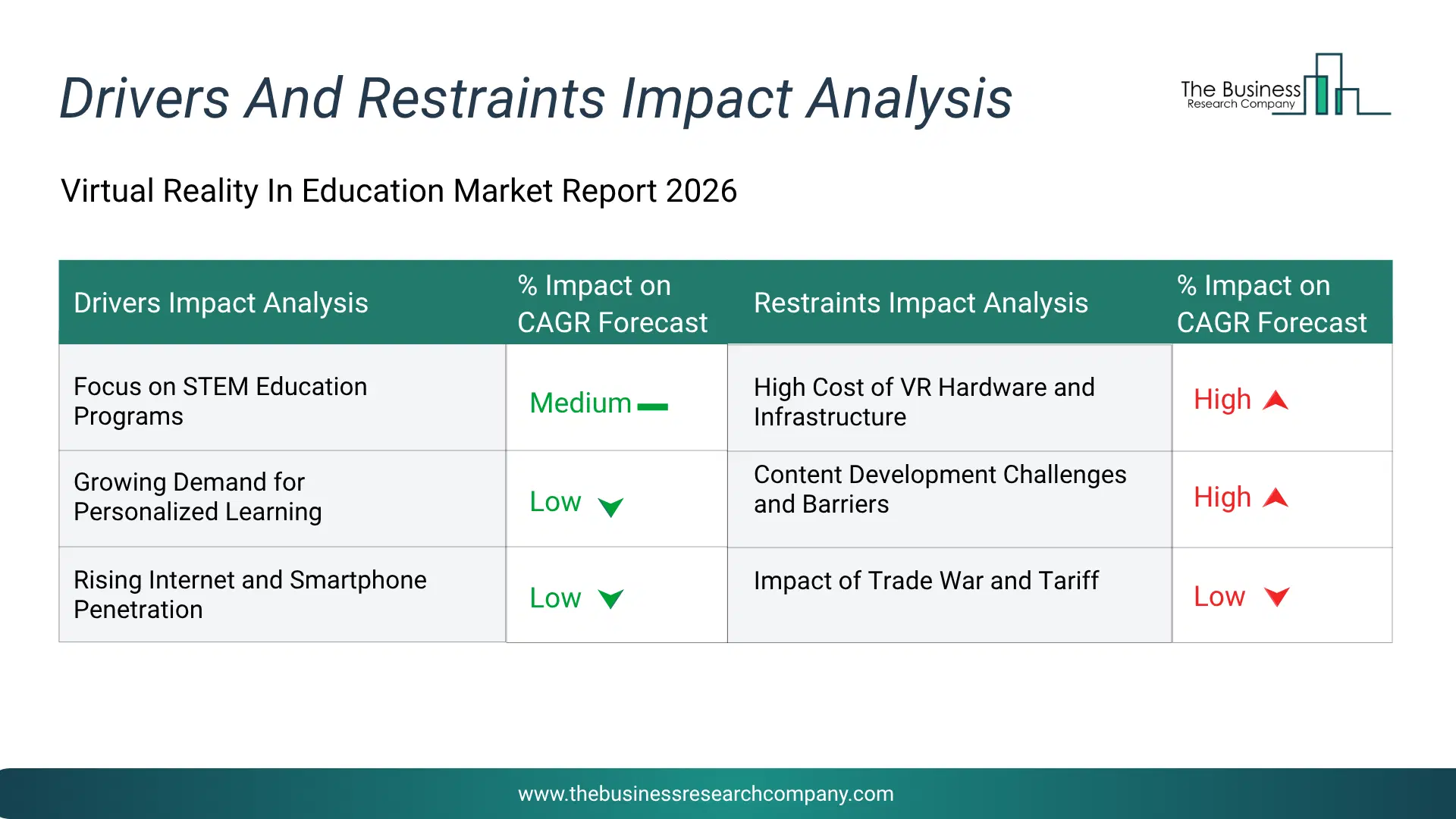
Infographic Chart Showing Key Market Drivers Analysis And Restraints For Virtual Reality In Education Market
The chart presents an impact analysis of key drivers and restraints, quantifying their relative influence on the market's growth rate and helping assess the balance between growth enablers and limiting factors. This chart offers a high-level perspective; the full report contains more detailed insights.
How Will The Drivers Impact Growth In The Global Virtual Reality In Education Market?
• Focus on STEM Education Programs (Medium) – During the forecast period, focus on science, technology, engineering and mathematics (stem) education programs is expected to be a key driver of the growth of the virtual reality in education market in the forecast period. as schools, universities and training institutions prioritize science, technology, engineering and mathematics skills, vr will emerge as a powerful instructional tool that can bridge the gap between theoretical learning and practical application. many stem topics involve abstract, technical, or hazardous concepts that are difficult to visualize or replicate in traditional classroom settings. vr enables immersive experimentation, 3d visualization and interactive simulations that enhance comprehension of complex principles while reducing dependence on expensive laboratory equipment or physical resources. this alignment between stem education needs and vr’s inherent strengths will encourage institutions to adopt vr-based labs and experiential modules as part of their core curriculum. as a result, focus on science, technology, engineering and mathematics (stem) education programs is anticipated to contributing to a 1.5% annual growth in the market. • Growing Demand for Personalized Learning (Low) – During the forecast period, the growing demand for personalized learning will propel the growth of the virtual reality in education market. vr’s ability to deliver adaptive learning pathways, real-time feedback and highly customizable experiences makes it well-suited for modern pedagogical models that prioritize learner autonomy and differentiated instruction. through immersive environments, students can progress at their own pace, repeat tasks until mastery and receive contextual support, creating deeper engagement and more meaningful learning outcomes. educators benefit from analytics-driven insights that help them monitor performance, identify gaps and personalize intervention strategies more effectively. consequently, growing demand for personalized learning is projected to contributing to a 1.0% annual growth in the market. • Rising Internet and Smartphone Penetration (Low) – During the forecast period, the rising internet and smartphone penetration will propel the growth of the virtual reality in education market. as more households, schools and training centers gain stable connectivity, vr solutions become easier to deploy, update and scale, especially when delivered through cloud-based platforms or mobile-powered headsets. enhanced internet penetration also supports the integration of real-time collaboration features, interactive content streaming and device management systems, improving the usability and reach of virtual learning environments. furthermore, stronger digital infrastructure creates opportunities for low-cost vr experiences using mobile vr devices, which can expand adoption beyond affluent institutions to more diverse regions and communities. therefore, rising internet and smartphone penetration is projected to contributing to a 0.8% annual growth in the market. • Increase in Specialized Programs and Curricula (Low) – During the forecast period, increase in specialized programs and curricula is expected to be a key driver of the growth of the virtual reality in education market in the forecast period. these programs often require learners to acquire practical competencies, perform technical procedures, or experience industry-specific environments that are difficult to replicate physically due to cost, safety, or accessibility limitations. vr enables institutions to incorporate realistic simulations, scenario-based training and virtual practice modules that mirror real-world tasks, making specialized programs more effective, scalable and accessible. as labor markets evolve and demand rises for job-ready graduates with applied skills, educational institutions will increasingly integrate vr to enrich their specialized curricula and differentiate their offerings. the increase in specialized programs and curricula growth contribution during the forecast period in 2025 is 0.5%.How Will The Restraints Impact Growth In The Global Virtual Reality In Education Market?
• High Cost of VR Hardware and Infrastructure (Medium) – During the forecast period, high cost of vr hardware and infrastructure is restricting the growth of the virtual reality in education market during the forecast period. many educational institutions operate within strict budget constraints and investing in vr headsets, compatible computers, motion controllers, networking upgrades and classroom integration systems can be financially challenging. beyond the initial purchase, institutions must also account for ongoing expenses such as device maintenance, replacement cycles, software licensing, teacher training and dedicated it (information technology) support. these cumulative costs create barriers for widespread adoption, particularly in public school systems and institutions in developing regions where budgetary resources are already stretched. growth affected by high cost of vr hardware and infrastructure across regions during the forecast period in 2025 is -3.0%. • Content Development Challenges and Barriers (Low) – During the forecast period, content development challenges and barriers is restricting the growth of the virtual reality in education market during the forecast period. developing immersive educational modules requires specialized skills in 3d design, instructional design, animation and subject-matter expertise, making the process expensive and time-intensive. many institutions also require content tailored to specific curricula, learning objectives, or regional academic standards, further complicating the development pipeline. additionally, compatibility issues between vr platforms and varying hardware ecosystems can limit content interoperability, reducing the usability of existing modules. these barriers slow down the creation of comprehensive content libraries, leading to fragmented offerings and inconsistent learning experiences. growth affected by content development challenges and barriers across regions during the forecast period in 2025 is -2.5% • Impact of Trade War and Tariff (Low) – During the forecast period, the impact of the trade war and tariffs restricting the growth of the virtual reality in education market during the forecast period. vr devices depend heavily on global supply chains for semiconductors, sensors, displays and other components, many of which are sourced from regions affected by trade restrictions. tariffs raise the cost of importing these components and finished products, directly increasing the price of vr headsets and related educational tools. this inflates institutional procurement budgets and forces schools to delay or scale back technology adoption. furthermore, trade uncertainties disrupt supply chain stability, extend lead times and make long-term planning difficult for both device manufacturers and educational institutions. growth affected by trade war and tariffs across regions during the forecast period in 2025 is -0.3%.Key Players In The Global Virtual Reality In Education Market
Major companies operating in the virtual reality in education market are Google LLC; Microsoft Corporation; Facebook Technologies LLC; HTC Corporation; Unimersiv; Samsung Electronics Co Ltd.; Lenovo Limited; Sony Corporation; Alchemy Immersive; Veative Labs Pvt Ltd.; VR Education Holdings plc; Schell Games LLC; Cornerstone OnDemand Inc.; EON Reality Inc.; Immersive VR Education Limited; ThingLink Incorporated; Nearpod Inc.; Filament Games LLC; Foundry 10; Labster Inc.; VictoryXR Inc.; Engage XR; Pearson Immersive; VirtualSpeech Limited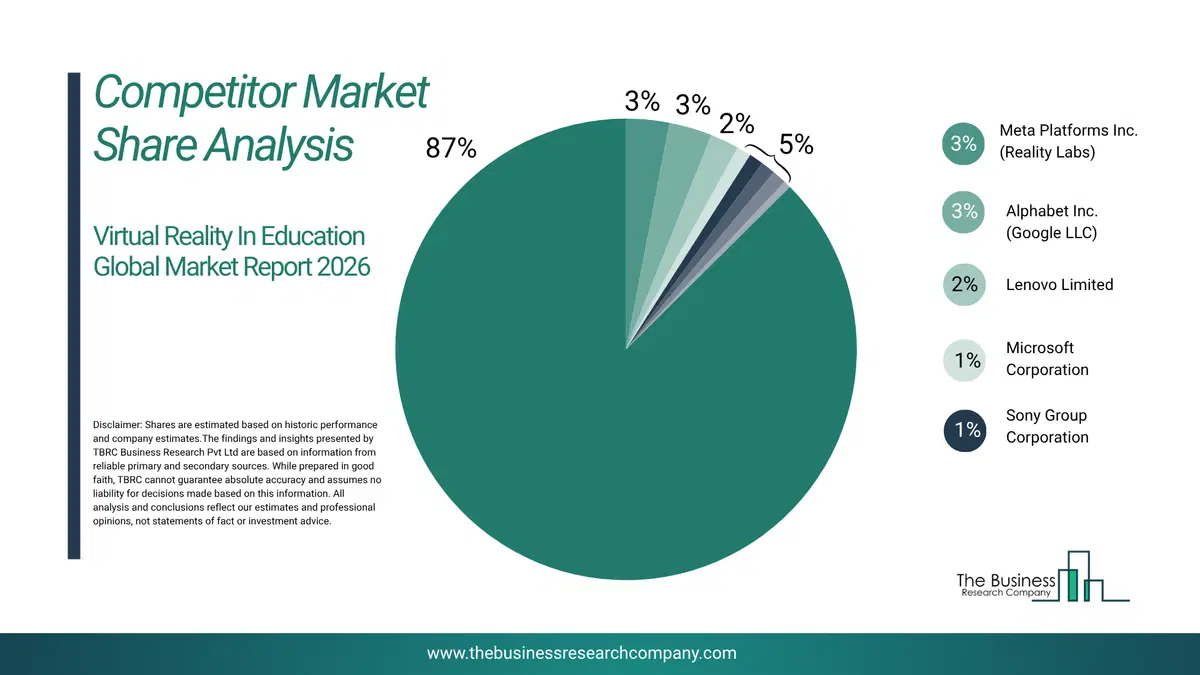
This chart is for illustrative purposes; the full report includes a detailed competitor analysis and comprehensive overview of the top 10 companies in the market.
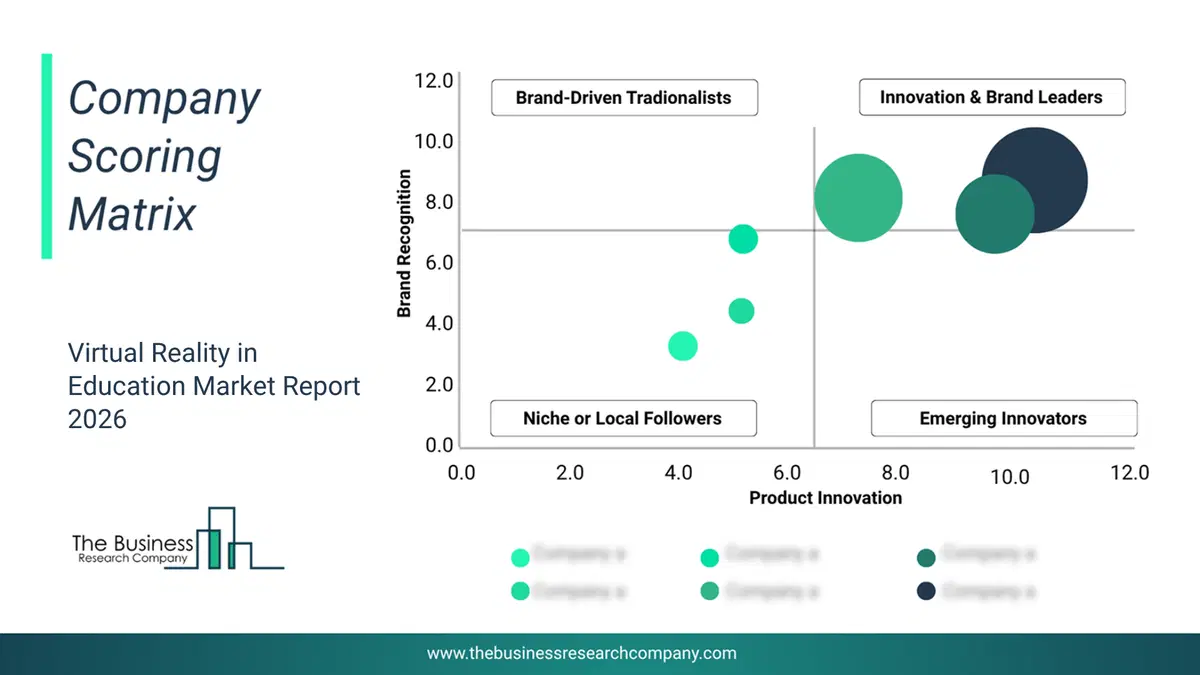
This chart maps companies by product innovation and brand strength, with bubble size indicating relative revenue, helping identify market leaders, challengers, and niche players. This is an illustrative chart; the full report provides a complete and accurate competitive analysis.
Global Virtual Reality In Education Market Trends and Insights
Major companies operating in the virtual reality in education market are focusing on developing innovative solutions, such as VR metaverse platforms, to enhance interactive and experiential learning. VR metaverse platforms are digital environments that combine virtual reality and interactive 3D spaces, allowing users to learn, collaborate, and engage in immersive experiences. For instance, in March 2025, the Indian Institute of Technology Guwahati, an India-based public technical university, launched Gyandhara, the country’s first VR-based metaverse platform specifically designed for school education. The platform offers immersive, interactive 3D learning environments that help students understand and engage with complex subjects such as mathematics, science, and social studies in their local languages. It promotes creativity, critical thinking, and real-time collaboration by enabling communication and teamwork within virtual classrooms. Additionally, Gyandhara provides a seamless, interconnected educational experience, allowing students to transition effortlessly between different subjects and practical simulations, transforming traditional learning into an experiential journey.What Are Latest Mergers And Acquisitions In The Virtual Reality In Education Market?
In February 2024, the National Board of Medical Examiners (NBME), a US-based non-profit that develops and manages assessments for student physicians, acquired MedVR Education for an undisclosed amount. Through this acquisition, the National Board of Medical Examiners aims to enhance its capabilities in developing innovative tools and assessments for medical education. The acquisition of MedVR Education combines NBME's expertise in psychometrics and test development with MedVR’s simulation-based learning technology, creating opportunities for next-generation tools that support learners throughout their medical education journey. MedVR Education is a US-based company dedicated to utilizing virtual reality in the education sector to revolutionize medical training and enhance student engagement.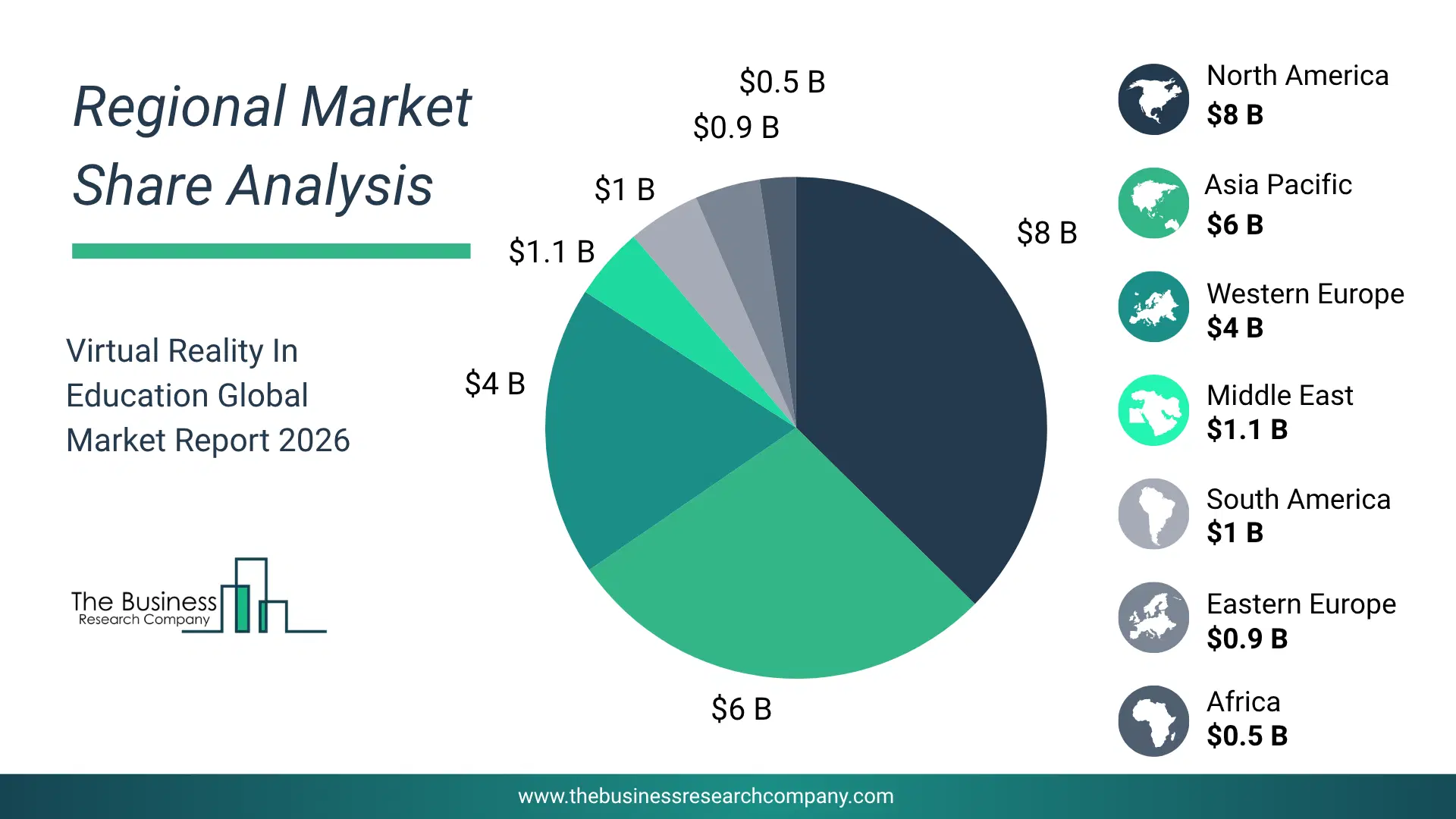
Regional Insights
North America was the largest region in the virtual reality in education market in 2025. The regions covered in this market report are Asia-Pacific, South East Asia, Western Europe, Eastern Europe, North America, South America, Middle East, Africa. The countries covered in this market report are Australia, Brazil, China, France, Germany, India, Indonesia, Japan, Taiwan, Russia, South Korea, UK, USA, Canada, Italy, SpainWhat Defines the Virtual Reality In Education Market?
The virtual reality in the education market includes revenues earned by entities offering hardware and software in the education industry that have the potential to transform the theoretical aspects in books to reality using virtual reality features. Virtual reality is a computer-enabled simulation that is presented using projectors and computer programming. Virtual reality in education is being applied in all levels of education today including K-12, higher education, and vocational training. Values in this market are ‘factory gate’ values, that is the value of goods sold by the manufacturers or creators of the goods, whether to other entities (including downstream manufacturers, wholesalers, distributors and retailers) or directly to end customers. The value of goods in this market includes related services sold by the creators of the goods.How is Market Value Defined and Measured?
The market value is defined as the revenues that enterprises gain from the sale of goods and/or services within the specified market and geography through sales, grants, or donations in terms of the currency (in USD unless otherwise specified). The revenues for a specified geography are consumption values that are revenues generated by organizations in the specified geography within the market, irrespective of where they are produced. It does not include revenues from resales along the supply chain, either further along the supply chain or as part of other products.
This chart presents market attractiveness based on a quantitative evaluation of growth, competition, strategic alignment, and risk, offering a clear view of opportunity areas for decision-making. This chart is for illustrative purposes; the full report contains the complete analysis.

This chart highlights the Total Addressable Market (TAM) by estimating the maximum revenue opportunity using an assumption-driven approach, supporting strategic planning and opportunity sizing across markets. The chart is illustrative; the full report provides a more comprehensive analysis.
What Key Data and Analysis Are Included in the Virtual Reality In Education Market Report 2026?
The virtual reality in education market research report is one of a series of new reports from The Business Research Company that provides market statistics, including industry global market size, regional shares, competitors with the market share, detailed market segments, market trends and opportunities, and any further data you may need to thrive in the virtual reality in education industry. The market research report delivers a complete perspective of everything you need, with an in-depth analysis of the current and future state of the industry.Virtual Reality In Education Market Report Forecast Analysis
| Report Attribute | Details |
|---|---|
| Market Size Value In 2026 | $31.11 billion |
| Revenue Forecast In 2030 | $118.9 billion |
| Growth Rate | CAGR of 40.4% from 2026 to 2030 |
| Base Year For Estimation | 2025 |
| Actual Estimates/Historical Data | 2020-2025 |
| Forecast Period | 2026 - 2030 - 2035 |
| Market Representation | Revenue in USD Billion and CAGR from 2026 to 2030 |
| Segments Covered | Component, Deployment, Application |
| Regional Scope | Asia-Pacific, Western Europe, Eastern Europe, North America, South America, Middle East, Africa |
| Country Scope | The countries covered in the report are Australia, Brazil, China, France, Germany, India, Indonesia, Japan, Taiwan, Russia, South Korea, UK, USA, Canada, Italy, Spain. |
| Key Companies Profiled | Google LLC; Microsoft Corporation; Facebook Technologies LLC; HTC Corporation; Unimersiv; Samsung Electronics Co Ltd.; Lenovo Limited; Sony Corporation; Alchemy Immersive; Veative Labs Pvt Ltd.; VR Education Holdings plc; Schell Games LLC; Cornerstone OnDemand Inc.; EON Reality Inc.; Immersive VR Education Limited; ThingLink Incorporated; Nearpod Inc.; Filament Games LLC; Foundry 10; Labster Inc.; VictoryXR Inc.; Engage XR; Pearson Immersive; VirtualSpeech Limited |
| Customization Scope | Request for Customization |
| Pricing And Purchase Options | Explore Purchase Options |