
Virtual Reality Therapy Hardware Market Report 2026
Global Outlook – By Product Type (Head-Mounted Displays, Motion Tracking Devices, Haptic Feedback Devices), By Distribution Channel (Direct Sales, Online Retail, Specialty Stores, Other Distribution Channels), By Application (Mental Health, Physical Rehabilitation, Pain Management, Phobia Treatment, Other Applications), By End-User (Hospitals And Clinics, Rehabilitation Centers, Research And Academic Institutes, Other End-Users) – Market Size, Trends, Strategies, and Forecast to 2030
Virtual Reality Therapy Hardware Market Overview
• Virtual Reality Therapy Hardware market size has reached to $1.87 billion in 2025 • Expected to grow to $4.59 billion in 2030 at a compound annual growth rate (CAGR) of 19.6% • Growth Driver: The Rising Mental Disorders Is Fueling The Growth Of The Market Due To Increasing Demand For Accessible And Effective Therapeutic Interventions • Market Trend: Virtual Reality Therapy Gains Momentum With New Reimbursement Breakthrough Approval • North America was the largest region in 2025.What Is Covered Under Virtual Reality Therapy Hardware Market?
Virtual reality therapy hardware (VRTH) refers to physical devices designed to create immersive virtual environments that facilitate therapeutic interventions. These systems actively engage users through visual, auditory, and sensory feedback to support rehabilitation and cognitive training. VRTH enhances treatment effectiveness by providing controlled, repeatable, and interactive experiences. Its key advantage lies in delivering personalized therapy in a safe and measurable manner. The main product types of virtual reality therapy hardware are head-mounted displays, motion tracking devices, haptic feedback devices, virtual reality (VR) cameras, and others. Head-mounted displays (HMDs) are wearable devices that provide immersive visual and auditory experiences to support therapeutic interventions in virtual reality. The distribution channels include direct sales, online retail, specialty stores, and others, and the various applications cover mental health, physical rehabilitation, pain management, phobia treatment, and others and are used by several end-users, including hospitals and clinics, rehabilitation centers, research and academic institutes, and others.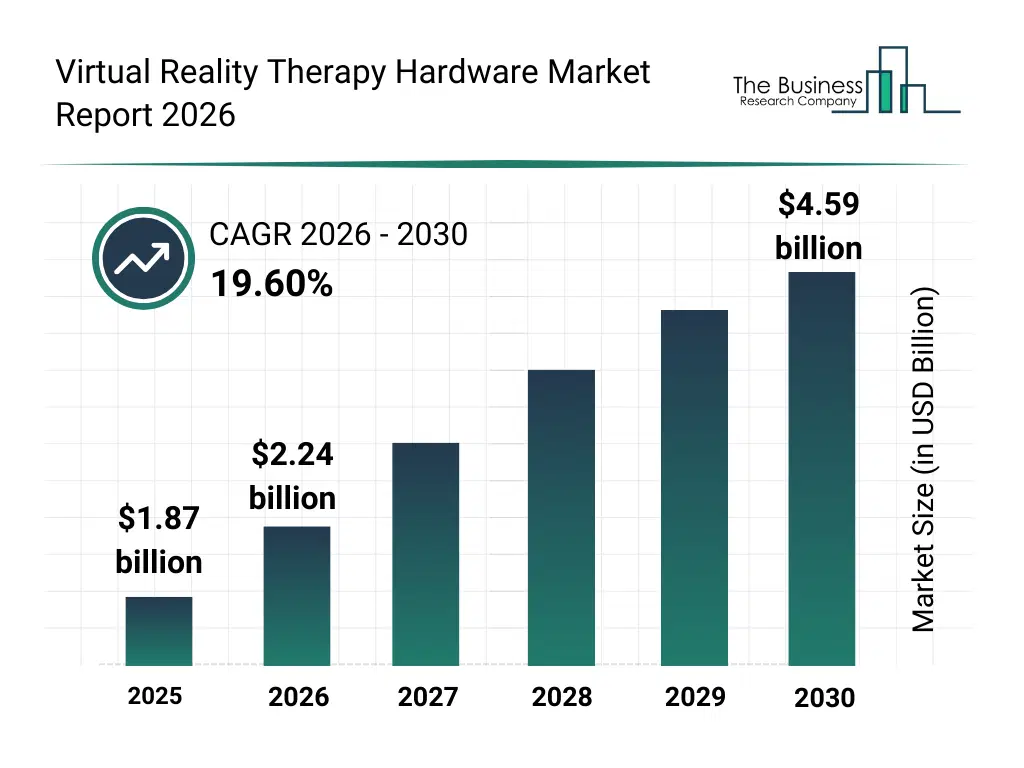
What Is The Virtual Reality Therapy Hardware Market Size and Share 2026?
The virtual reality therapy hardware market size has grown rapidly in recent years. It will grow from $1.87 billion in 2025 to $2.24 billion in 2026 at a compound annual growth rate (CAGR) of 19.9%. The growth in the historic period can be attributed to mental health burden growth, rehabilitation therapy demand, vr hardware cost reduction, clinical pilot programs, digital therapy validation.What Is The Virtual Reality Therapy Hardware Market Growth Forecast?
The virtual reality therapy hardware market size is expected to see rapid growth in the next few years. It will grow to $4.59 billion in 2030 at a compound annual growth rate (CAGR) of 19.6%. The growth in the forecast period can be attributed to telehealth expansion, vr content personalization, insurance coverage expansion, aging population rehabilitation needs, hardware innovation. Major trends in the forecast period include mental health vr therapy, physical rehabilitation gamification, pain distraction therapy, remote therapy sessions, personalized therapy environments.
Global Virtual Reality Therapy Hardware Market Segmentation
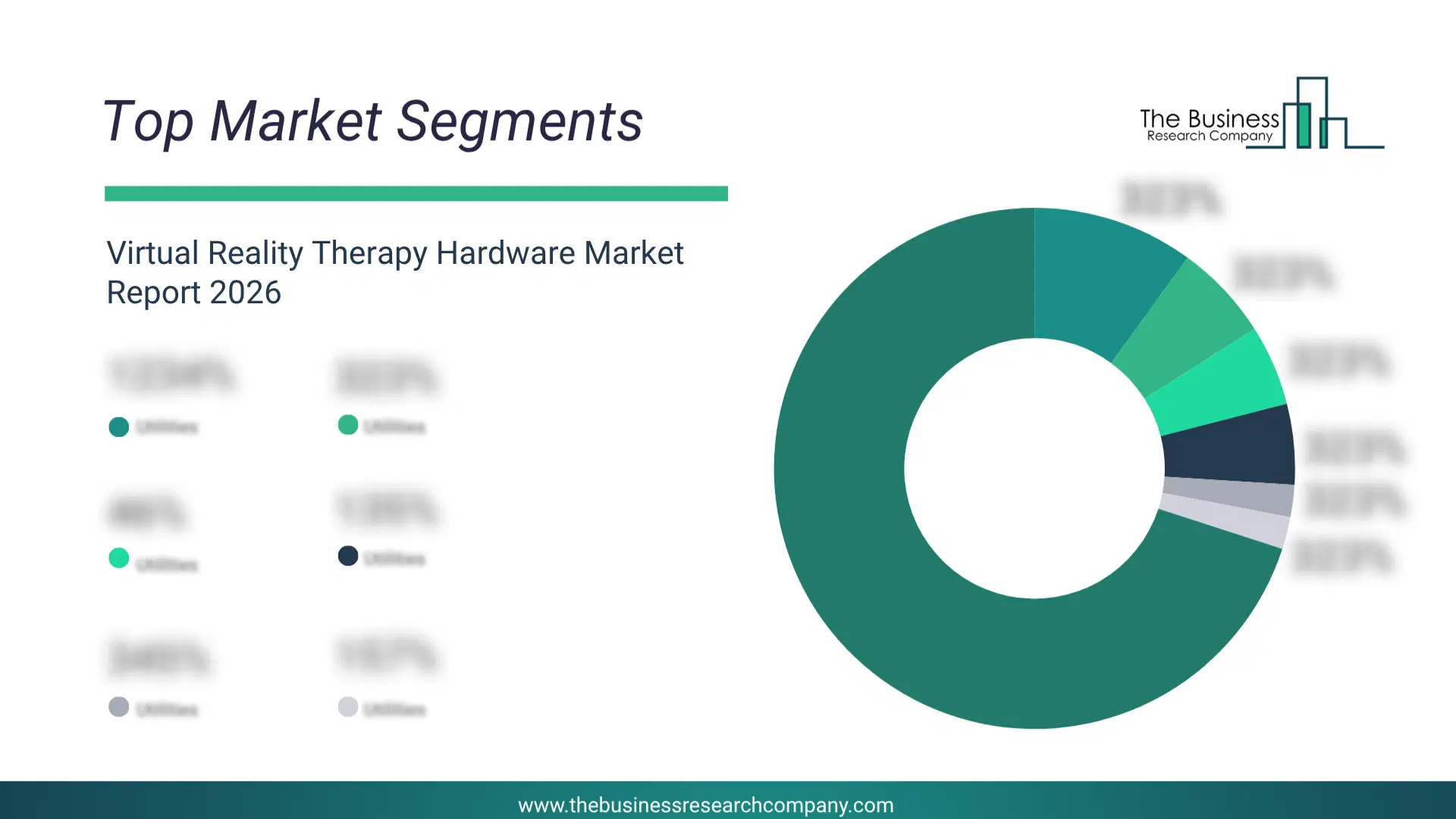
1) By Product Type: Head-Mounted Displays, Motion Tracking Devices, Haptic Feedback Devices 2) By Distribution Channel: Direct Sales, Online Retail, Specialty Stores, Other Distribution Channels 3) By Application: Mental Health, Physical Rehabilitation, Pain Management, Phobia Treatment, Other Applications 4) By End-User: Hospitals And Clinics, Rehabilitation Centers, Research And Academic Institutes, Other End-Users Subsegments: 1) By Head-Mounted Displays (HMDs): Standalone Head-Mounted Displays (HMDs), Tethered Head-Mounted Displays (HMDs), Mixed Reality Head-Mounted Displays (HMDs) 2) By Motion Tracking Devices: Optical Motion Trackers, Inertial Motion Trackers 3) By Haptic Feedback Devices: Gloves With Haptic Feedback, Suits With Haptic Feedback, Handheld Haptic Controllers, Exoskeleton-based Haptic DevicesWhat Is The Driver Of The Virtual Reality Therapy Hardware Market?
The rising mental disorders are expected to propel the growth of the virtual reality therapy hardware market going forward. Mental disorders are conditions that affect a person's thinking, feeling, behavior, or mood and can substantially interfere with daily functioning and quality of life. The growing mental disorders are linked to increasing social isolation, which elevates stress and anxiety, harming emotional well-being and triggering mental health issues. Rising mental health conditions boost demand for virtual reality therapy hardware, as these immersive technologies provide effective, accessible treatment alternatives that can deliver exposure therapy, mindfulness training, and therapeutic interventions in controlled virtual environments. For instance, in May 2024, according to the American Psychiatric Association, a US-based professional organization of psychologists, 43% of adults reported feeling more anxious compared to 37% in 2023 and 32% in 2022, indicating a consistent increase in anxiety levels. Therefore, rising mental disorders are driving the growth of the virtual reality therapy hardware industry.Key Players In The Global Virtual Reality Therapy Hardware Market
Major companies operating in the virtual reality therapy hardware market are Apple Inc, Meta Platforms Inc, HTC Corporation, Sony Group Corporation, Samsung Electronics Co Ltd, Microsoft Corporation, Varjo Technologies Oy, Pico Interactive Inc, Magic Leap Inc, MindMaze SA, XRHealth Inc, AppliedVR Inc, MyndVR Inc, NuEyes Technologies Inc, Looxid Labs Inc, OpenBCI Inc, Karuna Labs Inc, HaptX Inc, bHaptics Inc, Virtuix Holdings Inc, Teslasuit Inc, Ultraleap Ltd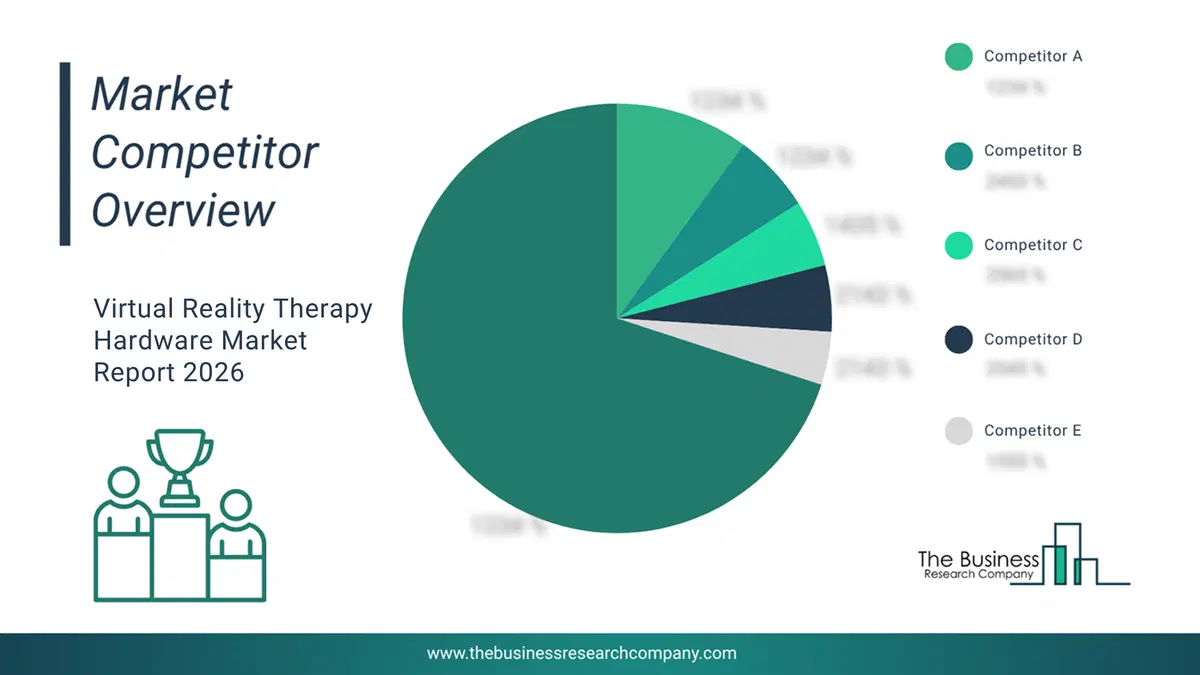
This chart is for illustrative purposes; the full report includes a detailed competitor analysis and comprehensive overview of the top 10 companies in the market.
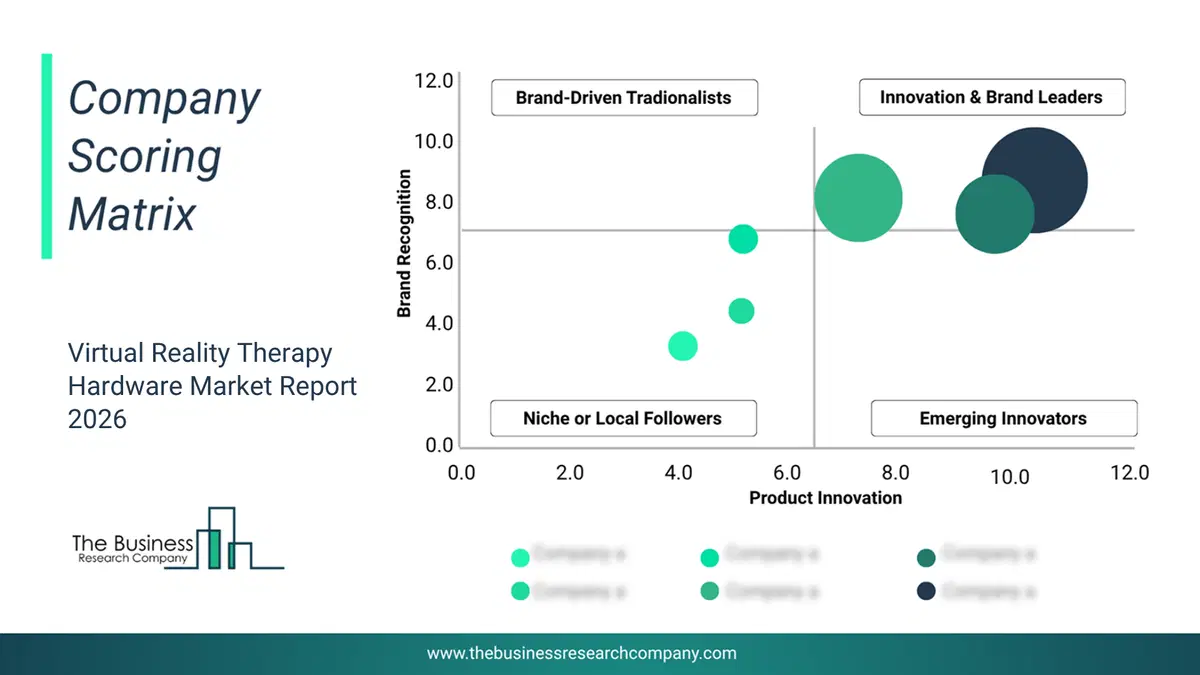
This chart maps companies by product innovation and brand strength, with bubble size indicating relative revenue, helping identify market leaders, challengers, and niche players. This is an illustrative chart; the full report provides a complete and accurate competitive analysis.
Global Virtual Reality Therapy Hardware Market Trends and Insights
Major companies operating in the virtual reality therapy hardware market are focusing on developing innovative advancements such as VR therapeutic devices to enhance patient access to clinically validated, non-pharmacological treatment modalities. A VR therapeutic device is a medical-grade virtual reality system designed to administer structured therapeutic interventions through immersive digital environments. For instance, in March 2023, AppliedVR, a US-based immersive therapeutics company, announced that its RelieVRx system had received a unique Healthcare Common Procedure Coding System Level II code. The system integrates virtual reality–based cognitive behavioral therapy with a dedicated device platform to offer an at-home, prescription treatment option for individuals with chronic lower back pain. Its formal classification as durable medical equipment creates a clearer reimbursement pathway, representing a significant advancement for the broader clinical adoption of virtual reality therapeutic hardware.What Are Latest Mergers And Acquisitions In The Virtual Reality Therapy Hardware Market?
In April 2023, XRHealth, a US-based manufacturer of virtual reality therapy hardware, merged with Amelia Virtual Care to transform healthcare through immersive XR therapeutics. The merger aims to consolidate leading XR or VR therapeutic solutions, combining physical and mental health treatments to expand patient reach. Amelia Virtual Care is a Spain-based provider of mental health services.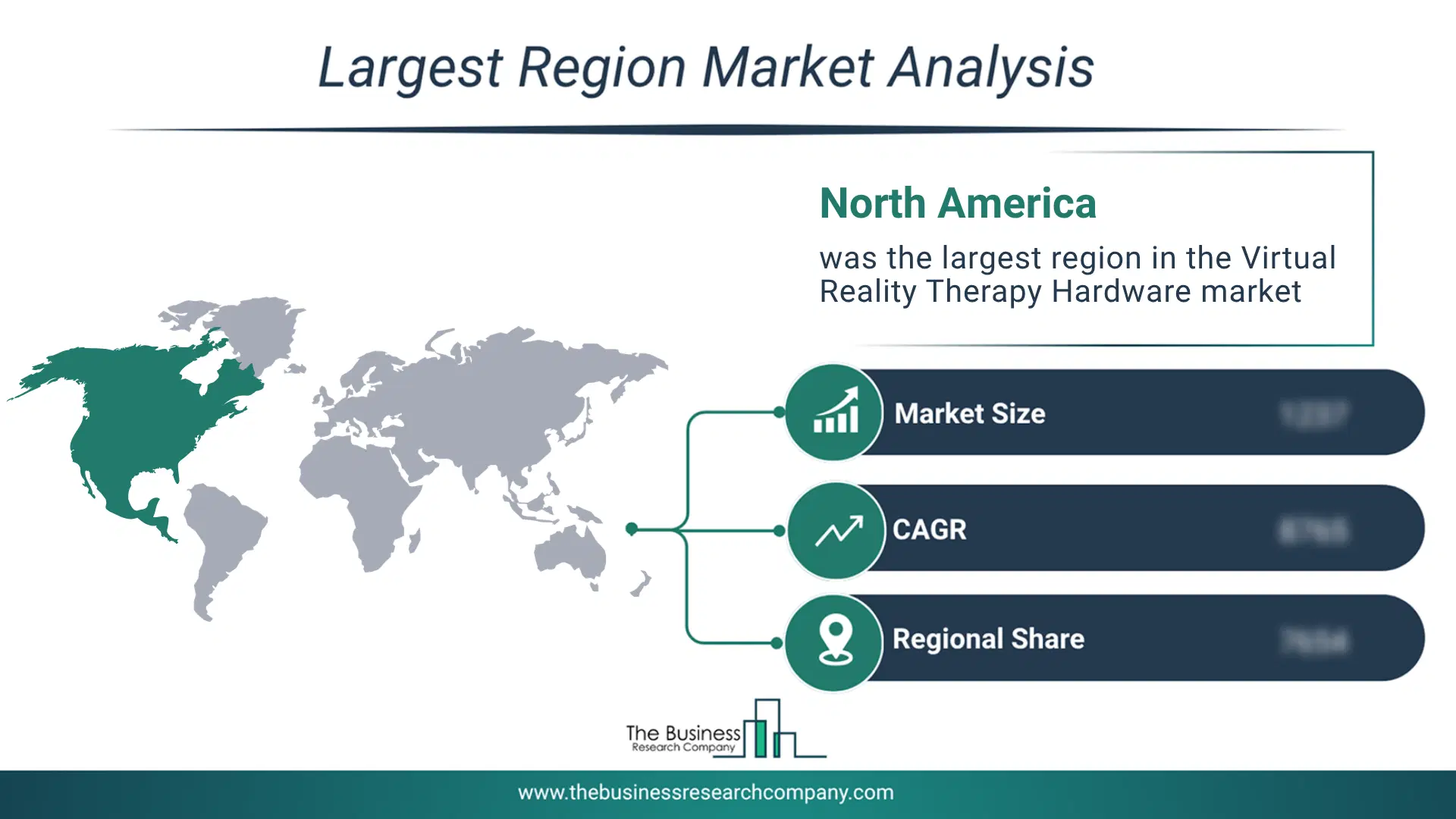
Regional Outlook
North America was the largest region in the virtual reality therapy hardware market in 2025. The regions covered in this market report are Asia-Pacific, South East Asia, Western Europe, Eastern Europe, North America, South America, Middle East, Africa. The countries covered in this market report are Australia, Brazil, China, France, Germany, India, Indonesia, Japan, Taiwan, Russia, South Korea, UK, USA, Canada, Italy, SpainWhat Defines the Virtual Reality Therapy Hardware Market?
The virtual reality therapy hardware market consists of sales of gesture tracking devices (GTD), projectors and display walls (PDW), treadmills and haptic gloves, virtual reality (VR) glasses, and virtual reality (VR) simulators. Values in this market are 'factory gate' values, that is, the value of goods sold by the manufacturers or creators of the goods, whether to other entities (including downstream manufacturers, wholesalers, distributors, and retailers) or directly to end customers. The value of goods in this market includes related services sold by the creators of the goods.How is Market Value Defined and Measured?
The market value is defined as the revenues that enterprises gain from the sale of goods and/or services within the specified market and geography through sales, grants, or donations in terms of the currency (in USD unless otherwise specified). The revenues for a specified geography are consumption values that are revenues generated by organizations in the specified geography within the market, irrespective of where they are produced. It does not include revenues from resales along the supply chain, either further along the supply chain or as part of other products.
This chart presents market attractiveness based on a quantitative evaluation of growth, competition, strategic alignment, and risk, offering a clear view of opportunity areas for decision-making. This chart is for illustrative purposes; the full report contains the complete analysis.

This chart highlights the Total Addressable Market (TAM) by estimating the maximum revenue opportunity using an assumption-driven approach, supporting strategic planning and opportunity sizing across markets. The chart is illustrative; the full report provides a more comprehensive analysis.
What Key Data and Analysis Are Included in the Virtual Reality Therapy Hardware Market Report 2026?
The virtual reality therapy hardware market research report is one of a series of new reports from The Business Research Company that provides market statistics, including industry global market size, regional shares, competitors with the market share, detailed market segments, market trends and opportunities, and any further data you may need to thrive in the virtual reality therapy hardware industry. The market research report delivers a complete perspective of everything you need, with an in-depth analysis of the current and future state of the industry.Virtual Reality Therapy Hardware Market Report Forecast Analysis
| Report Attribute | Details |
|---|---|
| Market Size Value In 2026 | $2.24 billion |
| Revenue Forecast In 2030 | $4.59 billion |
| Growth Rate | CAGR of 19.6% from 2026 to 2030 |
| Base Year For Estimation | 2025 |
| Actual Estimates/Historical Data | 2020-2025 |
| Forecast Period | 2026 - 2030 |
| Market Representation | Revenue in USD Billion and CAGR from 2026 to 2030 |
| Segments Covered | Product Type, Distribution Channel, Application, End-User |
| Regional Scope | Asia-Pacific, Western Europe, Eastern Europe, North America, South America, Middle East, Africa |
| Country Scope | The countries covered in the report are Australia, Brazil, China, France, Germany, India, Indonesia, Japan, Taiwan, Russia, South Korea, UK, USA, Canada, Italy, Spain. |
| Key Companies Profiled | Apple Inc, Meta Platforms Inc, HTC Corporation, Sony Group Corporation, Samsung Electronics Co Ltd, Microsoft Corporation, Varjo Technologies Oy, Pico Interactive Inc, Magic Leap Inc, MindMaze SA, XRHealth Inc, AppliedVR Inc, MyndVR Inc, NuEyes Technologies Inc, Looxid Labs Inc, OpenBCI Inc, Karuna Labs Inc, HaptX Inc, bHaptics Inc, Virtuix Holdings Inc, Teslasuit Inc, Ultraleap Ltd |
| Customization Scope | Request for Customization |
| Pricing And Purchase Options | Explore Purchase Options |