

Virtual Reality (VR) In Telerehabilitation Market Report 2026
Global Outlook – By Component (Hardware, Software, Services), By Rehabilitation (In-Person Rehabilitation, Remote Rehabilitation), By Application (Physical Rehabilitation, Neurological Rehabilitation, Cardiac Rehabilitation, Psychological Rehabilitation, Orthopedic Rehabilitation), By End-User (Healthcare Providers, Rehabilitation Centers, Homecare Settings, Fitness And Wellness Centers, Corporates) - Market Size, Trends, Strategies, and Forecast to 2030
Virtual Reality (VR) In Telerehabilitation Market Overview
• Virtual Reality (VR) In Telerehabilitation market size has reached to $0.98 billion in 2025 • Expected to grow to $2.67 billion in 2030 at a compound annual growth rate (CAGR) of 22% • Growth Driver: Rise In Telehealth And Remote Healthcare Services Fueling The Growth Of The Market Due To Increasing Demand For Convenient And Continuous Care • Market Trend: Ai-Powered Immersive Therapy Platforms Transform Personalized Remote Rehabilitation • North America was the largest region in 2025.What Is Covered Under Virtual Reality (VR) In Telerehabilitation Market?
Virtual reality (VR) in telerehabilitation refers to the use of immersive digital environments to deliver remote therapeutic exercises and monitor patient progress. It enables healthcare providers to conduct rehabilitation sessions virtually while capturing real-time performance data. By enhancing patient engagement and motivation, VR supports consistent practice and contributes to more effective recovery outcomes. The main components of virtual reality (VR) in telerehabilitation are hardware, software, and services. Hardware refers to physical devices such as head-mounted displays, motion sensors, and haptic systems that enable immersive therapy experiences. The rehabilitation types include in-person rehabilitation and remote rehabilitation for several applications such as physical rehabilitation, neurological rehabilitation, cardiac rehabilitation, psychological rehabilitation, and orthopedic rehabilitation, and the key end-users include healthcare providers, rehabilitation centers, homecare settings, fitness and wellness centers, and corporations.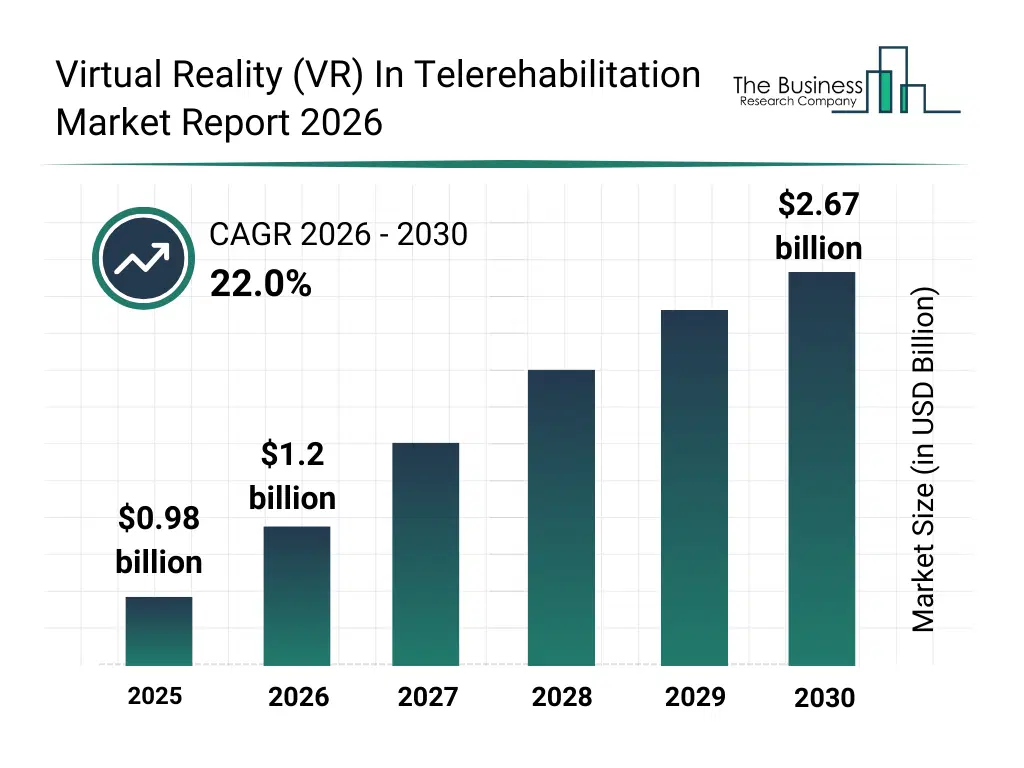
What Is The Virtual Reality (VR) In Telerehabilitation Market Size and Share 2026?
The virtual reality (vr) in telerehabilitation market size has grown exponentially in recent years. It will grow from $0.98 billion in 2025 to $1.2 billion in 2026 at a compound annual growth rate (CAGR) of 22.3%. The growth in the historic period can be attributed to expansion of telerehabilitation services, rising adoption of digital therapeutics, increasing focus on patient-centered care, availability of consumer vr hardware, growth of remote healthcare delivery.What Is The Virtual Reality (VR) In Telerehabilitation Market Growth Forecast?
The virtual reality (vr) in telerehabilitation market size is expected to see exponential growth in the next few years. It will grow to $2.67 billion in 2030 at a compound annual growth rate (CAGR) of 22.0%. The growth in the forecast period can be attributed to increasing investment in immersive healthcare technologies, rising demand for home-based rehabilitation solutions, expansion of ai-enabled therapy platforms, growing integration with wearable devices, increasing focus on outcome-based rehabilitation models. Major trends in the forecast period include increasing adoption of immersive remote rehabilitation programs, growing use of gamified therapy environments, rising integration of AI-based progress tracking, expansion of home-based vr therapy solutions, enhanced focus on patient engagement and adherence.
Global Virtual Reality (VR) In Telerehabilitation Market Segmentation
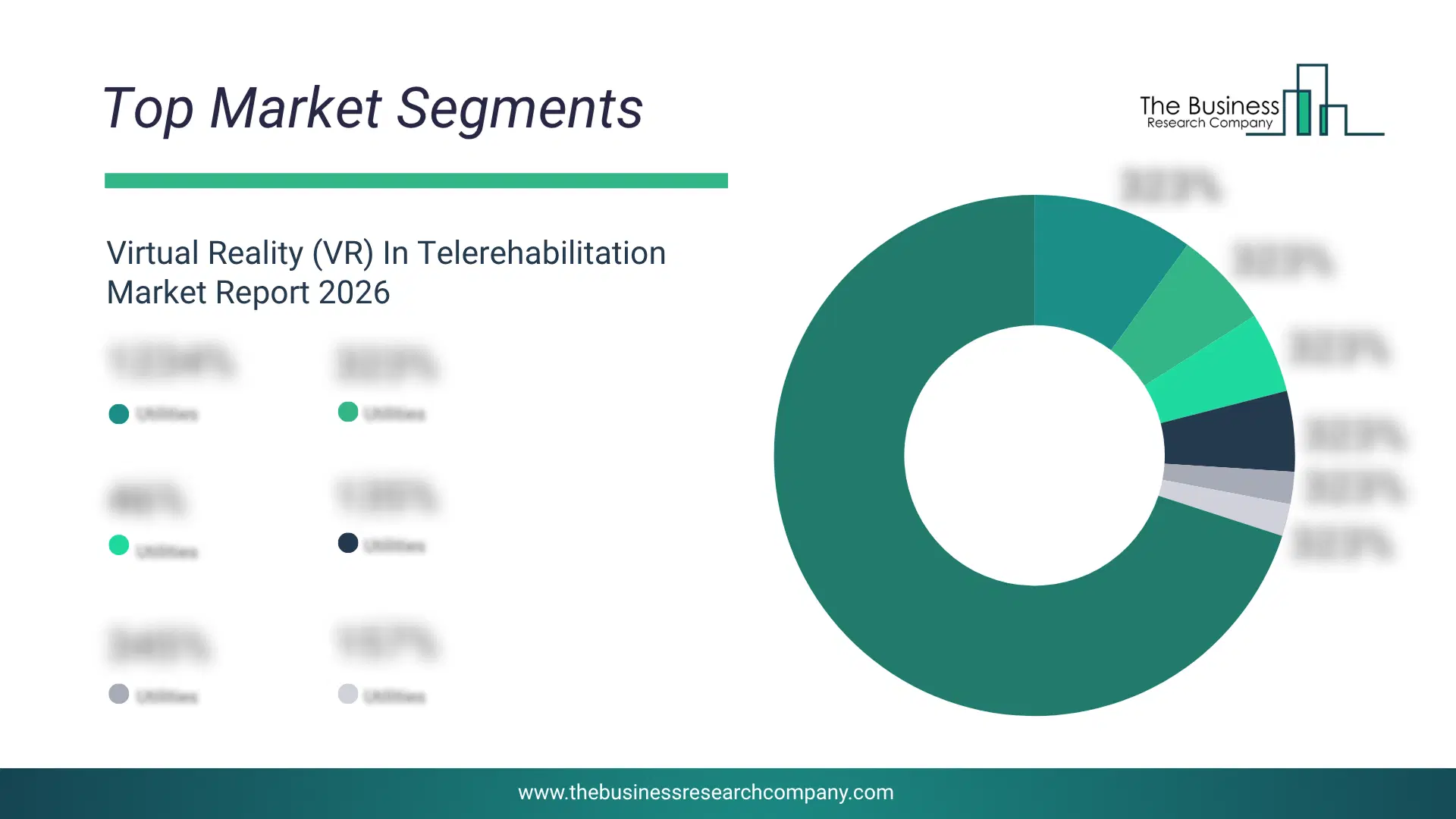
1) By Component: Hardware, Software, Services 2) By Rehabilitation: In-Person Rehabilitation, Remote Rehabilitation 3) By Application: Physical Rehabilitation, Neurological Rehabilitation, Cardiac Rehabilitation, Psychological Rehabilitation, Orthopedic Rehabilitation 4) By End-User: Healthcare Providers, Rehabilitation Centers, Homecare Settings, Fitness And Wellness Centers, Corporates Subsegments: 1) By Hardware: Head-Mounted Displays (HMDs), Motion Tracking Sensors, Haptic Feedback Devices, Virtual Reality (VR) Gloves, Virtual Reality (VR) Treadmills, Eye-Tracking Devices, Cameras And Depth Sensors, Computing And Graphics Processing Units (GPUs) 2) By Software: Immersive Virtual Reality (VR) Therapy Applications, Non-Immersive Virtual Reality (VR) Therapy Applications, Mixed Reality Therapy Applications, Artificial Intelligence (AI)-Based Therapy Modules, Gamified Rehabilitation Software, Patient Data Management And Analytics Platforms, Cloud-Based Therapy Software 3) By Services: Clinical Implementation Services, Remote Patient Monitoring Services, Maintenance And Support Services, Training And Education Services, Consultation And Integration ServicesWhat Is The Driver Of The Virtual Reality (VR) In Telerehabilitation Market?
The rise in adoption of telehealth and remote healthcare services is expected to propel the growth of the virtual reality (VR) in telerehabilitation market going forward. Telehealth and remote healthcare services refer to the delivery of clinical care to patients through digital and telecommunication technologies without requiring in-person visits. The adoption of telehealth is increasing as patients seek convenient home-based consultations and continuous monitoring that reduce travel, waiting times, and care interruptions. The virtual reality (VR) in telerehabilitation market supports this driver by enhancing remote rehabilitation therapy through immersive, interactive, and clinically guided VR environments that improve recovery outcomes. For instance, in August 2023, according to Vivalink, a US-based healthcare technology company, 81% of clinicians reported using remote patient monitoring (RPM) technologies in 2023, demonstrating strong and accelerating adoption of remote care tools. Therefore, the rise in adoption of telehealth and remote healthcare services is driving the growth of the virtual reality (VR) in telerehabilitation industry.Key Players In The Global Virtual Reality (VR) In Telerehabilitation Market
Major companies operating in the virtual reality (vr) in telerehabilitation market are Penumbra Inc., DIH Holding US Inc., MindMaze, Reflexion Interactive Technologies Inc., Saebo, VR Rehab Inc., CUREosity GmbH, InfiVR, SyncVR Medical, Rehametrics, GestureTek Health, Doctor Kinetic, Cognihab Inc., Neuro Rehab VR, Virtualware, Mice Labs, Evolv Rehabilitation Technologies, XR4REHAB, MIRA Rehab Limited, LiteGait.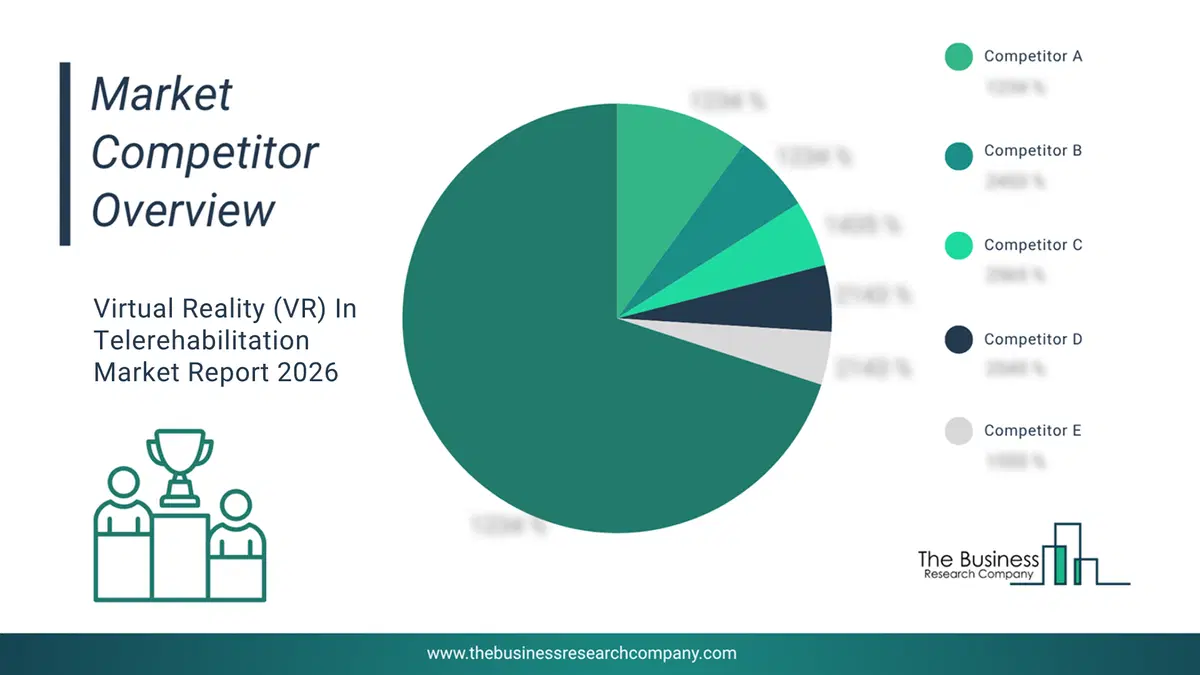
This chart is for illustrative purposes; the full report includes a detailed competitor analysis and comprehensive overview of the top 10 companies in the market.
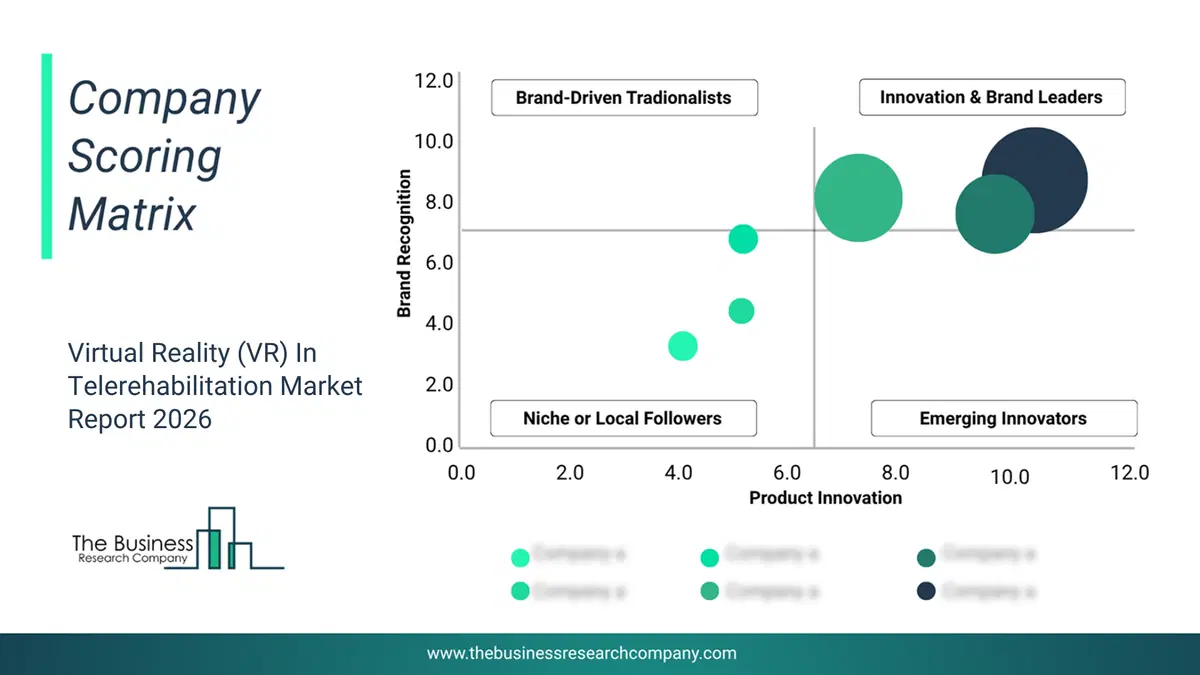
This chart maps companies by product innovation and brand strength, with bubble size indicating relative revenue, helping identify market leaders, challengers, and niche players. This is an illustrative chart; the full report provides a complete and accurate competitive analysis.
Global Virtual Reality (VR) In Telerehabilitation Market Trends and Insights
Major companies operating in the virtual reality (VR) telerehabilitation market are focusing on developing advanced solutions, such as AI-powered immersive therapy platforms, to deliver personalized, remote rehabilitation and cognitive care. AI-powered immersive therapy platforms are digital systems that combine virtual reality (VR) environments with artificial intelligence to create personalized, interactive therapy experiences for rehabilitation, mental health, or cognitive training. For instance, in November 2024, XRHealth Inc., a US-based digital therapeutics company, launched an AI-enhanced multidisciplinary extended reality (XR) therapeutic platform that integrates advanced artificial intelligence with immersive XR experiences to provide personalized and interactive therapeutic environments. The platform features an AI Generator Space that enables clinicians to create custom 360-degree therapeutic environments tailored to individual patient needs and includes dynamic avatars for enhanced patient interaction.What Are Latest Mergers And Acquisitions In The Virtual Reality (VR) In Telerehabilitation Market?
In April 2023, XRHealth, a US-based developer and operator of virtual treatment rooms, merged with Amelia Virtual Care to transform healthcare through immersive XR solutions for a healthier world. The merger aims to create the world’s largest XR therapeutics platform by combining expertise in virtual and augmented reality for physical and mental health. It expands global clinical accessibility and establishes itself as the leading XR/VR therapeutic provider with a comprehensive, end-to-end solution that enhances patient care and outcomes. Amelia Virtual Care is a Spain-based company that provides VR-based solutions for mental health and psychological therapy.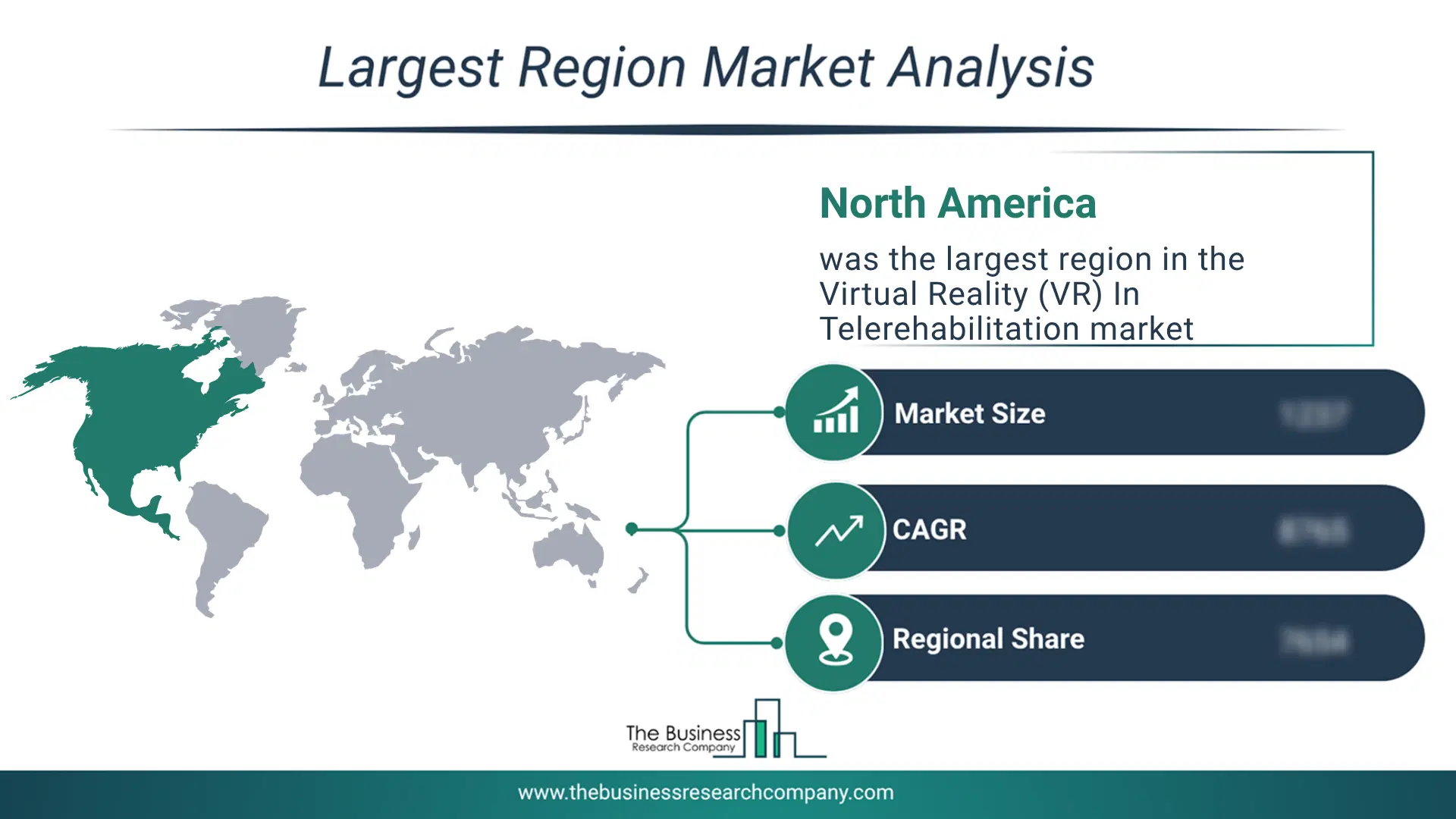
Regional Outlook
North America was the largest region in the virtual reality (VR) in telerehabilitation market in 2025. Asia-Pacific is expected to be the fastest-growing region in the forecast period. The regions covered in this market report are Asia-Pacific, South East Asia, Western Europe, Eastern Europe, North America, South America, Middle East, Africa. The countries covered in this market report are Australia, Brazil, China, France, Germany, India, Indonesia, Japan, Taiwan, Russia, South Korea, UK, USA, Canada, Italy, Spain.What Defines the Virtual Reality (VR) In Telerehabilitation Market?
The virtual reality (VR) in telerehabilitation market consists of revenues earned by entities by providing services such as remote therapy sessions, personalized exercise software, real-time performance monitoring, professional clinician training and certification, and clinical data analytics. The market value includes the value of related goods sold by the service provider or included within the service offering. The virtual reality (VR) in telerehabilitation market also includes sales of VR headsets and controllers, motion capture sensors, haptic feedback devices, specialized therapeutic content and game licenses and telehealth software platforms. Values in this market are ‘factory gate’ values, that is, the value of goods sold by the manufacturers or creators of the goods, whether to other entities (including downstream manufacturers, wholesalers, distributors, and retailers) or directly to end customers. The value of goods in this market includes related services sold by the creators of the goods.How is Market Value Defined and Measured?
The market value is defined as the revenues that enterprises gain from the sale of goods and/or services within the specified market and geography through sales, grants, or donations in terms of the currency (in USD unless otherwise specified). The revenues for a specified geography are consumption values that are revenues generated by organizations in the specified geography within the market, irrespective of where they are produced. It does not include revenues from resales along the supply chain, either further along the supply chain or as part of other products.
This chart presents market attractiveness based on a quantitative evaluation of growth, competition, strategic alignment, and risk, offering a clear view of opportunity areas for decision-making. This chart is for illustrative purposes; the full report contains the complete analysis.

This chart highlights the Total Addressable Market (TAM) by estimating the maximum revenue opportunity using an assumption-driven approach, supporting strategic planning and opportunity sizing across markets. The chart is illustrative; the full report provides a more comprehensive analysis.
What Key Data and Analysis Are Included in the Virtual Reality (VR) In Telerehabilitation Market Report 2026?
The virtual reality (vr) in telerehabilitation market research report is one of a series of new reports from The Business Research Company that provides market statistics, including industry global market size, regional shares, competitors with the market share, detailed market segments, market trends and opportunities, and any further data you may need to thrive in the virtual reality (vr) in telerehabilitation industry. The market research report delivers a complete perspective of everything you need, with an in-depth analysis of the current and future state of the industry.Virtual Reality (VR) In Telerehabilitation Market Report Forecast Analysis
| Report Attribute | Details |
|---|---|
| Market Size Value In 2026 | $1.2 billion |
| Revenue Forecast In 2030 | $2.67 billion |
| Growth Rate | CAGR of 22% from 2026 to 2030 |
| Base Year For Estimation | 2025 |
| Actual Estimates/Historical Data | 2020-2025 |
| Forecast Period | 2026 - 2030 |
| Market Representation | Revenue in USD Billion and CAGR from 2026 to 2030 |
| Segments Covered | Component, Rehabilitation, Application, End-User |
| Regional Scope | Asia-Pacific, Western Europe, Eastern Europe, North America, South America, Middle East, Africa |
| Country Scope | The countries covered in the report are Australia, Brazil, China, France, Germany, India, Indonesia, Japan, Taiwan, Russia, South Korea, UK, USA, Canada, Italy, Spain |
| Key Companies Profiled | Penumbra Inc., DIH Holding US Inc., MindMaze, Reflexion Interactive Technologies Inc., Saebo, VR Rehab Inc., CUREosity GmbH, InfiVR, SyncVR Medical, Rehametrics, GestureTek Health, Doctor Kinetic, Cognihab Inc., Neuro Rehab VR, Virtualware, Mice Labs, Evolv Rehabilitation Technologies, XR4REHAB, MIRA Rehab Limited, LiteGait. |
| Customization Scope | Request for Customization |
| Pricing And Purchase Options | Explore Purchase Options |