
Visceral Leishmaniasis Market Report 2026
Global Outlook – By Treatment (Antiparasitic, Antifungal, Other Treatments), By Diagnosis Method (Serological Tests, Molecular Tests, Microscopy, Culture Methods), By Route Of Administration (Oral, Injectable, Other Routes Of Administration), By Distribution Channel (Hospital Pharmacy, Online Pharmacy, Retail Pharmacy), By End-User (Hospitals, Homecare, Specialty Clinics, Other End-Users) - Market Size, Trends, Strategies, and Forecast to 2030
Visceral Leishmaniasis Market Overview
• Visceral Leishmaniasis market size has reached to $1.06 billion in 2025 • Expected to grow to $1.39 billion in 2030 at a compound annual growth rate (CAGR) of 5.5% • Growth Driver: Rising Global Malnutrition Intensifies Vulnerability To Market Due To Immune System Weakening • Market Trend: Advancements In Oral Antiparasitic Therapies For Visceral Leishmaniasis • North America was the largest region in 2025 and Asia-Pacific is the fastest growing region.What Is Covered Under Visceral Leishmaniasis Market?
Visceral leishmaniasis, also known as kala-azar, is a severe parasitic disease caused by Leishmania species, transmitted through infected sandfly bites. It affects internal organs such as the spleen, liver and bone marrow, causing prolonged fever, weight loss, anemia and organ enlargement. If untreated, it can be fatal, making early diagnosis and treatment crucial. The main treatment types of visceral leishmaniasis are antiparasitic, antifungal, and others. Antiparasitic refers to medications or treatments that specifically target and eliminate parasites from the body by disrupting their biological processes, preventing their growth, reproduction, or survival. It is diagnosed with various diagnostic methods such as serological tests, molecular tests, microscopy, and culture methods, and administered through several routes of administration consisting of oral, injectable, and other alternative methods. The distribution channels encompass hospital pharmacies, online pharmacies, and retail pharmacies and are used by various end users, including hospitals, home care, specialty clinics, and others.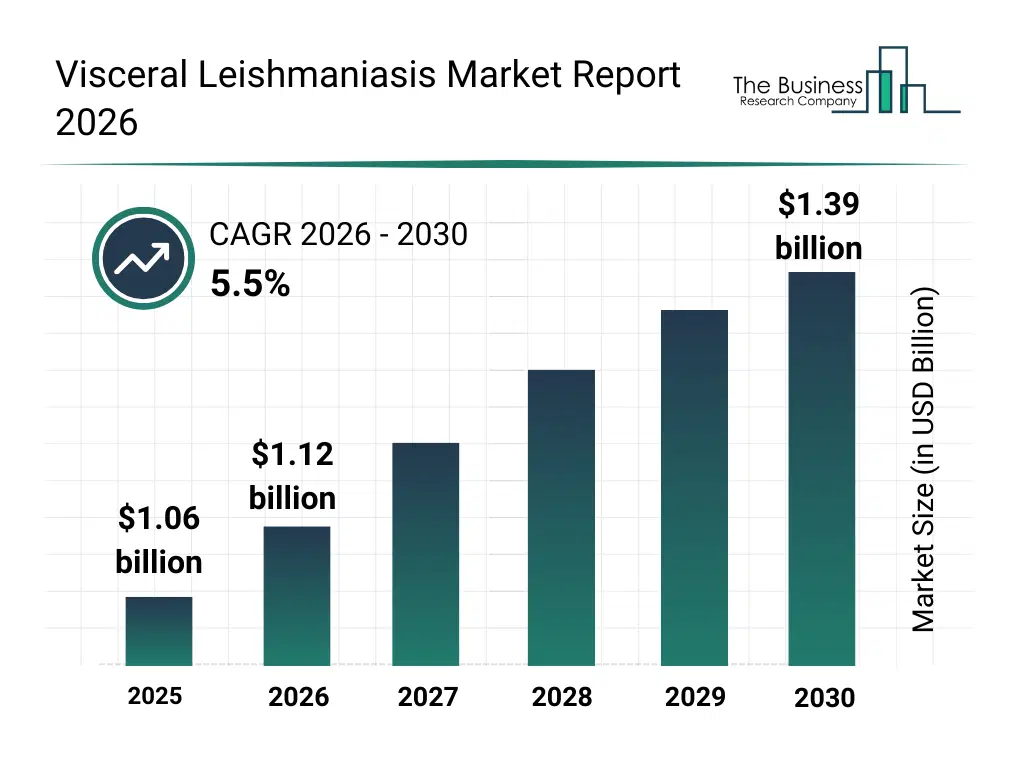
What Is The Visceral Leishmaniasis Market Size and Share 2026?
The visceral leishmaniasis market size has grown strongly in recent years. It will grow from $1.06 billion in 2025 to $1.12 billion in 2026 at a compound annual growth rate (CAGR) of 5.9%. The growth in the historic period can be attributed to expansion of endemic disease prevalence, increasing public health awareness initiatives, availability of established antiparasitic treatments, growth of hospital-based treatment programs, international health organization support.What Is The Visceral Leishmaniasis Market Growth Forecast?
The visceral leishmaniasis market size is expected to see strong growth in the next few years. It will grow to $1.39 billion in 2030 at a compound annual growth rate (CAGR) of 5.5%. The growth in the forecast period can be attributed to increasing investments in novel therapeutics, rising focus on vaccine and immunotherapy development, expansion of molecular diagnostic adoption, growing government funding for disease elimination, increasing access to treatment in endemic regions. Major trends in the forecast period include increasing adoption of advanced diagnostic techniques, rising use of combination drug therapies, growing focus on early disease detection, expansion of public health screening programs, enhanced investment in treatment accessibility.
Global Visceral Leishmaniasis Market Segmentation
1) By Treatment: Antiparasitic, Antifungal, Other Treatments 2) By Diagnosis Method: Serological Tests, Molecular Tests, Microscopy, Culture Methods 3) By Route Of Administration: Oral, Injectable, Other Routes Of Administration 4) By Distribution Channel: Hospital Pharmacy, Online Pharmacy, Retail Pharmacy 5) By End-User: Hospitals, Homecare, Specialty Clinics, Other End-Users Subsegments: 1) By Antiparasitic: Pentavalent Antimonials, Miltefosine, Paromomycin, Sitamaquine, Combination Therapy 2) By Antifungal: Amphotericin B, Liposomal Amphotericin B (AmBisome), Azoles, Echinocandins, Polyenes 3) By Other Treatments: Immunotherapy, Monoclonal Antibodies, Vaccine-Based Approaches, Photodynamic Therapy, Gene TherapyWhat Is The Driver Of The Visceral Leishmaniasis Market?
The rise in malnutrition is expected to propel the growth of the visceral leishmaniasis market going forward. Malnutrition is a health condition resulting from inadequate or imbalanced nutrient intake required for healthy physiological functioning. The rise in malnutrition is due to food insecurity, as it limits access to nutritious food, leading to undernourishment and micronutrient deficiencies, which weaken the immune system. Malnutrition impairs immune function, making the body more vulnerable to infections such as visceral leishmaniasis. Nutrient deficiencies weaken defense mechanisms, increasing the risk of severe disease and complications. For instance, in July 2024, according to the United Nations Children's Fund (UNICEF), a U.S.-based specialized agency, around 733 million people were undernourished globally in 2023. Therefore, the rise in malnutrition is driving the growth of the visceral leishmaniasis industry.Key Players In The Global Visceral Leishmaniasis Market
Major companies operating in the visceral leishmaniasis market are Pfizer Inc., GSK plc, Sun Pharmaceutical Industries Ltd., Dr. Reddy's Laboratories, Aurobindo Pharma Limited, Cipla Limited, Zydus Lifesciences Limited, Glenmark Pharmaceuticals Limited, Alkem Laboratories Ltd., Xellia Pharmaceuticals, Gufic Biosciences Ltd., United Biotech Private Limited, DNDi, Sanofi SA, Bharat Serums and Vaccines Limited, Emcure Pharmaceuticals Limited, Hetero Drugs Limited, Lupin Limited, Ipca Laboratories Limited, Intas Pharmaceuticals Limited, Macleods Pharmaceuticals Limited, Mankind Pharma Limited, Alembic Pharmaceuticals Limited
This chart is for illustrative purposes; the full report includes a detailed competitor analysis and comprehensive overview of the top 10 companies in the market.
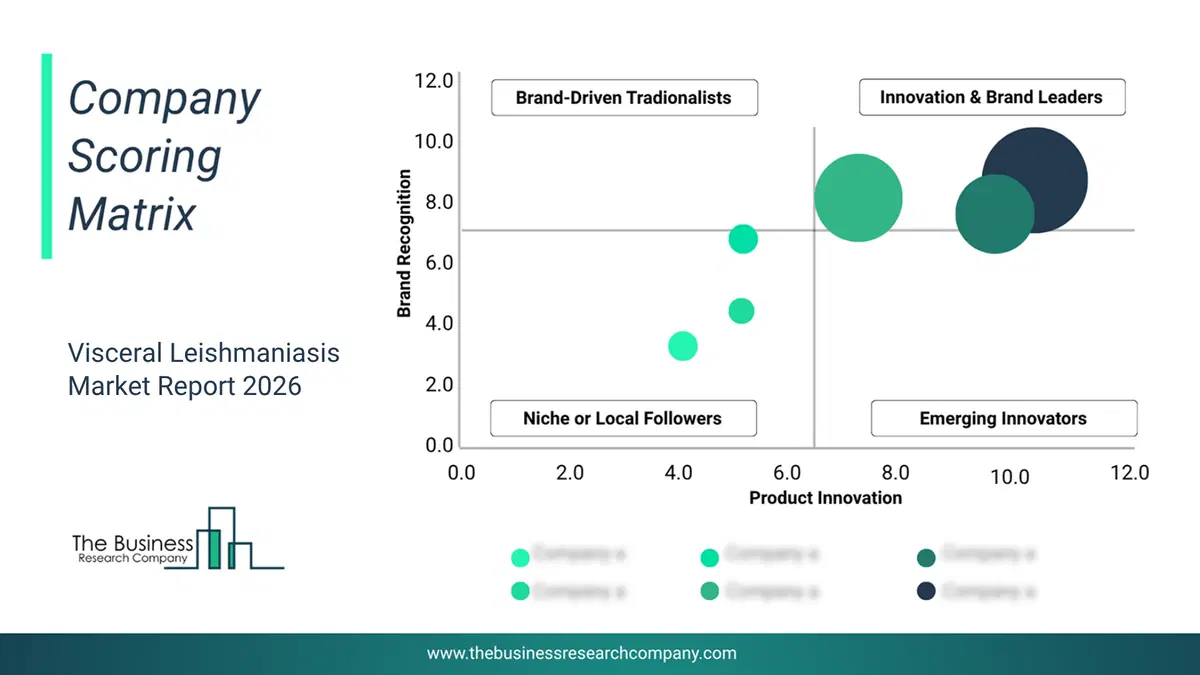
This chart maps companies by product innovation and brand strength, with bubble size indicating relative revenue, helping identify market leaders, challengers, and niche players. This is an illustrative chart; the full report provides a complete and accurate competitive analysis.
Global Visceral Leishmaniasis Market Trends and Insights
Major companies operating in the visceral leishmaniasis market are focusing on developing advancements in treatment options, such as antiparasitic drugs to improve efficacy and enhance patient accessibility, particularly in endemic regions. Antiparasitic drugs are medications used to treat infections caused by parasites, by targeting the parasite’s biological functions and disrupting its growth, reproduction, or survival within the host. For instance, in February 2024, Zydus Lifesciences Limited, an India-based pharmaceutical company, received World Health Organization (WHO) prequalification approval for the active pharmaceutical ingredient (API) and formulation of miltefosine for the treatment of leishmaniasis or kala-azar. Miltefosine is an oral antiparasitic drug that works by disrupting the parasite's cell membrane and interfering with its metabolism, leading to cell death. It also inhibits parasite growth and survival, making it an effective oral treatment option for visceral leishmaniasis or kala azar.What Are Latest Mergers And Acquisitions In The Visceral Leishmaniasis Market?
In January 2023, Gilead Sciences Inc., a US-based biopharmaceutical company that provides treatment for visceral leishmaniasis, extended its partnership with the World Health Organization (WHO) to facilitate better access to treatment options for visceral leishmaniasis. Through this partnership, Gilead Sciences is donating 304,700 vials of AmBisome (liposomal amphotericin B) to enhance the availability of essential medicines for the treatment of visceral leishmaniasis in high-burden countries, supporting global efforts to control and eliminate this life-threatening disease. The World Health Organization (WHO) is a Switzerland-based specialized agency that plays a key role in preventing, controlling, and eradicating visceral leishmaniasis through strategic initiatives and global health programs.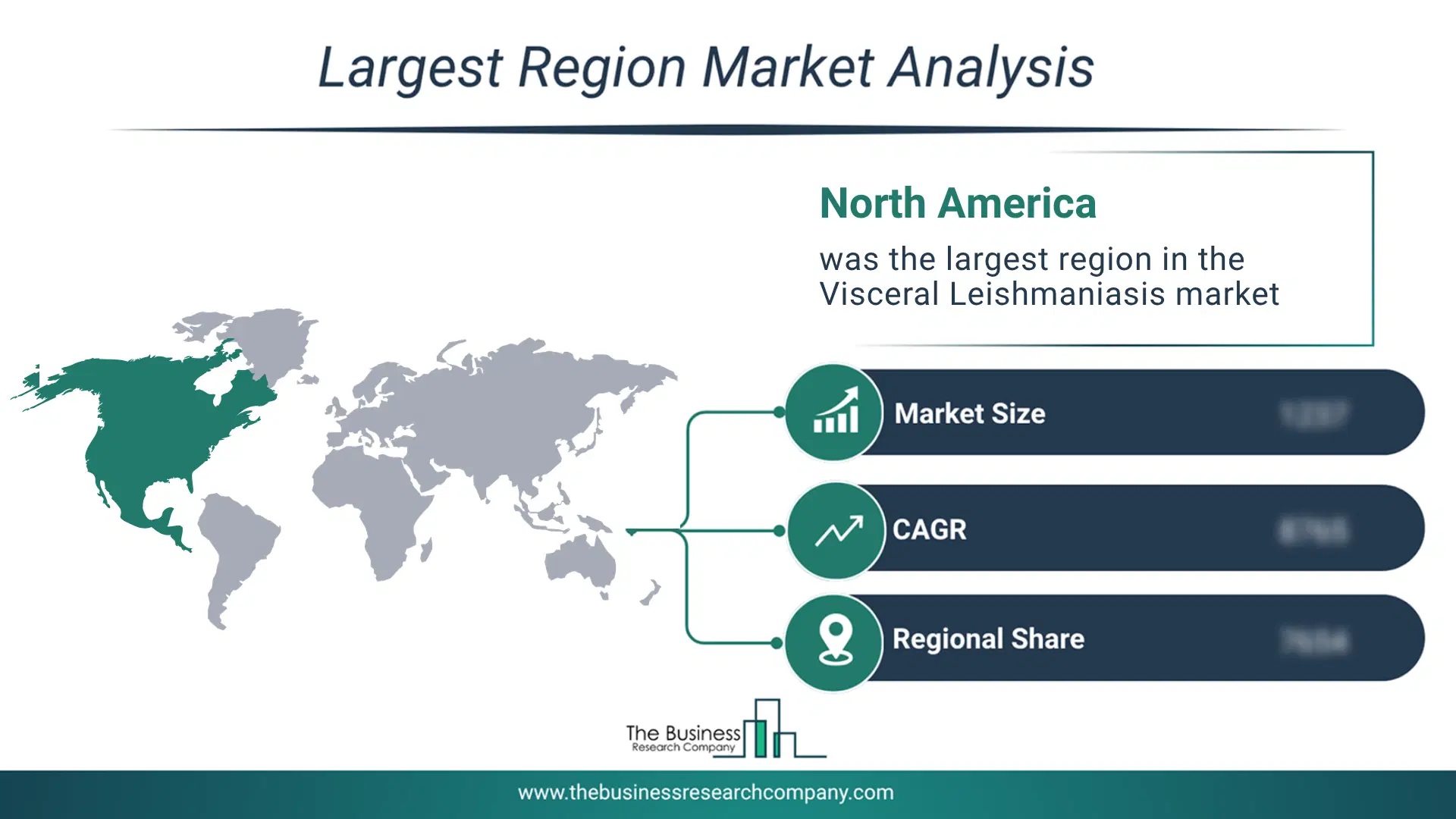
Regional Outlook
North America was the largest region in the visceral leishmaniasis market in 2025. Asia-Pacific is expected to be the fastest-growing region in the forecast period. The regions covered in this market report are Asia-Pacific, South East Asia, Western Europe, Eastern Europe, North America, South America, Middle East, Africa. The countries covered in this market report are Australia, Brazil, China, France, Germany, India, Indonesia, Japan, Taiwan, Russia, South Korea, UK, USA, Canada, Italy, Spain.What Defines the Visceral Leishmaniasis Market?
The visceral leishmaniasis market consists of revenues earned by entities by providing services such as drug development and distribution, vector control programs, and research and clinical trials. The market value includes the value of related goods sold by the service provider or included within the service offering. The visceral leishmaniasis market also includes sales of antileishmanial drugs, vaccines, vector control insecticides, recombinant antigen-based diagnostics, and polymerase chain reaction (PCR)-based detection kits. Values in this market are ‘factory gate’ values, that is the value of goods sold by the manufacturers or creators of the goods, whether to other entities (including downstream manufacturers, wholesalers, distributors and retailers) or directly to end customers. The value of goods in this market includes related services sold by the creators of the goods.How is Market Value Defined and Measured?
The market value is defined as the revenues that enterprises gain from the sale of goods and/or services within the specified market and geography through sales, grants, or donations in terms of the currency (in USD unless otherwise specified). The revenues for a specified geography are consumption values that are revenues generated by organizations in the specified geography within the market, irrespective of where they are produced. It does not include revenues from resales along the supply chain, either further along the supply chain or as part of other products.
This chart presents market attractiveness based on a quantitative evaluation of growth, competition, strategic alignment, and risk, offering a clear view of opportunity areas for decision-making. This chart is for illustrative purposes; the full report contains the complete analysis.

This chart highlights the Total Addressable Market (TAM) by estimating the maximum revenue opportunity using an assumption-driven approach, supporting strategic planning and opportunity sizing across markets. The chart is illustrative; the full report provides a more comprehensive analysis.
What Key Data and Analysis Are Included in the Visceral Leishmaniasis Market Report 2026?
The visceral leishmaniasis market research report is one of a series of new reports from The Business Research Company that provides market statistics, including industry global market size, regional shares, competitors with the market share, detailed market segments, market trends and opportunities, and any further data you may need to thrive in the visceral leishmaniasis industry. The market research report delivers a complete perspective of everything you need, with an in-depth analysis of the current and future state of the industry.Visceral Leishmaniasis Market Report Forecast Analysis
| Report Attribute | Details |
|---|---|
| Market Size Value In 2026 | $1.12 billion |
| Revenue Forecast In 2030 | $1.39 billion |
| Growth Rate | CAGR of 5.5% from 2026 to 2030 |
| Base Year For Estimation | 2025 |
| Actual Estimates/Historical Data | 2020-2025 |
| Forecast Period | 2026 - 2030 |
| Market Representation | Revenue in USD Billion and CAGR from 2026 to 2030 |
| Segments Covered | Treatment, Diagnosis Method, Route Of Administration, Distribution Channel, End-User |
| Regional Scope | Asia-Pacific, Western Europe, Eastern Europe, North America, South America, Middle East, Africa |
| Country Scope | The countries covered in the report are Australia, Brazil, China, France, Germany, India, Indonesia, Japan, Taiwan, Russia, South Korea, UK, USA, Canada, Italy, Spain |
| Key Companies Profiled | Pfizer Inc., GSK plc, Sun Pharmaceutical Industries Ltd., Dr. Reddy's Laboratories, Aurobindo Pharma Limited, Cipla Limited, Zydus Lifesciences Limited, Glenmark Pharmaceuticals Limited, Alkem Laboratories Ltd., Xellia Pharmaceuticals, Gufic Biosciences Ltd., United Biotech Private Limited, DNDi, Sanofi SA, Bharat Serums and Vaccines Limited, Emcure Pharmaceuticals Limited, Hetero Drugs Limited, Lupin Limited, Ipca Laboratories Limited, Intas Pharmaceuticals Limited, Macleods Pharmaceuticals Limited, Mankind Pharma Limited, Alembic Pharmaceuticals Limited |
| Customization Scope | Request for Customization |
| Pricing And Purchase Options | Explore Purchase Options |