

Visual Merchandising Copilots Market Report 2026
Global Outlook – By Component (Software, Services), By Deployment Mode (On-Premises, Cloud), By Enterprise Size (Small And Medium Enterprises, Large Enterprises), By Application (Apparel And Fashion, Grocery And Supermarkets, Electronics, Home Décor, Beauty And Cosmetics, Other Applications), By End User (Retailers, Shopping Malls, Department Stores, Specialty Stores, Other End Users) – Market Size, Trends, Strategies, and Forecast to 2030
Visual Merchandising Copilots Market Overview
• Visual Merchandising Copilots market size has reached to $1.61 billion in 2025 • Expected to grow to $4.14 billion in 2030 at a compound annual growth rate (CAGR) of 20.7% • Growth Driver: Rising Adoption Of Artificial Intelligence Driving The Market Growth Due To Increasing Integration Across Business Functions • Market Trend: Artificial Intelligence (AI)-Powered Fashion Discovery Enhances Visual Merchandising and Personalized Shopping Experiences • North America was the largest region in 2025 and Asia-Pacific is the fastest growing region.What Is Covered Under Visual Merchandising Copilots Market?
Visual merchandising copilots are AI-powered software solutions that assist retailers in planning, optimizing, and managing physical or digital product displays and merchandising activities. They can analyze merchandising, inventory, customer, and store-performance data to generate recommendations, insights, or automated assistance for visual presentation and merchandising decisions. The main components of visual merchandising copilots include software and services. Software refers to digital solutions that assist retailers and merchandising teams in planning, creating, analyzing, and optimizing visual product displays and store layouts. These solutions are deployed through On-Premises and cloud models and are adopted by small and medium enterprises and large enterprises. They find application in apparel and fashion, grocery and supermarkets, electronics, home décor, beauty and cosmetics, and others, serving end users including retailers, shopping malls, department stores, specialty stores, and others.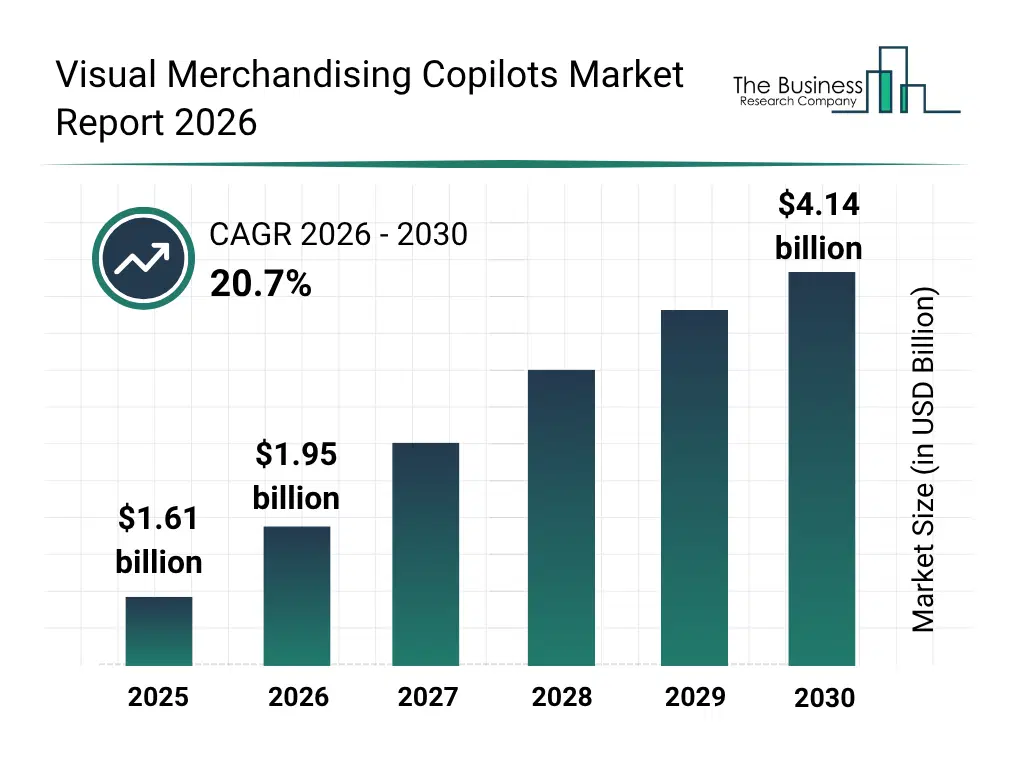
What Is The Visual Merchandising Copilots Market Size and Share 2026?
The visual merchandising copilots market size has grown exponentially in recent years. It will grow from $1.61 billion in 2025 to $1.95 billion in 2026 at a compound annual growth rate (CAGR) of 21.1%. The growth in the historic period can be attributed to increasing adoption of AI in retail operations, growing demand for personalized shopping experiences, rising need for efficient inventory management, expansion of digital retail channels, increasing focus on in-store customer engagement.What Is The Visual Merchandising Copilots Market Growth Forecast?
The visual merchandising copilots market size is expected to see exponential growth in the next few years. It will grow to $4.14 billion in 2030 at a compound annual growth rate (CAGR) of 20.7%. The growth in the forecast period can be attributed to growing adoption of automated merchandising decisions, rising demand for real-time retail analytics, increasing use of predictive shopper insights, expansion of omnichannel retail strategies, growing need for consistent visual merchandising across store networks. Major trends in the forecast period include AI-powered visual display optimization, real-time shopper behavior analysis, automated planogram generation, omnichannel visual merchandising coordination, dynamic product placement recommendations.Tariff Impact On Visual Merchandising Copilots Market
Tariffs are impacting the visual merchandising copilots market by increasing the cost of retail technology hardware, digital signage equipment, sensors, computing devices, and other imported components supporting AI-powered merchandising systems. Retailers, department stores, shopping malls, and specialty stores in North America, Europe, and Asia-Pacific may face higher deployment and infrastructure costs due to globally interconnected technology supply chains. However, tariffs can encourage retailers and technology providers to diversify suppliers, localize technology procurement, and accelerate software-centric merchandising solutions that reduce dependence on imported physical equipment.
Global Visual Merchandising Copilots Market Segmentation
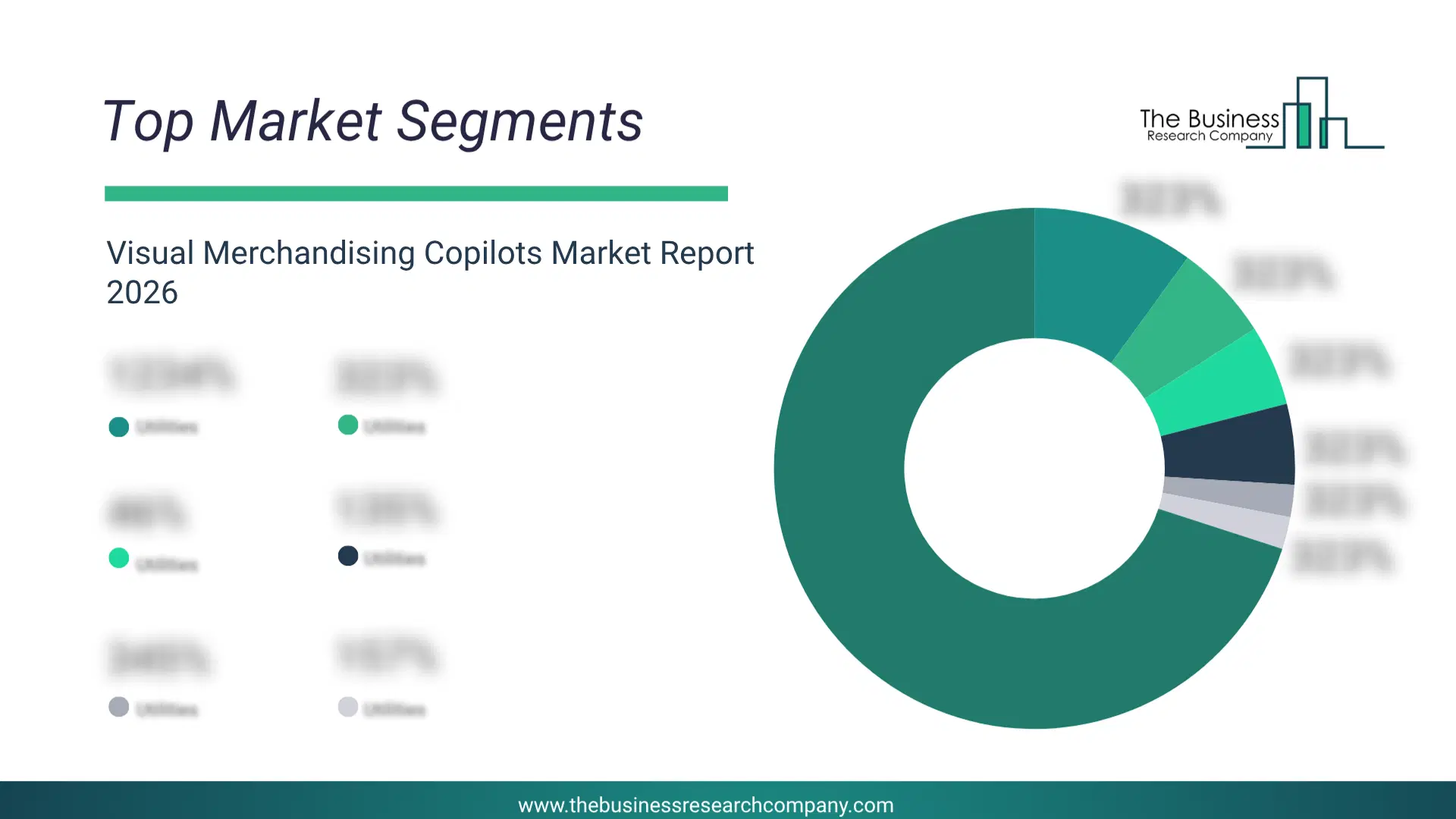
1) By Component: Software, Services 2) By Deployment Mode: On-Premises, Cloud 3) By Enterprise Size: Small And Medium Enterprises, Large Enterprises 4) By Application: Apparel And Fashion, Grocery And Supermarkets, Electronics, Home Décor, Beauty And Cosmetics, Other Applications 5) By End User: Retailers, Shopping Malls, Department Stores, Specialty Stores, Other End Users Subsegments: 1) By Software: Analytics Software, Content Management Software, Artificial Intelligence Recommendation Software, Visualization Software, Inventory Management Software 2) By Services: Consulting Services, Integration Services, Managed Services, Support Services, Maintenance ServicesWhat Are The Drivers Of The Visual Merchandising Copilots Market?
The rising adoption of artificial intelligence is expected to propel the growth of the visual merchandising copilots market going forward. Artificial intelligence refers to the development of computer systems capable of performing tasks that typically require human intelligence, such as visual recognition, data analysis, and decision-making. The adoption of AI is accelerating primarily due to the rapid proliferation of generative AI tools, as the widespread availability of accessible, low-code AI platforms has significantly lowered barriers to adoption across industries of varying sizes and digital maturity levels. This surge in AI adoption directly increases demand for AI-powered visual merchandising copilots, as retailers and businesses seek intelligent tools to automate display planning, optimize product placement, and personalize in-store and digital shopping experiences. For instance, in January 2026, according to the Organization for Economic Co-operation and Development (OECD), a France-based intergovernmental organization, 20.2% of firms across OECD countries reported using artificial intelligence (AI) in 2025, up from 14.2% in 2024. Therefore, the rising adoption of artificial intelligence is driving the growth of the visual merchandising copilots industry. The growing integration of e-commerce and digital retail platforms is expected to propel the growth of the visual merchandising copilots market going forward. E-commerce and digital retail platforms refer to online channels and technologies that enable businesses to display, promote, and sell products or services directly to consumers through internet-based storefronts. The rapid expansion of e-commerce is largely driven by increasing smartphone penetration and widespread internet access, which have made online shopping more accessible and convenient for consumers across developed economies, prompting retailers to invest heavily in digital storefronts and virtual merchandising tools to capture growing online audiences. The surge in online retail activity amplifies the need for intelligent visual merchandising solutions that help brands optimize product presentation, placement, and discovery across digital channels to drive conversions and enhance the customer shopping experience. For instance, in March 2026, according to the U.S. Census Bureau, a US-based government statistical agency, total U.S. retail e-commerce sales reached $1,233.7 billion in 2025, representing a 5.4% increase from 2024. Therefore, the growing integration of e-commerce and digital retail platforms is driving the growth of the visual merchandising copilots industry.Key Players In The Global Visual Merchandising Copilots Market
Major companies operating in the visual merchandising copilots market are Adobe Inc., SymphonyAI LLC, RELEX Solutions Oy, Simbe Robotics Inc., ParallelDots Inc., Stylitics Inc., FindMine Inc., Infilect Technologies Pvt. Ltd., Optimum Retailing Inc., Leafio AI Ltd., Nextail Labs S.L., Retail Insight Ltd., RetailNext Inc., First Insight Inc., Trax Technology Solutions Pte. Ltd., Panasonic Holdings Corporation, DotActiv Pty Ltd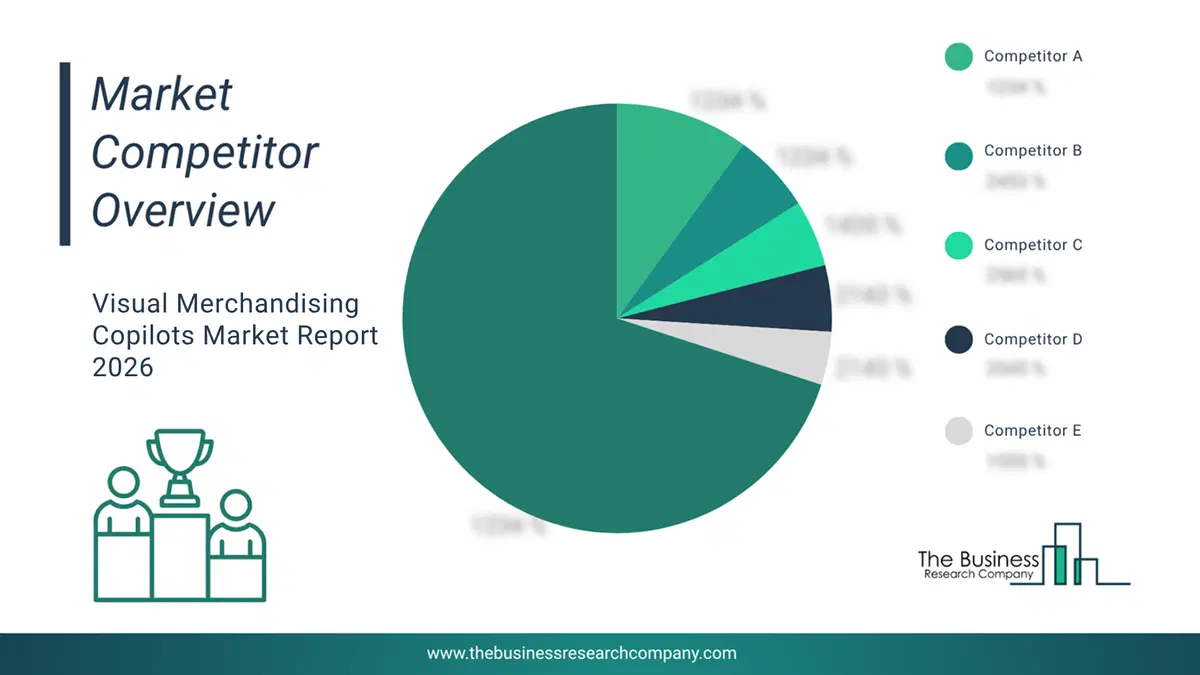
This chart is for illustrative purposes; the full report includes a detailed competitor analysis and comprehensive overview of the top 10 companies in the market.
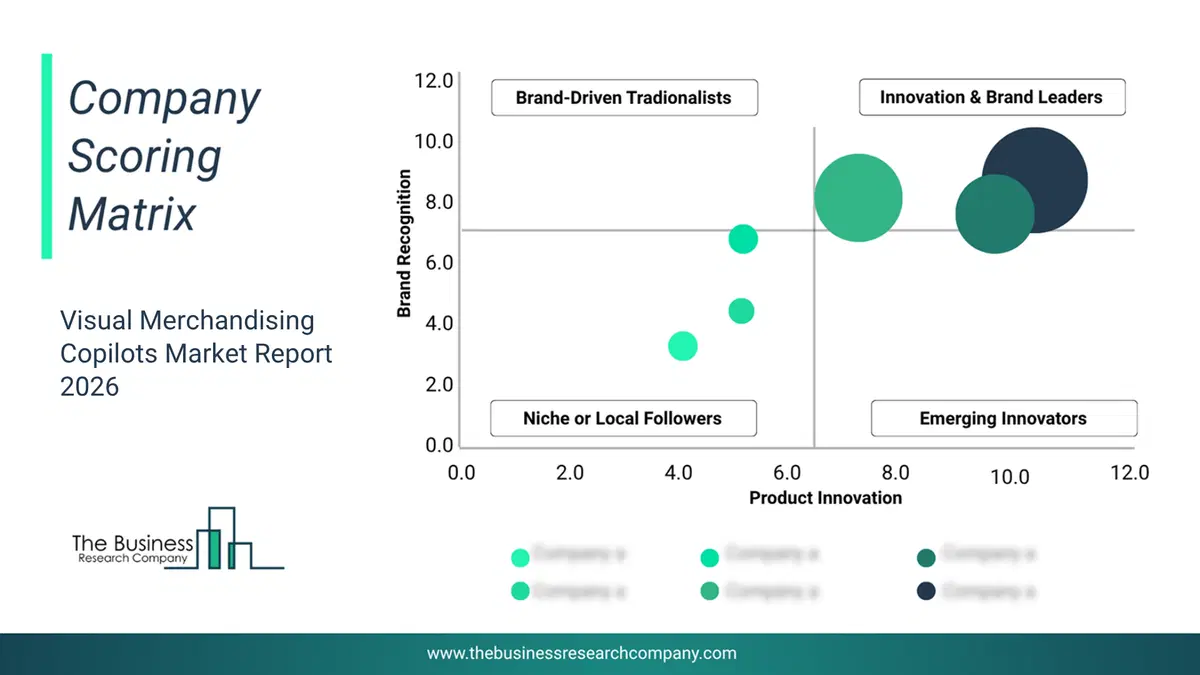
This chart maps companies by product innovation and brand strength, with bubble size indicating relative revenue, helping identify market leaders, challengers, and niche players. This is an illustrative chart; the full report provides a complete and accurate competitive analysis.
Global Visual Merchandising Copilots Market Trends and Insights
Major companies operating in the visual merchandising copilots market are focusing on developing advanced artificial intelligence (AI)-powered fashion discovery solutions to deliver personalized product recommendations, improve customer engagement, and enhance digital merchandising experiences. AI-powered fashion discovery refers to the use of conversational artificial intelligence and contextual merchandising to recommend visually curated fashion products based on customer preferences, occasions, trends, and shopping intent. For instance, in September 2025, Curated for You, a US-based AI-powered lifestyle commerce platform, collaborated with Microsoft Corporation, a US-based technology company, to launch the first-of-its-kind AI fashion experience in Microsoft Copilot. The solution enables consumers to discover personalized and shoppable fashion collections through natural language interactions, leveraging an intelligent merchandising engine that integrates retailer data with contextual insights such as fashion trends, occasions, and customer intent to enhance product discovery, customer engagement, and purchase conversion.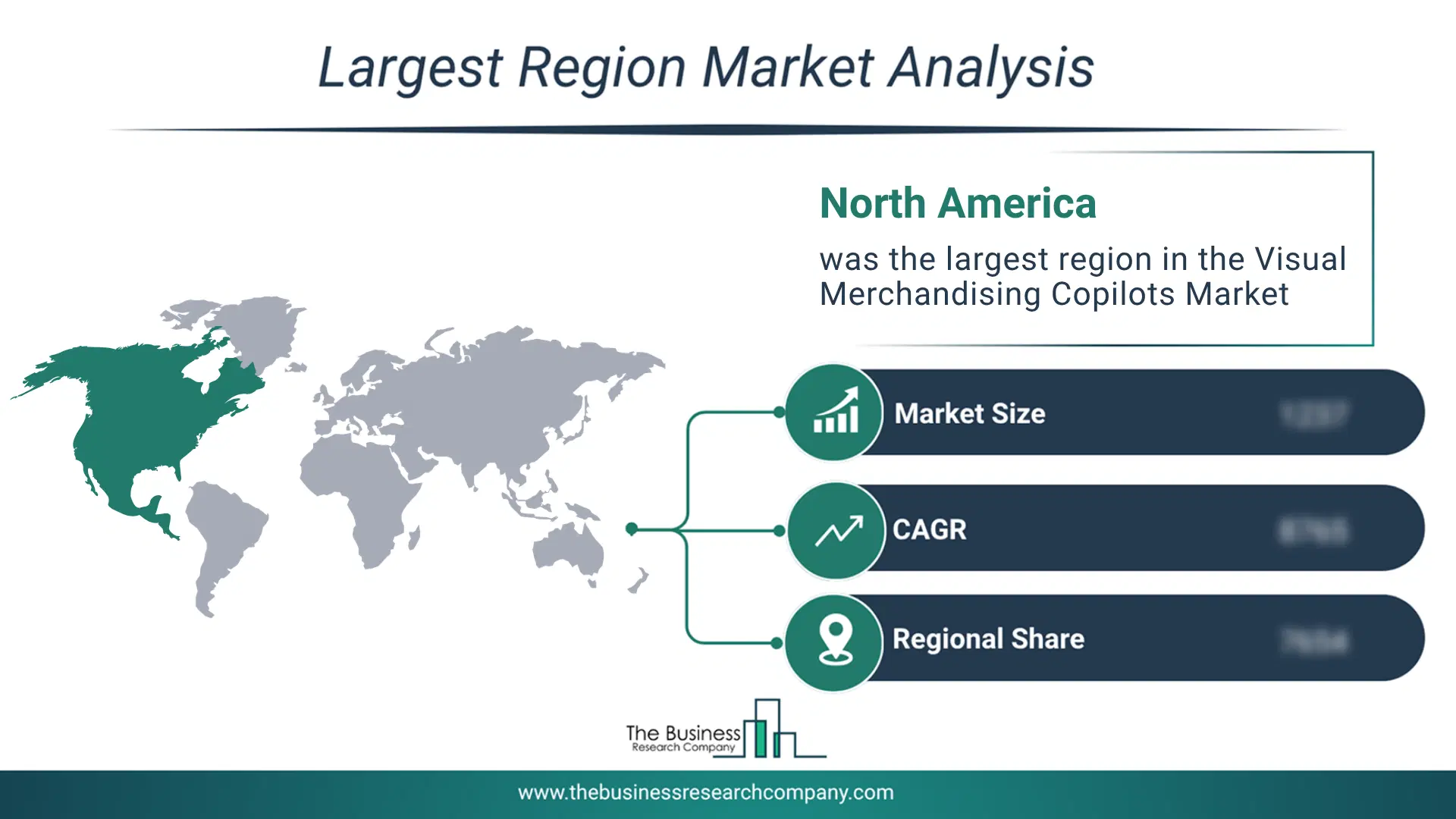
Regional Outlook
North America was the largest region in the visual merchandising copilots market in 2025. Asia-Pacific is expected to be the fastest-growing region in the forecast period. The regions covered in this market report are Asia-Pacific, South East Asia, Western Europe, Eastern Europe, North America, South America, Middle East, Africa. The countries covered in this market report are Australia, Brazil, China, France, Germany, India, Indonesia, Japan, Taiwan, Russia, South Korea, UK, USA, Canada, Italy, Spain.What Defines the Visual Merchandising Copilots Market?
The visual merchandising copilots market consists of revenues earned by entities by providing products and services such as planogram generation, store layout optimization, visual display recommendations, assortment visualization, merchandising compliance monitoring, and visual merchandising performance analysis. The market value includes the value of related goods sold by the service provider or included within the service offering. Only goods and services traded between entities or sold to end consumers are included.How is Market Value Defined and Measured?
The market value is defined as the revenues that enterprises gain from the sale of goods and/or services within the specified market and geography through sales, grants, or donations in terms of the currency (in USD unless otherwise specified). The revenues for a specified geography are consumption values that are revenues generated by organizations in the specified geography within the market, irrespective of where they are produced. It does not include revenues from resales along the supply chain, either further along the supply chain or as part of other products.
This chart presents market attractiveness based on a quantitative evaluation of growth, competition, strategic alignment, and risk, offering a clear view of opportunity areas for decision-making. This chart is for illustrative purposes; the full report contains the complete analysis.

This chart highlights the Total Addressable Market (TAM) by estimating the maximum revenue opportunity using an assumption-driven approach, supporting strategic planning and opportunity sizing across markets. The chart is illustrative; the full report provides a more comprehensive analysis.
What Key Data and Analysis Are Included in the Visual Merchandising Copilots Market Report 2026?
The visual merchandising copilots market research report is one of a series of new reports from The Business Research Company that provides market statistics, including industry global market size, regional shares, competitors with the market share, detailed market segments, market trends and opportunities, and any further data you may need to thrive in the visual merchandising copilots industry. The market research report delivers a complete perspective of everything you need, with an in-depth analysis of the current and future state of the industry.Visual Merchandising Copilots Market Report Forecast Analysis
| Report Attribute | Details |
|---|---|
| Market Size Value In 2026 | $1.95 billion |
| Revenue Forecast In 2030 | $4.14 billion |
| Growth Rate | CAGR of 20.7% from 2026 to 2030 |
| Base Year For Estimation | 2025 |
| Actual Estimates/Historical Data | 2020-2025 |
| Forecast Period | 2026 - 2030 |
| Market Representation | Revenue in USD Billion and CAGR from 2026 to 2030 |
| Segments Covered | Component, Deployment Mode, Enterprise Size, Application, End User |
| Regional Scope | Asia-Pacific, Western Europe, Eastern Europe, North America, South America, Middle East, Africa |
| Country Scope | The countries covered in the report are Australia, Brazil, China, France, Germany, India, Indonesia, Japan, Taiwan, Russia, South Korea, UK, USA, Canada, Italy, Spain. |
| Key Companies Profiled | Adobe Inc., SymphonyAI LLC, RELEX Solutions Oy, Simbe Robotics Inc., ParallelDots Inc., Stylitics Inc., FindMine Inc., Infilect Technologies Pvt. Ltd., Optimum Retailing Inc., Leafio AI Ltd., Nextail Labs S.L., Retail Insight Ltd., RetailNext Inc., First Insight Inc., Trax Technology Solutions Pte. Ltd., Panasonic Holdings Corporation, DotActiv Pty Ltd |
| Customization Scope | Request for Customization |
| Pricing And Purchase Options | Explore Purchase Options |