

Visual Positioning System Market Report 2026
Global Outlook – By Component (Sensors, Camera Systems, Markers, Other Components), By Type (1D (One-Dimensional), 2D (Two-Dimensional), 3D (Three-Dimensional)), By Solution (Navigation, Analytics, Tracking, Industrial Solutions, Other Solutions), By Location (Indoor Positioning System, Outdoor Positioning System), By Application (Commercial Application, Retail, Healthcare, Industrial, Transportation And Logistics, Hospitality, Defense Application, Other Applications) – Market Size, Trends, Strategies, and Forecast to 2030
Visual Positioning System Market Overview
• Visual Positioning System market size has reached to $14.2 billion in 2025 • Expected to grow to $26.07 billion in 2030 at a compound annual growth rate (CAGR) of 12.6% • Growth Driver: Autonomous Vehicles Driving Growth In Visual Positioning Systems Market • Market Trend: Advancements In City-Scale Visual Navigation Technology Driving Precision Indoor And Outdoor Positioning Solutions • North America was the largest region in 2025 and Asia-Pacific is the fastest growing region.What Is Covered Under Visual Positioning System Market?
A visual positioning system (VPS) is a technology that uses vision technology to determine the precise location of a device or object by analyzing visual data from the surrounding environment. It captures images and compares them to a database of known locations, enabling accurate positioning. This technology enhances situational awareness and navigation accuracy, especially where global positioning system (GPS) signals are weak or unavailable. The main components of a visual positioning system are sensors, camera systems, markers, and others. Sensors are devices or components that detect and measure physical properties or changes in the environment, converting these physical quantities into signals that can be read, interpreted, or recorded. The various types include 1D (One-Dimensional), 2D (Two-Dimensional), and 3D (Three-Dimensional) with various solutions such as navigation, analytics, tracking, industrial solutions, and others. The various location types include indoor positioning systems, and outdoor positioning systems that are used in various applications such as commercial applications, retail, healthcare, industrial, transportation and logistics, hospitality, defense applications, and others.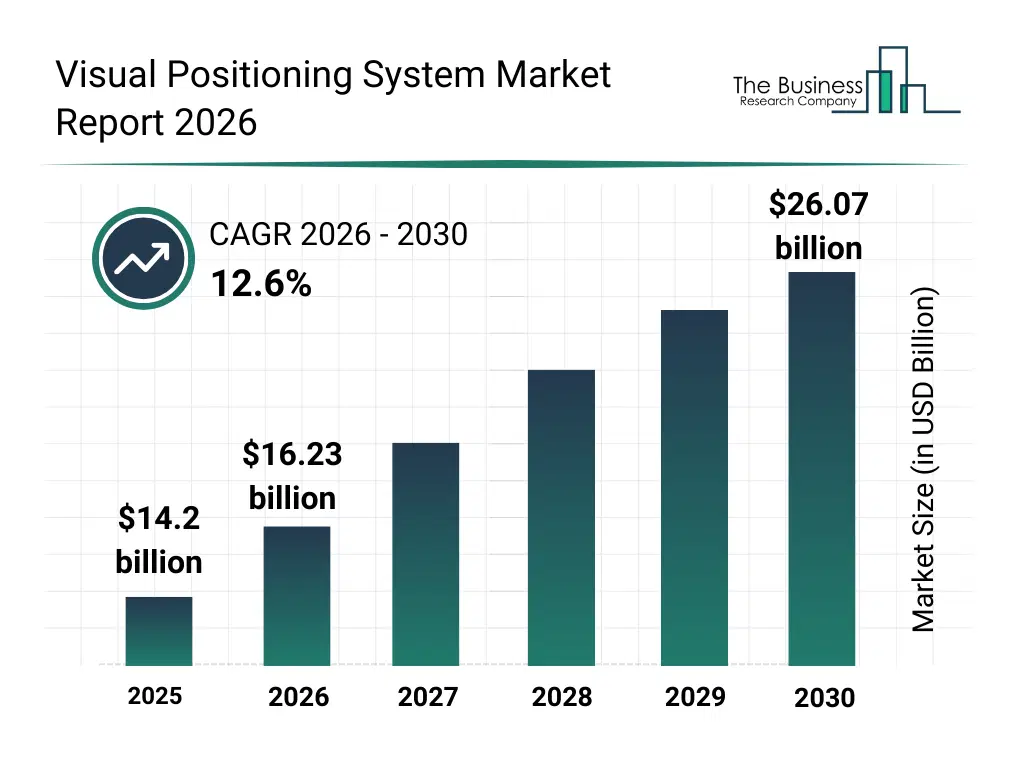
What Is The Visual Positioning System Market Size and Share 2026?
The visual positioning system market size has grown rapidly in recent years. It will grow from $14.2 billion in 2025 to $16.23 billion in 2026 at a compound annual growth rate (CAGR) of 14.2%. The growth in the historic period can be attributed to increasing deployment of indoor mapping solutions, growth of location-based services, expansion of smart infrastructure projects, improvements in camera and sensor technologies, rising demand for precise navigation systems.What Is The Visual Positioning System Market Growth Forecast?
The visual positioning system market size is expected to see rapid growth in the next few years. It will grow to $26.07 billion in 2030 at a compound annual growth rate (CAGR) of 12.6%. The growth in the forecast period can be attributed to growing adoption of autonomous navigation systems, rising investments in smart cities, expansion of robotics and drone navigation use cases, increasing integration of AI-driven localization algorithms, demand for seamless indoor-outdoor positioning. Major trends in the forecast period include increasing adoption of vision-based indoor navigation, rising integration of vps with ar applications, growing use of camera-based localization systems, expansion of gps-denied navigation solutions, enhanced focus on high-accuracy positioning.
Global Visual Positioning System Market Segmentation
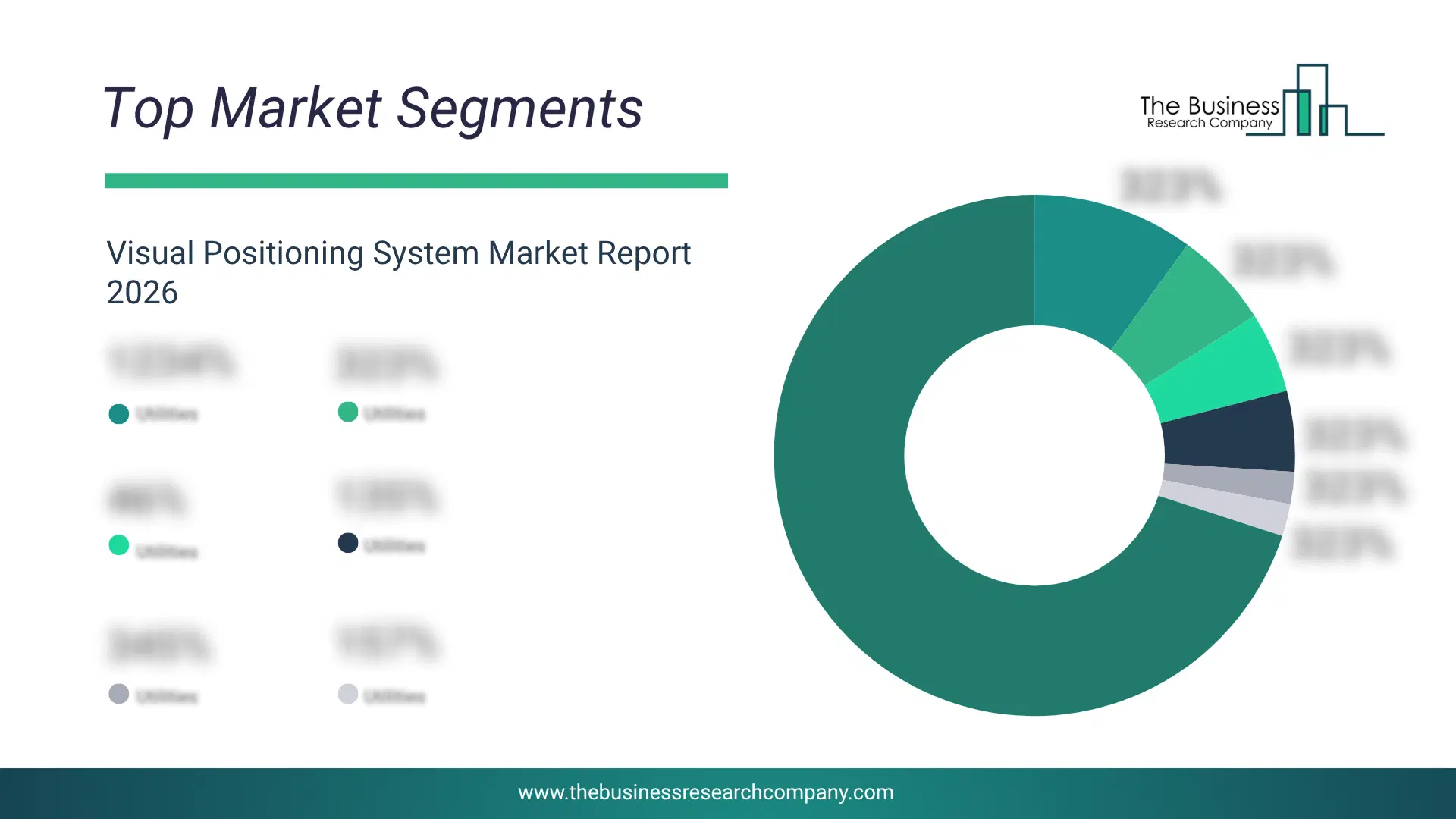
1) By Component: Sensors, Camera Systems, Markers, Other Components 2) By Type: 1D (One-Dimensional), 2D (Two-Dimensional), 3D (Three-Dimensional) 3) By Solution: Navigation, Analytics, Tracking, Industrial Solutions, Other Solutions 4) By Location: Indoor Positioning System, Outdoor Positioning System 5) By Application: Commercial Application, Retail, Healthcare, Industrial, Transportation And Logistics, Hospitality, Defense Application, Other Applications Subsegments: 1) By Sensors: Optical Sensors (Photodetectors), Lidar Sensors (Light Detection And Ranging), Inertial Measurement Units (Imus) (Gyroscopes, Accelerometers), Ultrasonic Sensors (For Distance Measurement), Magnetic Sensors (For Orientation And Positioning), Gps Sensors (For Hybrid Systems) 2) By Camera Systems: Monocular Cameras (Single Lens For Positioning), Stereo Camera Systems (Two Cameras For Depth Perception), 360-Degree Cameras (Panoramic Cameras For Complete Spatial Coverage), Depth Cameras (Time-Of-Flight Cameras), Infrared Cameras (Used For Low-Light Or Night-Time Positioning), Rgb Cameras (Standard Cameras For Image Processing) 3) By Markers: Qr Code Markers (For Machine Vision-Based Positioning), Fiducial Markers (Distinct Visual Patterns For Positioning), Barcodes (For Indoor Navigation And Item Tracking), Ar (Augmented Reality) Markers (Used In Ar-Based Positioning Systems), Optical Flow Markers (For Dynamic And Real-Time Positioning), Custom Visual Markers (Designed For Specific Positioning Needs) 4) By Other Components: Processing Units (Microcontrollers, Gpus For Data Processing), Software And Algorithms (For Image Processing, Position Estimation), Communication Modules (Wi-fi, Bluetooth, Li-Fi), Power Supply Units ( Batteries, Power Management Systems), Mounting Hardware (Brackets, Supports For Sensors And Cameras), Calibration Tools (To Ensure Accurate Measurements And Alignment)What Is The Driver Of The Visual Positioning System Market?
The increasing number of autonomous vehicles is expected to propel the growth of the visual positioning systems market going forward. Autonomous vehicles are self-driving cars that employ advanced sensor technologies, computer systems, and artificial intelligence to operate and navigate without constant human intervention or monitoring. The increasing number of autonomous vehicles is due to advancements in artificial intelligence and sensor technology, along with substantial investment and support from private companies and governments to enhance safety and efficiency in transportation. Visual positioning systems are a crucial supporting technology that offers the accuracy, integrity, and shared reference frame required for safe, dependable self-driving capabilities as autonomous vehicles become more popular. For instance, in December 2024, according to the National Association of Insurance Commissioners, a US-based non-profit organization the Insurance Institute for Highway Safety anticipates that 4.5 million self-driving vehicles will be on U.S. roads by 2030. Therefore, the increasing number of autonomous vehicles driving the growth of the visual positioning systems industry.Key Players In The Global Visual Positioning System Market
Major companies operating in the visual positioning system market are Google LLC, Qualcomm Inc., Broadcom Inc., MediaTek Inc., STMicroelectronics, Infineon Technologies AG, Hexagon AB, Trimble Inc., Sick AG, Topcon Corporation, Pepperl + Fuchs Inc., Cognex Corporation, Niantic Inc., Sonardyne International Ltd., DJI Technology Co Ltd, Sony Corporation, Apple Inc, NVIDIA Corporation, TomTom NV, HERE Technologies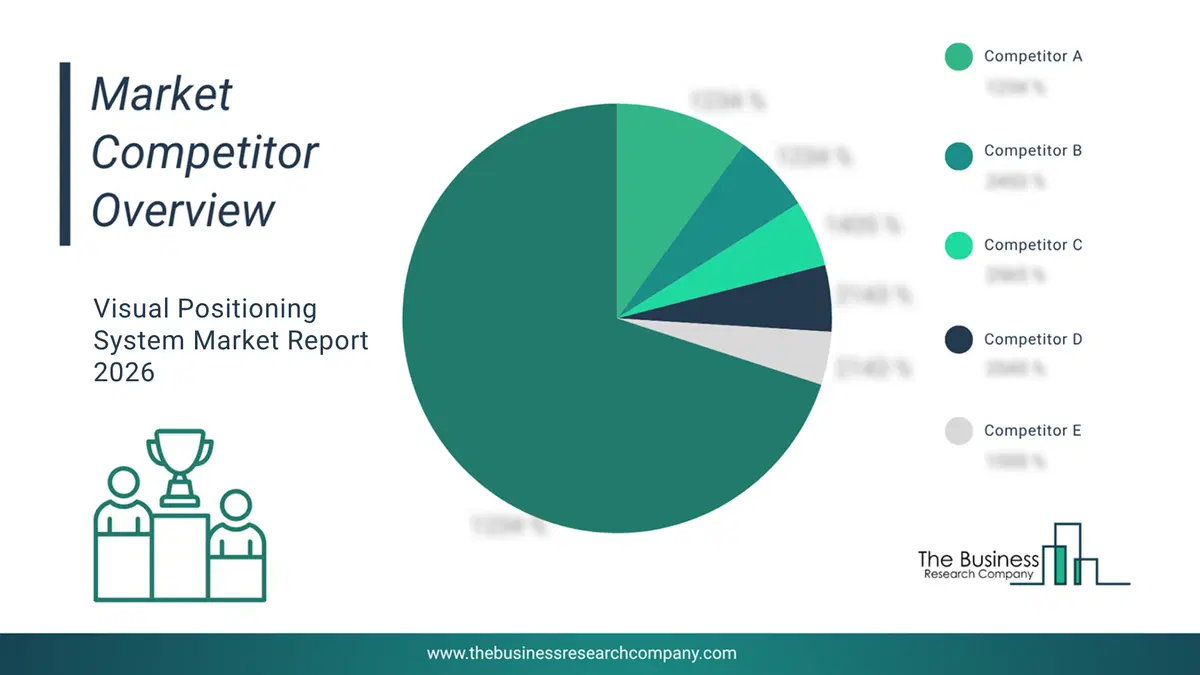
This chart is for illustrative purposes; the full report includes a detailed competitor analysis and comprehensive overview of the top 10 companies in the market.
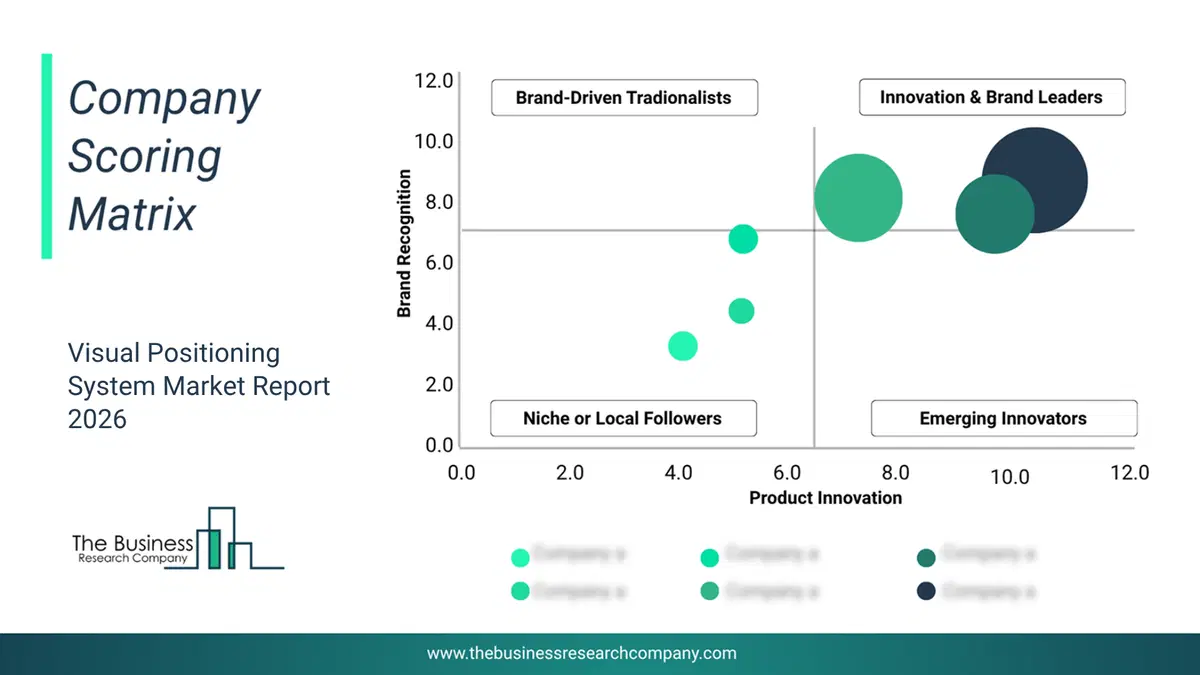
This chart maps companies by product innovation and brand strength, with bubble size indicating relative revenue, helping identify market leaders, challengers, and niche players. This is an illustrative chart; the full report provides a complete and accurate competitive analysis.
Global Visual Positioning System Market Trends and Insights
Major companies operating in the visual positioning system market are focusing on developing innovative solutions, such as augmented reality navigation to enhance user experience and enable precise location-based services. Augmented reality (AR) navigation is a technology that overlays digital directions, information, or markers onto the real-world view through a device such as a smartphone or AR glasses, helping users navigate more intuitively, find locations quickly, and interact with their environment efficiently. For instance, in February 2023, Immersal Oy, a Finland-based technology company, launched Immersal City-Scale Visual Positioning System, an innovative solution designed to map entire city environments for augmented reality and navigation purposes. The system integrates detailed 3D point cloud data, high-resolution imaging, and machine learning algorithms to enable seamless localization and mapping, supports multiple platforms including mobile and AR devices, and offers developers tools for creating immersive AR experiences with centimeter-level accuracy. Its applications include smart city infrastructure, AR gaming, indoor navigation, and location-based marketing, providing a significant improvement over conventional GPS-based systems by delivering consistent precision in complex environments.What Are Latest Mergers And Acquisitions In The Visual Positioning System Market?
In August 2024, TKH Group, a Netherlands-based technology company, acquired Liberty Robotics Inc. for undisclosed amount. This acquisition of TKH Group's aim is to enhance its strategic growth in the field of 3D vision systems, particularly within the automotive and logistics sectors. Liberty Robotics Inc. is a Us-based technology company, that specializing in 3D vision guidance systems for robotic applications.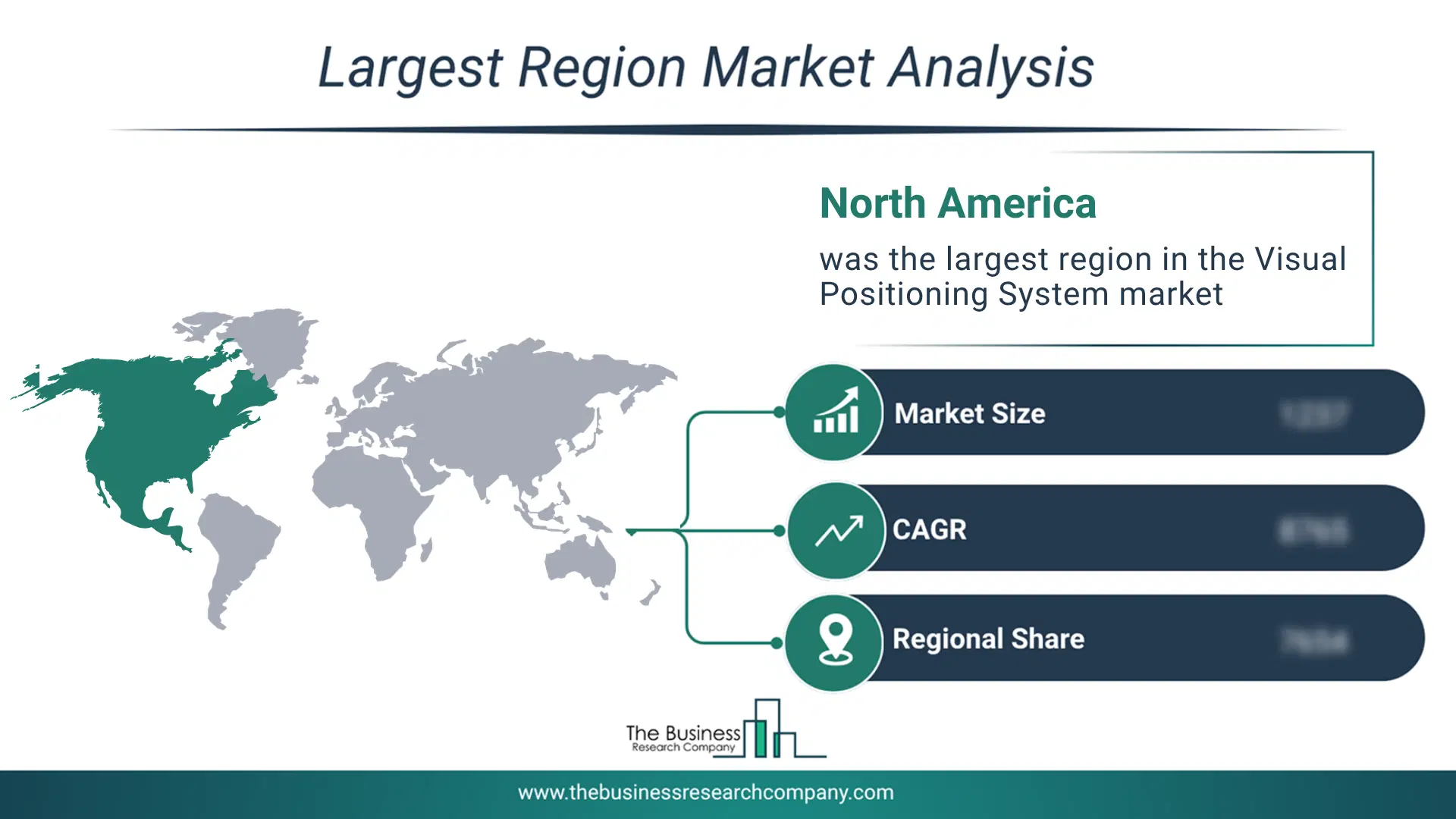
Regional Insights
North America was the largest region in the visual positioning system market in 2025. Asia-Pacific is expected to be the fastest-growing region in the forecast period. The regions covered in this market report are Asia-Pacific, South East Asia, Western Europe, Eastern Europe, North America, South America, Middle East, Africa. The countries covered in this market report are Australia, Brazil, China, France, Germany, India, Indonesia, Japan, Taiwan, Russia, South Korea, UK, USA, Canada, Italy, Spain.What Defines the Visual Positioning System Market?
The visual positioning system market consists of revenues earned by entities by providing services such as navigation, asset tracking, and supply chain management. The market value includes the value of related goods sold by the service provider or contained within the service offering. The visual positioning system market also includes sales of depth-sensing tools and GPS tools. Values in this market are ‘factory gate’ values, the value of goods sold by the manufacturers or creators of the goods, whether to other entities (including downstream manufacturers, wholesalers, distributors, and retailers) or directly to end customers. The value of goods in this market includes related services sold by the creators of the goods.How is Market Value Defined and Measured?
The market value is defined as the revenues that enterprises gain from the sale of goods and/or services within the specified market and geography through sales, grants, or donations in terms of the currency (in USD unless otherwise specified). The revenues for a specified geography are consumption values that are revenues generated by organizations in the specified geography within the market, irrespective of where they are produced. It does not include revenues from resales along the supply chain, either further along the supply chain or as part of other products.
This chart presents market attractiveness based on a quantitative evaluation of growth, competition, strategic alignment, and risk, offering a clear view of opportunity areas for decision-making. This chart is for illustrative purposes; the full report contains the complete analysis.

This chart highlights the Total Addressable Market (TAM) by estimating the maximum revenue opportunity using an assumption-driven approach, supporting strategic planning and opportunity sizing across markets. The chart is illustrative; the full report provides a more comprehensive analysis.
What Key Data and Analysis Are Included in the Visual Positioning System Market Report 2026?
The visual positioning system market research report is one of a series of new reports from The Business Research Company that provides market statistics, including industry global market size, regional shares, competitors with the market share, detailed market segments, market trends and opportunities, and any further data you may need to thrive in the visual positioning system industry. The market research report delivers a complete perspective of everything you need, with an in-depth analysis of the current and future state of the industry.Visual Positioning System Market Report Forecast Analysis
| Report Attribute | Details |
|---|---|
| Market Size Value In 2026 | $16.23 billion |
| Revenue Forecast In 2030 | $26.07 billion |
| Growth Rate | CAGR of 12.6% from 2026 to 2030 |
| Base Year For Estimation | 2025 |
| Actual Estimates/Historical Data | 2020-2025 |
| Forecast Period | 2026 - 2030 |
| Market Representation | Revenue in USD Billion and CAGR from 2026 to 2030 |
| Segments Covered | Component, Type, Solution, Location, Application |
| Regional Scope | Asia-Pacific, Western Europe, Eastern Europe, North America, South America, Middle East, Africa |
| Country Scope | The Countries Covered In This Market Report Are Australia, Brazil, China, France, Germany, India, Indonesia, Japan, Taiwan, Russia, South Korea, Uk, Usa, Canada, Italy, Spain. |
| Key Companies Profiled | Google LLC, Qualcomm Inc., Broadcom Inc., MediaTek Inc., STMicroelectronics, Infineon Technologies AG, Hexagon AB, Trimble Inc., Sick AG, Topcon Corporation, Pepperl + Fuchs Inc., Cognex Corporation, Niantic Inc., Sonardyne International Ltd., DJI Technology Co Ltd, Sony Corporation, Apple Inc, NVIDIA Corporation, TomTom NV, HERE Technologies |
| Customization Scope | Request for Customization |
| Pricing And Purchase Options | Explore Purchase Options |